Habituated wolf shot near Jardine, MT

The Billings Gazette

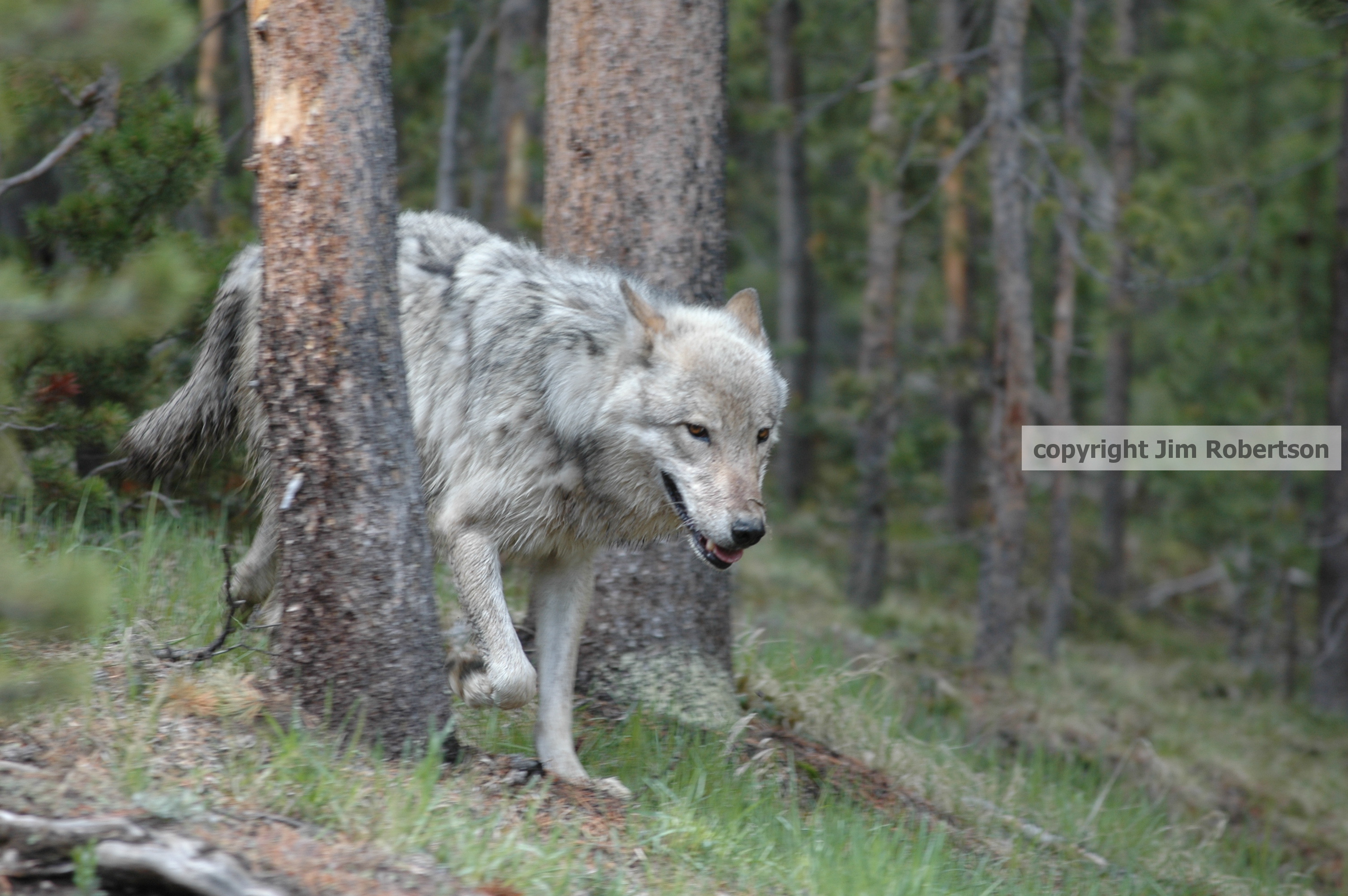
A young collared female gray wolf was shot by a Jardine-area resident on Saturday after the wolf had recently come in close proximity to a number of homes, killed a cat as well as several chickens, according to Montana Fish, Wildlife and Parks.

“It had shown up at a number of properties since April,” said Andrea Jones, FWP information officer.

Over the last few months the wolf displayed unusually bold behavior as attempts were made by FWP and residents to haze the animal. It was shot while eating a chicken. There will be no charges filed, Jones said, since the wolf was becoming increasingly more bold.

“It has not shown normal wolf behavior when confronted,” Jones said.

Until this spring, the wolf lived primarily in the northeast corner of Yellowstone National Park as a member of the Lamar Canyon pack. Young wolves often disperse to start their own packs. After leaving the pack it moved into the Jardine area. Jardine is located northeast of Gardiner and just north of the park boundary.

FWP investigated the wolf mortality in consultation with USDA-Wildlife Services. An FWP veterinarian will examine the wolf’s general condition but a necropsy is not planned at this time, Jones said.

Wolf shootings to protect livestock as well as wolf hunting are divisive issues that have prompted death threats in the past to those involved. Consequently, FWP was not releasing the name of the individual who shot the wolf.

Two other members of the Lamar Pack were shot last fall during Wyoming’s hunting season, one of which was the pack’s alpha female. All together, hunters in surrounding states shot 12 wolves last year that spent part of their time inside Yellowstone’s boundaries. Six of the 12 were collared wolves that park staff use to study wolf movements and interactions.
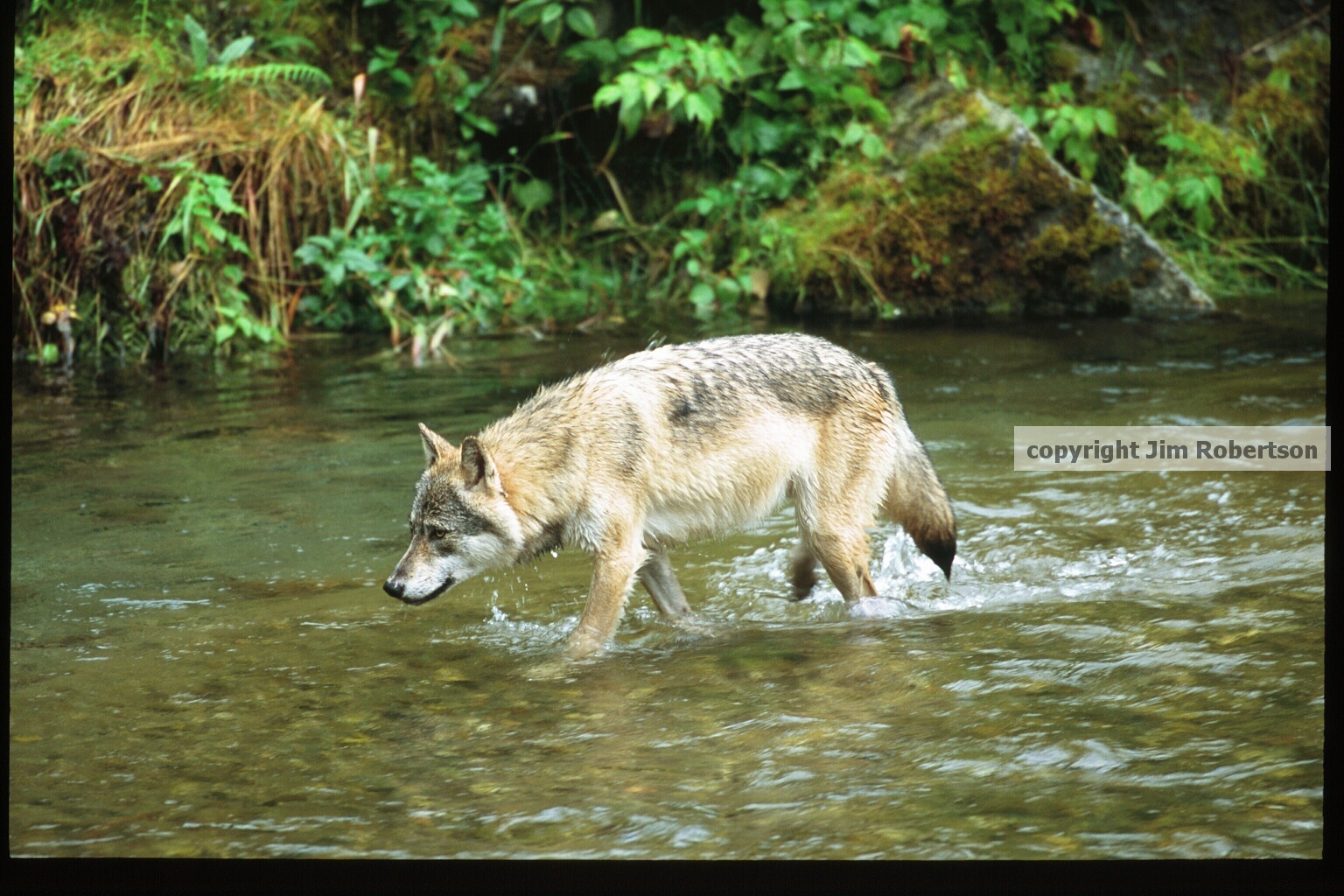
copyrighted wolf in water

Wolf advocates post how-to manual for saboteurs

http://www.capitalpress.com/newsletter/AP-wolf-trapping-081413

HELENA, Mont. (AP) — Environmentalists upset with a federal proposal to remove protections for wolves across most of the U.S. have posted a manual on how to disrupt wolf hunts and sabotage traps.

The 12-page manual published online Monday by Earth First! tells would-be saboteurs that Internet activism alone can leave activists with an empty feeling, so “why not try direct action?”

The manual instructs how to find traps and take them out by destroying or hiding them. It also instructs how to release a trapped wolf, noting that doing so is very dangerous, and suggests forming blockades where wolf permits are sold and walking ahead of hunters with air horns.

Earth First! Media spokesman Grayson Flory said his organization published the manual written by a group calling themselves the “Redneck Wolf Lovin’ Brigade.” The impetus was the Obama administration’s announcement in June that it plans to end Endangered Species Act protections for almost all wolves in the United States, he said.

“We don’t believe something being illegal automatically makes it right or wrong,” Flory said. “The wolf hunt manual that we’re redistributing is only about protecting life, not killing it. We’re completely against the harming of living things.”

[Oh really, that’s a welcome switch from their statement in the manual that, “We are hunters and proud of it…feral hogs beware.”]

Wolf hunts already are allowed in Montana, Idaho, Wyoming and Minnesota. A hunt is scheduled for this fall in Michigan’s Upper Peninsula.

Montana Fish, Wildlife and Parks spokesman Ron Aasheim said the state’s wolf hunting policy was a public process that deserved respect.

“This shows you the extremes people are willing to go to in making their points and affecting public policy,” Aasheim said. “But if something comes to pass and people do break the law, they will be prosecuted.”

Montana Trappers Association president Tom Barnes said hunters and trappers help manage the wolf population.

“All we ask is that we can manage these wolves,” Barnes said. “Hunting is a tool to do that, just like trapping, for any other animal species.”

A draft of the U.S. Department of Interior proposed rule to lift wolf protections said the roughly 6,000 wolves now living in the Northern Rockies and Great Lakes are enough to prevent the species’ extinction.

The agency says having gray wolves elsewhere — such as the West Coast, parts of New England and elsewhere in the Rockies — is unnecessary for their long-term survival.

A small population of Mexican wolves in the Southwest would continue to receive federal protections, as a distinct subspecies of the gray wolf.

Federal officials have delayed a required analysis of the proposal after a contractor provided the U.S. Fish and Wildlife Service with information that could have identified scientists on the anonymous review panel. At least two scientists were told they couldn’t serve on the panel because they signed a letter supporting continuing wolf protections.

More mainstream coverage here: http://www.greatfallstribune.com/article/20130812/NEWS01/308120015/Radical-environmental-group-advocates-wolf-hunt-sabotage

copyrighted wolf in river

Humans show their thirst for blood

Roger, one of our regular readers, posted the following letter he wrote which was printed yesterday in the Missoulian, under the heading “Hunting and fishing.”

: Humans show their thirst for blood

The sports killing season of 2013 is upon us. In Montana alone, “sportsmen” will kill around 19,000 antelope, 40,000 deer, 300 wolves, 1,300 black bear, 200 bighorn sheep, 200 moose, 20,000 elk – then there are turkeys and an assortment of other birds to kill.

It is sporting tradition. Wyoming will kill even more elk, having had record years the past 10. The states of Montana, Wyoming, Idaho and Wisconsin will push wolf-killing as far as they think they can get away with and not risk re-listing. Montana sells $19 wolf tags to kill five wolves.

Then there is the U.S. Department of Agriculture Wildlife Services, which kills around 72,000 coyotes each year and around 28,000 other animals, a million animals a decade.

Then there are the poachers of Africa, and the sportsmen who go there to kill dwindling populations of elephants and rhinos and lions.

We, human animals, are overfishing the oceans and threatening sharks, whales, bluefin tuna and other marine life.

Then there are the slaughterhouses, which will kill a billion chickens worldwide and millions of cattle, pigs and sheep each year. Now conservative state legislatures are pushing every year, despite what the American people have opposed over and over, the opening of horse slaughterhouses.

Animal shelters “put down” (kill) thousands of dogs and cats each year because there are too many and too few homes for them.

You would think that humans are primarily bloodthirsty carnivores, something as scary as the worse aliens you can imagine, which we are.

Roger Hewitt
Great Falls, MT

MT Bison Comment Period Extended

Dear Interested Citizen: July 2013

Montana Fish, Wildlife and Parks and the Montana Department of Livestock have extended the public comment period on a draft environmental assessment (EA) reviewing the potential for bison to occupy public lands adjacent to Yellowstone National Park on a year-round basis.

Public comments on the EA will now be accepted until 5 p.m. September 13, 2013; the original deadline was August 13, 2013.

Copies of the draft EA can be obtained at the FWP regional headquarters in Bozeman and FWP’s headquarters in Helena or at http://fwp.mt.gov/news/publicNotices/environmentalassessments/
plans/pn_0014.html. Comments can be emailed to YearRoundBison-EA@mt.gov, or mailed to Bison Year-Round Habitat EA, Montana Fish, Wildlife & Parks, 1400 S. 19th Ave. Bozeman, MT 59718.

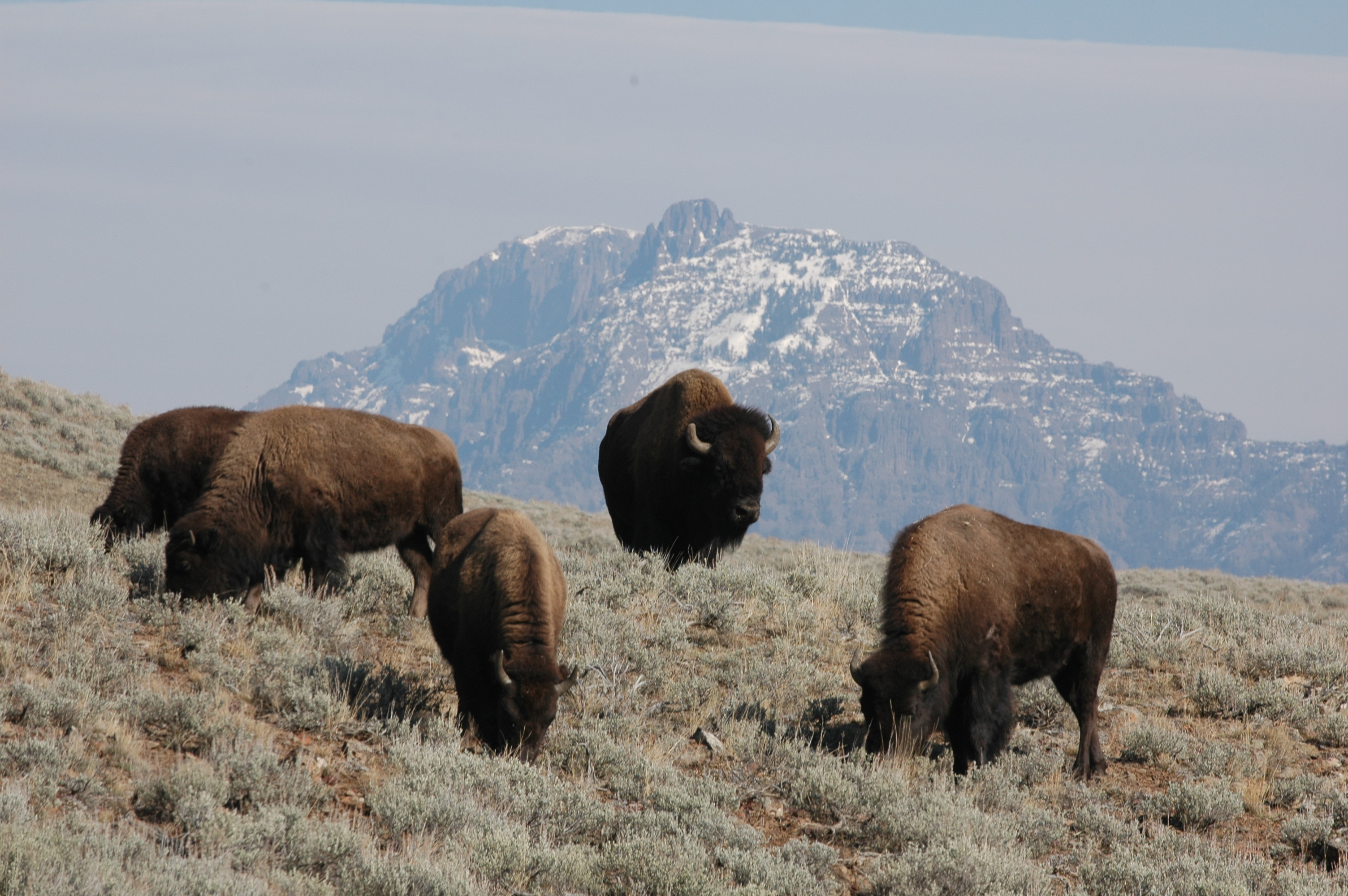
Photo copyright Jim Robertson

Photo copyright Jim Robertson

Cost to Shoot a MT Wolf: $19.00. Add a Dollar if You Want to Let it Struggle for Two Days in a Trap

Although the kind of sick fucks who get a kick out of killing wolves in Montana would pay ten times that amount, their “game” departments are handing out wolf tags like candy—so much for the notion that hunting licenses raise a lot of money for wildlife.

But, as evidenced by the article below, the mainstream media would not judge or condemn anyone who gets a thrill from killing non-human animals. Instead, their informative yet dispassionate reporting legitimizes the ongoing atrocity of wolf hunting…

MT: Changes in store for Montana’s 2013-14 wolf hunt

Posted on July 26, 2013 by TWIN Observer

Written by Tribune Staff

Montana’s Fish & Wildlife Commission recently approved regulations for the upcoming wolf season.

For the 2013-14 seasons, hunters will have the opportunity to pursue wolves throughout Montana beginning Sept. 7 for archery hunting, Sept. 15 for the general rifle season and Dec. 15 for trapping. The archery only season will close Sept. 14, and the general season will end March 15. Wolf trapping season ends Feb. 28

Wolf hunting licenses cost $19 for residents and $50 for nonresidents. License sales should begin by Aug. 5. Montana trapping licenses are currently on sale for $20 for residents and $250 for nonresidents.

New prospective wolf trappers must attend a mandatory wolf-trapping certification class to use a Montana trapping license to trap wolves and can sign up at fwp.mt.gov. Trappers who successfully completed a wolf trapping certification class in Montana or Idaho in the past do not need to retake one this year.

There is no statewide hunting harvest or trapping quota, but each wolf harvest must be reported. There is, however, a quota of two wolves in Wolf Management Unit 110 near Glacier National Park; four wolves in WMU 313 and three wolves in WMU 316, which borders Yellowstone National Park. Additionally, hunters and trappers are limited to taking only one wolf per person in WMUs 110, 313 and 316.

FWP urges hunters to avoid harvesting wolves with radio collars that provide researchers and managers with important scientific information.

The combined maximum hunting and trapping bag limit is five wolves per person. A hunter can purchase up to five wolf hunting licenses but can harvest only one wolf with each license. The use of electronic calls by wolf hunters is allowed.

Trappers must check their traps every 48 hours and immediately report any unintended animal caught in a trap, including domestic animals. Wolf traps must be set back 1,000 feet from trailheads and 150 feet from roads, the commission will consider in August a new measure that requires additional setbacks along more than 20 specific roads and trails popular among hikers and other recreationists in western Montana. If approved, the locations will be posted on FWP’s website.

Montana wolf specialists counted 625 wolves, in 147 verified packs, and 37 breeding pairs in the state at the end of 2012. The count dropped about 4 percent from the previous year and marked the first time since 2004 that the minimum count declined.

Last season the total hunting and trapping harvest was of 225 wolves. Hunters took 128 wolves and trappers 97.

Delisting allows Montana to manage wolves in a manner similar to how bears, mountain lions and other wildlife species are managed, guided completely by state management plans and laws.

7d547853b294cf28b7b6c4ff5a69dda1

Non-lethal Control of Humans Key to Future

After receiving 25,000 comments from across the country and around the world, the Montana Fish, Wildlife and Parks commissioners refused to listen to wolf advocates and compromise on their proposed plan to increase the “bag limit” on wolves from one to five for each hunter or trapper (except on a few paltry acres around Yellowstone) and extend the hunting season to six months, without any annual cap on the culling. Despite heartfelt pleas from wolf lovers the world over to spare the lives of wolves in Montana, the commission took a “no compromise” position.

Well, two can play at that game (it seems to me I’ve heard the slogan, “No Compromise” somewhere before). God only knows what some folks might resort to when they feel their voice is being completely ignored, as though their side—the wolves’ side—is of no significance.

An article in an Idaho paper the other day carried the title, “Non-lethal control of wolves key to future.” While that may sound sensible to some people, there are others who feel the reverse would be more appropriate: non-lethal control of humans is the answer. (Some may even be tempted drop the prefix “non.”) In order for wolves to thrive (or at least survive) and for nature to begin to heal from centuries of abuse, cattle and sheep ranchers need to back off and get their forcibly domesticated grazers off the land. Meanwhile, hunters (like the outspoken members of the Rocky Mountain Elk Foundation) need to realize that wildlife were not put here purely for their sporting pleasure.

And as long as “game” departments keep allowing and promoting lethal control, there’s always the chance that Nature’s side might follow suit. History has shown that when push comes to shove, people won’t continually stand by while their voices are being squelched and those they care about are being “controlled” or made sport of.

 Text and Wildlife Photography ©Jim Robertson, 2013. All Rights Reserved


Text and Wildlife Photography ©Jim Robertson, 2013. All Rights Reserved

Montana increases bag limit for next wolf hunt

The bastards!!

http://www.seattlepi.com/news/article/Montana-increases-bag-limit-for-next-wolf-hunt-4657694.php          

 By MATT VOLZ, Associated Press Wednesday, July 10, 2013

HELENA, Mont. (AP) — Montana Fish and Wildlife commissioners on Wednesday increased the bag limit from one to five wolves per person and extended the state’s next hunting season, but they also set new restrictions in areas adjacent to Yellowstone National Park.

The commission voted to loosen hunting regulations during its meeting in Helena in an attempt to further decrease the state’s wolf population. They amended their plans and set new quotas around Yellowstone after park administrators expressed concern over the effects on the wolf population there.

Hunting and trapping wolves next to Yellowstone, which is a no-hunt zone, flared as an issue after several Yellowstone wolves wearing radio tracking collars were shot last year by hunters in Montana, Idaho and Wyoming.

Commission Chairman Dan Vermillion said the limits are the result of an attempt to reach a middle ground.

“It’s not going to cause a long-term threat to the wolf population there,” Vermillion said.

There is no statewide quota limiting the total number of wolves that can be killed during the season, but in two special wolf-management units north of Yellowstone, the commission limited the total number of wolves that can be killed to seven.

Hunters and trappers will only be allowed to take one wolf each in those areas.

To the west of Glacier National Park, a quota of two wolves has been set in that management unit, the same as last year.

The rifle season for wolves will run from Sept. 15 to March 15, giving hunters a six-month season this year. The trapping season, the state’s second, will again run from Dec. 15 through Feb. 28.

Archery season will be from Sept. 7 through Sept. 14.

Opponents of the new regulations wanted an even lower quota around Yellowstone, saying the combined effects of Montana’s and Wyoming’s hunts would likely hurt the park’s wolf population. They also objected to lengthening the rifle season beyond February, saying that is the time when female wolves are pregnant.

“Yellowstone’s wolf packs are the foundation for the ecosystem’s wolf population and must be provided special considerations,” said Bart Melton of the National Parks Conservation Association. “It’s imperative that we protect this iconic species adjacent to the park as well as the vibrant wolf-related tourism that benefits our local economy.”

Wolf opponents argued the animals’ burgeoning population hurts other big-game animals and results in more livestock being killed. Blake Henning of the Rocky Mountain Elk Foundation said the National Park Service’s lack of wildlife management creates problems for hunters and ranchers outside the park.

“We don’t believe the park needs special protections or designations for its wolves,” Henning said.

In all, nearly 25,000 people submitted comments on the plans to loosen regulations for the upcoming hunt since the commission first announced the proposal in May.

A total of 225 wolves were killed by hunters and trappers last season. Montana Fish and Wildlife estimated the state’s wolf population at 625 at the end of 2012, a decline of about 4 percent from 2011.

Congress lifted federal protections of wolves in Montana and Idaho in 2011, handing management over to those states and allowing them to hold hunts. Wyoming held its first hunt last year.

Montana’s management plan calls for a population of at least 150 wolves and 15 breeding pairs within its borders.

copyrighted-wolf-argument-settled

Wolves: Brutal management, false facts

This letter to the editor by Roger Hewitt, a regular reader and commenter to this blog, appeared in today’s Missoulian. Way to go, Roger!

http://missoulian.com/news/opinion/mailbag/wolves-brutal-management-false-facts/article_98bac2b4-e57a-11e2-b13a-0019bb2963f4.html

The wolf is politically managed in Montana, Wyoming, Idaho, Wisconsin and other states, not scientifically or compassionately, but by a set of minds that are wolf jihad-minded, who intend to marginalize the wolf and other predators in the mistaken belief that nature needs to be controlled by man instead of lived with in a sharing attitude. It is being managed by a set of minds that go forward in their brutal management rationalizing it by claiming basically two false facts

• Myth 1: That wolves are harming elk populations which are, to the contrary, up in the states mentioned and other states. Elk populations are up 37 percent in Montana, from 89,000 before wolf re-introduction to more than 141,000 elk now, and elk populations are up in the Bitterroots contrary to popular beliefs (myths); and elk numbers have stabilized in Yellowstone at historic normal levels contrary to popular beliefs.

• Myth 2: The stock depredation by wolves in Montana is at 0.002 percent – 67 cattle in 2012, and it has been 67-80’s range.

Sheep depredation is 0.1 percent. So, the elk and stock depredation arguments are myths. What Fish, Wildlife and Parks is doing is farming elk, which the agency claims is 55 percent above desirable population. But the FWP and sportsmen and ranchers are of the same mindset, anti-predator and somewhat anti-wildlife unless it is a recreational killing opportunity. Predators are something to control-manage-dominate, not something to live with, not part of balanced ecology, which reflects our heritage, our prevalent mindsets that live against the environment not with it.

Roger Hewitt, Great Falls

copyrighted Hayden wolf in lodgepoles

States must demonstrate respect for wolves before assuming management

http://missoulian.com/news/opinion/mailbag/states-must-demonstrate-respect-for-wolves-before-assuming-management/article_90c75b9a-da84-11e2-b787-0019bb2963f4.html

letter to the editor

I was very troubled by your (June 18) editorial supporting the delisting of wolves in the lower 48.

Your editorial mentions that wildlife groups worry this could lead to the extermination of wolves in many states, and that concern isn’t unfounded. It is, in fact, supported by recent events in the form of hunting seasons in states such as Idaho and Wyoming and of course, Montana. The widespread hostility of these popular hunting states toward the wolf as a “trophy animal” and the alleged “sportsman” that are eager to simply kill the wolf is appalling. Barely on the cusp of recovery, wolves are killed for the sole purpose of a pelt, a rug or a taxidermy prize. Forty years of protection for endangered species leads to this? What a travesty.

And let’s not forget the fragile border of Yellowstone National Park in Montana, and the killing a few months back of the popular 831F, a collared Yellowstone wolf that happened to wander outside the safety of the park. How many other wolves might suffer a similar fate, a sick and sad potential future for the state of Montana if the wolves are stripped of their protection.

You also mention that if, indeed, human’s overzealous hunting practices take the wolf back to the brink of extinction, the Endangered Species Act can be applied again. What is the likelihood of the ESA being applied again once lifted? My guess is slim to none!

Certainly there can be a balance between permanent protection and wholesale slaughter. A reasonable respect to the wolf lineage that humans destroyed and have worked for many years to rebuild must be fostered before the ESA is removed from these animals, otherwise the individual states will never be able to govern themselves. This, we’ve already, unfortunately, seen.

Jennifer Selzer

copyrighted Hayden wolf in lodgepoles


Montana’s Opening Day of Hunting Claimed Two Teens

Hunting, what a senseless waste of life…

2 Montana teenagers die in hunting accidents          October 25, 2010 6:30 am  •  Associated Press

GREAT FALLS – Two Montana teenagers died in apparent hunting accidents over the weekend, including a 17-year-old boy who was shot and killed by his 14-year-old sister as she was unloading a rifle, authorities said Monday.

The separate shootings happened Saturday, the opening day of hunting season in Montana.

The siblings from Power were on a hunting and camping trip with their father, friends and other family members in the Missouri River Breaks about 70 miles south of Chinook. They had finished hunting for the evening Saturday and the girl was unloading her rifle when it discharged, said Blaine County Undersheriff Pat Pyette.

The 17-year-old boy, who was standing less than five feet away, was shot in the face, Pyette said. He died at the scene.

Police declined to release the names of any people involved.

Also on Saturday, a 16-year-old boy was shot and killed in a separate apparent hunting accident on the Montana Hi-Line near his hometown of Malta.

Logan Wilson separated from his two companions to walk across a field, Phillips County Undersheriff Scott Moran said. After a short while, they went looking for him and called authorities after discovering that he had been shot.

KFBB-TV reported that the preliminary cause of death was listed as an accidental shooting and an investigation is under way.

No other information was immediately available.

leavetheanimalsalone