URGENT! Montana Wolf Hunt Comments Due on 24th‏

From another list:

http://fwp.mt.gov/hunting/publicComments/2013_14proposedWolfSeason.html

We all know that it doesn’t seem to make a difference when it comes to our public comments making a difference when it comes to MFWP idiotic and reprehensible

wolf management, but it will be on public record, and will show support for seeing wolves alive rather than dead and, it will show the rest of the world that more people value wolves and but a few want to eliminate them. These new regulations are being supported by the livestock industry, Rocky Mtn Elk Foundation, and other hunting groups and have nothing to do with science.

PLEASE comment and here’s some talking points from WOTR and Kim Bean

Wolves that are coexisting with humans and livestock will be killed for no other reason than bigotry and extreme mismanagement. Critical habitat for wolves near Yellowstone (Gardiner Basin) has been excluded from the quota areas. This is a deliberate attempt to kill as many YNP wolves as possible. With less than 25 wolves in the entire northern range of YNP, this will certainly prove an end to wolf packs of Yellowstone.

Some of our concerns are as follows: Hunters & trappers will be able to hunt over baited traps, as well as use electronic calls to pull wolves from safety into their line of fire. Because of the extended season September 15, 2013 – March 31, 2014 hunters will be able to hunt wolves in the advanced stages of pregnancy. If a hunter kills an alpha female he/she has killed the future survival of the pack. Disruption of the pack structure will lead to increased depredation and smaller pack sizes, yet more packs on the land. A Visions of Walt Disney’s Fantasia “The Sorcerer’s Apprentice” comes to mind. A Wolf’s fur does not become full until late November; wolves killed prior to this are killed simply for the sake of killing.

Issues of Concern or Talking Points

1. Extended Season (15 Sept 2013 – 31 March 2014)

• Hunting Pregnant Wolves

• Pelt is Substandard

• Unethical & Immoral

• Disruption of the Pack Structure

• Killing to Hunt or Hunting to Kill

• Bitterroot Elk Study Research states Very Low Wolf Predation

2. Bag Limit of 5

• Annihilate Entire Pack

• Disrupt Pack Social Structure

• Increased Depredation

• Leads to Smaller Packs = Increase in Packs on the landscape

• Decrease in Recruitment

• Killing Pregnant Wolves ½ way through gestation

• Black Science

• In Contrast with North American Wildlife Conservation Model

3. Baiting Traps

• Not Fair Chase & Unethical

• Unenforceable

• Drastic Departure from Montana Wolf Management Plan

Yellowstone Wolves

Gardiner Basin MUST be included in the quota unit of 313

Revenue producing value of 35.5 + million sustainable dollars to the communities surrounding YNP

Research value utilized world-wide

Number 1 tourist attraction in YNP

These are not just Montana’s wolves, but the Nations wolves

Miscellaneous Talking Points

Could help slow or contain CWD Chronic Wasting Disease

Livestock Depredation continue to decline – In 2012 2.6 million cattle in MT, depredation by wolves 67

Huge deviation from the Montana Gray Wolf Management Plan

Under Public Trust Doctrine Wildlife belong to all Montanans

Elk Populations are virtually at or above objectives in Montana 55% above objective

More elk now in Montana then when wolves were reintroduced

Approximately 73 wolves in Yellowstone

Less than 25 in the Northern Range of YNP – only 18 in Lamar Valley

copyrighted-wolf-argument-settled

Revise Montana’s Wolf Hunt Proposal

This action alert is from a group of Yellowstone Park wolf watchers; your comments will likely be a bit more “extreme” (such as, “No hunting–leave the wolves alone,” etc.) but there’s good contact info here…


Please Write Montana Fish, Wildlife, and Parks Commissioners: Ask to Revise FWPs Wolf Hunt Proposal 2013-14
June 24 at 5 pm is the Deadline for Public Comment

On May 9, advocates for Yellowstone wolves spoke in Helena and Bozeman, asking for revisions to the FWP Wolf Hunt Proposal. The Commissioners want public comments before they make changes or ratify the Proposal. Now’s the time to send in your comments!

Email Chairman Vermillion and the Commissioners at this link: http://fwp.mt.gov/hunting/publicComments/2013_14proposedWolfSeason.html

Comments can be mailed to FWP – Wildlife Bureau, Attn: Public Comment; P.O. Box 200701; Helena, MT 59620-0701

Send copies of your letter to:

FWP Director Hagener: jhagener@mt.gov

Governor Bullock at this link: governor.mt.gove/contact.aspx

Office of the Governor: P.O. Box 200801: Helena, MT 59620-0801

Overview:

Yellowstone wolves rarely depredate on livestock and are essential for Montana tourism and research. Tourism and the science are intertwined in Yellowstone. For 18 years,data coming out of the Yellowstone Wolf Project has been is one of Montana’s great exports to the world. Science creates radio collared wolves, which can be located, drawing millions of tourists to Montana each year. This sort of tourism encompasses wolf biology, creating citizen scientists who learn about wolf behavior and collect and share data with biologists.

Suggested Points for your Comments:

Applaud the expansion of WMU 316 to include HD 313in your 2013-14 Wolf Hunt Proposal as a big step forward.

FWP gave us something we wolf advocates asked for. Expanding WMU 316 to include parts of HD 313 will save many Yellowstone wolves—because most YNP wolves were killed in HD 313. These wolves live within Yellowstone 95% of the time and leave the park in autumn to follow elk and scavenge on elk gut piles from the hunt.

Ask FWP to extend 316 to include the rest of HD 313.

This closes the gap on Eagle Creek and allows FWP to legally close the hunt around YNP. The new Montana law allows FWP to set low quotas or close hunting around Yellowstone only in designated Wolf Management Units (WMUs.)

Ask FWP to set the quota in expanded WMU 316 at 3 or fewer wolves.FWP has set the quota at 7 wolves. 7 wolves is the same number of Yellowstone park wolves that were killed in 2012—a disaster for wolf tourism and for Yellowstone Wolf Project research.WHY NOT ASK FOR A QUOTA OF ZERO or 1 WOLF IN 316? The Chairman of the Commission, Dan Vermillion, says they will not consider a quota that low.

4. Ask FWP to restrict wolf tags in WMU 316 to one tag per hunter. With a limited quota in WMU 316, one hunter could easily fill the quota all by himself.

5. Ask FWP to delete baiting over traps. It is unethical and unsporting.

6. Ask FWP to close the season in February when hunters will kill and disturb pregnant females as they try to den up.

7. Ask FWP to include wolf tourism and research in FWPs Measurable Objective #3 Objective #3 reads: “Maintain positive and effective working relationships with livestock producers, hunters, and other stakeholders. Revise it to add “wolf tourism, research, and other stakeholders.”

copyrighted Hayden wolf in lodgepoles

After Years of Progress, a Setback in Saving the Wolf

From the New York Times

By VERLYN KLINKENBORG

Published: June 1, 2013

The 1973 Endangered Species Act provides federal protection — breathing space, in a very real sense — to plants and animals threatened with extinction. Had this task been left to the states alone, almost none of the species that have returned to health would have done so.

But the Interior Department’s Fish and Wildlife Service now plans to remove wolves from the endangered list in all 48 contiguous states and transfer control over their fate to the states. This may save the department from running battles with Congress, state officials and hunters about protecting the wolf. Whether it will save the animal is another matter.

Thanks entirely to federal protections, wolves have rebounded remarkably in some places. There are now about 4,000 in Michigan, Minnesota and Wisconsin, and 1,600 or so more in the Rocky Mountain states of Idaho, Montana and Wyoming. Interior has gradually delisted the wolves in all these places because, it says, their numbers are enough to guarantee survival. And it is not necessary to their survival, the service says, to protect wolves elsewhere.

But many scientists argue, persuasively, that these delistings are premature — that the service is giving up on recovery before the job is done. For one thing, they note a 7 percent decline in Rocky Mountain wolves since they were delisted and controlled hunts were authorized. They also note that other recovered species — notably the bald eagle and the American alligator — were allowed to expand into much of their historical range before they were removed from the list.

The historical range of the wolf is nearly the whole contiguous United States. There is suitable habitat all across the West still unoccupied by wolves, including the Pacific Northwest, Northern California and Colorado. A recovering wolf population isn’t static. It spreads as wolves rebound. The northern Rockies and the upper Midwest are proof of that. Can wolves recover suitable parts of their historical range without federal protection? The answer is almost certainly no.

Interior’s plan has little to do with science and everything to do with politics. Congress bludgeoned President Obama’s first interior secretary, Ken Salazar, into delisting the Rocky Mountain wolf. But there is no reason his successor, Sally Jewell, has to accept a plan to delist the wolves everywhere. It is hard enough to protect species that occupy hidden ecological niches. Politics has made it harder still to protect an intelligent, adaptive predator living openly in the wild.

copyrighted Hayden wolf in lodgepoles

PEER Sue Over ‘Political Deals’ Behind Wolf Delisting

From Environmental News Service

WASHINGTON, DC, May 22, 2013 (ENS) – The Obama Administration’s plan to remove the gray wolf from the protections of the Endangered Species Act, as detailed in a draft Federal Register notice released today by Public Employees for Environmental Responsibility, PEER, is temporarily on hold.

The reasons for the indefinite delay announced this week were not revealed nor were the records of closed-door meetings to craft this plan that began in August 2010.

Today a federal Freedom of Information Act lawsuit to obtain the records from those meetings was filed by PEER, a nonprofit national alliance of local, state and federal resource professionals.

The draft Federal Register notice would strike the gray wolf from the federal list of threatened or endangered species but would keep endangered status for the Mexican wolf. No protected habitat would be delineated for the Mexican wolf, of which fewer than 100 remain in the wild.

This step is the culmination of what officials call their National Wolf Strategy, developed in a series of federal-state meetings called Structured Decision Making, SDM. Tribal representatives declined to participate.

On April 30, 2012, PEER submitted a Freedom of Information Act request to the U.S. Fish and Wildlife Service for all SDM meeting notes, handouts and decision documents. More than a year later, the agency has not produced any of the requested records, despite a legal requirement that the records be produced within 20 working days.

Today, PEER filed suit in the U.S. District Court for the District of Columbia to obtain all of the SDM documents.

“By law, Endangered Species Act decisions are supposed to be governed by the best available science, not the best available deal,” said PEER Executive Director Jeff Ruch, pointing to a letter from the nation’s leading wolf researchers challenging the scientific basis for the de-listing plan.

“The politics surrounding this predator’s legal status have been as fearsome as the reputation of the gray wolf itself,” said Ruch.

To support its argument that politics trumps science in deciding how to handle the nation’s wolves, PEER also made public today a letter from 16 scientists to the new Interior Secretary Sally Jewell and U.S. Fish and Wildlife Service Director Dan Ashe expressing “serious concerns with a recent draft rule leaked to the press that proposes to remove Endangered Species Act protections for gray wolves across the Lower 48 States…”

“Collectively, we represent many of the scientists responsible for the research referenced in the draft rule,” wrote the scientists, who specialize in carnivores and conservation biology. “Based on a careful review of the rule, we do not believe that the rule reflects the conclusions of our work or the best available science concerning the recovery of wolves, or is in accordance with the fundamental purpose of the Endangered Species Act to conserve endangered species and the ecosystems upon which they depend.”

Among other problems with the delisting proposal, the scientists say it ignores the positive influence of large carnivores such as wolves on the ecosystems they inhabit.

“The gray wolf has barely begun to recover or is absent from significant portions of its former range where substantial suitable habitat remains. The Service’s draft rule fails to consider science identifying extensive suitable habitat in the Pacific Northwest, California, the southern Rocky Mountains and the Northeast. It also fails to consider the importance of these areas to the long-term survival and recovery of wolves, or the importance of wolves to the ecosystems of these regions,” the scientists wrote.

“The extirpation of wolves and large carnivores from large portions of the landscape is a global phenomenon with broad ecological consequences,” the scientists wrote. “There is a growing body of scientific literature demonstrating that top predators play critical roles in maintaining a diversity of other wildlife species and as such the composition and function of ecosystems. Research in Yellowstone National Park, for example, found that reintroduction of wolves caused changes in elk numbers and behavior which then facilitated recovery of streamside vegetation, benefitting beavers, fish and songbirds. In this and other ways, wolves shape North American landscapes.”

“Given the importance of wolves and the fact that they have only just begun to recover in some regions and not at all in others,” the scientists wrote, “we hope you will reconsider the Service’s proposal to remove protections across most of the United States.”

PEER charges that the resulting National Wolf Strategy used political and economic factors to predetermine the answer to scientific questions, such as the biological recovery requirements for wolves and ruling out areas in states within the species’ historical range which lack sufficient suitable habitat.

“This closed-door process lacked not only transparency but also integrity. It involved no independent scientists, let alone peer reviewed findings,” Ruch said. “It is not surprising that the Fish and Wildlife Service does not want to see this laundry airing in the public domain.”

Jamie Rappaport Clark, president of the nonprofit Defenders of Wildlife, is a former director of the Fish and Wildlife Service who served during the Clinton Administration.

“The gray wolf delisting proposal represents a major retreat from the optimism and values which have been the hallmark of endangered species recovery in this country for the past 40 years,” says Clark. “Instead, the proposal reflects a short-sighted, shrunken and much weaker vision of what our conservation goals should be. The Service has clearly decided to prematurely get out of the wolf conservation business rather than working to achieve full recovery of the species.”

Clark and five other heads of environmental organizations – Center for Biological Diversity, Earthjustice, Endangered Species Coalition, Natural Resources Defense Council and Sierra Club – last week sent a letter to Secretary Jewell asking that she reconsider the nationwide wolf delisting plan.

“Maintaining federal protections for wolves is essential for continued species recovery,” the letter says, adding that the unwarranted assault on wolves in the northern Rocky Mountains after wolves in those states lost federal protections highlights the “increasingly hostile anti-wolf policies of states now charged with ensuring the survival of gray wolf populations.”

Since wolves in Montana, Idaho and Wyoming were delisted in 2011, more than 1,100 wolves have been killed in these Northern Rockies states.

Gray wolf populations were extirpated from the western United Stated by the 1930s, explains the Fish and Wildlife Service. Public attitudes towards predators changed and wolves received legal protection with the passage of the Endangered Species Act in 1973.

Subsequently, wolves from Canada occasionally dispersed south and successfully began recolonizing northwest Montana in 1986. In 1995 and 1996, 66 wolves from southwestern Canada were reintroduced into Yellowstone National Park and central Idaho.

Recovery goals of an equitably distributed wolf population containing at least 300 wolves and 30 breeding pairs in three recovery areas within Montana, Idaho, and Wyoming for at least three consecutive years were reached in 2002, according to the Service.

Copyright Environment News Service (ENS) 2013. All rights reserved.
copyrighted-wolf-argument-settled


Comment info Montana Wolf Hunt Proposal, 2013-14

From Wolfwatcher.org:

NWC Official Statement: Montana Wolf Hunt Proposal, 2013-14

May 13th, 2013

Montana officials estimated that at least 625 wolves, in 147 verified packs, and 37 breeding pairs inhabited the state at the end of 2012. During Montana’s 2012/2013 wolf season, hunters and trappers killed 128 wolves and trappers took 97 wolves for a total of 225. The actual numbers of wolves killed in the state, however, estimates more than 300 when factoring in wolves that were killed by depredation control (USDA’s Wildlife Services killed 108 wolves), vehicular accidents, disease and other natural causes.

Montana FWP Commission proposed its 2013-14 wolf hunting and trapping season. Comment period begins on Mon., May 13th and ends on June 24th at 5PM. Final decision will be made at a Commission meeting on July 10th in Helena.
•Submit via online submission – or – email: fwpcomm@mt.gov
•Submit via USPS mail at FWP – Wildlife Bureau, Attn: Public Comment, P.O. Box200701, Helena, MT 59620-0701

PROBLEMS:
1.Archery-only hunting would run from Sept. 7 through Sept. 14.
2.The hunting season is extended – the general hunting season (Sept. 15 and ending March 31, 2014); trapping season (Dec. 15 through Feb. 28, 2014)
3.The overall bag limit is 5 wolves per person in any combination of wolves taken by hunting or trapping, – an increase from 1 per person last year.
4.Wolf quotas would be maintained in areas near Montana’s two national parks, with a quota of 7 wolves in an expanded Wolf Management Unit 316 near Yellowstone National Park and a quota of 2 wolves in WMU 110 near Glacier National Park.
5.A new regulation would allow hunters to take a wolf over bait placed for trapping

BACKGROUND:
• As of Jan. 2013, Montana has 2.6 million head of cattle and 225,000 sheep. FWP Director Jeff Hagener said in a press release, “Confirmed livestock depredations due to wolves included 67 cattle, 37 sheep, one dog, two horses and one llama in 2012. Cattle losses in 2012 were the lowest recorded in the past six years.”
•In April 2012, MtFWP’s former Commissioner Ream stated, “The arrival of wolves in the West Fork added to the predatory pressure on the elk herds, but does not come close to the impact that mountain lions have. Statistics show that the elk population statewide is doing well with numbers at an all-time high of 112,000. He said the state management objective calls for 90,000 which means the state is about 22,000 elk over objective.” Ream suggests, considering a number of factors, that it was “a perfect storm“ that led to elk population reductions in Hunting district 250. Those factors include hunting, predation and weather and have all have tipped the balance in that area against the elk. He said the drop in the calf/cow ratio had hit a critical low, but did show some sign of recent recovery.
•In a May 1st article in the Independent Record, FWP Recommends Expanded Wolf Hunt Season and Bad Limit , George Pauley, FWP Wildlife Management Chief, said the reasons for the proposed changes in Montana’s 2013-14 wolf hunting season are twofold. “We’re just looking for opportunities to hunt wolves … and it’s an attempt to reduce the population,” Pauley said. “We’ve always had a philosophy of incrementally increasing harvest rates and opportunities.”

The National Wolfwatcher Coalition submitted its

NWC Official Public Comment re: Montana’s wolf hunting proposal for 2013-14.

We have already reached out to the Commission so that we can ensure the voices of all stakeholders are represented in its policy objectives. You are invited to review our statement and use it as a resource to guide the drafting of your own public comment via the directions above.

Questions or Comments? Contact us via email at : info@wolfwatcher.org

Finally Some Good News From Montana

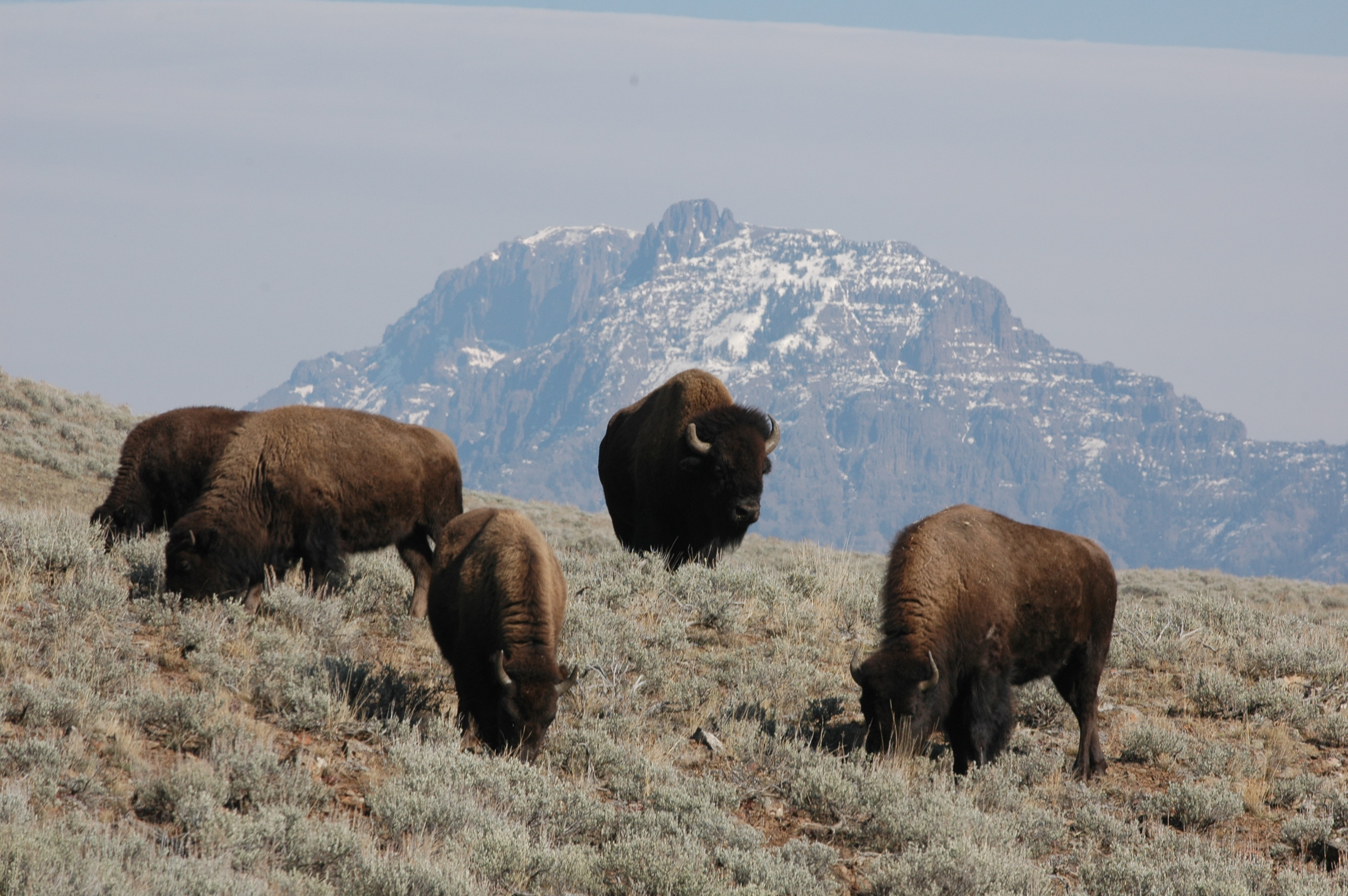
Montana governor vetoes the last of the anti-bison bills sent to him by 2013 legislature

By Ralph Maughan On May 9, 2013 The Wildlife News
… .

Anti-bison mania seizes legislature, Governor Bullock helps beat off the attack on a national symbol-

Helena, MT. Montana’s new legislature, elected in 2012, was a hotbed of anti-bison activity. Ten or so bills to hurt the bison in one way or another were introduced and a number passed and were sent to Montana’s new governor Steve Bullock.

Governor Bullock has saved the limited number of free roaming bison, and maybe bison as something other than livestock, with his veto pen. This week he vetoed the last two bills that would harm the bison, SB 256 and SB 305.

It is difficult to understand why the majority party of legislature is so hostile to the bison except it seems to have become a partisan issue as over the years all the standard anti-bison arguments have been knocked down by management and regulatory changes made by the U.S. agency APHIS (Animal and Plant Health Inspection Service) and Montana Department of Livestock and by scientific studies.

The Wildlife News has, over the years generally argued that anti-bison sentiment is basically a cultural response from the state’s cattle ranchers now angry that anyone would dare challenge their cultural hegemony — it has little to do with a threat of brucellosis spreading, bison knocking down fences, chasing people, etc. The trouble with cultural animosity is that science, economics, compromise cannot calm “a party with a chip on their shoulder.”

Those who want rational bison management and a degree of free roaming bison in the state outside of the limited boundary of Yellowstone National Park should contact the governor and thank him. governor@mt.gov

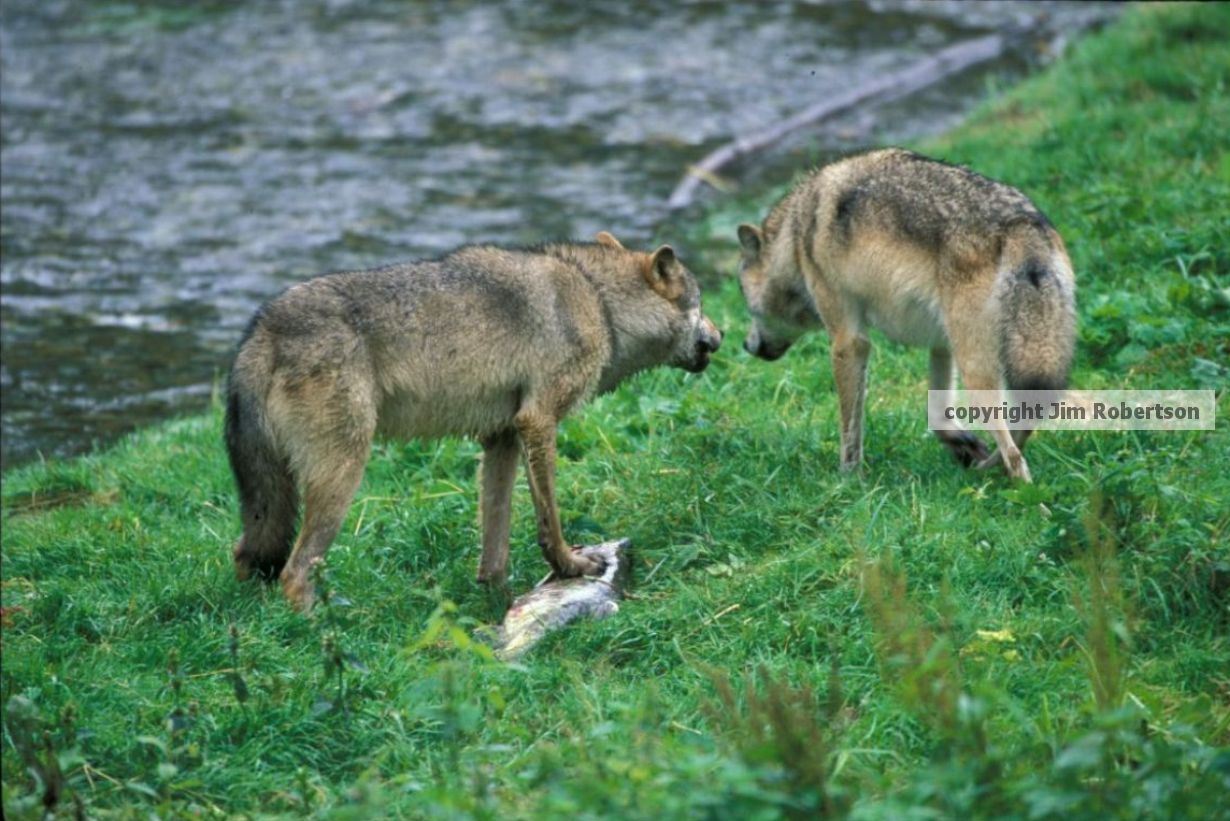
Photo Copyright Jim Robertson

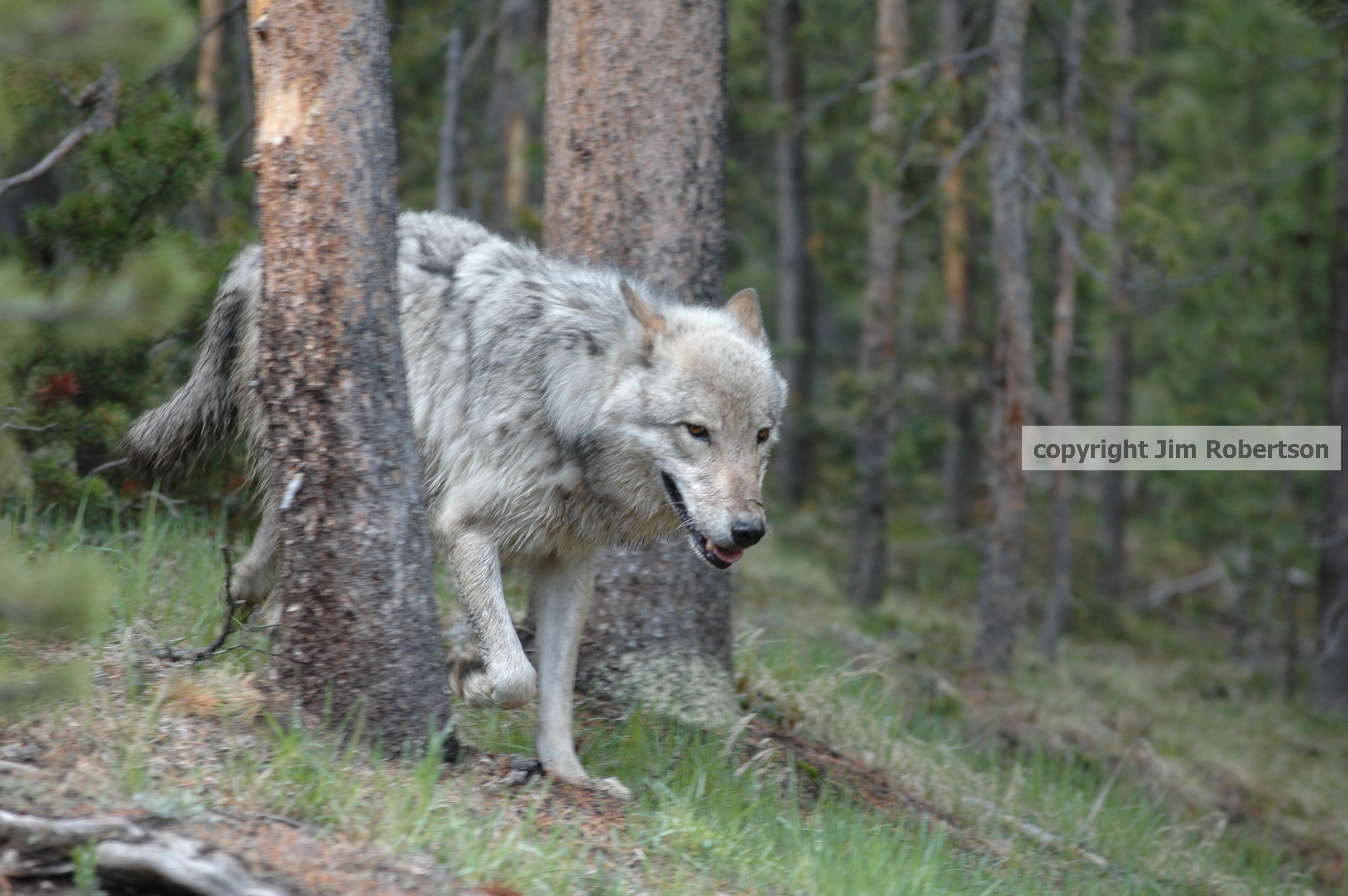
Photo Copyright Jim Robertson

The Perverse Logic of Wolf Hunts

I’d been wondering how many cows died from other causes, versus the fewer than 100 (or 0.0003%) killed by wolves. This article includes some of those figures…

The Perverse Logic of Wolf Hunts

by GEORGE WUERTHNER

The hysteria that surrounds wolf management in the Rockies has clouded rational discussion. Wolves are hardly a threat to either hunting opportunity or the livestock industry.

ELK NUMBERS ABOVE OBJECTIVES

For instance, the Wyoming Fish and Game reports: “The Department continues to manage to reduce Wyoming’s elk numbers. The total population of the herds with estimates increased by 16 percent in 2009 and is now 29 percent above the statewide objective of 83,640 animals.”

Things are similar in Montana. Populations have grown from an estimated 89,000 animals in 1992 prior to wolf recovery to 140,000-150,000 animals in recent years.

In Idaho we find a similar trend. According to the IDFG 23 out of 29 elk units are at and/or above objective. Hunter success in 2011 was 20%: one in five hunters killed an elk.

Wolves are clearly not a threat to the future of hunting in any of these states.

LIVESTOCK LOSSES EXAGGERATED

Ranchers are equally irrational. In 2010 Wyoming livestock producers lost 41,000 cattle and calves due to weather, predators, digestive problems, respiratory issues, calving and other problems. But total livestock losses attributed to wolves was 26 cattle and 33 sheep!

Last year Montana livestock producers lost more than 140,000 cattle and sheep to all causes. But total livestock losses attributed to wolves was less than a hundred animals.

In 2010 Idaho cattle producers lost 93,000 animals to all causes. Respiratory problems were the largest cause accounting for 25.6 percent of the cattle lost. Next came digestive problems, accounting for 13.4 percent of the cattle deaths. Total cattle losses attributed to wolves was 75 animals.

To suggest that wolves are a threat to the livestock industry borders on absurdity.

WOLF CONTROL INCREASES CONFLICTS

Worse yet, the persecution of predators does not work to reduce even these minimum conflicts as most proponents of wolf control suggest.

The reason indiscriminate killing does not work is because it ignores the social ecology of predators. Wolves, cougars, and other predators are social animals. As such, any attempt to control them that does not consider their “social ecology” is likely to fail. Look at the century old war on coyotes—we kill them by the hundreds of thousands, yet ranchers continue to complain about how these predators are destroying their industry. And the usual response assumes that if we only kill a few more we’ll finally get the coyote population “under control.”

The problem with indiscriminate killing of predators whether coyotes, wolves, cougars or bears is that it creates social chaos. Wolves, in particular, learn how and where to hunt, and what to hunt from their elders. The older pack members help to raise the young. In heavily hunted (or trapped) wolf populations (or other predators), the average age is skewed towards younger age animals . Young wolves are like teenagers—bold, brash, and inexperienced. Wolf populations with a high percentage of young animals are much more likely to attack easy prey—like livestock and/or venture into places that an older, more experience animal might avoid—like the fringes of a town or someone’s backyard.

Furthermore, wolf packs that are continuously fragmented by human-caused mortality are less stable. They are less able to hold on to established territories which means they are often hunting in unfamiliar haunts and thus less able to find natural prey. Result : they are more likely to kill livestock.

Wolf packs that are hunted also tend to have fewer members. With fewer adults to hunt, and fewer adults to guard a recent kill against other scavengers, a small pack must actually kill more prey than a larger pack. Thus hunting wolves actually contributes to a higher net loss of elk and deer than if packs were left alone and more stable.

Finally hunting is just a lousy way to actually deal with individual problematic animals. Most hunting takes place on the large blocks of public land, not on the fringes of towns and/or on private ranches where the majority of conflicts occur. In fact, hunting often removes the very animals that have learned to avoid human conflicts and pose no threat to livestock producers or human safety. By indiscriminately removing such animals which would otherwise maintain the territory, hunting creates a void that, often as not, may be filled by a pack of younger, inexperienced animals that could and do cause conflicts.

INSANITY IS DOING SAME WRONG THING OVER AND OVER

We need a different paradigm for predator management than brute force. As Albert Einstein noted, the definition of insanity is doing the same thing over and over again and expecting different results. Unfortunately, insanity has replaced rational thought when it comes to wolf management.

Montana Mulls Upping Hunter “Harverst” Limit to FIVE Wolves

HELENA — Montana wildlife commissioners may extend the hunting season for wolves and the number of predators that can be killed by a hunter or trapper.

“We’ve always had a philosophy of incrementally increasing harvest rates and opportunities,” FWP Wildlife Management Chief George Pauley said in an article in today’s Great Falls Tribune entitled, “FWP proposes extending wolf hunt, kill limit.” The changes would allow hunters more opportunities and reduce the wolf population,
he said.

Well that’s just fucking great; more hunter “harvest” opportunities, fewer wolves–what a philosophy!!

The agency also is proposing allowing hunters and trappers to take up to five wolves each, the Independent Record reported Wednesday.

Last year, hunters and trappers could take only one wolf. The state Legislature this year passed a bill that allows the agency to increase that limit.

The commission takes up the proposal at its May 9 meeting in Helena….

copyrighted-wolf-argument-settled

Intolerance is Sometimes the Only Humane Stance

There’s been a lot of talk about tolerance these days, but sometimes it seems only the Left side really takes the concept of peaceful acceptance to heart. Fair-minded folk are encouraged to politely tolerate each other’s differences in order to get along. But lately the anti-wolf faction has hijacked the word to justify the killing of wolves.

For example, ten Washington state legislators recently urged their Fish and Wildlife Commission to enact a policy of allowing the unpermitted killing of wolves, “to maintain social tolerance for gray wolves in northeast Washington.” And a wolf-hunter/wildlife snuff film producer told NPR News, “Having these [wolf] hunting seasons has provided a level of tolerance again.” Sorry, but I just don’t see how killing wolves promotes tolerance for them; sounds more like enmity than tolerance.

The only way I can relate is from a converse perspective: doing away with a few wolf hunters might provide some level of tolerance for them.

Still, tolerance should not be just a catchall catchword to be bandied about whenever the mood strikes—some things don’t deserve to be tolerated. No caring person should be expected to tolerate the mistreatment of others. Anyone with a sense of right and wrong should eventually come to the conclusion that intolerance is sometimes the only humane stance to take.

Intolerant is what Japanese whalers label anti-whaling groups or non-whaling nations when they question the “right” to harpoon and butcher whales or trap and slaughter dolphins. South Koreans, who literally torture dogs to death and boil cats alive in the belief that doing so makes them taste better or improves their medicinal value, call humane activists intolerant when they oppose those barbarous customs. And European and American producers of foie gras scream cultural intolerance when animal advocates work to end the bizarre practice of shoving a pipe down the throats of geese and force feeding them until their livers swell or their stomachs burst, whichever comes first.

Meanwhile hunters and trappers expect us to tolerate the torment they unleash on wolves and other wildlife. Members of a civilized society should not hesitate to take a stand against cruelty to other sentient beings—who are fully capable of suffering—in the same way they oppose cruelty to human victims.

This post includes an excerpt for the book, Exposing the Big Game; Living Targets of a Dying Sport.

Text and Wildlife Photography ©Jim Robertson, 2013. All Rights Reserved

Text and Wildlife Photography ©Jim Robertson, 2013. All Rights Reserved

Letter-length Answer to an Anti-Wolf Extremist

Dear Editor,

It was bad enough to read another damning letter from an anti-wolf extremist asking, “Is the wolf an animal we want protected in our area?” as though it’s our birthright to pick and choose which wildlife species are welcome and which are not—that kind of human arrogance is always unwelcome. But since the letter was full of hyperbole aimed at striking fear into the hearts of sport hunters, by suggesting that wolves are completely wiping out the elk in Montana, someone has to set the record straight.

Having recently lived in Montana, I’ve seen and photographed my share of wolves, but also thousands of elk and mule deer. According to a 2012 Montana Fish, Wildlife and Parks Department survey, there are 141,078 elk in the state, 55% over their “management objective” of 90,910; but rather than allowing wolves to solve their elk “problem,” they want to continue to reduce the number of both elk and wolves. That policy is not only flawed, it’s downright kill-happy.

And an alleged threat to the cattle industry is no excuse for today’s rampant killing of these important predators either. Out of the approximately 2.6 MILLION cows in Montana, only 74, or 0.0003%, were taken by wolves in 2011.

But if there has been any drop in business for Montana’s trophy elk hunting industry, it’s because wolves keep elk on the move (thus doing their job of preventing over-grazing). With elk in Montana now wilder and less complacent, the common complaint you hear from hunters is not that they’re disappearing, but that they’re gettin’ “harder to hunt.”

Text and Wildlife Photography ©Jim Robertson, 2013. All Rights Reserved

Text and Wildlife Photography ©Jim Robertson, 2013. All Rights Reserved