Exposing the Big Game

Forget Hunters' Feeble Rationalizations and Trust Your Gut Feelings: Making Sport of Killing Is Not Healthy Human Behavior

Exposing the Big Game

‘Bad’ Bison Bills In Montana Set Back Conservation of America’s Official National Mammal

https://mountainjournal.org/montana-bills-for-bison-represent-major-blow-to-conservation?fbclid=IwAR2YWcEy36hEA4k3qJK4U3icb4TFN6gpXk-YiU7xyQYnRMaL66_2ifi3kkA

MARCH 29, 2021

WILDLIFE BIOLOGIST, AUTHOR AND CONSERVATIONIST JIM BAILEY SIZES UP WHAT HE CALLS “THE FULL CATASTROPHE” REGARDING MONTANA LEGISLATURE’S BACKWARD ATTITUDE TOWARD BISON. WILL THE CONTROVERSIAL GOVERNOR

by Jim BaileySUPPORT USGET NEWSLETTERBailey writes: “Currently, there are no public-trust wild bison, year-round, in Montana. Two bills in the Montana legislature would prevent any restoration of the species, as wildlife, in the state. While touting ‘protect public lands’ as a smokescreen, Montana lawmakers are betraying their public trust responsibilities to manage a resource for all people. They are bulldozing a whole history of bison conservation efforts into the refuse pile of the ‘once best place.'”
Opinion guest essay by Jim Bailey
Bison are the official land mammal of the United States. They are on the flag of the US Interior Department, they appear on the insignia of the National Park Service, they were featured on one side of the buffalo nickel and, in Montana, the skull of a bison, as portrayed by famous Western artist Charles M. Russell, was showcased on the Montana collectible 25-cent piece.
Bison were once the most abundant large land mammal in the world. Their great numbers, their basis for a renowned Native American horse culture on the Great Plains, and their demise are legendary parts of American and Montana histories. But, two bills moving through the Montana legislature and headed for the desk of Governor Greg Gianforte would undo years of attempts to securely recover this iconic species, widely loved by the American people, as a wildlife species.
The vast majority of plains bison are being domesticated in private herds for commercial purposes. Many tribes have bison herds, managed to fulfill important needs of Native Americans. American conservation herds in parks and refuges are mostly small, on small ranges, and most are managed with domesticating interventions, much like livestock. But, there are no public-trust, wild bison year-round in Montana. (Yellowstone bison are only seasonal visitors to Montana from most of the park encompassed by Wyoming.)
As wildlife, bison are a natural resource jointly and cooperatively managed by state and federal legislatures and administrations having trust obligations to benefit all the people, including future generations.
A long history of federal and state legislation, policy and planning, has been established to guide and constrain bison management – to benefit and protect the people. These actions, listed below, have included decisions under federal and state laws developed under agencies representing over a million Montanans and over 300 million American citizens who own Montana wildlife.
House Bill 302 would permit any county commission in Montana to veto any publicly analyzed and examined proposal for local bison restoration, even on federal land. House Bill 318, in narrowly redefining “wild bison” in Montana law, would disqualify all possible plains bison for use in restoring any population of public-trust, wild bison in the state.
Both of those bills 302 and 318 would ignore, duplicate, violate or render meaningless the following Montana history regarding bison restoration:Mandates in Article IX of the state Constitution to care for natural resources and objects of historic, cultural and recreational value; and to preserve the opportunity to harvest wild game.
Legislative guidelines in MCA 87-1-216, developed in response to the constitutional mandate, providing requirements for restoring public, wild bison in Montana.
The Montana Environmental Policy Act, MCA 75-1-103, for making difficult decisions. Abundant public effort under MEPA could simply be vetoed and wasted, with little county analysis or explanation.
Twelve years, (so far) of effort and expense by Montana Fish, Wildlife & Parks to develop a statewide plan for restoring at least one herd of public, wild bison in the state.
Three polls demonstrating that 70 percent of Montana voters support bison restoration on the Charles M. Russell Refuge.
For restoration of public-trust—getting wild bison established on the Charles M. Russell National Wildlife Refuge—house bills 302 and 318 would ignore, preclude or render meaningless the following federal mandates, plans and policies (again, set in bold for emphasis)The mission statement of the U. S. Fish & Wildlife Service.
The mission statement of the Fish and Wildlife Service’s cherished National Wildlife Refuge System.
The Refuge System Improvement Act of 1997.
The U. S. Department of Interior’s recent Bison Conservation Initiative.
The National Environmental Policy Act, for use in decision-making.
The ability of the Russell Refuge to achieve its overall goal of restoring natural ecosystems on the Refuge, as stated in the Refuge Plan.
House Bill 302 would duplicate existing requirements for notifying rural counties and citizens of the details in any plan for restoring wild, public bison in Montana.
Any proposal for bison restoration must be developed under either or both the Montana and National Environmental Polcts and under MCA 87-1-216. These laws provide all citizens with detailed project analyses and abundant opportunities to comment. Rural counties are not being discriminated against in this public outreach.“Domestication is the most serious threat to the future of bison as a wild species,” Bailey writes. “The vast majority of North American plains bison exist in privately-owned commercial herds where they are being domesticated by replacing natural selection with human-determined selection, augmented by genetic effects of small population sizes.”For example, the current MEPA process to develop a state plan for restoring at least one herd of public, wild bison has been ongoing for 12 years, with abundant public outreach and input, including public hearings around the state. A preliminary review  by Adams and Dood, 2011) and the current, interim “programmatic” plan and impact statement include abundant information on diverse issues related to bison restoration. This information, developed by professional biologists and others, has been widely available.
Likewise, under the NEPA process, the Charles M. Russell National Wildlife Refuge Conservation Plan was developed with public outreach and input. Public hearings were held in 6 Montana towns and cities.
House Bill 302 would allow a local government, representing perhaps only 1000-5000 Montanans, to preclude the needs and privileges of the majority of citizens of the state and the nation, as these needs and desires are provided for under existing statutes.
In contrast to the small numbers of citizens in many rural counties, Montana Fish, Wildlife & Parks received over 21,000 public comments in response to the 2015 Draft Environmental Impact Statement for bison conservation and management. Also, the U. S. Fish and Wildlife Service received over 23,000 public comments during scoping and over 21,000 Public comments on the draft conservation plan for the CMR Refuge.
Again, three polls of citizens have shown that about 70 percent of Montana voters support restoration of public-trust, wild bison on the CMR Refuge.
House Bill 302 would duplicate existing legal requirements for protecting private property, while restricting private and public property rights for many citizens. 
Private landowners cannot be discriminated against with restoration of wild bison.  Existing law (MCA 87-1-216) does not permit Fish, Wildlife & Parks to allow wild bison on any property where the landowner does not accept them. Further, this law requires Fish, Wildlife & Parks to compensate for any damage caused by wandering bison. Among many other requirements, it minimizes possible transfer of disease from wild bison to livestock and requires a pre-restoration public hearing in any affected county.
In contrast, HB 302 could prevent any landowner who would accept wild bison from enjoying that option, limiting private property rights. Moreover, HB 302 could prevent the majority of Americans and of Montanans from restoring a native species, with its important ecological functions, on their public property.
House Bill 302 would be an imprudent precedent in negating the role of the Fish, Wildlife & Parks Commission to determine policy for conserving and managing state wildlife.
House Bill 318 would disqualify all possible plains bison for any transplant to restore public, wild bison in Montana. 
Aside from redefining “wild bison”, HB318 amends MCA 15-24-921 to clearly exempt tribal bison from the per capita livestock fee. Redefining wild bison is not necessary for this purpose.
Under HB 318, a wild bison: has not been reduced to captivity; has never been owned by a person; has never been taxed as livestock; nor is the offspring of a bison once taxed as livestock. These proposed redefinitions of “wild bison” have no basis in biology. There is no reason why the past ownership of a bison, or its parents, should disqualify and animal from initiating a new, wild herd.
In particular, HB 318 at least implies that a wild bison is one that has never been in captivity. Since the vast majority of plains bison, including conservation herds in public ownership, are fenced-in, mostly small herds on small ranges, and the very few unfenced herds would have to be captured for months or years of quarantine or inspection and for transportation, HB 318 would disqualify all possible plains bison for use in restoring a public wild herd in Montana. No bison, anywhere, would clearly qualify to be used in restoring bison as wildlife in Montana.
House bills 302 and 318 would expedite gradual disorganization and domestication of the wild bison genome.The International Union for Conservation of Nature and Natural Resources has concluded that large herds of bison subject to the full range of natural limiting factors must be of pre-eminent importance to the long-term conservation, global security and continued evolution of bison as wildlife. The Alternative is gradual domestication of the species (Gates et al. 2010).
As large, highly mobile grazing mammals, restoration of bison as wildlife has been difficult. In the USA, most conservation herds of bison are small, genetically inadequate, limited to small ranges, and managed much like livestock. Gradual deterioration of the wild bison genome is underway in a domesticating process including loss of genetic diversity.
It is a national goal of the US Department of Interior’s Bison Conservation Initiative to forestall this deterioration of wild bison. This will require restoring at least one large herd on a large, diverse landscape. Realistically, this will require a large area of all or mostly public land where conflicts with private interests, especially livestock production, can be minimized. For plains bison, the best option, anywhere, for such restoration of wild bison exists on the Charles M. Russell National Wildlife Refuge in Montana. The CMR Refuge is the largest federal refuge within the historic range of plains bison.
Seven rural counties include some of the CMR Refuge. HB 302 would allow one county commission, representing a few thousand citizens, to prevent achievement of global and national goals for conserving bison as a wild species.Observes Bailey, “The Charles M. Russell National Wildlife Refuge in east-central Montana is the largest refuge within the historic range of plains bison. But the refuge has no bison and lacks the diverse ecological effects of this keystone species. Despite mandates in federal law and policy, the Refuge Management Plan cedes the right to restore, or not restore, wild bison to the state of Montana.”House bills 302 and 318 would prevent diversification and enhancement of rural economies with opportunities from bison-based hunting and tourism.
Thirty-three contiguous counties in eastern and north-central Montana have been losing population for many decades. Most lack a critical population necessary to support a comprehensive county government, adequate health care, emergency services, quality education, communication facilities and other infrastructure. Poverty levels are the highest in the state. Livestock production has remained the primary economic foundation for these counties, and this industry has opposed any projects that might compete with cattle production.
Under the requirements of MCA 87-1-216, a large herd of public-trust, wild bison could be restored with minimal or no negative impacts on the livestock industry, especially if bison are reestablished on the CMR National Wildlife Refuge.
Bison restoration has potential to augment and diversify local economies by enhancing tourism and with monies spent during months-long hunting seasons for lodging, meals, supplies and outfitting services (Sage, 2017). Either HB 302 or HB 318 would prevent bison restoration in these counties, perpetuating an economic strategy that has failed for decades.
House bills 302 and 318 would justify and encourage independent federal action to restore wild bison on the CMR Refuge.The Fish and Wildlife Service and its refuge system are mandated to collaborate and cooperate with the states in the management of wildlife on federal lands. However, the states’ trust responsibilities for wildlife are subordinate to the federal government’s statutory and trust obligations over federal lands and their integral resources (Nie et al. 2017). Federal agencies have often abdicated this responsibility and authority to the states. HB 302 could be an ultimate expression of Montana’s obstinacy and lack of cooperation for restoring bison, a keystone species, on the CMR Refuge. 
This may lead the Fish and Wildlife Service to fulfill its legal mandates by exercising its ultimate authority and proceeding with bison restoration without state approval.

Bison conservation and the future of bison as wildlife are not merely a local or state issue. The state of Montana, especially the Charles M. Russell National Wildlife Refuge, have a unique and important role to play in preserving a future for public-trust, wild bison. Under HBs 302 and 318, Montana will fail to fulfill an irreplaceable opportunity to conserve a wild resource that is a unique component of global biodiversity.

In conclusion, any proposal for a Montana bison restoration project must be developed by professionals and abundantly vetted under MEPA and MCA 87-1-216. HB 302 adds nothing to this comprehensive process. However, a county veto of a professionally developed and vetted bison restoration plan could be based upon a narrow sample of public goals, by commissioners having no staff to evaluate complex biological issues. 
Either house bills 302 or HB 318 would almost certainly prevent any restoration of public-trust wild bison in Montana, preempting economic opportunities in many rural counties, ignoring the desires and statutory privileges of most citizens of the state and nation, and disregarding a host of state and federal legal mandates and policies. 
Bison conservation and the future of bison as wildlife are not merely a local or state issue. The state of Montana, especially the Charles M. Russell National Wildlife Refuge, have a unique and important role to play in preserving a future for public-trust, wild bison. Under HBs 302 and 318, Montana will fail to fulfill an irreplaceable opportunity to conserve a wild resource that is a unique component of global biodiversity.
In 1910, William Hornaday of the Smithsonian Institution proposed a preserve for wild bison on the south side of the Missouri River in Montana. In Congress, he was thwarted by the Montana Woolgrowers Association. Now, 111 years later, we still have no herd of public, wild bison in the state. Citizens of Montana and the nation must be heard. If Montana’s obstinacy toward bison restoration offends you, contact Governor Greg Gianforte at mt.gov, phone 406-444-3111, or write him at PO Box 200801, Helena, MT 59620-0801. 
Silence is complicity.
EDITOR’S NOTE: For more information, visit the Montana Wild Bison Restoration Coalition and the Buffalo Field Campaign.  Mountain Journal welcomes a rebuttal to Bailey’s essay provided it is based upon science and established fact.

Montana Governor Given Written Warning After Trapping, Killing Of Yellowstone Wolf

https://www.boisestatepublicradio.org/post/montana-governor-given-written-warning-after-trapping-killing-yellowstone-wolf#stream/0

By NATE HEGYI MAR 23, 2021The Mountain West News BureauShareTweetEmail

  • Montana Gov. Greg Gianforte trapped and killed an adult black wolf, like the one pictured, near Yellowstone National Park on February 15. The wolf, 1155, was born and radio-collared within the park.JIM PEACO / NPS

Montana’s newly elected Republican governor violated state hunting regulations when he trapped and shot a collared wolf near Yellowstone National Park in February, according to documents obtained by the Mountain West News Bureau.ListenListening…4:12

Gov. Greg Gianforte killed the adult black wolf known as “1155” roughly ten miles north of the park’s boundary in Park County. He trapped it on a private ranch owned by Robert E. Smith, director of the conservative Sinclair Broadcasting Group, who contributed thousands of dollars to Gianforte’s 2017 congressional campaign

While wolves are protected inside Yellowstone National Park, it’s legal to hunt and trap wolves in Montana – including wolves that wander beyond the park’s boundaries – in accordance with state regulations.

Gianforte violated Montana regulations by harvesting the wolf without first completing a state-mandated wolf trapping certification course. Montana Fish, Wildlife and Parks issued the governor a written warning, and he promised to take the three-hour online course March 24Montana Gov. Greg Gianforte

According to Montana’s wolf hunting regulations, “A person must attend and complete a wolf-trapping certification class before setting any trap for a wolf,” and the state-issued certificate “must be in possession of any person setting wolf traps and/or harvesting a wolf by trap.”

The course gives would-be wolf trappers “the background and rules to do so ethically, humanely, and lawfully,” the course’s student manual states.

John Sullivan, Montana chapter chair for the sportsmen’s group Backcountry Hunters and Anglers, said the governor should’ve known about the certification requirements. 

“He has been hunting and trapping for a long time and I would be surprised to learn that he didn’t know better than to complete that education,” Sullivan said. “We hope that he apologizes to the citizens of the state for circumventing the process that we all have to go through.”

“It’s difficult to fathom accidentally not taking that class,” he added. “When you go to buy your wolf trapping license online it clearly states that trapper education is required.”

The governor’s spokesperson, Brooke Stroyke, said in an emailed statement that “after learning he had not completed the wolf-trapping certification, Governor Gianforte immediately rectified the mistake and enrolled in the wolf-trapping certification course.”

The governor did have all the necessary hunting licenses to harvest a wolf, according to Montana Fish, Wildlife and Parks spokesperson Greg Lemon. 

“Typically, we approach this sort of incident as an educational opportunity, particularly when the person in question is forthright in what happened and honest about the circumstances,” Lemon said in an email. “That was the case here with Gov. Gianforte.”

Lemon said the warning was a “typical operation procedure” and the governor was allowed to keep the skull and hide. As governor, Gianforte oversees Montana Fish, Wildlife and Parks and appointed its director earlier this year. Gov. Gianforte trapped and killed the wolf on land owned by Robert E. Smith’s Point of Rocks Ranch, LLC, according to location data obtained by the Mountain West News Bureau.

Word of Gianforte’s wolf-kill violation comes as the Republican-controlled Montana Legislature appears poised to send to his desk bills aimed at aggressively reducing the state’s wolf population through hunting and trapping. One would reimburse wolf trappers for the costs they incur, which critics call a “bounty.”

The incident highlights the polarized and overlapping debates in the West over how to manage growing wolf populations and trapping’s role – if it has one at all – in wildlife management. A decade after wolves were stripped of Endangered Species Act protections in the Northern Rockies, Montana, Idaho and Wyoming are asserting aggressive wolf management policies, while Colorado voters recently decided to reintroduce wolves to the Western Slope. 

Meanwhile, the New Mexico Legislature last week approved a bill banning the use of wildlife traps, snares and poison on public lands across the state, likely joining the growing number of Western states that have outlawed the practice increasingly viewed as cruel.

“It’s clearly not an ethical chase,” said Mike Garrity, executive director for the nonprofit environmental group Alliance for the Wild Rockies. “Ethical hunters try to have a clean shot so they kill the animal instantly. Trapping obviously doesn’t do that. They suffer for a long time and who knows how long that wolf was trapped before the governor went out and killed it.” 

Wolf 1155 was born in Yellowstone National Park and was issued a radio collar by wildlife biologists in 2018, according to park spokesperson Morgan Warthin. Collars allow scientists to track the movements – and deaths – of wolves. 1155 was initially a member of the Wapiti Lake pack but is now considered a “dispersed male,” which means it had wandered away from the pack to find a mate elsewhere.

Yellowstone wolves hold a special place in the nation’s heart, according to Jonathan Proctor, director of the Rockies and Plains program for the environmental group Defenders of Wildlife.

“People from all over the world come to Yellowstone specifically to see these wolves,” he said. “The fact that they can be killed so easily, right on the edge of the park in the state of Montana, for only a few dollars for a permit to trap a wolf – it makes no sense, either ecologically or economically.”

There are about 94 wolves living within the park, according to data from last year. Warthin said this was the first Yellowstone-collared wolf to be killed by a hunter or trapper this year. 

Gianforte killed 1155 on Feb. 15. It’s unclear when Gianforte first laid the traps. State regulations require that trappers check their traps every 48 hours and report wolf kills to FWP within 24 hours. Trappers also have the option of releasing a collared wolf. 

This is the second time Gianforte’s personal actions sparked controversy. In 2017, he pleaded guilty to a misdemeanor assault after he body-slammed a reporter from the British newspaper The Guardian. He was sentenced to community service and anger management.

This story was produced by the Mountain West News Bureau, a collaboration between Wyoming Public Media, Boise State Public Radio in Idaho, KUNR in Nevada, the O’Connor Center for the Rocky Mountain West in Montana, KUNC in Colorado, KUNM in New Mexico, with support from affiliate stations across the region. Funding for the Mountain West News Bureau is provided in part by the Corporation for Public Broadcasting.

Any wildlife trapping should be banned

 PREVPreviousPREVIOUS

We don’t need to kill wolves

I’ll keep this short and to the point. I applaud all of our county commissioners and the other letter writers who wrote enlightened and reasonable letters in the Feb. 19 Express. Trapping is inhumane. Period. The proponent organizations with benevolent-sounding names are complicit in the cruelty of trapping, as is Fish and Game, which claims that even sign posting is too burdensome. Are they kidding?

Blaine County especially objects to trapping, as evidenced by the unanimous opinions of our county commissioners who represent us. Trapping might be justified in the Alaskan bush where there are no groceries or clothing stores, but not in a civilized state and county where one can buy anything they need locally or online. I also expect that our tourist economy will suffer when visitors don’t want to spend their money in a place that allows such immoral activity that is a clear danger to recreationalists and their kids and dogs. This is the 2020s, not the 1800s.

Keith Saks

Sun Valley

https://www.mtexpress.com/opinion/letters_to_editor/any-wildlife-trapping-should-be-banned/article_b6610612-7bd0-11eb-9409-1b87c1c4e161.html

Former FWP Director Appointed To U.S. Fish And Wildlife Service

Montana Public Radio | By Nick MottPublished January 20, 2021 at 5:55 PM MST

Former Montana Fish, Wildlife and Parks Director Martha Williams was appointed on Wednesday as second-in-command at the U.S. Fish and Wildlife Service in the Biden Administration. William’s replacement within Montana Gov. Greg Gianforte’s cabinet was also named today.

As principal deputy director of FWS, Williams will oversee a federal agency tasked with managing wildlife and habitat across the country, and  in charge of more than 150 million acres of land in the National Wildlife Refuge System. The agency also administers the Endangered Species Act.

At FWP, Williams was at the helm of fishing and hunting policy in Montana. That agency also guides how the state deals with federally-protected species like grizzly bears, bull trout and Canada lynx, andother thorny wildlife issues such as managing the spread of chronic wasting disease and brucellosis.

Williams was the first female director of Montana FWP. She was appointed to that position in 2017 by former governor Steve Bullock. On Wednesday, Gov. Greg Gianforte nominated the agency’s new director — Hank Worsech, a 17-year FWP employee who most recently served as license bureau chief.

Beavers Lose in Beaver Creek Park

from Footloose Montana

View this email in your browser

Living up to its namesake, Beaver Creek Park, the largest county park in the country, has beaver. However, despite no cost offerings, those entrusted to the park’s management, are dead set the beaver are overpopulated and need to be trapped.

At 10,000 acres, Beaver Creek Park, is located 10 miles South of Havre, Montana in Hill county. It was designed for recreation. The park is 17 miles long by 1 mile wide with Beaver Creek running through it. There are 2 lakes for fishing, a 3.5 mile interpretative “Beaver Paw Nature Trail” and numerous camping opportunities. In the fall, cattle are put in the park.

An old-time trapper has trapped beaver in Beaver Creek for decades and at a reported kill rate of 180 beaver on average annually. He has simply grown too old to continue. That lead to Beaver Creek Park board member, Renelle Braatan, stepping up her ongoing wildlife advocacy on the board and for many months requesting the Park board and county Commissioners exploration into non-lethal alternatives to trapping beaver.

Dave Pauli with Humane Society of United States, out of Montana, proposed a grant to fully fund the installation and maintenance of beaver deceiver/s in 2-3 of the worst identified areas in the park for beaver activity. It would provide a cost effective non-lethal alternative demo site with potential added benefits to education, tourism, wildlife watching, and replication elsewhere.

In March, Trap Free Montana learned of the park happenings. We actively operated under the radar so as not to alert trappers and see this non-lethal opportunity turn into a perceived trapping war. Trap Free Montana conducted outreach to various beaver experts, encouraged and  read some exceptional letters to the park board and Commissioners, coordinated and participated in conference calls and recommended we try to have  certain diverse experts be available for the pending board meeting on May 4th.

Due to the approaching grant application deadline, and with our growing concern the grant proposal would be voted on at the upcoming meeting, Trap Free Montana, last minute, produced a sign on letter from our research. We included pertinent information written and reviewed by a handful of the very knowledgeable participants. We emailed it to the interested parties and dozens of our various random supporters mainly across Montana. We managed to quickly exceed our goal of 50 individuals signing on to the letter in time for it to be sent to the board and Commissioners prior to the meeting. Thank you to those who signed!

Unfortunately, it quickly became apparent little mattered even with the experts, Dave Pauli, Skip  Lisle, and Torrey Ritter who were on the call for the meeting for questions and answers Monday eve.  The Park board goal was not to eliminate conflicting beaver activity, even at no cost to them. Their goal was evident … to eliminate beaver!  Dave Pauli’s repeated past outreach to help to move the grant forward had been ignored. Instead, Commissioner Mark Peterson motioned to “decline the grant at this time.” Stating, there “needs to be a plan in place first.” His motion passed 5:3. Joining, Renelle Braatan, in opposing the motion were Commissioner McLean and Commissioner Wendland.

Other options for healthy ecosystem management including a no cost consultant and the formation of a natural resource committee were denied in the past. Trap Free Montana advocated for tree wrapping and were told park visitors do not want to see fences around the trees.

Wonder how attractive the park visitors would find drowned and crushed trapped beaver?

Renelle’s term on the board is now up. The Hill County Commissioners will almost certainly not re-appoint her so they can continue operating status quo, including trapping, and silence her once and for all. Given the pandemic and economic challenges, future grants may be harder to come by.

The Montana Trappers Association is based out of the nearby town of Havre. Annually, they hold their youth trapping camp in Beaver Creek Park. They are just biting at the bit to continue to teach little kids how to trap and destroy all these readily available beaver.

We thank Renelle Braatan, Dave Pauli, and the others involved, including locals, in their attempt to make positive change for beaver and Beaver Creek Park.

We are asking you, in your own words respectfully express how you feel about the Beaver Creek Park board and Hill County Commissioners decision to oppose even free offerings for effective conflict resolution and their decision to continue to destroy their namesake,  beaver.

Contact the Hill County Commissioners:

Chair. Mark Peterson – petersonm@hillcounty.us.  Note he opposed the grant proposal.

Vice Chair. Diane McLean – mcleand@hillcounty.us

Michael Wendland – wendlandm@hillcounty.us

Please thank the latter two for voting to support the grant proposal.

Contact Beaver Creek Park: 1-406-395-4565  bcpark@mtintouch.net

Write a review for Beaver Creek Park on the search engine

Write a review on Beaver Creek Campground

Comment online to the Havre Daily News article:
Park Board declines grant for non-lethal beaver trapping alternatives

Comment on the Beaver Creek Park facebook page

Leave a recommendation or not on this  Beaver Creek face book page

And let us know, too, if you have been a visitor to Beaver Creek Park.

Please send us a copy of any of your efforts!

Past Havre Daily News articles:
Is trapping the right way to manage beaver in Beaver Creek Park?

Park Board turns down offer for study on Beaver Creek Park

Letter to the Editor – Beavers in Beaver Creek Park – Enemy or ally?

Park board hears more on beavers in Beaver Creek Park

Disagreements arise about beaver trapping alternatives

Lands Council offers help on managing beavers in Beaver Creek Park

Thank you Friends of Trap Free Montana & Trap Free Montana Public Lands

Facebook  | Twitter

Fur Takes Major Hit Due to Coronavirus

https://mailchi.mp/f94662811f94/fur-takes-major-hit-due-to-coronavirus?e=34cb4196ed

This is a very difficult and challenging time for us all. However, there is a silver lining to the coronavirus.

In mid March, just days before the event was to begin, we watched, waited and advocated for the cancellation of the largest wild fur auction house in North America.

Almost 500,000 animal pelts were in the preliminary listing for sale in Toronto at the Fur Harvester’s (FHA) March Auction.

On March 16, as TFMPL was preparing to step it up, Canada, in response to the coronavirus, responsibly closed their doors, basically to non-Canadians, thereby forcing the cancellation of the Fur Harvester’s March auction.

The major purchasers of fur from our North American wildlife are China and Russia. Italy, Greece and South Korea are also players in the fur trade.

Why is this so significant?

In the fall of 2019, the 350 year old North American Fur Auctions, (NAFA), with proclaimed roots to Hudson Bay company, recognized as the world’s largest producer of wild fur, announced they would no longer be selling wild fur. In a letter to trappers, NAFA said their banking partners had decided to get out of the fur business. The names of the banks were not provided. According to the NAFA CEO, “the entire industry is still facing an unprecedented market correction and no sector is immune, including the auction houses.”

The Fur Harvesters Auction claimed NAFA’s problems were due to ranch fur and had nothing to do with wild fur. The cost for the production of ranch fur is now about double the profit. The prediction has been that the demand for wild fur would rise as the ranch fur market decreases.

Fur Harvesters Auction were provided a virtual monopoly on wild fur sales. Trappers were assured they would still get their money at the Fur Harvester’s auction. Some in the fur business actually give monetary advances to trappers.

The Fur Harvester’s Auction states, “The global fur market is always set at the International Auctions.” They go on to advise trappers “as the last remaining wild fur action house on the continent, the market will not be set until the conclusion of our March 24th /26th 2020 auction”. Now that has been cancelled. Postponed.

An expert told us all these pelts over time go stale reducing their value.

Even though, we know trappers say the number one reason they trap is for fun, trapping is market driven. With the downturn of fur prices over the years, trapping has been on the downward trend, too! Some have said it simply isn’t worth it anymore or is becoming more cost prohibitive. Heaven forbid!


*Photo courtesty: Montana Trappers Association Western States Fur Auction Feb 2018

You may be surprised to know in the past, Montana Fish Wildlife and Parks responded to low bobcat prices by increasing their quota in order to spark interest again in trappers. Nowadays, bobcat remain one of the more lucrative animals to trap and kill. However, the days of recent highs of $1,000 for a bobcat pelt are a rarity. The bobcat average price has also dropped $200 to an average of $300 – $400.

Unfortunately, the popularity of coyote trim jackets, courtesy of Canada Goose, has caused coyote pelts to rise as well as the persecution on them.  This is further exacerbated in places like Montana where coyotes can be trapped, killed by any means, year round, unlimited, no annual $28 trapping license required of residents and no reporting either. This, of course, is reinforced by the powerful livestock industry. There were 50,000 coyotes at this cancelled auction, alone. These were just the ones accepted for sale. Many, probably most, are not. Western coyotes are the favorites.

Locally, fur auctions in Montana and fundraisers to embrace trapping have been cancelled due to the coronavirus restrictions.
Saga Furs, owned by the Finnish fur industry, just attempted to sell millions of ranch fur online and failed miserably. They are now claiming they are laying all staff off for three months.

We can’t help but wonder with this pandemic and the upcoming widespread financial ramifications to come, who all will wind up buying furs? Add to that the growing fashion designers, stores, cities, and states ending the selling of fur.

Prior to this year’s auction, the trapper owned Fur Harvesters, wrote, “FHA remains deeply committed to the trappers of North America on all levels.” Well we know that but now we’ll see.

Not long ago the fur industry was still estimated at $15 billion! 50,000 animals on average are reported trapped annually in Montana but along with the price of fur, that number has been declining. Millions of wildlife nationally have been estimated trapped in the US each year.

There are so many wrongs with trapping that there are multiple ways to attack it! We need your help though!

In this scary and uncertain time, we can’t wait to see the bottom fall out of this blood money! It can’t happen soon enough, friends!

*Images are the courtesy of Fur Harvesters Auction unless otherwise noted.

Thank you Friends of Trap Free Montana Public Lands and Trap Free Montana

A Red Flag Warning has been put into effect for Central and Eastern Montana.

GREAT FALLS – A Red Flag Warning has been into effect for Central and Eastern Montana.

The Red Flag Warning went into effect around 3 am with expected wind gusts of at least 75 miles per hour.

The warning will last over the next two days and during this span, areas with little to no snow cover will be at an increased risk of being able to catch a spark.

“We have to talk about fire danger in the middle of Winter here with these Chinook wind events but it’s definitely not something that happens every year that’s for sure,” said Francis Kredensor, Meteorologist, National Weather Service Great Falls.

This week we already saw a 22-acre grass fire start-up and the strong winds will also be putting high profile vehicles at risk when traveling on highways.

If you are traveling this weekend remember to take extra precautions so you can avoid any unnecessary risks.

A couple of easy things to remember for this weekend is to avoid doing any burning during the strong winds, prepare an emergency kit should a fire spark in your area and prepare a family communications plan in case of an emergency.

You can find links to the Weather Service and the Red Flag Warning here.

Gallatin County communities rally around cat found suffering from possible trapping

https://www.kxlf.com/news/local-news/gallatin-county-communities-rally-around-cat-found-suffering-from-possible-trapping

Vet says “Trapper” may have to lose both legs
Posted: 7:21 PM, Nov 27, 2019
Updated: 1:24 PM, Nov 28, 2019

A cat caught in a man-made trap in Gallatin County is bringing out the best of the community.

“When animals are left to their own devices, you never know what they are going to get themselves into,” says Dr. Holly Cruger, DVM at Foothills Veterinary Hospital.

It all started with the little guy, found on a back porch off of Thorpe Road near Belgrade, dragging his back legs.

“He came in, he had some pretty open wounds that looked like he was tied up or trapped on his back legs, which is where I think we got the name, Trapper,” Dr. Cruger says. “Tiny Tails has taken on this case to do everything we can to make sure that he’s got the best chance he can have.”

A Gallatin County Animal Control officer took the cat to Foothill Veterinary Hospital in Bozeman, where he spent the night.

“One of the infections was so deep, I did not think that it would even have the chance to heal,” Dr. Cruger says.

And that surgery? Already, the cat has had to lose one of his legs.

“He’s in better shape today than he was yesterday,” says Diana Stafford, director and founder of Tiny Tails K-9 Rescue in Manhattan.

Stafford and her volunteers are working to help build Trapper’s road to recovery.

“We try to do our best to make sure that our community animals get health care when they need health care,” Stafford says.

Diana’s group is made up of all volunteers, working to foot Trapper’s medical bill.

But the community, well, the cat’s story reached them quickly, raising around $1,500 in a single day.

“Our community is amazing,” Stafford says. “We do a lot of crying. All of our volunteers do. There’s only so much we can do.”

The veterinarian watching over Trapper says he has a difficult road ahead and could lose his other rear leg.

Yet, Stafford, Dr. Cruger and the community are rooting for him.

“If you see an animal in need, please, please tell someone,” Dr. Cruger says.

“Everybody loves an underdog and this little guy, this little cat is right now an underdog,” Stafford says.

Tiny Tails is already planning a series of fundraisers to help animals like Trapper with their own financial needs.

You can find a full schedule and list of upcoming events on their website.

The Grizzlies Are Coming

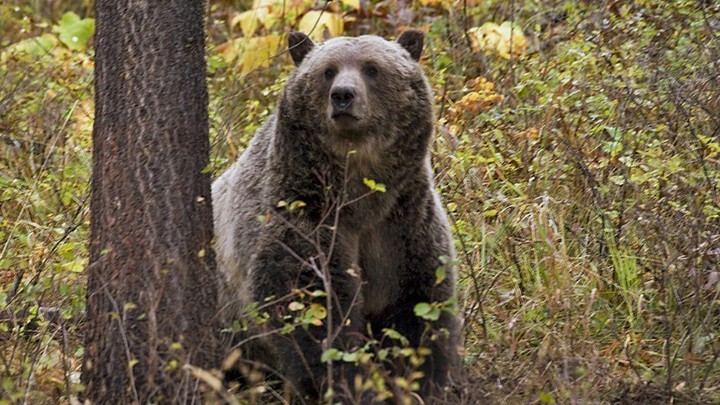
A grizzly bear
MONTANA FISH, WILDLIFE, AND PARKS / AP
The Rolling Stone Ranch lies behind a cluster of deciduous trees on the open, undulating plains of Montana’s Blackfoot Valley. Its green barns sit just outside the tiny town of Ovando, which is home to about 80 residents. As a crisp autumn breeze swept by in early October, Jim Stone, the ranch’s owner, greeted me in front of his house with a firm handshake. From his kitchen, he gazed out the window overlooking the valley and gestured across Highway 200. “My neighbor has 13 grizzly bears on his property,” a 21,000-acre spread, he told me. Just two decades ago, that many bears would have been rare.

To protect their livestock from the booming bear population, many local cattle ranchers have installed electric fences. They require less maintenance than barbed wire does and are safer for migrating elk, Stone explained. Since improving his fencing, he no longer has to worry about grizzlies killing his cows and calves.

As grizzlies continue to expand their range in Montana, more communities will have to face the question of how to coexist with them. Strategies such as installing electric fences, distributing special garbage cans, and encouraging communities to share the lessons they learn can help. But the most effective solution may be one of the hardest to achieve: trust between rural landowners and government agencies.

Back in the early 1800s, there were more than 50,000 grizzlies in the Lower 48. But by 1975, after years of hunting and habitat destruction, the population had dwindled to fewer than 1,000, and the U.S. Fish and Wildlife Service listed the bear as threatened under the Endangered Species Act. With federal protections in place, grizzly bears in the Northern Continental Divide in northwestern Montana have flourished. Currently, there are approximately 1,000 bears in the area, the largest population in the United States outside Alaska. As a result of this rebound, the federal government considered delisting the population, though that process is now paused in light of last year’s court decision to restore federal protections for grizzlies in and around Yellowstone.

But the grizzly boom has brought with it a rise in human-bear conflicts. In September, for example, four hunters were injured in three separate attacks in southwestern Montana. These encounters are bad news for the grizzlies as well: Last year, about 50 bears were killed or removed from the Northern Continental Divide Ecosystem, a record high for Montana.

Nonprofits such as the Blackfoot Challenge, located in the Blackfoot Valley, are helping communities deal with these conflicts. Stone, who chairs the organization’s board of directors, has helped implement its three-pronged approach to managing grizzlies: building electric fences, moving dead livestock to designated compost plots, and employing range riders to protect cattle. All told, conflicts with grizzlies in the Blackfoot Valley dropped by 74 percent from 2003 to 2013, according to a 2017 case study on the Blackfoot Challenge.

But in the small town of Condon, in nearby Swan Valley, where tall conifers rather than rangelands dominate the landscape, the residents face different problems. One of the biggest challenges is teaching people how to manage backyard bear attractants, such as garbage cans and chicken coops, says Luke Lamar, the conservation director at the nonprofit Swan Valley Connections. The organization offers electric-fencing installation, bear-resistant garbage containers, property consultations, and educational events. Once a bear knows where to find free food, it tends to return to the area, Lamar says. “That cycle will most likely continue until the bear is caught and removed by agency bear managers or by other means, such as a resident shooting the bear.”

Communities have different reactions to grizzlies and may need different methods to manage them. Sara Halm, a graduate student at Idaho State University, is interviewing people who live in three Montana communities to learn how grizzlies impact their rural towns. Many locals are scared for their children, who can no longer play outside alone the way their parents once did. For some, electric fences help lessen that fear. But fences make other residents feel confined. “This is deeper than just an economic issue of protecting people’s livelihoods,” Halm says. People have to redefine their relationship with the environment and wildlife.


This post appears courtesy of  High Country News.

The Next Yellowstone: A Hunter’s Paradise

  OCT 23, 2019

In northeastern Montana, a controversial group of millionaires and billionaires is trying to build a privately-funded national park. The group is purchasing ranches, phasing out the cattle, and opening the land up to genetically pure bison and other wildlife.

It’s called American Prairie Reserve. But as we’ve heard in our series, “The Next Yellowstone,” most long-time locals are bitterly opposed to the idea. Still, there are some supporters.

This story was supported by the Pulitzer Center on Crisis Reporting. Listen to the full documentary here.

PARTS: How Big Money Is Building A New Kind Of National Park | A Privately-Funded Park For The People | Save The Cowboy, Stop The American Prairie Reserve |  A Hunter’s Paradise | The Bison Is A Symbol Of God

I find myself in Justin Schaaf’s black Toyota Tundra heading down a two-track dirt road. Schaaf, 27, looks like a high school linebacker. His head is shaved and he’s wearing cargo pants. He’s taking me to one of his favorite hunting spots. While he works as a train conductor for the local railroad, his passion is hunting.

“If I’m not hunting I’m thinking about hunting and planning hunts, and when I’m sitting in the motel for work or when I’m sitting at home in the recliner I’m looking at maps, looking at Google Earth,” he says.

He’s always trying to find the perfect place to hunt.

As the road peters out, Schaaf pulls over. We grab some water and begin hiking in. It’s not big game hunting season yet, so we’re just scouting.

“We’re hoping to see some elk. Definitely some bighorn sheep. I have seen some pretty good mule deer in here,” he says.

We climb over sweet clover and sagebrush. This seems like an easy place to get lost but I’m not worried because Schaaf has lived in eastern Montana all his life. His great-great grandparents homesteaded just a few miles south of here near the Musselshell River. They lasted about 40 years before quitting and heading into town.

“They didn’t have enough land to support the ranching that you need and I don’t think the farming was cutting it at all,” he says.

It was a fate suffered by a lot of homesteaders out here. They couldn’t produce enough food or money to survive. As eastern Montana’s population continues to decline, Schaaf thinks it’s time to try something different.

“Is a little shot of tourism, capitalizing on hunter dollars, bringing more hunters into this area, will that make the difference?” he asks.

He thinks it might. After all, Schaaf is a young guy who stayed in eastern Montana precisely because of this wild country in his backyard.

“I can make more money in other places but it’s the outdoors, being able to pull my pickup up here and not talk to anyone and go for a hike all day long, that keeps me here,” he says. “Opportunity to just roam, I think, is enticing to young people.”

So-called rural recreation counties are growing faster than counties that don’t have a lot of hiking, hunting and fishing opportunities, according to the non-profit Headwaters Economics.

And here’s an important point: unlike a traditional national park, American Prairie Reserve allows hunting.

We don’t spot any wild bison. They’re mostly confined to privately-owned reserve lands north of us. But we do see a big herd of elk, about 45 cows and calves.

“That’s a crapload of elk,” Schaaf says.

It’s getting hot and the hike is grueling. We stumble up steep ravines and past stands of ponderosa pine. Schaaf says he understands that American Prairie Reserve is funded by rich people, some who made millions helping finance industries that degrade the environment.

“I do worry where that money comes from,” he says. But dirty money doesn’t just come from the private sector. He points to the Land and Water Conservation Fund, a federal program that takes royalties from offshore oil and gas drilling and pumps it back into parks and public lands.

“It’s helped my kid’s playground and it’s provided hunting opportunities for me,” Schaaf says.

More: https://www.kunc.org/post/next-yellowstone-hunters-paradise#stream/0