How Much Are WE Willing to Tolerate?

For the first decade or so after their reintroduction to Yellowstone and central Idaho in 1996, the Federal Endangered Species Act safeguarded wolves from overzealous hunters and trappers, but as the director of the USFWS pointed out, the ESA is “not an animal protection act.” Blanket protection of any non-human animal goes against the grain of our political agencies, which are ultimately only answerable to the one species with the any hope of representation—Homo sapiens.

The right of an American species not to be hunted to extinction is a relatively new advancement. At present, it‘s about the only right extended to the nonhumans in this, the land of the free. Now that wolves are off the Endangered Species list in any state with even a minor population, the feds plan to remove them from the U.S. list completely, casting any pioneering individual or would-be wolf pack to the mercy (or lack thereof) of whichever state is fortunate enough to be graced by their presence.

An organized bunch of thugs, anti-wolf fanatics have been on point, lying in wait for the day wolves lose all protection and are deemed “fair game” for their killing pleasure. Lately a deceptively named hate-group calling itself “Big Game Forever” has been luring Utah state funds away from essentials such as schools and into their anti-wolf agenda. Just recently they leached $300,000 for their campaign against wolves in that currently wolf-less state.

Others, such as South Dakota, have hastily re-classified wolves from the status of protected to “varmint,” in the event that any lost wolf happens by. Even “progressive” Washington state jumped on the bandwagon, allowing people to kill wolves without permit and changing the wolf’s status to “big game,” ahead of their anticipated complete removal from federal ESA protection.

A classic example of what will happen the minute wolves lose federal protections was made clear yesterday as Washington state lawmakers approved “Emergency Rule WAC 232-36-05100B Killing wildlife causing private property damage” which includes the following provisions:

1) An owner of domestic animals, including livestock, the owner’s immediate family member, the agent of an owner, or the owner’s documented employee may kill one gray wolf (Canis lupus) without a permit issued by the director, regardless of its state classification, if the wolf is attacking their domestic animals.

(a) This section applies to the area of the state where the gray wolf is not listed as endangered or threatened under the federal endangered species act.
(b) Any wolf killed under this authority must be reported to the department within twenty-four hours.
(c) The wolf carcass must be surrendered to the department.
(d) The owner of the domestic animal must grant or assist the department in gaining access to the property where the wolf was killed for the purposes of data collection or incident investigation.

(2) If the department finds that a private citizen killed a gray wolf that was not attacking a domestic animal, or that the killing was not consistent with this rule, then that person may be prosecuted for unlawful taking of endangered wildlife under RCW 77.15.120.

The “Emergency Rule” is bad enough as it stands, but if ESA wolf protections are lifted nationwide (as is currently planned), points (1a) and (2) will be moot—there won’t be any area of the state safe for wolves, nor any “endangered wildlife” designation to discourage poaching. This is why the wolves, though arguably “recovered” in some areas, need to remain under federal ESA protection nationwide.

We can’t let them lose what little protection they still have in this country. While the U.S. Fish and Wildlife Service forge ahead with their plan for full removal of wolves from the ESA, we need to continue to press our new Interior Secretary Sally Jewell for both their continued protection as well as the re-listing of wolves in those states where out-of-control culling is driving them back to the brink of oblivion.

Washington’s “emergency” rule was crafted in response to a letter from ten state legislators urging their Fish and Wildlife Commission to act quickly “to maintain social tolerance for gray wolves in northeast Washington in the timeliest manner for residents.”
Hmm, killing wolves to “maintain tolerance,” where have I heard that before? Oh that’s right, it was from wildlife snuff film producer and wolf-hunter Randy Newberg who told NPR News that wolf hunts in Wyoming, Montana and Idaho are easing the animosity many local people feel toward the predator. “Having these hunting seasons has provided a level of tolerance again,” Newberg told NPR.

Let me get this straight, in order to placate and appease good ol’ boys and get them to put up with the presence of one of North America’s most historically embattled endangered species, we have to let them kill some of them once in a while? Wolf hunting and trapping are just a salve—a bit of revenge-killing for them–why not let them have their fun? By this logic, they should also be entitled to shoot an Indian every so often (like their forefathers who tried to wipe them out), to help promote tolerance and social acceptance.

It’s time to remind our politicians that the wolf-killing Calvary is about as outnumbered by those of us who appreciate wolves as General Custer was at the Battle of Little Bighorn.

What’s happening now in Washington is just how it started out in other states whose wolf-killing policies are now completely out of control. Washington wolf proponents need to realize that their wildlife policy-makers will continue to up the ante each time we accept the new status quo.

The question is, how much of a wolf-kill massacre are we willing to tolerate before we go on the warpath?

Text and Wildlife Photography ©Jim Robertson, 2013. All Rights Reserved

Text and Wildlife Photography ©Jim Robertson, 2013. All Rights Reserved

Montana FWP ignored public comment on wolf trapping

FWP ignored public comment on wolf trapping
Guest column in the Missoulian, by MARTY ESSEN

The ability to comment on proposed state and federal government regulations is an important right for all Americans. Since we live in a republic, not a direct democracy, public comment helps our representatives make informed decisions on our behalf.

No one expects public comment to be the equivalent of voting. But even so, public comment should not be ignored. After all, if our representatives just did what they pleased, they could hardly be considered representatives. This is especially true when government officials are appointed, not elected.

But if public comment isn’t voting, is there some percentage where public officials are morally obligated to put aside their preformed opinions and abide by the wishes of their constituents? If 60 percent is a supermajority, certainly 70 percent is a mandate, and ignoring anything over that percentage would make a mockery of the process.

What if our representatives passed a new regulation that disregarded the wishes of 90 percent of all public comments? Now that would be extreme! Yet that is exactly what the Montana Fish, Wildlife and Parks commissioners did last year.

In May of 2012, Montana FWP asked for public comments on proposed wolf killing regulations that for the first time would allow trapping. And boy did Americans speak out! Of the 7,750 comments registered, 6,997 opposed trapping. That’s 90 percent saying “no” to trapping.

Later, without publicly acknowledging the results or even indicating the general viewpoint of the public comments, our FWP commissioners voted 4 to 0 (with one abstention) to open up wolves to the barbaric practice of trapping.

What an insult to the public comment process. Not only does it prove that the FWP commissioners had already made up their minds, but it also discourages citizens from making public comments in the future. After all, if such an overwhelming landslide of comments had no effect on this decision, when would public comments ever have an effect on any decision?

Had the commissioners at least been honest enough to admit they were ignoring the thoughtful comments so many people had taken time to write, appropriate political pressure might have rectified the situation. Unfortunately, the injustice wasn’t discovered until Footloose Montana was able to count the comments, long after the damage was done. As a result, not only were wolves callously tortured, so were many family pets.

Since the terms have expired for three of the five commissioners involved, asking for resignations is impractical. Consequently, all we can do now is look forward to next season and demand that the new FWP Commission follow the wishes of the vast majority of the public. Should they ignore us again, Gov. Steve Bullock must take appropriate action.

In the meantime, the first action taken by the new Montana Fish, Wildlife and Parks Commission should be an out-loud reading of their own website, where it states: “We understand that serving the people of Montana to achieve this vision is both a privilege and a responsibility. We also understand that we cannot achieve our vision alone … We will actively involve people in decisions that affect them; help people to participate by providing them with credible and objective information; and, develop programs with a clear understanding of public expectations for FWP service.”

Marty Essen writes from Victor. He is the six-time award-winning author of “Cool Creatures, Hot Planet: Exploring the Seven Continents.” He is also a founding member and past president of Footloose Montana. His website is http://www.coolcreatureshotplanet.com.

Montana Governor Steve Bullock and the politics of Wolves

I thought you folks might appreciate today’s Sunday sermon from Bold Visions Conservation…  

Montana Governor Steve Bullock and the politics of Wolves

by Stephen Capra

There was a time when I use to think politics really mattered. I remember going to a rally for Senator Eugene McCarthy, as he ran for President in 1968, in Madison Square Garden, the energy and belief could really change our nation, or so I thought.

I really believed that democrats would change our country, by the end of that year our heart had been stolen by too many bullets, to many great leader’s had fallen. I think of that today with the state of affairs in Montana, a state led by ignorance, political pandering and a Governor who fancies himself progressive.

This all comes back to our heart being stolen. In this case it’s not men that have fallen, its wolves. I have watched as Montana shared in the magical return of wolves to Yellowstone, watched as tourists have flocked from around the world, watched in Lamar Valley as you could not estimate the price of cameras in a one-mile stretch, all focused on wolves. Since President Obama sold wolves out and the Endangered Species Act on a rider that ensured another Democrat would get re-elected, Senator Jon Tester, clear thinking shows us that faith in political leaders is very overrated.

Over the past few months the Montana Legislature, seemingly some of the most ill-informed, and job destroying group of people God ever put under one roof, spent the majority of their time trying to find new ways of killing wildlife. Spear-hunting was a hot topic, yes spear-hunting. Of course, new ways to kill, more jobs. Yet, when it came to wolves and bison, this group could not have enough blood on their hands. If it was not so heartbreaking, it would be funny. Listening to Montana Game and Fish talk about “responsibly harvesting” predators, none of it with any science worth discussing.

This is a group designed to kill animals, not protect. New bills are now being introduced. to allow silencers on guns to protect the precious ears of hunters; continuing to allow dead wolf members to be used as traps set to kill the rest of the family; making licenses easier and cheaper. New non-resident permits can be had for $50.

When Governor Bullock panders to the wolf hating bunch, he opens the door to killing more beautiful animals and their family units slaughtered by ignorance and by the ego that demands reelection. If Democrats do not have the guts to stand up for wolves, [by standing up I mean vocally,] publicly, and ignore the stupidity of state Game and Fish departments, there will be shooting in the dens of newborn pups. Introduction of strong and important protections for wolves must happen now and end the shameless pain of trapping once and for all. The Governor is aware that people come from all over the world (meaning serious tourist dollars) to observe wolves.

 The whining rancher scenario is a SNORE.

I believe in wolves, I love bison. I am sick and tired of Democrats that want only their reelection and refuse to acknowledge how important wildlife is to our humanity. I challenge them to causality.

It amazes me that some people can feel nothing when confronted with wild animals. For me it is so magical, such a spiritual experience. I have seen grizzlies in the wild, wolves and bison. It is a gift; there is more than enough land to share. Throughout our history we have destroyed as a means of growth for man to feel magisterial.

William Beebe said it so well, “When the last individual of a race of living things breaths no more, another heaven and earth must pass before such a one can begin again.”

I was inspired in 1968. I look forward to being inspired once again, but my Democratic party and Governors like Bullock must become inspiring, must take chances, and must become a voice for those who cannot speak.

 Don’t be redundant Governor, wolves belong! Be BOLD!

Let your soul heal in the wild spirit that wolves bring to us. Amen!

How Low Will You Go, Montana?

Why is it that snares are acceptable for wolves, but when an eagle  dies in one the USFWS offers a $2,500.00 reward?

Alaskan-Wolf-Snare_med

From Defenders of Wildlife:  Wolf-haters in Montana have introduced a bill to legalize a long list of deplorable acts.

This bill, SB 397 would:
•Allow wolves to be choked to death in neck snares, killed in traps and hunted for 10 months of the year, including during breeding, pregnancy, denning and pup-rearing seasons;
•Make it legal to lure wolves into traps using dead wolves – including dead pack and family members; and
•Allow an unlimited amount of wolves to be killed in a given season.
If this bill passes, it will be legal in Montana to use snares to choke a wolf to death and then leave its body out as bait to try to kill more wolves in its pack.

You have to ask — Who does that?

Only the Beginning

The Montana assault on wolves is not an isolated incident. It is only one facet of a well-funded, highly-coordinated and unrelenting effort by wolf-haters to significantly reduce the number of wolves and strip federal protection from most of them in the lower 48 states.

Just last week, anti-wolf lobbyists in Washington DC secured 72 Congressional signatures on a letter to U.S. Fish and Wildlife Service Director Dan Ashe demanding that wolves in the Lower 48 be completely delisted under the Endangered Species Act (ESA).

It was a chilling show of force by the anti-wolf lobby, and a reminder of what we are up against. Montana is a textbook case of what can happen when wolf management is turned over to a state that is politically dominated by anti-wolf interests.

Thanks to you and thousands of other wildlife lovers, the “kill wolves lobby” can be stopped, but make no mistake – we are in the fight of our lives for America’s wolves.

Our team is working long hours in Montana, across the Northern Rockies and here in Washington, D.C. to:
•Organize and mobilize local activists to fight appalling state measures like SB 397;
•Provide expert testimony at legislative hearings – these measures are not only reprehensible, they are based on politics, not science;
•Garner support for wolves on Capitol Hill. More than 50 members of Congress signed a letter demanding continued federal protection for wolves; and
•Mobilize online support from hundreds of thousands of people like you. Those letters, calls and emails do make a difference!

I won’t lie. We’re up against formidable foes who will stop at nothing to open America’s wolves up to unconscionable assault.

MFWP Sued Over Lynx Trapping

Today the Missoulian reported that:

– Three conservation groups filed a federal court lawsuit Thursday against Montana Fish, Wildlife and Parks commissioners and Director Jeff Hagener for allowing trapping and snaring in Canada lynx habitat.

The Friends of the Wild Swan, the WildEarth Guardians and the Alliance for the Wild Rockies say FWP reported at least nine incidents since 2000 of lynx being caught in traps set for other species; and say four of those animals died. They alleged that this violates the federal Endangered Species Act, which lists lynx as a threatened species and warranted for protection, and want the trapping prohibited in lynx habitat.

“In one instance, a young female lynx was found in a pool of her own blood, with extensive muscle damage, and an empty stomach — all from lingering far too long in a cruel, steel-jawed trap,” Wendy Keefover, carnivore protection program director for WildEarth Guardians, said in a news release. “Montana allowed this unnecessary death, which impedes lynx recovery, especially when it involves potential breeding animals.”

The lawsuit outlines some of the cases in which lynx were caught and died, including one that starved to death. 

Yes, you read that right, a lynx STARVED TO DEATH in a trap! Obviously there’s no 24 hour trap check required for species like bobcat or whoever trappers are “legally” targeting. How many more precious animals have to bleed to death, lose limbs or starve in traps before the world wakes up and trapping ends for good?

525140_440817092654544_311118433_n

Wolves Getting Booted Back to the Brink

When an activist friend asked me to write an overview of the wolf situation, my first thought was: “What a daunting and extremely depressing task that would be.” But having followed the wolves’ story since long before their reintroduction to Yellowstone and the Idaho wilderness, I suppose it’s only natural that I take this on. After all, I’ve covered the issue many times in articles, on my blog, and I devoted two chapters of my book, Exposing the Big Game: Living Targets of a Dying Sport, to the plight of wolves.

At the time I wrote the book’s chapter, “From the Brink of Oblivion and Back Again,” wolves were still federally protected and their removal from the Endangered Species List was just someone’s bad idea that had yet to see its dark day—I never quite realized just how apt that title would soon be. Until recently I remained hopeful that any wolf hunting would be strictly monitored and regulated, and that abusers would be fully prosecuted. Frankly, I thought we would be a little more evolved as a species by now.

But time and again states have proven themselves unworthy by declaring open seasons on wolves, without regard for the species’ future or for the welfare of individual wolves. Indeed, the ongoing warlike attack on wolves is anything but sporting or humane, with kill methods ranging from traps and snares to aerial hunting, running them down with dogs or luring them in and sniping at entire packs with semi-automatic rifles—depending on a given state’s predilection. At the same time, many hunters and trappers go out of their way to express their hatred for wolves through horrific acts of overkill. They seem to take sick pleasure in further degrading their victims by glibly posing in morbid photos of trapped or bloodied wolves, then spreading their snuff shots across the internet, fishing for praise, while taunting wolf advocates.
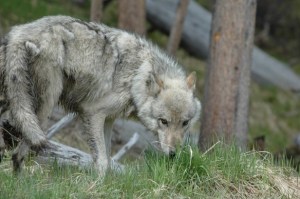
Text and Wildlife Photography ©Jim Robertson, 2013. All Rights Reserved

Text and Wildlife Photography ©Jim Robertson, 2013. All Rights Reserved

For thousands of years, wolves played a central role as keepers of nature’s balance across the American landscape. Wolves are the personification of untamed wilderness; their presence is a sign of an ecosystem relatively intact.

But bigotry toward wolves has thrived across the country since colonial times and wolves have long been the object of unwarranted phobias. Today’s wolf-haters panic at the thought of natural predators competing for “their” trophy “game” animals and loath anything that might threaten their exploitive way of life. They view the federal government as the enemy in their ongoing combat against wilderness, and grasp for local control of species like wolves, who, until recently, were all but extinct in the continental U.S. Far from being their foe however, the federal government has actually been a fervent ally.

The contentious removal of wolves from the federal endangered species list—long before they were truly recovered—was a coldly calculated course set in motion by the Bush Administration, dutifully followed by the Obama Administration and rendered the law of the land through an underhanded act of Congress in 2011. This crooked covenant, conjured up for the sake of ranchers and trophy hunters, left the wolves’ fate in the custody of hostile western states…and fits right in with a centuries-old, historic norm.

In 1630, Puritans of the Massachusetts Bay Colony—known for holding the first Thanksgiving Day celebration…and Salem witch hunts—felt biblically impelled and duty-bound to “subdue the earth.” Hence, they were the first to establish a bounty on wolves. Soon the other colonies followed their example and set bounties of their own, and a systematic genocide of wolves in America spread west with the “settling” of the land.

In 1818, Ohio declared a “War of Extermination” against wolves and bears. Iowa began their wolf bounty in 1858; in 1865 and 1869 Wisconsin and Colorado followed suit. State by state wolves were shot, trapped and poisoned to extinction. As the demand for wolf pelts increased, “wolfers” began killing grazers like elk or bison and poisoning the meat as bait, decimating whole packs of unsuspecting canines in one fell swoop.

By 1872, the year President Grant created Yellowstone National Park, 100,000 wolves were being annihilated annually. 5,450 were killed in 1884 in Montana alone, after a wolf bounty was initiated there. By the end of 1886, a total of 10,261 wolves were offered up for bounty (sixteen times Montana’s 2011 population of 653 “recovered” wolves). Wyoming enacted their bounty in 1875 and in 1913 set a penalty of $300 for freeing a wolf from a trap.

Not to be outdone, the US government began a federal poisoning program in 1915 that would finish off the rest of the wolves in the region—including Yellowstone. By 1926 wolves had been completely extirpated from America’s premier national park.

Having no more regard for wolves than those who originally caused their extinctions, willfully-ignorant wolf-haters in the tri-state area of Idaho, Montana and Wyoming have not received their reintroduction with open arms but rather with loaded arms, hoping to turn the clock back to the dark ages of centuries past. The posture they assume on the subject of wolves is as warped and ill-informed as any Massachusetts witch hunter’s.

With the wolf population in the tri-state area at only a fraction of its historic sum, the federal government unceremoniously removed them from the endangered species list (and consequently from federal protection) in 2009, casting their “management” (read: eradication) into the clutches of eager states that wasted no time implementing wolf hunting seasons. Montana quickly sold 15,603 wolf permits, while their confederates in Idaho snatched up 14,000 permits to hunt the long-tormented canids.

For its part, Wyoming has stubbornly held to a policy mandating that wolves be shot on sight anytime they wander outside Yellowstone, allegedly to safeguard range cattle (who are actually 147 times more likely to fall prey to intestinal parasites). Wolves have killed a grand total of only 26 cows (out of 1.3 million head of cattle in the state). Still, the livestock industry is in control of their wolf management decisions. Though hunters there have killed 74 wolves this season, as of March 1st the state of Wyoming has expanded and extended its season indefinitely, declaring an open, year-round hunt on them. Winter, spring and summertime hunts are particularly harsh since this is when wolves are denning and raising their newborn pups.

On the other side of Yellowstone, the disingenuously but suitably named “Idaho Anti-Wolf Coalition,” backed by a well-funded trophy elk hunting industry, filed and circulated an initiative petition in 2008 calling for the removal of “all” wolves there “by whatever means necessary.” Fortunately, even in the state famous for potatoes, militias and neo-Nazi compounds, they failed to gain enough public support to move forward with their avaricious initiative. Even so, the Idaho government has been quietly carrying out the “whatever means” approach by adding aerial hunting, trapping, snaring and baiting to their wolf devastation arsenal. This last season, 169 wolves were killed by trophy hunters in Idaho, while trappers there claimed the lives of 76.

It should come as no great jolt that Idaho hunters felt they could get away with asking for the renewed obliteration of an entire species—their governor, “Butch” Otter, publicly proclaimed he hoped to be the first to shoot a wolf as soon as they lost federal ESA protection. Failing that, Otter used his gubernatorial powers to declare his state a “wolf disaster area,” granting local sheriffs’ departments the power to destroy packs whenever they please.

“Meanwhile,” according to Defenders of Wildlife’s president, Jamie Rappaport Clark, “the federal government is sitting idly by as Idaho almost singlehandedly unravels one of our nation’s greatest wildlife conservation success stories. This is totally unheard of—never before has a species climbed its way back from near extinction only to be quickly decimated once again.”

Montana started out seeming to be the sensible state, appearing almost tolerant of wolves. But between their state legislature and their wildlife policy makers, they’ve made an about face and quickly caught up with their neighbors, displaying a total disregard for the public trust doctrine which holds that wildlife, having no owners, are res communes, belonging “in common to all of the citizens.” They’ve recently passed bills barring any protected zones outside Yellowstone Park, while legalizing silencers for wolf hunting and the use of recorded calls to attract wolves, as well as allowing five wolf tags per hunter, 12 years and older. (And a new state bill is proposing lowering the legal age of hunters to nine years old.) Legislators also proposed a cap of 250 on their state wolf population. Last year’s wolf hunt kill totals for Montana were 128 wolves shot to death and 97 killed in traps.

Text and Wildlife Photography ©Jim Robertson, 2013. All Rights Reserved

Text and Wildlife Photography ©Jim Robertson, 2013. All Rights Reserved

Since Congress stripped wolves of their Endangered Species status, an estimated 1,084 wolves have been killed in the Northern Rockies. Again, that’s ONE THOUSAND AND EIGHTY-FOUR living, breathing, social, intelligent wolves killed by scornful, fearful, vengeful and boastful hunters and trappers, often in the most hideous ways imaginable.

Thanks to a federal judge’s 2010 decision, the wolf was granted a one-year stay of execution. But in 2011 our federal legislators on Capitol Hill attached a rider to a budget bill circumventing that judgment. This serpentine, backbiting end-run around science and public opinion played right into the hands of anti-wolf fanatics in Idaho and Montana and cleared the way for the bloodiest butchery of wolves in almost a century. Case in point: the opening week of Montana’s nascent hunting season on wolves saw sportsmen set up just outside the park boundary gun down every adult in Yellowstone’s well-known and much-loved Cottonwood pack, leaving their dependent pups to starve.

As if that weren’t enough, on December 6, 2012, the familiar, radio-collared alpha female of the park’s Lamar Canyon pack was shot and killed by a hunter. Suddenly the average American was aware of the atrocities of wolf hunting, yet in spite of widespread public outcry, wolf-killing states have stepped up their single-minded assault.

Wyoming’s expanded wolf-killing season is all the more tragic given that spring is the time of year that wolves are denning. As Defenders of Wildlife points out, “This expanded hunt puts the most vulnerable population of wolves – pups and pregnant or nursing mothers – in greater danger of being shot on sight. This kill-at-will approach is exactly the kind of flawed policy we knew would happen if wolves prematurely lost their Endangered Species Act protection – this is why Defenders is suing the U.S. Department of Interior to restore ESA protection for wolves in Wyoming.”

It’s not like the administration didn’t know what might happen when the fate of the wolves was turned over to states with extreme anti-wolf plans already in place. In just two years nearly 1,100 wolves have been ruthlessly murdered by hunters and trappers eager to relive the gory glory days of the 1800s.

All this is going on in spite of well-documented proof that wolves are beneficial to a given environment, and despite the fact that the majority of Americans, including most visitors to Yellowstone and the tri-state area, want to see wildlife unmolested. They are not there to hunt—the money they spend reflects their strong interest in the quiet enjoyment of nature. A 2011 National Park Service report shows that the 3,394,326 visitors to Yellowstone spent $332,975,000 in communities surrounding the park. But these figures could drop dramatically if Yellowstone wolves continue to be slaughtered.

Yellowstone is fertile ground for watching and learning about wolves. Biologists studying the Yellowstone ecosystem have found that since their reintroduction to the park, wolves have kept elk herds on the move, thus allowing over-browsed streamside riparian habitats to regenerate. Among the species that rely on a healthy riparian zone—and therefore benefit from the presence of wolves—are moose, trumpeter swans, warblers, wrens, thrushes, beavers, muskrats and the Yellowstone cutthroat trout. Everywhere they’re found, wolves play an important role in maintaining the health of ungulate herds by preying primarily on infirm or diseased animals, ensuring a healthy gene pool. And the remains of their kills provide a welcome relief for hungry scavengers, from bears to ermine to wolverines to bald eagles.

But the number of animals killed by wolves is grossly overplayed by their detractors. According to Yellowstone National Park data for 2011, project staff found that wolves barely took a bite out of Yellowstone’s rich and varied biota. And it’s long been established that wolf populations, left alone, are self-regulating; data from Yellowstone backs that up as well. Like humans, when they feel the pinch of too many of their own kind in a given area, they start to turn against one another. 2011 saw seven wolves killed in intra-pack quarrels. Yellowstone’s fluctuating wolf population has declined from 174 in 2003 to around 80 in 2012. Since then, hunters and trappers targeting wolves along the park’s borders have brought the current population down to the low 70s, as of this writing.

In addition, scientists studying the relationships between keystone predators, trophic cascades and biodiversity have found that ecosystems which include these predators have more diversity and are more resilient to climate change and stresses caused by a growing human population.

Sadly, state game departments are out of touch with these concepts. For example, according to a 2012 Montana Fish, Wildlife and Parks Department survey, there are 141,078 elk in the state, 55% over their management “objective” of 90,910; but rather than allowing wolves to solve their elk “problem,” they want to reduce the number of both elk and wolves. That policy is not scientific; it’s downright kill-happy. And an alleged threat to the cattle industry is certainly no excuse for the rampant killing of these important predators. Out of the approximately 2.6 million cattle in the state, only 74, or .0003%, were taken by wolves in 2011.

Biologist Bob Hayes, author of Wolves of the Yukon, wrote: “I spent 18 years studying the effects of lethal wolf control on prey populations. The science clearly shows killing wolves is biologically wrong. As I began to better understand the wolf, I developed a clear answer to my question about the effectiveness and moral validity of lethal wolf control programs. I can now say the benefits of broad scale killing of wolves are far from worth it…It should never happen again.”

And the late Canadian naturalist and author, R D Lawrence, stated in his book, In the Presence of Wolves: “Killing for sport, for fur, or to increase a hunter’s success by slaughtering predators is totally abhorrent to me. I deem such behavior to be barbaric, a symptom of the social sickness that causes our species to make war against itself at regular intervals with weapons whose killing capacities have increased horrendously since man first made use of the club—weapons that today are continuing to be ‘improved’.”

The 1996 reintroduction of wolves to the northern Rocky Mountains in Yellowstone and wilderness areas of Central Idaho as mandated by the Endangered Species Act–along with protections against hunting and trapping all too briefly afforded them under the ESA–gave the wolf a temporary reprieve and allowed Nature to reign again over some of her sovereign lands.

Yes, wolves are spreading out, but that doesn’t necessarily mean there are more of them; each time they find a given habitat hostile to them, they continue to branch out in search of someplace safer and more hospitable. The total wolf population of the tri-state area has fluctuated, reaching a high of around 2000 individuals. An impressive figure perhaps, unless you consider that 1,089 were killed this year (not including those killed by federal “Wildlife Services” agents); or that 10,261 wolves were destroyed between 1884 and 1886 in Montana alone; or even that 380,000 wolves once roamed the country.

While all this is going on, the Great Lakes states have been racking up a high wolf body count of their own. Wisconsin in particular seems to be bucking for a most merciless award—the cruelties they’ve unleashed on wolves are the stuff of nightmares. Though recent studies suggest wolf predation may suppress CWD (chronic wasting disease—the deer equivalent of mad cow disease), Wisconsin has spent 27 million de-populating its white-tail deer to curb CWD. To underscore the irony of this: no CWD has been detected in areas where wolves live in that state. In addition to CWD, wolves have been shown to reduce or eliminate brucellosis, ironically benefitting the very Montana ranchers who vilify them

Anti-wolf fanatics are an organized bunch of thugs. Lately a deceptively named hate-group calling itself “Big Game Forever” has been luring Utah state funds away from essentials such as schools and into their anti-wolf agenda. Just recently they leached $300,000 for their campaign against wolves in that currently wolf-less state.

States, such as South Dakota, that don’t even have wolf populations are hastily re-classifying wolves from the status of protected to “varmint,” in the event that any lost wolf happens by.  Even states as progressive as Washington are jumping on the bandwagon, allowing people to kill wolves without permit and changing the wolf’s status to “big game,” ahead of their anticipated complete removal from federal ESA protection. This can’t be allowed to happen—the minute federal protections are lifted, wolves will be fair game practically everywhere in the country!

As Aldo Leopold pointed out in 1949: “If the land mechanism as a whole is good, then every part of it is good, whether we understand it or not. If the biota, in the course of eons, has built something we like but do not understand, then who but a fool would discard seemingly useless parts? To keep every cog and wheel is the first precaution of intelligent tinkering.”

Who but a fool, indeed.

With the return of widespread wolf hunting, it will take today’s anti-wolf bigots only a few years to boot this misunderstood embodiment of wilderness back to the brink of oblivion.

________________________________________

This post includes excerpts from Exposing the Big Game: Living Targets of a Dying Sport.

Text and Wildlife Photography ©Jim Robertson, 2013. All Rights Reserved

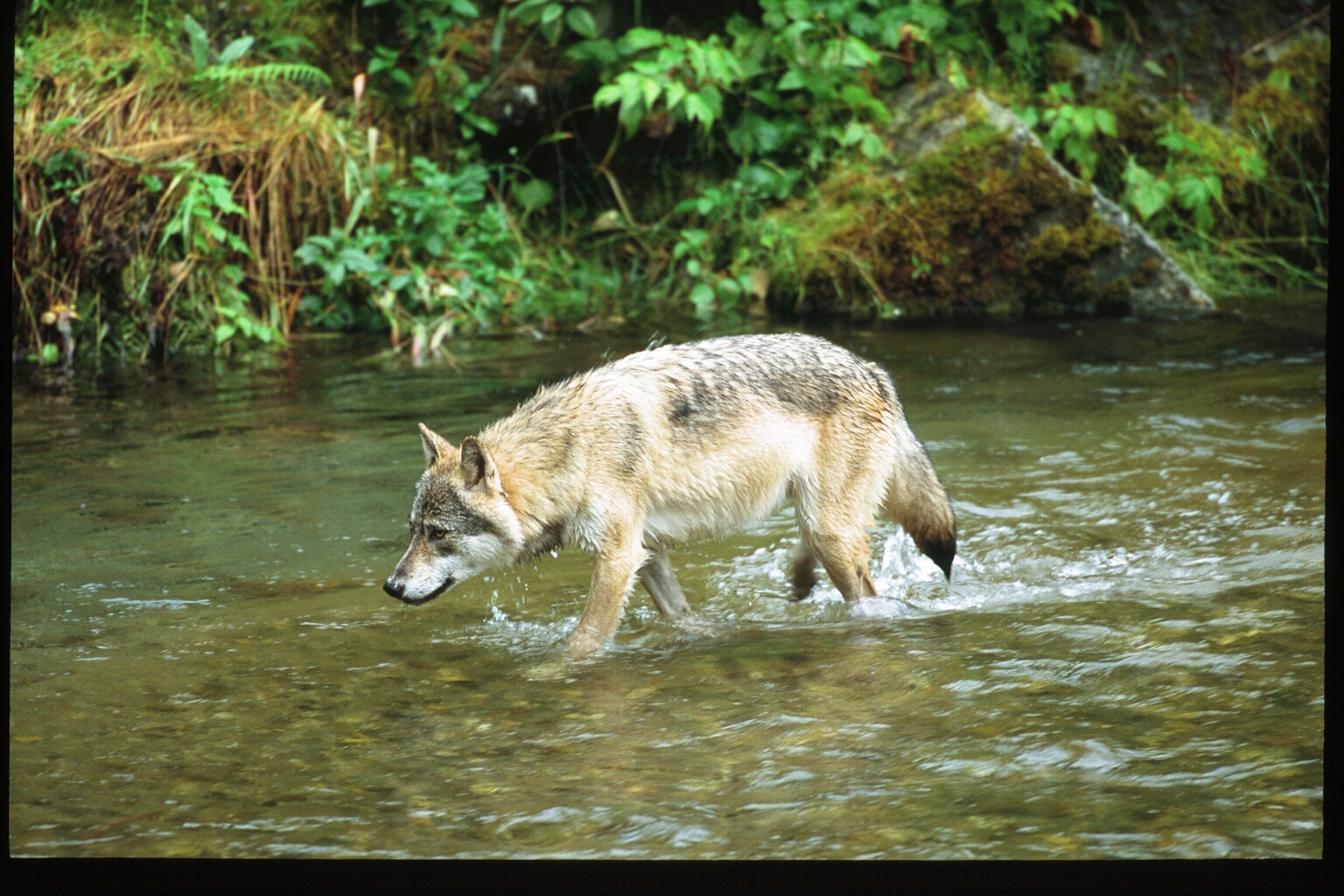
Text and Wildlife Photography ©Jim Robertson, 2013. All Rights Reserved

South Dakota Reclassifies Wolves as “Varmints”


Earlier today I posted an action alert to Urge Your Representative to Stand Up for Wolves. Well, here is an article by the AP and Mark Watson in the South Dakota’s Black Hills Pioneer (a newspaper that boasts being “local and independent since 1876”—and whose attitude toward wolves obviously has remained unchanged since then), titled, “Wolf bill likely signed into law today.” The “wolf bill” in question is actually a state anti-wolf bill which unintentionally underscores why wolves need to remain on the federal Endangered Species List…

SPEARFISH — Gov. Dennis Daugaard is expected to sign a bill today that would reclassify wolves from protected species in the state to predators or varmints in East River counties.

SB 205 received final Legislative action on Feb. 26 when the House approved it 60-9. It passed in the Senate unanimously 35-0.

The bill will classify wolves the same as coyotes, foxes, skunks, gophers, ground squirrels, chipmunks, jackrabbits, marmots, porcupines, crows, and prairie dogs, but only in Eastern South Dakota. They will still remain protected by federal and state law West River.

In 2012, wolves residing in the Great Lakes population, which includes Eastern South Dakota, were removed from the federal Endangered Species Act. Now the U.S. Fish and Wildlife Service is working on plan that would delist the wolves West River as well.

Wolves don’t often roam across South Dakota, however there have been confirmed sightings. Wolves are occasionally killed by vehicles. One was killed in Harding County by a lethal trap set for coyotes and one was shot in 2012 near Custer. Olson said that one was seen just south of her Harding County ranch in February, however that sighting, like most others, lack physical evidence and are not confirmed.

The wolves that do traverse the state come from both the Rocky Mountain packs as well as the Great Lakes packs. They are typically younger males searching out mates and new territory.

Montana officials said that 255 wolves were killed in the 2012-2013 hunting and trapping season. Wyoming reported about 60 wolves killed. In Wisconsin, 117 were killed and in Minnesota, 395 were killed.

Scott Larson, a field supervisor with the Fish and Wildlife Service in Pierre, said a proposed rule by the service regarding the delisting wolves in West River should be issued this spring.

“It will be part of a larger effort,” Larson said. “The Rocky Mountain population and the Great Lakes populations have been delisted, but they are protected in most of the Lower 48 where we don’t have plans for any recovery efforts. … When you have a recovered population you have transients that move out into area where there is not suitable habitat. It doesn’t make any sense to have the protection status different.”

But dozens of U.S. House members don’t want that to happen.

A letter signed by 52 representatives [the good guys] urged the U.S. Fish and Wildlife Service to not drop wolves from the endangered species list in areas where it hasn’t already been done. The comeback of the wolf populations in the western Great Lakes and the Northern Rockies is “a wildlife success story in the making,” the lawmakers said in a letter distributed by Reps. Peter DeFazio of Oregon and Ed Markey of Massachusetts, both Democrats. But it added that because of lingering human prejudice, “federal protection continues to be necessary to ensure that wolf recovery is allowed to proceed in additional parts of the country.”

The Fish and Wildlife Service is trying to return wolves to the Southwest, despite court battles and resistance from ranchers. It’s also reviewing the status of wolves and their potential habitat in the Pacific Northwest, where perhaps 100 of the animals are believed to roam, and in the Northeast, which has no established population although occasional sightings have been reported.

“The outcome of these reviews will identify which, if any, gray wolves should continue to receive protections under the Endangered Species Act outside of the boundaries of the recovered populations and the Southwest population,” agency spokesman Chris Tollefson said.

…And which wolves, by contrast, will be classified as “varmints,” the same as coyotes, foxes, skunks, gophers, ground squirrels, chipmunks, jackrabbits, marmots, porcupines, crows, and prairie dogs, as South Dakota has done.

Speaking of prairie dogs, please sign on to this pledge for that beleaguered cornerstone species:

Wildlife Photography ©Jim Robertson

Wildlife Photography ©Jim Robertson

Your Call Are Making a Difference for Wolves

I heard some encouraging news today from a diehard activist who has called every one of the Minnesota state representatives listed as contacts for the bill to reinstate a five-year moratorium on recreational wolf hunting and trapping. She learned that of all the issues, they were hearing the most about the wolf issue and one staffer said, “he has not taken ONE call against the bill.

Her message to us is, “Please keep up the calls people—its making a difference!”

Here’s the info again and the contact info, from Howling For Wolves:

Today, legislation was introduced into the Minnesota House of Representatives to reinstate a five-year moratorium on recreational wolf hunting and trapping. Chief house author, Rep. Jason Isaacson (DFL – Shoreview) introduced H.F. 1163, the companion bill for S.F. 666 introduced by Sen. Chris Eaton. The bill calls for a five-year wait before another wolf hunting season can be proposed, and only for population management purposes after other options are explored. Read the press release here.

Mark your calendars! A Senate hearing of the bill has been scheduled on Tuesday, March 12 at noon before the Environment and Energy committee. Let’s fill the hearing room and the halls for the wolf. It was your efforts making calls and sending emails to committee members that pushed us forward.

Now we need your help to secure a hearing in the House Environment and Natural Resources Policy committee. A bill must be heard and passed out of one committee before March 15, 2013 to stay alive. Please call the committee members listed below to voice your support for H.F. 1163 and request the bill be heard and passed through committee.

House Environment and Natural Resources Policy Committee Rep. David Dill (Chair) 651-296-2190 Rep. Peter Fischer (Vice Chair) 651-296-5363 Rep. Tom Hackbarth 651-296-2439 Rep. John Benson 651-296-9934 Rep. Tony Cornish 651-296-4240 Rep. Dan Fabian 651-296-9635 Rep. Andrew Falk 651-296-4228 Rep. Steve Green 651-296-9918 Rep. Rick Hansen 651-296-6828 Rep. Clark Johnson 651-296-8634 Rep. Denny McNamara 651-296-3135 Rep. John Persell 651-296-5516 Rep. Mark Uglem 651-296-5513 Rep. Jean Wagenius 651-296-4200 Rep. JoAnn Ward 651-296-7807 Rep. Barb Yarusso 651-296-0141

Please know that to work a bill into law requires many repeated actions to push it through. We will have several urgent requests for actions over the next few weeks to keep each bill moving forward to a final floor vote. In the meantime, mark your calendars for the Senate hearing on Tuesday, March 12 at 12 pm. Please email us atrespond@howlingforwolves.org if you are able to attend. We want a strong showing of support at this hearing.

_____________________

Meanwhile in Montana,

Another activist writes, “I counted the public comments MTFWP received in January about the Wolf Hunt closure next to Yellowstone National Park (YNP). Overwhelmingly the votes were in favor of a closure. I kept a strict count of all the Montana comments and was pretty close on the others too.  Here’s my count:

There were a total of 1811 comments.

750 of those comments were from Montanans:

•554 in favor of a wolf hunt closure around YNP

•196 opposed to a closure around YNP


1061 comments were from out of state, USA citizens and some from overseas

•~1058 were in favor of a wolf hunt closure, protecting YNP wolves

•~3 were opposed


As wolf advocate Justin Forte put it, “This dictatorship that hunters and ranchers have had over the rest of us on wildlife policy has gone on for too long! It is time for all of us to stand up and say ‘No More!’”

Text and Wildlife Photography ©Jim Robertson, 2013. All Rights Reserved

Text and Wildlife Photography ©Jim Robertson, 2013. All Rights Reserved
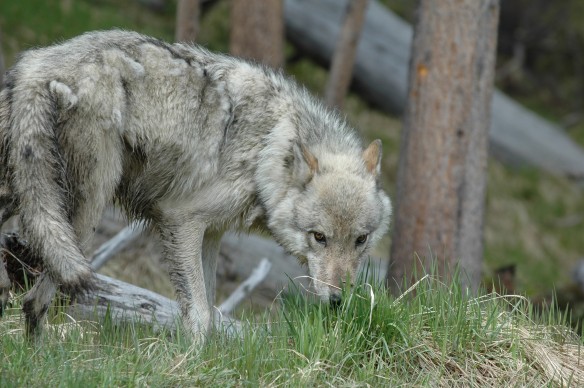


Stop the Spread of Psychopathy—End Hunting and Trapping

In light of the rise in violent crime, many have pondered the question: “How do I know if my neighbor is a psychopathic serial killer?” Well, unfortunately, it’s not easy. Unless of course you happen to live in any number of rural areas across the country where hunters are required to wear blaze orange—then the psychopathic serial killers stand out like a bunch of sore thumbs.

Okay, so maybe it’s a bit hyperbolic to compare hunters to serial killers. Yes, they both obsess on and stalk their victims, whom they objectify and depersonalize in their single-minded quest to boost their self-esteem, and the kills made by both hunters and serial killers are followed by a cooling off period, but serial killing usually has a sexual component to it.

Let’s hope hunters aren’t literally getting off on their exploits.

Maybe a better comparison for a hunter would be to a mass murderer: the inadequate type who snipes with a hunting rifle at innocent passers-by from a clock tower, or fires an AR-15 at cars from an embankment over a freeway.

Either way, the plain fact is cruelty to animals often leads to the killing of people. The perpetrators of the Columbine mass school shooting in Colorado honed their slaying skills by practicing on woodpeckers with their hunting rifles. David Berkowitz, the self-proclaimed “Son of Sam” serial killer, who habitually took sport in shooting lovers in parked cars along the streets of New York City, began his criminal career by shooting his neighbor’s dog.

Why does the public put up with these people in their midst?

The mainstream media downplays the behavior of serial animal killers as though hunting was just another “sport” to report on; like they were covering some Boy Scout Jamboree. They repeat by rote hunter/”game” department jargon like the animals were inanimate objects, using emotionally void terms such as “crop” for deer or “wolf harvest” for the unnecessary torture and murder of sentient beings vastly more admirable than their pursuers.

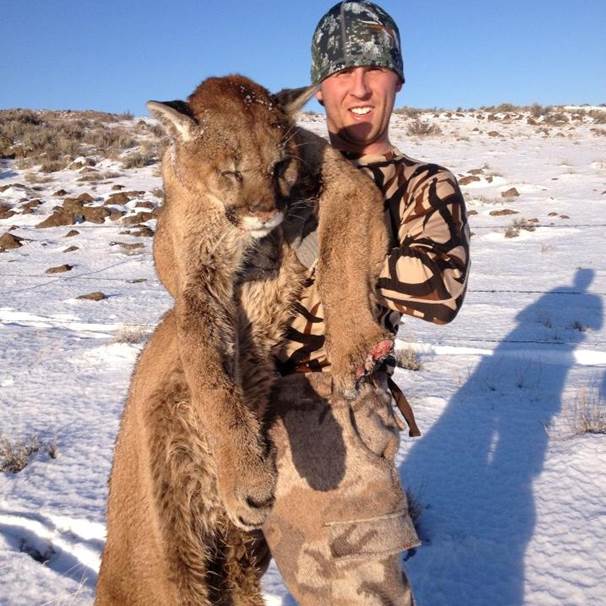
Worse yet are the noxious spread of anything-goes anti-wolf/anti-wildlife websites and chat rooms now widespread in social media. Consider the following comments made in response to a hunter showing off the cougar he killed (photo below)…

February 11 at 8:34am – “Nice cat bud.”

February 11 at 8:34am via mobile – “Colter! I had no idea you were into cougars.”

February 11 at 8:39am via mobile – “Hahahaha only old hairy ones like this one!!”

February 11 at 8:51am via mobile – “Good cat man congrats.”

February 11 at 9:15am via mobile – “That’s a nice cat bud!”

February 11 at 10:25am via mobile – “Thanks! Damn fun hunt.”

February 11 at 4:39pm – “what did you do, shoot its paw off!”

February 11 at 5:25pm via mobile – “It had been stuck in a trap at some point. Either chewed it off or pulled it off.”

In other words the poor cougar suffered, possibly for days, in a trap, before being shot by a trophy hunter. “Non-target” species like cougars often end up in traps set for other undeserving animals.

The Ravalli Republic reports (in typical mainstream media passionless fashion) in their article, Montana, Idaho trappers catching more than just wolves

In the first year that wolf trapping was allowed in Idaho, trappers captured a total of 123 wolves.

But according to a survey by the Idaho Fish and Wildlife Department, those same trappers in 2011-2012 also inadvertently captured 147 other animals, including white-tailed deer, elk, moose, mountain lions, skunks and ravens.

Trappers reported that 69 of those animals died as a result.

Trappers reported capturing 45 deer. Twelve of those died. They also captured 18 elk and four moose. One of the elk died.

The same number of coyotes ended up in traps as deer. Trappers reported that 38 were killed. Mountain lions also took a hit. Nine were captured and six died.

“There are a heck of a lot of people out there trapping furbearers,” said the Montana Fish, Wildlife and Parks wildlife management chief. “And there also are a lot of people trapping coyotes, which aren’t even regulated.”

Meanwhile, Idaho allows trappers to use wire snares that collapse around an animal’s neck as it struggles to free itself.

The Idaho Department of Fish and Game’s state wildlife game manager vacuously adds, “No one wants to catch a deer. It costs them a lot of time.”

Any society that looks the other way when people murder animals for fun does so at its peril. Marine biologist, Rachel Carson, author of Silent Spring, had this to say about the growing problem:

“Until we have the courage to recognize cruelty for what it is—whether its victim is human or animal—we cannot expect things to be much better in this world. We cannot have peace among men whose hearts delight in killing any living creature. By every act that glorifies or even tolerates such moronic delight in killing we set back the progress of humanity.”

It doesn’t get much more cruel or moronic than this…

cougar kill

Wolf-Murder by Numbers

Here are the totals of wolves murdered in the tri-state area, not including those who were victims of our taxpayer-funded assassins—the hit men from the federal “Wildlife Services” agency. (Note: all three of these states share a border with Yellowstone National Park)…

Latest Posted Idaho Wolf Hunt Kill total (current season): 169
Latest Posted Idaho Wolf Trapping Kill total (current season): 76
Final Posted Montana Wolf Hunt Kill Total (most recent season) 128
Final Posted Montana Wolf Trapping Kill total (most recent season): 97
Wyoming Wolf Kill Total (current season): 74 (Note: as of March 1st Wyoming’s season has been extended indefinitely)
Regional Total Reported Killed This Season: 544
Regional Total Reported Killed Since Delisting: 1,089

Meanwhile, a new National Park Service report for 2011 shows that the 3,394,326 visitors to Yellowstone spent $332,975,000 in communities surrounding the park. This spending supported 5,041 jobs in the local area.

(Michigan State University conducted this visitors’ spending analysis for the NPS. The report includes information for visitor spending at individual parks and by state. It can be downloaded at http://www.nature.nps.gov/socialscience/products.cfm#MGM click on Economic Benefits to Local Communities from National Park Visitation 2011.)

Needless to say, most people who visit national parks want to see the wildlife unmolested. They are not there to hunt; the money they spend reflects their strong interest in the quiet enjoyment of nature. Pro-hunting factions like to boast about the money their bloodsport brings to local communities. I don’t know if anyone has taken a survey on how much those kill-happy cowboys add to the communities around Yellowstone, but you can bet your boots it’s nowhere near $332,975,000.
One thing I know for sure is that the number of dollars spent by Yellowstone visitors is going to drop as the wildlife they went there to see continues to disappear.

Yellowstone wolf photo ©Jim Robertson. All Rights Reserved

Yellowstone wolf photo ©Jim Robertson. All Rights Reserved