Wolves Are Getting it From the Left and the Right

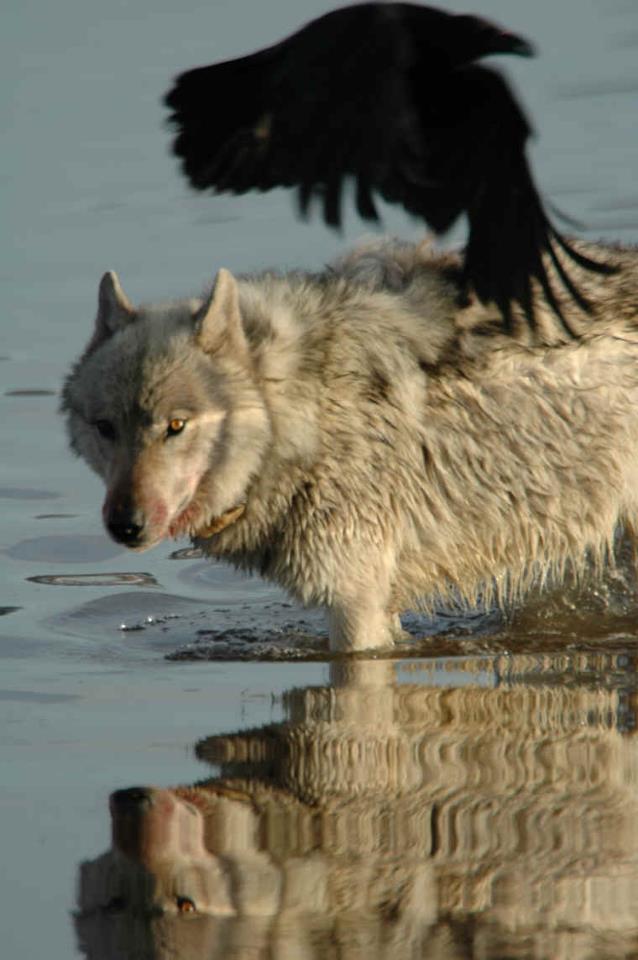
Since 2011, when Congress stripped wolves of their Endangered Species status, an estimated 1,084 wolves have been killed in the Northern Rockies. Again, that’s ONE THOUSAND AND EIGHTY-FOUR living, breathing, social, intelligent wolves killed by scornful, fearful, vengeful and boastful humans, often in the most hideous ways imaginable.

Of course, that number might not seem so shocking if you consider that 5,450 wolves were killed in the Montana Territory in 1884, after a bounty on wolves was first instated there. Clearly, there were a lot more wolves in the country then as compared to now, but that didn’t stop the Obama Administration from declaring the species “recovered” in 2011 and handing them over to eagerly awaiting hostile, hateful anti-wolf states to “manage” as they see fit.

Now, under a plan supported by the federal government, the state of Wyoming is opening even more wolf habitat to unlimited killing. As of today, March 1st, until at least October, wolves can be slain there at will. How many will survive such an onslaught is anyone’s guess, but I can guarantee the number of “recovered” Wyoming wolves will be in the dozens or very low hundreds, not the thousands.

Doubtless, a few will survive…for a while. The famed “Custer wolf” eluded hunters and trappers for over ten years and over 2600 square miles along the Wyoming-South Dakota border, even though he had a $500.00 bounty on his head. The crafty fugitive was aided in out-witting the best hunters in the country by a pair of coyotes who flanked him on both sides, serving as sentinels. Finally a government hunter was assigned to track down the Custer wolf. He first shot the two coyotes, and six months later, in October 1920, he caught up with and killed the wolf, making him one of the last of his kind to live and die in the region for nearly a century.

Anyone (well, anyone with a conscience) should be ashamed to read about the gruesome war on wolves carried out in this country during the 1800s which resulted in the extinction of the species over most of the Lower 48. Common “extermination” practices used by “wolfers” included killing pups in their dens.

But where is the national outrage today as hunters and trappers in bloody red states like Wyoming, Idaho and Montana wipe out entire packs, including fathers, mothers and their pups?  Wyoming’s expanded wolf-killing season is all the more tragic given that spring is the time of year that wolves are denning.

From the group, Defenders of Wildlife: “This expanded hunt puts the most vulnerable population of wolves – pups and pregnant or nursing mothers – in greater danger of being shot on sight. This kill-at-will approach is exactly the kind of flawed policy we knew would happen if wolves prematurely lost their Endangered Species Act protection – this is why Defenders is suing the U.S. Department of Interior to restore Endangered Species Act (ESA) protection for wolves in Wyoming.”

It’s not like the administration didn’t know what might happen when the fate of the wolves was turned over to states with extreme anti-wolf plans already in place. In just two years over 1,000 wolves have been ruthlessly murdered by hunters and trappers eager to relive the gory glory days of the 1800s.

Obviously some people have a different reaction when they read their history books than those of us with a conscience.

Text and Wildlife Photography ©Jim Robertson, 2013. All Rights Reserved

Text and Wildlife Photography ©Jim Robertson, 2013. All Rights Reserved

Back To the Bad Old Days

What’s up with all the anti-wildlife legislation going on around the country these days? Everywhere you look there’s some state senator or representative introducing bills to keep non-human animals down and implement some new form of cruelty to punish them for the crime of not being born of our privileged species.

A few examples: a self-amused eastern Washington representative is calling for east-side wolves to be moved out of his district to the west side of the Cascade Mountains; at the same time Washington State politicians just introduced three bills to make it easier for ranchers to use lethal measures on wolves whenever they see fit; and of course you’ve heard that Montana’s public servants are on a rampage to get rid of their resident wolves. Now one of their legislators wants to lower the minimum hunting age for that state to nine years old.

Meanwhile, in Alaska, a senator just put forth legislation to instate a $100.00 bounty on sea otters! Never mind that these playful, aquatic mammals were nearly completely wiped out during the fur trade era, are critically endangered or extinct from much of their former range and are still listed in Alaska as Threatened or Endangered under the federal ESA, those poor, underpaid (sarcasm intended) commercial crab fishermen see them as competition. (Far from downtrodden, crabbers take pride in being the wealthiest of commercial fishermen; no doubt the senator who proposed the bounty is counting on a kickback into his campaign coffers from the crabbing industry for his otter oppression bill.)

And the list of detrimental anti-wildlife legislation goes on and on.

Is it just me, or have good ol’ boy state politicians stepped up the pace of non-human animal persecution? It’s as though they’re intentionally trying to drag us back to the bad old days of the 1800s, arguably this country’s most reckless period for uncontrolled animal exploitation—besides, perhaps, the present.

Take Action:

Not surprisingly, state legislators only take input from residents of their given state, but since there are bogus bills and measures cropping up across the country, there should be something to speak out against wherever you live. For instance, if you live in Washington State, contact your senator and urge them to oppose anti-wolf bills SB 5187, SB 5188 and SB 5193. Let them know:

  • These three bills would undermine the state’s wolf management plan by giving authority to the county legislators and local sheriffs over the state wildlife agency biologists, and would allow the public to override the state and kill wolves perceived to be a threat to livestock on public and private lands.
  • There are only 50 wolves in Washington.  Now is not the time to remove their protection.
  • Washington’s wolf management plan was created with massive public involvement and adopted unanimously by the Washington Wildlife Commission; powerful ranching advocates should not be allowed to undermine it.
Text and Wildlife Photography ©Jim Robertson, 2013. All Rights Reserved

Text and Wildlife Photography ©Jim Robertson, 2013. All Rights Reserved


Boycott Montana Beef

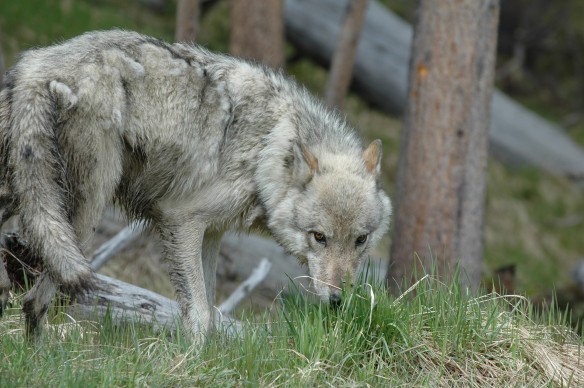
Beef cattle are the number one predator on wolves and bison in Montana.
Of course, the cows themselves are not directly to blame for the deaths of others; they too are victims of the same exploiters who are waging a war of extermination on wolves, bison and other native species, unparalleled since the ecologically reckless 1800s.

The government of Montana’s attitude toward wildlife is a disgrace—nothing short of reprehensible—for any state who calls themselves a gateway to Yellowstone National Park. Wildlife watchers should not have to concede to the will of hostile states; they have as much right to visit Montana as any beef buyer or trophy hunter.

Recently the state of Montana has turned up the heat on any wild species who might in any way be perceived as a threat to one of their biggest cash crops: cows. Don’t fall prey to the feel-good lure of “sustainable” grass-fed Montana beef. In order to sustain cattle, the livestock industry demands that wildlife be controlled by any and every lethal means imaginable.

It’s time to hit where it hurts. For the sake of wolves and bison and biodiversity, boycott Montana beef!

Text and Wildlife Photography ©Jim Robertson, 2013. All Rights Reserved
Text and Wildlife Photography ©Jim Robertson, 2013. All Rights Reserved
It’s Official: Montana Hates Wildlife

To the casual observer, it would surely seem that Montana hates its wildlife.

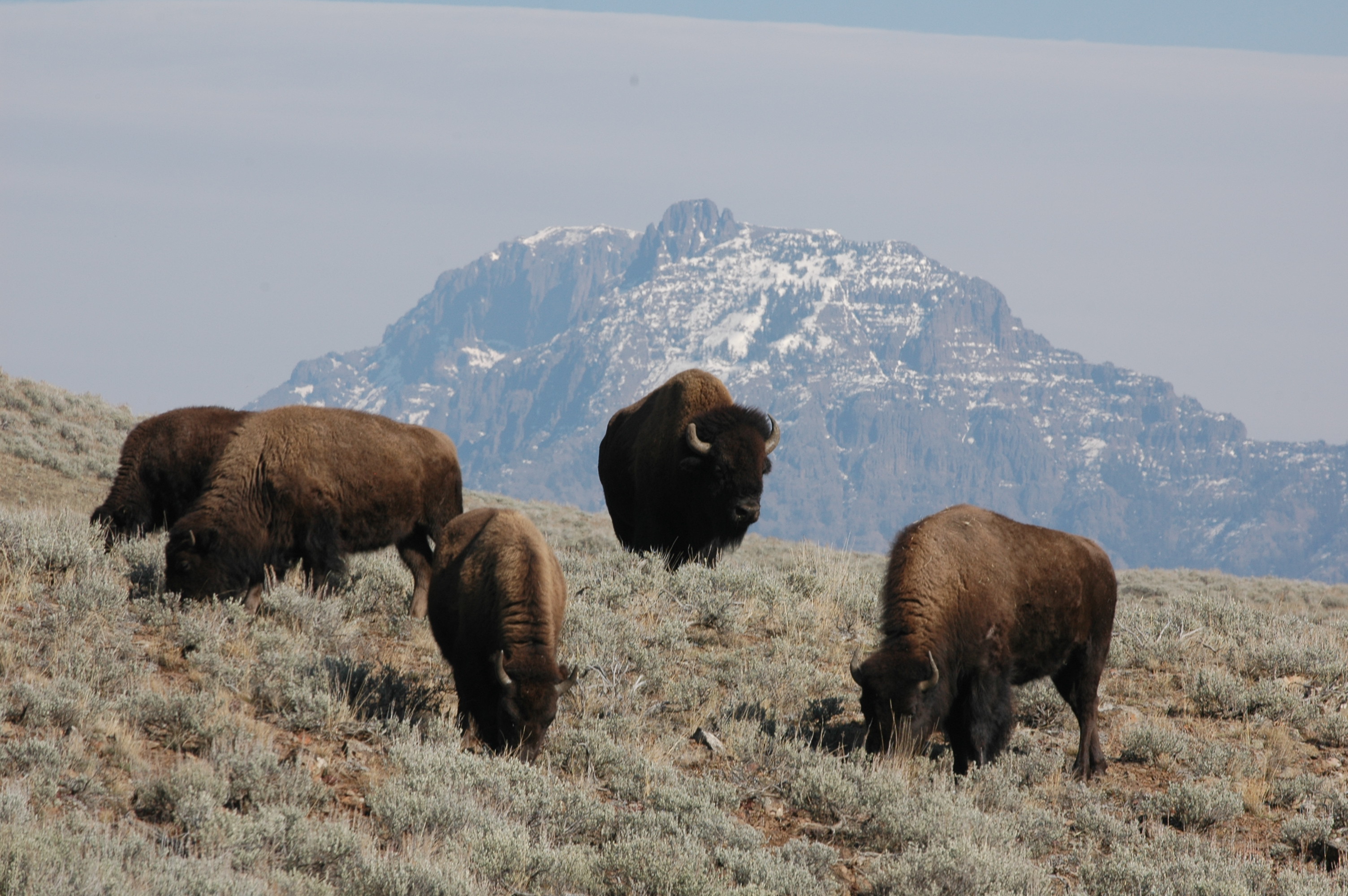
Not only does the state continue to escalate its attack on wolves by prolonging its hunting and trapping season and increasing the per hunter quota even as the number of wolves there drops, but now their state legislature is proposing to eliminate free-roaming wild bison altogether, outside the confines of Yellowstone National Park.

The same Montana politicians who just rushed through a bill to expand the state’s ongoing wolf hunting and trapping are now considering new lethal bills to:

•prohibit reintroduction of wild bison into Montana;

•establish a year-round hunting season for bison, with virtually no limitations;

•authorize private landowners to shoot on sight any bison that wandered onto their property;

•order state officials to exterminate or move any wild bison that migrate into Montana.

The grizzly bear is soon to come off the federal Threatened Species list, and thereby lose federal protection. You can bet that states like Montana, Idaho and Wyoming—those few places fortunate enough to still support the bears in their wilderness areas—are planning to add trophy hunting of grizzlies to their long hit list of “big game” species as soon as (in)humanly possible.

But to hear them tell it, Montanans don’t hate all wildlife. They love having out of control populations of ungulates around to “harvest” between shopping trips to WalMart. As long as their Fish, Wildlife and Parks department provides them with huntable populations of “surplus” elk, deer and pronghorn, those token other species—the wolves, grizzly bears and bison—can stay in the national parks, “where they belong.”

Photos Copyright Jim Robertson

Photos Copyright Jim Robertson


Let Montana Governor Bullock know: “Our Voice Counts, Too!”

The following, from WolfWatcher.org, includes contact info for the MT governor.  More on this issue can be found in my previous blog post, Montana: Love the Place, Hate the Politicians …

Montana Governor Bullock: “Our Voice Counts, Too!”

Montana Governor Bullock: “Our Voice Counts, Too!”

Feb 10th, 2013

Posted in: All News, Front Page News, News, North American Wolves News, Northern Rockies News, Take Action, WolfWatcherYellowstone Wolf Project biologists are speaking out about a record number of wolves that were lost to this year’s hunting season in an article, “YNP biologists struggle to maintain wolf research,”  published in the Bozeman Daily Chronicle, Feb. 9, 2013.

“This is the first year that wolves were hunted on every side of the park. They’ve learned to tolerate people in the park, but that gets them in trouble if they leave. Some wandered outside the park, and within six hours, they were dead…The park has an international constituency and our mission is preservation. The kills are a big hit on our research, but another big concern for us is that too many kills affect visitor enjoyment,” said YNP wolf biologist Doug Smith.

More state bills have been introduced seeking to reduce the wolf populations with even more aggressive management ‘tools’ that make it easier to hunt and trap more wolves – even in areas near Yellowstone and Glacier National Parks. House Bill 73 has been fast-tracked to the Governor’s office, too.

Yellowstone National Park is posting record attendance numbers – a 2% increase to 3.4 million visitors in 2012.  With a projected 65 million international visitors to the USA in 2012 and more in 2013, Yellowstone National Park is the largest international draw in the Northern Rockies region.    With three of the five gateways accessed through Montana, the state serves to benefit from this increased traffic.

We heard that Montana’s Governor’s Office is disregarding calls and emails from tourists. Interestingly, the North Entrance at Gardiner, the area where zone closures were recently proposed and denied near Yellowstone , suffered a 5% loss in visitors in 2012.

We conclude that potential tourists are turned off when they learn about more aggressive hunting and trapping practices in the state.  So, is Montana killing the largest growing industry in the region – eco/wildlife tourism along with this apex predator?    We think so!

It’s time for us to remind Governor Bullock that our tourism dollars affect the economic future of his state and our voice counts!  We ask that you call the following officials to tell them you oppose the bill because it is anti-science, anti-eco-tourism, and anti-jobs!

1 – Montana Governor Bullock: tell him to VETO HB 73

Telephone: Toll Free Number: 855-318-1330;  Montana: 406-444-3111

governor@mt.gov and  http://governor.mt.gov/contact.aspx

2 – Gov. Bullock’s Natural Resources Adviser, Tim Baker: tbaker@mt.gov and 406-444-7857

3 – Montana Office of Tourismmt-webmaster@visitmt.com   Phone: 1-406-841-2870

4 – Montana’s Official Travel Sitehttp://www.visitmt.com/feedback/ or call 1-800-847-4868


REFERENCE:

House Bill 73 – introduced at the request of Montana Fish, Wildlife & Parks to increase the tools available to hunters to successfully kill more wolf populations (http://data.opi.mt.gov/bills/2013/billpdf/HB0073.pdf)

  • Reduces the price of nonresident licenses REDUCING THE PRICE OF A NONRESIDENT LICENSE;
  • Allows use of recorded or electronically amplified calls in wolf hunting; ALLOWING USE OF RECORDED OR ELECTRONICALLY AMPLIFIED CALLS;
  • Exempts hunters from wearing orange outside the general deer and elk hunting season
  • Prevents the creation of wolf harvest buffer zones and wolf harvest closures around national parks; In an area immediately adjacent to a national park, the commission may not: prohibit the hunting or trapping of wolves; or close the area to wolf hunting or trapping unless a wolf harvest quota established by the commission for that area has been met.”

Montana’s Wolf “Problem” Doesn’t Add Up

Montana’s resident human population recently topped a million, according to census takers. That may not seem like a lot in today’s grossly overcrowded world, where dozens of U.S. cities could boast three or four times that number (if wall to wall people were something to boast about). But compare 1,000,000 humans to the estimated 650 or so wolves in the state and it’s pretty clear which species’ population is out of control.

It’s not like I’m comparing apples and oranges here, either. Both species are predatory mammals (although human beings don’t have to predate, they just do it for fun), and carnivorous (unlike wolves, we can get by–a lot healthier, I might add–on a plant-based diet). Both wolves and humans would be considered large animals, roughly equal to each other in size and weight (well, actually, the average wolf weighs around 100 pounds, whereas the average Montanan weighs in at 3 or 4 times that nowadays).

Meanwhile, thanks to humans, there are two and a half million cows in the state. That’s two and half million cows, each of whom is slated to eventually be killed and eaten by humans. Wolf livestock predation amounts to only a tiny of that number; in 2011 for instance, 74 cows were killed by wolves. As Roger commented yesterday, 74 divided by 2,500,000 is .00029 percent, statistically zero. Range cattle are 147 times more likely to fall prey to intestinal parasites than to wolves. Yet those 74 cows amount to a wolf “problem,” according to the state of Montana and are cause to declare open season on wolves there.

So far this season, hunters and trappers have killed nearly 200 wolves. Montana wildlife officials say they are hoping to reduce the wolf population to around 450. That number does not even come close to representing a recovered state wolf population by any historical standards when you consider that in 1884, 5,450 wolves were killed in the Montana Territory, after a bounty was first initiated there. Before that, wolves probably outnumbered people.
How I long for the good old days.

Text and Wildlife Photography ©Jim Robertson, 2013. All Rights Reserved

Text and Wildlife Photography ©Jim Robertson, 2013. All Rights Reserved

Montana: Love the Place, Hate the Politicians

In a variation of the old adage, “Love the country, hate the people,” my new motto for my former and possibly future home state is, “Love the place, hate the politicians—especially the wildlife policy makers.

Though I have a lot of like-minded friends back there, they are mostly “new-comers” from other states who have moved there because of their love for the land. They don’t share the self-centered patrician attitude of many of the Montana “natives,” so they tend to appreciate the wildlife more.

But the Montana state legislators think they know who their constituents are—and they’re not the wolves or us wolf advocates. In their zeal to fast-track a proposal to expand their already out-of-control wolf hunt, the Montana State Senate on Thursday suspended its rules so it could take initial and final votes on the same day on a measure that already had overwhelmingly cleared the House. The Senate backed it 45-4, and now the unbelievable piece of anti-wolf legislation will soon be sent to the governor’s desk for his signature. (It must be quite a challenge for the evil, pointy-tailed office-bearers to hold a pen with those cloven hooves of theirs).

The following is an AP article entitled, “Legislature gives quick OK to expanded Montana wolf hunt” (my parenthetical asides are added when necessary or appropriate):

House Bill 73 lets the Department of Fish, Wildlife and Parks increase the number of wolves one hunter can take, allows for electronic calls, and removes a requirement to wear hunter orange outside general deer and elk season. (The one bright side: more hunting accidents.)

The measure also prohibits the state wildlife agency from banning wolf hunts in areas around national parks. (Parks like Yellowstone, where wolves are used to seeing appreciative, peaceful people and are therefore deceitfully and easily killed by the malicious ones waiting just outside the park boundaries). Its swift passage would allow the changes to take effect during the hunting season that’s currently under way…

The department last month abandoned efforts to shut down gray wolf hunting and trapping in an area north of Yellowstone National Park, a move originally promoted by concerns that too many wolves wandering out of the park were dying. (“Dying”… Is that what the AP thinks happened to them? Or, are they just being pleasant? What they meant was, “…too many wolves wandering out of the park and being stuck in a trap and/or shot to death by bloodthirsty wolf-haters!”)

Lawmakers wanted to make sure such a regional closure doesn’t come up again.

Gov. Steve Bullock on Thursday indicated support for the legislation, noting it had been backed by Montana Fish, Wildlife and Parks. (Not surprising that MFWP gave it their cloven-hooved stamp of approval).

Fish, Wildlife and Parks said it already has prepared rule changes that will allow the legislation to immediately impact what remains of the wolf hunting season ending Feb. 28.

Hunters and trappers so far this season have killed fewer than 200 wolves. Wildlife officials are hoping to reduce the animals’ population from an estimated 650 wolves to around 450. The goal is to reduce wolf attacks on (non-native) livestock and help some elk herds that have (allegedly) been in decline due to wolf attacks (read: natural predation).

Wildlife advocates have argued that the state is being too aggressive (read: violent, hostile, destructive, belligerent, antagonistic, bellicose) against a species only recently restored to the Northern Rockies after it was widely exterminated last century.

But no one spoke against the expanded wolf hunt on the Senate floor.

“These creatures are hard to hunt, and we need to allow our wolf hunters the best chance of getting into them while the season is still ongoing,” said Sen. Larry Jent, D-Bozeman (“getting into them”—how sick is that kind of talk?)

Sen. Fred Thomas, R-Stevensville, argued it doesn’t go far enough to limit wolf numbers. He said the FWP is going to have to start allowing snare trapping of the wolves, a controversial practice the wildlife commission banned with its trapping regulations. (Even the MFWP isn’t willing to descend into that level of hell.)

“While this bill will do some things, it is not the big answer,” Thomas said. “If you really want to get after this, you have to authorize snaring.”

So sayeth the elected official from the great state of Montana. No, I wouldn’t feel any more fairly represented there now than the wolves are.

Text and Wildlife Photography ©Jim Robertson, 2013. All Rights Reserved

Text and Wildlife Photography ©Jim Robertson, 2013. All Rights Reserved

Who is the Creeping Cancer?

Amazingly enough, despite their wrongheaded policies toward wolves and wolverine (which I covered in the post, “WTF’s Up w/MFWP?”), the Montana WDFW actually came up with a good idea regarding bison. According to an article in the New York Times:

Montana’s Fish, Wildlife and Parks department is considering allowing bison year-round access to cattle-free pockets of public land on Yellowstone’s northwest side. Officials are also working on a statewide bison management plan that could allow the reintroduction of a few disease-free bison to some of the most remote parts of the state, possibly including the million-acre Charles M. Russell National Wildlife Refuge in northeastern Montana.

Public polls show that most Montanans support reintroducing wild bison that could be watched by wildlife enthusiasts and harvested by hunters. That approach would parallel established management plans that allowed elk, deer, antelope and bighorn sheep to return after they were hunted to near-extinction around the time bison vanished. …

Because of attitudes held by ranchers like John Youngberg, vice president for government affairs for the Montana Farm Bureau Federation, Montana has traditionally held to a policy of intolerence toward free-roaming bison.

Youngberg said that since wild bison were exterminated by the time Montana became a state in 1889, landowners should have the right to live without them.

“They got their property with the expectation that there were no buffalo,” he said. “And these are not white-tailed deer you’re talking about, they’re 2,000-pound animals”

Now, two new bills introduced in the Montana legislature would usher in a zero-tolerance policy for wild bison, potentially opening the way for a return to the shoot-on-sight practices of years past.

Under a bill proposed in the state Senate, Department of Livestock officials would have the leeway to exterminate all wild bison. And a different bill in the state House of Representatives would allow landowners to kill any bison that sets foot on private property.

“Why do you want to spread this creeping cancer, these woolly tanks, around the state of Montana? We’ve got zero tolerance left in our bones,” said John Brenden, a state senator  from Scobey, Mont., who is chairman of the Senate Fish and Game Committee and authored that chamber’s bill.

My response to Mr. Brenden: If you want to see a creeping cancer whose destructive behavior can be compared to a tank, look in the mirror.

Over the last three decades, around 7,000 bison from Yellowstone National Park, descendants of the less than two dozen free-range bison in America known to have survived the great slaughter of the Nineteenth Century, were killed for migrating from federal parkland into the states of Montana, Idaho and Wyoming.

Yet in Montana, where most Yellowstone bison have been shot or shipped to slaughterhouses, the state agreed last year for the first time to allow bison access to 75,000 acres of public land north of the park for a few months each year.

How generous.

For more on the plight of bison, past and present, read Chaper 1, “Hide Hunting Holocaust Survivors Still Under Fire,” in the book, Exposing the Big Game: Living Targets of a Dying Sport.

Photo Copyright Jim Robertson

Photo Copyright Jim Robertson

More on Snaring–Eagles killed in Snare in Montana

Research eagle killed in Mont.

by Mike Koshmrl, Jackson Hole News and Guide

Date: February 1, 2013

A Jackson Hole biologist’s research took a hit this past week, when one of six golden eagles he tracks became tangled in a Montana snare and died. The adult female, GPS-tracked by Craighead Beringia South, was one of three Montana eagles recently caught in snares, said Becky Kean, director of the Montana Raptor Conservation Center. Two of the three, including Beringia South’s research subject, nicknamed “Elaine,” were killed. Beringia South, based in Kelly, had been following Elaine’s migrations with a GPS backpack since 2010, said biologist Bryan Bedrosian. The study, which tracked six goldens, was conducted in tandem with the Raptor View Research Center, out of Missoula, Mont. “It’s just unfortunate to lose a study bird that we’ve been tracking so long,” Bedrosian said. “There are a lot of longer-term questions she would have helped answer.” It’s unlikely that Elaine would have been caught in a snare, Bedrosian said, unless it was set over an animal carcass or some type of meat. That is illegal in Montana. “No trap or snare may be set within 30 feet of an exposed carcass or bait which is visible from above,” the state’s furbearer regulations read. Snares and foothold traps are used to catch a wide array of mammals, but birds of prey, pets and other animals can be caught by accident. Beringia South’s study was set up to help biologists better understand golden eagle migration corridors. Between 1991 and 2010, an Audubon Society research project found that the migratory golden eagle population de-clined by 40 to 50 percent. Reasons for the decline, Bedrosian said, include collisions with wind turbines and electrical lines, incidental trapping, energy development and overall habitat loss. “There’s a whole host of reasons, but I wouldn’t say there’s one smoking gun,” he said. The Teton Raptor Center has tried to rehabilitate just one raptor injured in a snare in recent years, said Meghan Warren, the center’s program associate. The raptor center’s snared bird, also a golden eagle, became entangled near Pinedale about a year ago. He died a week later after developing a fungal infection of the lungs. “It’s such a tragedy,” Warren said of the Beringia South golden eagle. “It’s terrible that another animal had to suffer, and it was obviously not the intended animal for trapping.” Kean, from the Montana Raptor Conservation Center, said the recent rash of snared eagles was very out of the ordinary. “It was kind of overwhelming — we had three in two days,” she said. “These are the first [birds] I’ve seen killed in snare traps and I’ve been here full-time for 6 years.” About three raptors a year are brought to the Montana rehabilitation center as a result of more common leghold traps, Kean said. The one snared golden that did survive underwent successful surgery Wed-nesday, Kean said. “She’s in the other room here eating right now,” she said over the phone from Montana. “She’s doing pretty good so far, but it’s just the start of the healing process,” Kean added.

Starting to Look Like Speciescide

It’s been another bad week for wolves in the Rocky Mountain States…

MFWP reports: On January 25th the Montana State wildlife officials canceled the Jan. 29 conference call to reconsider a recent court-challenged decision to close the wolf hunting and trapping seasons in two areas north of Yellowstone National Park. The areas were closed by the Montana Fish, Wildlife & Parks Commission on Dec. 10, in response to concern about the harvest of wolves with collars that supply scientific information to YNP researchers. The seasons, however, were reopened by the district court in Livingston in response to a lawsuit brought by several sporting groups and a state representative from Park County.

FWP officials said today that the best course of action is to fully follow the judge’s Jan. 18 order that prohibits FWP from enforcing the wolf hunting and trapping closure.


“The judge clearly stated that FWP would have to return to the court to apply for an order to dissolve the injunction and have proof that requisite public notice was given. We have simply run out of time,” said Ron Aasheim, FWP’s spokesman in Helena. Aasheim noted that wolf hunting and trapping season is set to end in 34 days, on Feb. 28, and that obtaining a hearing and court action prior to the end of the wolf hunting season would be unlikely.

Meanwhile, The Jackson Hole News and Guide ran an article stating:

Predator zone eliminates wolves

By Mike Koshmrl, Jackson Hole, Wyoming

Date: January 25, 2013

Wyoming officials wanted wolves removed from much of the state, and their hands-off management method has worked as designed.

Wolves can be killed in a “predator zone,” which covers 85 percent of the state, by almost any method, at any time, in any number and without a license. The anything-goes rules have had the desired effect: Wyoming Game and Fish Department harvest reports show that 31 of the canines have been killed in the predator zone since October. That’s more than the 20 to 30 animals department biologists estimated roamed the zone last year.

“It appears the predator zone is reducing wolf numbers there significantly,” said Mark Bruscino, Game and Fish’s large carnivore supervisor. “That’s what the management strategy was designed to do.”

Wyoming’s latest wolf management plan regulates wolf hunting in a trophy game area that encompasses about 15 percent of northwest Wyoming, including most of Jackson Hole. A portion of the trophy game area south of Highway 22 and Wilson is a flexible zone that rotates between being a free-fire zone and regulated hunting area.

Duane Smith, the wild species program director for the Biodiversity Conservation Alliance, said the state’s management plan outside the trophy hunt area is “essentially an eradication program.”

“If you cut off the ability of a species to disperse, you essentially fence them in,” Smith said.

The alliance has filed one of three lawsuits against the U.S. Fish and Wildlife Service to try to re-establish protections for wolves in Wyoming.

But Bruscino defended the predator zone approach.

“Minnesota, Idaho and Montana also have incredibly liberal hunting provisions in some areas,” he said. “They aren’t that dissimilar from the predator area.”

And in Colorado, the group Wild Earth Guardians asks:

Sharpshooters, but not Wolves, in Rocky Mountain National Park?

WildEarth Guardians was frustrated but not yet defeated in early January when, in a stunning blow, the 10th Circuit Court of Appeals ruled that it wasn’t feasible for Rocky Mountain National Park to consider a wild wolf restoration, in spite of the Park being overrun by elk. The court concluded that it made more sense for hunters rather than wolves to kill elk in a national park. We believe allowing hunting in a national park sets a dangerous policy precedent. More importantly, wolves would have done what hunters cannot: keep sedentary elk constantly on the move preventing overbrowsing and protecting fragile streamsides and aspen groves. Wolves easily detect and remove diseased and sick prey animals. Guardians is committed to having wolves roam free in Colorado.

Add it all up and it’s seriously starting to look like a policy of speciescide for wolves…

Wildlife Photography ©Jim Robertson, 2013. All Rights Reserved

Wildlife Photography ©Jim Robertson, 2013. All Rights Reserved