Exposing the Big Game

Forget Hunters' Feeble Rationalizations and Trust Your Gut Feelings: Making Sport of Killing Is Not Healthy Human Behavior

Exposing the Big Game

Sanders County woman accidentally shoots daughter while hunting

https://missoulian.com/outdoors/sanders-county-woman-accidentally-shoots-daughter-while-hunting/article_075b7e76-377c-5735-870e-6650db31275f.html

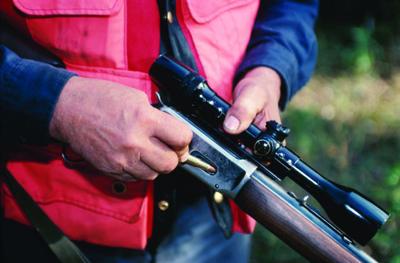
Hunting / hunter stock photo

A Sanders County woman earlier this month accidentally shot and wounded her 10-year-old daughter in a grouse hunting accident, according to Montana Fish, Wildlife and Parks. It was believed to be the first hunting-related shooting incident of the year.

Wayde Cooperider, FWP outdoor skills and safety supervisor, told Lee Newspapers on Tuesday the woman was unloading her .22 magnum on Oct. 11 when the firearm inadvertently discharged a round through the vehicle door, striking her daughter. The girl was transported to the hospital, Cooperider said.

The Sanders County Sheriff’s Office is conducting the investigation. Sanders County Sheriff Tom Rummel did not return a call from the Missoulian seeking further information on the girl’s condition and the investigation.

General rifle season begins in Montana on Oct. 26 for deer and elk. On Tuesday, Cooperider warned residents to be rigorous about their firearm safety measures.

“Be extra cautious,” he said. “Please unload your firearms away from your vehicle.”

Do not transport loaded firearms, and if hunting with another party, check each other’s firearms to make sure they are unloaded, Cooperider added.

The woman was with her children hunting forest grouse, he said. Her children were in the backseat while the vehicle was parked. When she got out to harvest a bird, she was unloading the firearm and it went off, Cooperider said. Another vehicle was approaching during the time of the accident, he said.

While Cooperider believes this is the first hunting-related shooting incident in 2019, he said its possible others have gone unreported.

“Montana is not a mandatory reporting state, which means I find out about this stuff either through our wardens or the news media,” he said.

Just last week, a Helena man was sentenced to nearly 3 1/2 years in state prison for an accidental fatal shooting after a hunting trip in 2018. Gregg Trude pleaded guilty to the charge in September, admitting he had placed a loaded firearm on the backseat of his truck before it discharged and killed Helena Dr. Eugene “Buzz” Walton.

Last hunting season, Montana experienced more hunting-related injuries and deaths than the past several combined, FWP said in an Oct. 18 release.

In the release, Cooperider reminded hunters of the four firearm rules taught at every Hunter Education course: “Always point your muzzle in a safe direction. Always treat every gun as if it were loaded. Always keep your finger off the trigger until ready to fire. Always be sure of your target and beyond.”

“The merits or practice of walking around with a chambered round when big game hunting can be debated extensively,” Cooperider said in the release. “However, I believe it should always come down to ‘best safety practice.'”
Footloose Montana hosts trap-release workshop

SALE! SIGN UP AND GET 90% OFF
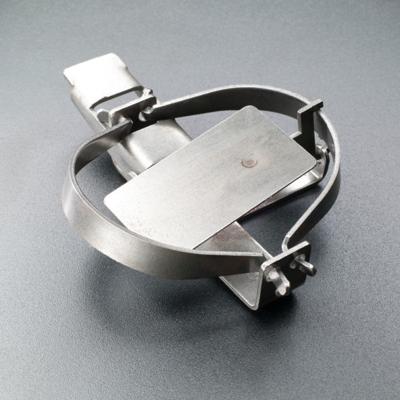
trap stockimage

A trap-release workshop will be presented from 7 to 9 p.m. Wednesday, Oct. 30, at St. Anthony Parish Center, 217 Tremont St.

Learn what to do if your pet steps in a trap, learn first aid, hands-on trap release practice, trapping regulations and what to carry with you to rescue your pet.

Sponsored by Footloose Montana, a nonprofit group educating concerned citizens about traps on public lands. Call 406-282-1482 or visit footloosemontana.org.

Reward for info on shooting of pelicans along Montana river


Montana wildlife officials are offering a $1,000 reward for information in the shooting of possibly dozens of pelicans along the Bighorn River. Photo: NBC Montana

Montana wildlife officials are offering a $1,000 reward for information in the shooting of possibly dozens of pelicans along the Bighorn River.

State game wardens have reported retrieving about a dozen dead pelicans along a stretch of the river downstream of Yellowtail Dam. The river in that area is popular among fly fishers.

Fish, Wildlife and Parks spokesman Robert Gibson says the birds are being killed with a shotgun.

Officials believe dozens more may have been shot and killed this summer in the same area. Gibson says that estimate is based on dead birds seen but not retrieved by wardens and reports they’ve received.

Pelicans are a protected under federal law as migratory birds.

The reward is offered for information that leads to the conviction of those responsible. Call 1-800-TIP-MONT.

Hayden man attacked by grizzly last year makes Animal Planet television debut tonight

https://www.spokesman.com/stories/2019/sep/04/hayden-man-attacked-by-grizzly-last-year-makes-ani/

UPDATED: Wed., Sept. 4, 2019, 7:50 p.m.

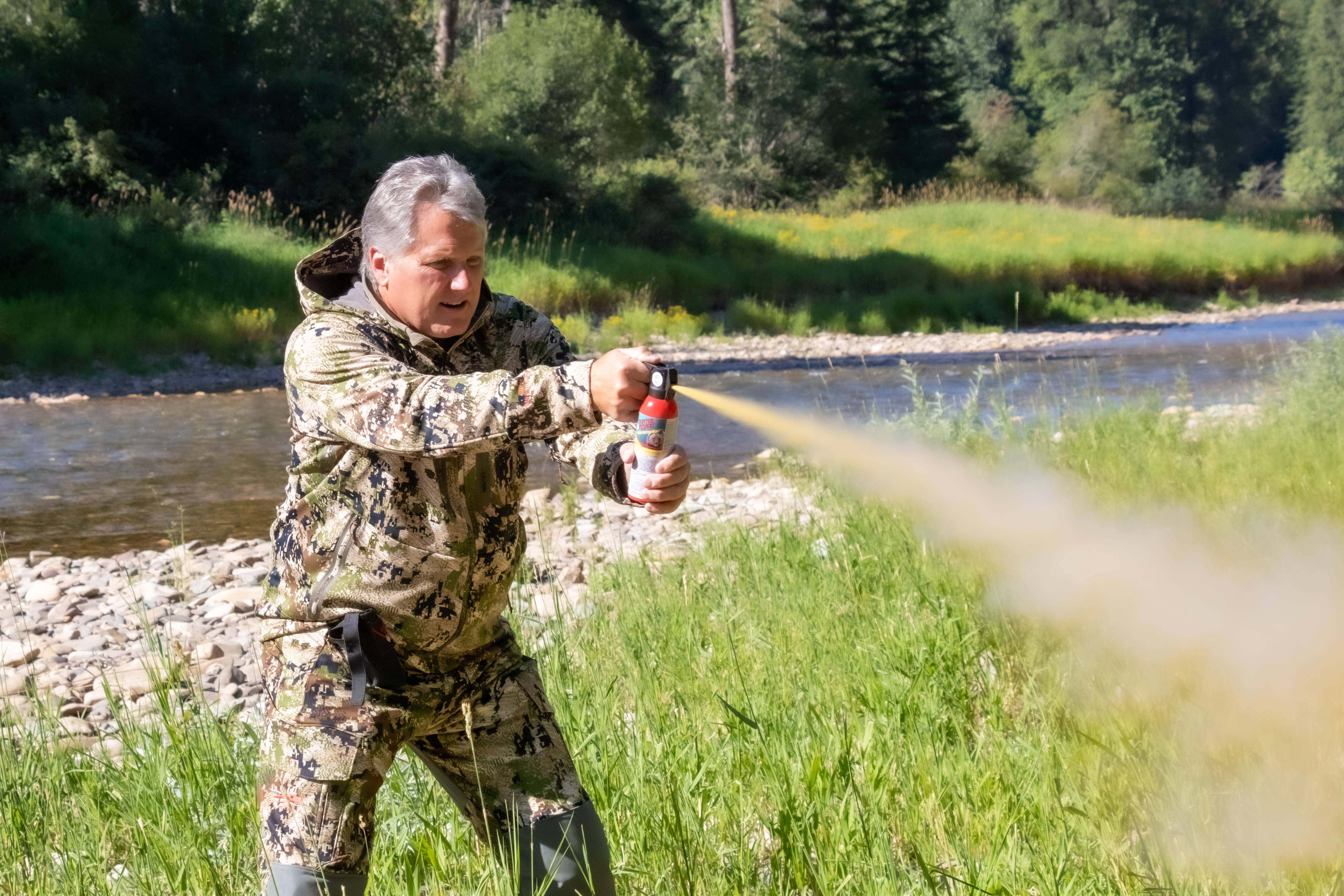
After being attacked by a grizzly bear last October,  Bob Legasa has started working with Counter Assault. Here he is pictured demonstrating how to use the company’s bear spray. Legasa’s story will be featured on Animal Planet’s “I was Prey” on Wednesday. (Bob Legasa/Freeride Media / COURTESY OF FREERIDE MEDIA)
After being attacked by a grizzly bear last October, Bob Legasa has started working with Counter Assault. Here he is pictured demonstrating how to use the company’s bear spray. Legasa’s story will be featured on Animal Planet’s “I was Prey” on Wednesday. (Bob Legasa/Freeride Media / COURTESY OF FREERIDE MEDIA)

Nearly a year ago, Bob Legasa was bloody and broken in the Montana backcountry, the unfortunate recipient of the maternal fury of an adult grizzly bear.

“It certainly was something I hope I don’t have to endure again,” Legasa said this week. “As far as the emotional and physical aspect of it, I’m lucky that I didn’t get mauled. That I wasn’t being rag dolled and tossed around. It was short and sweet. Or fast and vicious.”’

Tonight, Legasa will relive his Oct. 13 experience on national television. The Hayden resident’s story will be featured on Animal Planet’s “I Was Prey” show.

This is what happened: As Legasa and his partner, Greg Gibson, walked through tall sagebrush – between 6 and 8 feet – they startled a grizzly bear cub and its mother.

The mother bear tackled Legasa. Gibson, of Sandpoint, sprayed the bear with bear spray. The bear dropped Legasa, but not before breaking his arm with her mouth and clawing his face. She then started to charge Gibson. Gibson sprayed the bear again and she retreated.

Covered in blood and nearly blind from the spray, which had blown into their faces, both men hiked out.

In February, Legasa traveled to New York for an interview for Animal Planet’s show. Legasa, who owns his own outdoors media company, said he hesitated when first asked to participate. He worried that the show would overdramatize his experience or put an “anti-hunting” spin on it.

After being attacked online by hard-core vegans last year, he wondered if appearing on a television show would again make him a target. Ultimately, he decided to do it, reasoning that it provided him a good platform to spread a few important messages.

“Hunting has been in a weird limelight lately,” he said. “It seems like there are more people that are understanding hunting … but then there are also … some activist groups that are really going hard on trying to cut down or stop hunting.”

1 / 3

In February, Hayden resident Bob Legasa was interviewed by Animal Planet for their show “I was Prey.” Last fall, Legasa was attacked and injured by a mother grizzly bear while bowhunting for elk in Montana. The episode featuring Legasa will air Wednesday Sept. 4, 2019. (Animal Planet / COURTESY)

Legasa hopes to emphasize on the show that he hunts for many reasons. He loves being in the mountains and the challenge of stalking prey. He enjoys the pride and accomplishment of killing an animal that provides food for him and his family.

Showing the diverse reasons people hunt is a job many hunters are increasingly taking upon themselves. Only 5% of Americans 16 years and older hunt, according to a U.S. Fish and Wildlife Service study published in 2017. Fifty years ago, 10% of Americans 16 years and older hunted. Those decreased numbers mean that fewer people, especially in urban areas, know anyone who hunts.

“I was hoping that I could at least get a positive message across in that respect,” Legasa said.

In addition to burnishing the reputation of hunters, Legasa hopes to reiterate the importance of carrying bear spray, for hunters and nonhunters alike. Since his attack, he’s done promotional and testimonial work for Counter Assault bear spray, “preaching that bear spray works.”

“It should be the first line of defense,” he said. “It just gives you a better option than shooting.”

In Legasa’s case, if the two hadn’t had bear spray, they would have been out of luck. Because the bear was on top of Legasa, Gibson wouldn’t have been able to safely shoot the bear with his handgun.

With hunters and hikers heading to the hills this fall, that message couldn’t be more important.

As for Legasa, he’s mostly recovered from the attack last year. While he still has some residual pain from where the bear broke his arm, it hasn’t slowed him too much. Emotionally, he said the fallout has been minimal. Although recently, he did have his first bear-related dream.

“It wasn’t a nightmare, but there was a bear running at me,” he said. “It made me think for a second.”

That won’t stop him from hunting this year. In a week, he’s again heading to Montana for 12 days of bow hunting for elk.

“I’m going to get back on that horse and ride,” he said. “This is in my DNA. Being in the mountains is good for my soul. I’m just counting the days until I get back out there.”

FWP kills mountain lion found near Helena’s Centennial Park


MTN News File Photo

HELENA – A mountain lion found in Helena city limits has been killed and removed by Montana Fish, Wildlife and Parks.

The Helena Police Department reported the mountain lion was spotted at NorthWestern Energy property on the 1300 block of Last Chance Gulch around 7:30 a.m.

An employee saw the cat in the bushes near a building entrance.

Interim Police Chief Steve Hagen stated in a news release that “immobilizing and relocating mountain lions located in urban areas is not a safe/feasible option so lethal means are used.”

The HPD, animal control officers, and FWP all responded.

-Reported by Jacob Fuhrer/MTN News

Editorial: Build public credibility by making Grizzly Advisory Council transparent fromthe start

Missoulian May 8, 2019
https://missoulian.com/opinion/editorial/build-public-credibility-by-making
grizzly-advisory-council-transparent-from

It speaks to Montanans’ high interest in grizzly bears that 157 individuals
have been nominated to serve on a grizzly bear advisory committee that may
have 20 seats at most. Now comes the difficult task of whittling down the
lengthy list of volunteers.

Gov. Steve Bullock is already committed to ensuring the committee
encompasses the widest possible range of perspectives and a comprehensive
variety of expertise. But Bullock must also take pains to make his selection
process as transparent as possible, and to fully explain to the public the
reasoning behind his picks. At a minimum, the names and qualifications of
the volunteers need to be posted on the Montana Fish, Wildlife and Parks
website. That way, when the eventual selections are made, people can see for
themselves just how representative the council is.

After all, the advisory council will represent the general public on
critical grizzly bear management matters, an issue of looming importance as
the bears face the likely loss of federal protections.

Montana shares responsibility for four grizzly recovery zones, each of which
is home to its own unique challenges. Moreover, on top of the regional
distinctions, a key component to successful recovery involves connecting
genetically isolated populations. The council must therefore consider how to
promote healthy bear populations while also finding effective ways to reduce
conflicts with humans.

According to the Montana Fish, Wildlife and Parks website, the advisory
council will consider how best to:

. Maintain and enhance human safety

. Ensure a healthy and sustainable grizzly bear population

. Improve the response to conflicts involving grizzly bears

. Engage all partners in grizzly-related outreach and conflict prevention

. Improve intergovernmental, interagency, and tribal coordination

That’s a tall order, and to that end, the members of the council clearly
should come to the table prepared to share expertise on bear behavior – but
also human behavior. Montanans across the state will need to learn how to
safely share a home with grizzly bears.

As FWP Region 2 Supervisor Randy Arnold noted in a recent Missoulian news
article: “There are a lot of folks who will soon be dealing with grizzly
bears who have not been a part of this conversation.” The governor’s
advisory council offers an opportunity for these folks to have their
concerns considered and answered before any major problems arise.

But Governor Bullock must first reassure the public that no legitimate
concern will be ignored, and no voice will go unheard. He can get started on
the right foot and set a clear expectation of transparency throughout the
process by being open with the public as he selects the members of the
Grizzly Bear Advisory Council.

^^^^^^^^^^^^^^^^^^^^^^^^^^^^^^^^^^^^^^^^^^^

A study led by Susan Solomon found that the CO2 we add to the atmosphere
every day remains there for centuries, “so that atmospheric temperatures do
not drop significantly for at least 1,000 years<<

Hunter reportedly shot at person he thought was Bigfoot

A Montana man who was out target shooting became a target himself when another shooter unloaded a barrage of gunfire at him after mistaking him for Bigfoot, authorities said.

The 27-year-old shooter told authorities he was putting up targets outside Helena on Sunday when bullets started flying toward him, Lewis and Clark County Sheriff Leo Dutton said, according to the Idaho Statesman.

One round came within three feet of the victim and another whizzed by even closer, he told police. The man said he ran behind nearby trees for cover and eventually confronted the shooter, who was driving a Ford F-150 pickup truck.

“I thought you were Bigfoot,” the victim says the shooter told him, according to Dutton. “I don’t target practice — but if I see something that looks like Bigfoot, I just shoot at it.”

Once the man assured the gunman that he wasn’t Bigfoot — an ape-like creature said to inhabit wooded areas in the Northwest — the shooter advised him to wear an orange vest in the future.

But Dutton noted that “there was some question about the veracity of the report” because the victim who spoke to police a day after the alleged incident couldn’t provide a physical description of the shooter.

Police checked the area but didn’t find the pickup truck, ABC Fox Montana reported.

After local media reports of the man’s story, a woman said she had a similar experience in which she had been shot at by a man in an F-150.

“We’re working to find this person,” Dutton said. “It is of great concern that this individual might think it’s OK to shoot at anything he thinks is Bigfoot.”

If the reports are true, the shooter could face charges, Dutton said.

But the chief said he didn’t think the public at large was in danger, noting that “it seems to be a localized event to one geographic area.”

According to the Bigfoot Field Researchers Organization, there have been 46 sightings in Montana since 1978. In 1993, three backpackers spotted a massive upright animal running on two legs through the Gallatin National Forest.

$12 to Kill a Wolf in Montana

Center for Biological Diversity

APR 27, 2019 — 

$19 is apparently too high a sticker price for the privilege of killing a wolf in Montana. A new state proposal would cut the cost of a wolf-hunting license to just $12.

This sick disdain for wolves, literally cheapening their lives, once pushed them to the brink of extinction. The same forces who see wolves as target practice want to spread this mentality nationwide.

They must be stopped, and you can help.

The administration’s plan to take away Endangered Species Act protection from most wolves in the lower 48 would expose the animals to more hunting, more trapping, more shattered packs.

In some places it would cost more to go to the movies than to slaughter a wolf.

Idaho is even paying trappers to kill them.

These states are showing how little they care for wildlife and how easy they want to make it for wolves to be shot.

This is the war on wolves the Trump administration is encouraging states to wage.

The job of wolf recovery is far from over, which is why we’re pushing hard for a national recovery plan.


Wolf hunting could be allowed at nighttime under Montana bill

  • Updated 
https://ravallirepublic.com/news/state-and-regional/govt-and-politics/article_fb2e7e60-ff9a-5de6-a2a4-3a79b883d4ae.html?utm_medium=social&utm_source=facebook&utm_campaign=user-share&fbclid=IwAR2uSE4w_7HDX8dX3y-PKWfv1ZmDn7huyukyYAmchtEHCVDZcfoSMyxgNTk
TRY 1 MONTH FOR 99¢
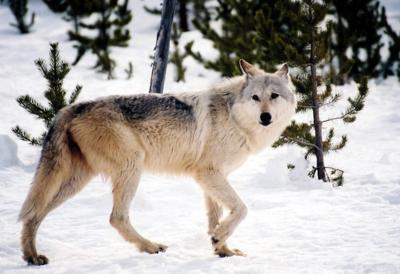
Gray Wolf

Wolves could be hunted at night and traps set along seasonally closed roads under a pair of bills brought by a northwest Montana lawmaker Thursday.

Rep. Bob Brown, R-Thompson Falls, brought House Bills 551 and 552 to the House Fish, Wildlife and Parks Committee.

Rep. Bob Brown (R-Thompson Falls)

The first bill would allow nighttime wolf hunting, making them the only big game animal that could be hunted outside of daylight hours. Other nongame animals such as coyotes and skunks already may be hunted at night.

“I know this is going to be a kind of an unpopular thing,” Brown acknowledged after several wolf bills have already brought strong debate this session. But many of his constituents in northwest Montana have been outspoken about reducing wolf numbers, he said.

The bill saw support from two individuals who described it as “another tool in the toolbox” to manage wolves.

Garrett Bacon testified that it would help key in on problem wolves by allowing hunting when they are most active and possibly preying on livestock.

Scott Blackman also testified in support and believed the number of hunters that would focus on hunting wolves at night would be limited to a few serious individuals.

Several conservation groups testified in opposition on topics ranging from ethics to safety.

“We feel hunting any game animal at night is unethical,” and won’t help the image of hunters, said Nick Gevock with the Montana Wildlife Federation.

Marc Cooke with Wolves of the Rockies agreed with the ethical concerns but also noted that shooting at night raises safety issues with identifying a target and beyond.

Montana Fish, Wildlife & Parks testified in opposition, echoing the concerns of others as well as the propensity for poaching at night, which is often associated with spotlighting.

Brown’s second bill, SB 552, was borne out of what he sees as difference in opinion about what constitutes a closed road when it comes to trapping and particularly the trapping of wolves.

Along open roads and trails, trapping regulations require traps be set a certain distance away. Called a “setback,” the distance is intended to reduce conflicts with other recreationists, particularly those with dogs that may be unintentionally caught. Traps for most animals must be set 50 feet from a road or trail while wolf traps require a 150-foot setback.

Under the bill, setback regulations would not apply to roads closed year-round to highway vehicles nor would they apply to seasonally closed gated roads for wolf trapping. The setback regulations currently apply to seasonally closed roads.

Brown said he believed the definition of a closed and open road should be made by legislators rather than the Montana Fish and Wildlife Commission, and that many of the gated roads are in the high country that sees lower use by other recreationists. He also noted that while the areas in question are public land, pet owners “also need to take responsibility for their pets” when venturing out in wolf habitat and where trapping is taking place.

Blackman, testifying for the Montana Trappers Association, agreed with the bill and felt it was “nothing more than a clarification.”

KC York with Trap Free Montana Public Lands disagreed, holding up a wolf trap and saying “Traps hold our public lands hostage,” and adding that a great deal of work went into establishing setbacks.

Art Compton with the Sierra Club felt that roads closed year-round should be the last place to lift setbacks, as recreationists such as skiers and snowshoers seek those areas out to get away from motorized users.

Brown closed on the bill by noting that many miles of ungated roads would still fall under the setback regulations and reiterated responsibility.

“(We’re) asking some responsibility from trappers in many cases and I think we need to ask some responsibility from pet owners,” he said.

The committee did not take immediate action on the bills.

Letter: Mandatory trap checks needed in MT

    •  https://missoulian.com/opinion/letters/mandatory-trap-checks-needed-in-mt/article_916d9166-c08c-5bc7-811e-72007a5158fe.html
TRY 1 MONTH FOR 99¢
Letter

According to the Association of Fish and Wildlife Agencies, trappers should check their traps at least once every day.

The American Society of Mammalogists states, “Snares or foot-hold traps should be checked a least daily, but more frequent depending upon target species, the potential for capture of non-target species, and environmental conditions. Frequent checking of traps is the most effective means of minimizing mortality or injury to animals in live traps.”

Montana has no mandatory trap check time. Trapped animals can suffer for days, even weeks, injured and exposed to the elements. Only bobcat trap sets in designated lynx protection zones and traps set for wolves require checking every 48 hours.

“The longer that animal is in a trap, the more likely you have foot injury, shoulder sprains, vascular damage, neural damage,” said Carter Niemeyer, a retired wildlife biologist.

Thirty six states have 24-hour/daily trap checks in their trapping regulations. House Bill 287 requires daily trap checks and allows for exceptions if a trapper cannot tend to the traps. HB287 helps end prolonged suffering of trapped animals and gives the trap-released non-targets, i.e. raptors, mountain lions, grizzly, deer, lynx and beloved pets a chance to survive.

Trapping is a bipartisan issue.

KC York,

Hamilton