
Continued from https://exposingthebiggame.wordpress.com/2016/05/23/excerpt-from-the-howl-of-the-hunted/ and https://exposingthebiggame.wordpress.com/2016/05/26/the-howl-of-the-hunted-part-two/
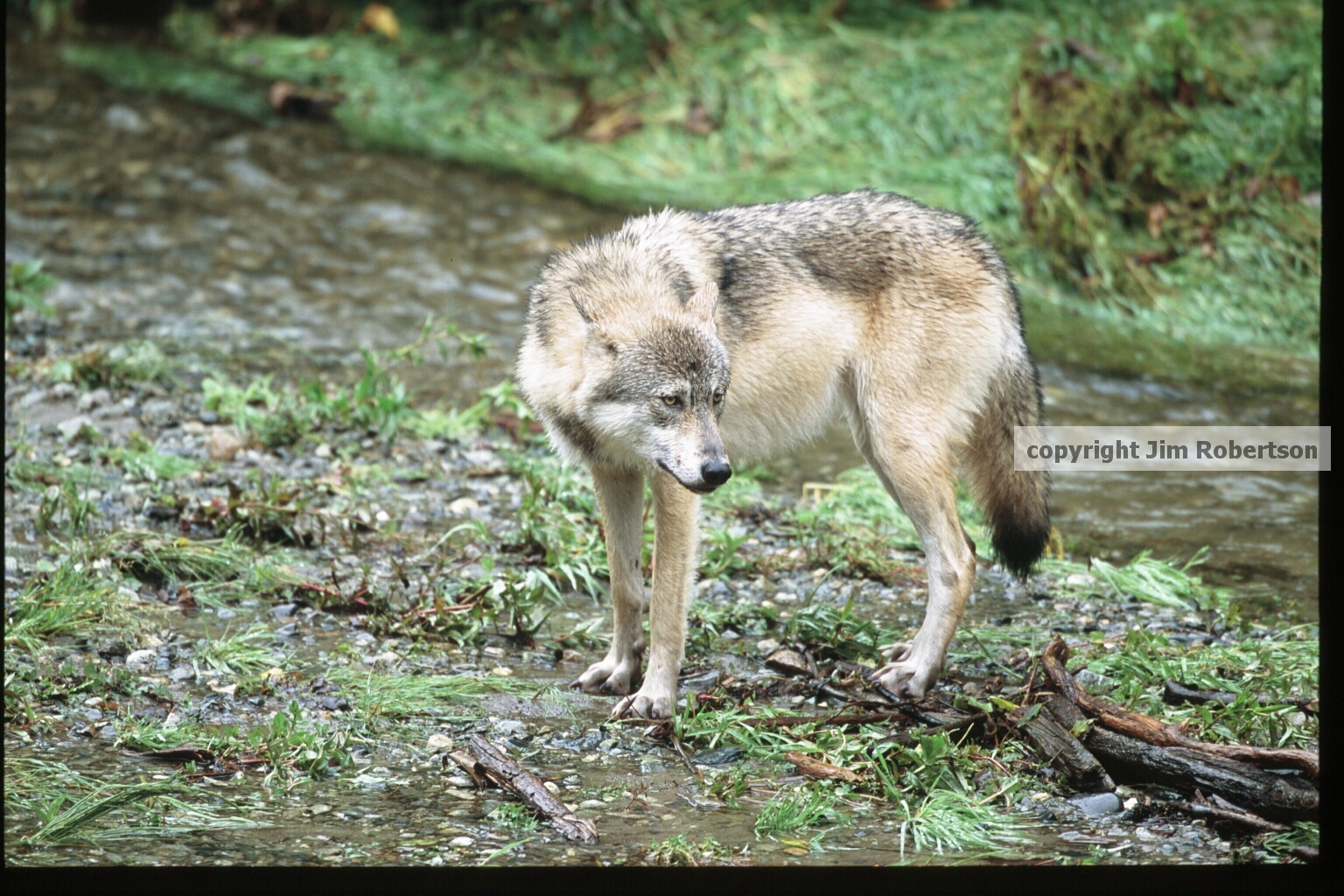
“Lone wolves are rare. Normally wolves live in packs ranging in size from three to thirty members, but averaging less than eight. The pack is essential for the species’ survival and its size is determined by the abundance of prey in a given area. A single wolf can rarely bring down an animal as large as a deer or elk, but a pack–working together with each individual taking a role–can usually, procure enough food for all members. Wolves often have great difficulty overcoming a hoofed animal contrary to older beliefs. This well known by the wolf himself and is reflected in the way he chooses his prey. If the prey does not run at first rush but holds his ground, he’s usually left alone. A good example of wolves ‘testing’ prey comes from L. David Mech’s book, The Wolves of Isle Royale, a study of wolf/moose relationships on a large protected island in Lake Michigan:
‘Seven wolves encountered three adult moose standing a few yards inland among sparse conifers and heavy blowdown. The wolves ran fifteen yards to the nearest moose, but the animal stood at bay and threatened the wolves. Immediately they headed for the second moose, which started running. However, they soon abandoned pursuit, for the animal had a head start. Then they turned to the third moose, which had watched them chase the others. This animal ran upon their approach and when during the pursuit it charged the wolves, one got ahead of the moose. The moose charges this wolf and chased it down the trail for fifty yards while the rest of the pack pursued it. Finally the moose stood next to a spruce and defied the wolves. Within half a minute they gave up.’
“On Isle Royale, Mech regularly observed moose from the air. Of the 160 in the range of the hunting wolves, 29 were ignored by wolves, 11 discovered the wolves first and eluded detection, 24 refused to run when confronted and were left alone. Of the 96 that ran, 43 got away immediately, 34 were surrounded but left alone, 12 made successful defensive stands, 7 were attacked, 6 were killed and 1 was wounded but escaped. These cases he observed over several winters in the 1960s.
“Wolves must be very economical in their energy expenditure if they are to survive. A healthy adult moose has a good chance of escaping and the wolves know they can’t afford to chase for long distances without results. Also a wolf knows he can be seriously injured or killed by his hoofed prey, if it is strong and healthy. Weaker individuals, logically, are easier to catch and the wolves–not caring about making trophy kills or obtaining fine hides–go for the easiest prey possible. Wolves often stare down their prey before deciding which one is healthiest and which one is weakest. The weaker usually show some sign of nervousness not exhibited by healthier individuals.
“The personality of wolves was summed up by Adolf Murie, who spent long periods of time with wolves in Mount McKinley National Park. In his 1944 book, The Wolves of Mount McKinley, he writes, ‘The strongest impression remaining with me after watching wolves on numerous occasions, was their friendliness. The adults were friendly towards each other and were amiable toward the pups.’
“His social nature contributes greatly to the wolf’s personality traits. One of the strongest traits is his capacity to make emotional attachments to other individuals. This is very important to the formation of a pack as the unit of a wolf’s society. Another characteristic necessary for wolf pack system cohesion is the aversion to fighting. This non-violent nature is advantageous considering they must spend much of their time together.”
to be continued…

 Exposing the Big Game