


Broadcaster withdraws series from distribution amid doubts over harpooning scene
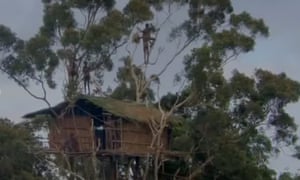
The BBC has withdrawn its TV series Human Planet from distribution after finding a second editorial breach in a matter of weeks.
Earlier this month the corporation said a scene in one episode showing tribal people living in treehouses had been faked by the programme’s makers. Now, it has said a scene showing a hunter apparently harpooning a whale is not an accurate portrayal of the man’s role.
“The BBC has been alerted to a further editorial breach in the Human Planet series from 2011,” it said in a statement. “In episode one, Oceans, a Lamaleran whale hunter named Benjamin Blikololong is shown supposedly harpooning a whale.
“On review, the BBC does not consider that the portrayal of his role is accurate, although the sequence does reflect how they hunt whales. The BBC has decided to withdraw Human Planet from distribution for a full editorial review.”
It is not the first time the series has been hit by claims of fakery. In 2015 it emerged that a semi-domesticated wolf had been used because the crew had been unable to find a wild wolf on location.
The BBC statement said: “Since this programme was broadcast in 2011, we have strengthened our training for the BBC’s Natural History Unit in editorial guidelines, standards and values.”
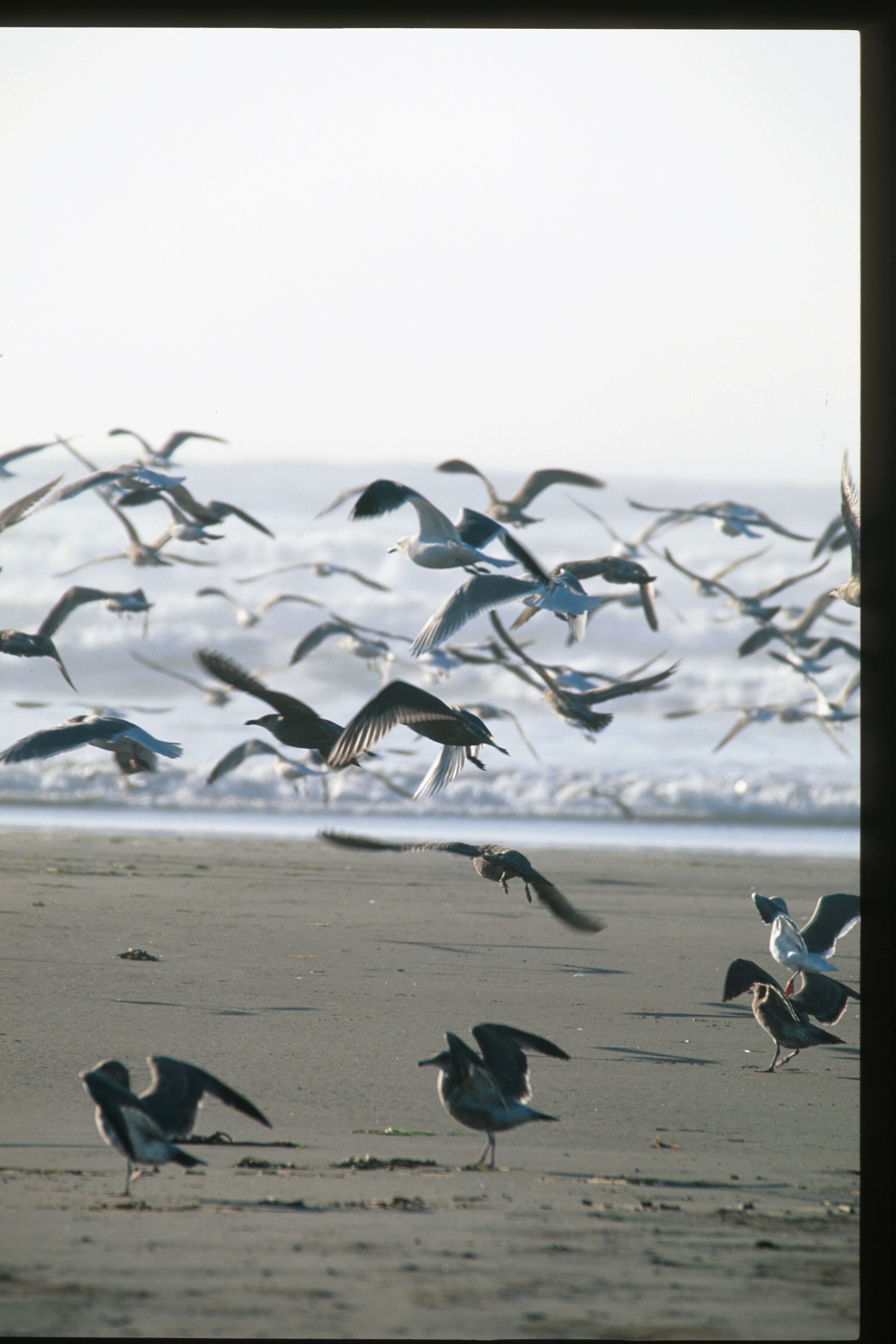
Over the weekend, my wife and I had the always-rewarding opportunity to save another life. We don’t get all the credit of course; we only brought the stranded murre to the local wildlife rehab center. But as the rehabber pointed out, those birds don’t last long on exposed beaches like that, with all the cars and dogs running off leash who might happen by.
Starving or otherwise stressed pelagic birds, like murres and grebes, loons and others, sometimes get washed in on the storms and find themselves too weak to make it back past the breakers. Last year, when I was rescuing just such a stuck sea bird who was washed up on the beach, a busy body local (probably resentful that birds sometimes eat fish) tried to convince me to leave the bird and let nature take its course. I wanted to tell him to butt out and mind his own mortality.
When I relayed the story to the rehabber she said what I’ve always thought: How often does he visit a doctor? Implied was the question: Why doesn’t he just let nature take its course next time he’s sick or injured?
Text and Wildlife Photography Copyright Jim Robertson
Yesterday I received the following comment to my post, All Meat is the Product of Cruelty and Exploitation… “How can you argue with those whose response is: ‘In the natural world animals kill other animals for food and in a most painful and cruel way and if I choose to raise my animals on my own property allowing them to live in a free and natural manner just as they would live in the wild that only differs in that they have shelter from the elements should they choose to use it and they are not kept in pens or tied but in large open barns and that at some point they will be killed as quickly and humanely as possible to be eaten by my family and the excess sold to others. I love animals but choose to eat them as well. I believe that how I treat them and kill them is better than they would live in the wild and their deaths much less horrible than being ripped apart alive as is the case in the wild’. What can you say to that?”
…to which I replied: First of all, it sounds like someone has been watching too many “nature” programs that revel in prolonged scenes of wildlife predation. Most cases of natural predation happen much faster; in many cases the prey are killed instantly.
In my book, Exposing the Big Game, I wrote about a wolf kill I witnessed in Yellowstone: “Suddenly they tore out after a young mule deer who had risked leaving the cover of the forest for the lure of an open meadow. The inexperienced doe didn’t stand a chance against the incredible, greyhound-like speed of the determined wolves. One quickly caught her by the hind leg, bringing her down, and a split second later the other had her by the throat. In less than a heartbeat, a living, breathing deer was reduced to a lifeless carcass.” Not a pretty sight, but much more the norm than the horrible scenarios depicted for entertainment on cable T.V. shows.
The hypothetical argument you spelled out (above) begins by raising the naturalist fallacy, which I covered in the post, Top Ten Retorts to Hunters’ Fallacies (just substitute hunter for animal farmer/rancher):
# 9) Animals kill other animals, so we can too.
That’s an example of what’s known as the naturalistic fallacy—the notion that any behavior that can be found in nature is morally justifiable. But wolves and other natural predators need to hunt to survive, humans don’t—for them it’s nothing more than a thrill kill. Human beings have moved beyond countless other behaviors such as cannibalism or infanticide, so why can’t some people tear themselves away from hunting?
A quote from author Robert Franklin Leslie adds to this:
“It is not important that a hawk takes a robin, that a bear robs a grouse nest. That is Nature’s own salient way even if we don’t understand it…Wilderness life has gone on that way since the beginning, and the prey has withstood the predation. But when man steps in…the very soul of Nature cringes for having endowed one of her creatures with intelligence disproportionate to responsibility.”
Backyard animal farming is nothing but the revival of Old World animal husbandry, from which modern-day factory farming is an unfortunate upshot. Both the factory farmer and the backyard butcher breed animals for the sole purpose of killing them when the time is ripe. They don’t raise the animals just because they love them and want to give them a good life, and raising them does nothing to eliminate any suffering that might go on in the wild between natural predator and prey (unless a person’s intent is to eliminate all natural relationships between wild animals, and there would be a lot of suffering on the predator’s part as the human strives to eliminate them).
Killing farmed animals “quickly and humanely” is easier said than done. At some point the animal knows that the human they trusted intends to hurt or kill them, as they probably would have seen it happen to one or more of their herd-mates. And the act of ending a healthy animal’s life so you can eat their flesh is cruel no matter how you slice it, especially since people do not have to eat meat to live a long, healthy life. And in fact, a lifetime of meat-eating is unhealthy for the human primate. Also from the Top Ten list mentioned above:
8) Humans are carnivores, look at our canine teeth.
Human teeth are designed primarily for chewing plant-based foods, like our primate cousins do. Humans “fangs” are teensy compared to those of gorillas, who are strict vegetarians and only show them to appear fierce. Also, our intestinal tract is long to allow for the slow digestion of high-fiber foods, while true carnivores have short intestines as needed to process meat and dispose of the resulting toxic wastes quickly.
7) Wild game (or free-range) meat is health food.
All animal flesh is rife with cholesterol throughout, and the protein in animal flesh is acidic, causing bone calcium losses as it is metabolized. According to the American Dietetic Association, a diet high in animal products has been linked to obesity, diabetes, colon and other cancers, osteoporosis, kidney stones, gallstones, diverticular disease, hypertension and coronary artery disease. New studies have found that another culprit in causing heart disease may be a little-studied chemical that is burped out by bacteria in the intestines after people eat meat.
Again, wolves and other predators need to eat meat to survive—modern humans do not. Natural predators don’t hate their prey, but they don’t pretend to love them either.
Forget the 4-H Club—you can’t really claim to “love” an animal you plan to someday kill, butcher and consume.

Hunters’ arguments and rationalizations for their sport are so repetitive and predictable that, to save valuable time and precious mental energy, it might help to have your responses printed out ahead of time like flash cards, and kept at the ready in your back pocket. Here, then, are the Top 10 Retorts to Hunter Fallacies you’re most likely to hear the next time you debate a sportsman. (I would apologize to David Letterman, but this isn’t meant to be a joke.)
10) Hunting is”sustainable.”
In today’s world of 7 billion people? Never mind, that’s a joke if I’ve ever heard one.
Do we really want to encourage 7 billion humans to go out and kill wildlife for food as if wild animal flesh is an unlimited resource? The only way hunting could be sustainable for humans these days is if we drastically reduced our population…and killed off all the natural predators. Overhunting has proven time and again to be the direct cause of extinctions, from the passenger pigeon to the Eastern and the Miriams Elk. Now wolves in the Rockies and Great Lakes are being hunted and trapped to oblivion—for the second time.
9) Animals kill other animals, so we can too.
That’s an example of what’s known as the naturalistic fallacy—the notion that any behavior that can be found in nature is morally justifiable. But wolves and other natural predators need to hunt to survive, humans don’t—for them it’s nothing more than a thrill kill. Human beings have moved beyond countless other behaviors such as cannibalism or infanticide, so why can’t some people tear themselves away from hunting?
8) Humans have teeth like carnivores Human beings have mostly flat teeth, designed primarily for chewing plant-based foods, as our primate cousins do. Our canines, or “fangs,” are teensy compared to those of gorillas, who are strict vegetarians and only show them to appear fierce. Also, our intestinal tract is long to allow for the slow digestion of high-fiber foods, while true carnivores have short intestines as needed to process meat and dispose of the resulting toxic wastes quickly.
7) Wild game meat is health food.
All animal flesh is rife with cholesterol throughout, and the protein in animal flesh is acidic, causing bone calcium losses as it is metabolized. According to the American Dietetic Association, a diet high in animal products has been linked to obesity, diabetes, colon and other cancers, osteoporosis, kidney stones, gallstones, diverticular disease, hypertension and coronary artery disease. New studies have found that another culprit in causing heart disease may be a little-studied chemical that is burped out by bacteria in the intestines after people eat meat.
6) Hunting is needed to control animal populations.
You’d really have to have no understanding of or faith in Mother Nature to make such a claim—she was doing a fine job of taking care of her own before Man came along and appointed himself “manager” and “game” keeper. No niche goes unfilled for long before some natural predator finds it and fixes a “problem”…if we allow them to. Besides, hunting animals like deer makes them breed more, resulting in more deer, not fewer.
5) If we don’t kill deer they’ll become a traffic hazard.
Two words: Slow the fuck Down. (Sorry, that was four words.)
More animals are hit by cars during hunting season than any other time of year, usually when fleeing from bloodthirsty sportsmen with guns.
4) Hunting teaches respect for wildlife and an appreciation for nature.
Ha! That’s like a serial killer claiming his crimes foster a respect for women. Tracking down and shooting something does not equal respect. Try using a camera or binoculars if you really want to respect them.
3) Hunting is a “manly” sport.
First of all, hunting isn’t even a sport—Sport is generally recognized as an activity based in physical athleticism or physical dexterity. Sports are usually governed by rules to ensure fair competition. A sport is played by two equally matched, or at least equally willing, sides. According to SportAccord, the second criteria determining if something is a sport: it be in no way harmful to any living creature. And anyway, real men respect animals (see above).
2) Hunting licenses pay for wildlife refuges.
In truth, hunting licenses pay for hunter playgrounds, not true wildlife refuges. Take a look at how many “refuges” have been opened up to hunting; or just try to close an area to hunting for the sake of wildlife and hear the nimrods wail. If hunters hadn’t hijacked all the refuges, more bird watchers, hikers and others who truly appreciate nature would gladly pay for a pass to frequent those places. Furthermore, non-consumptive wildlife watchers contribute far more to local economies than do hunters.
1) Hunting keeps kids out of trouble.
Sticking a gun in a child’s hand and telling him or her to shoot Bambi is likely to leave lasting psychological scars, whether it’s PTSD or a heart calloused for killing.
Bonus fallacy) God put Animals here for us to use.
Don’t flatter yourself.

Text and Wildlife Photography ©Jim Robertson, 2013. All Rights Reserved
 Exposing the Big Game