Chronic wasting disease: How will zombie-like deer impact Kentucky hunting season?

by: Allie Root

Posted: Oct 23, 2024 / 07:07 AM EDT

Updated: Oct 23, 2024 / 07:07 AM EDT

SHARE https://fox56news.com/news/kentucky/chronic-wasting-disease-how-will-zombie-like-deer-impact-hunting-season/

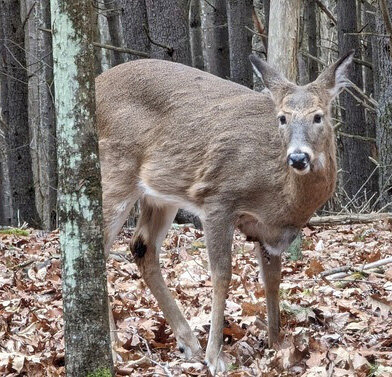
KENTUCKY (FOX 56) — A new case of chronic wasting disease (CWD) will likely throw a wrench in some people’s hunting plans. Signs of the disease are weight loss, brain lesions, and zombie-like behavior.

The illness is common in deer and was recently found in a dead one from a facility in Breckinridge County.

“And we’ve tried to put together the very best plan that we can to make these recommendations to mitigate the disease,” said Gabe Jenkins, deputy commissioner for the Kentucky Department of Fish and Wildlife Resources. 

Harris and Cheney stump in battleground states

volume_off

-00:00

sd

closed_captions

fullscreen

On Tuesday, the state approved a CWD surveillance zone in Breckinridge, Hardin, and Meade counties.

LATEST KENTUCKY NEWS:

While deer hunting is still allowed, hunters cannot bait deer with items such as corn, grain, or mineral blocks. Deer killed inside the zone cannot be taken outside of it.

Some meeting attendees were not happy with these restrictions, saying several local hunters have already put a lot of time and money into their hunting properties.

“A lot of hunters do not use woodsmanship anymore like they used to,” said one attendee. “They’re hunting straight over a feeder or some kind of mineral, and they’ve hung their stands there and everything. The concern now is if we stop that today, we’ve ruined them for the rest of the season.”

Kentucky Fish and Wildlife officials said an investigation is now underway that will allow them to check the deer population to determine if there are any other CWD cases, but some say banning bait won’t be effective.

“I think it’s going to potentially impact the underparticipation and harvest rates, which is going to be counterintuitive to getting more deer there to sample to see what the prevalence rate is,” said Matt Rhodes, the 3rd District Representative for the Kentucky Fish and Wildlife Commission.

Jenkins said this is necessary to limit the spread of the disease among Kentucky’s deer population.

https://285bc54a0092deb0ed20f762cfa00d03.safeframe.googlesyndication.com/safeframe/1-0-40/html/container.htmlRead more of the latest Kentucky news

“We know the disease is on the landscape and we know modes of transportation of that disease from an animal to an animal and how that looks. So, there’s a high probability it’s in the environment. It’s on there. And so, anything we can do right out of the gate to decrease the chances of infection and the spread of the disease is paramount for us.”

No CWD infections in people have ever been reported, but the CDC notes that if CWD could spread to humans, it would most likely be by eating meat from an infected animal.

Anyone with questions or concerns can attend a public meeting set for Nov. 7 at the Breckinridge County Extension Office.

Owls in Cyprus become “collateral damage” in illegal trappings (photos)

Owls In Cyprus Become %22collateral Damage%22 In Illegal Trappings (photos)

Relevant News

The issue of Mia Milia is becoming clearer…

21 October 2024

Meloni shows the way and Ursula is applauds

21 October 2024

Inflation decreases, but economic growth is also slowing down

21 October 2024

Newsroom

21 October 2024

Wildlife officials have raised alarm over the continued threat of illegal bird trapping to the island’s avian population, with over 150 species known to have been caught in nets and limesticks.

Nikos Kasinis, a senior official at the Game and Fauna Service, told philenews that the term “collateral damage” aptly describes the unintended capture of non-target species in these indiscriminate trapping methods.

According to Kasinis, more than one-third of the affected species (58) are of conservation concern.

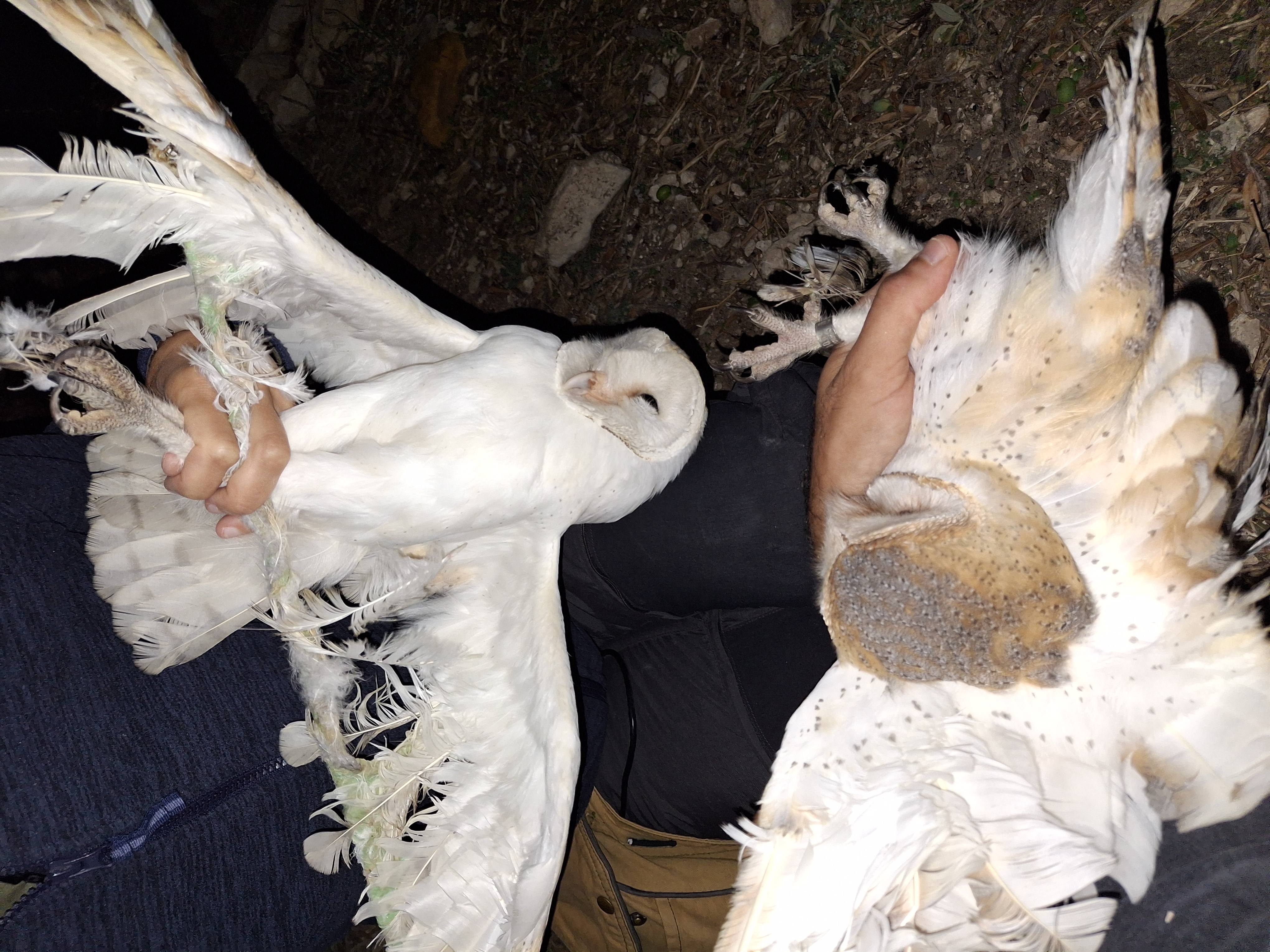
He cited a recent incident where two barn owls (Tyto alba) were found caught in limesticks in the Larnaca district. The birds were rescued, cleaned of the sticky substance, and released.

Kasinis highlighted the irony of the situation, noting that one of the rescued barn owls had been ringed by the Game and Fauna Service as part of conservation efforts.

These efforts include installing artificial nests across Cyprus to boost owl populations for natural rodent control.

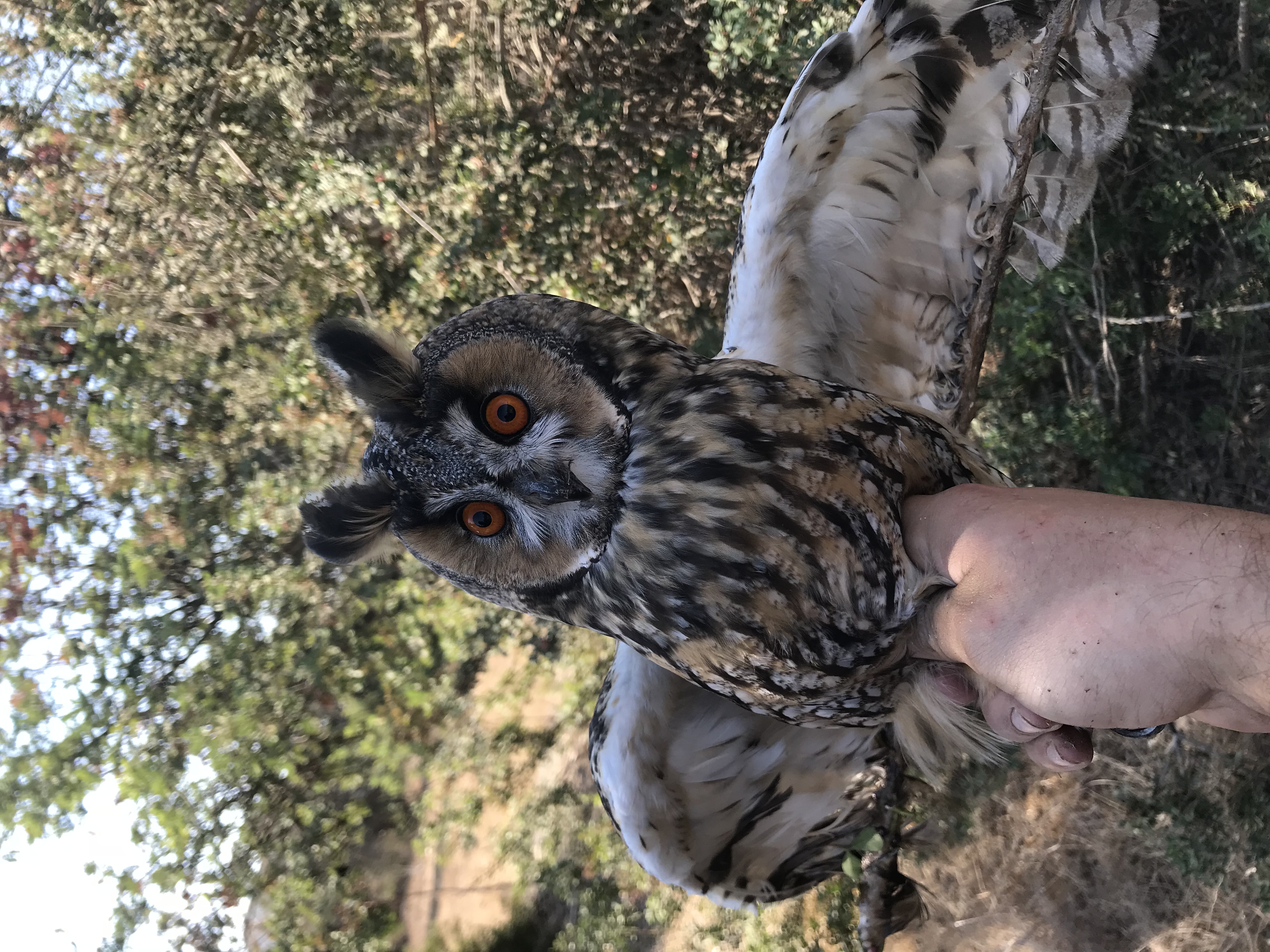
The official revealed that all owl species nesting in Cyprus have fallen victim to these trapping methods.

This includes the endemic Cyprus scops owl (Otus cyprius), the little owl (Athene noctua) – associated with the goddess Athena, and the long-eared owl (Asio otus).

Kasinis emphasised that this activity is not a “tradition” but an illegal practice driven by profit. He stressed that it poses a significant threat to Cyprus’s natural heritage and should be treated as such.

The most severe case reported was that of a young Bonelli’s eagle (Aquila fasciata) caught in a limestick in Larnaca. Despite care efforts, the bird did not survive due to stress and exhaustion.

Read more:

Illegal songbird trapping surges 90% in Cyprus, conservationists warn

Hunter, 81, severely injured in Wasatch County ATV rollover

By

 Gephardt Daily Staff

 –

October 20, 2024

Photo by Wasatch County Search & Rescue

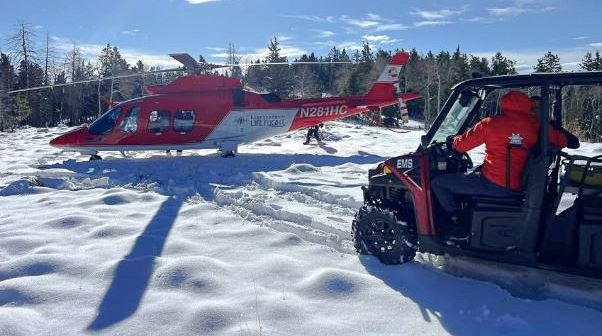
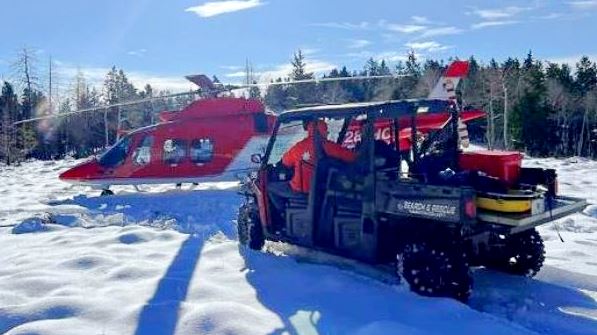
WASATCH COUNTY, Utah, Oct. 20. 2024 (Gephardt Daily) — Wasatch County Search & Rescue was dispatched to the scene after a call came in about a hunter who had sustained significant injuries.

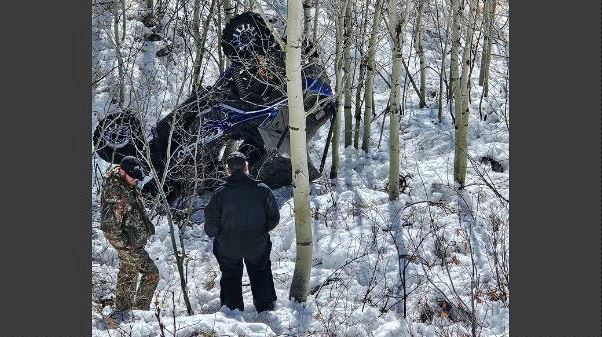
An “81-year-old male was riding his side by side while hunting,” says a statement issued by the rescue group.

about:blank

“Somehow slid off the road and down a steep embankment. This person was thrown from the vehicle and sustained severe injuries.”

The accident was called in to dispatch by other hunters who happened to be passing by, the news release says.

Photo by Wasatch County Search Rescue

Wasatch FireWasatch County Search & Rescue, State Parks, Wasatch County Sheriff‘s Office, Utah County Search and Rescue all responded to the area.

“Special thanks to Intermountain Life Flight who helped speed up the extraction on a very remote mountain.

1 of 4

Photo by Wasatch County Search & Rescue

https://www.facebook.com/plugins/like.php?href=https://gephardtdaily.com/local/hunter-81-severely-injured-in-wasatch-county-atv-rollover/&layout=button_count&show_faces=false&width=105&action=like&colorscheme=light&height=21

Four Horrific Trophy Hunting Stories That Shook the World

6 hours ago

By Trinity Sparke

trophy hunter

Image Credit :Canon Boy/Shutterstock

 Add-Free Browsing

Subscribe to Newsletter

FoodMonster App

Support Us

Buy our Cookbooks

Sign Our Petitions

Help keep One Green Planet free and independent! Together we can ensure our platform remains a hub for empowering ideas committed to fighting for a sustainable, healthy, and compassionate world. Please support us in keeping our mission strong.Pay

Pay $49.99/Year + Go Ad-Free!

Trophy hunting, often framed as a controversial pastime, has long been a point of contention among wildlife enthusiasts and conservationists. While some argue that regulated hunting contributes to Conservation efforts, the grim realities behind certain hunts reveal a darker truth. Stories of creatures hunted for sport, often with little regard for their ecological importance or emotional impact, highlight the disturbing nature of this practice.

1. Cecil the Lion

Source: ABC News/Youtube

by Taboola

Sponsored Links

You May Like

AdYETI CoolersNever Watered Down

Take A Hot Plunge

Take It Stronger

Lasts Through Every Season

The ongoing global outrage over Walter Palmer’s killing of Cecil the lion highlighted serious ethical concerns regarding trophy hunting, particularly after investigations revealed he lacked a legal hunting permit. Critics argued that such practices, often defended as beneficial to Conservation, actually undermined efforts to protect endangered species and ecosystems. Palmer’s previous illegal hunting incident exemplified a troubling disregard for wildlife laws, suggesting that the purported Conservation funding from trophy hunting was often overstated.

2. Trophy Hunter Kills Sleeping Lion

Source: PETA/Youtube

According to this video, “many lions killed for “sport” in South Africa are captive-bred, making them habituated to humans and ultimately “easier” targets for trophy hunters.” PETA released video footage showing a group of hunters ambushing a captive-bred lion resting under a tree. After being shot and wounded by one of the hunters, the lion roared and charged, only to be met with four more shots from the hunter and his guides before he was finally killed.

3. Trophy Hunter Kills Giraffe

Source: CBS Evening News/Youtube

American trophy hunter Tess Talley faced significant backlash after posting a photo of herself with a giraffe she killed, prompting her to defend the image. In a segment titled “Trophy Hunting: Killing or Conservation,” Jim Axelrod explored the controversy surrounding her hobby of hunting big game, which often involves animals kept in captivity. Talley drew criticism after the photo of her killing the giraffe went viral on social media. She claimed that the pictures were part of her effort to display respect for the animals, attempting to justify her actions amidst outrage.

4. Girl Poses With Giraffe and Zebra

Source: ABC News/Youtube

A 12-year-old girl named Ariana Gordin ignited fierce outrage after posting photos of her trophy hunts on social media, revealing her passion for hunting exotic animals. Despite her young age, Ariana had already become a skilled sharpshooter and traveled abroad for big game hunts, including a recent safari in Africa with her father. While she defended her actions, expressing pride in her experiences, the online backlash was overwhelming, with many condemning her and even issuing death threats. Her father stated that they were offered the opportunity to hunt a problematic giraffe, which sparked further debate over the ethics of hunting.

The stories of trophy hunting show us the serious problems with this practice. They remind us how important it is to protect wildlife and the natural world. Each case highlights the need to rethink how we treat animals and work towards better ways to care for them. By standing against trophy hunting, we can help ensure that animals live freely and that future generations can enjoy the beauty of wildlife without the threat of unnecessary harm.

Being publicly-funded gives us a greater chance to continue providing you with high-quality content.

Collapsing wildlife populations near ‘points of no return’, report warns

As average population falls reach 95% in some regions, experts call for urgent action but insist ‘nature can recover’

The age of extinction is supported by

theguardian.org

About this content

Patrick GreenfieldThu 10 Oct 2024 02.26 EDTShare

Global wildlife populations have plunged by an average of 73% in 50 years, a new scientific assessment has found, as humans continue to push ecosystems to the brink of collapse.

Latin America and the Caribbean recorded the steepest average declines in recorded wildlife populations, with a 95% fall, according to the WWF and the Zoological Society of London’s (ZSL) biennial Living Planet report. They were followed by Africa with 76%, and Asia and the Pacific at 60%. Europe and North America recorded comparatively lower falls of 35% and 39% respectively since 1970.

Scientists said this was explained by much larger declines in wildlife populations in Europe and North America before 1970 that were now being replicated in other parts of the world. They warned that the loss could quicken in future years as global heating accelerates, triggered by tipping points in the Amazon rainforest, Arctic and marine ecosystems, which could have catastrophic consequences for nature and human society.

symbol

00:00

03:12

Read More

Matthew Gould, ZSL’s chief executive, said the report’s message was clear: “We are dangerously close to tipping points for nature loss and climate change. But we know nature can recover, given the opportunity, and that we still have the chance to act.”https://interactive.guim.co.uk/uploader/embed/2024/10/archive-zip/giv-4559jCCOm61dRRFw/

The figures, known as the Living Planet Index, are made up of almost 35,000 population trends from 5,495 mammals, birds, fish, amphibians and reptiles species around the world, and have become one of the leading indicators of the global state of wildlife populations. In recent years, the metric has faced criticism for potentially overestimating wildlife declines.

The index is weighted in favour of data from Africa and Latin America, which have suffered larger declines but have far less reliable information about populations. This has had the effect of driving a dramatic top line of global collapse despite information from Europe and North America showing less dramatic falls.

Hannah Wauchope, an ecology lecturer at Edinburgh University, said: “The weighting of the Living Planet Index is imperfect, but until we have systematic sampling of biodiversity worldwide, some form of weighting will be necessary. What we do know is that as habitat destruction and other threats to biodiversity continue, there will continue to be declines.”

Critics question the mathematical soundness of the index’s approach, but acknowledge that other indicators also show major declines in the state of many wildlife populations around the world.

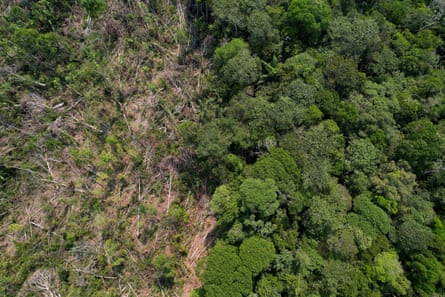
Aerial shot of he border of rainforest and clearcut land
Brazilian rainforest in Humaitá. The report identifies land-use change driven by agriculture as the most important cause of the fall in wildlife populations. Photograph: Adriano Machado/Reuters

In a critique of the index published by Springer Nature in June, scientists said it “suffers from several mathematical and statistical issues, leading to a bias towards an apparent decrease even for balanced populations”.

They continued: “This does not mean that in reality there is no overall decrease in vertebrate populations [but the] current phase of the Anthropocene [epoch] is characterised by more complex changes than … simple disappearance.”

The IUCN’s Red List, which has assessed the health of more than 160,000 plant and animal species, has found that almost a third are at risk of extinction. Of those assessed, 41% of amphibians, 26% of mammals and 34% of conifer trees are at risk of disappearing.

The index has been published days ahead of the Cop16 biodiversity summit in Cali, Colombia, where countries will meet for the first time since agreeing on a set of international targets to halt the freefall of life on Earth. Governments have never met a single biodiversity target in the history of UN agreements and scientists are urging world leaders to make sure this decade is different.

Susana Muhamad, Cop16 president and Colombia’s environment minister, said: “We must listen to science and take action to avoid collapse.

“Globally, we are reaching points of no return and irreversibly affecting the planet’s life-support systems. We are seeing the effects of deforestation and the transformation of natural ecosystems, intensive land use and climate change.

“The world is witnessing the mass bleaching of coral reefs, the loss of tropical forests, the collapse of polar ice caps and serious changes to the water cycle, the foundation of life on our planet,” she said.

Susana Muhamad Rozo 001 in Bogota, Colombia, June 2022

Land-use change was the most important driver of the fall in wildlife populations as agricultural frontiers expanded, often at the expense of ecosystems such as tropical rainforests. Mike Barrett, director of science and conservation at WWF-UK, said countries such as the UK were driving the destruction by continuing to import food and livestock feed grown on previously wild ecosystems.

“The data that we’ve got shows that the loss was driven by a fragmentation of natural habitats. What we are seeing through the figures is an indicator of a more profound change that is going on in our natural ecosystems … they are losing their resilience to external shocks and change. We are now superimposing climate change on these already degraded habitats,” said Barrett.

“I have been involved in writing these reports for 10 years and, in writing this one, it was difficult. I was shocked,” he said.

Here is what hunters can do to share the woods safely this season in St. Lawrence County

Posted Sunday, October 13, 2024 8:40 am

The New York State Department of Environmental Conservation (DEC) today encouraged outdoor enthusiasts to respectfully share the woods and follow safety precautions this fall and winter. Hikers, nature photographers, leaf peepers, mountain bikers, hunters, and trappers are encouraged to follow safety measures while afield. Regular big game hunting season in the Northern Zone begins Oct. 26 and closes Dec. 8. Bowhunting season for deer and bear is ongoing in the Southern Zone and ends at the beginning of the regular firearms season on Nov. 16.

Tips for hikers and hunters venturing afield this fall include:

  • Tell someone intended destinations and return times. If plans change, notify them;
  • Dress for the weather and plan for both location and elevation changes;
  • Become familiar with planned hiking trails or hunting areas;
  • Wear bright clothing; blaze orange or blaze pink. Bright colors allow hikers and hunters to be seen more easily and from farther away; and,
  • Pack the 10 Essentials, especially a light source, map, and first aid kit.

For more tips on sharing the woods this fall, check out this recent DEC video

While hunting-related shooting incidents involving non-hunters are extremely rare, DEC encourages all outdoor adventurers to be aware of the presence of others enjoying New York’s natural resources. Hikers should be aware they may meet hunters bearing firearms or archery equipment while hiking on trails. Hunters are fellow outdoor recreationists and hunting is permitted on Forest Preserve and Conservation Easement lands. Hunters should likewise recognize they may encounter hikers and others enjoying the outdoors.

Hunting is among the most popular forms of wildlife recreation in the state, with almost 600,000 New Yorkers participating. Hunting is safe and economically important, helping to manage wildlife populations and promote family traditions while fostering an understanding and respect for the environment.  

Hunting is safe and is getting safer thanks to the efforts of DEC’s Hunter Education program, volunteer instructors, and the vigilance of hunters. The last few years have been the safest on record with 2021 and 2022 having the fewest ever number of hunting-related shooting incidents, and 2019 and 2023 tying for second.

Hunters looking for solitude can minimize the disturbance associated with other forms of recreation by following a few tips. Before a season opens, when hunters are scouting for the perfect spot or stand location, take the time to check if the planned location is a popular one. Avoid crowding other hunters and recognize that if a hunting location is near a popular hiking spot, noise can be a factor. If a preferred hunting spot is too crowded, identify an alternative location ahead of time.

Florida python hunters get scary surprise while hunting for invasive predator snakes

By Alexa Cimino For Dailymail.Com

Published: 12:17 EDT, 11 October 2024 | Updated: 12:31 EDT, 11 October 2024

21shares

20

View comments

Top

+99Home

20

View comments

A Florida-based python hunter has shared a video of the heart-stopping moment a Burmese python lunged at him and his camera crew.

Invasive Burmese pythons are becoming a more frequent sight in the high grasses of South Florida, but a recent encounter shows these snakes are just as comfortable hiding in trees. 

On Wednesday, hunting guide Mike Kimmel, known as the ‘Python Cowboy,’ shared a video on Facebook capturing a tense interaction with one of the snakes.

javascript:false

javascript:false

javascript:false

javascript:false

javascript:false

javascript:false

The video, filmed earlier this year, shows a python turning aggressive and lunging to bite after its hiding spot was discovered by Kimmel’s hunting dog, Otto. 

‘We walked past this thing, like, three or four times,’ Kimmel said in the footage. ‘I would have walked right past it again if it were not for this (hunting) dog.’

A python hunter faces a heart-stopping moment as a Burmese python lunges at him

+6

View gallery

A python hunter faces a heart-stopping moment as a Burmese python lunges at him

Hunting guide Mike Kimmel, known as the 'Python Cowboy,' shared a Facebook video on October 9th of a tense encounter with a Burmese python that lunged aggressively after being discovered by his dog, Otto

+6

View gallery

Hunting guide Mike Kimmel, known as the ‘Python Cowboy,’ shared a Facebook video on October 9th of a tense encounter with a Burmese python that lunged aggressively after being discovered by his dog, Otto

TRENDING

Florida mans DIY strapped down house makes it through Hurricane Milton

397.3k viewing nowLieutenant Dan’s daughter warns: ‘Don’t give him money’68.6k viewing nowDisney World to reopen after ‘greedy’ response to Hurricane Milton10.5k viewing now

As the hunters, including a participant from the TV show Swamp People: Serpent Invasion, attempted to capture the snake, it lashed out several times and even tried to climb higher to evade capture. 

Kimmel eventually grabbed the snake by the head, revealing it to be a younger python, around four feet in length. 

‘The little guys are the tough ones (to catch) because where to grab them is so small and they’re quick,’ Kimmel added in the clip.

Read More

Hurricane Milton batters Florida leaving trail of death and destruction in its wake 

The Florida Fish and Wildlife Conservation Commission has called for the removal of Burmese pythons from the wild due to their devastating impact on the Everglades ecosystem. 

These nonvenomous snakes, which can grow up to 18 feet in Florida, prey on native wildlife, including deer, bobcats and alligators

Experts believe the species proliferated in the region after escaping captivity or being released by pet owners.

Officials recommend that Burmese pythons be humanely euthanized when captured in the wild to help control their growing population. 

The exact location of this particular hunt was not disclosed.

As the damage from Hurricane Milton is still being assessed, experts are warning of a potential increase in wildlife activity and advising residents to remain cautious and avoid interfering with animals.

As the damage from Hurricane Milton is still being assessed, experts are warning of a potential increase in wildlife activity

+6

View gallery

As the damage from Hurricane Milton is still being assessed, experts are warning of a potential increase in wildlife activity 

Animals such as alligators, bears, snakes and manatees may have been displaced or agitated by the storm

+6

View gallery

Animals such as alligators, bears, snakes and manatees may have been displaced or agitated by the storm 

Animals such as alligators, bears, snakes and manatees may have been displaced or agitated by the storm.

The Florida Fish and Wildlife Conservation Commission recommends staying alert and giving wildlife plenty of space. It’s important to avoid attempting to rescue or assist animals during or after a storm, as this could put you at risk.

Severe weather conditions, such as high winds and flooding, can displace and disorient wildlife, granting them access to unusual areas. 

The stress and confusion caused by storms and hurricanes often result in wildlife behaving differently, potentially exhibiting more aggressive tendencies than usual. 

While only six of Florida’s 44 snake species are venomous, the increased risk of encounters due to flooding makes it essential to maintain a safe distance. Snakes may seek shelter in debris or homes and can be found in unusual places. 

Christopher Gillette, who works at Bellowing Acres Sanctuary, an alligator and exotic animal sanctuary, has warned that snakes who are displaced can often blend in among the debris or be found washed up in unusual places. He tells people to ‘keep a sharp eye.’

'Keep in mind that the storm is going to send a lot of snakes on the move... there will be venomous snakes on the move as well. Watch your step, especially in those floodwaters,' said Gillette

+6

View gallery

‘Keep in mind that the storm is going to send a lot of snakes on the move… there will be venomous snakes on the move as well. Watch your step, especially in those floodwaters,’ said Gillette

During storms, snakes can often be carried by flooding waters or cause them to seek shelter in debris, homes, sheds or barns

+6

View gallery

During storms, snakes can often be carried by flooding waters or cause them to seek shelter in debris, homes, sheds or barns

‘Keep in mind that the storm is going to send a lot of snakes on the move… there will be venomous snakes on the move as well. Watch your step, especially in those floodwaters. If you’re doing your clean up after the storm, picking up branches, definitely watch where you put your hands – watch for snakes,’ he added.  

Snakes are not aggressive toward humans unless they feel threatened, and usually would much rather avoid encounters. To best avoid snakes, the FWC suggests avoiding tall grass and keeping hands and feet out of areas you can’t see. 

Displaced wildlife, although not all pose a threat to humans’ safety, it is important to not attempt to rescue or help injured, orphaned or dead animals during or after storms if it endangers you. 

American Mountain Lion Trophy Hunting Enthusiasts Trot Out a Stream of False Information in Prop 127 Fight

By Wayne Pacelle

Ballots will be mailed to 4.5 million Colorado voters today, and citizens can submit completed ballots at any time between now and Nov. 5.

Prop 127 is a major focus for animal welfare advocates and conservationists in the Rocky Mountain State and the nation because it seeks to halt Colorado’s unnecessary and ruthless practices of trophy hunting and commercial fur trapping of mountain lions and bobcats.

This very small segment of 2,000 trophy hunters and 700 fur trappers kills as many as 2,500 lions and bobcats for their heads, hides, and beautiful coats during a four-month assault, rigging the hunt with packs of dogs, bait, cage traps, and high-tech gadgetry. They even use drones.

As is typical in so many ballot issue campaigns, big-money opposition seeks to confuse voters and prompt them to opt for the status quo.

The biggest funder of the “No on 127” campaign is a Virginia-based Concord Fund, which focuses on federal judicial appointments and has no professional staff with any conservation or wildlife experience. The second biggest funder, if you add up donations from its chapters around the country, is Safari Club International, which has an elaborate awards program for its members who amass trophies of dead wildlife. Its best-known award is the “Africa Big Five,” requiring the shooting of an African lion, a leopard, an African elephant, a rhino, and a Cape Buffalo. A lesser-known prize is “Cats of the World,” and North American mountain lions and Canada lynx qualify as trophies for that awards category.

On Prop 127, these special interest groups have offered up a steady stream of misinformation to mislead and confuse voters so they can continue recklessly killing native wild cats. Today, I address false claims to set the record straight.

False Claim: Trophy hunting is already banned in Colorado.
Fact: There is no statute or regulation in the state that says anything about banning trophy hunting. Trophy hunting is perfectly legal in Colorado, and there is a tiny segment of the larger hunting community obsessed with obtaining a nose-to-tail trophy of a lion. Most of the successful trophy hunters shell out $8,000 to a hunting guide, who maintains the dog packs, drones, and GPS equipment, and sets up a point-blank shot at a lion clinging to a tree branch.

Only California bans trophy hunting of lions, and it would have been big news had Colorado forbidden trophy hunting. But no one has even taken note of such a ban, because it doesn’t exist. It is a political fabrication, not a policy truth.

Trophy hunting of lions — in Africa and in the Americas — has been going on since the 19th century. Lion hunting is now banned in the vast majority of South American countries, and it’s tougher for Americans to hunt African and Asiatic lions overseas because the species are classed as threatened or endangered across their ranges. That means that a major reservoir of potential cat trophies exists in North America, and there are trophy hunting vendors who caters to this subculture and deliver the point-blank shot and then the trophy for mounting and display.

Indeed, it’s not hard to find promotions of “trophy hunting” by the network of professional hunting guides who offer “guaranteed kills” of trophy “toms” to their fee-paying clients, such as this one from Huntin’ Fool. The term “trophy” is ubiquitous among the non-purged sites whose owners charge wealthy hunters $8,000 or more to kill a lion in Colorado.

On the internet, and specifically on the websites of hunting guides, it’s plain as day that the purpose of the hunt is to secure a trophy: “We start our days very early driving roads looking for mountain lion tracks,” according to one guide on BookYourHunt. “Once we have a track located, we release hounds and catch your cat. Using GPS technology we track the hounds and precisely locate where they treed your trophy. We then determine the easiest route to take you into your trophy.” A different guide says cost depends on “the outfitter’s reputation for producing quality trophies.” A posting online by one lion-hunting guide talks of strapping a dead lion to a horse, with the caption “tying on the trophy.

The animal welfare community didn’t invent the notion of “trophy hunting.” The trophy hunters coined it, and today’s trophy hunters are part of that tradition of wildlife exploitation. We draw the phrase directly from their literature, their promotional materials, and the celebrations.

And how would the taxidermy industry operate at all if not for trophy hunters?

False Claim: Packs of dogs are needed to allow for sex selection of male lions, so they don’t shoot the females.
Fact: If it’s their game plan to reduce the number of females killed by eyeing the cat cornered in a tree, I can assure you it’s not working. During the 2023-24 lion-hunting season, 47% of the 501 lions shot by trophy hunters were females.

Many of the females shot from a tree had dependent young tucked away in a den or roaming on their own. The shooting of those females dooms the family group. Lions can breed at any time of the year, so there is no safe season for avoiding orphaning.

The truth is, dog packs are used to rig the hunt. Mountain lion guides just arrested in Utah and Idaho all used dogs in their orchestrating of commercial kills of lions. The trophy hunts happen just about the same way in all these states. Same guides, slightly different settings.

Dogs are not allowed for any other so-called big game — not for deer, elk, or bears. Just for lions and bobcats.

False claim: Wildlife experts decide wildlife policy in Colorado.
Fact: It was the state Legislature that authorized mountain lion hunting in Colorado, and it’s the Colorado Wildlife Commission, a policymaking body appointed by seated governors, that approves annual hunting regulations that allow the use of dogs and high-tech gadgetry for lion hunting. These elected and appointed individuals are also the people who allow baiting of bobcat traps and the use of nooses and clubs to kill bobcats for their fur.

There are no requirements for either appointed wildlife commissioners or state lawmakers to have undergraduate or graduate degrees in any discipline of wildlife science or ecology. But even if they did — and precious few of these decision-makers do — it doesn’t mean that they have a monopoly on truth. Matters of trophy hunting and hunting methods are matters of values, ethics, and science. There are MDs, DVMs, and PhDs on both sides of just about every policy issue in America — from medical and veterinary research to health policy to criminal justice reform to agriculture policy. To cite the clearest example in our history of scientists getting it wrong, look at how the smoking industry trotted out experts and bamboozled policy makers for years and told the public that smoking posed no major health risks.

When representative government and political appointees at state commissions fail to do their jobs, then the citizens can opt to put a ballot question to the voters, given that the Colorado Constitution allows for a direct democracy.

There have been only two instances in Colorado history when citizen initiatives secured enough signatures to place measures on the statewide ballot to promote more humane and more responsible policies related to wildlife protection: 1) bear hunting, and 2) trapping.

By a lopsided vote of more than two to one, voters in 1992 banned spring hunting of bears and any bear baiting and hounding. It was the Colorado Wildlife Commission and Colorado state wildlife agency that allowed those atrocious hunting methods to be conducted for years until voters swatted them away as cruel and unsporting.

And four years later, voters also stopped the use of cruel and indiscriminate steel-jawed leghold traps and neck and body snares to kill animals for their fur and for recreation. And, yes, that’s because the Wildlife Commission and the state wildlife agency allowed those landmines for wildlife.

Citizens have always served as a check on reckless decision-making by state legislators and government agencies. In the case of wildlife policy, the process of creating humane treatment standards for wildlife by ballot initiative has been extraordinarily sparing. In every case, voters have adopted to stop inhumane, unfair, and commercial exploitation of wildlife, and there have been no serious attempts to revisit these policies.

False Claim: Mountain lion trophy hunting is “science-based” wildlife management.
Fact: There is no research or scientific evidence to support the idea that trophy killing of lions achieves any valuable social or management purpose, whether to keep populations in check or to reduce occasional conflicts. Twenty-two wildlife scientists, many of them with field experience with lions, affirmed that notion in an open letter to Colorado voters. “Wild cats evolved in Colorado’s natural ecosystems and maintain stable populations,” reported the scientists.

Science is not an opinion, but an aggregation of information, often published in peer-reviewed journals, used to inform policy judgments. It is not an end in itself, but a means of evaluation. Good science gives us options, not answers.

Among the signatories was Dr. Rob Wielgus, former director of the Carnivore Conservation Lab of Washington State University. Dr. Wielgus did pioneering work to demonstrate that trophy hunting creates social chaos among surviving lions, with fellow scientists noting in their joint letter that “trophy hunting may also exacerbate human-lion conflicts by removing unoffending animals from the ecosystem, leaving the door open to younger cats who are more likely to be involved in conflict random recreational killing of lions.”

“These wild cat populations can and do regulate themselves, while providing a multitude of benefits to ecosystems,” commented Dr. Elaine Leslie, PhD, former chief of biological services for the National Park Service, who concluded that “the inhumane trapping and hunting of mountain lions and bobcats is not an ethical management tool.”

In addition to them, Dan Ashe has also weighed in and urged voters to approve Prop 127. Ashe was the top wildlife management official in the United States for years, with his role as director of the U.S. Fish and Wildlife Service from 2010-2016. He says trophy hunting of lions is wrong. He particularly underscores that using dogs and GPS gadgetry makes it unsporting, with the culmination of the hunt the shooting of a terrified animal in a tree.

It is an axiom of American politics that there is a bilge pump of misleading, false information washing over the public during election season. There’s no better example of this social science phenomenon than the “No on Prop 127” campaign.

Wayne Pacelle is president of Animal Wellness Action and the Center for a Humane Economy. He is the author of two New York Times bestselling books about the human relationship with animals.

Police hunt suspect who shot and killed 2-year-old sea lion lying on California beach

Police are offering a reward of up to $20,000 for information about the suspect.

ByJon Haworth ABCNews logo

Thursday, October 10, 2024 10:01AM

Sea lion fatally shot on Orange County beach

about:blank

A California sea lion was fatally shot on Bolsa Chica State Beach in Orange County, and a reward is now being offered to find the person responsible.

Federal officials are hunting for a suspect who they say shot and killed a 2-year-old sea lion while it was lying on a California beach, authorities said.

The National Oceanic and Atmospheric Administration’s Office of Law Enforcement is now offering a reward of up to $20,000 after the incident — which took place at Bolsa Chica State Beach in Orange County, California, on Aug. 7 — when the male California sea lion was found injured but alive between lifeguard stations 22 and 23 with a “fresh gunshot wound in its back,” according to a statement from the NOAA released on Wednesday.

“The Pacific Marine Mammal Center in Orange County rescued the male sea lion, but it died from its injuries the following day,” NOAA officials said.

Law enforcement is now actively seeking information on the person who shot the animal and any other details surrounding its shooting.

“The Marine Mammal Protection Act prohibits the harassment, hunting, capturing, or killing of sea lions and other marine mammals,” officials said. “However, the law allows for non-lethal methods to deter marine mammals from damaging private property, including fishing gear and catch, if it does not injure or kill an animal.”

Like all marine mammals, the California sea lion is protected under the Marine Mammal Protection Act which has helped their population to continue increasing since at least 1975, after protections were put in place under the MMPA.

“California sea lions are easy to view in the wild, but this puts them at higher risk of human-related injuries and death. Feeding or trying to feed them is harmful and illegal, because it changes their natural behaviors and makes them less wary of people and vessels,” the NOAA said. “They learn to associate humans with an easy meal and change their natural hunting practices-for example, they take bait catch directly off fishing gear. Sometimes they fall victim to retaliation (such as shooting) by frustrated boaters and fishermen.”

Anyone with information about the sea lion shooting should call NOAA’s 24/7 enforcement hotline at (800) 853-1964.

SBA Police arrest three in connection with bird-trapping

Sba Bird Trapping

Relevant News

SBA Police arrest three in connection with bird-trapping

https://in-cyprus.philenews.com/local/sba-police-arrest-three-in-connection-with-bird-trapping/

Three men were arrested in the Dhekelia area on Monday morning after a Sovereign Base Area Police anti-bird trapping raid discovered them in an orchard using active mist nets.

During the raid, between the villages of Ormidhia and Xylophagou, the dedicated Bird Trapping Action Team working alongside the Committee Against Bird Slaughter, released 69 live Ambelopoulia (Black Caps) which had been snared in three mist nets.

The police have also confirmed that a bird imitating device used to attract migrating Ambelopoulia was seized, along with three loudspeakers, 100 metres of electric cabling, one car battery and a vehicle used by the men.

All three are from the Xylophagou area and police are now in the process of tracing the owner of the orchard used for the crime.

Sergeant Yiannis Louca, who ran the operation, said the men are now all facing prosecution for their crimes.

He explained: “Firstly, this is a really good result and sends out a very strong message that despite our success in heavily reducing this crime over the years, we remain committed.

“We are still investigating this crime but the men will face prosecution in the SBA Court as we operate a zero-tolerance policy on bird trapping.”

Inspector Fanos Christodoulou, who oversees the team, warned trappers his officers were now better resourced and more prepared than ever before.

He said: “We have assembled a team of 10, full of experience with officers that are keen to make a difference in tackling this crime.

“We will have the capacity to call on up to 10 members of the military to assist us in our operations when working on military land and on top of that, we will once again work very closely with Bird Life Cyprus and CABS to combat bird trapping.

“As always, we will continue to develop our technology, with drones, hidden cameras and any other modern means of detection.”

Bt1