A flock of 5 short-toed eagles came under fire along the Victoria lines on Tuesday as members of BirdLife Malta followed the prized birds in an attempt to prevent them from being killed.
The organisation said in a statement the shots at these birds were fired as they attempted to find a resting place for the night, with one bird being filmed as it was shot down at Bingemma, while volleys of shots at these birds were fired along Tas-Santi, Dwejra and Mtarfa into the evening.
Video footage of the Bingemma incident was passed on to police with a hunter identified as being the same person involved in a separate illegal hunting incident during the closed season last August.
Information about a second, separate incident was also shared with police for further investigation.
The following morning, only two eagles were seen flying out of the northern part of the island, while searches undertaken by police are believed to have been futile.
“Despite peak migration, only two EPU units are currently operative around the island, with occasionally a single unit struggling to keep up with reports of illegal hunting by NGOs,” Birdlife said.
BirdLife Malta said such incidents are a direct consequence of the lack of proper governance of hunting whereby thousands of birds listed in taxidermy collections have gone unchecked for years, with recent allowances in transfers rekindling demand for such birds to become taxidermy specimens.
The organisation added that it was holding Minister Clint Camilleri politically responsible for allowing the opening of a hunting season without the necessary police resources and for allowing a system where a hunter who was caught red-handed hunting illegally is, a month later, persisting in more wildlife crime.
It also remarked on the continuing situation with hunting federations taking no responsibility for their members’ actions.
Short-toed Eagles only appear annually in few numbers between September and November, and they are highly prized for taxidermy.
“As was the case yesterday, hunters do not hesitate to use the opportunity of an open hunting season for game birds to target protected species. A 3pm hunting curfew to protect such birds of prey on arrival was changed to 7pm in 2015, effectively allowing hunting to coincide with the arrival of these highly protected species,” Birdlife said.
A flock of 5 short-toed eagles came under fire along the Victoria lines on Tuesday, as members of BirdLife Malta chased the birds in an attempt to prevent them being killed.
Shots at these birds were fired as they attempted to find a resting place for the night with one bird being filmed as it was shot down at Bingemma, while volleys of shots at these birds were fired along Tas-Santi, Dwejra and Mtarfa into the evening.
The bird conservation group said video footage of the Bingemma incident were passed on to police with a hunter identified as being the same person involved in a separate illegal hunting incident during closed season last August.
Information pertaining to a second separate incident was also shared with police for further investigations.
Earlier this morning only two eagles were seen flying out of the northern part of the island, while searches undertaken by police are believed to so far have proven futile.
Despite peak migration, only two Environmental Protection Units within the Police Force are currently operative around the island, with occasionally a single unit struggling to keep up with reports of illegal hunting made by NGOs.
In a statement on Wednesday, BirdLife Malta said such incidents were a direct consequence of the lack of proper governance of hunting whereby thousands of birds listed in taxidermy collections have gone unchecked for years, with recent allowances in transfers rekindling a demand for such birds to become taxidermy specimens.
It also said it held Minister Clint Camilleri, an avid hunter himself, politically responsible for allowing the opening of a hunting season without the necessary police resources, and for allowing a system where a hunter who was caught red-handed hunting illegally, is a month after, persisting in more wildlife crime decimating highly protected species. It also remarked on the continuing situation with hunting federations taking no responsibility for such acts by their members.
Short-toed Eagles only appear annually in few numbers between September and November, and they are highly prized on taxidermy lists by hunters.
A 3pm hunting curfew to protect such birds of prey on arrival had been changed to 7pm in 2015, effectively allowing hunting to coincide with the arrival of these highly protected species.
(THE CONVERSATION) Hunting large carnivores is a contentious issue in wildlife management and conservation. It’s on the ballot in fall 2024 in Colorado, where voters will consider Initiative 91, a proposed ban on hunting and trapping of mountain lions, bobcats and lynx in the state. Wildlife agencies often use regulated hunting as a tool for controlling carnivore populations, reducing their impacts on vulnerable wildlife or minimizing the risk of conflict between carnivores and people, pets and livestock. But scientific studies have questioned how effectively recreational hunting achieves these goals. And public attitudes are shifting as participation in hunting declines. We direct Colorado State University’s Center for Human-Carnivore Coexistence and Animal-Human Policy Center. Together with our colleague Benjamin Ghasemi, we recently surveyed Colorado residents about their perceptions of hunting mountain lions and black bears in the state. We found that support for hunting depended on the purpose, with most Coloradans disapproving of hunting for trophies or sport. Gender, age and other demographic factors also played roles. Meet the neighbors Mountain lions, also known as cougars or pumas, live primarily in the western U.S. and are legally hunted in all western states except California. Black bears, which live mainly in mountainous and forested regions across the continental U.S., are hunted in the majority of states in which they are found. The Colorado Parks and Wildlife agency estimates that roughly 3,800 to 4,400 adult mountain lions and 17,000 to 20,000 black bears live in Colorado. They are found mainly in the Rocky Mountains, with the eastern edges of their ranges near more human-populated areas in the Front Range. According to state data, hunters in Colorado killed 502 mountain lions during the 2022-2023 hunting season and 1,299 black bears during the 2023 season. Both species come into conflict with people in the state. The most common situation is when bears wander into mountain towns in search of garbage or other foods left by humans. Mountain lions are occasionally sighted in urban areas, and on rare occasions have attacked people. Varying views of hunting Our study gathered responses from Colorado residents through two public mail surveys. Samples were weighted to be representative of state population demographics, including age, gender, urbanization level, geographical region and participation in hunting. Respondents’ views on legal and regulated hunting of mountain lions were evenly split, with 41% approving and 41% disapproving. This was also true for black bears: 46% approved of hunting them, and 46% disapproved. Large majorities disapproved of hunting either animal for trophies, hide or fur, or for recreation. For mountain lions, 78% of respondents disapproved of trophy hunting; for black bears, 86% disapproved of trophy hunting. People also generally disapproved of hunting either species for meat. Respondents were more supportive of hunts for other reasons. They approved of hunting mountain lions and black bears to protect human safety by 63% and 57%, respectively. And 56% approved of hunting mountain lions to reduce harm to livestock. Large majorities disapproved of hunting mountain lions with dogs (88%) or recorded electronic calls (75%). Most mountain lions hunted in Colorado are legally taken with the aid of dogs, which chase and then tree or corner the cats. Using electronic calls to attract the cats was permitted in some parts of western Colorado until 2024, when the practice was banned for hunting mountain lions. It remains legal for hunting other carnivores, such as bobcats and coyotes. Women, younger people, urban residents and people who identified as or leaned Democratic tended to be less supportive of hunting than men, older people, rural residents and Republicans. A study we published in 2022 on the reintroduction of wolves to Colorado found a similar political split, with stronger support for restoring wolves among people who identified as Democratic than among Republicans. How to coexist with carnivores? Although Coloradans were generally supportive of using hunting to reduce human conflict with black bears and mountain lions, studies suggest that it might not be the most effective tool to do so. For example, a recent experimental study in Ontario, Canada, concluded that increased hunting of black bears did not result in less conflict – particularly during years when the bear’s natural food sources, such as nuts and berries, were limited in the wild. A long-term study on bears in Durango, Colorado, also found that availability of natural foods in the wild, and the lure of human food within the city, were the main drivers of clashes with bears. Conversely, another study in New Jersey – which is more densely developed than Colorado, so bears may be more likely to encounter people – found that well-regulated hunting of closely monitored black bear populations could help reduce conflict. Similar to its policy with bears, Colorado uses hunting as a management tool for mountain lions. There is limited scientific evidence that hunting mountain lions may prevent conflict with them. A recent study found that juvenile mountain lions from a hunted site in Nevada tended to avoid developed areas. In contrast, young cats from a site in California without hunting did not show any preference for or against areas with people. Yet, other correlative studies in Washington, California and Canada have suggested that hunting may make the problem worse. According to these researchers, hunting might disrupt the social dynamics and age structure of mountain lion populations, causing young cats seeking new territory to roam into populated areas, increasing their chances of encountering people. Overall, we believe that more reliable scientific information is needed to guide carnivore management and test assumptions about how effective hunting is at addressing these problems. Continued focus on proactive, nonlethal strategies to prevent conflict is essential. Ultimately, promoting coexistence between humans and carnivores is often much more about managing people than about managing predators. Changing human behavior is key. For example, failing to store garbage securely attracts bears. So does filling bird feeders in spring, summer and fall, when bears are active. Steps to reduce encounters with mountain lions include hiking in groups and making noise; keeping dogs leashed in the backcountry; keeping pets indoors at home; and not landscaping with plants that attract deer, the cat’s main prey. Big cats on the ballot Colorado’s Initiative 91 would ban hunting and trapping of mountain lions, bobcats and lynx in the state. It would allow for lethal removal of problem animals to protect human life, property and livestock. Hunting and trapping of bobcats, mainly to sell their pelts in the fur trade, is currently legal in Colorado. On average, hunters and trappers have killed 880 bobcats annually over the past three years, the majority of which were trapped. Hunting and trapping are currently prohibited for lynx, which are listed as endangered in Colorado and threatened nationally, but the proposed ban would protect them if their populations recover. Coloradans have voted to limit carnivore hunting in the past. They passed a ballot initiative in 1992 to ban bait, hounds and a spring hunting season for bears, and another in 1996 to ban the use of leghold traps, poison and snares. Our research adds to growing evidence that public views toward hunting and carnivores are shifting. An increasing share of Americans believes humans should coexist with carnivores and opposes lethal control for human benefit. Studies also suggest that ballot measures like Initiative 91 may become more common as public attitudes evolve and more diverse groups seek to influence wildlife management. It will be challenging for wildlife managers to adapt to these changing values. Agencies may have to consider more participatory methods that engage diverse stakeholders in decision-making, develop new funding mechanisms that are less reliant on hunting and fishing license fees, and reexamine how and for whom they manage wild animals. This article is republished from The Conversation under a Creative Commons license. Read the original article here: https://theconversation.com/as-attitudes-toward-wild-predators-shift-colorado-voters-weigh-a-ban-on-hunting-mountain-lions-238265.
Saturday morning at approximately 6:15 AM near St. Germain, a young 19-year-old hunter from Sugar Camp had to make an instinctual decision to shoot and kill a wolf to protect himself and two younger hunters from a pack of brazen wolves.
“We pulled up to the spot at like 3:45 in the morning to get our spot because it was opening morning. We got to the spot we built our blind. A little bit before shooting light, we threw our decoy outs we had some goose silhouettes some mallards and some teal,” said Chase Melton the 19-year-old hunter.
But come daybreak, that normal opening morning quickly became a nightmare.
“The one kid next to me he was 14 years old said ‘hey you have a deer coming down on your left side,’ so I stood up and looked over at it was a wolf,” said Melton.
Melton said it was hard to identify at first whether it was a wolf or coyote.
“I tried making some noise, I was clapping, stomping, breaking some sticks, whatever. This wolf turned at me and we locked eyes, and it started to come at us not like a walk but like a jog almost and it was at about 40-50 yards. So, I started to panic a little bit they started panicking because they’re younger kids and they’re like oh my god we’ve got wolves around us,” said Melton.
“So, I grabbed my gun just in case something would happen,” said Melton. “Then, the 13-year-old who was two people down from me said ‘Chase right behind you!’ I looked, and we had a wolf at about five yards – I probably could have touched it with my hand, that was extremely scary. So now, we’re really panicking were like alright were surrounded we have a wolf charging us right now.” Said Melton.
A witness that was hunting 300 feet away reported seeing at least five wolves surrounding the young hunters’ blind and another four in the general area. The witness also reported hearing barks, growls and howls coming from the wolves surrounding the young hunters’ blind.
“This wolf got within 15 yards and I’m like he’s still coming, he’s still coming, he got withing 8-10 yards and it’s not what I wanted to do but to protect us and to protect them we felt harmed, so I pulled the trigger,” said Melton.
Melton fired one shot, close range at the wolf’s face using a 12-gauge loaded with non-toxic waterfowl load.
“This wolf that was five yards behind us went off into the woods, came down, and then grabbed this wolf that I shot by the neck and started dragging it off. I’ve never witnessed something like that.”
Melton said he’s witnessed wolves in this spot once before but never an encounter like this.
“So after this wolf grabbed the one that I shot by the neck, they were yipping super loud, beyond scary,” said Melton
Melton said he contacted the DNR immediately after the encounter occurred after the wolves retreated into woods. A DNR official confirmed the incident.
“They reported that incident to DNR right away that morning. A DNR conservation warden and biologist were able to follow up that morning to investigate and confirmed that it was a wolf. At this time the investigation remains open so unfortunately, I’m unable to share any more details at this time,” said Randy Johnson, Large Carnivore Specialist for the Wisconsin Department of Natural Resources.
As for Melton – an avid outdoorsman – it’s a day he won’t forget.
“Even just being out in the woods in the future it might have an impact on me its just hard to say,” said Melton.
Restoring nature boosts biodiversity and ecosystems that can rapidly and cheaply absorb carbon emissions
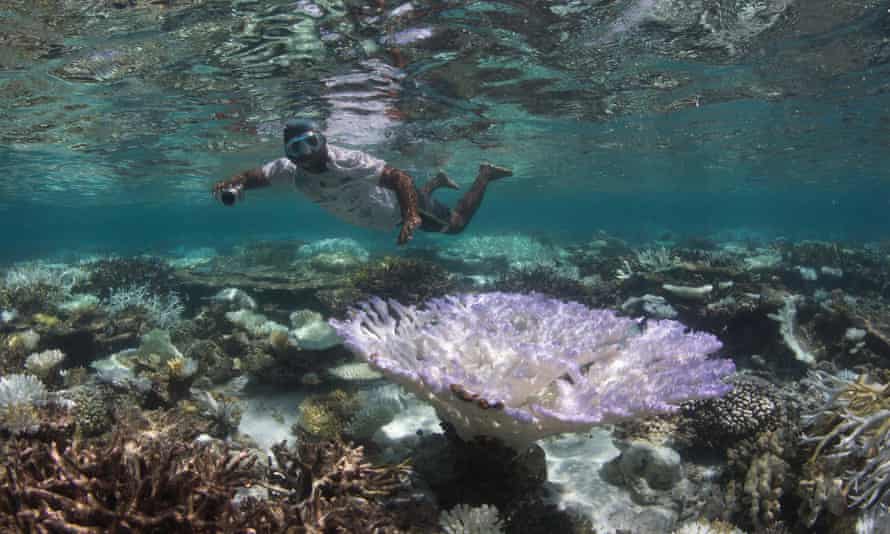
A snorkeler swims through bleached coral in the Maldives. Half of the world’s coral cover has been lost since Victorian times, say scientists. Photograph: AP
Humanity must solve the climate and nature crises together or solve neither, according to a report from 50 of the world’s leading scientists.
Global heating and the destruction of wildlife is wreaking increasing damage on the natural world, which humanity depends on for food, water and clean air. Many of the human activities causing the crises are the same and the scientists said increased use of nature as a solution was vital.
The devastation of forests, peatlands, mangroves and other ecosystems has decimated wildlife populations and released huge amounts of carbon dioxide. Rising temperatures and extreme weather are, in turn increasingly damaging biodiversity.
They also warned against action on one crisis inadvertently aggravating the other, such as creating monoculture tree plantations that store carbon but are wildlife deserts and more vulnerable to extreme weather.
“It is clear that we cannot solve [the global biodiversity and climate crises] in isolation – we either solve both or we solve neither,” said Sveinung Rotevatn, Norway’s climate and environment minister.
The peer-reviewed report was produced by the world’s leading biodiversity and climate experts, who were convened by the Intergovernmental Panel on Climate Change and the Intergovernmental Science-Policy Platform on Biodiversity and Ecosystem Services, both which report to the world’s political leaders.
The report identified actions to simultaneously fight the climate and nature crises, including expanding nature reserves and restoring – or halting the loss of – ecosystems rich in species and carbon, such as forests, natural grasslands and kelp forests.
“It’s very disturbing to see the impacts over recent years,” said Prof Alex David Rogers, of conservation group REV Ocean and the University of Oxford, and a report author. “Between 1970 and 2000, mangrove forests have lost about 40% of their cover and salt marshes an estimated 60%. We’ve also lost half of coral cover since Victorian times.”
Food systems cause a third of all greenhouse gas emissions, and more sustainable farming is another important action, helped by the ending of destructive subsidies and rich nations eating less meat and cutting food waste.
“Animal agriculture not only emits 10 to 100 times more greenhouse gases per unit product than plant-based foods, they also use 10 to 100 times more land,” said Prof Pete Smith, of the University of Aberdeen. “So more plant-based diets would mean more environmentally friendly farming and then there would be more land on which to apply nature-based solutions.”
The scientists also warned against actions that tackled one crisis but worsened the other. “When I went for a walk in a plantation forest in England, it was sterile. It was a single, non-native species of tree,” said Prof Camille Parmesan, of the University of Plymouth. “There was nothing else there, no insects, no birds, no undergrowth. You might as well have built a concrete building.”
Past tree planting on carbon-rich peatlands that had never been forested was another example, said Smith. “That was an epic fail for the climate and for biodiversity.”
Planting very large areas with single crops to burn for energy was also problematic, even if the CO2 was captured and buried, Smith said: “To get the billions of tonnes of carbon removal that has been proposed in some scenarios for global stabilisation of climate, you would need thousands of millions of hectares – an area twice the size of India.”
Protecting and restoring natural ecosystems was the fastest and cheapest way to remove CO2 from the atmosphere, the scientists said. Cutting fossil fuel emissions was essential, but not enough at this point in the climate crisis, said Parmesan. “We cannot avoid dangerous climate change without soaking up some of the carbon that we’ve already put into the atmosphere and the best way to suck up carbon is using the power of plants,” she said.
“The science of restoration of ecosystems has really blossomed over the last 40 years. We are now able to efficiently and effectively restore complex systems, tropical rainforest, coastal wetlands, kelp forests and seagrass meadows, natural American prairie, and UK meadows back to their near historical diversity.”
Prof Mark Maslin, of University College London, said the report was seminal: “The science is very clear that climate change and biodiversity are inseparable. To stabilise climate change we need massive rewilding and reforestation.”
The UK environment minister, Zac Goldsmith, said: “This is an absolutely critical year for nature and climate. With the UN biodiversity [and climate summits], we have an opportunity and responsibility to put the world on a path to recovery. This hugely valuable report makes it clear that addressing biodiversity loss and climate change together offers our best chance of doing so.”
This study of the economics of biodiversity loss sets out how the current model by which money flows from rich, developed nations into schemes to enhance and protect nature in poorer nations can exacerbate the problem.
image captionConservation efforts in Kenya, and around the world, have been hindered by debt and austerity, the researchers say
Investment in activities like large-scale agriculture and resource extraction, it points out, continue to drive the destruction of natural habitats.
The gap, the researchers say, “between those who live with the environmental consequences of [resource] extraction and those who benefit from financing these developments”, is widening.
“In 2019, 50 of the world’s largest banks underwrote more than $2.6 trillion into industries known to be the drivers of biodiversity loss, an amount equivalent to Canada’s gross domestic product,” the report states.
Making things worse?
There are a number of international schemes designed to protect nature that this report deems “ineffective and underfunded”.
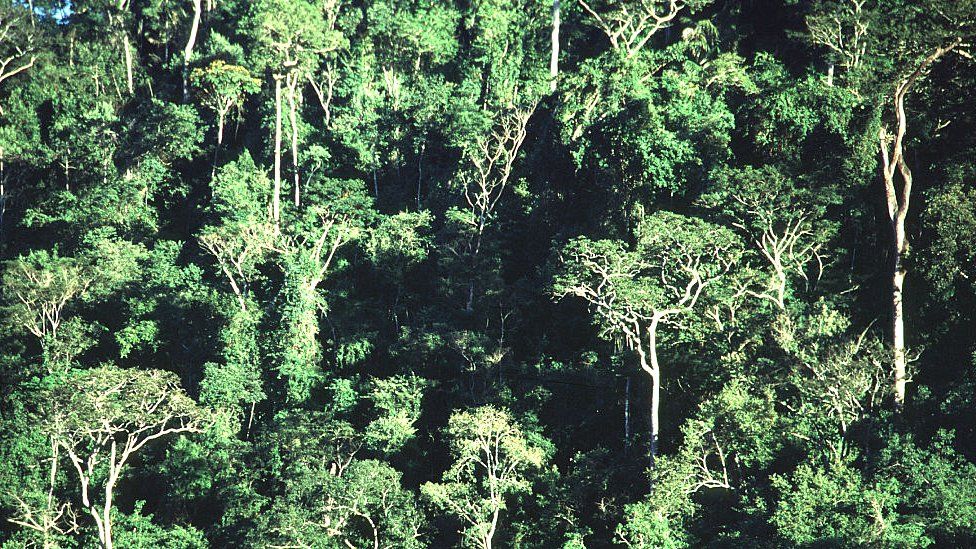
image captionBrazil’s Atlantic Forest: Second in biodiversity only to the Amazon
It points specifically to a UN programme that was designed to pay communities that live in valuable, biodiverse forests for “actions that prevent forest loss or degradation”. Essentially, it pays those communities in credits for activities that protect the forest.
In some cases, these market-driven schemes can do more harm than good.
One study of a scheme in Costa Rica, which was designed to incentivise tree-planting, revealed that it had subsidised commercial forestry, resulting in more “plantation forests” of a single non-native tree species used in the production of wooden shipping pallets.
“We need a broader rethink about how the rules of the economy are driving the sixth extinction,” said Dr Jessica Dempsey from the University of British Columbia, Canada, a researcher on the report.
“We need to take a hard look at things like tax and intellectual property policy, and even entire ideas that guide how the global economy works – like what it means for governments to be ‘financially responsible’ when austerity has such a poor track record of delivering good environmental outcomes.”
My very first job was raking leaves in the fall. It was a good way to make a little money without leaving the neighborhood. The weather was cool, the leaves were trippy colors, and people were out and about before the coming semi-hibernation of winter. It was a beautiful season of red, orange and yellow, quiet but for the sound of kids jumping into huge piles of leaves.
Now, the simple and efficient rake has been replaced by the daily intrusion of loud and polluting gas-powered leaf blowers designed to blast away any leaf that dares land on a lawn. The mind-rattling racket of these machines has made being outside, working and going to school remotely, listening to someone or something, even thinking, nearly impossible. about:blankhttps://c5x8i7c7.ssl.hwcdn.net/vplayer-parallel/20210209_0916/videojs/show.html?controls=1&loop=30&autoplay=0&tracker=83863571-8b84-4d58-a827-64f927c39254&height=300&width=533&vurl=%2F%2Fa.jsrdn.com%2Fvideos%2Fdgv_dallasnews%2F20210301053120_603c7a292e165%2Fdgv_dallasnews_trending_articles_20210301053120_603c7a292e165_new.mp4&poster=%2F%2Fa.jsrdn.com%2Fvideos%2Fdgv_dallasnews%2F20210301053120_603c7a292e165%2Fdgv_dallasnews_trending_articles_20210301053120_603c7a292e165_new.jpgXFeatured on Dallas News
Advertisement
FEATURED ON DALLAS NEWS
Surprise concert performed for homeowner activist who fought for Shingle Mountain removal
Quincy Roberts, CEO of Roberts Trucking and the man in charge of Shingle Mountain’s removal,…
Operating a gas-powered leaf blower for one hour emits smog-forming pollution comparable to driving a 2017 Toyota Camry about 1,100 miles, or approximately the distance from Chicago to Houston. Particulate matter linked to cancers, heart disease, asthma and other serious ailments, lingers in the air for days in droplets so small that the body has no way to filter them from entering the lungs. Most affected are children, the elderly and, of course, the operators of these machines.
A leaf blower is frequently the soundtrack for my day, too often the first sound I hear in the morning. The noise from these contraptions can be overwhelming. It is their unique combination of sound waves from the engine and the 200 mph blast of air it generates, that makes them so intolerable. The low-frequency waves travel farthest and produce the worst health effects, but the high-frequency waves (think dentist drill) add a grating intrusion. Unlike eyes, ears can’t shut. Studies show that noise pollution heightens stress, disrupts sleep, leads to hypertension and impairs learning.https://2c2359a808bfe6b0e9a6386ad15cacb1.safeframe.googlesyndication.com/safeframe/1-0-37/html/container.html
There is no waste in nature, and leaves aren’t litter. When autumn leaves fall, many species of butterflies, bees, fireflies, moths, ladybugs and earthworms find their winter home. The Luna moth is one of the most beautiful wild creatures that still exists close to our homes. Wrapping their cocoons in leaves provides excellent camouflage and insulation from cold temperatures. The cocoons are bright lime green and as large as four and a half inches long, and finding one is always a delight. But weekly blowing of leaf cover has substantially destroyed Luna moth habitat as well as that for fireflies and many other species. When we treat leaves like trash, we’re tossing out something other species need to survive.
Maintaining clean air and water, addressing the looming climate crisis, and protecting other species as well as ourselves should start at the neighborhood level. If we don’t encourage community responses to threats to our health and well-being, what hope do we have to take on bigger problems? We have to ask, is there value in the environment we live in, or has a leafless lawn become the new standard of our values?SPONSORED CONTENT
There are around 40 million acres of lawn in the continental United States, making turf grass the single largest “crop” we grow. Let’s move on from lawns styled with a 1950s-era crewcut to more of a Beatles-style shag, using native plants that don’t require being groomed into a flat-top. Let’s leave the leaves alone once in a while.
I’ve started to hand out a Golden Rake Award, a miniature gold rake and gift card to folks I see raking leaves, to thank them for helping to keep the neighborhood a little quieter and the air a little cleaner. We each chose the issues — from the global to the personal — that we most care about. Common to all of them is the need for sanctuary in our lives, on our streets and in our homes. If given the choice, wouldn’t we all rather live in a clean, quiet neighborhood than a loud, dirty one with fewer leaves?https://2c2359a808bfe6b0e9a6386ad15cacb1.safeframe.googlesyndication.com/safeframe/1-0-37/html/container.html
Nature is not someplace to visit, it’s all around us. Even the most urbanized places are home to countless populations of wild birds, butterflies, flowers and other species. Our surroundings have much to offer in an increasingly complicated and electronic world. Nature provides us a place to think, create and de-stress. Spending time outside is rejuvenating and important to our well-being, but the persistent noise of gas-powered blowers makes it tough to enjoy the simple act of being outside, and it’s loud enough to disrupt your day, even inside your own home, a place that has become more essential than ever.
Sanctuary is being lost to the sanctity of a well-groomed lawn. With a million new gas-powered blowers sold each year, and manufacturers pushing the year-round use of leaf blowers for a variety of purposes, including to dry off pavement, it’s only getting worse. We’re not only losing peace and quiet and the quality of our air, we’re losing a whole season.
It’s time to hit the reset button and take back autumn. Buy someone a rake for Christmas, and get out in the crisp clean air and jump in the leaves.
Peter Bahouth is the former executive director of Greenpeace USA, the Turner Family Foundation and the U.S. Climate Action Network. He wrote this column for The Dallas Morning News.
Updated 11:00 AM ET, Tue January 19, 2021This Psittacosaurus fossil, in the collection of the Senckenberg Museum of Natural History in Frankfurt, Germany, preserves the only known dinosaur cloacal vent.
(CNN)We know a lot about dinosaurs — what they looked like,what they ate and what killed them off — but no fossils have definitively preserved two dinosaurs in the act of mating.However, a fossil from China of a Psittacosaurus is so well preserved that the opening the Labrador-size dinosaur used to pee, poop and reproduce is visible, allowing paleontologists to study it for the first time.While it doesn’t offer any concrete answers on how dinosaurs may have procreated, it does give some hints.”We don’t have any dinosaur fossils where you can be confident they’ve been caught in the act,” said Jakob Vinther, a paleontologist and senior lecturer at the University of Bristol’s School of Earth Sciences.What we know is “based on natural history where we compare it to living groups of animals.”While most mammals have separate holes for bodily functions, many other animals — including birds and reptiles — have just one and it’s known as the cloaca.close dialog
Receive Fareed Zakaria’s Global Analysisincluding insights and must-reads of world newsActivate Fareed’s BriefingBy subscribing you agree to ourprivacy policy.The fossilized cloaca confirms that dinosaurs had one but it doesn’t look like that of any other living animals.A reconstruction of Psittacosaurus illustrating how the cloacal vent may have been used for signaling during courtship.”It is very unique. Most cloacas form a kind of slit. Sometimes it’s a vertical split, sometimes it’s a smiley face, sometimes it’s a sour face. This thing has a V-shaped structure with a pair of nice flaring lips and there’s not a living groups of animals that have morphology like that,” Vinther said. “It is somewhat similar to crocodiles but still unique.”The study, which published in the journal Current Biology on Tuesday, said that large, pigmented lobes on either side of the opening could have harbored musky scent glands, as seen in living crocodiles and alligators.What’s more, the outer margins of the cloaca are highly pigmented with melanin. While they don’t know for sure what color it was, it likely would have contrasted with the dinosaur’s pale underbelly, Vinther said.
Inside a dinosaur egg, this baby wasn’t what researchers expectedThis distinctive pigmentation could mean the vent was used to display and signal, similar to living baboons andsome breeding salamanders.The fossil is displayed at the Senckenberg Museum of Natural History in Frankfurt, Germany, but was found in a fossil-rich area of Liaoning in northern China.Vinther had worked on the fossil before in 2016, reconstructing the dinosaur’s color patterns, and it was only at the end of that study that he realized that the cloaca was really well preserved, he said.In animals with cloacal vents, the genitals are tucked inside the body and haven’t been preserved so it’s not known whether this particular dinosaur was male or female.Most birds, the only living relative of dinosaurs, mate by “cloacal kissing” — by pressing together their openings. Some paleontologists think dinosaurs may have mated like this.Vinther, however, believes that this dinosaur would have had a penis — the fossilized opening is more similar to a crocodile’s, which do, and there are some birds, like ostriches and ducks, which also have penises.”From what we can see, this cloaca would not have been suitable for cloacal kissing,” Vinther said. “It looks like it would have been penetrative sex.”
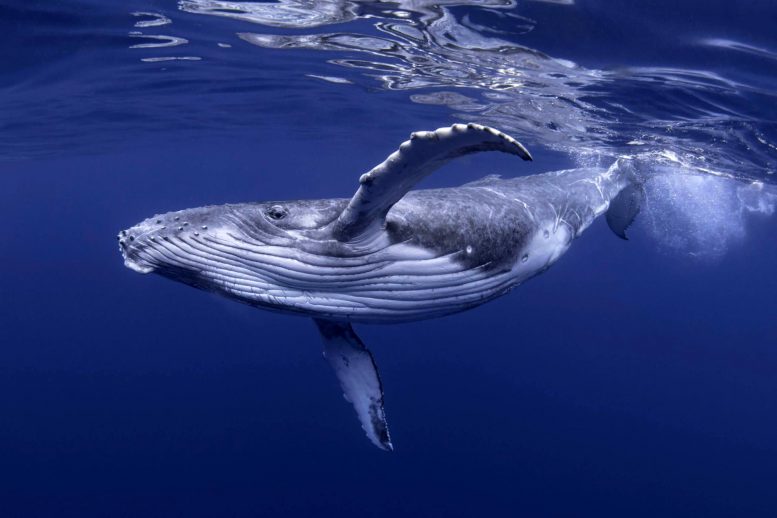
The nutrients produced by whales when they poo has been found to fertilize the interior of forests around the world.
Big animals have the power to change the face of our planet: they sculpt woodlands, power ecosystems and can even help to fertilize the interior of rainforests.
Conservation is working to prevent the largest animals on Earth from sliding into extinction — and saving them could be more important than we ever realized.
Humans have been altering the environment for tens of thousands of years. One of the starkest consequences of this is the loss of many large animals, known collectively as megafauna, from much of the planet.
When people spread out of Africa and first arrived in places like the Americas, Australia, New Zealand and Europe, the land was dominated by some truly huge animals.
Giant ground sloths and armored glyptodons roamed across the savannas of South America, huge mammoths and cave bears were trampling around the chilly landscapes of Europe, while truly enormous wombat-like diprotodons and moas were to be found across much of Australia and New Zealand.
These species had a significant impact on the habitats in which they lived, and when they were driven to extinction, they left an ecological hole. But this wave of extinction is not over.
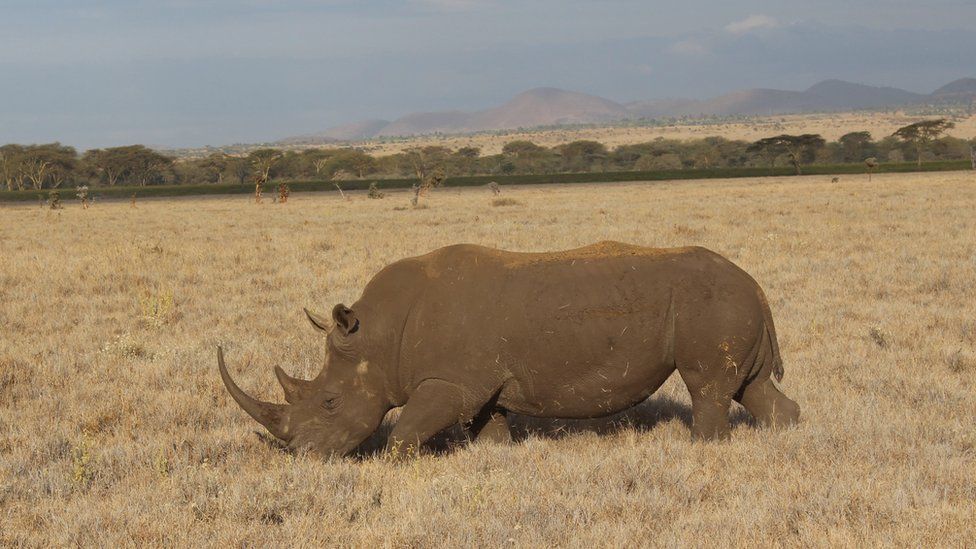
Those large animals that did survive the first round are now facing a similar threat. Elephants, rhinos, and some species of whales are all balancing on the edge of extinction.
It is only relatively recently, however, that we have begun to understand just how wide reaching the influence of these animals is on the natural world. Once we know more, it could change the way we go about protecting them.
Big animals are influencing environments such as the Amazon not only on national or international scales, but even global ones. Credit: Neil Palmer/CIAT/CIFOR
Ken Norris, Head of Life Sciences at the Museum, has published a piece with colleagues that raises the question of how conservationists could think more globally.
“These big animals are iconic in a conservation sense and we are not arguing that we shouldn’t conserve them in their own right,” explains Ken. “But there are also a lot of fundamental things these animals do ecologically, and we are only just beginning to understand the really massive scales on which they operate.
“Currently we are not conserving those systems at scales large enough to protect and restore these key ecological roles. That is the point.”
Large animals, such as elephants and whales, are often referred to as ecosystem engineers. This is because as they go about their day-to-day business, these huge animals alter their environment in such dramatic ways that they help to create and maintain entirely new habitats.
Elephants, for example, are so big that they will regularly push down trees to get to food from the upper branches, and as a result open up woodlands that allow understory plants to thrive in the sunshine. They are also known to help sustain entire rainforests as they spread the large seeds of fruit trees over vast distances before depositing them in little piles of natural fertilizer.
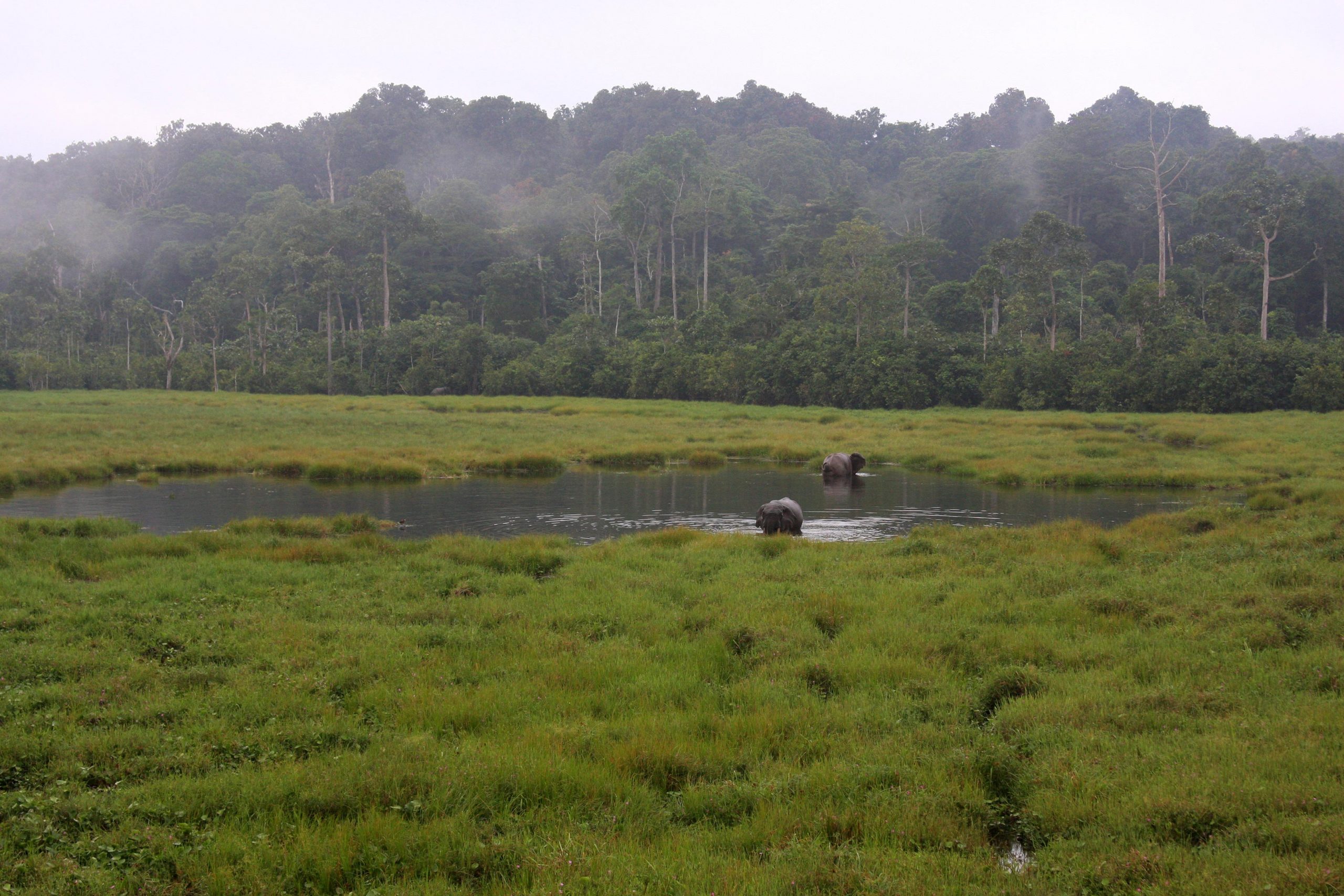
In the depths of the African rainforest, elephants create and maintain huge forest openings known as bais, which are then used by an array of other species from bongo antelopes to gorillas. Credit: Michelle Gadd/U.S. Fish and Wildlife Service
But these big animals have an impact on a much larger scale even than this.
“We didn’t realise until a few years ago just how important large animals are to large scale earth system processes,” explains Ken. These are the systems in which nutrients are cycled through the environment on a global scale.
“For example, there is research we cite which shows how important nutrients from the oceans are for massive biomes like the Amazon. You wouldn’t realize it, but there is a nutrient pump that exists which comes from the ocean up the rivers and onto the land.”
Animals such as whales and fish poop nutrients into the water. These nutrients help to fuel the plankton, which make their way into smaller fish. The fish are then either eaten by seabirds which in turn deposit their own poop on land, or feed larger migratory fish.
These fish then travel up the river systems and deep inland through the vast network of waterways. They will then be eaten by predators such as birds of prey and big cats, or simply die in the rivers, and as a result spread these nutrients that originated in the oceans over the land and deep within the forests.
“In recent years, some people have estimated how degraded those nutrient systems are because of the loss of large animals, and the impact has been massive,” explains Ken. “They estimate that certain nutrient pumps may have declined by over 80%, in part because of the removal of large animals such as whales.”
Migratory fish that originated in the oceans can be found spread across the forest floors, distributing nutrients far inland and feeding the forest. Credit: anttler (CC BY-NC-ND 2.0)
Global cooperation
When it comes to protecting nature, conservation movements have tended to focus on saving specific species in particular locations.
Recently, scientists have been thinking more broadly. For example, transboundary conservation initiatives have been created which straddle multiple countries. But Ken and his colleagues argue that, while this is undoubtedly moving in the right direction, if we want to take into account the scale at which these nutrient cycles operate, we need to think bigger still.
“There are some examples of this emerging, but we are still not up at the necessary levels of scale,” says Ken. “For example there is one of these transboundary conservation initiatives in the north west US and the west of Canada called Y2Y, where they have reintroduced wolves but conservation at these scales may still not be large enough.
“We need to be looking at ecosystems such as the Amazon which are millions of square kilometers.”
This might seem like an impossible challenge, but environmental initiatives of this scale have been achieved before, such as when the world’s governments came together to agree to fix the hole in the ozone layer or the international ban on whaling.
“It is an enormous challenge to reinstate these systems, but the impacts of not doing anything about it could be really severe,” says Ken. “We simply don’t know enough about this.
“We know that losing big animals is ecologically problematic at these massive scales, but we don’t know the exact impacts of losing them. How long have we got to sort out those issues, and what could be done about them?
“This is really a call to get people thinking about these problems and issues.”
Date:December 28, 2020Source:Scripps Research InstituteSummary:Chemists have made a discovery that supports a surprising new view of how life originated on our planet. They demonstrated that a simple compound called diamidophosphate (DAP), which was plausibly present on Earth before life arose, could have chemically knitted together tiny DNA building blocks called deoxynucleosides into strands of primordial DNA.Share: FULL STORY
Chemists at Scripps Research have made a discovery that supports a surprising new view of how life originated on our planet.
In a study published in the chemistry journal Angewandte Chemie, they demonstrated that a simple compound called diamidophosphate (DAP), which was plausibly present on Earth before life arose, could have chemically knitted together tiny DNA building blocks called deoxynucleosides into strands of primordial DNA.
The finding is the latest in a series of discoveries, over the past several years, pointing to the possibility that DNA and its close chemical cousin RNA arose together as products of similar chemical reactions, and that the first self-replicating molecules — the first life forms on Earth — were mixes of the two.
The discovery may also lead to new practical applications in chemistry and biology, but its main significance is that it addresses the age-old question of how life on Earth first arose. In particular, it paves the way for more extensive studies of how self-replicating DNA-RNA mixes could have evolved and spread on the primordial Earth and ultimately seeded the more mature biology of modern organisms.
“This finding is an important step toward the development of a detailed chemical model of how the first life forms originated on Earth,” says study senior author Ramanarayanan Krishnamurthy, PhD, associate professor of chemistry at Scripps Research.
The finding also nudges the field of origin-of-life chemistry away from the hypothesis that has dominated it in recent decades: The “RNA World” hypothesis posits that the first replicators were RNA-based, and that DNA arose only later as a product of RNA life forms.
Is RNA too sticky?
Krishnamurthy and others have doubted the RNA World hypothesis in part because RNA molecules may simply have been too “sticky” to serve as the first self-replicators.
A strand of RNA can attract other individual RNA building blocks, which stick to it to form a sort of mirror-image strand — each building block in the new strand binding to its complementary building block on the original, “template” strand. If the new strand can detach from the template strand, and, by the same process, start templating other new strands, then it has achieved the feat of self-replication that underlies life.
But while RNA strands may be good at templating complementary strands, they are not so good at separating from these strands. Modern organisms make enzymes that can force twinned strands of RNA — or DNA — to go their separate ways, thus enabling replication, but it is unclear how this could have been done in a world where enzymes didn’t yet exist.
A chimeric workaround
Krishnamurthy and colleagues have shown in recent studies that “chimeric” molecular strands that are part DNA and part RNA may have been able to get around this problem, because they can template complementary strands in a less-sticky way that permits them to separate relatively easily.
The chemists also have shown in widely cited papers in the past few years that the simple ribonucleoside and deoxynucleoside building blocks, of RNA and DNA respectively, could have arisen under very similar chemical conditions on the early Earth.
Moreover, in 2017 they reported that the organic compound DAP could have played the crucial role of modifying ribonucleosides and stringing them together into the first RNA strands. The new study shows that DAP under similar conditions could have done the same for DNA.
“We found, to our surprise, that using DAP to react with deoxynucleosides works better when the deoxynucleosides are not all the same but are instead mixes of different DNA ‘letters’ such as A and T, or G and C, like real DNA,” says first author Eddy Jiménez, PhD, a postdoctoral research associate in the Krishnamurthy lab.
“Now that we understand better how a primordial chemistry could have made the first RNAs and DNAs, we can start using it on mixes of ribonucleoside and deoxynucleoside building blocks to see what chimeric molecules are formed — and whether they can self-replicate and evolve,” Krishnamurthy says.
He notes that the work may also have broad practical applications. The artificial synthesis of DNA and RNA — for example in the “PCR” technique that underlies COVID-19 tests — amounts to a vast global business, but depends on enzymes that are relatively fragile and thus have many limitations. Robust, enzyme-free chemical methods for making DNA and RNA may end up being more attractive in many contexts, Krishnamurthy says.make a difference: sponsored opportunityhttps://action.publicgood.com/embed.html?partner_id=sciencedaily&utm_source=sciencedaily&title=Discovery%20boosts%20theory%20that%20life%20on%20Earth%20arose%20from%20RNA-DNA%20mix%3A%20Newly%20described%20chemical%20reaction%20could%20have%20assembled%20DNA%20building%20blocks%20before%20life%20forms%20and%20their%20enzymes%20existed&url=https%3A%2F%2Fwww.sciencedaily.com%2Freleases%2F2020%2F12%2F201228095428.htm&utm_content=https%3A%2F%2Fwww.sciencedaily.com%2Freleases%2F2020%2F12%2F201228095428.htm&widget_type=card&action=Default&is_flex=true&match_type=terms&content_id=13885177&cid_match_type=regex&tag=coronavirus%20~%20unsponsored%20first%20responders%20variant%20terms%20match&target_id=a5b62d04-991b-4b01-a285-9a499e519227&target_type=campaign&is_filter=true&url_id=25771184&parent_org=sciencedaily&target_name=Support%20%20First%20Responders%20and%20Health%20Care%20Workers%20During%20Coronavirus&is_sponsored=false&sponsor_name=
Ramanarayanan Krishnamurthy, Eddy I. Jiménez, Clémentine Gibard. Prebiotic Phosphorylation and Concomitant Oligomerization of Deoxynucleosides to form DNA. Angewandte Chemie International Edition, 2020; DOI: 10.1002/anie.202015910
Aug. 30, 2018 — How did life arise on Earth? Researchers have found among the first and perhaps only hard evidence that simple protein catalysts — essential for cells, the building blocks of life, to function — …
Apr. 25, 2016 — The crucibles that bore out building blocks of life may have been, in many cases, not fiery cataclysms, but modest puddles. Researchers working with that hypothesis have achieved a significant …
Jan. 12, 2016 — Cell survival depends on having a plentiful and balanced pool of the four chemical building blocks that make up DNA. However, if too many of these components pile up, or if their usual ratio is ..






/cloudfront-us-east-1.images.arcpublishing.com/dmn/4VVSDFGEHTSSCUKAVSVO53ZKGU.jpg)

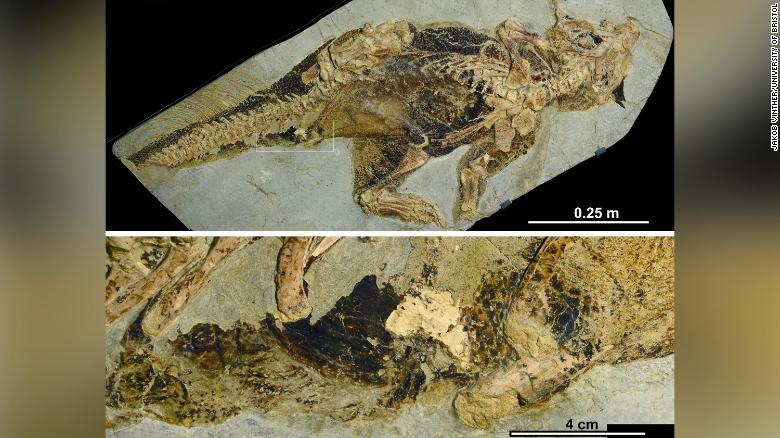 This Psittacosaurus fossil, in the collection of the Senckenberg Museum of Natural History in Frankfurt, Germany, preserves the only known dinosaur cloacal vent.
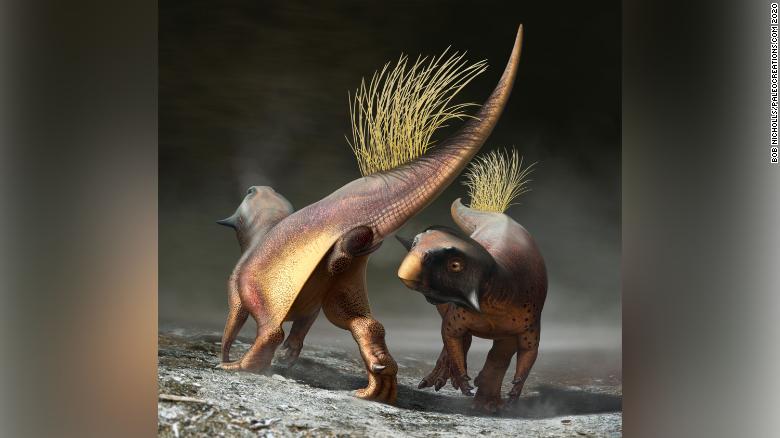 A reconstruction of Psittacosaurus illustrating how the cloacal vent may have been used for signaling during courtship.”It is very unique. Most cloacas form a kind of slit. Sometimes it’s a vertical split, sometimes it’s a smiley face, sometimes it’s a sour face. This thing has a V-shaped structure with a pair of nice flaring lips and there’s not a living groups of animals that have morphology like that,” Vinther said. “It is somewhat similar to crocodiles but still unique.”The study, which published in the journal Current Biology on Tuesday, said that large, pigmented lobes on either side of the opening could have harbored musky scent glands, as seen in living crocodiles and alligators.What’s more, the outer margins of the cloaca are highly pigmented with melanin. While they don’t know for sure what color it was, it likely would have contrasted with the dinosaur’s pale underbelly, Vinther said.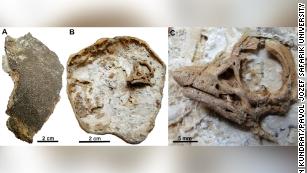

 Exposing the Big Game