If the Global Warming Doesn’t Kill the Humans…

I trust you’re all familiar with the Onion news, right? Good. In that case you’ll get it as you read my parody on the following “article” from
America’s finest news source, the Onion:

If The Heat Doesn’t Kill The Elderly, I Will
Jul 13, 2005
By Rudolph Milner

It is now high summer, and the sun is broiling the American Southwest, sending temperatures soaring upwards of 110 degrees. The heat has struck hardest among the elderly, dozens of whom have died of heatstroke, heat exhaustion and dehydration. If you, like me, are a right-thinking person, your mind recoils in horror at this fact: The old and decrepit are dying by mere dozens?

Fifty years ago, a heat wave of this magnitude and duration would have claimed the lives of hundreds, perhaps thousands of shriveled-up old codgers. The streets would have been littered with their withered carcasses. Unfortunately, this is no longer the case. By providing today’s elderly with unprecedented access to air conditioning and situating them in safe, supervised retirement communities, we have thrown Mother Nature’s natural-selection process completely out of sync. And don’t look for winter to solve the problem, either: Even more old people have heating than have air-conditioning, and more and more are getting it every day.

Like you, I had high hopes for this summer. Like you, I am deeply disappointed in the low death toll among the elderly…

Call me warped, but I have to confess I got a good chuckle or two from this piece of pseudo news. Still, as much as I envied the Onion’s ability to make light of a serious issue like human mortality, I felt they were unfairly picking on the elderly when it’s actually the whole of the human race who deserves lampooning. Therefore, in the spirit of fairness to decrepit old codgers everywhere, I’m going to hereby restate this piece and edit out all the ageist rhetoric in hopes it will come across a bit more senior-neutral:

If the Global Warming Doesn’t Kill the Humans…

It is now high summer, and the sun is broiling the American Southwest, sending temperatures soaring upwards of 110 degrees. The heat has struck humans by the dozens, some of whom have died of heatstroke, heat exhaustion and dehydration. If you, like me, are a right-thinking person, your mind recoils in horror at this fact: Homo sapiens are dying by mere dozens?

Fifty years ago, a heat wave of this magnitude and duration would have claimed the lives of hundreds, perhaps thousands of humans. The streets would have been littered with their carcasses. Unfortunately, this is no longer the case. By providing today’s humans with unprecedented access to air conditioning and situating them in safe, supervised communities, we have thrown Mother Nature’s natural-selection process completely out of sync. And don’t look for winter to solve the problem, either: Even more people have heating than have air-conditioning, and more and more are getting it every day.

Like you, I had high hopes for this summer. Like you, I am deeply disappointed in the low death toll among humans…

291789_400428663360054_2105335387_n

The True Nature of the Grizzly Bear

Here’s another older letter to the editor (this time to small, local paper in Northeast Washington), that I found in my archives…

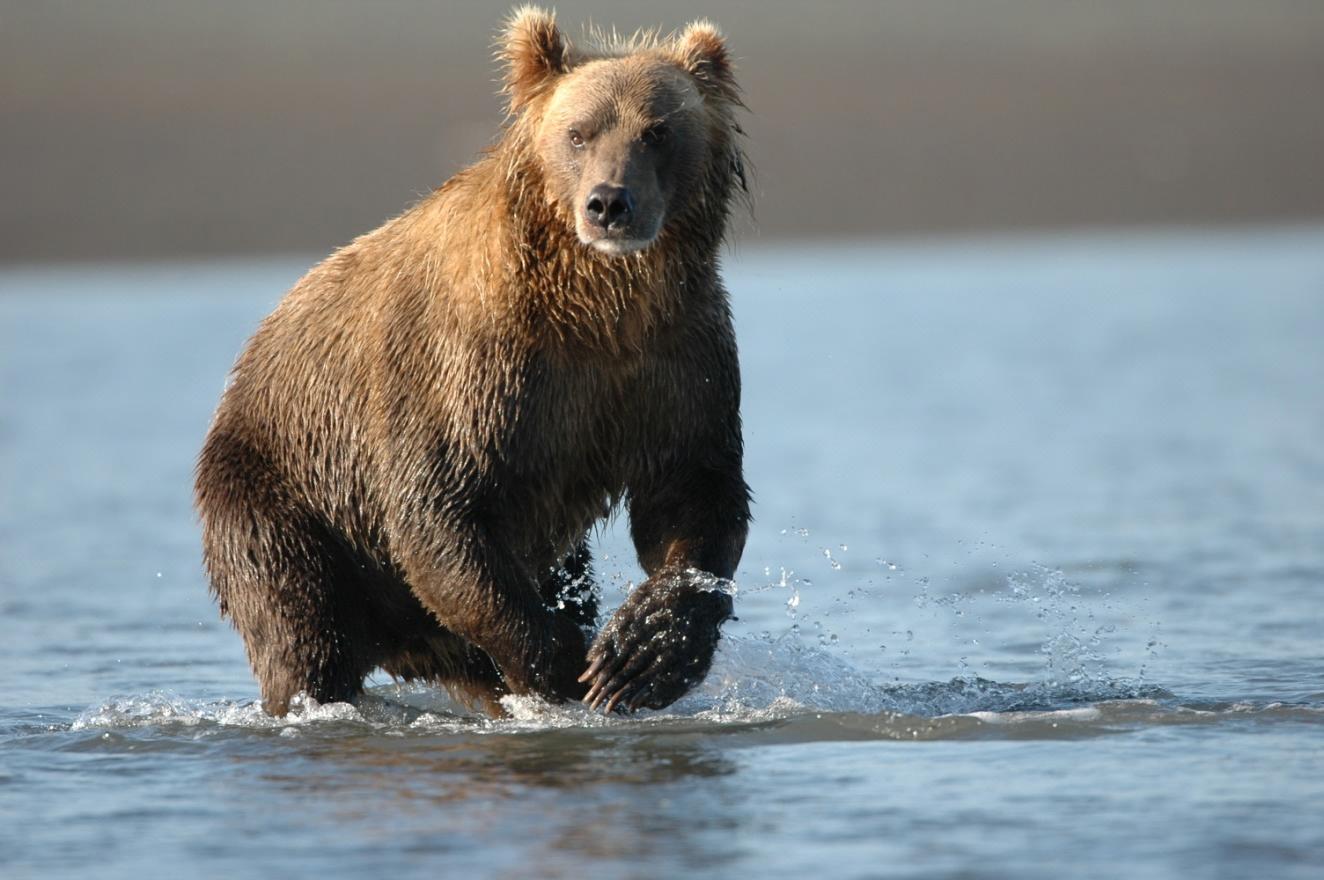
A couple of months ago I may have sided with the attitude that if grizzly bears come back to the North Cascades on their own, fine, but there’s no need to reintroduce them. But now, after a rash of anti-grizzly letters have appeared in this paper, I’m ready to become one of the champions of their full recovery here. I hope your readers are laughing off the letters from these misguided, close-minded fanatics and will learn for themselves the true nature of the grizzly bear, instead of jumping on the fear bandwagon and turning their backs on this vanishing species.

One of the common misconceptions frequently stated is that these bears are fearless and have no respect for man. This would lead you to believe that grizzlies would soon be wandering the streets of Winthrop. The fact is, grizzlies will avoid man if at all possible and will choose to inhabit the most rugged and remote areas. I worked for years in known grizzly country in Montana and the Selkirk Mountains of Washington and only sighted a grizzly in those areas once (although I saw numerous black bears).

On the other hand I’ve seen scores of grizzlies and have had numerous positive encounters with them in Yellowstone and national parks in Alaska where bear hunting is not allowed. In one case, I came face to face with a large grizzly on a narrow, brushy trail. I rounded the corner and nearly prodded him with my fishing pole before seeing him. The grizzly did not charge, but merely waited until I moved off the trail before he continued on. As John Crawford put it in an article entitled, “Getting along with grizzlies,” “…Confidence devoid of cockiness and a deep basic respect and fondness for grizzlies” should be our attitude if we meet up with Ursus arctos. Crawford goes on to describe other typical bear encounters. In one case, two B.C. trail workers met a grizzly who was running toward them in pursuit of a grouse. The bear did not see the men, but when he got a scent of them, “he reacted as though he’d run into a wall. His front legs stiffened; and mud splattered as his paws pushed out to break.” Then, “the bear turned and walked slowly, sullenly away. As soon as he was out of sight…he broke into a gallop…”

To those people who can’t appreciate living near one of the last wild areas in the lower 48, there are plenty of place to live where you won’t have to face the remote possibility of encountering a wild animal. If we are not willing to allow grizzly bears to exist in the rugged Cascade Mountains, what can we say if elephants are wiped off the African continent, or pandas have joined the dinosaurs?

Text and Wildlife Photography ©Jim Robertson, 2013. All Rights Reserved

Text and Wildlife Photography ©Jim Robertson, 2013. All Rights Reserved

China’s Poultry Industy is Losing One Billion Yuan PER DAY

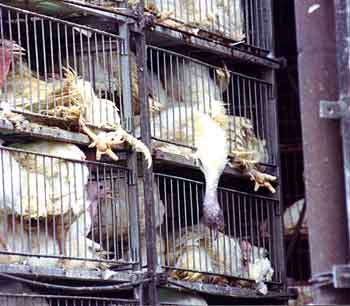
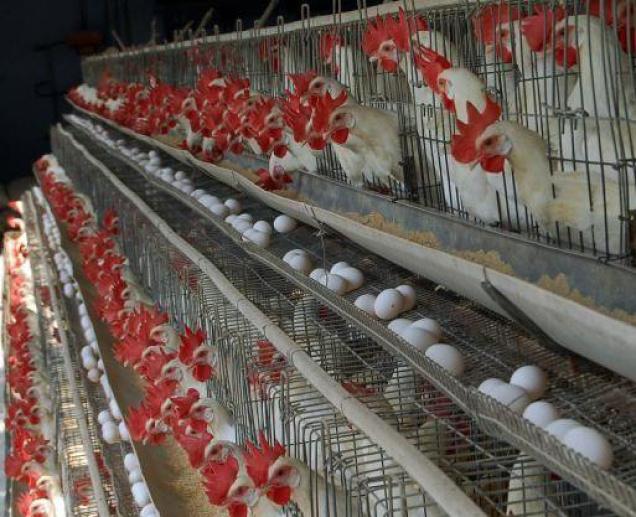
While an article in the Hindu Business Line tells us that China’s poultry industry has  lost 65 BILLION Yuan since the end of March, what I found shocking is that the industry has been losing an average of one billion Yuan a day for the past two months! What I want to know is, how many millions of birds does it take to raise one billion Yuan and what kind of horrendous living conditions must that many birds be forced to endure? How miserably confined, overcrowded and devoid of any semblance to natural bird life must it be like (for the short time their allowed to live).

The article (inadvertently) points out some shocking facts, which I’ve highlighted incage_1 bold

Bird flu costs China’s poultry industry $65 bn: State media

Beijing, May 21:

China’s human H7N9 bird flu outbreak has cost the country’s poultry industry more than $65 billion as consumers shun chicken, government officials said according to state media yesterday.

The sector has been losing an average of one billion yuan a day since the end of March, the Beijing Times said, citing Li Xirong, head of the National Animal Husbandry Service.

H7N9 avian influenza has infected 130 people in China, killing 35, since it was found in humans for the first time, according to latest official data.

Poultry sales have tumbled and prices plunged, Li said, causing major financial problems and job losses as a result.

Another agriculture ministry official, Wang Zongli, said government agencies should set a good example for the public by treating “poultry products in a correct way”, the report added.

In a stunt to boost confidence, officials and poultry business leaders in the eastern province of Shandong held a widely reported all-chicken lunch last week, according to Chinese media.

China has seen several food safety scares in recent years, including one in which the industrial chemical melamine was added to dairy products in 2008, killing at least six babies and making 300,000 ill.

poultry_845904f_jp_1463316f

Wolves Under Tyrannical Control

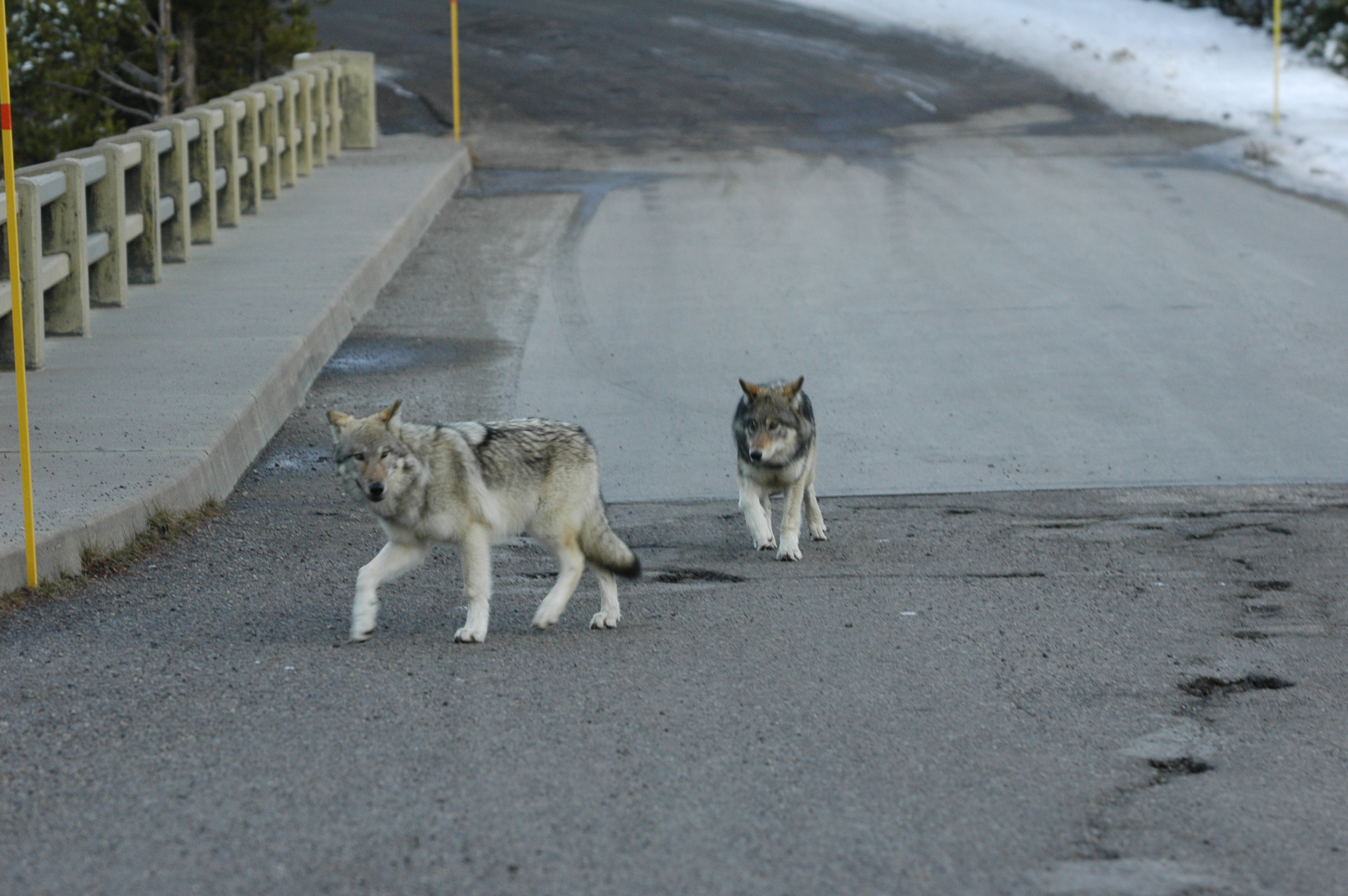
According to a recent article about the planned destruction of Washington’s Wedge pack, Bill McIrvin of the Diamond M ranch said in an interview in July that he believes radical environmental groups are conspiring to introduce wolves in order to force ranchers off public lands. Yeah right—nice thought—but that sounds pretty paranoid to me.

Most “radical” environmentalists are smart enough to know that cattle ranchers have wildlife and the wildlife agencies by the balls with a death grip that won’t let go until Nature hertself is under their tyrannical control.

If the rancher is this suspicious of environmentalists, how paranoid must he be of the wolves? And why should we blindly accept all his claims of depredation at an almost unprecedented level?

I can just see him laughing under his hat at the wildlife agents he’s duped into doing his bidding by annihilating the entire Wedge pack (he’s stated several times he won’t settle for anything less). Heck, even the presumed wolf-champions at Conservation Northwest (in an obvious effort not to appear “radical”) have turned their back on the pack for the sake of the cattle rancher.

Not only will McIrvin be allowed to keep grazing his cattle on public national forest land, but now he’s got the state sharpshooters’ promise that they’ll spend as long as it takes to kill each and every wolf in the pack.

No, there’s not much chance of crafty extreme environmentalists covertly re-introducing wolves to this crazy cattle-industry controlled world. But we can always hope that some animal ‘extremist’ will usher them back into Canada for now, until the ranchers of Eastern Washington can put their prejudices aside and learn to live with the diversity of wildlife they’re fortunate enough to have in their backyard.

Text and Wildlife Photography ©Jim Robertson

_____________________________________________________

Text and Wildlife Photography ©Jim Robertson

It Ain’t Gonna be Pretty

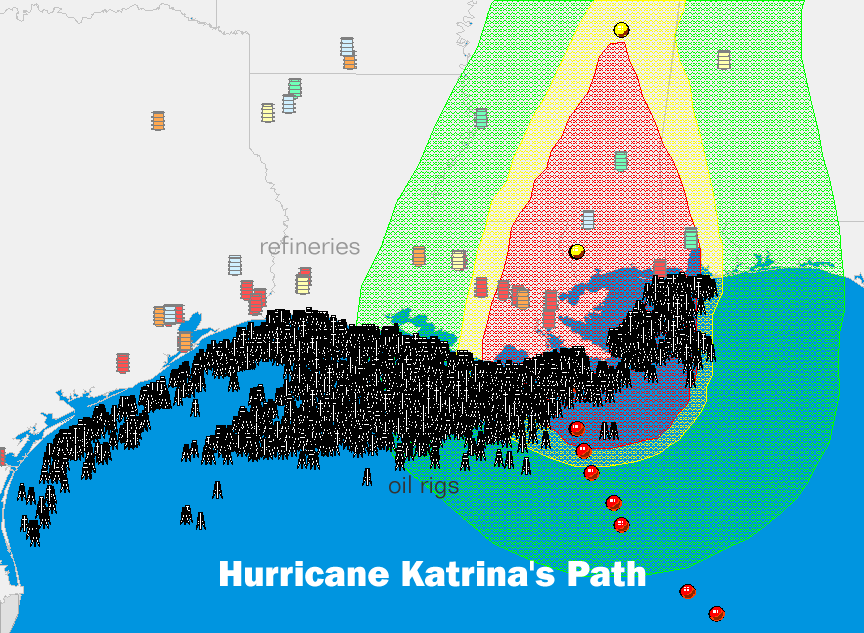
Over the ages, humans have more than proved their point—they’re the dominant ones. Nowadays they’re just rubbing Nature’s face it in. But they won’t feel so dominant when Mother Nature decides to really put up a fight. Once she gets started, it ain’t gonna be pretty, and man, you’ll curse the day you were born. It’s not like she hasn’t given plenty of fair warning, but every time she summons up an epic hurricane in the Gulf of Mexico, for example, humans react like a ants at  an anthill, and scurry to raise their levees, dikes and sea walls a little higher and rebuild their off-shore oil platforms.

Hurricane Katrina destroyed over 100 off-shore oil rigs (one of which floated for 50 miles before coming to rest in the shallows), while this year’s Isaac put 44 of them out of commission. The financial pages were quick to share the news that the Gulf of Mexico oil production was reduced by 901,726 barrels per day as a result of Hurricane Katrina. Yet the media barely covered the massive oil spills then, and we never heard much about the half million gallons of oil that sloshed into the Gulf after Hurricane Ike in Texas. Nor is there ever much talk of the persistent leaks and pollution that comes from the rigs; spills of more than 60,000 gallons scarcely make the news outside southern Louisiana.

It wasn’t long ago that there were no oil platforms in that pristine body of water that’s been a spawning ground for blue fin tuna and home to sea turtles, manatees, dolphins and an astounding array of bird life. Now oil derricks in the Gulf are considered a fact of life—but the ecosystem has suffered dearly for it.

Are we going to see a repeat of this scenario in the Arctic, now that anthropogenic climate change has caused the polar icecap to retreat far enough that the President just approved Shell oil to start drilling up there?

Carbon is a waste product of life and the atmosphere needs a certain amount of it to keep temperatures comfortable enough for life to thrive here. Yet never before in the long history of the earth has one species tapped into the vast pools and veins of carbon, safely stored underground for millions of years, and lit a match to it.  Now the one species who prides itself in being smarter than the others is using up its limited brain capacity devising ways to commandeer the planet’s carrying capacity, while smothering the atmosphere with the carbon of the eons in just a few short centuries.

From fashioning the first tools out of stone (a feat that our vegan cousins the bonobos have accomplished as well) to learning to raise food crops, experimentation has brought our species to where it is today. But now we’ve turned the whole planet into our own personal petri dish. God only knows what sort of punishment Mother Nature has in store for us when she wearies of our infernal domination games.

Play by Nature’s Rules

One of the more amusing of hunters’ feeble rationalizations is that they are “part of nature,” as though that entitles them to assume the role of top predator over every other species. Funny how they bring that up when they think it will get them what they want, but when the preacher postulates that humans are above the animals and nature, they’re the first to stand up and shout “Amen!”

It seems they want their cake and eat it too.

Modern humans have long since stacked the deck in their favor. When Mother Nature decides to defend herself against their fully-armed onslaught by summoning up a super-bug or super-storm, hunters will quickly decide it’s no fun to be part of nature anymore and demand a dose of the antidote or call in the rescue helicopters.

Natural predators, like wolves, don’t have the kind of creature comforts that even the most impoverished hunter takes for granted. When wolves get hurt or sick it’s often fatal, whereas a human can find a clinic to fix them up whenever they get any kind of scratch. Hunters should play by nature’s rules or get out of the game.

Like it or not, humans really are a part of nature—but they’re certainly not above it. As Sea Shepherd’s Captain Paul Watson wrote in my book’s foreword:

“No species can live upon this earth without living in accordance to the three basic laws of ecology: (1) the law of diversity, that an eco-system is strengthened by the diversity of species within it, (2) the law of interdependence, that all species are dependent upon each other for survival and (3) the law of finite resources, that there is a limit to growth, a limit to carrying capacity. Human populations grow by literally stealing the carrying capacity of other species and by so doing, they diminish diversity and thus cut the bonds of interdependence.

“The cruelty and destruction that humans have inflicted upon each other is surpassed only by the cruelty and destruction humans have inflicted upon the nonhuman citizens of this world. Hunters are guilty of crimes against nature, against future generations and against humanity because diminishment leads to collapse and to extinction and we forget that we as animals, as primate hominids, will commit collective suicide if we continue with our barbaric traditions and behavior in the face of a global ecological collapse.”

Taking Trophies

“You’re the last one there…you feel the last bit of breath leaving their body. You’re looking into their eyes and basically, a person in that situation is God! You then possess them and they shall forever be a part of you. And the grounds where you killed them become sacred to you and you will always be drawn back to them.”

The words of a hunter triumphantly reliving his conquest?

Well, if by hunter you mean a person who stalks and kills an innocent, unarmed victim, then yes.

The quote is from serial killer Ted Bundy, as he sat on death row and mused over his murders to the authors of The Only Living Witness. It seems that, whether the perpetrator is engaged in a sport hunt or a serial kill, the mentality is roughly the same.

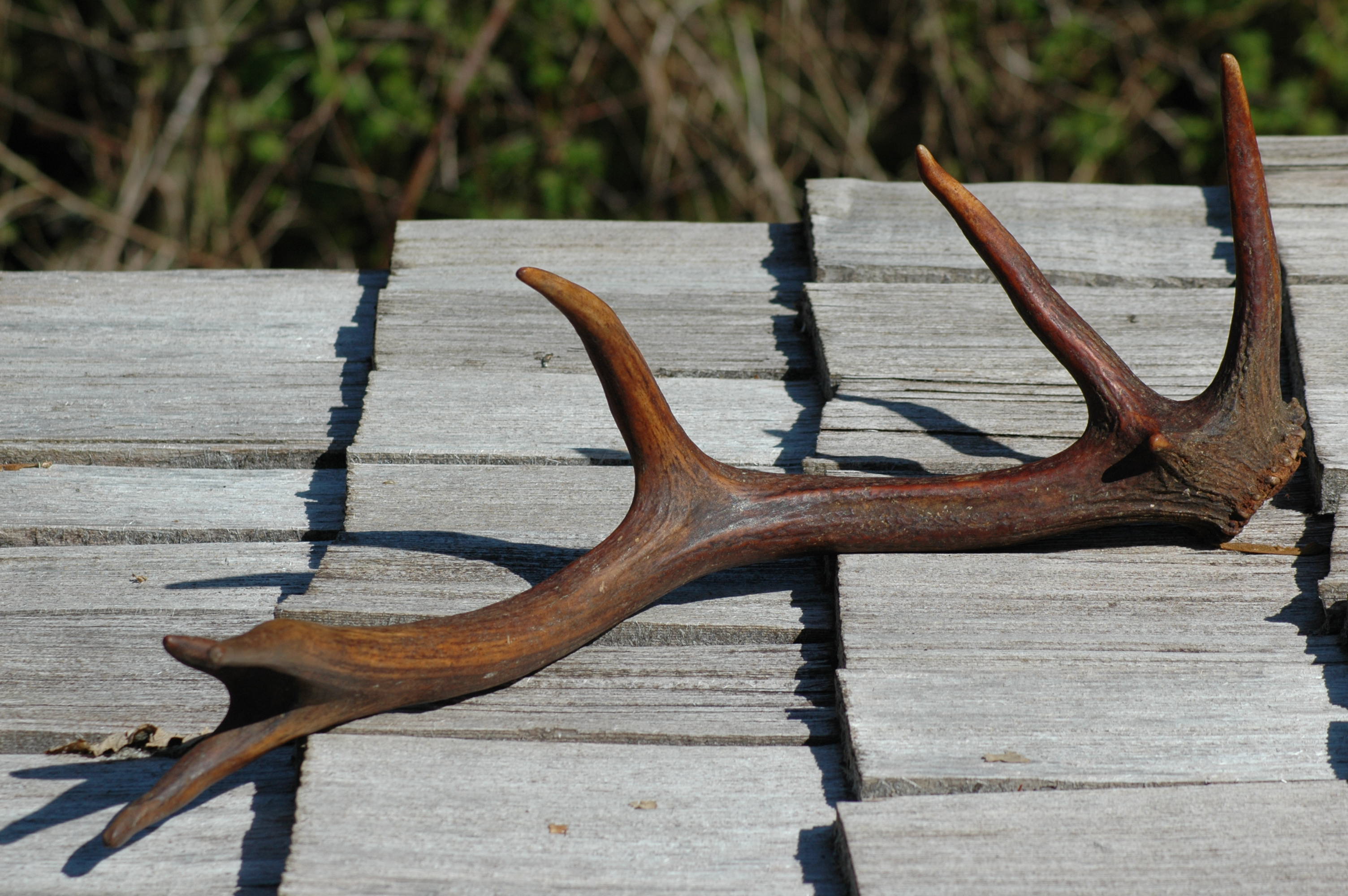
Try as I might, it’s a mindset I really can’t relate to. But this quote helped answer a question I’ve been pondering since I came across a freshly shed elk antler on a hike in the forest behind my place. It was thrilling to find a tangible sign of such a proud and noble soul, willingly discarded to make way for this year’s even larger adornment. I’ve experienced a similar feeling of exhilaration many times before when capturing images of wildlife with my camera. The key component for me is the knowledge that the animal is still roaming free.

Image

I hung the keepsake over my doorway. It serves as a reminder that the bull elk made it through another season alive. Conversely, when a hunter proudly displays a “rack” of antlers, they are the result of a killan animal’s life was taken so they could claim their trophy.

So why can’t hunters be satisfied with finding a naturally shed horn?

Clearly, they are after more than just a souvenir or symbol of a beautiful living creature. There’s something sinister about their motive—something akin to what drives a trophy-taking serial killer.

For the likes of Ted Bundy, a memento such as a pair of panties or a Polaroid photo helps them to recall the heightened state of arousal they felt while slaying their prey. As with the serial killer, the ultimate goal of a hunter is to play God over a helpless victim and to possess not just their image or their antler, but their very being.

Speak Up for Wildlife During National Park Week

On the twentieth day of April, in the year of our Lord two thousand twelve, President Obama declared this week National Park Week. Ironically, during this very week, the U.S. Senate is considering a bill that would allow hunting on our national parks! H.R. 4089, the so-called “Sportsmen’s Heritage Act of 2012,” passed the House of Representatives on April 17th and is now with the Senate. Once again the fate of our lands and waters—and the life that depends on them—has been cast into doubt. To paraphrase the president’s proclamation, as Americans and as inhabitants of this one small planet, it is up to us to preserve our national heritage for the generations (human and non-nonhuman alike) to come.

Lumped in with the “Sportsmen’s” Act are such abhorrent offerings as the Recreational Shooting Protection Act, which requires National Monument land under BLM’s jurisdiction to be open to access and use for “recreational” shooting (ground squirrels, and prairie dogs beware), and the Polar Bear “Conservation and Fairness” Act of 2012, which would amend the Marine Mammal Protection Act of 1972 to direct the Secretary of the Interior to issue a permit for the importation of any polar bear carcass killed during a sport hunt in Canada.

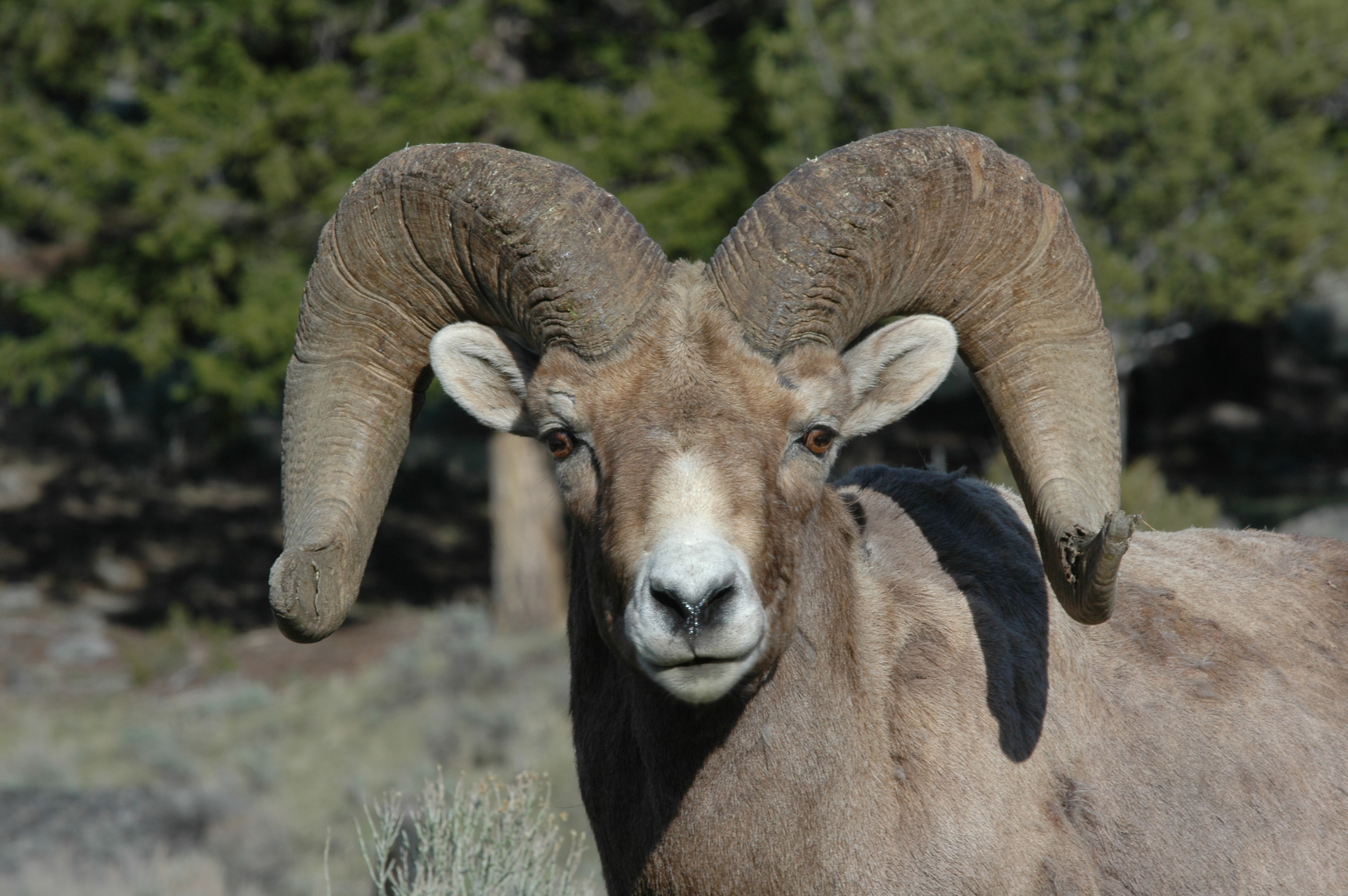
As long as they remain off-limits to hunting, our national parks are some of the best places for viewing and photographing wildlife without causing undue stress. Since they’ve learned they’re safe within park boundaries, animals are not so shy and distrustful of human presence—as long as said human maintains a polite distance. And because they’re protected, park moose, elk or bighorn sheep are allowed to grow the kind of impressive antlers or horns now rare in hunted populations.

Image

We can’t let the “Sportsmen’s Heritage Act” undermine the serenity of our last few protected places. Please contact your Senator and urge them to oppose H.R. 4089:  https://secure.humanesociety.org/site/Advocacy?cmd=display&page=UserAction&id=5507&s_src=shareonfb