animals.Control Cruel Special Interest Groups, Not the Wild Animals.
animals.
animals.
As the June meeting of the New Mexico Game Commission approaches, the so-called wildlife biologists of Game and Fish have modified their proposal on cougar trapping. Facing widespread opposition from editorials and letters in the Santa Fe New Mexican and Albuquerque Journal, culminating in a rally at the state capitol, they dropped their proposal to set cougar traps on public land. The new proposal would allow unrestricted cougar trapping on private land, while increasing other forms of cougar hunting on public land.
The career game managers who fancy themselves “biologists,” continue to serve the interests of ranchers and trappers, while ignoring the need to protect wildlife populations. The department’s original proposal had nothing to do with biology or any other science, as it was dropped in the face of public opposition. The current proposal is hardly better. And they continue to kill cougars while the proposal is up for discussion. Last week they killed a cougar in a Raton neighborhood for allegedly attacking a puppy, and they continue to set out cougar traps in Los Alamos.
Nothing has changed in the year since Scott Bidegain was forced to resign his position as Game Commission Chair after promoting an illegal cougar hunt. As a member of the New Mexico Cattle Growers Association Board of Directors, Bidegain personified the close connection between the livestock industry and the Game Commission.
For that matter, nothing has changed since the Game Commission was first set up in 1921, about the time President Warren Harding appointed NM rancher and former US Senator Albert Fall as Secretary of the Interior. Fall made a career out of opening up public lands to the oil industry in the notorious Teapot Dome Scandal.
With the support of hunting and livestock interests, New Mexico established a Game Commission to maintain populations of huntable wildlife in accord with the principles of the North American Model of Wildlife Conservation. The Rocky Mountain Elk Foundation has aptly summed up the model as follows:
Man has hunted since he walked the Earth. Every early culture relied on hunting for survival. Through hunting, man forged a connection with the land and learned quickly that stewardship of the land went hand-in-hand with maintaining wildlife – and their own way of life.
In the first half of the 20th century, leaders like Theodore Roosevelt and Aldo Leopold shaped a set of ideals that came to be known as the North American Model of Wildlife Conservation. They articulated the philosophy that all wildlife belong to all of us.
It is useless in any case to look to science to set public policy. In a Wildlife Society article titled An Inadequate Construct, Dr. Michael P. Nelson challenges the tenet of the North American Model which “asserts that Science is the Proper Tool for Discharge of Wildlife Policy.” Nelson states: “This is mistaken for equating a desire for policies informed by science with science discharging or determining, by itself, what policies ought to be adopted—a serious, but very common, error in ethical reasoning. Scientific facts about nature cannot, by themselves, determine how we ought to relate to nature or which policies are most appropriate.”
By making a career out of serving their political masters, New Mexico’s professional game managers have combined the world’s two oldest professions. To borrow a term popularized by Sea Shepherd Captain Paul Watson, the game managers are aptly described as biostitutes.
The current drought, exacerbated by anthropogenic climate change, is likely to continue for decades, threatening wildlife habitat. All wildlife is threatened, including species not officially recognized as endangered. It is time for the State of New Mexico to repeal outdated laws which view predators as threats to livestock. It is time to abolish the Game Commission.
http://www.abqjournal.com/519815/news/dead-coyotes-dumped-near-las-cruces.html
By Lauren Villagran / Journal Staff Writer – Las Cruces Bureau
PUBLISHED: Thursday, January 1, 2015
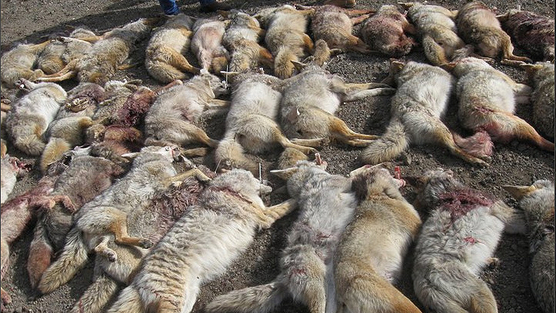
LAS CRUCES [New Mexico] – Nearly 40 dead coyotes dumped in the desert outskirts of Las Cruces, some with wood blocks in their mouths marked with the date they were killed, are the latest sign of the excesses of coyote-killing contests, say advocates who want to see the derbies banned.
At least 10 environmental groups are hoping to push legislation this session outlawing the contests in New Mexico, much as California did last month. They say the contests, which reward participants for the largest number killed or biggest animal shot, serve no legitimate wildlife management purpose.
Supporters of the contests say coyotes are akin to varmints and identify in online forums as “predator callers,” a reference to their use of hand or electronic calling to attract coyotes.
But a co-founder of a local coyote hunting club said wholesale dumping of coyotes is “very much frowned upon.”
The hunting of coyotes is unregulated in New Mexico, and the contests are legal. There are no limits to the number of animals that may be killed.
Wildlife advocates counted some 20 such contests around New Mexico in 2014 but say the number is understated because many are not publicized.
Advocates say they are in talks with two possible sponsors of a bill to ban the contests, one Democrat and one Republican. The legislation would mirror a House bill to ban the contests that failed in the 2013 legislative session by a 38-30 vote.
California is the first state to ban wildlife-killing contests, although some states such as Colorado place limits on the number of animals that can be taken.
“The animals are not being eaten or used in any way; they are just being killed, and they are being killed for sport,” said Kevin Bixby, executive director of the Southwest Environmental Center in Las Cruces. “It disrupts natural ecosystems and undermines the ability of coyotes to provide their ecological role in maintaining healthy systems, in regulating populations of prey animals like rodents and rabbits.”
Bixby recently counted 39 coyotes strewn around creosote, broken glass and tossed cardboard boxes used for target practice near the Las Cruces airport.
The mouths of the animals were stuffed open with wood or bullets inscribed with the date they were killed – Dec. 21 – a practice used in contests. A few had been skinned, but most were tossed to rot.
New Mexico Desert Dogs holds coyote-killing contests around Las Cruces and bills itself on a Facebook page as a “hunting club for those folks that have a passion, appreciation, fondness … for coyote hunting.”
A co-founder of the club who identified himself only as Ruben said the group was not behind the dumped carcasses. He defended coyote-killing contests as “a way for people to gather and share the same culture and love for the sport” and said such dumping – instead of burying the animals or donating pelts to apprentice taxidermists – is “a shame on the hunting community.”
“It is a sport,” he said in a telephone interview. “It takes precision and skill and timing and effort to go and harvest coyotes.”
The legislation the wildlife advocacy groups are backing would ban coyote-killing contests for material gain but would not prohibit killing coyotes that threaten property, such as livestock or pets.
“They are commercial events: killing animals for the purpose of entertainment, prizes and publicity,” said Guy Dicharry of the Los Lunas-based Wildlife Conservation and Advocacy Southwest. “You’re really out there trying to win. This is not focused on predator management. It’s random.”
http://www.koat.com/news/game-and-fish-hunting-contests-dont-put-dent-in-coyote-population/29730964
By Regina Ruiz
In less than 24 hours, coyotes will be the target of a controversial hunting contest in New Mexico.
The two-day contest begins Saturday morning.
Animal rights activists have been pushing for a law to make such events illegal, but that won’t stop this weekend’s event from occurring.
It may not seem like coyotes are a big threat to day-to-day life in New Mexico, but they are for ranchers and dairy farmers in the state. Those in favor of the event feel the coyotes are a nuisance. Those who aren’t don’t feel it is legitimate wildlife management to allow contestants to go out and shoot as many coyotes as they can.
The New Mexico Game and Fish Department doesn’t regulate the hunting of coyotes, and coyotes aren’t protected or endangered animals.
Game and Fish officials said contestants may not even be making a dent in the coyote population, and don’t believe the contests have a negative impact. About 10,000 coyotes are hunted every year, according to Game and Fish. That’s about 8 percent of the total coyote population in New Mexico.
Activists have emailed the Governor’s Office calling for the contests to be stopped. The emails were referred to game and fish.
Contestants pay $300 for a two-person team.
Winners get assault rifles. The contest is sponsored by Larry’s Gun Shop in Roswell.
This week hunters across New Mexico will open fire on coyotes.
It’s all part of a contest — the Third Annual Great Coyote Hunt — that has animal rights activists outraged and pushing for legislation to make these types of events illegal.
“They shoot as many coyotes as they can so it’s purely a numbers game for material profit or financial profit,” said Phil Carter, with Animal Protection of New Mexico. “We cannot allow our state to be so definitely associated with these thrill-killing contests that just celebrate death and destruction of animals.”
Larry’s Gun Shop in Roswell is putting on the contest.
Contestants pay $300 for a two-person team. Other than not killing in city limits, there are few restrictions. Whoever kills the most coyotes wins an assault rifle for each team member.
Event organizers disagree with the activists.
“(It’s) not inhumane at all. These are a nuisance,” said Colby Griffin, a manager at Larry’s Gun Shop.
The gun shop argues that thousands of coyotes cause problems for ranchers and dairy farmers. They said they are just helping out and giving a prize just encourages people to participate in the hunt.
Animal activists are taking their fight to Santa Fe’s Roundhouse. They are drafting up a bill for the 2015 legislative session to outright ban hunting contests and make it a misdemeanor crime.
“This is not real wildlife management, to simply allow contestants to go out and shoot as many coyotes as they can,” said Carter.
Right now at least one lawmaker is interested in sponsoring the bill. In 2013, similar legislation was defeated in the house.
Read more: http://www.koat.com/news/coyote-hunt-continues-to-draw-controversy/29649118#ixzz3Izaa7WnW
http://abcnews.go.com/Technology/wireStory/mexico-taking-aim-drone-hunting-23569819
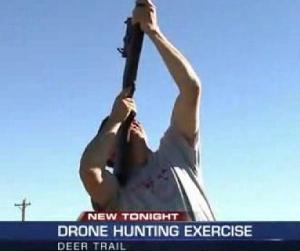
Alaska, Colorado and Montana already have outlawed the use of drones in hunting, but some sportsmen groups and animal advocates are pushing to see that regulations are passed in every state to protect the concept of fair chase.
They argue the art of hunting should be based on skills and traditions that have been honed and passed down over generations, not technological advancements such as drones.
“Hunting an animal with your physical senses, with your eyes and your ears and even to a lesser extent your sense of smell, that puts you on fairly even ground with these animals that can see far better, hear far better and smell far better than we can,” said Joel Gay, a spokesman for the New Mexico Wildlife Federation.
Drones would simply take the challenge out of hunting and could lead to the sport becoming more exclusive, Gay and others said.
There’s only anecdotal evidence of drones being used for hunting, but the national group Backcountry Hunters and Anglers and the Humane Society of the United States both say they want to get ahead of the issue before it becomes a problem.
In New Mexico, the state Game Commission is set to vote this month on a proposal that would make it illegal to use drones to signal an animal’s location, to harass a game animal or to hunt a protected species observed from a drone within 48 hours.
All of that is already illegal if done from an aircraft. The proposal calls for redefining aircraft to include unmanned, remote-controlled drones.
Vermont is also considering changes to its hunting rules, while Idaho and Wisconsin have included prohibitions on the use of aircraft to hunt wildlife in existing regulations.
But there are some groups that don’t see the need to act quickly to regulate drone-assisted hunting.
Blake Henning, vice president of lands and conservation with the Rocky Mountain Elk Foundation, said he has yet to hear from the group’s more than 200,000 members about drone concerns.
“We’ve got all kinds of other things we’re trying to address,” he said.
Like helicopters and airplanes, Henning said drone-assisted hunting will undoubtedly have to be regulated at some point, but he noted that wildlife research could benefit from the technology.
From Nepal to South Africa, scientists are already using drones to monitor endangered species and to track poachers.
In the U.S., federal aviation regulators do not yet allow for the commercial use of drones, but the government is working on operational guidelines and has said that as many as 7,500 small commercial drones could be flying within five years of getting widespread access to U.S. skies.
by John Robertson / Journal Staff Writer
Scott Bidegain, chairman of the New Mexico Game Commission, has resigned from from the commission, says a news
release from the Department of Game and Fish.
Bidegain’s resignation letter over the weekend said: “I am honored to have served on the commission and as its chair. Unfortunately, I was present during a hunting incident earlier this month that will result in charges being filed shortly. I believe that it is in the best interest of the Commission and the Department that I step down at this time. I think you should be proud to know that throughout this incident, the officers at the Department acted honorably and professionally.”
The Game and Fish news release said department officers filed a misdemeanor charge against Bidegain in Quay County Magistrate Court on Monday, alleging he was was an accessory to the unlawful killing of a cougar.
https://www.causes.com/actions/1752223-stop-cruel-animal-traps-in-america-by-2020?conversion_request_id=2381843&ctag=09d44ab239cd00064c53385eb9814ef8af&ctoken=MLEjxS0ImRVakE02ScHkiK6eM07ignxPMzzi7vJUKqnWFjfXcN2DtRJEPzOCVXh84X8iuDGxXGYYhuoTR8oWdA%3D%3D&recruiter_id=46771178&uid=55991894&utm_campaign=activity_invitation_mailer%2Factivity_invitation&utm_medium=email&utm_source=causes
We ask that you and other Game & Fish Directors across America put a stop to the cruel, inhumane practice of animal trapping. We’re asking you to take a leadership role in this and let your fellow wildlife managers be aware:
1. Stop your own trapping Mr. Lane, you’re practicing animal cruelty. Your personal cessation of this activity will set an example for others to follow. You are unfit to manage wildlife so long as you torture animals.
2. We ask that you stop supporting the practice of trapping in the State Legislature of New Mexico when called to testify, and that your peers cease similar activity in their states.
3. Begin to phase out new trapping licenses. This practice will end.
4. Eliminate issuance of trapping licenses completely by 2015 in New Mexico. Ask your peers to follow your lead.
Signed,
Bold Visions Conservation
As you read this, hundreds of animals have their foot, shattered and mangled in a foothold trap, or are slowly choking to death in conibear traps.
Thousands of animals are suffering unthinkable pain and anguish, EVERY DAY. They’re frightened beyond hope, and in horrible pain. Their savior will show up in a day or two or three, to murder them, and finally end their anguish.The people whose job it is to manage wildlife for ALL PEOPLE use their position purely to help that very small population of trappers: it’s time they heard from the rest of us!
Please Sign the petition and visit the Bold Visions Conservation website:http://boldvisions.businesscatalyst.com/bold-visions-conservation—trapping.html
We need YOU and 250,000 other concerned people across the planet to take on this issue with us: wild creatures belong to the earth, not to the few deranged individuals that think animals are for killing, and for killing alone.
IT’S TIME TO QUIT LETTING THE BARBARIANS BE IN CHARGE!
Bold Visions Conservation is YOUR representative. We will fight these departments on your behalf, and we’ll fight with every resource available. We will start with the New Mexico Game and Fish Department, and use what we learn to work with groups across America to stop barbaric trapping, once and for all!
http://boldvisions.businesscatalyst.com/bold-visions-conservation—trapping.html
by THE ASSOCIATED PRESS and DAILY SUN STAFF
“We can’t, over time, maintain genetic viability in the little area that they have,” said Southwest
Regional Director Benjamin Tuggle.
The agency has proposed expanding the range of the wolves and as a result has reignited passions about whether and where humans should coexist with the predators.
Ranchers and rural families were outraged as the plan was discussed at a public meeting on Tuesday in Pinetop. A similar meeting took place last month in Albuquerque, N.M., where environmentalists spoke in favor of the proposal.
The federal agency hadn’t planned to have any meetings in Arizona but was pressured by politicians to allow Arizonans the chance to speak as well.
Under the current proposed plan, wolves would be allowed to live in forested habitat as far north as Interstate 40. The USFWS is considering removing the gray wolf from the endangered species list nationwide and designating the Mexican gray wolf as a protected subspecies. But it would likely
keep its experimental population designation. That means that if wolves left their designated borders, they would be captured and removed.
However, biologists have identified the Grand Canyon region as some of the last, best territory for wolves. Although few people live in the area, the reintroduction has been blocked in part by hunters who want to protect big game on the North Kaibab.
“It’s up to the U.S. Fish and Wildlife Service to go forward and do their jobs based on the best available science and not the politics of state and federal agencies,” said Emily Nelson of the Grand Canyon Wolf Recovery Project. “We might see the opportunity slip by us if we’re not outspoken about wanting to see wolves in the Grand Canyon.”
The State of Utah has paid hundreds of thousands of dollars to a group called Big Game Forever to
lobby against the lobo and its potential reintroduction to the North Rim. The group was audited at the request of Democratic state legislators after receiving payments of $300,000 the past two years for unspecified lobbying purposes, according to the Salt Lake Tribune. The lobbying group said it was fighting the Mexican gray wolf’s reintroduction, which many in southern Utah fear will quickly migrate into the remote region.
a test of time
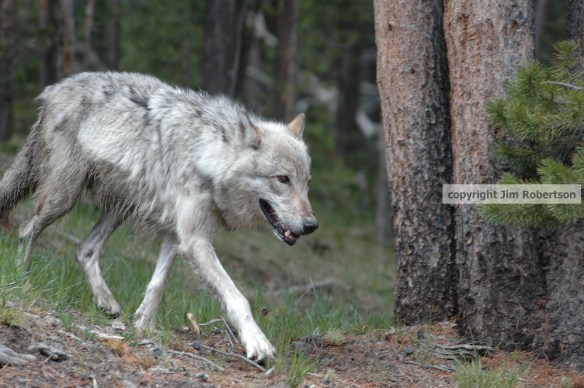
The Mexican wolf was reintroduced in 1998. Biologists say there are at least 75 wolves in the wild in the two states. Federal officials believe it’s necessary to make more room for packs — 14 at last count — to squeeze the most from a limited gene pool.
Nelson said that whatever happens with the official reintroduction plan, she’s optimistic about the chances of wolves in northern Arizona.
“I’m always very optimistic that the wolves will come here on their own because the wolves will follow the best habitat and seek out the best places to find mates,” Nelson said. “I think the people of northern Arizona are much more supportive of wolf recovery. Every public poll in Arizona has shown the majority of people support wolf recovery in the Grand Canyon region.”
But many local elected officials from rural areas of the state spoke out against expanded wolf reintroduction at the meeting in Pinetop on Tuesday.
“The sad truth is that the wolves are already here,” Globe Mayor Terry Wheeler said during Tuesday’s meeting.
But if they’re released in Gila County as proposed, he said, wolves will soon be in Scottsdale “munching down on pink Pomeranians.”
Others in the crowd of about 300 people responded with pronouncements of hysteria or “lobophobia” after several people angrily accused the government of endangering children. Biologists said wolves are wild animals requiring caution but they have not attacked anyone since reintroduction began.
Members of the White Mountain Apache and Havasupai tribes spoke for protection. A group of Havasupai elders said they wanted to see wolves inside the Grand Canyon.
The U.S. Fish and Wildlife Service proposes to more than double the area in which captive wolves could be released to 12,500 square miles. The release zone currently is restricted to the southern Apache National Forest, but it would grow north and west to the Payson area, including the full Apache-Sitgreaves National Forest and three ranger districts in the Tonto National Forest. It would also expand east in New Mexico, across Gila National Forest and into Cibola National Forest.
Eric Betz can be reached at 556-2250 or ebetz@azdailysun.com.
The Associated Press contributed to this report.
By Chris McKee Sunday, December 1, 2013
LOS LUNAS, N.M. (KRQE) – Following protests and attempted legislation, a New Mexico county is now trying to tackle the issue of animal hunting contests that could inspire some change.
Valencia County commissioners will soon review and vote on a resolution to oppose the contests. Over the last year, the state has seen several contests targeting coyotes and prairie dogs. At least four of those contests have been held in Valencia County.
Commissioner Alicia Aguilar is behind the resolution’s proposal. In a phone interview with News 13 on Saturday, Aguilar said she’s heard from several people, including a wildlife biologist, who are concerned about the contests impact on wildlife populations.
Other commissioners say residents have raised even more issues with the contests.
“They think it’s a negative look on the county promoting this contests,” said Aragon.
Commissioner Jhonathan Aragon has a background in veterinary medicine. He says he hasn’t made his mind up about which way he’ll vote on the resolution. However, he says the targeted animals are a real problem.
“It is devastating, you know these ranchers put a lot of money and time into these animals to have these coyotes just come in and just you know, ruin their entire life’s work,” said Aragon.
Aragon says despite the vote, it may be time for a change in how the hunting is done.
“Maybe they could work with some of these activist groups to kind of see how they can … just do things differently so that both sides are happy about the outcome,” said Aragon.
Commissioners will debate and vote on the resolution on Wednesday. If it passes, it won’t change any local laws but just serve as the county’s official opinion saying it “opposes animal hunting contests.”
Two of the Valencia County gun shops that have held animal hunting contests for coyotes this year say they plan to hold more in the near future.