Pure Propaganda: N.M. students take refuge in bus stop ‘kid cages’ as gray wolf population soars

Kid cage at school bus stop.Kid cage at school bus stop.

    By Valerie Richardson

The Washington Times

Thursday, November 28, 2013

DENVER — Canadian gray wolves are by all accounts thriving in the Northern Rocky Mountains and Great Lakes region, but getting the wolf’s removal from the Endangered Species List won’t be easy.

Even as children in rural New Mexico take refuge from wolves in “kid cages” at school bus stops, wildlife lovers and environmentalists are fighting tooth and nail the proposal by the Fish and Wildlife Service to delist the species.

Read more: http://www.washingtontimes.com/news/2013/nov/28/wolves-no-longer-endangered-but-friends-fight-thei/#ixzz2mFO57EJI Follow us: @washtimes on Twitter


Understanding the Great Divide

http://boldvisions.businesscatalyst.com/opinion.html

Stephen Capra

Another week has passed and we have lost more wolves. Not really a surprise, but we also lost a beloved malamute while its owner was hiking. Shots were fired, screams persisted and a beautiful dog lay dead with seven bullets penetrating his body. This is becoming the mantra from Montana on a daily basis. When walking a family canine, a dog must always wear blaze orange and the master must say his prayer of protection when on a trail. The killing of wolves has become a sickness for the depraved and wicked.

This past week in Albuquerque we had a hearing on the Mexican wolf, with ideas the Fish and Wildlife Service has about expanding their range, what the count will be when they are deemed no longer endangered and perhaps easing the means of killing for ranchers. Perhaps 300-400 people showed up for the hearing in a large meeting room at the Comfort Inn. Clearly the pro wolf people held the majority, but there remained plenty of ranchers and county commissioners and other wolf haters who spoke out with rage about the wolf.

Several things struck my mind as they talked. First, why do ranchers not understand it’s rude to leave your hat on at such hearings? It is clearly designed to show their personal arrogance and sense of control. Yet, to me it just shows ignorance. Then there is this obsession with the constitution. Since when did the people that robbed, killed and destroyed our public lands have such a deep feeling about the constitution? The answer is only when it seems politically viable to their own good. Not for any other more altruistic goal.

Then it was time for the fear game rhetoric-Our children……Their safety……We are losing our entire herds…..We are being wiped out…….Poor me……….

It was the usual regurgitation of lies and their dream of an antiquarianism way of life, circa 1870.

What makes this issue so frustrating and demoralizing are the people- the killers, who seem to glee in the chance to steal life. This is the group I characterize as the “angry mob.” They are collectively the people that best define Obama haters, anti-tax loathers, people, who feel that issues like Gay marriage, Climate Change, Health Care are things that liberals like the President have brought to their doorstep and they must fight back, with pride and furry. They do this by collecting an arsenal of weapons, ammo, scopes, night vision equipment. They speak in chat rooms and share their rage against this new America.

They seek in their twisted way a chance to have power and control. The victim of this demented mind-set is wolves. Wolves represent freedom and the power of true spirit. Wildness is at their core, but also love and a sense of family. Yet, for those who feel they have lost control, this animal and its demise makes them feel a sense of power, a place of control, the means to settle their rage. To allow themselves a sense of freedom and spirit, they must kill and steal it from the very symbol of that, which they seek. It also allows them to show their disdain for conservation. Ignorance it seems is truly bliss.

However, there is another aspect to this fight which is often overlooked and it stems from the conservation side. First, as we have said many times, groups like Defenders of Wildlife, tried to find common ground with ranchers from the start. In fact, even when it was clear it was not working, they simply kept doubling down on a flawed strategy. But some of their rational for this stems from the reality of dealing with foundations.

Foundations in America today define how we work in Conservation. They are the funding, which is the lifeblood of any campaign and any organization. Foundations like much of America tend to be more conservative in how they give. By this I mean they do not tend to like direct conflict or issues that cannot fit into a nice collective ending. Therein lies the problem with wolves. This is a fight that is not likely to have a happy, feel good ending; one side will lose. Right now unless we as a community say, we refuse to lose and we will not compromise any longer, all will be lost. But the pressure on many conservation groups is to find a road to compromise. That in turn has led to hunting seasons and other such destructive outcomes.

The opposition has rallied under one voice, which is to say no to all wolf recovery; to push as hard as possible to fight expanded ranges, to create longer hunting seasons, and to say repeatedly that our children and the livestock industry are threatened! The conservation community by contrast seems to have twenty positions and no clear unified strategy. Instead, wolf recovery has turned into an endless fund-raising opportunity, with little success to speak of.

Bold Visions Conservation stands by its 10-point wolf recovery proposal. It is designed to rally support from urban areas to dwarf that which comes from the rural hot spots. It means changing our rhetoric and understanding we are truly in a war, not just to save wolves, but a war of culture which will define the future of the West.

During the hearing a rancher from eastern Washington got up to thank Fish and Wildlife for not creating a sub-species category for wolves in eastern Washington, meaning they can be killed. My first thought was why was he here in Albuquerque? The answer, I believe, is that the ranching community is sharing strategy, working in a unified manner to take what has worked in Montana and bring it to New Mexico, Colorado or any place that could harbor wolves. They are funded to fight and fight they will.

There comes a time in conservation, as David Brower clearly understood, when you fight for what you believe, and when you do so, people respect you. In order to protect and expand wolf recovery we cannot be cute, or speak in only scientific jargon, rather we must get in the trenches and fight, this is a battle we can surely win, it’s for the heart and soul  of the America we want to be a part of and the future of our western heritage.

Wolves define the freedom and spirit that is the West of my soul. Join us in the trenches. Victory is ours, when we cross that great divide, united.

“I am he and you are me, and we are all together.”

 -John Lennon and Paul McCartney

Cages built to protect kids from wolves at New Mexico bus stops under fire for ‘demonizing’ the endangered animals

snl-106_4[If folks in New Mexico are this afraid of wolves, they must  really be paranoid of land sharks.]

Cages designed to protect children from  Mexican gray wolves at New Mexico’s bus stops have come under fire for demonizing the endangered animals, which have never attacked anyone in the  state.

Environmentalists argue the  wooden and mesh cages erected in the town of Reserve a decade ago are only furthering the misunderstanding of the animals, their behaviors and the dangers they pose [not to mention making the people of Reserve look really silly.]

But supporters of the cages – including residents and conservative anti-government organizations – insist that the animals, which were reintroduced to the area in 1998, pose a very real threat.

The  debate has resurfaced because the U.S. Fish and Wildlife Service proposes to  extend Endangered Species Act protections for around 75 wolves left in New  Mexico and Arizona.

The approximately 20 cages in Reserve were  installed on the orders of Reserve Independent Schools, Catron County Sheriff  Shawn Menge said.

The FWS is also seeking to make it illegal to  kill wolves in most situations and would greatly expand the area where wolves  can exist without interference, FoxNews.com reported.

To many conservatives in the area, the  proposals are simply examples of meddling government officials who do not know  what it is like to live with wild wolves.

But Eva Sargent, director of Southwest  programs for Defenders of Wildlife, said that keeping the cages was politically  motivated, rather than based on safety concerns.

While there are some – albeit few – reports  of animals attacking livestock, they rarely attack humans. Even with the livestock, domestic dogs kill 20 times as many sheep as wolves do, data  shows.

‘There’s been absolutely zero, nada, zilch attacks on humans by wolves in the Southwest, so I think these cages are a reaction to a non-problem,’ Sargent told Fox.

‘For some people, it’s a political ploy to bring attention to other things. A lot of the fear stirred up by these kid cages, at the base of it, is an anti-government fear and the wolves are standing in for that.’

Yet, still residents in the West say the decision should be up to them, not Washington. ‘The wolf is symbolic of a larger fact,’ David Spady, the producer of an anti-wolf documentary told the LA Times. ‘The federal government is running roughshod over private property rights.

Read more: http://www.dailymail.co.uk/news/article-2479999/Cages-built-protect-kids-wolves-New-Mexico-bus-stops-demonizing-endangered-animals.html#ixzz2jExLvkAG
Follow us: @MailOnline on Twitter | DailyMail on Facebook

Wolf protection plan raises hackles in Southwest

By Julie Cart
October 26, 2013, 6:30 p.m.

ALBUQUERQUE — In the small, rural community of Reserve, children waiting for the school bus gather inside wooden and mesh cages provided as protection from wolves. Parents consider the “kid cages” a reasonable precaution.

Defenders of the wolves note there have been no documented wolf attacks in New Mexico or Arizona. Fears of wolves attacking humans, they say, are overblown, and the cages nothing more than a stunt.

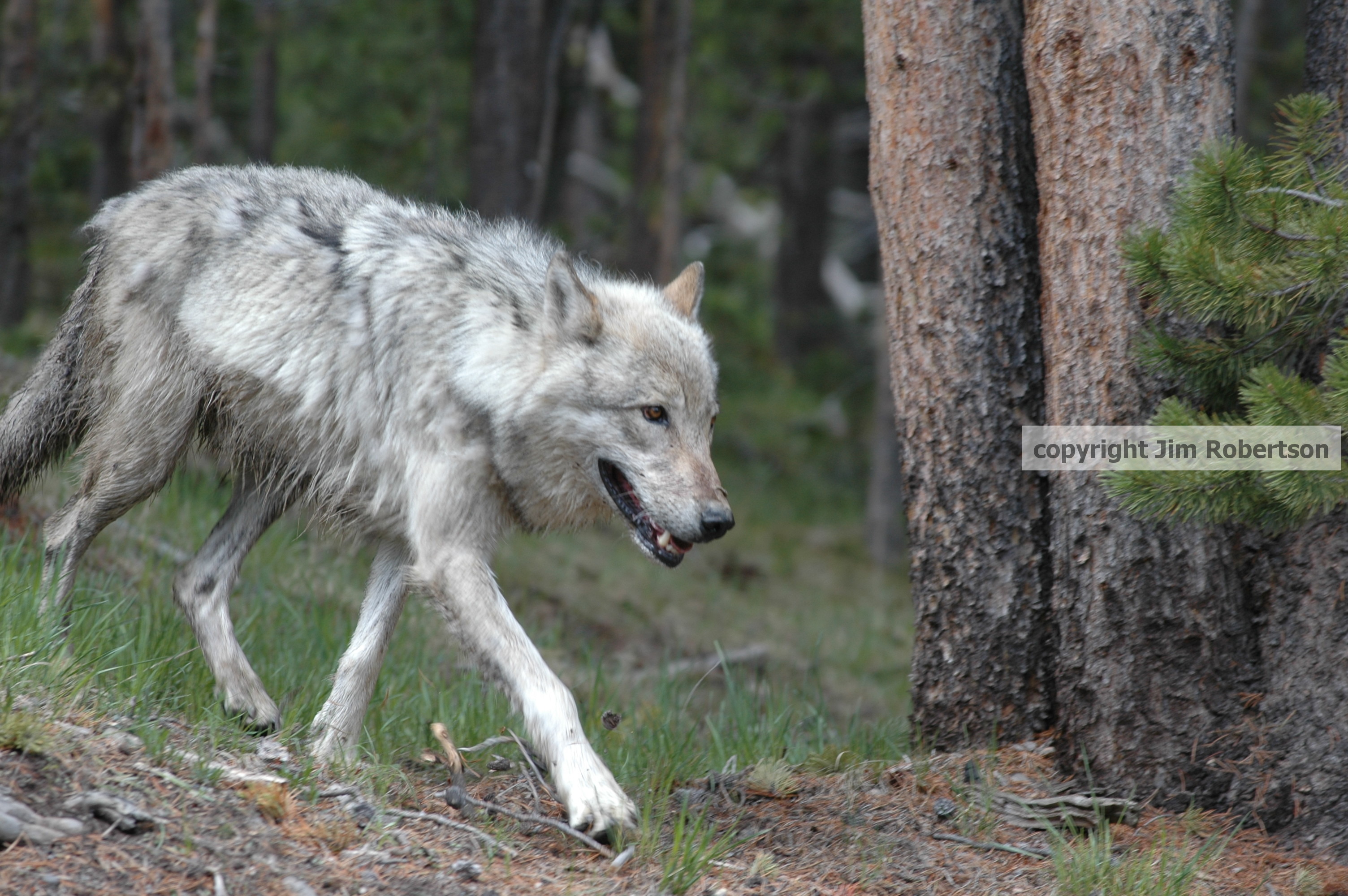
copyrighted Hayden wolf walkingIn 1995, the reintroduction of Canadian gray wolves into the northern Rockies ignited a furor.

Now that acrimony has cascaded into the Southwest, where the U.S. Fish and Wildlife Service proposes to extend Endangered Species Act protections for an estimated 75 Mexican wolves in the wild in New Mexico and Arizona.

Such protections would make it illegal to kill wolves in most instances. The new federal plan would also significantly expand the area where the wolves could roam unmolested.

To many conservatives in the West, such protections are examples of government overreach — idealistic efforts by officials who don’t know what it’s like to live with wolves.

“People have to stand up and defend our rights,” said Wink Crigler, a fifth-generation rancher from Arizona who says guests at her tourist cabins fear they might be attacked by wolves.

Anti-wolf campaigns here — paid for by conservative political organizations antagonistic toward the federal government — often portray the animal as a savage devil preying on children.

The antipathy has encouraged scores of illegal killings of Mexican wolves, whose population dwindled to seven before federal efforts to reintroduce them began in 1998. A young male wolf was fatally shot with an arrow a few weeks ago in the same rural Catron County that uses the kid cages.

Into this atmosphere have come federal officials who by the end of the year are expected to finalize their plan for managing Mexican wolves, a smaller and tawnier subspecies of the Canadian grays.

“With the political debate we see raging, we can’t just listen to the loudest voice in the room,” said Fish and Wildlife Service Director Dan Ashe. “There are many loud voices in the room. No animal engenders more polarizing emotion among Americans than does the wolf.”]]

It is a public policy debate driven not just by biology and science, but by emotional appeals and unalloyed partisanship.

When a previously scheduled Oct. 4 public comment hearing about wolf management was postponed by the government shutdown, advocates came out anyway, staking out nearby meeting rooms at an Albuquerque hotel.

The Save the Lobo rally, paid for by Defenders of Wildlife, featured a man in a wolf costume, children scrawling placards with crayons and people offering videotaped testimony to be forwarded to Washington.

Down the hall, an anti-wolf event was sponsored by Americans for Prosperity, an organization funded by the conservative Koch brothers. The group offered literature by Ayn Rand and screened the documentary “Wolves in Government Clothing,” which equated rampaging wolves with an out-of-control federal government. Said one Arizona rancher at the event: “Is this politically driven? Absolutely.”

An armed guard patrolled — made necessary, Americans for Prosperity said, by death threats from environmental groups.

The issue of public safety loomed large, with much discussion of the kid cages, boxy structures that resemble chicken coops. Photos and video of the cages have been circulated by Americans for Prosperity, although it was unclear how many exist or who requested or paid for them. Local media reports suggest at least some of them were built by students in a high school shop class.

Calls to the superintendent of schools in Reserve were not returned.

To Carolyn Nelson, a teacher in Catron County, the cages don’t go far enough to protect children. She said that seven years ago her son, then 14, was out walking and came across three wolves. Frightened, he backed against a tree. One wolf stared him down while the other two circled.

Only when the boy cocked the gun he was carrying did the wolves run off. “I think it was a miracle he wasn’t killed,” she said.

Continue the story here: http://www.latimes.com/nation/la-na-wolves-20131027,0,2078501.story?page=2#axzz2j2HBeocx

Copyright © 2013, Los Angeles Times

Arizona’s wolves another casualty of federal shutdown

Scott: Make decisions for species based on science, not politics

By David Scott My Turn Wed Oct 9, 2013copyrighted Hayden wolf walking

Closed national parks and monuments have become a symbol of the cost of the federal government shutdown.

Vacation plans are on hold, local economies are hurting, hundreds of thousands of Americans are temporarily out of work, and without the federal agencies in charge of monitoring pollution, many Americans have been left vulnerable. So, too, has our wildlife.

Without U.S. Fish and Wildlife Service officers on the beat, animals such as wolves are at risk — both in the short term from immediate dangers, including poachers, and over the long term from delays in making important management decisions that affect their future recovery.

Recently, the U.S. Fish and Wildlife Service proposed removing the gray wolf from the list of endangered and threatened species. The proposal would remove Endangered Species Act protections for wolves across nearly the entire lower 48 states, despite the fact that there are still few, if any, wolves in the vast majority of their former range.

It is a critical time for wolves. Yet public hearings scheduled by the U.S. Fish and Wildlife Service on the proposed delisting have been delayed, to be rescheduled when the government re-opens.

This is also a critical time for Mexican gray wolves, the smallest, rarest, southernmost-occurring, and most genetically distinct subspecies of North American gray wolf. Although the Mexican wolf would be listed as endangered, the Fish and Wildlife Service is proposing to keep and expand its “experimental nonessential status,” even though it remains one of the most endangered animals in North America.

Virtually exterminated in the U.S. by 1970, Mexican wolves were reintroduced north of the border in 1998. But by early 2013 there were still only about 75 Mexican wolves living in the wild in the U.S. These animals are “essential” and should have the full protection of the Endangered Species Act.

Wolf recovery has been one of our greatest Endangered Species Act success stories. Stripping away federal protections now, before the population has fully recovered, will negate the decades of hard work that have gone into bringing wolves back from the brink of extinction in this country.

Without federal protections, this magnificent symbol of our wild heritage will almost assuredly slide back into harm’s way. Wolf hunting seasons have been reintroduced over the last two years in Idaho, Montana and Wyoming, and more than 550 wolves were killed by hunters or trappers in the Northern Rockies last season alone.

Wolves are among North America’s most charismatic animals. The howl of the wolf is emblematic of our country’s last wild places, reminding us of the power and beauty of the natural world. The oldest and largest ancestor of domestic dogs, wolves once ranged from coast to coast and from Alaska to Mexico, but these magnificent animals have been victims of prejudice since their early encounters with people.

Targeted by bounty hunters for their pelts, they were poisoned, trapped, and shot, until by the 1970s, wolves remained only in remote areas of Minnesota and Michigan in the lower 48 states.

The tide began to turn in 1973 when Congress enacted the Endangered Species Act, and wolves received official protection that same year. Since then, thanks to these federal protections, wolf populations have rebounded in the continental United States.

In response to public outcry and the advocacy of conservation groups, the U.S. Fish and Wildlife Service reintroduced wolves to Yellowstone National Park and central Idaho in the mid-1990s. Today, there are about 1,600 gray wolves in the Northern Rockies and some 3,700 in the Great Lakes states.

Wolves are vitally important to maintaining nature’s balance throughout their habitat, culling out weak and sick animals among their prey, which helps keep deer and elk populations healthy and in check. (Over the last two decades, exploding deer populations have been wreaking havoc on ecosystems from the Rockies to New England and the Great Lakes to the Deep South.)

Wolf reintroduction has also been a factor in the reappearance of willow and aspen trees, the return of beavers, and increased populations of red foxes throughout gray wolf habitat. Wolves are even helping local economies as people from across the country come to view these inspiring icons of wild America.

The current proposal to strip gray wolves of federal protections reflects a political desire, not scientific reality. The proposal is based on a single study that has not been peer-reviewed and relies on a wildlife classification theory that is not generally accepted within the scientific community.

In fact, the Fish and Wildlife Service’s “Proposed Rule Removing the Gray Wolf from the List of Endangered and Threatened Wildlife” is contrary to the fundamental principles of the Endangered Species Act. Now is the time to finish the job of wolf recovery, not abandon the gray wolf to the same kinds of destructive forces that endangered them in the first place.

David Scott is president of the Sierra Club.

Wolves are here, so should hearing be about their future

Article, including video, here:
http://www.azcentral.com/opinions/articles/20130918bring-tough-wolf-hearing-arizona-editorial.html

Our View: Debate will be tough, but Arizona should host it
By Editorial boardThe Republic | azcentral.comFri Sep 20, 2013 12:38 PM

The reintroduction of Mexican gray wolves to Arizona is a victory that requires more nurturing to become a true triumph. We need more wolves and an expanded recovery area.

Arizona’s role is undeniable. Primary releases occur in our state, and the Arizona Game and Fish Department played a key role in management efforts.

It is ridiculous that the U.S. Fish and Wildlife Service did not schedule hearings in Arizona to discuss proposed changes in the program.

Hearings are planned for this month in Washington, D.C., and next month in Sacramento, Calif., and Albuquerque, N.M.

Sens. Jeff Flake and John McCain and Rep. Paul Gosar sent a letter to Interior Secretary Sally Jewel requesting a hearing in our state. Arizona’s Game and Fish Commission wants the same thing.

It makes sense.

Establishing a healthy population of lobos in eastern Arizona and western New Mexico has been fraught with controversy.

Some ranchers don’t like accommodating the public’s desire to restore wolves to public land that is also used for grazing.

Some environmentalists are dissatisfied with wolf management that resulted in many wolves being killed or removed.

A hearing in Arizona means passionate debate. That’s fine. Nobody said this was easy.

Arizona deserves a continued voice in the worthwhile effort to reintroduce Mexican wolves.

Agreement limits relocation of wild wolves

copyrighted Hayden wolf walking

PHOENIX — Federal officials have agreed not to try to capture and relocate wolves entering Arizona from Mexico.

In a deal approved Monday in federal court, the U.S. Fish and Wildlife Service will consider wolves found wandering outside the current reintroduction boundary areas to be wild. The agency is, in essence, revoking the permission it gave itself to capture and relocate the animals.

Michael Robinson of the Tucson-based Center for Biological Diversity said the settlement is a crucial step in helping reintroduce the wolf population to its natural habitats in Arizona.

Robinson said the issue arose two years ago when Mexico began reintroducing wolves into its northern regions, a few dozen miles south of the area where Arizona and New Mexico meet.

What happened, he said, is the U.S. Fish and Wildlife Service, on its own, then gave itself a permit — without public notice — to capture any wolf that might cross the border and cause problems with livestock.

The agency already has the power to capture and relocate those wolves being reintroduced into Arizona and New Mexico in an effort to keep them from preying on cattle. That is because the whole reintroduction program is being conducted under rules that specifically consider the wolves in the program to be a “nonessential population.’’

But Robinson said there is no reason to unilaterally decide wolves that wander into Arizona on their own should be treated in a similar fashion.

More to the point, he said it’s illegal. Robinson said the rules that govern the domestic reintroduction program, including relocation, do not apply to wolves that were not placed by the United States government but instead wandered into this country on their own.

“These wolves, under the law, are fully protected’’ as an endangered species,’’ Robinson said. “And you can’t simply sacrifice them under the law for special interests, in this case, the livestock industry.’’

Robinson said it is impossible to determine whether any of the wolves released by the Mexican government have, in fact, made their way into the United States.

In essence, the lawsuit settlement recognizes the rules require that if a wolf is found outside the reintroduction area — or other areas where the animals have been welcome — it is required to presume the animal is “of wild origin with full endangered status.’’ And that can be overcome only with other evidence the wolf is of domestic origin and reintroduced, like a radio collar or identification mark.

Robinson said the settlement may actually help wolf reintroduction in this country.

He said the latest report shows there are 75 wolves in the program, including 37 in Arizona. But that includes only three breeding pairs.

Robinson said inbreeding results in smaller litter sizes. He said wolves released in Mexico that manage to make their way across the border could help diversify the population.

The current wolf reintroduction area includes the Apache and Gila national forests as well as lands where the owners have said they are welcoming the animals. Robinson said that includes the Fort Apache Reservation as well as property owned in New Mexico by media mogul Ted Turner.

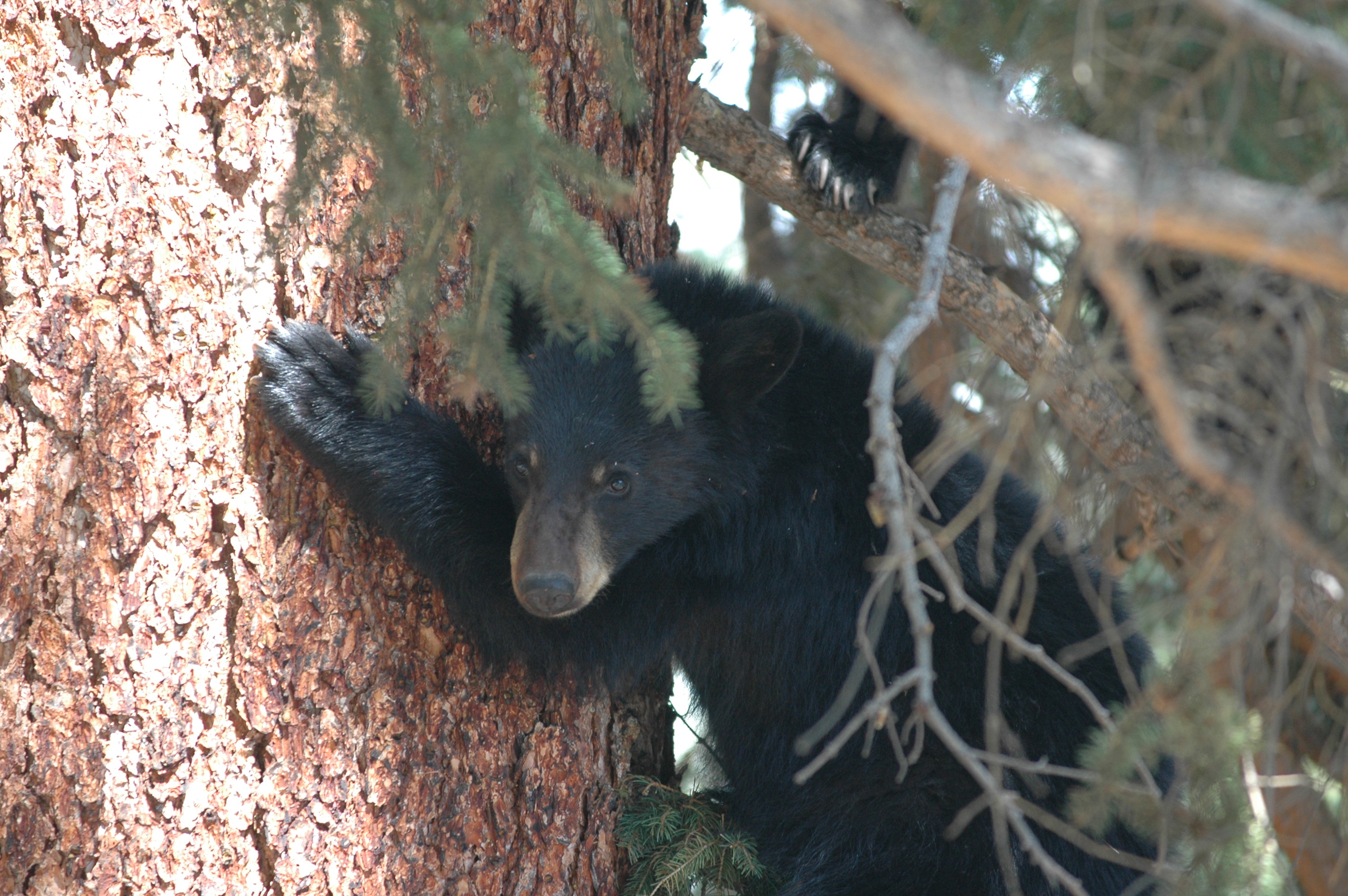
Animal Advocates Say New Mexico’s Bears are Under Siege

Wildlife Photography ©Jim Robertson, 2013. All Rights Reserved

Wildlife Photography ©Jim Robertson, 2013. All Rights Reserved

Renee Blake, Public News Service – NM
August 6, 2013 ALBUQUERQUE, N.M. –

What is being portrayed by some as an infrequent and humane response to hungry bears entering towns looking for food, is actually quite another matter, according to Jan Hayes founder of Sandia Mountain Bear Watch. Hayes is looking for the state to institute stopgap diversionary feeding to keep the bears alive at this difficult time, and keep them away from people.

She said what is happening to Sandia Mountain bears is an ecological disaster, that the drought and lack of food for the bears, along with the hunter-focused attitudes of New Mexico Game and Fish, add up to a decimated bear population. “They want the animals to be there for hunter opportunity,” she said. “Their only mode of management is to trap or kill. The Sandias is a wildlife preserve. So, it’s not a moneymaker for Game and Fish. Bears are a problem species that they would really prefer not be here.”

Stewart Liley, big-game program coordinator for N.M. Game and Fish, said feeding bears would cause them to become increasingly dependent upon artificial food sources. Hayes however said she believes the temporary measure would serve to get the bears “over the hump” and save their population in the Sandia Mountains. She is requesting a meeting with someone in Governor Martinez’ administration on the matter.

Hayes declared that the current style of bear management in the Sandia Mountains has caused an alarming rate of damage that cannot be overcome. “We’re looking at bears that are completely lost to this population. There’s no way they can keep up with reproduction,” she said. “And we also expect 100 percent attrition of first-year cubs this year. They’re very slow reproducing. Our bears don’t even have their first baby until they’re five or six.”

Mary Katherine Ray, Rio Grande Chapter wildlife chair of the Sierra Club, said New Mexico adheres to the North American Wildlife Conservation Model, which says that wildlife, from roadrunners to butterflies, belongs to everyone in the state. That includes the bears in the Sandia Mountains. “We all have a share in owning that wildlife, and it’s supposed to be democratically adjudicated,” Ray declared. “But when you look at the composition of the Game Commission, every last one of them is a hunter.” She said she believes that mindset is getting in the way of seeing the benefits of diversionary feeding.

Ray said that where it has been tried, bears that have been the beneficiaries of diversionary feeding have not become either dependent or dangerous.

See more at: http://www.publicnewsservice.org/index.php?/content/article/33828-1#sthash.l9IhArpU.dpuf

Breaking Down the Means of Stupidity

sarah-palin-lope-navo1

http://boldvisions.businesscatalyst.com/opinion.html

by Stephen Capra

Another weekend is about to pass in New Mexico, and another group enjoyed killing innocent animals. So goes it, in the modern, or perhaps throwback American West. South of Albuquerque, in Valencia County is a special place of hell for animals. It is known as Gun Hawk. It is a gun shop owned by people of greed, which make their money off the killing of innocent animals. Their method is to sponsor “killing contests” of coyotes, prairie dogs, and perhaps if they had their way, wolves.

This so-called company thrives on the negative publicity they receive, because like conservation groups, it allows them to become a cause, only they are a cause for fools. You see, if you use the words freedom enough, and talk about heritage, you will have an ample supply of cowboys, young guns, Tea Partiers and worse yet the media, which will quote everything you say without a moments fact checking.

So what this pathetic company is doing is creating a working model for others to emulate in the future. Their bravado is empowering to communities like Clovis, and allows them to take their stand despite science, compassion and simple reason. When George Bush was President many of us protested his war, his environmental policies, his views on abortion. We did it like Americans before us had. We made our case clear and went to the streets to make our case. We did not harm people with whom we disagreed. What has changed is how those on the other side approach dissent. They plant bombs and kill those that believe in a woman’s right to choose. They carry on very public killings of innocent animals, not just for fun, but because they know it is painful to us and they want us to see the carcasses of their personal rage.

To counter this opposition will require that the conservation movement, like Silicon Valley be open to new ways of engaging and fighting for our principles. We cannot speak to these people and try to reason. It is like a conversation with a sociopath, and they simply would not understand the language. I believe in organizing. I see it as essential, but the time has come where you must go from talk to action. Reason is not a guaranteed part of success.

Last week we were in Clovis, we spent time looking at the prairie dogs. Our supplemental feeding and some rain have brought them back to health. I watched as they played and as they stood guard over their territory and thought to myself, they have no idea what is occurring, no idea of the fight. Then another thought occurred, perhaps they do, perhaps they are preparing themselves for what may come. They are hoping for freedom, but resigned to death. Animals sense what is not spoken. They live with dignity and they die with even more.

So we are going to save them, which is not a goal; it is part of the center of our heart and part of our commitment to them. We spoke with the Mayor, the paper and listened to rage, and to phony religious ramblings. As they spoke I searched for their pulse. I looked deeply into their eyes trying to see their personal pain. Was it childhood, was it divorce, it matters not. We all have burdens to overcome, that is the essence of life. When they were done, I knew that our job was far from over.

The earth is heating up, this we know. Many continue to deny that climate change is real. I mention this because people are also heating up. Reason and civility are being lost as the planet continues to boil, as our artic ice melts. It would be easy to say, I want no part of this, I want a home in the country, or to move to Europe. Part of modern society, is a staunch reality that as humans we must be able to absorb more pain and visually see the result of our actions.

The challenge that we all face is how to get us on the right course. We have so many great alternatives, and it begins demanding that we share this planet with all animals-forever. Be it Clovis, be it Africa, or be it the bounty and beauty of our oceans. Stare into the eyes of an animal; you will experience one thing-love.

We can never rest while wolves are being slaughtered. While Coyotes and prairie dogs are killed for fun and laughter. However, we must change tactics, and we must be forceful in our message. People who kill for fun are cowards. What is occurring in simplification- humanity is being bullied. The way for change is to confront the bully, without fear. With this hot powered strength, the bully will yield.

We will soon begin airing our gorilla commercials to fight for the prairie dogs of Clovis and we have plans for a certain gun shop as well. Please help if you can, it’s time we all stare down the bully and share the land with our true kin, the lives that live it wild.

A very wise and learned man stated succinctly my feelings, “When you destroy nature you destroy one’s own nature as well. It kills the song.” Thank you Joseph Campbell

Public review begins for expansion of Mexican wolf habitat

http://www.latimes.com/news/science/sciencenow/la-sci-sn-mexican-wolf-habitat-20130806,0,2399491.story

By Julie Cart
August 6, 2013, 2:39 p.m.

The Interior Department this week opened to public comment and review its proposal to expand the range of federally protected Mexican wolves.

The U.S. Fish and Wildlife Service has been attempting to reintroduce wolves into parts of Arizona and New Mexico with little success. A small population of about 75 wolves is restricted to a recovery area, and when an animal roams beyond those borders, it must be recaptured and returned.

Allowing wolves more room will increase their numbers and genetic diversity, biologists say. Livestock growers and others oppose any expansion of wolf territory.

Federal officials earlier this year proposed delisting gray wolves in the Northern Rockies and Great Lakes but preserved the endangered species status of Mexican wolves.

The agency is considering five alternatives, and the public has until Sept. 19 to comment.

copyrighted Hayden wolf walking