Exposing the Big Game

Forget Hunters' Feeble Rationalizations and Trust Your Gut Feelings: Making Sport of Killing Is Not Healthy Human Behavior

Exposing the Big Game

Newsom signs bill to ban octopus farming in California

https://www.aol.com/news/newsom-signs-bill-ban-octopus-140959108.html

Susanne Rust

September 29, 2024 at 7:09 AM

Gov. Gavin Newsom signed a bipartisan bill Friday making it a crime to farm octopuses for human consumption in California.

The new law makes it illegal to raise and breed octopuses in state waters or in aquaculture tanks based on land within the state. It also prevents business owners and operators from knowingly participating in the sale of an octopus — regardless of its provenance — that has been raised to be eaten by people.

The text of the law recognizes that octopuses are “highly intelligent, curious, problem-solving animals” that are conscious, sentient and experience “pain, stress, and fear, as well as pleasure, equanimity, and social bonds.” It goes on to note that in research studies, these eight-legged marine invertebrates have demonstrated long-term memory as well as the ability to recognize individual people.

In one experiment, eight giant Pacific octopuses were introduced to two people over a two-week period at the Seattle Aquarium. One of them always approached with food in hand, which they gave to the octopuses. The other carried a bristly stick, with which they used to scratch the cephalopods’ sensitive skin.

At the end of two weeks, the octopuses’ responses to the two people were significantly different. When the stick-carrier approached, the animals would move away and line up their water jets toward the offender so they could make a quick get-away if necessary. But when feeder came calling, they ambled up to the side of the tank and turned their jets away.

Proponents of the new law said it positions California as a leader in humane aquaculture. They point to a growing body of research that shows raising octopuses for food is cruel, inefficient and detrimental to the environment.

Read more:Farm-bred octopus: A benefit to the species or an act of cruelty?

California is now the second state — after Washington — to prohibit octopus farming. Similar legislation has also been introduced in the U.S. Senate and in Hawaii.

“We know that what happens in California has an impact on what happens federally,” Jennifer Jacquet, a professor of environmental science and policy at the University of Miami, said when the bill cleared the legislature. “Americans want to keep octopuses wild.”

This story originally appeared in Los Angeles Times.

Update: Sik Gaek Restaurant Removes Live Animals From Menu

ShareTweet

Updated March 26, 2021:
Thank you to everyone who contacted Sik Gaek restaurant in Queens, New York, to ask it to stop serving live octopuses and lobsters. Before disabling its Facebook page, the restaurant posted, “Sikgaek is no longer available for live octopus. We decided not to serve octopus and lobster alive.” We hope this is the truth and that this abject cruelty won’t simply be available “off menu.” Rest assured, we’ll be watching, and we hope you will, too.


Original post:

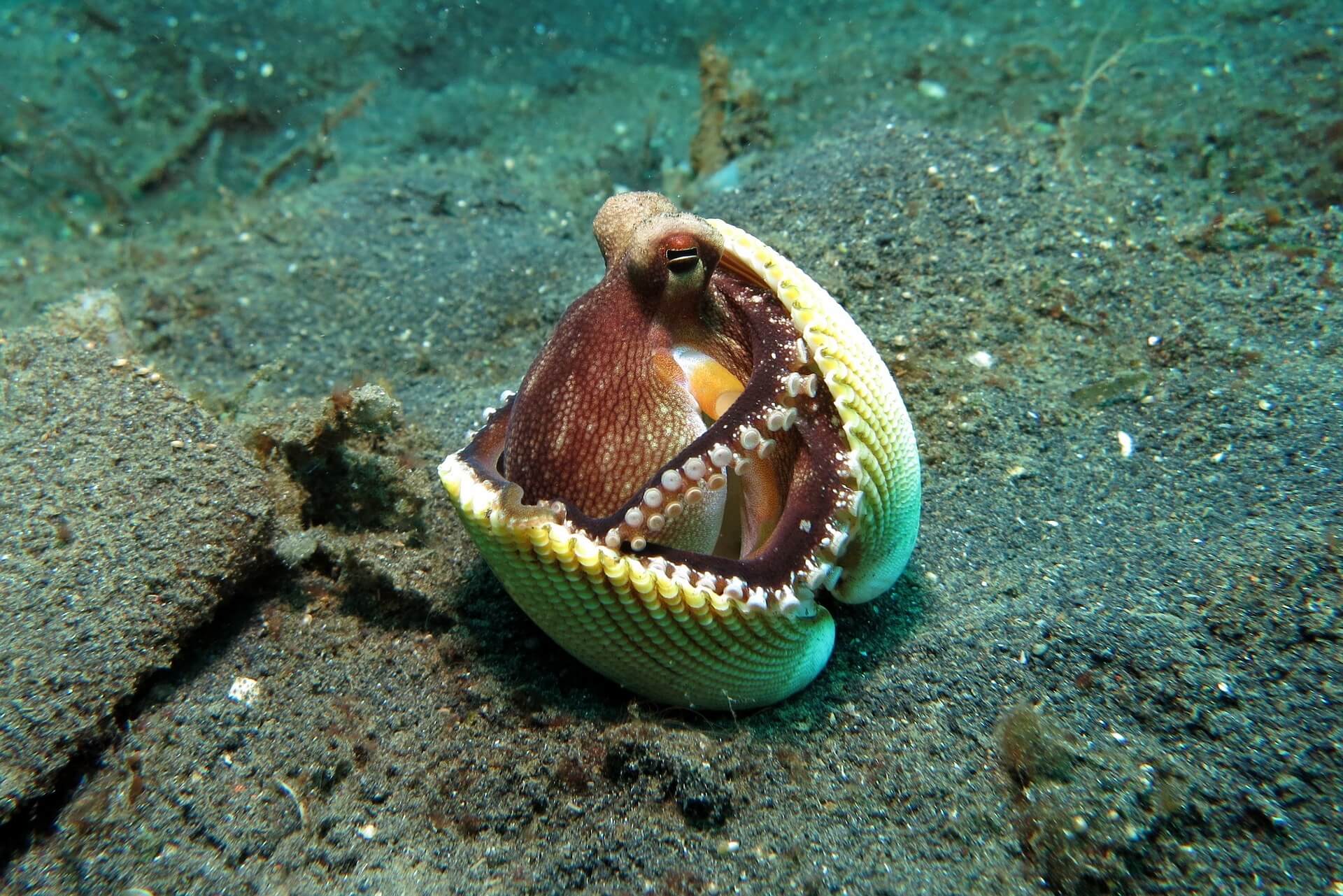
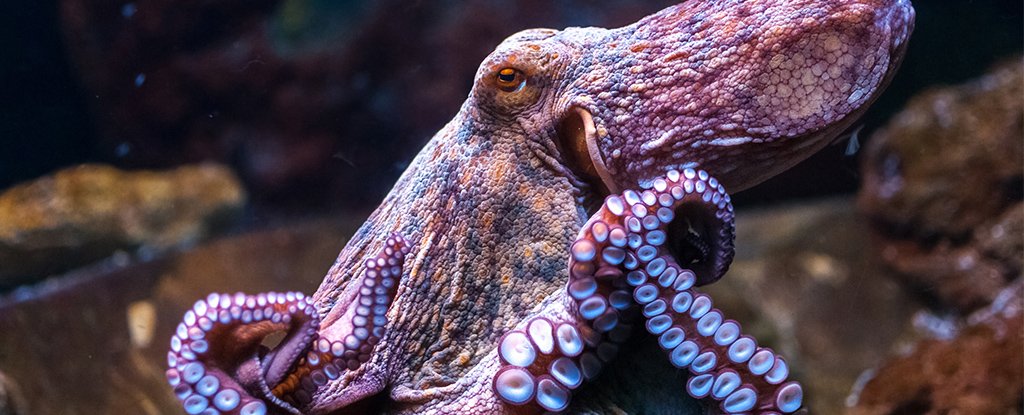
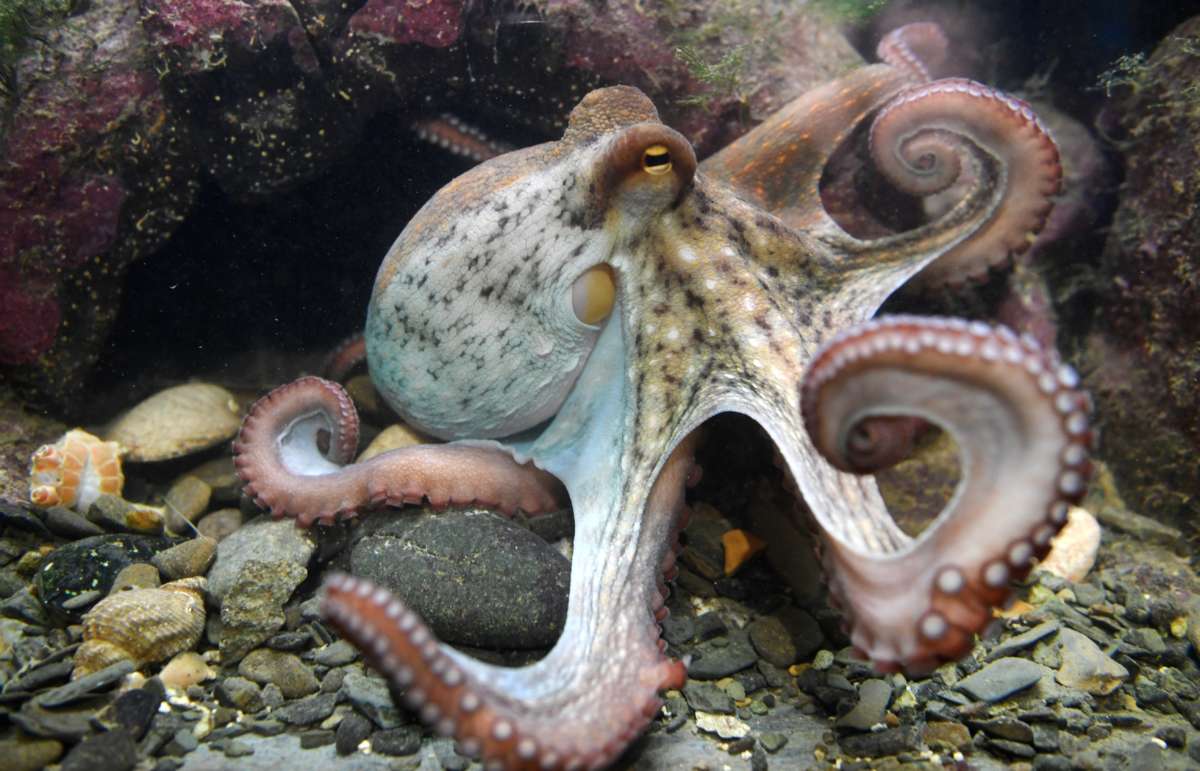
The intelligence of octopuses is well known, but did you know that they have been observed decorating their homes with pretty bits of glass, shells, and bottle tops? They’ve also been seen using tools and playing games! Octopuses have extremely sensitive skin for both touch sensation and chemical recognition. Their suckers are the equivalent of a tongue or fingertip, and the linings are regularly shed to maintain sensitivity to touch and taste. These brilliant beings are like us in so many ways that for most people, the thought of eating one alive is unimaginable.

However, Sik Gaek in Queens, New York, has for years insisted on serving octopuses and lobsters—another complex, misunderstood species also known to have the ability to experience great pain—still squirming on dinner plates, to those customers who find slowly hacking apart living, suffering animals to be appetizing. The restaurant even brags about this horrific practice on its website.

Please feel free to use our sample letter, but remember that using your own words is always more effective.

Octopuses Are Being Devoured Alive at New York Restaurant!

ShareTweet https://www.peta.org/action/action-alerts/octopuses-new-york-restaurant/?utm_source=PETA::E-Mail&utm_medium=Alert&utm_campaign=0321::veg::PETA::E-Mail::Octopuses%20Devoured%20Alive%20at%20New%20York%20Restaurant::::aa%20em

The intelligence of octopuses is well known, but did you know that they have been observed decorating their homes with pretty bits of glass, shells, and bottle tops? They’ve also been seen using tools and playing games! Octopuses have extremely sensitive skin for both touch sensation and chemical recognition. Their suckers are the equivalent of a tongue or fingertip, and the linings are regularly shed to maintain sensitivity to touch and taste. These brilliant beings are like us in so many ways that for most people, the thought of eating one alive is unimaginable.

However, Sik Gaek in Queens, New York, has for years insisted on serving octopuses and lobsters—another complex, misunderstood species also known to have the ability to experience great pain—still squirming on dinner plates, to those customers who find slowly hacking apart living, suffering animals to be appetizing. The restaurant even brags about this horrific practice on its website.

Sik Gaek needs to continue hearing from the compassionate public until it decides to join the 21st century and leave this barbarism behind. Please contact its management and tell them what you think!

After you’ve submitted the form, please also leave a comment on Sik Gaek’s Facebook page.

Please send polite comments to:

Sik Gaek
woodsidesikgaek@gmail.com

EMAIL SIK GAEK

SIK GAEK ON FACEBOOK

Please feel free to use our sample letter, but remember that using your own words is always more effective.

GET PETA UPDATES

FOLLOW US

ShareTweetDonate

GET PETA UPDATES

Stay up to date on the latest vegan trends and get breaking animal rights news delivered straight to your inbox!

https://www.peta.org/action/action-alerts/octopuses-new-york-restaurant/?utm_source=PETA::E-Mail&utm_medium=Alert&utm_campaign=0321::veg::PETA::E-Mail::Octopuses%20Devoured%20Alive%20at%20New%20York%20Restaurant::::aa%20em

Octopus And Squid Evolution Is Officially Stranger Than We Could Have Ever Imagined

main article image

https://www.sciencealert.com/octopus-and-squid-evolution-is-weirder-than-we-could-have-ever-imagined

(Olga Visavi/Shutterstock)NATURE

SCIENCEALERT STAFF31 DECEMBER 2020

Just when we thought octopuses couldn’t be any weirder, it turns out that they and their cephalopod brethren evolve differently from nearly every other organism on the planet.

In a surprising twist, in April 2017 scientists discovered that octopuses, along with some squid and cuttlefish species, routinely edit their RNA (ribonucleic acid) sequences to adapt to their environment.https://8fca1865db38fa71528b67178c37ab73.safeframe.googlesyndication.com/safeframe/1-0-37/html/container.html

This is weird because that’s really not how adaptations usually happen in multicellular animals. When an organism changes in some fundamental way, it typically starts with a genetic mutation – a change to the DNA.

Those genetic changes are then translated into action by DNA’s molecular sidekick, RNA. You can think of DNA instructions as a recipe, while RNA is the chef that orchestrates the cooking in the kitchen of each cell, producing necessary proteins that keep the whole organism going.

But RNA doesn’t just blindly execute instructions – occasionally it improvises with some of the ingredients, changing which proteins are produced in the cell in a rare process called RNA editing.

When such an edit happens, it can change how the proteins work, allowing the organism to fine-tune its genetic information without actually undergoing any genetic mutations. But most organisms don’t really bother with this method, as it’s messy and causes problems more often that solving them.

“The consensus among folks who study such things is Mother Nature gave RNA editing a try, found it wanting, and largely abandoned it,” Anna Vlasits reported for Wired.

But it looks like cephalopods didn’t get the memo.

In 2015, researchers discovered that the common squid has edited more than 60 percent of RNA in its nervous system. Those edits essentially changed its brain physiology, presumably to adapt to various temperature conditions in the ocean.

The team returned in 2017 with an even more startling finding – at least two species of octopus and one cuttlefish do the same thing on a regular basis. To draw evolutionary comparisons, they also looked at a nautilus and a gastropod slug, and found their RNA-editing prowess to be lacking.

“This shows that high levels of RNA editing is not generally a molluscan thing; it’s an invention of the coleoid cephalopods,” said co-lead researcher, Joshua Rosenthal of the US Marine Biological Laboratory.

The researchers analysed hundreds of thousands of RNA recording sites in these animals, who belong to the coleoid subclass of cephalopods. They found that clever RNA editing was especially common in the coleoid nervous system.

“I wonder if it has to do with their extremely developed brains,” geneticist Kazuko Nishikura from the US Wistar Institute, who wasn’t involved in the study, told Ed Yong at The Atlantichttps://8fca1865db38fa71528b67178c37ab73.safeframe.googlesyndication.com/safeframe/1-0-37/html/container.html

It’s true that coleoid cephalopods are exceptionally intelligent. There are countless riveting octopus escape artist stories out there, not to mention evidence of tool use, and that one eight-armed guy at a New Zealand aquarium who learned to photograph people. (Yes, really.)

So it’s certainly a compelling hypothesis that octopus smarts might come from their unconventionally high reliance on RNA edits to keep the brain going.

“There is something fundamentally different going on in these cephalopods,” said Rosenthal.

But it’s not just that these animals are adept at fixing up their RNA as needed – the team found that this ability came with a distinct evolutionary tradeoff, which sets them apart from the rest of the animal world.

In terms of run-of-the-mill genomic evolution (the one that uses genetic mutations, as mentioned above), coleoids have been evolving really, really slowly. The researchers claimed that this has been a necessary sacrifice – if you find a mechanism that helps you survive, just keep using it.

“The conclusion here is that in order to maintain this flexibility to edit RNA, the coleoids have had to give up the ability to evolve in the surrounding regions – a lot,” said Rosenthal.

As the next step, the team will be developing genetic models of cephalopods so they can trace how and when this RNA editing kicks in. 

“It could be something as simple as temperature changes or as complicated as experience, a form of memory,” said Rosenthal.

The findings have been published in Cell.

A version of this story was originally published in April 2017.

You’re Not So Different From an Octopus: Rethinking Our Relationship to Animals

Remember back when we were all tubes?

Sy Montgomery does. That was a simpler time, eons before the octopus and Homo sapiens went their separate evolutionary ways, and certainly long before that highly intelligent cephalopod, which appeared some 300 million years ago, ended up boiled, stewed and fried. “Our lineage goes back a half-billion years ago when everyone was a tube,” says Montgomery, a naturalist and author of many books about animals. “That was when there were no eyes. Yet we have evolved almost identical eyes. I just love that.”

Montgomery’s enthusiasm and devotion to Earth’s creatures — and the similarities we share with them — has inspired her readers to get to know the eight-tentacled and big-brained wonders in The Soul of the Octopus, and taken us to the ends of the Earth and back to our own backyards in such award-winning books as Spell of the Tiger and Birdology.

A real-life Dr. Dolittle, Montgomery says she’s always related best to animals and — sometimes straining the patience of her bipedal family members — has long treated her home as a land-bound ark for orphaned animals. In scientifically precise but poetic prose, she writes that we share greater similarities than differences with the electric eel, the tarantula, the tree kangaroo and the snow leopard. Don’t forget, she says, that we hail from the same genetic pool, or more likely, gurgling swamp. By paying attention to the commonalities we have with our fellow animals — our singular capacity for what Montgomery argues is a broad range of emotions and zeal for life — humans can transcend the “we-shall-rule-the-Earth” anthropocentric focus, she says, and see that we are all in this together.

“We are on the cusp of either destroying this sweet, green Earth — or revolutionizing the way we understand the rest of animate creation,” Montgomery said. “It’s an important time to be writing about the connections we share with our fellow creatures. It’s a great time to be alive.”

Montgomery recently chatted with Leslie Crawford, author of animal-focused children’s books Gwen the Rescue Hen and Sprig the Rescue Pig, and compared notes on delving into the minds of animals.

Leslie Crawford: Do you understand animals more than people?

Sy Montgomery: As a child, I grew up on an Army base and I did not have a single human friend. It allowed me the freedom to get to know other species. I vividly remember my 20s like it was yesterday. As a young person, I was often worried about whether or not I was reading other people correctly. And yet these are organisms that use the same English language. It’s terrific to be in my 60s and know I can read animals. I have always read animals better than people.

What did you find surprising about humans as a child?

I was shocked to learn that people use their language to lie. Even little kids lie. Of course, animals will lie, too. A sea snake will say, I’m three or four sea snakes. Chimpanzees lie all the time. But the degree to which humans use language to lie shocked me. I’ve always dealt with animals in a very straightforward way. I wasn’t ever trying to conceal things from them. Humans often want incorrect information about you and project incorrect things on you.

So much has changed about our understanding of animals since you started writing about them. When did you first realize that animals are sentient beings?

I think most of us realize as children that animals are sentient beings. But then, somehow, for so many people, this truth gets overwritten — by schools teaching old theories, by agribusiness that wants us to treat animals like products, by the pharmaceutical and medical industries who want to test products on animals as if they were little more than petri dishes. But thankfully, scientific and evolutionary evidence for animal sentience has grown too obvious to ignore.

What have you learned about animals and consciousness?

You don’t want to project onto animals your wishes and desires. You have to respect your fellow animals. I don’t want to roll in vomit, but a hyena would enjoy that. I don’t want to kill everything I eat with my face, but that’s what I’d do if I’m a great white shark. If I were eating a carcass, I would not be as happy about it as a scavenger. We have different lives but what we share is astonishingly deep, evolutionarily speaking.

When did you know you were an animal person?

Animals have always been my best friends and the source of my deepest joy. Before I was 2, I toddled into the hippo pen at the Frankfurt Zoo, seeking their company, and totally unafraid. When I learned to speak, one of my first announcements to my parents was that I was really a horse. The pediatrician reassured my mother I would outgrow this phase. He was right, because next I announced I was really a dog.

My father loved animals. Growing up, my mother had a dog named Flip who she adored. But I seem to have had an even greater attachment to animals than they did. My friend, the author Brenda Peterson, says that I must have been adopted at the local animal shelter.

How many animals do you currently live with?

Right now, the only animal who lives with us is a border collie named Thurber. I travel a lot: Thailand, Ecuador, Germany, Spain. I can’t force my husband to have a house filled with animals. I had chickens but predators got almost all of them. Weasels got into the coop. They are so smart. Even though we buried wire beneath the floor, weasels need just a tiny opening to get through. You can never weasel-proof an old barn.

It sounds like you have some respect for weasels even though they killed your chickens?

They were there first. I learned my chickens were killed on Christmas morning when I brought a bowl of popcorn to them and saw this white creature with black eyes staring at me. You’d think I’d be angry. But the beauty and ferocity of this creature filled me with awe. At the same time that I mourned my beloved chickens, I admired the weasel.

You originally studied psychology. How do you go about thinking about what animals are thinking? Or is it a mistake for people to imagine animals are thinking in a way that we think?

I triple majored in college, and psychology was one of them. But thinking about animals wasn’t really part of the coursework. I think it’s perfectly reasonable to assume that nonhuman animals share our motivations and much of our thought processes. We want the same things: food, safety, interesting work and, in the case of social animals, love. But we can’t always apply human tastes to animals — otherwise fish would seek to escape from the water and hyenas wouldn’t roll in vomit.

When did you stop eating meat and dairy and why do you think some people make the decision and others don’t?

I read Animal Liberation, by Peter Singer, in my 20s. Even though I loved meat, I haven’t eaten it since. I can’t wait to try the Impossible Burger!

In writing Sprig, I learned so much about pigs, including how smart they are. What do you love most about pigs?

They are so sensitive and emotional. And they’re wise. They know what matters in life: warm sun, the touch of loving hands and great food.

Similarly, when I wrote Gwen, I found out how remarkable hens are with their own superpowers, including keen eyesight and a strong community that includes watching out for each other.

I agree with you. I love these aspects of their lives. I love how similar they are to us in so many ways, but I also love the otherness of these animals.

Speaking of “otherness,” in your book Soul of an Octopus, you came to know Athena, an octopus, as a friend. But can a person really know an octopus?

Until the day I met Athena in 2011, pretty much all of the creatures I got to know personally were vertebrates. We are so like fellow mammals, with whom we share 90 percent of our genetic material.

I didn’t know if I would be able to bring what I understand about other animals to an invertebrate, but I was delighted to see it was true of the octopus. It was clear the octopus was just as curious about me as I was about her.

There are some animals who aren’t interested in you. But when you have an octopus look you in the face and investigate you with her suckers with such an intensity, well, what that octopus taught me [about consciousness] blew me away. When Athena grabbed me, I correctly understood that she wasn’t being aggressive, just curious.

How do you convince people to consider an octopus as something other than something to eat?

I tell them about my octopus friends, Octavia and Kali and Karma — specific individuals to whom they could relate.

I have realized that preaching to people about seeing animals as worthy of the same compassion and dignity as is owed humans doesn’t work. But if preaching isn’t effective, what do you think works to change hearts and minds — and stomachs?

Teach by example. It’s the most powerful tool we have. Your love for pigs, told through your stories of Sprig and Gwen, is contagious because of your example. You show how much fun it is to let these animals enrich your life and make others want to be part of it. That’s much more appealing than a lecture.

Are there one or two calls to action you would ask of people who want to improve the world for animals?

I would suggest that individuals find the action that best suits them. For me, when I was young, working 14 hours a day and making relatively little money, I had no extra time for volunteer work, and my tithes to animal causes amounted to far too little. But I could change my diet, so I did. For another person, an overnight change to vegetarianism or veganism might be too tough, but perhaps they could volunteer at a shelter.

I personally hate politics, though I vote and donate. But other people might throw themselves joyously into working toward electing candidates that support conservation and animal welfare legislation. Happily, we can all work with our individual strengths to make the change animals deserve.

What about everything we learn daily about climate change and the growing risk of mass extinctions?

Sometimes you don’t want to read the headlines. It’s so depressing. During the civil rights movement, I was too young to have anything to do with that. But now we can choose to be part of what is definitely a movement, one that recognizes that nonhuman animals think and know and feel the way we do. We know this based on cognitive and behavioral science. That change has happened within my lifetime, which is fantastic.

The fact that we live during a challenging time gives us an opportunity to be courageous. I’m thrilled to be able to apply my courage to such a worthy endeavor and with such worthy partners.

This article was produced as part of a partnership between Stone Pier Press and Earth | Food | Life, a project of the Independent Media Institute.

Minister temporarily suspends octopus traps

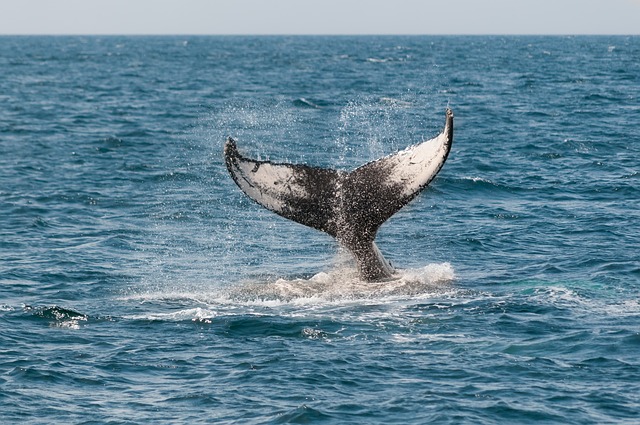
The death of two whales caused by entanglement in octopus traps in recent weeks has caused an uproar among marine conservationists and local residents. A petition doing the rounds, to suspend exploratory fishing for octopus ,has gathered thousands of signatures.

On Friday, Minister of Environment, Forestry and Fisheries, Barbara Creecy announced the decision to temporarily suspend exploratory fishing for octopus with immediate effect.

Creecy’s decision comes after talks with operators in the False Bay Area.

“Our decision is taken following widespread public concern regarding recent whale entanglements in the False Bay area which has resulted in the untimely and cruel death of these magnificent creatures.”

The statement Creecy released explains how the traps came into existence.

A calf died this week after getting tangled in an octopus trap. Picture: Emma Raisun

“In 2014, the Department established an octopus exploratory fishery that is operating in Saldanha, False Bay and Mossel Bay. This programme aims to gain scientific knowledge regarding octopus harvesting, with a view to enhancing job creation and economic development in coastal areas. Meaningful data has been collected between 2014 and 2018, and will continue until 2021 in order to ensure a solid statistical time series of catch and effort data.

“Once enough data has been collected, it will be analysed and subjected to proper scientific scrutiny and review, after which a recommendation will be made regarding the viability of establishing a new commercial fishery. Such a recommendation will also consider mitigating measures in the operations of octopus fishery,” read the statement.

Throughout the process, the Department has been leading with permit holders to ensure whales do not get caught in the nets.

After today’s meeting, operators will start the process of removing the gear from False Bay, focusing on the areas where the whales were harmed first.

A whale of a controversy erupts as a second whale dies in two weeks

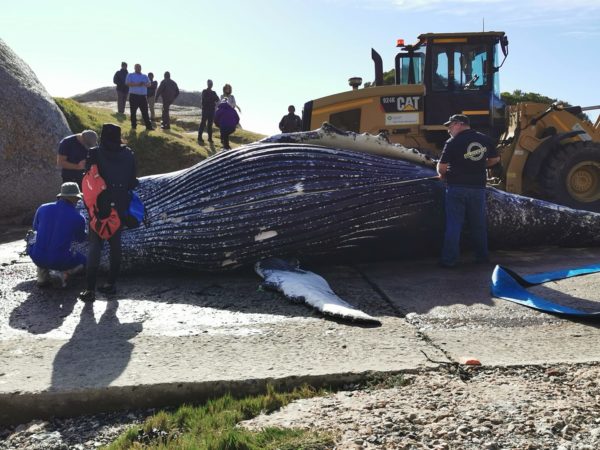
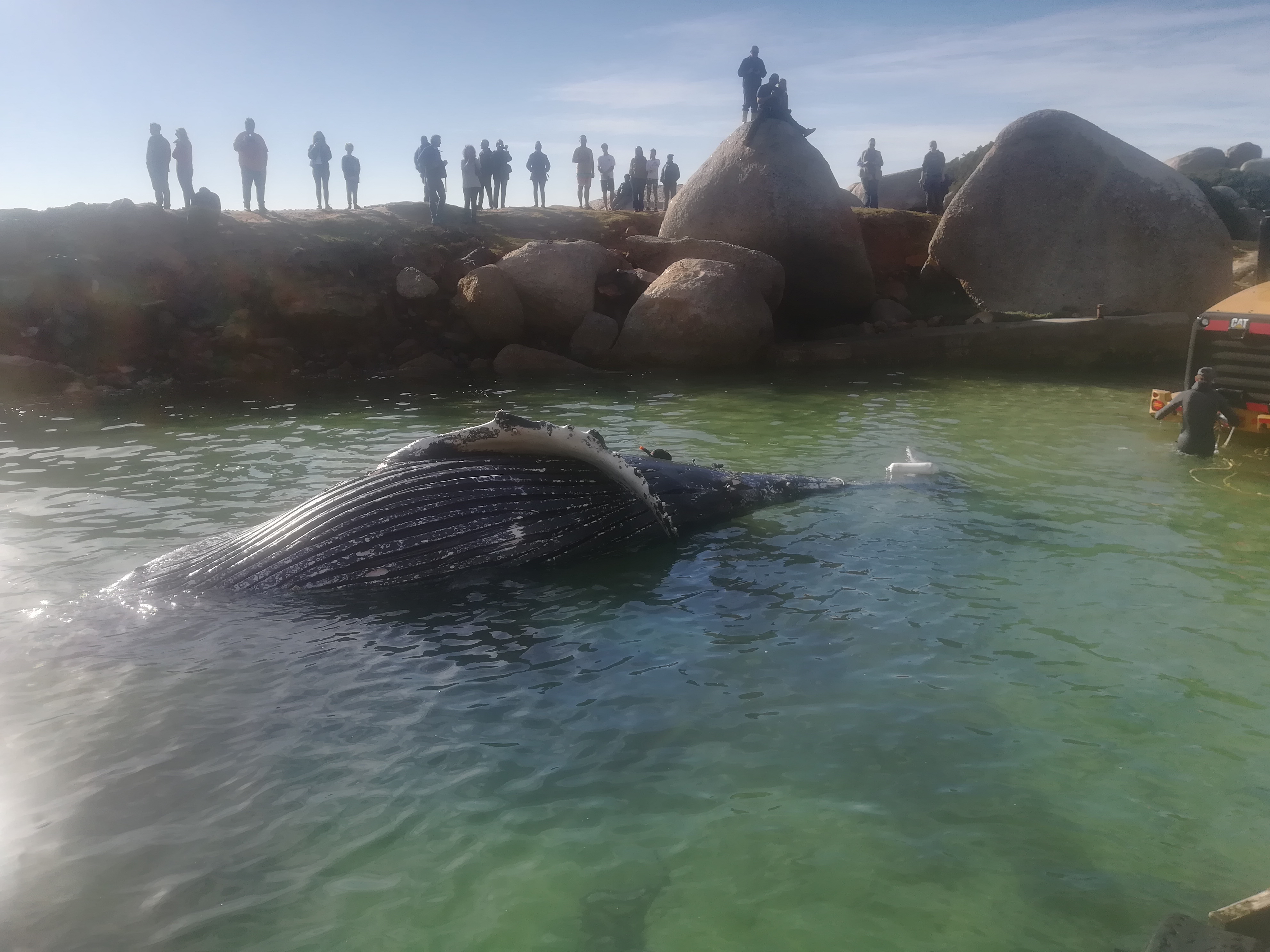
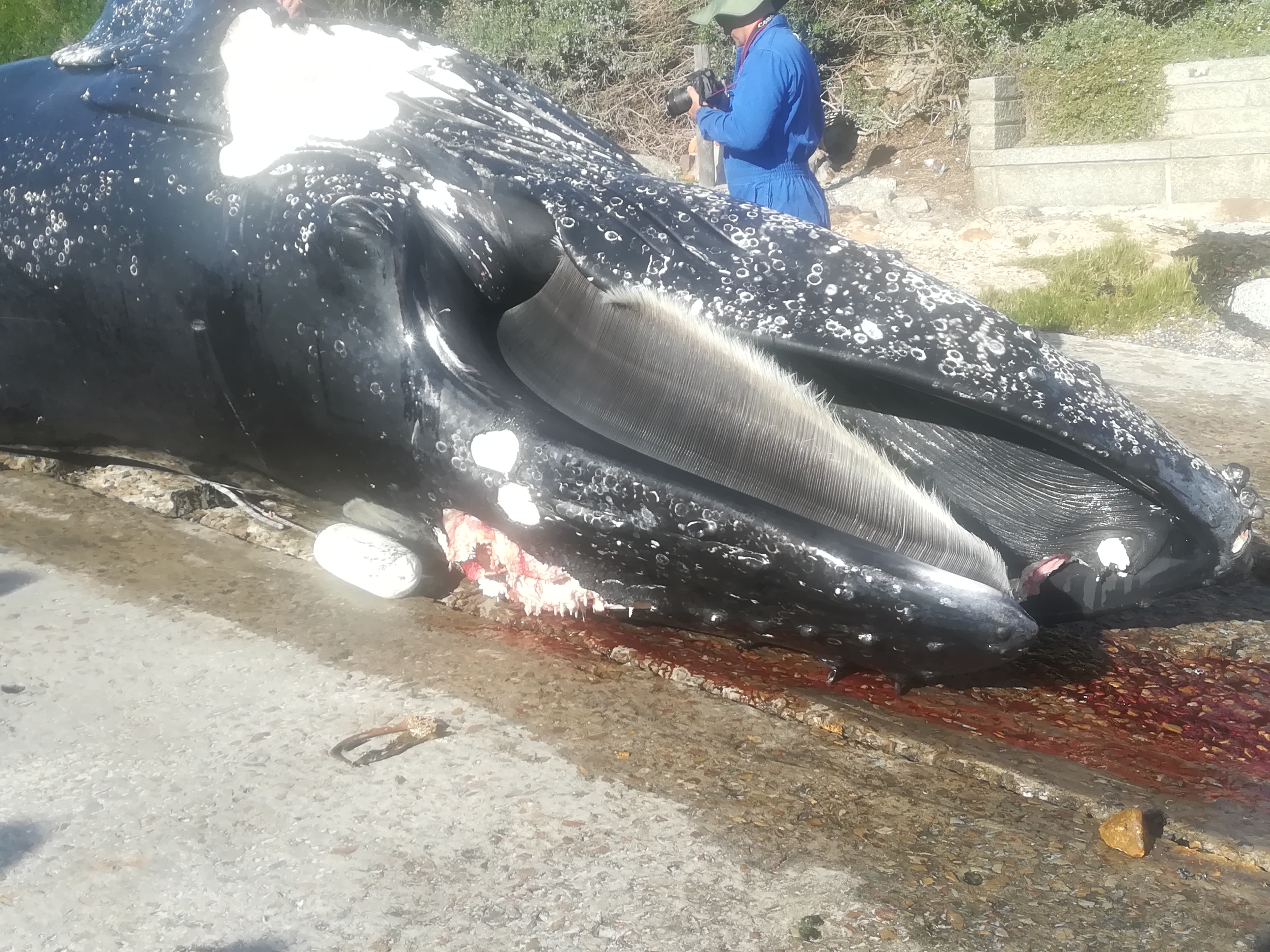
 A carcass of a young humpback whale, about eight metres long, that was killed during octopus fishing is retrieved on June 27, 2019 in Cape Town, South Africa. According to the City of Cape Town officials, the humpback whale was entangled in an octopus fishery line and had drowned. This is reportedly the third entanglement and second fatality of whales as a result of the octopus fishery in the last two weeks. (Photo by Gallo Images/Brenton Geach)  Less

The City of Cape Town has called on Environment, Forestries and Fisheries Minister Barbara Creecy to issue a moratorium on octopus trapping in False Bay, following the death of two whales in two weeks as a result of the controversial industry.

  • ARTICLE UPDATE 4.50PM, 28 JUNE, 2018:  The Minister on Friday acounnced in a statement it had decided to temporarily suspend exploratory fishing for octopus with immediate effect. The decision was taken following consultation with operators in the False Bay Area. 

Late in the afternoon of Wednesday, 26 June, the carcass of a juvenile humpback whale was spotted off of Sunny Cove in False Bay. The animal was left floating overnight until city officials from the Environmental Management Department’s Coastal Management Branch, with assistance from Cape Town Octopus – the company at the centre of the controversy – were able to retrieve it early on Friday morning.

It was the second whale to have died in just two weeks, both allegedly having drowned after becoming entangled in fishing line attached to octopus traps.

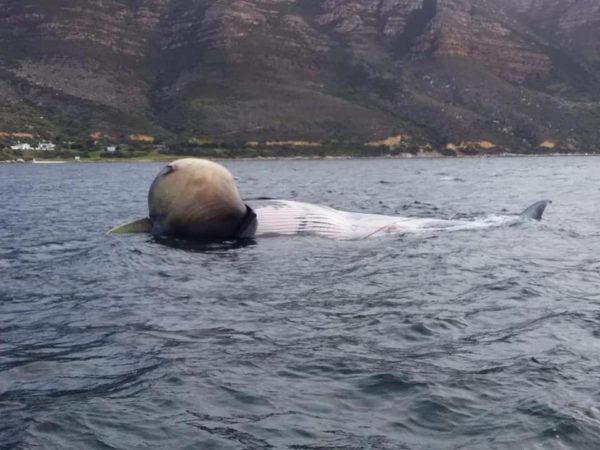
The death of a Bryde’s whale on 11 June sparked outrage on social media platforms such as Facebook and Twitter, with citizens calling for the industry to be shut down after media reports revealed that the octopus trapping permit is classified as experimental rather than commercial. The official number of whales that have died as a direct result of becoming entangled in octopus traps is not known – some reports indicate that nine whales have died over the last few years, while others say the humpback whale is only the third to drown.

But Garry Nel, General Manager of Cape Town Octopus, told Daily Maverick on Thursday that the latest whale death was not as a direct result of his current gear.

“It was a line that was lost seven years ago in another detanglement operation from a separate vessel all together that was one of the very first research boats in that area using gear with no modifications. We assisted the NSRI in that detanglement, and they cut the line and we never found that gear again.”

Nel has operated in False Bay catching octopus for over 15 years, although the Department of Environmental Affairs told Daily Maverick that multiple stakeholders were offered the same permit option.

Nel said the line used seven years ago floated, while the lines his team currently use are weighted, sinking lines. Nel told Daily Maverick that one of the new sinking lines caught onto the old piece of line, but the whale was entangled in the older line.

In a press release issued by the City of Cape Town Marian Nieuwoudt, Mayoral Committee Member for Spatial Planning and Environment said that “the whales swim into the long ropes, and that they get a fright when this happens. They then roll over and get entangled, and eventually drown because the fishing gear is too heavy for them to reach the surface.”

A juvenile humpback whale is hauled to shore after becoming entangled in octopus traps on 26 June in False Bay, Cape Town. Photo: Tessa Knight

As a result of the latest whale death, the City has called for Minister Barbara Creecy to issue a moratorium on the experimental licence, requesting that all gear be removed from False Bay until the “fishing gear and equipment are redesigned, tested, and proven not to pose a threat to our marine life”.

Creecy, as the new Minister of Environment, Forestries and Fisheries (DEFF), takes over control of what was previously the Department of Agriculture, Forestries and Fisheries (DAFF). It was DAFF that issued the experimental octopus fishing permit in 2003 and it is DAFF, now DEFF, that Nel provides with data on all things octopus related.

At a Fisheries stakeholder forum on 19 June Creecy addressed the contentious issue of trapping octopus in False Bay.

“What I would like to do is get some independent opinion on this so that I can understand whether we are doing everything that we can to prevent a situation where we’re endangering mammals,” Creecy said.

But environmental activists are demanding the Department provide answers as to why the process has taken so long. Swati Thiyagarajan, head of Conservation and Campaign of the Cape Town-based Seachange Project, told Daily Maverick that one of the biggest issues with the Department is a lack of transparency.

“It’s a Marine Protected Area, why did the start this project in the first place? What, and who, are they supposed to be protecting?”

Video Player

00:00
00:09

Thiyagarajan was among a small group of bystanders and activists who watched Thursday’s humpback being transported from the slipway onto the back of the City’s Solid Waste Department’s trucks (see video clip above). As the juvenile whale was moved into shallow waters those present noted the presence of another whale just outside of the slipway investigating the situation.

Darryl Colembrander, City of Cape Town Head of Coastal Management and Programmes, told Daily Maverick that the missing pieces of flesh on the whale were in fact shark bites rather than wounds caused by the entanglement itself.

A juvenile humpback whale is hauled to shore, 26 June, False Bay, Cape Town. Photo: Tessa Knight

In a response to Daily Maverick’s request for information, Albie Modise, Chief Director of Communications for the Department of Environmental Affairs said:

“The only consistent (and therefore practically usable data) that has been received from this fishery to date has been that collected by Mr Nel’s fishing operations.

“As fisheries data relies on analyses of trends over time, the data from the first few years are not very informative, but these become more informative as one accumulates more data over time.”

The Department did not respond to a deadline requesting more information on why data was not made public. DM

Save our whales: Stop octopus trap fishing in False Bay, Cape Town

396
Whales Source: Google Images

We request an immediate moratorium on all octopus trapping in the False Bay area until such time as stakeholders and concerned citizens are consulted and can agree on a safe operating standard/procedure for the use of traps used in the octopus trapping fishing industry and that the Department uses this period of Moratorium to gather much needed information on stock levels and the impact of octopus trap fishing on the environment.

For many years now permits for trapping of octopus in the False Bay area have been issued to a local fishing company and during this period there have been numerous entanglements and deaths and it is now time to put an end to the suffering and deaths.

The Department of Agriculture, Fisheries & Forestry (which has recently been incorporated into Environmental Affairs) were negligent in issuing a permit to the permit holder, relying solely upon data submitted by the permit holder to determine whether the stock was a viable source to fish. As per their 2016 Status report they listed the stock status as “unknown” – nearly 20 years since the start of octopus trapping – after such a long period surely they should know what the stock levels are and what impact this fishing is having on the stock and what effect it is having on other species such as otters and sharks who also feed on octopus.

These traps, with long ropes tied to buoys that float on the surface, are a danger not only to whales and dolphins but they also pose a huge risk to boats and ships.  False Bay is the home to the South African Navy and in the past they traps allegedly had sonar reflectors and lights on them – this is no longer the case.  There is no visible warning on any of the traps in the bay and poses a big risk to the military and recreational boat user.

The traps in the Simon’s Bay area are in areas used by the Naval ships and submarines.  Should a submarine catch one of these ropes in its propellers it could mean catastrophic loss of life of those on board.  Small boats and yachts are often out in rough weather or at night and they pose a serious threat to these vessels as well.

The two most recent whale entanglements on the 8th and the 10th of June 2019 caused the unnecessary and avoidable death of a Bryde’s Whale.

The whale is from the ‘inshore’ stock of Bryde’s whales. This is a small resident population that does not migrate. We do not have a good estimate of the whole population nor a thorough understanding of population structure (but there is some). Available information suggests the population is very small. A survey in 1983 estimated 583 +- 184 in the population (Best et al. 1984). More recent work based on photos of individuals suggests this is about right (not published yet – G Penry data). Using the best available knowledge at the time – the 2016 South Africa Red List assessment confirms there are almost certainly fewer than 1000 and ‘up-listed’ the population to VULNERABLE. Recent genetic work by Gwen Penry at NMU strongly suggests that this is potentially a subspecies in its own right (Penry et al. 2018).
Information to hand is that 12 of these animals have been caught (of which 8 died) in trap fisheries along the SA coast over the years, although it is not clear if they were all octopus or if some were crayfish traps.
The Bryde’s whale population is small, localised, officially vulnerable and clearly prone to being caught in trap fisheries. We strongly encourage further research into the topic of impacts on the population and a clearer definition of the status of the fishery.

We implore the Honourable Minister to place an immediate moratorium on all trapping in the False Bay area until such time as stakeholders and concerned citizens are consulted in order to come up safe operating procedures that will include compulsory 24 hour monitoring at sea of these traps as well as sufficient visible signalling on the bouys to avoid any further endangerment of both marine and human life.  This Moratorium will also allow the Department time in which it can assess the current stock levels and update much needed information that they need in order to be able to apply their minds when considering the issuing of permits.

Act now and save our seas.

Sign petition: https://www.change.org/p/the-minister-of-environmental-affairs-fisheries-and-forestry-the-honourable-barbara-creecy-save-our-whales-stop-octopus-trap-fishing-in-false-bay-cape-town

Sign the petition to save our whales

 1003  21

Sign the petition to save our whales

For years the octopus-trapping ropes set up in False Bay have led to a number of marine animals, whales in particular, getting entangled and killed. The recent death of a trapped Bryde’s whale just days after a humpback calf was trapped in the same ropes has pushed the public over the edge.

Members of the community took to social media to share their outrage over the incident and have joined together to see that something is done about these needless and preventable deaths.

An official petition has been created to raise awareness around the harm caused by octopus traps as well as develop safer conditions for marine life.

“We request an immediate moratorium [ban] on all octopus trapping in the False Bay area until such time as stakeholders and concerned citizens are consulted and can agree on a safe operating standard/procedure for the use of traps used in the octopus trapping fishing industry and that the Department uses this period of Moratorium to gather much-needed information on stock levels and the impact of octopus trap fishing on the environment,” the petition reads.

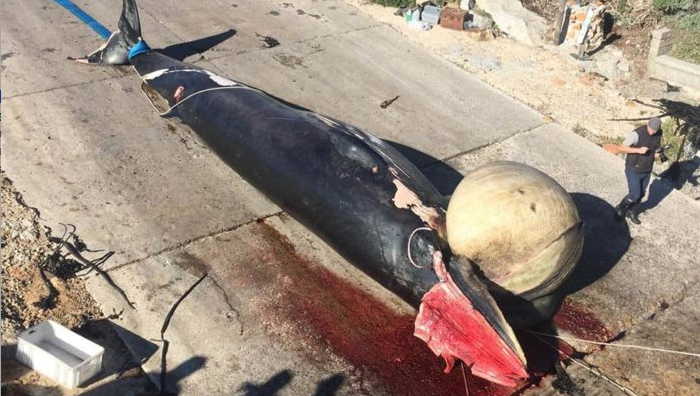
The Bryde’s whale carcass floating on the water’s surface. The whale died after it got caught in octopus-trapping ropes.

For years permits for octopus trapping have been casually issued, and these traps have lead to numerous entanglements and deaths of marine animals.

The community feels the Department of Agriculture, Fisheries and Forestry has approved a number of permits without proper consideration or updated data.

Octopus traps consist of long ropes tied to buoys that float just above the water surface, and are not only a danger to whales but also to dolphins, boats and ships.

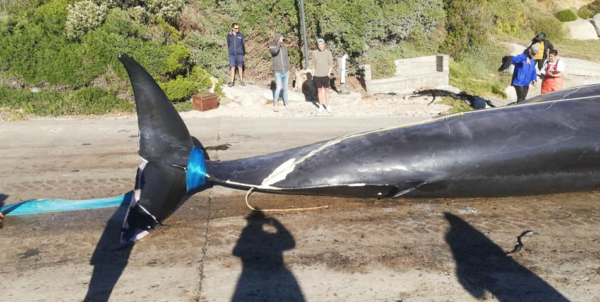
The Bryde’s whale carcass was hoisted ashore.

False Bay is home to the South African Navy and octopus traps also often endanger those on board boats in the bay, as the traps no longer include sonar reflectors or lights as they once did.

If a submarine accidentally catches one of the ropes in its propellers, a dire situation could develop.

Recently two whales were caught in the same octopus trap near Millers Point on June 8 and 10, leading to the death of one of them.

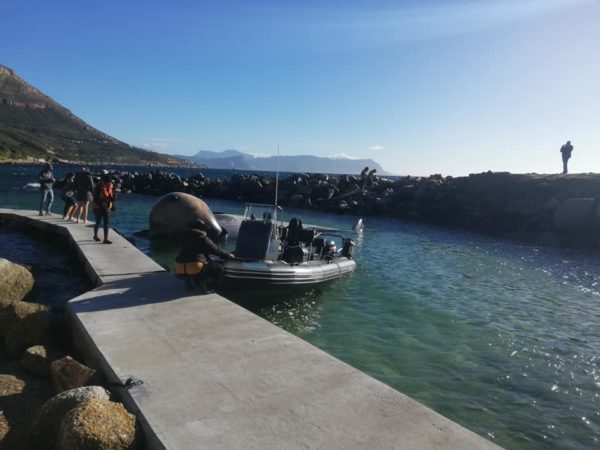
The carcass of the Bryde’s whale being towed into the harbour.

The creators of the petition, dubbed “Save our whales: Stop Octopus Trapping in False Bay, Cape Town”, are imploring the Honourable Minister to place an immediate ban on all trapping in the False Bay Area until a safer operating procedure can be put in place. A safer procedure would include compulsory 24-hour monitoring at sea of octopus traps and sufficient visible signalling on the traps’ buoys to avoid endangering any more marine or human life.

The community hopes that the department will also take time to assess the current stock levels and update any information they may need to make educated decision when issuing permits.

Act now to save whales in False Bay by signing the petition here. 

Also Read: Whale caught in octopus trap dies

Picture: Allison Thomson/Facebook