Delisting wolves was a mistake (OPINION)

http://www.projectcoyote.org/delisting-wolves-was-a-mistake/

by | Nov 24, 2015 | Notes From the Field |

The decision by the Oregon Fish and Wildlife Commission to delist wolves from the state’s Endangered Species Act protection was based on faulty science and political expediency. The biggest problem is with the department’s criteria for delisting — more than four breeding pairs of wolves for three years in a row— is that it fails to ensure full restoration of the wolf across the state. Many outside scientists, including myself, feel the small population of 80 to perhaps as many as 100 wolves statewide is hardily sufficient to guarantee a robust and speedy restoration of the species.

A hundred or fewer wolves may preclude the extinction of the species, but it does not restore the ecological function of the wolf. And restoring the ecological function of the species should be the prime goal of any conservation effort. Precluding extinction is a very low bar and does not serve the people of Oregon, the wolf or our ecosystems.

I did an analysis of the potential for wolf restoration in Oregon back in the 1990s and concluded that the state could easily support 1,500 to 2,000 wolves. Others have reached similar conclusions. Restoring wolves across the state so that they are functional members of the wildlife community should be the goal of the Oregon Department of Fish and Wildlife.

If, hypothetically, elk were the species under consideration and were protected under the state’s Endangered Species Act, I can almost guarantee you ODFW would want way more than 100 individuals before they would recommend delisting. They would want to see elk restored across the state.

Wolves are in a sense a “keystone” species that influences ecosystem health. Having a token population of wolves is not the same as having a functioning ecosystem member. Wolves not only eliminate weaker prey individuals but can shift habitat use; for instance they can reduce elk and deer foraging on aspen, willows and other browse species in riparian areas. Wolves can also affect the distribution and numbers of other species. Where wolves are present, there are often fewer coyotes. Coyotes kill the smaller Sierra Nevada red fox that is just hanging on in the Cascades. Restoration of wolves could thus assist the recovery of the red fox.

The rush to delist wolves is driven by false perceptions of wolf impacts on livestock and big game populations. Out of 1.3 million cattle and 195,000 sheep in the state, only 114 domestic livestock have been confirmed killed by wolves since the first wolves appeared in the early 2000s. Comparisons between Montana and Oregon are often made by ODFW. Using Montana, in 2014, the state’s 600 or so wolves killed 35 cattle and six sheep out of a total of 2.5 million cattle and 220,000 sheep respectively, By comparison, non-wolf losses accounted for 89,000 deaths. And though six sheep were killed by wolves, some 7,800 sheep died from other causes, like weather.

Wolves are simply not a threat, or even barely a factor, in the economic viability of the livestock industry.

The idea that hunting will be negatively affected across any significant portion of the state is also unlikely. Between 2009 and 2014, all wildlife management units (WMUs) of northeastern Oregon with established wolf packs had increasing elk populations, and two of the four (Imnaha and Snake River) were above the established management objectives for elk since wolves became established (ODFW data).

A similar situation exists in Montana, where elk numbers grew from an estimated 89,000 animals in 1992 (Montana Elk Plan) to 167,000 elk today (Montana Department of Fish, Wildlife and Parks, 2015). If this is what you get with wolf predation, I think most reasonable hunters would agree we could use more wolves in Oregon!

In the end, ODFW capitulated to mythology and false fears of hunters and ranchers without providing context and did not meet its wildlife responsibilities under the public trust doctrine to work diligently for full restoration of the ecological function of the wolf.

George Wuerthner lives in Bend.

Comments regarding the proposed delisting of gray wolves in Oregon from Adrian TrevesProject Coyote Science Advisory Board member
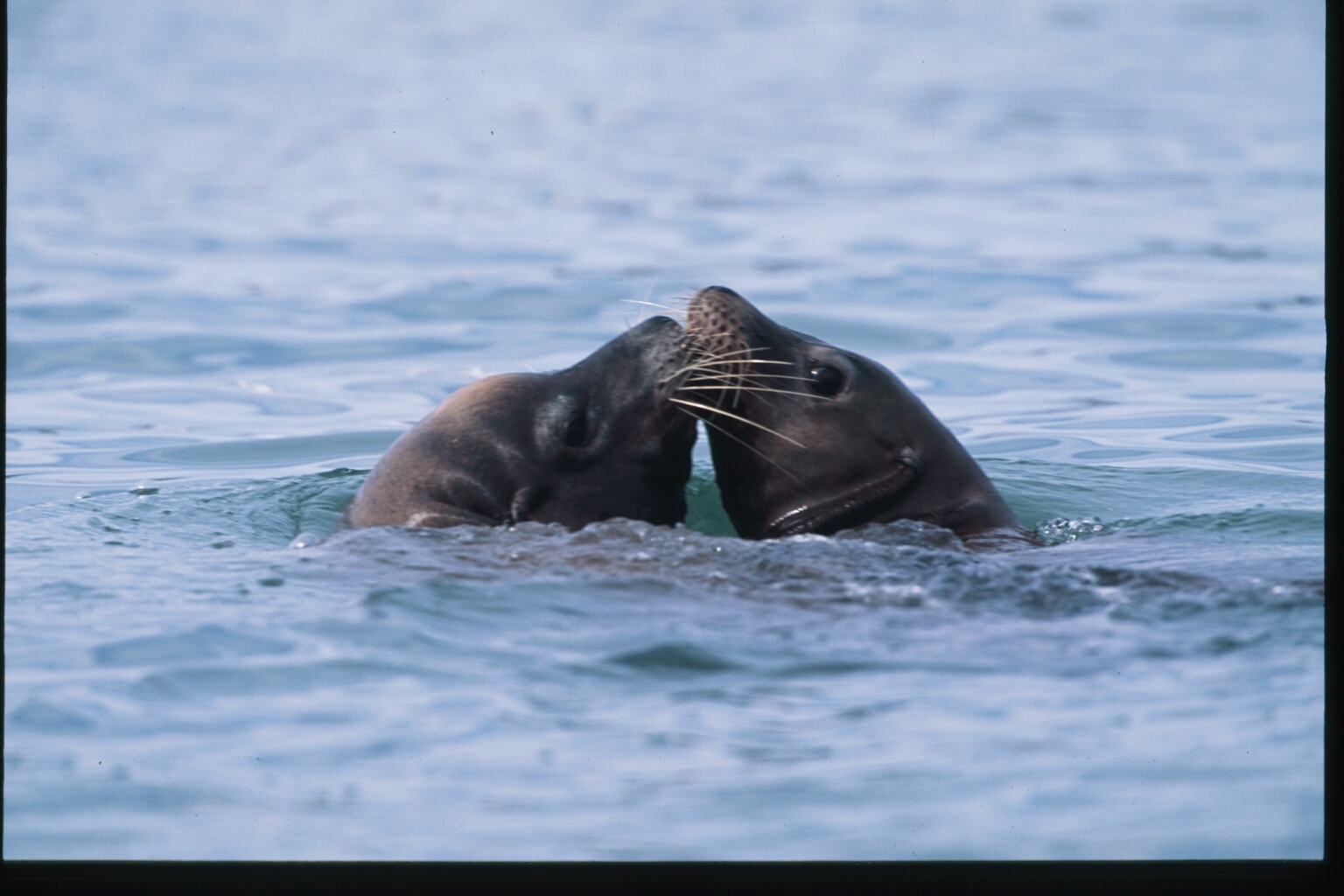
NOAA reminds people not to touch or pick up seal pups

By PHUONG LE

Associated Press

Published on July 1, 2016 9:19AM

Last changed on July 1, 2016 10:21AM

A harbor seal pup rests on seaweed-covered rocks after coming in on the high tide in the West Seattle neighborhood of Seattle in October 2011. At least five times this season, well-meaning people have illegally picked up seal pups in Oregon and Washington thinking they were abandoned or needed help, but that interference ultimately resulted in two deaths, said Michael Milstein, a spokesman with the National Oceanic and Atmospheric Administration.

AP Photo/Elaine Thompson

A harbor seal pup rests on seaweed-covered rocks after coming in on the high tide in the West Seattle neighborhood of Seattle in October 2011. At least five times this season, well-meaning people have illegally picked up seal pups in Oregon and Washington thinking they were abandoned or needed help, but that interference ultimately resulted in two deaths, said Michael Milstein, a spokesman with the National Oceanic and Atmospheric Administration.

Ralph Heitt picks up a “Seal Sitters” sign after the harbor seal pup he and other volunteers had been watching during his rest period returned to the water in Seattle in October 2011. As harbor seals are being born in the Pacific Northwest this time of year, marine mammal advocates are urging people not to touch or pick up pups that come up on beaches and shorelines to rest.

AP Photo/Elaine Thompson

Ralph Heitt picks up a “Seal Sitters” sign after the harbor seal pup he and other volunteers had been watching during his rest period returned to the water in Seattle in October 2011. As harbor seals are being born in the Pacific Northwest this time of year, marine mammal advocates are urging people not to touch or pick up pups that come up on beaches and shorelines to rest.

A baby seal is seen laying across a shopping tote used to carry it off a beach in Westport, Wash. State wildlife officials had to euthanize the harbor seal pup after it was determined to be unresponsive and lethargic.

Marc Myrsell/Westport Aquarium

A baby seal is seen laying across a shopping tote used to carry it off a beach in Westport, Wash. State wildlife officials had to euthanize the harbor seal pup after it was determined to be unresponsive and lethargic.

<!–

–>

SEATTLE — As harbor seals are being born in the Pacific Northwest, marine mammal advocates up and down the West Coast are urging people not to touch or pick up pups that come up on beaches and shorelines to rest.

At least five times this season, well-meaning people have illegally picked up seal pups in Oregon and Washington thinking they were abandoned or needed help, but that interference ultimately resulted in two deaths, said Michael Milstein, a spokesman with the National Oceanic and Atmospheric Administration Fisheries.

It’s an ongoing issue along the entire West Coast, from Alaska to California, when people who think they’re doing the right thing end up stressing or harming the animals instead, officials say.

State wildlife officials had to euthanize one harbor seal pup last month after a woman picked it up on a beach in Westport, Washington, and apparently carried it back to a house in a shopping tote. The animal was unresponsive and lethargic, Milstein said.

Another couple found a seal pup on the beach in Garibaldi, Oregon, and fearing the animal was abandoned, wrapped the seal in a beach towel, put it in their car and placed it in their shower at home, said Kristin Wilkinson, a NOAA Fisheries regional stranding coordinator. Wildlife officers returned that seal to the beach, but it was discovered dead the next day, she said. That couple received a written warning.

In California last year, there were at least 60 cases where people either illegally picked up or fed marine mammals, said Justin Greenman, NOAA’s assistant stranding coordinator for the state. Some of those animals were re-released; others died in care or had to be euthanized.

Selfies with seals or sea lions are also a growing problem, he added.

People’s impulse is to rush in and help, but it’s better to let nature run its course, Wilkinson said. The risk in taking baby seals off the beach is that adult seals may abandon them. “The best chance they have to survive is to stay wild,” she said.

Last month, in a case that garnered national attention, a Canadian man and his son loaded a bison calf into their SUV at Yellowstone National Park because they thought it was an abandoned newborn that would die without their help. The calf later had to be euthanized because it couldn’t be reunited with its herd.

“This is our Northwest version, apparently,” Milstein said.

NOAA Fisheries has launched a “Share the Shore” campaign to remind beachgoers to leave marine mammals alone, to stay at least 100 yards away and reduce other disturbances, such as keeping dogs on leashes. It’s illegal to harass, disturb or try to move young seals or other marine mammals.

Wilkinson said they typically see six to 10 illegal animal handling cases a year, but this year they’re seeing them earlier in the season and within a wider area.

Harbor seal pups are born along the West Coast, typically from February to May in California and from spring to late summer in the Northwest. They use beaches, docks and other shoreline areas to rest, regulate their body temperatures or wait for their mothers, who typically are nearby but may not come near the pups if there are too many disturbances.

Dr. Jeff Boehm, executive director of The Marine Mammal Center in Northern California, said so far this year 18 marine mammals have been brought to his center because they were harassed or illegally picked up. Most were eventually released into the wild after being treated but three have died.

“These animals have an innate charm. When you see one on the beach, they just draw you in. They’re small. They’re vulnerable,” he said, but people should really pause, take a step back and call local authorities who know best what to do with them.

NOAA wildlife officers in Washington are investigating a number of cases, including one in which a seal pup born prematurely parked up on the beach and a homeowner placed the animal in a tote and removed it, worried about bald eagles preying on the seal and making a mess on the beach, Wilkinson said.

Last month, a seal wasn’t illegally picked up but the pup was killed after wildlife officials determined that too much traffic and people on the beach meant that the mother was not likely to reunite with her pup.

In another case, a woman picked up a seal and briefly put it in her car before someone else told her to put the animal back on the beach, said Marc Myrsell, who directs the Westport Aquarium and whose staff responded to that incident. That pup returned to the water on its own.

Last week, a pup was handled so extensively at a beach park that wildlife responders determined the constant human interaction permanently separated the pup from its mother. People held the pup in their laps, cuddled it and pet the animal for many hours, she added. That seal was eventually taken to a rehabilitation facility.

With rehabilitation, “you’re giving them a second start, but you might not be giving them all the tools they need,” said Dr. Joe Gaydos, a wildlife veterinarian with SeaDoc Society. “They probably have a much better chance if they stay with their moms.”

Hazed birds flock to Astoria (OR) bridge

http://www.dailyastorian.com/Local_News/20160624/hazed-birds-flock

By Katie Frankowicz

For The Daily Astorian

Published on June 24, 2016 7:56AM

Cormorants rest below the Astoria Bridge Wednesday.

Danny Miller/The Daily Astorian

A lone cormorant takes flight under the Astoria Bridge.

The Astoria Bridge is experiencing a housing boom.

As many as 11,000 cormorants are roosting there at night, and observers have counted around 600 nests there within the past few weeks. Last year, there were only 400.

This surge in the bridge’s cormorant population comes a month after roughly 17,000 double-crested cormorants, for reasons still unknown, abandoned their nests and eggs on East Sand Island, located at the mouth of the Columbia River near Chinook, Washington.

“The bottom line is we believe most of the cormorants have remained in the estuary and the increased number of nests on the Astoria-Megler Bridge seems to indicate that,” said Diana Fredlund, a spokeswoman for the U.S. Army Corps of Engineers, which manages East Sand Island and the massive cormorant colony that used to nest there seasonally.

“But our observers are in the process of counting all the birds and nests in the estuary right now,” Fredlund added. “They can’t say definitively that they are from East Sand Island, but it seems likely.”

The bridge has hosted the fish-eating birds before, acting as a seasonal home to around 75 to 100 nesting pairs of cormorants on average, according to studies by the Corps — nothing compared to what has been observed in the past few weeks. It isn’t clear what the increase means for the bridge itself, or if the nests will remain in use after the regular nesting season has passed.

Meanwhile, the Oregon Department of Fish and Wildlife is continuing with regularly scheduled hazing of double-crested cormorants along Oregon estuaries to protect smolt.

The bulk of this work wrapped up in May, but Clatsop County’s Fisheries Project holds a permit from the state that allows them to also harass the birds in July, when the department typically releases fish from net pens in Youngs Bay and Tongue Point. With lower numbers of brood stock this year, however, Natural Resources Manager Steve Meschke doubts they’ll need to go out in their boats and chase cormorants around the bay — Clatsop County’s usual method.
Different methods, same birds
Oregon’s state-run hazing is very different from the methods undertaken by the Corps on East Sand Island.

Last year, the Corps obtained a permit from the U.S. Fish and Wildlife Service that allowed them to begin targeting and killing double-crested cormorants, planning to ultimately reduce approximately 14,900 breeding pairs of double-crested cormorants to 5,900 breeding pairs by 2018. The agency says the birds eat millions of protected salmon and steelhead traveling through the Columbia River estuary and threaten the survival of those runs, statements and reasoning the Portland Audubon Society and others have since challenged.

As of May 16, the Corps’ contractors killed 2,394 double-crested cormorants and oiled 1,092 nests to prevent eggs from hatching before all the birds disappeared and culling activities were halted early.

The goal for the Oregon Department of Fish and Wildlife hazing is similar, but different. Instead of using guns, the state and the other groups it contracts with or issues permits to for hazing work are more likely to chase the birds around in boats or use laser pointers to wake them up and move them away from areas where young fish are going to be passing through.

Their goal with this nonlethal hazing is to increase the survival of smolts, particularly the Oregon Coast coho population that is federally listed as threatened, by changing the cormorants’ behavior for a short period of time. The hazing occurs when the fish are passing through estuaries along the southern and mid-coast — Tillamook, Nehalem, Nestucca, Elsie and Coquille — and in the Lower Columbia River. Such hazing has regularly occurred since the 1980s.
Stresses on fish
Oregon Fish and Wildlife can’t say for certain that this hazing ultimately reduces the number of birds traveling to sensitive areas, or if keeping the birds away from smolts means more fish survive to come back as adults.

“The diet data indicates cormorants don’t really care what they eat, they eat what’s around and what’s easy to catch,” said James Lawonn, a biologist and avian predation coordinator for the department. As other prey begin to run through the rivers and up and down the coast after May, research by the department and Oregon State University show salmon make up even less of the birds’ diet.

Salmon survival depends on a variety of factors, including huge variables like ocean conditions and habitat loss, Lawonn said. Still, the state is trying to ease any additional stresses the fish may face.

This sort of nonlethal hazing will likely continue for the foreseeable future — the state’s particular hazing program is already in the budget for next year — but it is, Lawonn believes, ultimately a social question.

“How much does society want to harass a native bird to promote survival of salmon, some of which are in conservation danger, some of which aren’t?” he said.

Thousands of cormorants abandon their nests

By Cassandra Profita

Oregon Public Broadcasting

Published on May 20, 2016 11:33AM

Last changed on May 23, 2016 10:03AM

A month-old double-crested cormorant at the Wildlife Center of the North Coast.

Joshua Bessex/The Daily Astorian

A month-old double-crested cormorant at the Wildlife Center of the North Coast.

Buy this photo

A double-crested cormorant rests atop of nest of eggs in the colony on East Sand Island.

The Daily Astorian/File Photo

A double-crested cormorant rests atop of nest of eggs in the colony on East Sand Island.

Buy this photo

<!–

–>

Officials say thousands of cormorants abandoned their nests on East Sand Island in the Columbia River and they don’t know why. Reports indicate as many as 16,000 adult birds in the colony left their eggs behind to be eaten by predators including eagles, seagulls and crows.

The birds’ mysterious departure comes after the latest wave of government-sanctioned cormorant shooting. It’s part of a campaign to reduce the population of birds that are eating imperiled Columbia River salmon.

Amy Echols, a spokeswoman for the U.S. Army Corps of Engineers, said the contractors who monitor the birds for the Corps reported May 16 that the East Sand Island colony had been significantly disturbed.

“The disturbance resulted in nest abandonment and the loss of all the cormorants’ eggs by avian predators like seagulls, eagles and crows,” she said. “We don’t know yet what the cause of the disturbance was.”

Officials didn’t see any evidence of a coyote or any other four-legged predator, but they did see 16 bald eagles on the island.

“Bald eagles are known to significantly startle and disperse nesting colonies,” Echols said. “We don’t know if that magnitude of bald eagles could have done this.”
Eagles may not be responsible
Bald eagles have been blamed for decimating Caspian tern and cormorant colonies on the island in the past. But Dan Roby, a researcher with Oregon State University who has studied the tern and cormorant colonies for decades, said he doesn’t think eagles could have flushed so many cormorants off their nests.

“I’m pretty confident that’s not what caused the cormorants to abandon the colony,” he said. “We’ve seen that number of eagles out there before. We’ve seen them killing cormorants on their nests, and it doesn’t cause that kind of abandonment.”

Roby said researchers on his team did an aerial survey of the island on Tuesday and saw a large group of cormorants on another part of the island. But the nesting area was completely abandoned.

“There were absolutely no cormorants anywhere in the colony,” he said. “It’s a real mystery for us. It actually amazes me that any kind of disturbance — even people going on the island if that’s what happened — could cause all the birds to leave their nests with eggs and then gather on the shoreline as if they were afraid to go back to their nests. It’s certainly unprecedented in all the years we were out there working on that cormorant colony.”
Biologists investigating
Echols said about 4,000 birds have returned to the island, but not the nesting area. A team of biologists is investigating what caused the birds to flee their nests.

Federal agents have been shooting cormorants in the area and oiling cormorant eggs on the island as part of a long-term plan to shrink the cormorant colony and reduce how many threatened and endangered salmon the birds are eating. They reported killing 209 cormorants between May 12 and Wednesday.

Officials haven’t attributed the disturbance of the cormorant colony to any shooting or egg oiling activity. Echols said the last time the agents were oiling eggs on the island was May 11. Agents were on the water shooting cormorants on May 16, she said, but they have now stopped all culling activities because the number of cormorants in the colony has dropped below the level where they’re required to stop.
Vocal critic
Bob Sallinger with the Portland Audubon Society has been a vocal critic of the Corps’ cormorant management plan. He said colony failure has been one of his chief concerns as federal agencies shrink the size of the cormorant population.

“When you do that, you make a population extremely vulnerable,” he said. “Regardless of whether this abandonment was caused by eagles or their own activities, the fact is they’ve gone in there and deliberately decimated the population. Federal agencies have deliberately put the western population of cormorants at direct risk, and it needs to stop.”

Echols said federal officials are monitoring the Columbia River estuary to see where all the cormorants have gone.

Roby said it’s still early enough in their breeding season that the birds could still return to their nests and lay more eggs to avoid complete colony failure for the year.

Death of wolf pack is a sobering turn for Oregon’s wolf plan

http://www.dailyastorian.com/da/capital-bureau/20160408/death-of-wolf-pack-is-a-sobering-turn-for-oregons-wolf-plan?utm_source=Daily+Astorian+Updates&utm_campaign=304b60fbbe-TEMPLATE_Daily_Astorian_Newsletter_Update&utm_medium=email&utm_term=0_e787c9ed3c-304b60fbbe-109860249
Age and injury may have fractured Oregon’s most influential wolf pack, and led to the downfall of its longtime alpha male.

By Eric Mortenson

Capital Press

Published on April 8, 2016 12:01AM

Oregon Department of Fish and Wildlife biologists place a new GPS collar on OR-4, the Imnaha wolf pack’s alpha male, after darting him from a helicopter in March 2012.

Courtesy of Oregon Department of Fish and Wildlife

Oregon Department of Fish and Wildlife biologists place a new GPS collar on OR-4, the Imnaha wolf pack’s alpha male, after darting him from a helicopter in March 2012.

Eric Mortenson/Capital Press

<!–

–>

They called him OR-4, and by some accounts he was Oregon’s biggest and baddest wolf, 97 pounds of cunning in his prime and the longtime alpha male of Wallowa County’s influential Imnaha Pack.

But OR-4 was nearly 10, old for a wolf in the wild. And his mate limped with a bad back leg. Accompanied by two yearlings, they apparently separated from the rest of the Imnaha Pack or were forced out. In March, they attacked and devoured or injured calves and sheep five times in private pastures.

So on March 31, Oregon Department of Fish and Wildlife staff boarded a helicopter, rose up and shot all four.

The decisive action by the department may have marked a somber turning point in the state’s work to restore wolves to the landscape. It comes on the heels of the Wildlife Commission’s decision in November to take gray wolves off the state endangered species list, and just as the commission is beginning a review of the Oregon Wolf Plan, the document that governs wolf conservation and management.

Oregon Wild, the Portland-based conservation group with long involvement in the state’s wolf issue, said shooting wolves should be an “absolute last resort.”

“While the wolf plan is out of date and under review, we shouldn’t be taking the most drastic action we can take in wolf management,” Executive Director Sean Stevens said in an email.

The commission should not have taken wolves off the state endangered species list in the first place, but it isn’t likely to revisit that decision, Stevens said.

The commission should call upon the department to not shoot more wolves until the plan review is finished, he said.

“But, more importantly, they should recognize that delisting does not mean that we should suddenly swing open the doors to more aggressive management,” Stevens said.

The ongoing wolf plan review, which may take nine months, should include science that wasn’t considered in the delisting decision, and the public’s will, he said. It also should create more clarity on non-lethal measures to deter wolves, he said.
Both sides
Publicly, at least, no one is celebrating the shootings.

The Oregon Cattlemen’s Association, long on the opposite side of the argument from Oregon Wild, said ODFW’s action was authorized by Phase II of the state’s wolf plan.

“The problem needed addressed and ODFW handled it correctly,” spokeswoman Kayli Hanley said in an email. “We acknowledge that while this decision was necessary for the sake of species coexistence, it was a difficult decision.”

Michael Finley, chairman of the commission, said the department handled the situation properly.

“I feel that the department acted in total good faith,” Finley said. “They followed the letter and the spirit of the wolf plan.”

Another conservation group, Defenders of Wildlife, called the shootings “a very sad day for us” but also said it appeared Fish and Wildlife followed the wolf plan.

“The final plan is a compromise, but it is among the best of all the state plans in that it emphasizes the value of wolves on the landscape, and requires landowners to try non-lethal methods of deterring wolves before killing them is ever considered,” the group said in a prepared statement.

Amaroq Weiss, West Coast wolf organizer for the Center for Biological Diversity, said the Imnaha Pack shootings may lead to more poaching, because killing wolves decreases tolerance of them and leads to a belief that “you have to kill wolves in order to preserve them.”

Weiss agreed that coming across a calf or sheep that’s been torn apart and consumed — the skull and hide was all that was left of one calf after the OR-4 group fed on it — must be gut-wrenching for producers. But she said those animals are raised to be killed and eaten. “They don’t die any more a humane death in a slaughterhouse than being killed by a wild animal,” she said. “It’s a hard discussion to find a common place of agreement.”

She said such losses are the reason Oregon established the compensation program: to pay for livestock losses and to help with the cost of defensive measures that scare wolves away.
Rush to Phase II
Weiss said Oregon rushed to move to Phase II of its wolf conservation and management plan in the eastern part of the state, which was prompted by reaching a population goal of four breeding pairs for three consecutive years. That also prompted the Fish and Wildlife Commission to take wolves off the state endangered species list in 2015, although they remain on the federal endangered list in the Western two-thirds of the state.

Like others, Weiss believes the state should have held off on such changes until it finished the mandated review of the wolf plan.

“Under Phase I, Oregon was the state we could all point to” for successfully managing wolves, Weiss said. “I would hope they look at what parts of the wolf plan are working, and look at the parts that are not working.”

Politics and policy aside, the shooting of OR-4 gave people pause. He was a bigger-than-life character; he’d evaded a previous state kill order and had to be re-collared a couple times as he somehow shook off the state’s effort to track him.
Pack history
OR-4’s Imnaha Pack was the state’s second oldest, designated in 2009, and it produced generations of successful dispersers. OR-4’s many progeny included Oregon’s best-known wanderer, OR-7, who left the Imnaha Pack in 2011 and zig-zagged his way southwest into California before settling in the Southern Oregon Cascades.

OR-25, which killed a calf in Klamath County and now is in Northern California, dispersed from the Imnaha Pack. The alpha female of the Shasta Pack, California’s first, is from the Imnaha Pack as well.

Rob Klavins, who lives in Wallowa County and is Oregon Wild’s field representative in the area, ran across OR-4’s tracks a couple times and saw him once.

Despite his fearsome reputation, the wolf tucked his tail between his legs, ran behind a nearby tree and barked at Klavins and his hiking group until they left.

“Killing animals four or five times your size is a tough way to make a living,” Klavins said. “Some people appreciate OR-4 as a symbol of the tenacity of wolves, even a lot of folks who dislike wolves have sort of a begrudging respect for him.”

Bulk carrier runs aground

http://www.dailyastorian.com/Free/20160321/eagle-dies-after-attack-by-mating-rival?utm_source=Daily+Astorian+Updates&utm_campaign=754ffa1e27-TEMPLATE_Daily_Astorian_Newsletter_Update&utm_medium=email&utm_term=0_e787c9ed3c-754ffa1e27-109860249
Pollution responders are watching a ship that ran aground just after midnight.

The Daily Astorian

Published on March 21, 2016 9:19AM

Last changed on March 21, 2016 12:20PM

Photo by Petty Officer 1st Class Levi ReadA tug boat helps stabalize the motor vessel Sparna, a 623-foot Panamanian-flagged bulk carrier that ran aground Monday in the Columbia River near Cathlamet, Washington. The Sparna is loaded with grain and fuel and was headed west on the Columbia River when it grounded.

Photo by Petty Officer 1st Class Levi ReadA tug boat helps stabalize the motor vessel Sparna, a 623-foot Panamanian-flagged bulk carrier that ran aground Monday in the Columbia River near Cathlamet, Washington. The Sparna is loaded with grain and fuel and was headed west on the Columbia River when it grounded.

Buy this photo

<!–

–>

CATHLAMET, Wash. — The U.S. Coast Guard is closely monitoring a bulk carrier that ran aground in the main shipping channel of the Columbia River just after midnight today near Cathlamet.

Pollution responders from the Coast Guard alerted local and federal agencies and established an incident command with the Washington Department of Ecology and Oregon Department of Environmental Quality.

“The positive news so far is that responders have not observed any oil in the water,” Capt. Dan Travers, commander of Sector Columbia River, said in a statement. “The vessel quickly activated its plan and all federal, state, and county responders mobilized immediately. This is a joint effort with both states and hopefully will just turn out to have been an exercise in mobilizing pollution response resources.”

The cause of the grounding is under investigation. The bulk carrier — the Sparna — was outbound, fully loaded with grain, and heading west in the Columbia with a river pilot still on board when it ran aground. The vessel is also filled with more than 218,000 gallons of high-sulfur fuel and more than 39,000 gallons of marine diesel.

The Maritime Fire & Safety Association and Clean Rivers Cooperative deployed response vessels, booms and personnel. The tugs PJ Brix and Pacific Escort are on scene to keep the Sparna stabilized. The Coast Guard has not closed the river channel.

Oregon: Enlightened or Dishonest, Cruel and Corrupt?


Robert Goldman's photo.
by Robert Goldman

Oregon’s legislators and governor have a big decision to make regarding the future of wolves in the state. It is a litmus test on whether these leaders are honest, decent and wise and whether they serve the hopes and dreams of a clear majority of Oregonians, or other interests. Will these supposed leaders do the right thing for wolves and for a brighter future for Oregon or will they fall back on the dark side of Oregon’s history?

Honest science, healthy ecosystems and biodiversity, the public trust doctrine, basic decency and respect and the clear will of the majority, all favor wolf protection. 96% of Oregonians told the state wildlife agency they favor wolf protection. Additionally, Oregon’s Department of Fish and Wildlife website makes crystal clear that the presence of approximately one hundred wolves has resulted in a near zero effect on the state’s 1,300,000 cattle, as depredation by wolves is barely out of the single digits per year. No honest person can claim with a straight face that Oregon has anything resembling a wolf problem because it does not have such a problem.

The truth is, just as in nearby Idaho, there is a people problem, but in Oregon it comes from a relatively small number of people. Their long held prejudices and their willingness to demonize and kill vital and innocent wolves while lying about them is well known. Some have no shame in spreading utter nonsense about ‘Canadian super wolves’, snarling monster beings and the end of the world triggered by…. fairy tales.

But Oregon is supposed to be different, isn’t it? Oregon is a green and enlightened state, where honesty, decency and justice rule, right?

I had the pleasure of visiting Oregon for three weeks in June and July of 2014. I arrived in the state with a high regard for its vast natural beauty, its magnificent native wildlife, lush forests and magical coast. The forward thinking reputation of its people resonated in my mind.

After an enjoyable week with a hiking club based in Portland, I rented a car and drove to the Wallowa Valley drawn by my respect for Chief Joseph and his Nez Perce people whose sacred homeland this had been for thousands of years. I hiked into the mountains and canoed, took lots of pretty pictures of horses and deer (they are everywhere), water and forests and people and their dogs. I explored and lingered for many hours in the very field where Chief Joseph gathered with his people as they prepared to flee their homeland, their very lives hanging in the balance. My heart felt heavy and sad, as if the unbearable heart ache of 800 innocent souls still hovers over this valley and the beautiful green field guarded by trees and mountains.

The Nez Perce were the peaceful native tribe who saved the entire Lewis and Clark expedition from certain starvation and death only seventy years earlier. President Jefferson personally promised, in gratitude, that the Wallowa Valley would never be taken from the Nez Perce. Later Presidents re-affirmed that promise, even as more white settlers invaded and threatened to steal the land from its rightful owners. The settlers kept coming and kept threatening. Gold was discovered nearby and the land was taken, the promises broken.

The ancestors of these white settlers are among the 8,000 people who call the Wallowa Valley home today. Some of these people are present day Wallowa cattle ranchers who mythologize and demonize wolves, pressure the state wildlife agency to take action, persistently lobby state legislators and the governor to do something about the wolf problem, the problem that exists in their own minds.

I visited the tourist town of Joseph and its wonderful museums, including the Maxwell Plantation Museum dedicated to African Americans who worked for a time as lumbermen in the region. There I learned that the founding state constitution of 1859 forbade the presence and citizenship of African Americans anywhere in Oregon.

Just east of the Wallowas, I explored the dusty, rugged town of Pendleton. On the Pendleton Underground Tour, I learned of the hard working Chinese men who helped build the early railways of the expanding United States. When their decades long hard labor was done and the rail lines complete, they were not wanted by the white settlers who had only recently established the new town of Pendleton. These human beings, thousands of miles from their native land, excavated a village beneath the streets of early Pendleton, a cavernous and dark place. There they lived, set up small businesses and did their best to survive from day to day. Above ground, it was legal to shoot a “Chinaman” for no reason. These poor souls survived in their underground village into the early 1900’s, which is not much more than a hundred years ago.

This not so distant history is part of Oregon’s past, or is it?

On behalf of ecologically vital, remarkably intelligent and social, deeply family-connected and innocent wolves, on behalf of the hopeful and decent majority of Oregonians you are supposed to serve and who have spoken clearly on this issue, in light of the facts and honest science, with full knowledge of your obligation to at long last live up to the public trust doctrine in which wildlife belongs to everyone and is to be managed (or left alone) accordingly, I am asking Oregon state legislators, the governor and the state wildlife agency, which Oregon will you be? The enlightened Oregon of your reputation or the dishonest, cruel and corrupt Oregon of your past?

Birders rejoice as Oregon standoff comes to close

http://www.oregonlive.com/environment/index.ssf/2016/02/birders_rejoice_as_oregon_stan.html#incart_story_package

With David Fry’s surrender to FBI agents Thursday morning, birders and environmentalists breathed a collective sigh of relief.

They’d grown increasingly anxious watching as the armed standoff at the Malheur National Wildlife refuge that began Jan. 2 dragged on for weeks and then for more than a month. Fry was among a group of four holdouts who dug in after the departure of most occupiers Jan. 26 and 27.

With each passing day, the standoff posed a greater threat to the spring migration that draws millions of shorebirds, waterfowl and songbirds to the 187,000-acre bird sanctuary.

“This couldn’t have ended soon enough,” said Harv Schubothe, president of the Oregon Birding Association.

Spring thaw is just around the corner, and Schubothe worried what might happen if U.S. Fish and Wildlife Service personnel couldn’t be present to direct the flow of melting water. He feared northbound swans, geese and sandhill cranes might arrive at Malheur to find dry meadows where wetlands should be. Unmanaged melt of this year’s copious snowpack could also cause flooding that might breach levies and wash out roads.

The standoff also threatened the Harney County Migratory Bird Festival, an April event that offers a major tourism boost for the county.

When the last occupier exited the refuge Thursday morning, all those threats disappeared. Their minds eased, refuge supporters turned to the formidable task of moving on and mending relationships frayed by the occupation.

“There’s a consensus that we never want this to happen again,” said Chris Gardner, who serves on the board of the nonprofit Friends of Malheur National Wildlife Refuge. “We want to make sure the refuge and Burns and the Harney County community are in partnership going forward, so it doesn’t happen again.”

For Gardner’s group, the occupation came with an upside. Bird lovers and environmentalists angry about the standoff channeled their feelings into action. The Friends of Malheur grew from 40 members to more than 700 over the course of the occupation. The group took in more than $25,000 in donations.

“Our treasurer has just gotten flooded with envelopes,” Gardner said.

The 41-day standoff began when Idaho businessman Ammon Bundy led a band of militants in an unannounced seizure of the refuge headquarters. Bundy’s insurrection fizzled on Jan. 26 when he and other occupation leaders were arrested on a highway north of Burns. LaVoy Finicum, a spokesman for the occupation, died in the encounter.

Known among birders and environmentalists as the crown jewel of the national wildlife refuge system, the vast preserve surrounding Malheur Lake is a rare source of abundant water in the arid Great Basin and a crucial point along the Pacific Flyway. Its importance to migratory birds can’t be understated, Schubothe said.

“The number of different species that depend on that oasis is just astounding,” he said.

In a way, the occupation leaders had fortuitous timing. Malheur’s wetlands are relatively empty in winter, with fewer birds present save the occasional hawk, quail, raven or owl. But the refuge comes alive in the spring as hundreds of species ranging from grebes and pelicans to warblers and finches arrive to feed and breed in its wetlands.

The standoff has likely ended with enough time for refuge staff to prepare for the migration, but cleaning up the occupiers’ mess could continue for weeks or months.

In a statement Thursday, Fish and Wildlife officials said they’ll be working to “assess and repair damages.”

In addition to the big task of managing water, refuge staff have been kept from the mundane duties of checking fish screens that keep invasive carp from tightening their grip on the refuge habitat, fixing fences and getting contracts in place for the summer.

“All that stuff that goes into making a place like Malheur function optimally, that’s stuff you can’t do on the spot,” said Bob Sallinger, conservation director for the Audubon Society of Portland. “You need to be prepping throughout the year.”

Sallinger quietly visited the bird sanctuary weeks into the occupation. Hoping to avoid the flurry of protests, counter-protests and news cameras, he brought little more than his binoculars and a bird list.

“I felt it was important to see for myself,” he said.

The swans had already arrived and the first sandhill cranes were coming in. Other waterfowl will arrive soon.

Although Sallinger was alone during his visit, other birders are planning trips to Malheur now that the occupiers have left. Hundreds have answered the environmental groups’ call for volunteers to assist in the cleanup effort.

Alan Contreras, a Eugene educational administrator and avid birder who began visiting the refuge as a child, plans to be among those returning this spring.

A lifelong Oregonian whose roots in the state go back to 1871, Contreras, 60, had taken the refuge occupation personally. He resented its out-of-stater leaders, who seemed to feel they had more right to the land than he did.

“I have asked my family to place my ashes there when the time comes,” he said. “It’s that kind of place.”

–Kelly House

Last occupiers of Oregon wildlife refuge surrender to FBI

By

The Associated Press

BURNS, Ore. (AP) — Surrounded by FBI agents in armored vehicles, the last four occupiers of a national nature preserve surrendered Thursday, and a leader in their movement who organized a 2014 standoff with authorities was criminally charged in federal court.

The holdouts were the last remnants of a larger group that seized the Malheur National Wildlife Refuge nearly six weeks ago, demanding that the government turn over the land to locals and release two ranchers imprisoned for setting fires. For the first time since Jan. 2, the federal land was fully under the control of the U.S. government.

Meanwhile, Cliven Bundy, who was at the center of the 2014 standoff at his ranch in Nevada, was arrested late Wednesday in Portland after encouraging the Oregon occupiers not to give up. Bundy is the father of Ammon Bundy, the jailed leader of the Oregon occupation.

 On Thursday, the elder Bundy was charged in the standoff from two years ago. Federal authorities may have feared Bundy’s presence would draw sympathizers to defend the holdouts.

More: http://www.seattletimes.com/nation-world/occupiers-at-oregon-refuge-say-theyll-turn-themselves-in/