Cliven Bundy arrested in Portland

http://www.msn.com/en-us/news/us/cliven-bundy-arrested-in-portland-as-oregon-occupiers-say-they-will-surrender-thursday/ar-BBpnaMG?ocid=spartandhp

Occupiers say they will surrender Thursday

Cliven Bundy, the controversial Nevada rancher at the center of an armed standoff with federal officials in 2014, was arrested in Portland Wednesday, according to jail records and news reports.

He was reportedly on his way to the Malheur National Wildlife Refuge in isolated southeastern Oregon, where an armed occupation in its 41st day seemed to be coming to an end. The occupation had been organized by Bundy’s sons Ammon and Ryan, who are now in jail facing a felony charge of conspiracy to impede a federal officer.

The last remaining members of the occupation had said they will turn themselves over on Thursday morning, after the FBI appeared to close in on their encampment.

The FBI in Portland would not confirm the circumstances of elder Bundy’s arrest. But the Oregonian reported that he was apprehended at Portland International Airport after disembarking from his flight from Las Vegas late Wednesday night. The newspaper said that Bundy, 74, faces the same charge as his son in relation to his standoff with the U.S. Bureau of Land Management in 2014. He also faces weapons charges, it said.

Bundy’s arrest came after federal authorities moved to surround the Malheur National Wildlife Refuge Wednesday afternoon, prompting the lingering occupiers to have a panicked phone conversation with a few of their supporters, including Nevada state assemblywoman, Michele Fiore, that was broadcast over a livestream on YouTube

Initially the occupiers said they feared an armed assault by agents was imminent. But late Wednesday night local time, after a phone conversation that lasted more than four hours, one of occupiers said they planned to emerge from the refuge in the morning so long as Fiore was there to act as a witness and ensure that the occupation ended peacefully.

Mike Arnold, an attorney for Ammon Bundy who took part in Fiore’s phone negotiations and was en route to the wildlife refuge with her early Thursday, told The Washington Post that he was “extremely disappointed” by the news of Cliven Bundy’s arrest.

“It was a horrible strategic move to arrest Cliven while negotiations were literally happening over the phone,” he said. “That is not a symbol of good faith.”

But he believed that the agreement reached Wednesday night would still hold.

“We can take comfort in the incompetent strategic move by the federal government,” he said, because it showed that “if Cliven Bundy can be arrested peacefully — the lightning rod of much of the discourse on these issues — then the folks at the refuge should rest assured that the FBI will honor their promise to peacefully end this.”

Cliven Bundy’s arrest came just hours after the FBI moved to surround the spot where the lingering occupiers were camped Wednesday evening.

According to a statement issued by the FBI in Oregon, authorities made their move after one of the occupiers rode an ATV at 4:30 p.m. local time outside the enclosure where the handful of occupiers have been barricaded.

“FBI Agents attempted to approach the driver and he returned to the encampment at a high rate of speed,” the statement said.

The FBI moved to “contain” the remaining four occupiers by posting agents at the barricades in front of and behind the spot where the occupiers are camping, the statement continued.

“Negotiations between the occupiers and the FBI continue,” it said. “No shots have been fired.”

A neighbor who lives near the Malheur Refuge, 30 miles south of Burns, Ore., told The Washington Post that residents have been told to stay in their homes until the police give clearance.

Greg Bretzing, Special Agent in Charge of the FBI in Oregon, gave a statement in support of the move to surround those still at the refuge.

“It has never been the FBI’s desire to engage these armed occupiers in any way other than through dialogue, and to that end, the FBI has negotiated with patience and restraint in an effort to resolve the situation peacefully,” he said. “However, we reached a point where it became necessary to take action in a way that best ensured the safety of those on the refuge, the law enforcement officers who are on scene, and the people of Harney County who live and work in this area.”

Meanwhile, occupiers could be heard yelling at what they said was an FBI negotiator, according to the Associated Press.

“You’re going to hell. Kill me. Get it over with,” yelled David Fry, sounding overwrought. “We’re innocent people camping at a public facility, and you’re going to murder us.”

Wednesday marks day 40 of the occupation. Two weeks ago, leader Ammon Bundy and several others were arrested after a confrontation with police that left one man dead. In the days and weeks since, more than a dozen people involved the in the occupation have been arrested and several others voluntarily left the remote spot in southeastern Oregon after the FBI set up a blockade.

All of those arrested have been charged with conspiracy to impede a federal officer, the same felony charge facing the four holdouts who remain.

Those occupiers are 27-year-old Fry, who has been running a YouTube live stream, married couple Sean and Sandy Anderson, and a man named Jeff Banta, according to the Oregonian.

They’ve been alone at the refuge since Jan. 26, when the rest of the occupiers voluntarily left and surrendered to law enforcement. Defying calls to stand down from Oregon officials, law enforcement, Harney County locals and even Bundy, they’ve remained holed up inside the FBI blockade. In videos streamed by Fry, the occupiers were by turns desperate and defiant and increasingly inclined toward pranky stunts. One from early this week showed Fry doing doughnuts in a U.S. government vehicle.

“I think I want to take it on a little joy ride. You know?” Fry said. “Let’s start this baby up. Now you’ve got another charge on me, FBI. I am driving your vehicle.”

But in the phone conversation broadcast over YouTube, Fiore — speaking to the occupiers from Portland International Airport — repeatedly had to call for calm, as Fry yelled incoherently and other occupiers broke into shouts or tears.

“People are watching,” she assured them, asking them to recite prayers.

But the occupiers insisted that they could not trust the FBI’s promise of a peaceful resolution, and seemed certain that the standoff would end in violence.

“They killed LaVoy,” one man yelled. LaVoy Finicum, a spokesperson for the occupation, was fatally shot by Oregon state troopers during a highway confrontation in January when Bundy and four others were arrested.

“We’re not giving them any reason [to fire],” another person said. “But my weapon is within reach.”

The phone call was orchestrated by Gavin Seim, a failed Washington congressional candidate and self-proclaimed “liberty speaker.

At the refuge, 187,700 acres of isolated grassland about 150 miles southwest of Bend, yelled conversations between the occupiers and law enforcement broke through the nighttime quiet of the high desert.

“Come out with your hands up,” a voice could be heard saying, according to the Oregonian. “There’s nowhere for you to go.”

“We’re leaving tomorrow,” Fry shouted back.

Over the phone, Fiore told the occupiers she would negotiate with law enforcement on behalf of those who remain.

“A grand jury has issued an indictment outside the Constitution, and we can fight that,” she said. “But we can’t fight if you die. … You guys have to come out. You need to stand down.”

Fiore said she wanted to come to the refuge and accompany the occupiers out on Thursday morning, telling the occupiers that she and Mike Arnold, an attorney for Ammon Bundy, were driving to Burns as they spoke. But the FBI has not allowed anyone onto the refuge since late January, when it set up its blockade.

Fiore, a Republican member of the Nevada state assembly who has been an outspoken gun rights advocate, traveled to Oregon Wednesday to advocate for Bundy and other occupiers. She is demanding that authorities release body cam anddash cam footage of the traffic stop in which Finicum was killed; the FBI has released aerial footage of the highway encounter but the video is fuzzy and taken from a distance.

“We have questions,” Fiore told the Las Vegas Sun.

The people still at the refuge have said they will not leave as long as they face charges and a possible prison term.

“I can’t even describe to you how wrong it is i feel to be giving myself into the hands of the enemy,” Sandy Anderson said. “ We’re going to lose our rights.”

On Wednesday night, Nevada rancher Cliven Bundy — father of Ammon Bundy — who was involved in a standoff with the Bureau of Land Management over grazing rights in 2014, announced on his Facebook page that he was heading to Burns to support the occupiers. He urged patriots and militia groups to join him.

“Wake up America!” his all-caps message read. “It’s time!”

Since it began on Jan. 2, the occupation has been at the center of a heated debate on the power of the federal government and land use in the West. In Oregon more than half of all land is federally controlled, and disputes over land use and environmental regulations are a familiar source of conflict.

The occupiers said that they would not leave until the Malheur Refuge was “returned” to the county and private landowners and two ranchers who had been imprisoned for setting fires on public lands were released from jail.

But after his arrest last month, Ammon Bundy called for the remaining occupiers to stand down.

“Go home and hug your families,” he said. “This fight is ours for now —  in the courts.”

The surprising history of the Malheur wildlife refuge

http://www.hcn.org/articles/the-surprising-history-of-the-malheur-wildlife-refuge?utm_source=wcn1&utm_medium=email

The refuge’s creation helped support nearby ranchers.

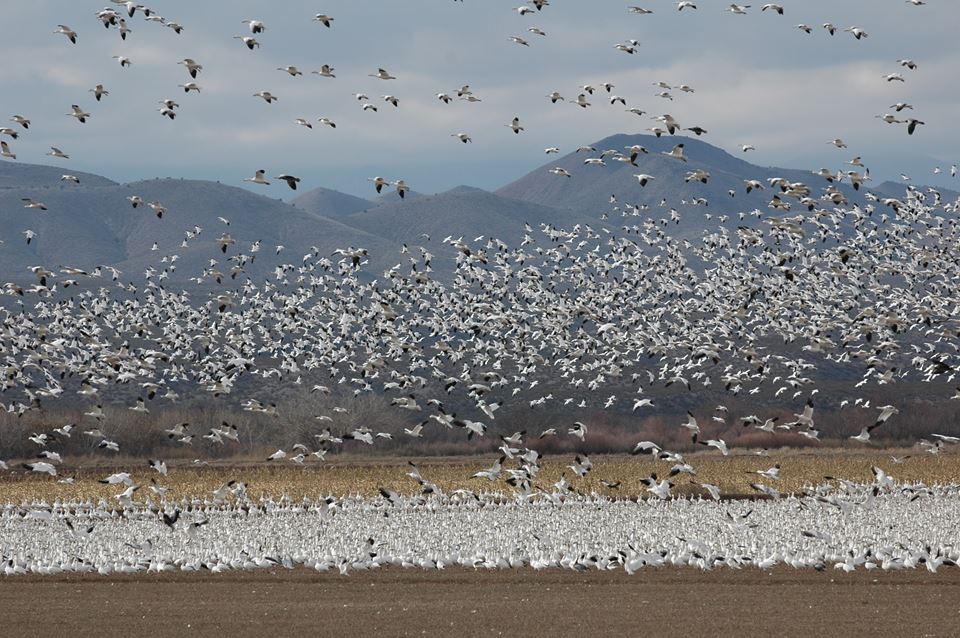
National wildlife refuges such as the one at Malheur near Burns, Oregon, have importance far beyond the current furor over who manages our public lands. Such refuges are becoming increasingly critical habitat for migratory birds because 95 percent of the wetlands along the Pacific Flyway have already been lost to development.

In some years, 25 million birds visit Malheur, and if the refuge were drained and converted to intensive cattle grazing – which is something the “occupiers” threatened to do – entire populations of ducks, sandhill cranes, and shorebirds would suffer. With their long-distance flights and distinctive songs, the migratory birds visiting Malheur’s wetlands now help to tie the continent together.

This was not always the case. By the 1930s, three decades of drainage, reclamation, and drought had decimated high-desert wetlands and the birds that depended upon them. Out of the hundreds of thousands of egrets that once nested on Malheur Lake, only 121 remained. The American population of the birds had dropped by 95 percent. It took the federal government to restore Malheur’s wetlands and recover waterbird populations, bringing back healthy populations of egrets and many other species.

Sandhill crane in Oregon’s Malheur National Wildlife Refuge.

Yet despite the importance of wildlife refuges to America’s birds, not everyone appreciates them. At one recent news conference, Ammon Bundy called the creation of Malheur National Wildlife refuge “an unconstitutional act” that removed ranchers from their lands and plunged the county into an economic depression. This is not a new complaint. Since the Sagebrush Rebellion of the 1980s, rural communities in the West have blamed their poverty on the 640 million acres of federal public lands, which make up 52 percent of the land in Western states.

Rural Western communities are indeed suffering, but the cause is not the wildlife refuge system. Conservation of bird habitat did not lead to economic devastation, nor were refuge lands “stolen” from ranchers. If any group has prior claims to Malheur refuge, it is the Paiute Indian Tribe.

For at least 6,000 years, Malheur was the Paiutes’ home. It took a brutal Army campaign to force the people from their reservation, marching them through the snow to the state of Washington in 1879. Homesteaders and cattle barons then moved onto Paiute lands, squeezing as much livestock as possible onto dwindling pastures, and warring with each other over whose land was whose. Scars from this era persist more than a century later.

In 1908, President Roosevelt established the Malheur Lake Bird Reservation on the lands of the former Malheur Indian Reservation. But the refuge included only the lake itself, not the rivers that fed into it. Deprived of water, the lake shrank during droughts, and squatters moved onto the drying lakebed. Conservationists, realizing they needed to protect the Blitzen River that fed the lake, began a campaign to expand the refuge.

But the federal government never forced the ranchers to sell, as the occupiers at Malheur claimed, and the sale did not impoverish the community. In fact, it was just the opposite: During the Depression years of the 1930s, the federal government paid the Swift Corp. $675,000 for ruined grazing lands. Impoverished homesteaders who had squatted on refuge lands eventually received payments substantial enough to set them up as cattle ranchers nearby.

John Scharff, Malheur’s manager from 1935 to 1971, sought to transform local suspicion into acceptance by allowing local ranchers to graze cattle on the refuge. Yet some tension persisted. In the 1970s, when concern about overgrazing reduced – but did not eliminate – refuge grazing, violence erupted again. Some environmentalists denounced ranchers as parasites who destroyed wildlife habitat. A few ranchers responded with death threats against environmentalists and federal employees.

But violence is not the basin’s most important historical legacy. Through the decades, community members have come together to negotiate a better future. In the 1920s, poor homesteaders worked with conservationists to save the refuge from irrigation drainage. In the 1990s, Paiute tribal members, ranchers, environmentalists and federal agencies collaborated on innovative grazing plans to restore bird habitat while also giving ranchers more flexibility. In 2013, such efforts resulted in a landmark collaborative conservation plan for the refuge, and it offers great hope for the local economy and for wildlife.

The poet Gary Snyder wrote, “We must learn to know, love, and join our place even more than we love our own ideas. People who can agree that they share a commitment to the landscape – even if they are otherwise locked in struggle with each other – have at least one deep thing to share.”

Collaborative processes are difficult and time-consuming. Yet they have proven that they have the potential to peacefully sustain both human and wildlife communities.

Authorities closing in on Oregon’s Malheur occupation

http://www.hcn.org/articles/malheur-occupiers-1-dead-7-arrested-finicum

FBI calls for removal of occupiers following eight arrests and the death of one man late Tuesday.

Remaining Oregon protesters issue death threats: ‘This is a free-for-all Armageddon’

http://www.latimes.com/nation/la-na-oregon-refuge-roadblocks-20160127-story.html

As law enforcement surrounded the remaining protesters at an Oregon wildlife refuge Wednesday, an armed occupier urged supporters to join them and to kill any law enforcement officer who tried prevent their entry, according to a livestream that has been broadcasting from the site.

“There are no laws in this United States now! This is a free-for-all Armageddon!” a heavyset man holding a rifle yelled into a camera that was broadcasting a livestream from the refuge Wednesday morning, adding that if “they stop you from getting here, kill them!”

A second man cooed to the camera in a sing-song voice, “What you gonna do, what you gonna do when the militia comes after you, FBI?”

See more of our top stories on Facebook >>

The FBI declined to release any details about how a spokesman for the protest group was killed during a confrontation with federal and state agencies a day earlier, citing a policy of not commenting on shooting incidents while they are under review.

The sudden move to arrest ranking protest leaders on a rural stretch of highway Tuesday afternoon was “a very deliberate and measured response” to the armed occupation that had lasted since Jan. 2 with no end in sight, Gregory T. Bretzing, special agent in charge of Portland’s FBI division, said at a Wednesday morning news conference.

“We’ve worked diligently to bring the situation” at the Malheur National Wildlife Refuge near Burns, Ore., to “a peaceful end,” Bretzing said.

He added that the FBI and Oregon State Police’s surprise arrests of protesters confronted outside the refuge Tuesday was deliberately carried far from county residents and that agents were cognizant of “removing the threat of danger from anybody who might be present.”

But he said he could not release details about how protester spokesman and Arizona rancher Robert “LaVoy” Finicum was killed, citing an ongoing investigation. A pair of unverified videos from a man and a woman who claimed to be traveling with the protesters when they were arrested said that Finicum was shot after he sped away from law enforcement during a traffic stop.

Several members of the group — including one of its most prominent leaders, Ammon Bundy, 40 — were expected to make their initial appearance in federal court Wednesday afternoon to face charges of government intimidation.

Meanwhile, the standoff continues….

More: http://www.latimes.com/nation/la-na-oregon-refuge-roadblocks-20160127-story.html

Man headed to Malheur standoff threatens to kill cops

http://www.ktvb.com/story/news/local/2016/01/26/watch-man-headed-malheur-standoff-threatens-kill-cops/79339746/

LINKEDINCOMMENTMORE

BURNS, Ore. — A Woodburn man who said he was on his way to an Oregon refuge under armed siege was jailed in Harney County after threatening to shoot and kill federal agents.

Joseph A. Stetson, 54, made the threats at a market in Hines, according to the Harney County district attorney’s office.

He was then pulled over by police. Stetson told authorities he was heading to Burns to join the weeks-long protest at the Malheur National Wildlife Refuge.

Stetson was carrying a weapon that turned out to be a pellet gun in a holster, the sheriff’s office said in a prepared statement.

He said he wished to be the personal bodyguard for the Bundy family, which orchestrated the takeover of the refuge in early January.

The actual bodyguard for the Bundys, Brian Cavalier, was called out by a  British newspaper recently for lying about being a Marine who served in the Middle East.

“If I go to jail and I come out I will kill you,” Stetson can be heard saying in a video of his arrest. He continues making the threats.

“You let me go right now or I’ll kill you I promise you,” he said It took troopers several minutes to get Stetson into a police vehicle.  He would later kick the door and damage it, according to authorities.  He was eventually booked into the Harney County Jail for DUII and resisting arrest.

Coyote-Kill Contest: It’s getting uglier around the Malheur National Wildlife

“This morally suspect male-bonding event is ecologically indefensible”

Scott Slocum
White Bear Lake, MN

Jan 15, 2016 — It’s getting uglier around the Malheur National Wildlife Refuge this weekend. The Harney County Coyote Classic is coming to the area. Another destructive force. Spotlights and gunfire at night. Spin-offs into firefights? Best to stay far away.

Here’s some advice from Predator Defense on who to call:

“HERE’S HOW TO HELP: express your concern to County and State officials! Call the Harney County Sheriff’s Office at 541-573-6156 and urge them to either (a) cancel the coyote-killing contest, or (b) make the Wildlife Refuge out of bounds for coyote-hunt contestants. Call Oregon Governor Kate Brown at (503) 378-4582, or write at http://www.oregon.gov/gov/Pages/share-your-opinion.aspx and ask her to act.”

Also, check out the information from Predator Defense on the importance of coyotes to intact, healthy ecosystems; and the foolishness of indiscriminate killing–not just in contests like this, but in all of its misguided forms.

Coyote-hunting foes oppose Harney County event
The third annual Harney County Coyote Classic will take place near Burns and Crane this weekend as planned, despite the ongoing refuge occupation nearby, authorities said Wednesday as they warned…

Grannies (and Friends) Against BULLIES — A Public Rally in support of our PUBLIC LANDS

http://www.malheurfriends.org/

Friends of Malheur National Wildlife Refuge (Friends of MNWR) was formed in 1999 and is an independent, non-profit 501(c)(3) corporation committed to:

    • Conserving, enhancing, and restoring fish and wildlife habitat and cultural history in the Harney Basin in southeast Oregon through the support of Malheur National Wildlife Refuge staff and programs.
    • Assisting the Refuge in providing wildlife-dependent educational and recreational opportunities while enhancing public knowledge and appreciation of the Refuge mission.
  • Advocating for support of the Refuge and the National Wildlife Refuge System.

Media Alert from the Friends of Malheur National Wildlife Refuge

Because of this potentially volatile situation, we have been asked to refer all media inquires to the Joint Command, led by the FBI who are coordinating law enforcement efforts. Here is the web page http://www.flashalertbend.net/
Date: *01/15/2016 (Fri.) *Time:* 11:30pm – 1:00pm PST (Speakers at High Noon) *Location: *Crow’s Feet Commons (downtown riverside) *RSVP: CLICK HERE< http://www.signupgenius.com/go/20f0f44afa729a5fa7-grannies> *(not required but helpful) PLEASE JOIN the *Friends of Malheur National Wildlife Refuge< http://www.malheurfriends.org/>* and the *Great Old Broads for Wilderness< http://www.greatoldbroads.org/>* to send a message to the armed militia trying to steal Malheur Wildlife Refuge: “get out, go home, and give the public back its wildlife refuge.” Speakers include Alice Elshoff, a board member of the Friends and Julie Weikel, a Harney County resident who participated in the process to develop a Comprehensive Conservation Plan for Malheur National Wildlife Refuge that included local ranchers and won a national award. Rally organizers believe PUBLIC LANDS are part of AMERICA’S HERITAGE and the government must enforce the laws that protect our public lands. These laws should be evaluated through a democratic process, not through bullying, intimidation, and armed anarchy. To RSVP CLICK HERE< http://www.signupgenius.com/go/20f0f44afa729a5fa7-grannies> or go to link http://www.signupgenius.com/go/20f0f44afa729a5fa7-grannies

Rancher Terrorists‏

by Stephen Capra

So a week has passed and we have witnessed a standoff continue that should never have started. The motley crew led by Ammon and Ryan Bundy, sons of the terrorist Cliven Bundy continue to laugh and mock the very Government that has fed their families for generations.

There remain many shocking aspects about this “armed standoff” with this group of home grown terrorists. Most of it however should be focused on the federal government response. I think it can be viewed along the lines of the “Affluenza defense.” You see in this case the government has done all it can for far too long to allow this group of its spoiled, lazy, bored and angry children to thrive. Examples include: endless subsidies, low to no interest loans, the endless destruction of public lands and waters at the hands of cattle and sheep and the well documented killing and torture of wildlife, all to appease their endless whining and inability of the majority to move cattle and employ measures to limit predator confrontations.

Let’s talk for a minute about how agencies like the BLM or forest service, lower their standards and allow endless violations and seemingly always bend over backwards to keep ranchers happy, while naturally ignoring conservation concerns. Finally, the response and this is crucial.

Some reports have said that employees at Malheur were told a week in advance that this group of radicals was coming and they cleared their offices. If true, why clear the office and leave, rather than block the entrance to the refuge with enough police and federal officials to make this ragtag group turn and leave?

Second. Given what occurred in Nevada last year, why are we waiting them out. Sure, lots of talk has been given to Ruby Ridge and other such sieges. Yet, in no other criminal activity in America with this level of publicity, have we witnessed the police or federal officials give the criminals such opportunity, such incredible leeway. This appears to be a decision by federal officials that plays right into the “affluenza” defense. By not charging Cliven Bundy last year after guns were pointed at federal officials (a felony) and ignoring all the money owed to the government (more than one million dollars). The federal government is allowing the rhetoric of these radicals-that the federal government does not own these lands or has any say in controlling ranching efforts, to begin to have validity.

So why is the government not acting? In part perhaps because republican lawmakers went crazy a few years ago at the mere effort by some experts to speak about domestic, home grown terrorism, the type we are now witnessing. The results, if you’re Muslim, leave the county, if you are a radical rancher- no charges. Furthermore, the vortex of guns, religion, flag waving, anti-environmental, constitution preaching, anti-government fervor is being exacerbated by a lack of a solid government response to such hostile ignorance.

What this occupation has done is created an opportunity, the chance to finally awaken the public to reality of public lands ranching in 2016. The goal: to raise grazing fees, to place a methane tax on cows, to demand a federal buy-out program and to end once any funding for predator control or killing.

But none of this can happen until the government and our President make clear that these acts of violence must be stopped. This Tuesday, the President will deliver his final State of the Union Address. The chair next to the First Lady will be empty, a symbol of all Americans lost to gun violence. The President must make clear in his speech what America plans to do with these home-grown terrorists and should also make clear the importance and constitutional right of our spectacular protected public lands for all Americans.

Finally, our National Parks, Wilderness areas, Refuges remain to many a scared trust. These lands, many stolen from our Native American brethren, are a symbol of life. Much like the Statue of Liberty has appeared to those seeking a new life; our protected lands are a place for the heart and soul to revive, and for wildlife to thrive. This takeover is made more heinous, because it desecrates this place of beauty and peace.

Let them rot in prison.

When you give to big environmental group, it falls into a big, general fund. When you donate to Bold Visions, we appreciate every penny, and every penny is spoken for, long before it arrives! Please consider giving to Bold Visions today!

Malheur National Wildlife Refuge is for the birds

12196349_10153256579521188_5652107754797511661_n

“Malheur’s for the birds”

That’s the slogan that read across a T-shirt I wore back in the late ’70s, when I worked there for the summer in the maintenance department for the Malheur Field Station. A branch of Oregon’s Pacific University, the “Field Station” was where they held month-long courses in botany and ornithology.

I also took their anthropology/wilderness survival course, called, “Aboriginal Life Skills of the Northern Great Basin.” There, we learned how the Paiutes lived off the land, hundreds of years before ranchers claimed it for themselves and their ubiquitous cows. Their armed takeover of the Malheur National Wildlife Refuge headquarters building is apparently part of an effort to re-assert their “constitutional rights.”

As an avid birdwatcher, I know the refuge and its headquarters well. Possibly second only to Yellowstone National Park for biodiversity, wildlife can be found throughout the refuge. The Wildlife Department headquarters office is practically a required stop for die-hard birders, due to the oasis-like edge effect the treed property has in the midst of an otherwise contiguous sagebrush habitat.

Say’s the Portland Audubon Society of the unique national refuge:

This area is one of the premiere sites for birds and birding in the U.S. The refuge consists of over 187,000 acres of habitat which include wetlands, riparian areas, meadows, and uplands.

 Location: In the center of the southeast quarter of the state, 30 miles south of Burns in central Harney County.

Description: This area is one of the premiere sites for birds and birding in the U.S. The refuge consists of over 187,000 acres of habitat which include wetlands, riparian areas, meadows, and uplands. Refuge lands are configured in roughly a “T” shape, 39 miles wide and 40 miles long.

Ornithological Highlights: Malheur’s varied habitats, abundant resources, and location on the Pacific Flyway are utilized by a variety of migratory and resident birds. Over 320 species of birds have been observed at Malheur, including numerous watch-listed species such as Western Snowy Plover, Long-billed Curlew, Franklin’s Gull, Short-eared Owl, Greater Sage-Grouse, Bobolink, Trumpeter Swan, and Brewer’s Sparrow.

The refuge’s riparian habitat supports the highest known densities of Willow Flycatcher, up to 20% of the world’s population of White-faced Ibis, and significant breeding populations of American White Pelican and Greater Sandhill Crane. Breeding populations on the refuge also include a variety of gulls and terns and hundreds of pairs of various duck species. The first Oregon breeding record of Cattle Egret came from Malheur Lake in the mid-1980s. Black-crowned Night-Heron pairs nesting on the refuge generally number in the hundreds.

During migration, the Refuge regularly supports hundreds of thousands of waterfowl and tens of thousands of shorebirds, including a significant proportion of the total populations of several species. Malheur Refuge is also a winter concentration point for raptors of many species.

Thousands of birders come to the refuge annually to take part in the spectacle, whether they come for the waterfowl, songbirds, or both. Due to the high birder coverage and concentrated bird habitat Malheur Headquarters may have the highest all-time bird list of any single location in Oregon.

For more information on Malheur, please see the Technical Site Report in the National IBA database.

Links:

Yes, contrary to the cow-pushers who are now trying to take it over again, this time from the rest of the US citizens, Malheur’s for the birds…and for us bird watchers too.

Oregon’s Delisting of Wolves was a Mistake

http://www.oregonlive.com/opinion/index.ssf/2015/11/delisting_wolves_was_a_mistake.html

By George Wuerthner

The recent decision by the Oregon Fish and Wildlife Commission to delist wolves from the state’s Endangered Species Act protection was based on faulty science and political expediency. The biggest problem is with the department’s criteria for delisting — more than four breeding pairs of wolves for three years in a row— is that it fails to ensure full restoration of the wolf across the state. Many outside scientists, including myself, feel the small population of 80 to perhaps as many as 100 wolves statewide is hardily sufficient to guarantee a robust and speedy restoration of the species.

A hundred or fewer wolves may preclude the extinction of the species, but it does not restore the ecological function of the wolf. And restoring the ecological function of the species should be the prime goal of any conservation effort. Precluding extinction is a very low bar and does not serve the people of Oregon, the wolf or our ecosystems.

I did an analysis of the potential for wolf restoration in Oregon back in the 1990s and concluded that the state could easily support 1,500 to 2,000 wolves. Others have reached similar conclusions. Restoring wolves across the state so that they are functional members of the wildlife community should be the goal of the Oregon Department of Fish and Wildlife.

If, hypothetically, elk were the species under consideration and were protected under the state’s Endangered Species Act, I can almost guarantee you ODFW would want way more than 100 individuals before they would recommend delisting. They would want to see elk restored across the state.

Wolves are in a sense a “keystone” species that influences ecosystem health. Having a token population of wolves is not the same as having a functioning ecosystem member. Wolves not only eliminate weaker prey individuals but can shift habitat use; for instance they can reduce elk and deer foraging on aspen, willows and other browse species in riparian areas. Wolves can also affect the distribution and numbers of other species. Where wolves are present, there are often fewer coyotes. Coyotes kill the smaller Sierra Nevada red fox that is just hanging on in the Cascades. Restoration of wolves could thus assist the recovery of the red fox.

The rush to delist wolves is driven by false perceptions of wolf impacts on livestock and big game populations. Out of 1.3 million cattle and 195,000 sheep in the state, only 114 domestic livestock have been confirmed killed by wolves since the first wolves appeared in the early 2000s. Comparisons between Montana and Oregon are often made by ODFW. Using Montana, in 2014, the state’s 600 or so wolves killed 35 cattle and six sheep out of a total of 2.5 million cattle and 220,000 sheep respectively, By comparison, non-wolf losses accounted for 89,000 deaths. And though six sheep were killed by wolves, some 7,800 sheep died from other causes, like weather.

Wolves are simply not a threat, or even barely a factor, in the economic viability of the livestock industry.

The idea that hunting will be negatively affected across any significant portion of the state is also unlikely. Between 2009 and 2014, all wildlife management units (WMUs) of northeastern Oregon with established wolf packs had increasing elk populations, and two of the four (Imnaha and Snake River) were above the established management objectives for elk since wolves became established (ODFW data).

A similar situation exists in Montana, where elk numbers grew from an estimated 89,000 animals in 1992 (Montana Elk Plan) to 167,000 elk today (Montana Department of Fish, Wildlife and Parks, 2015). If this is what you get with wolf predation, I think most reasonable hunters would agree we could use more wolves in Oregon!

In the end, ODFW capitulated to mythology and false fears of hunters and ranchers without providing context and did not meet its wildlife responsibilities under the public trust doctrine to work diligently for full restoration of the ecological function of the wolf.

528624c939a88_preview-620