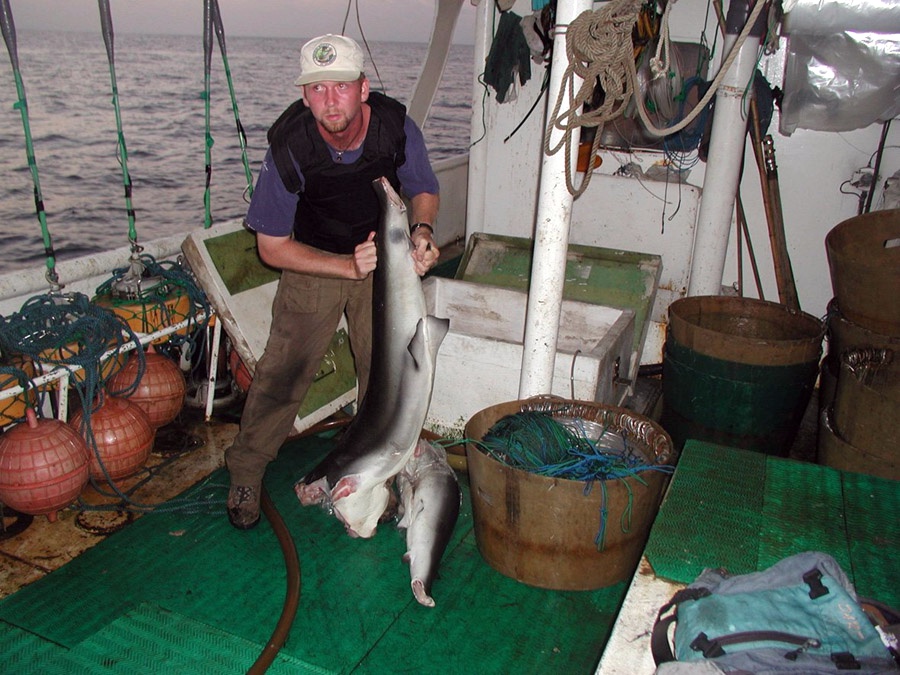
Exposing the Big Game

Forget Hunters' Feeble Rationalizations and Trust Your Gut Feelings: Making Sport of Killing Is Not Healthy Human Behavior

Exposing the Big Game

Penguins starving to death is a sign that something’s very wrong in the Antarctic

Overfishing, oil drilling, pollution and climate change are imperilling the ecosystem. But ocean sanctuaries could help protect what belongs to us all
 Landmark agreement will create world’s largest marine park in Antarctica

The awful news that all but two penguin chicks have starved to death out of a colony of almost 40,000 birds is a grim illustration of the enormous pressure Antarctic wildlife is under. The causes of this devastating event are complex, from a changing climate to local sea-ice factors, but one thing penguins, whales and other marine life don’t need is additional strain on food supplies.

Over the next year we have the opportunity to create an Antarctic Ocean Sanctuary – the largest protected area on Earth – which would put the waters off-limits to the industrial fishing vessels currently sucking up the tiny shrimp-like krill, on which all Antarctic life relies.

In 1990, the Voyager 1 space probe looked back at Earth from six billion kilometres away and took a historic selfie of our solar system. What it saw, according to renowned astrophysicist Carl Sagan, was a “pale blue dot”.

“Our planet is a blue planet,” echoed David Attenborough, in his opening words to the BBC’s landmark Blue Planet series. With over 70% of our world covered by water, this is no exaggeration. Our oceans can be seen from across the solar system.

The majority of this water falls outside of national borders. In fact, almost half of our planet is a marine natural wonder outside the boundaries of flags, languages and national divisions. These vast areas cover 230 million square kilometres, and they belong to us all. To give a sense of scale, that’s the size of every single continent combined, with another Asia, Europe and Africa thrown in for good measure. The size of our oceans may seem overwhelming. Our collective responsibility to protect them, however, should not.

It wasn’t long ago that the oceans were thought to be too vast to be irrevocably impacted by human actions, but the effects of overfishing, oil drilling, deep sea mining, pollution and climate change have shown that humans are more than up to the task of imperilling the sea and the animals that live there.

humpback whale
Pinterest
 A humpback whale dives for krill in Wilhelmina Bay, off the Antarctic Peninsula. ‘The creeping expansion of industrial fishing is targeting the one species on which practically every animal in the Antarctic relies: krill.’ Photograph: Charles Littnam/WWF/EPA

All of us who live on this planet are the guardians of these environments, not only to protect the wildlife that lives in them, but because the health of our oceans sustains our planet and the livelihoods of billions of people.

Here’s the good news. The tide of history is turning. We on the blue planet are finally looking seriously at protecting the blue bits. Just a few months ago, in a stuffy room far from the sea, governments from around the world agreed to start a process to protect them: an ocean treaty.

This ocean treaty won’t be agreed until at least 2020, but in the meantime momentum is already building towards serious and binding ocean protection. Just last year a huge 1.5 million sq km area was protected in the Ross Sea in the Antarctic. In a turbulent political climate, it was a momentous demonstration of how international cooperation to protect our shared home can and does work.

Over the next two weeks, the governments responsible for the Antarctic are meeting to discuss the future of the continent and its waters. While limited proposals are on the table this year, when they reconvene in 12 months’ time they have a historic opportunity to create the largest ever protected area on Earth: an Antarctic Ocean sanctuary. Covering the Weddell Sea next to the Antarctic peninsula, it would be five times the size of Germany, the country proposing it.

The Antarctic is home to a great diversity of life: huge colonies of emperor and Adélie penguins, the incredible colossal squid with eyes the size of basketballs that allow it to see in the depths, and the largest animal on the planet, the blue whale, which has veins large enough for a person to swim down.

The creeping expansion of industrial fishing is targeting the one species on which practically every animal in the Antarctic relies: krill. These tiny shrimp-like creatures are crucial for the survival of penguins, whales, seals and other wildlife. With a changing climate already placing wildlife populations in the Antarctic under pressure, an expanding krill industry is bad news for the health of the Antarctic Ocean. Even worse, the krill industry and the governments that back it are blocking attempts at environmental protection in the Antarctic.

Ocean sanctuaries provide relief for wildlife and ecosystems to recover, but it’s not just about protecting majestic blue whales and penguin colonies. The benefits are global. Recovering fish populations spread around the globe and only now are scientists beginning to fully understand the role that healthy oceans play in soaking up carbon dioxide and helping us to avoid the worst effects of climate change. Sanctuaries encourage vital biodiversity, provide food security for the billions of people that rely on our oceans, and are essential to tackling climate change. Our fate and the fate of our oceans are intimately connected.

Creating the world’s largest ever protected area, in the Antarctic Ocean, would be a signal that corporate lobbying and national interests are no match for a unified global call for our political leaders to protect what belongs to us all. The movement to protect over half our planet begins now, and it begins in the Antarctic.

 John Sauven is director of Greenpeace

Sushi parasite that embeds in the stomach is on the rise, doctors warn

Eating raw fish can lead to anisakiasis, a disease caused by parasitic worms.

Sushi has a healthy reputation – it can be low fat and high in protein – but a new report serves as a stark reminder that sushi made with raw fish can carry a dangerous parasite. Doctors warn that it’s becoming a greater problem in Western countries as more people eat sushi, and they documented one recent case that serves as a cautionary tale.

The case of a previously healthy 32-year-old man from Lisbon, Portugal, is featured in the medical journal BMJ Case Reports this week. The man was suffering from a bout of stomach pain for more than a week, and experienced vomiting and a fever.

When doctors questioned him about his symptoms and history, he revealed that he had recently eaten sushi.

Doctors performed an endoscopy – a scope test that uses a tiny camera on the end of a long, flexible tube to view the upper digestive system – and discovered he had parasite larvae attached to the lining of his stomach wall.

The culprit: Anisakiasis, a disease caused by parasitic worms.

“It is caused by the consumption of contaminated raw or undercooked fish or seafood,” the authors wrote in their case study.

Photos published with their account of the case show a worm “firmly attached” inside the man’s stomach.

Surgeons used a special device, called a Roth net, to remove the parasite, and the man’s symptoms resolved.

Most cases of the parasite have previously occurred in Japan, but the disease has been increasingly recognized as a problem in the West, the authors wrote.

Patients can have other symptoms too, including nausea, digestive bleeding, bowel obstruction, inflammation of the abdomen and allergic symptoms including itching and anaphalaxis, a severe and life-threatening reaction, according to the U.S. Centers for Disease Control and Prevention.

Dr. Daniel Eiras, assistant professor of infectious diseases at NYU Langone Medical Center, told CBS News that it’s pretty rare to see cases in the U.S. He’s only seen one case about two years ago, in a 45-year-old man.

“He was having reflux and severe abdominal pain. They thought he had a mass in his belly, cancer in his small intestine, so they took out the mass and looked at it under the microscope and it was one of these worms,” said Eiras.

Cases of anisakiasis are probably widely underreported, though, he said, because primary care doctors and pharmacists, the first health care professionals an infected person might consult with, typically aren’t aware of or looking for this type of parasite.

“We don’t do endoscopies on every person with stomach complaints, so we don’t know. Presumably there are many people who get anisakiasis and it gets sloughed out of their digestive system. It doesn’t lay eggs or continuously infect the intestine,” Eiras said.

So, only cases where the parasite actually embeds in the stomach or intestine wall may actually come to light, he explained.

The parasite can crop up in raw or undercooked seafood such as cod, fluke, haddock and monk fish.

Dr. Donald Hensrud, medical director of the Mayo Clinic Healthy Living Program and specialist in nutrition and preventive medicine, told CBS News that pregnant women and people with compromised immune systems, such as HIV patients or individuals taking biologic drugs, should avoid raw or undercooked fish and seafood. They can carry a risk for other illnesses, too.

Two years ago, a salmonella outbreak was linked to raw tuna.,” said Hensrud, the author of the Mayo Clinic Diet book.

Don’t eat raw fish at sketchy restaurants, either, Eiras recommended.

“I would not go to a restaurant with a ‘C’ rating in New York largely for this reason. It’s a big red flag when a sushi restaurant can’t maintain an ‘A’ rating, because one of the main things they get rated on is refrigeration. They’re not cooking the fish so that is the only prevention method, keeping it cold,” he said.

The same goes for eating ceviche — a dish made from raw fish and cured in lemon or lime juice — and poke, a Hawaiian raw fish salad that’s increasingly popping up on menus.

When preparing fish at home, cook seafood to an internal temperature of 145 degrees Fahrenheit, the U.S. Food and Drug Administration recommends. The FDA says freezing fish can kill parasites, too.

Baby sea lion pups are dying because overfishing has left our oceans without enough fish.

Add Your Name Now: Sea Lion Pups Are Starving

Goal: 30,000 Progress: 8,198
Sponsored by: Oceana

A surge of baby sea lions, starving and dehydrated, have washed ashore along the California coast each spring in recent years.

If we don’t take meaningful action now, this crisis will continue. More and more pups will arrive each day.Emaciated and weak, most of them will die.

Overfishing sardines during a natural population decline has severely reduced the number of these forage fish that sea lions rely on. Unless people like you fight back, vulnerable sea lion pups will continue to starve and die.

Add your name to save starving sea lion pups and protect the world’s oceans with Oceana.

Sign Here

Dear Pacific Fishery Management Council:

California sea lion pups have been found stranded on beaches during spring months in recent years. Many died and many others were found underweight, dehydrated, and starving. Their mothers were not finding enough forage fish to eat. They were spending more time away from their pups foraging, farther from shore, and the nursing sea lion pups were in turn, starving to death.

Approximately three times as many sea lions washed ashore in 2015 compared to 2013, when the severity of strandings emerged as an issue of great concern. About 90 percent of sea lion pups were estimated to have died last year before reaching weaning age.

More must be done to ensure there is adequate forage fish to support a healthy and abundant food web in the Pacific Ocean.

I am greatly concerned that management of the commercial forage fish fisheries off California, Oregon and Washington is leaving ocean wildlife without enough fish to eat. Sea lions, whales, pelicans, and many other species rely on these same forage fish for a large part of their diet. Pacific sardine and Northern anchovy populations are at historically low levels and are some of the most important forage fish in the California Current ocean ecosystem. Immediate, lasting action is needed to prevent future overfishing and to help these forage fish populations rebuild to healthy and abundant levels.

I urge you to take immediate measures to fix the Pacific sardine management framework, prevent Northern anchovy overfishing, and ensure abundant forage fish populations for dependent predators. Ocean wildlife and coastal communities don’t have time to wait.

Sincerely,

http://theanimalrescuesite.greatergood.com/clickToGive/ars/petition/Oceana-SeaLionPups/#QiekbhEgBlxe6YtJ.01

Mankind has eaten into its year supply of natural resources – in just seven months

https://www.msn.com/en-us/weather/topstories/mankind-has-eaten-into-its-year-supply-of-natural-resources-%e2%80%93-in-just-seven-months/ar-BBvm0WW?ocid=spartandhp

Harry Cockburn 20 hrs ago
Logging machinery sits in a pine plantation in Angol city, south of Chile, June 8, 2016.© REUTERS/Gram Slattery Logging machinery sits in a pine plantation in Angol city, south of Chile, June 8, 2016. Humans have used up a full year’s worth of Earth’s ecological resources in just over seven months, its fastest rate ever, according to an annual environmental report.

“Earth overshoot day”, marks the date at which humanity’s demand on the planet exceeds that which it can regenerate in a year. This year it will fall on Monday 8 August, its earliest date yet.

Earth overshoot day is calculated by the international think tank Global Footprint Network, which measures the world’s demand for resources against ecosystems’ ability to supply them.

The organisation uses United Nations data on thousands of economic sectors, including the energy industry, transport, fisheries and forestry, and calculates the number of days of the year the earth is able to provide resources for humanity’s ecological footprint.

The remainder of the year corresponds to global overshoot.

According to the network, greenhouse gas emissions are the largest and fastest-growing environmental impact, accounting for 60 per cent of humanity’s entire ecological footprint.

“We continue to grow our ecological debt,” Pascal Canfin of WWF, told AFP in response to the annual update.

“From Monday August 8, we will be living on credit because in eight months we would have consumed the natural capital that our planet can renew in a year,” he added.

In 1993, Earth overshoot day fell on October 21. In 2003 it fell on September 22 and last year on August 13.

Back in the 1960s, humans only used about three-quarters of the earth’s annual replaceable resources.

But since the 1970s, economic and population booms combined with modern consumer demands have meant the planet has subsequently been in annual overshoot.

However, the speed at which we are depleting resources has dropped, the network said.

In a statement, Global Footprint Network said: “The rate at which Earth Overshoot Day has moved up on the calendar has slowed to less than one day a year on average over the past five years, compared to an average of three days a year since the overshoot began in the 1970s.”

https://www.msn.com/en-us/weather/topstories/mankind-has-eaten-into-its-year-supply-of-natural-resources-%e2%80%93-in-just-seven-months/ar-BBvm0WW?ocid=spartandhp


The Laws Of Ecology And The Survival Of The Human Species

http://www.huffingtonpost.com/paul-watson/the-laws-of-ecology-and-t_b_11324490.html

08/05/2016

by Captain Paul Watson Founder of the Sea Shepherd Conservation Society

I was raised in a small fishing village on the Passamaquoddy Bay in New Brunswick, Canada and I still vividly remember the way things were in the Fifties. The way things were then is not the way things are now.

I’m not talking about technological, industrial or scientific progress. I’m referring to the health and stability of eco-systems. What was once strong is now weak. What was once rich in diversity is now very much the poorer.

I have been blessed, or perhaps cursed, with the gift of near total recall. I see the images of the past as clearly as the days that were. As a result it has been difficult for me to adapt to diminishment. I see the shells on the beaches that are no longer there, the little crabs under the rocks, now gone, the schools of fishes, the pods of dolphins, the beaches free of plastic.

I began traveling the world in 1967 — hitch-hiking and riding the rails across Canada; joining the Norwegian merchant marine; crossing the Pacific and Indian Oceans; traveling through Japan, Iran, Mozambique and South Africa, working as a tour guide in Turkey and Syria, co-founding the Greenpeace Foundation in 1972 and, in 1977, founding the Sea Shepherd Conservation Society.

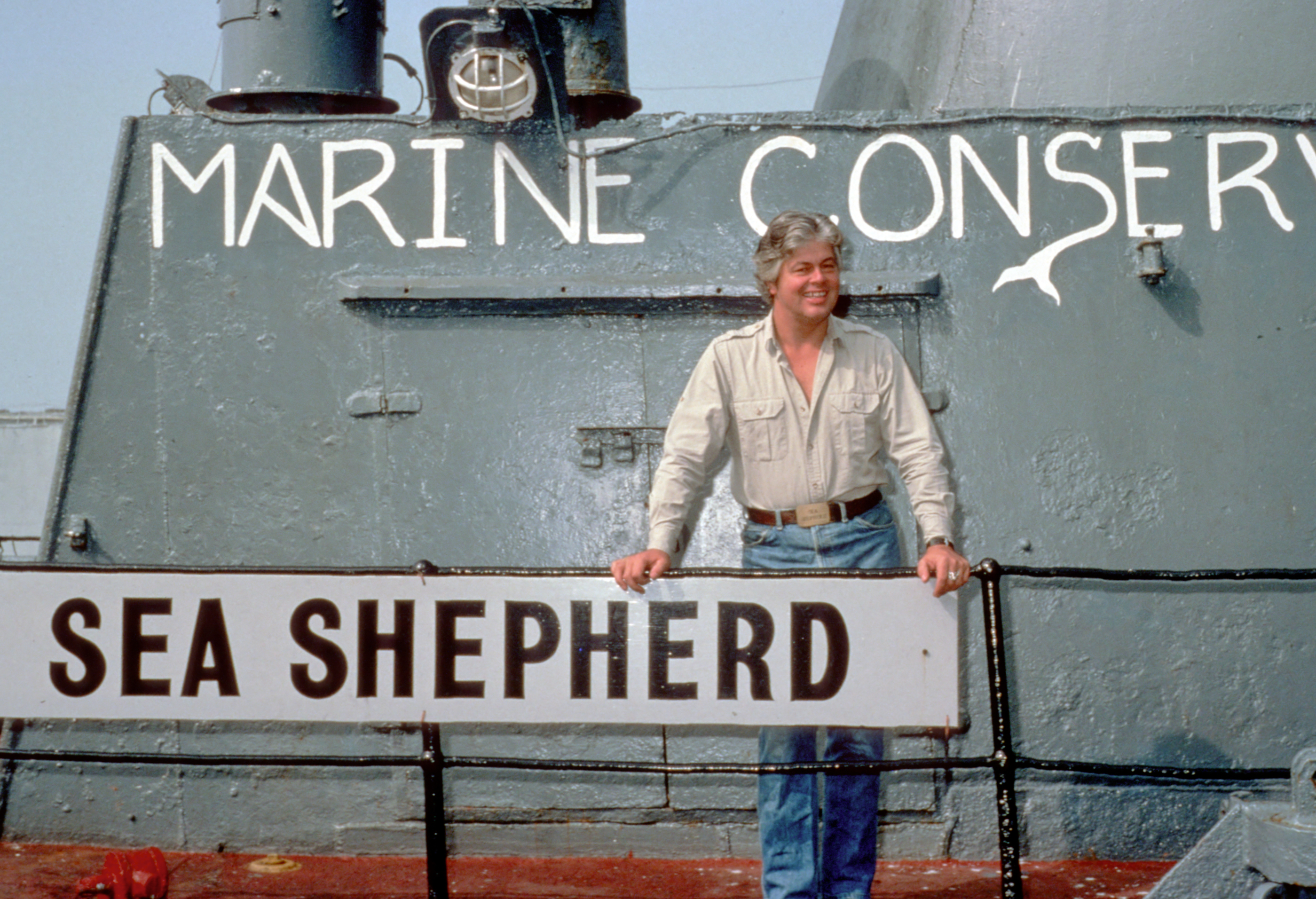
2016-08-04-1470340589-1361975-seashepherdfoundercaptainpaulwatson903.jpg

Sea Shepherd founder Paul Watson some forty years ago when he founded the non-profit.

Many things that I saw then no longer exist – or have been severely damaged, changed and diminished.

In the Sixties we did not buy water in plastic bottles. In the Sixties the word ‘sustainable ‘was never used in an ecological context, and except for Rachel Carson, there were very few with the vision to see into the future, where we were going, what we were doing.

But slowly, awareness crept into the psyche of more and more people. People began to understand what the word ecology meant. We saw the creation of Earth Day, and in 1972, the first global meeting on the environment in Stockholm, Sweden that I covered as a journalist.

Gradually, the insight into what were doing became more prevalent and to those who understood, the price to be paid was to be labeled radicals, militants, and a new word – eco-terrorist.

The real “crime” of eco-terrorism was not burning down a ski lodge, toppling a power line or spiking a tree. Such things are only outbursts of desperation and frustration. The real crime of eco-terrorism was having thought, perception, and imagination. In other words, the questioning of the modern economic, corporate and political paradigm.

The word eco-terrorism should be more accurately used for the destruction caused by progress like the Union Carbide disaster in Bhopal or the BP Deep Water Horizon spill in the Gulf of Mexico.

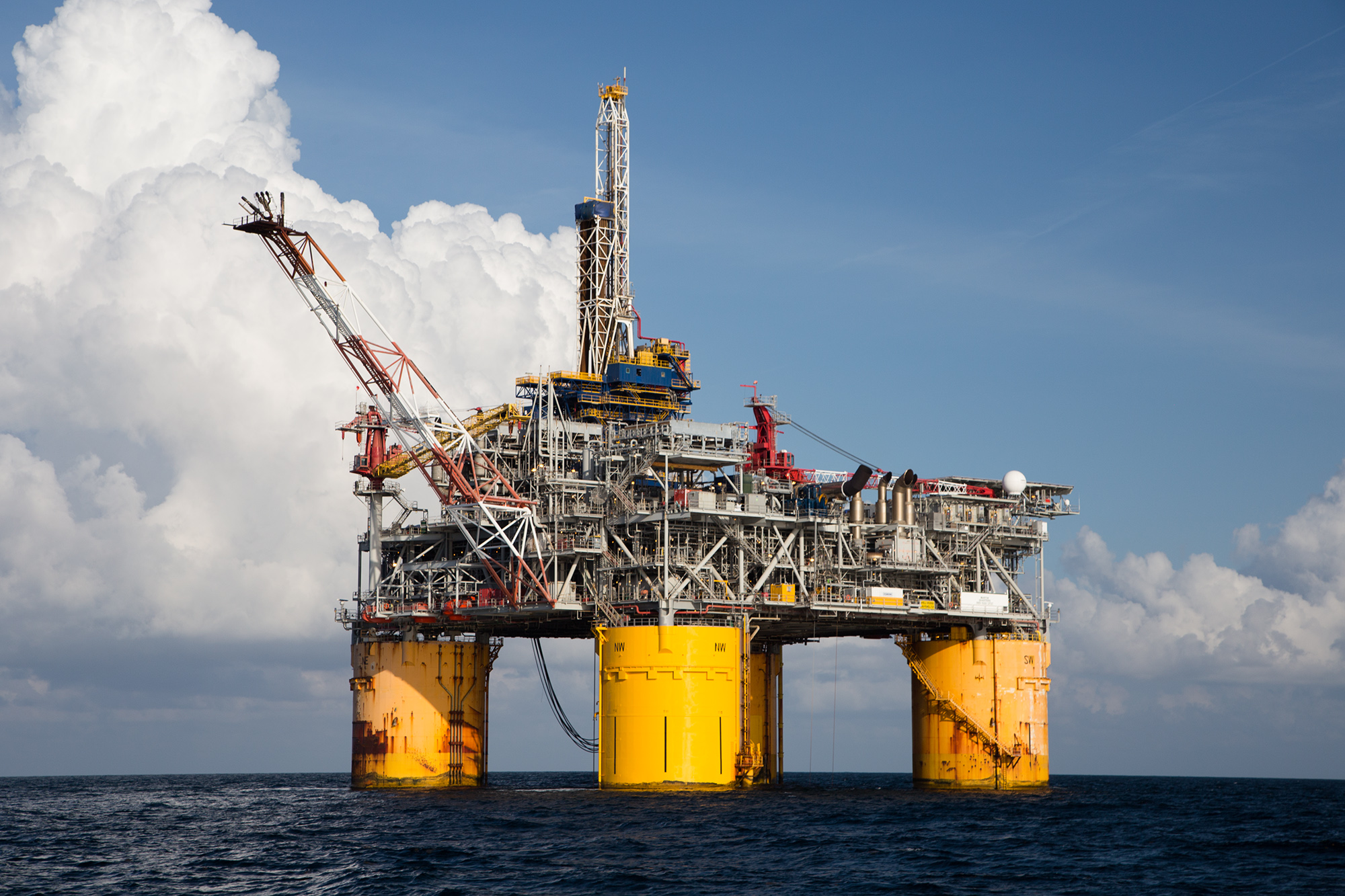
2016-08-04-1470340757-6508043-anoilrig756.jpg

Picture of an oil rig taken during Sea Shepherd’s Operation Toxic Gulf in 2014.

In the Seventies, the late Robert Hunter, along with Roberta Hunter, Dr. Patrick Moore, David Garrick, Rod Marining and myself observed and wrote down the three laws of ecology. What we realized was that these laws are the key to the survival of biodiversity on the planet and also the key to the survival of the human species. We realized that no species could survive outside of the three basic and imperative ecological laws.

The law of diversity: The strength of an eco-system is dependent upon the diversity of species within it.

The law of interdependence: All species are interdependent with each other.

The law of finite resources: There are limits to growth and limits to carrying capacity.

The increase of population in one species leads to the increase in consumption
of resources by that species. This leads to diminishment of diversity of other species, which in turn leads to diminishment of interdependence among species.

For example, increasing diminishment of phytoplankton populations in the sea is causing diminishment of many other species as well as a 40% diminishment in oxygen production since 1950. Diminishment of whale populations has contributed to the diminishment of phytoplankton populations because whale feces are a major source of nutrients (esp. iron and nitrogen) for phytoplankton.

The planet simply cannot tolerate 7.5 billion (and growing) primarily meat and fish eating necrovores. The killing of 65 billion domestic animals each year is contributing more greenhouse gases to the planet than the entire transportation industry. The industrial stripping of life from the sea is causing unprecedented biodiversity collapse in marine eco-systems.

Ecological systems globally are collapsing from coral reefs to rainforests because humanity is exploiting resources far beyond the capacity of eco-systems to create and renew natural resources.

Diminishment of eco-systems is also leading to the breakdown of human social structures causing global conflict in the form of wars and domestic violence. Terrorism is not the cause of society’s problems, it is merely a symptom.

Humans are compromised by medieval paradigms like territorial dominance, hierarchical desires and superstitious beliefs combined with primitive primate behavior like greed and fear.

2016-08-04-1470345289-7416340-bloodbathinleynarclaimedfourpregnantfemales377.jpg

Sea Shepherd’s 2010 Faeroe Islands Dolphin Defense Campaign: Operation Grindstop. Photo credit: Sea Shepherd /Sofia Jonsson

The fishing village that I lived in as a child is no longer a fishing village. The relative innocence of our lives as children of the Fifties and Sixties is no more. The African bush, the Arctic tundra, the marine reserve of the Galapagos Islands, the Great Barrier Reef, the Amazonian rainforests that I once traveled through are no longer what they recently were.

Humans have this amazing ability to adapt to diminishment. It’s a trait that was exceptionally useful when we lived as hunter-gatherers. We adapted to food shortages, to changes in the weather and to the world as it evolved around us. Today we are trying to adapt to the destruction brought on by ourselves and that adaption is taking the form of more and more control by governments and corporations and a blind reliance on corporate technologies.

We no longer have the empathy we once felt. I vividly remember the events of October 23rd, 1958. I was seven years old on the day of the Springhill Mine Disaster in Nova Scotia. 75 men died and 99 were rescue. I remember crying for the fate of people I did not know and feeling excited every time a miner was brought to the surface alive. I no longer have that capacity. Perhaps I lost it when I became an adult, or perhaps society no longer has room for such emotions.

Disaster happened and we grieved for people we did not know. A few weeks ago nearly 100 people were viciously murdered within a few kilometres of where I live when a deranged man mowed them down with a large truck in Nice, France. Last week, a priest was beheaded in France. Every week brings us more stories about mass killings in the Middle East, Africa, America etc. It’s a worldwide pain-fest of chaos and violence and yet it is met with complacency for the most part and a predictable Facebook posting of — “say a prayer for Paris, or Orlando, or Nice, or Beirut, or Istanbul” in a litany of self-indulgent adaptation to tragedy, before being quickly forgotten.

This is not the world of my childhood. We remembered the horrors of World War II with real emotion. I remember talking with both World War I and World War II veterans and feeling their pain. Today it’s just another short-term item on the news, in a world that seeks to escape through movies, celebrities, video games and increasingly more fanatical religious fervor.

Here is the reality. As human populations increase, the consumption of resources increases with it. But because resources are finite and the rate of renewables is overcome by demand, this can only lead to one result — the collapse of resource availability.

And because we are literally stealing resources from other species, this will lead to
diminishment of species and habitats, which will contribute to even more resource diminishment.

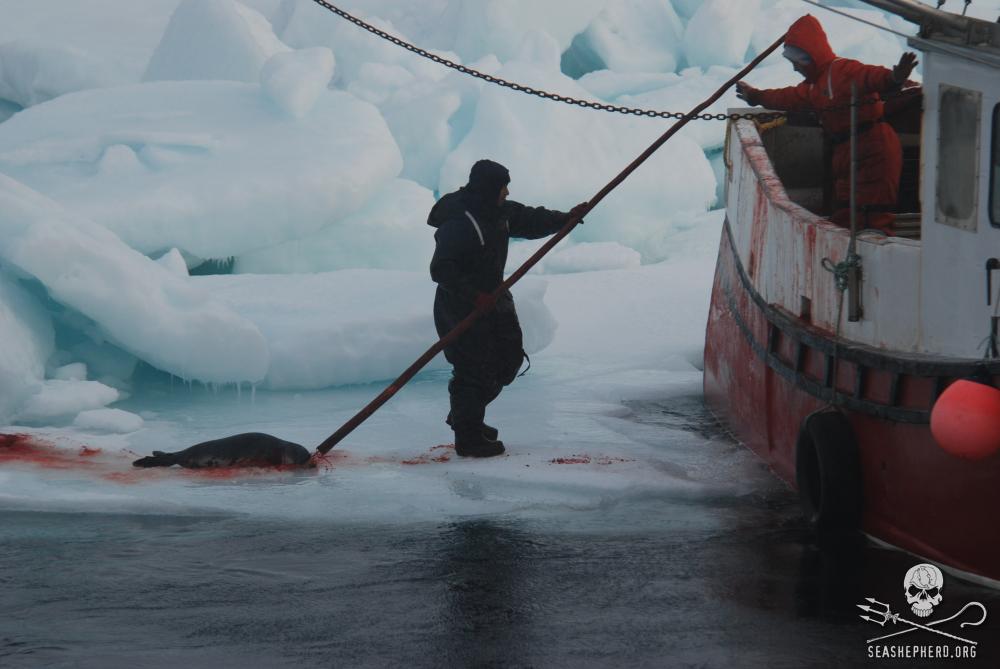
2016-08-04-1470342962-4408964-draggingontotheship273.jpg

Sea Shepherd’s 2008 Seal Defense Campaign photographs the murder and carcass dragging of a seal. Photo credit: Sea Shepherd / Greg Hager

At COP 21, I called for an end to worldwide government subsidies for industrialized fishing and at least a 50-year moratorium on commercial industrialized fishing. That solution was not given a moment’s thought at a conference that did not even take into account the imperative role of the Ocean in addressing climate change.

My opinion of COP 21 is that governments were not looking for solutions. They were looking for the appearance of solutions. They certainly did not want to hear about solutions from people like me. They want solutions that are accompanied by jobs and profit. The one thing they do not want is any form of economic sacrifice.

I also do not believe that the majority of humanity — certainly not the leadership — understand the true gravity of the situation. There are six viewpoints concerning climate change: 1. Denial 2. Acceptance, with the view of it being a positive development. 3. Acceptance with the belief that science and technology will save the day. 4. Acceptance, but refusal to fully appreciate the consequences. 5. Apathy. 6. Acceptance with the resolve to find real solutions.

Those who are in denial have vested self interests in doing so, motivated primarily by greed or ignorance. My old Greenpeace colleague Patrick Moore sees climate change as an opportunity for longer growing seasons and better weather. (He lives in Canada and I don’t think he’s really thought it through.) Others like Elon Musk see our salvation in science, in moving off-world or developing artificial eco-systems on Earth. Most responsible world leaders recognize the problem but are too politically-impotent to address it with realistic solutions because those solutions would not be politically popular. And as with everything, the majority of the world is apathetic and too self-absorbed with entertaining themselves (developed world) or surviving (underdeveloped world).

On this path we are on now, the future is somewhat predictable. More resource wars, more poverty, more accumulation of wealth by the minority of privileged people, more disease, more civil strife and with the collapse of biodiversity – global mass starvation, and pestilence.

The rich tapestry of all our cultures and all our achievements in science and the arts hangs by threads linked to biodiversity.

If the bees are diminished, our crops are diminished. If the forests are diminished, we are diminished. If phytoplankton dies, we die! If the grasses die, we die!

We exist because of the geo-engineering contributions of millions of diverse species that keep our life support systems running. From bacteria to whales, from algae to the redwoods. If we undermine the foundations of this planetary life-support system, all that we have ever created will fall. We will be no more.

We made the mistake of declaring war on nature, and because of our technologies it looks like we are going to win this war. But because we are a part of nature, we will destroy ourselves in the process. Our enemy is ourselves and we are slowly becoming aware of that indisputable fact. We are destroying ourselves in a fruitless effort to save the image of what we believe ourselves to be.

In this war, we are slaughtering — through direct or indirect exploitation — millions of species and reducing their numbers to dangerously low levels while at the same time increasing human numbers to dangerously high levels.

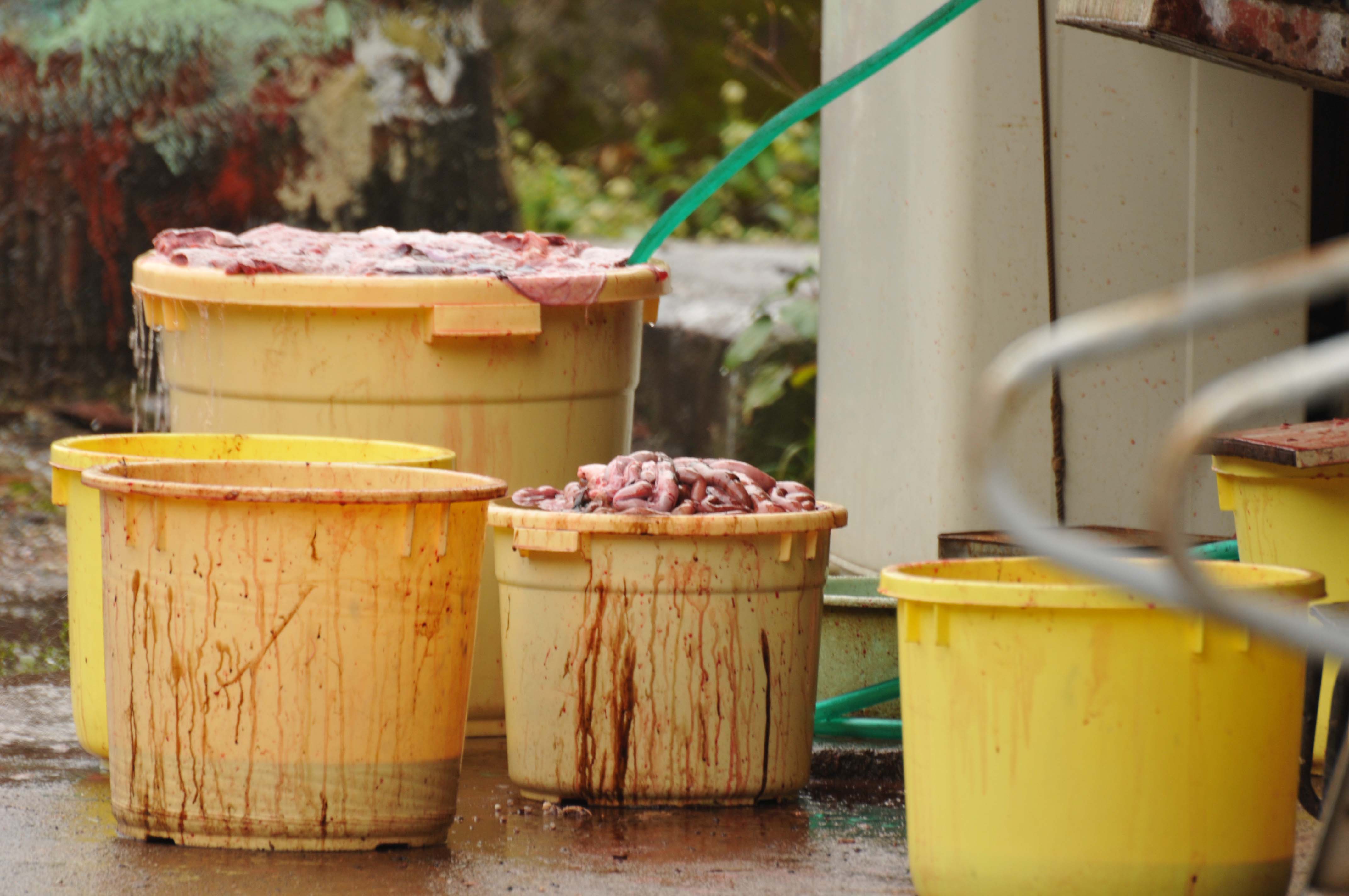
2016-08-04-1470343170-9873528-dolphinoffalandintestines645.jpg

Dolphin offal and intestines photographed during the 2011-12 Taiji Dolphin Defense Campaign. Photo credit: Sea Shepherd / Christoph Heylen

We are fighting this war against nature with chemicals, industrialized equipment, ever increasing extraction technologies (like fracking) and repression against any and all voices that rise up in dissent.

In our wake over the past two centuries we have left a trail of billions of bodies. We have tortured, slain, abused and wasted so many lives, obliterated entire species; and reduced rich diverse eco-systems to lifeless wastelands as we polluted the seas, the air and the soil with chemicals, heavy metals, plastic, radiation and industrialized farm sewage.

We were once horrified by the possibility of a Chernobyl or a Fukushima. But the accidents happened and we adapted and accepted. Now we are complacent.

In the process we are becoming sociopathic as a species. We are losing the ability to express empathy and compassion. We idolize soldiers, hunters, and resource developers without giving a thought to their victims. We revel in violent fantasies hailing two-dimensional fantasy killers as heroes. We have become increasingly more Darwinian in our outlook that the weak (other species) must perish so that the strong (ourselves) may survive. We forget that Darwinism recognizes the laws of ecology and we cannot pick and choose when it comes to the laws of nature. In the end nature controls us, we do not control nature.

The consequences of our actions are not going to happen centuries from now. They are going to happen within this century. Oceanic ecosystems are collapsing — now! The planet is getting warmer — now! Phytoplankton is being diminished — now!

To be blunt — the planet is dying now, and we are killing it!

From what I have experienced and from what I see there is only one thing that can prevent us from falling victim to the consequences of ignoring the laws of ecology.

We must shake off the anthropocentric mindset and embrace a biocentric understanding of the natural world. We can do this because we have wonderful teachers in indigenous communities worldwide who have lived biocentric lifestyles for thousands of years just as our species all once did. We need to learn to live in harmony with other species.

We need to establish a moratorium on industrialized fishing, logging and farming.

We need to stop producing goods that have no intrinsic value — all the useless plastic baubles for entertainment and self-indulgence. We need to stop mass-producing plastic that is choking our global seas. We need to stop injecting poisons into the soil and dumping toxins into the sea. We need to abolish cultural practices that destroy life for the sole purpose of entertaining ourselves.

Of course it won’t be easy but do we really want the epitaph for our species to be, “Well we needed the jobs?”

Without ecology there is no economy.

I am not a pessimist and I’ve never been prone to pessimistic thoughts. There are solutions. We see people of compassion, imagination and courage around us working to make this a better world — devoting themselves to protecting species and habitats; finding organic agricultural alternatives; and developing more eco-friendly forms of energy production. Innovators, thinkers, activists, artists, leaders and educators — these people are among us and their numbers are growing.

It is often said that the problems are overwhelming and the solutions are impossible. I don’t buy this. The solution to an impossible problem is to find an impossible solution.

It can be done. In 1972, the very idea that Nelson Mandela would one day be President of South Africa was unthinkable and impossible — yet the impossible became possible.

It’s never easy but it is possible and possibilities are achieved through courage, imagination, passion and love.

I learned from the Mohawks years ago that we must live our lives by taking into account the consequences of our every action on all future generations of all species.

If we love our children and grandchildren we must recognize that their world will not be our world. Their world will be greatly diminished and unrecognizable from the world of our childhoods. Each and every child born in the 21st Century is facing challenges that no human being has ever faced in the entire history of our species:

Emerging pathogens from the permafrost. (Just this summer, an anthrax virus from a recently thawed reindeer carcass broke out killing 1,500 reindeer and hospitalizing 13 people in Russia.) Eruptions of methane opening huge craters in the earth in Siberia, mass-accelerated extinction of plants and animals, pollution, wars and more wars, irrational violence in the form of individual, religious and state terrorism, the collapse of entire eco-systems.

This is not doom and gloom fear mongering. It is simply a realistic observation of the consequences of our deliberately ignoring of the laws of ecology. I call it the Cassandra Principle.

Cassandra was the prophetess of ancient Troy whose curse was the ability to see the future and to have everyone dismiss her prophecies. No one listened to her, instead they ridiculed her. Yet she was right. All that she predicted came to pass and Troy was destroyed.

Years ago I had a critic in the media label me as a doom and gloom Cassandra. I replied, “Maybe, but don’t forget one thing. Cassandra was right.”

2016-08-04-1470346349-3492535-sscsgalapagosdirectorseanohearngimenezonasharkfinningarrestoperation226.jpg

Sea Shepherd’s Galapagos Director Sean O’Hearn-Gimenez on a shark finning arrest operation om 2007.

And over the years I have made predictions (that were ridiculed and dismissed) that have come true. In 1982 I publicly predicted the collapse of the North Atlantic Cod fishery. It happened a decade later. In 1978 I predicted the destruction of one half of the African elephant population in Defenders magazine. I was wrong. Some two thirds of the population have been destroyed. In 1984, I predicted ecological destruction by salmon farms including the spreading of viruses to wild salmon populations. Every prediction was based on observation with reference to the laws of ecology and every prediction was dismissed.

Nothing has changed. Today I am predicting the death of worldwide coral reef eco-systems by 2025, the total collapse of worldwide commercial fishing operations by 2030; and the emergence of more virulent viral diseases in the coming decades. It does not take any exceptional foresight to predict that war will be the major business of the next half-century, as well as the rise of more authoritarian governments.

Recently my old friend Rod Marining, also a co-founder of Greenpeace, said to me: “The transformation of human consciousness on a mass scale can not happen, unless there are two factors. First, a huge mass visual death threat to survival of our species, and two, the threat of the loss of a people’s jobs or their values. Once theses two factors are in place humans begin to transform their thinking over night.”

I have seen the future written in the patterns of our behavior, and it is not a pleasant future, in fact it is not much of a future at all.

The four horses have arrived. As death sits astride the pale horse, the other three horses of pestilence, famine and war and terrorism are stampeding at full gallop toward us while our backs are turned away from them. And when they trample us, we may look up from our latest entertainment triviality to see ourselves in the dust of the ecological apocalypse.

I also see the possibility of salvation. By listening to the words and observing the actions of indigenous people. By looking into the eyes of our children. By stepping outside the circle of anthropocentrism. By understanding that we are part of the Continuum. By refusing to participate in the anthropocentric illusion. By embracing biocentrism and fully understanding the laws of ecology, and the fact that these laws cannot — must not — be ignored if we wish to survive.

Global Fisheries Are Collapsing — What Happens When There Are No Fish Left?

http://www.truth-out.org/news/item/35574-global-fisheries-are-collapsing-what-happens-when-there-are-no-fish-left

(Photo: Paul Symes)(Photo: Paul Symes)

“Commercial overexploitation of the world’s fish stocks is severe,” UN Secretary General Ban Ki-moon said back in 2012. “Many species have been hunted to fractions of their original populations. More than half of global fisheries are exhausted, and a further third are depleted.”

According to the UN Food and Agriculture Organization, 85 percent of global fish stocks are “overexploited, depleted, or recovering from depletion.”

To see more stories like this, visit “Planet or Profit?”

Yet despite these alarms having been sounded loud and clear, life in the oceans is continuing to deteriorate at an ominously rapid pace.

Total Collapse?

Fisheries for the most sought-after species of fish have already collapsed.

The populations of all large predator fish in the oceans have declined by 90 percent in the 50 years since modern industrial fishing became widespread around the world, according to a shocking paper by scientists with Dalhousie University in Halifax, Canada, published in Nature in 2003.

“We are losing species every day without ever knowing about them. Sometimes humans can be like a plague to the environment.”

Marine mammal strandings concern experts

http://www.dailyastorian.com/Local_News/20160218/marine-mammal-strandings-concern-experts?utm_source=Daily+Astorian+Updates&utm_campaign=451026f0b5-TEMPLATE_Daily_Astorian_Newsletter_Update&utm_medium=email&utm_term=0_e787c9ed3c-451026f0b5-109860249

 By Lyra Fontaine

EO Media Group

Published:February 18, 2016 9:01AM
Last changed:February 18, 2016 9:35AM

Daily Astorian/File Photo People stop to look at the dead humpback whale calf that washed ashore on the Seaside beach.

Buy this photo

Neal Maine/For EO Media Group
Workmen move the humpback whale that washed ashore in Seaside.

Buy this photo

A humpback whale that washed ashore in Seaside was one of several strandings

CANNON BEACH — The humpback whale stranded in Seaside in January may have become entangled or struck by a boat, according to Debbie Duffield, a Portland State University biology professor.

More than 30 people gathered for a lecture, “Marine Mammals, the Marine Mammal Stranding Network and Marine Reserves,” last week at the Cannon Beach Library.

The topic was particularly timely. In the past few weeks, a humpback whale washed ashore in Seaside, and a harbor porpoise and two striped dolphins were found on the North Coast. Experts are still waiting on necropsy results for the whale to see whether it was infected or if it had an accident.

The humpback has bruising that could have been from entanglement or a boat strike, Duffield said. It also carried a fairly heavy parasite load for a whale not more than 2 years old.

The presentation — a partnership between Duffield and Keith Chandler, the Seaside Aquarium general manager — was part of Haystack Rock Awareness Program’s lecture series.

The Oregon Marine Mammal Stranding Network, which Duffield and Chandler belong to, responds to mammal strandings from Tillamook to Long Beach, Washington. They see 149 stranded animals a year on average. The most common animals include California sea lions, harbor seals and Steller sea lions.

Strandings allow researchers to evaluate otherwise inaccessible animals, and necropsies tell scientists vital physiological and biological information. Marine mammals’ tissues are sampled and used for studies on ocean pollution, biotoxins and other environmental changes.

Once they evaluate a stranded animal, researchers take samples back to the university to study it in a controlled area and test for infections. After they finish the necropsies, they might prepare the bones for students to piece together.

“Every once in awhile we have species that, because of their charismatic value, are of great interest to everybody,” Duffield said.

For example, a killer whale was stranded in Long Beach several years ago, drawing veterinaries, researchers and onlookers alike. Duffield also recalls when a Baird’s beaked whale came in live in Seaside during a volleyball tournament. “Luckily, people weren’t around it when it started to die and thrash, because it could have killed somebody,” she said.

Why do these animals appear on shores? Seals, sea lions, whales, dolphins and porpoises are primarily stranded due to human interaction, such as gunshots, fisheries interaction and net entanglement. Bacterial disease, cancer and infections also cause strandings.

Sometimes the human-related interactions are extreme. Duffield displayed a jarring photo of a California sea lion that had part of its face destroyed by an explosive device.

She also showed a picture of plastics and debris on the Seaside beach. Sea lions get entangled in plastic bands, but since they bite, it’s difficult for humans to help them remove bands and recover from wounds. In 2010, a dead whale stranded in Washington’s Puget Sound beach had 50 gallons of material in its stomach that was mostly algae, but also human debris, such as sweatpants, plastic bags, duct tape and towels.

The Oregon Marine Mammal Stranding Network works to improve treatment and disentangle marine mammals from debris and fishery gear.

Duffield said that the animals are resilient. Seals and sea lions often carry worms in their stomach that can form ulcers. “They just live with that,” she said. “Their parasite loads are tremendous.”

The strandings may also point to larger forces at work. The El Niño climate pattern that’s increasing coastal temperatures, along with the warm “blob” of water in the north Pacific Ocean, affect the animals’ prey.

“We’re at the apex of these changes that we can actually follow annually,” Duffield said. “It’s a fascinating change that we’re living through.”

The ghost fishing gear crisis

read:http://www.worldanimalprotection.us.org/our-work/animals-wild/sea-change-campaign-tackling-ghost-fishing-gear?gclid=CJe3oZOm-soCFQoNaQodwj4PiA

Abandoned, lost and discarded nets, lines and traps are one of the biggest threats to our sea life. A staggering 640,000 tons of gear is left in our oceans each year. That gear traps, injures, mutilates and kills hundreds of thousands of whales, dolphins, sharks, seals, turtles and birds annually. So, through our Sea Change campaign, we’re aiming to save one million animals by 2018.

By bringing together governments, businesses and fishing organizations, we can protect sea life and move towards a future free from the ghost fishing gear threat

Ghost fishing gear: our work

We’re working in three ways to protect animals from ghost fishing gear. We:

  • Bring together partners to stop gear being abandoned
  • Support new ways to remove ghost gear from the seas
  • Help to replicate successful local sea animal rescue efforts on a global scale.

Global Ghost Gear initiative

The Global Ghost Gear Initiative is a big part of our Sea Change campaign. By collaborating with a range of partners, we’re working to understand just how bad the problem of ghost fishing gear is – and to respond with solutions that work for animals and people. The seafood industry spends millions each year untangling nets from propellers, for example, so we’re developing solutions that protect animals and benefit businesses too.

Resources

Download the following resources to learn how ghost gear is endangering our sea life:

David Burdick / Marine Photobank

Ghost Gear Dodge

How to play Ghost Gear Dodge:

1. Visit ghostgear.worldanimalprotection.org and play on your computer or your mobile phone
2. Click/tap to swim up & release to swim down to avoid getting caught in ghost gear
3. Sign-up at the end of the game to learn more about Sea Change work happening locally and share the game with your family and friends to help build the movement

Who is Making More Waves?

Text and Wildlife Photography ©Jim Robertson, 2015. All Rights Reserved

Text and Wildlife Photography ©Jim Robertson, 2015. All Rights Reserved


Blind anti-sea lion hatred or anti-cormorant animosity, like anti-wolf bigotry, seems born into in-bred, backwards communities, but it is a product of “nurture,” not nature and will (as with racism and sexism) surely fade away over time.

DSC_0030

The question is, how many of these animals will be left after all the arrogant, narcissistic, speciesist, selfish blood lust is finally appeased?

DSC_0046

And when it comes down to it, who is really making more waves—the sea lions for eating fish as they have for tens of millions of years (not hundreds, not thousands, but tens of MILLIONS) or the humans who are in the process, generally, of destroying the planet by changing the climate, polluting everything from the seas to the air we breathe, overfishing, overhunting, overpopulating and single-handedly bringing to an end the Age of Mammals?

DSC_0089

Hats off to all the good folks with the Sea Lion Defense Brigade who stand up for sea life, despite local animosity, on a daily basis.


Wildlife Photography ©Jim Robertson

Wildlife Photography ©Jim Robertson


Celebrities Get Naked for Fish

Finally, these celebrities get naked for fish

Do you love fish as Helena Bonham Carter does?

Helena Bonham Carter

That’s not Photoshop. That is HBC in the buff, cradling a bigeye tuna.

And she wants you to know how serious she is about this love:

Helena Bonham Carter

The photo is part of a British campaign called Fishlove, behold Dumbledore coyly peeking out from behind a pufferfish!

Fishlove is produced by Nicholas Röhl, co-owner of Japanese restaurant MOSHIMO, based in Brighton, UK
©Alan Gelati/Fishlove

Fishlove is produced by Nicholas Röhl, co-owner of Japanese restaurant MOSHIMO, based in Brighton, UK

British-Indian movie star Ayesha Dharker loves moray eels as much as she loves that fat baby. 
©Alan Gelati/Fishlove
Fishlove is produced by Nicholas Röhl, co-owner of Japanese restaurant MOSHIMO, based in Brighton, UK
Sir Ben Kingsley is alarmed by — and concerned about — the deflated cephalopod he finds in his hands. 
©Rankin/Fishlove
Fishlove is produced by Nicholas Röhl, co-owner of Japanese restaurant MOSHIMO, based in Brighton, UK
Emmy-award winner Greta Scacchi hopes to cod someone will save the oceans. 
©Rankin/Fishlove
Fishlove is produced by Nicholas Röhl, co-owner of Japanese restaurant MOSHIMO, based in Brighton, UK
Actor Trevor Laird has appeared on Doctor Who, but may go down in history for appearing underneath this sailfish. 
©Alan Gelati/Fishlove
Fishlove is produced by Nicholas Röhl, co-owner of Japanese restaurant MOSHIMO, based in Brighton, UK
Lily Loveless made her debut in British TV show Skins, now makes serious dermal contact with an octopus. 
©Rankin/Fishlove

For the rest of these sea stars, check out the galleries (and the campaign) here.