Europe’s Scorching Heatwave Forces Germany to Impose Autobahn Speed Limits

[Poor things will be forced to only drive 100km/ph on the freeway…]
Dangerous Heatwave Brings ‘Hell’ to Western Europe
Temperatures could reach over 110 degrees Fahrenheit.

Pause

Unmute

Current Time 0:44
/
Duration 1:10

Loaded: 0%

Progress: 0%

Share

Fullscreen

×

By WILLIAM WILKESBRIAN PARKIN, and BLOOMBERG

6:11 AM EDT

A blistering heatwave prompted Germany to impose speed restrictions on usually limit-free stretches of its high-speed motorways Wednesday, the latest sign of extreme weather events ruffling Europe’s largest economy.

State authorities are reducing speeds to as low as 100 kilometers per hour (62 miles per hour) on some stretches because of fears that the unusually high temperatures could create potentially deadly cracks on Autobahn surfaces, a highways agency spokesman said. Temperatures in Germany on Wednesday could surpass a June high of 38.2 degrees Celsius (101 Fahrenheit), according to the country’s DWD weather service. The all-time record of 40.3 degrees, set in July 2015, could also fall.

Meteorologists blame climate change for sending a blast of air from the Sahara desert into Western Europe. The sweltering heat echoes a sustained drought in 2018 across Germany that halted shipping on the Rhine River, hampered power generation, sparked forest fires and forced the country to import grain for the first time in 24 years. Rising temperatures are making violent convective storms more likely, mirroring a trend in the U.S. Midwest.

Health Risks

The early summer heat has already sparked wildfires outside Berlin. In Paris, volunteers distributed water to homeless people after the French government closed schools and activated a contingency plan to protect residents. The Red Cross warned that excessive heat could cause dizziness, convulsions and hallucinations, especially for older people. Electricity prices across the continent surged on expectations Europeans would turn on fans and air conditioning units to keep cool.

Europe’s heat in June — part of a string of extraordinary weather patterns including temperatures of more than 50 degrees in India that killed over 180 people — is the latest reminder of the tangible effects of climate change.

With those risks harder to ignore, environmental concerns have rocketed up the political agenda. Support for Germany’s Green Party has eclipsed Chancellor Angela Merkel’s Christian Democrats to become the country’s strongest party in some recent polls.

Coal Conflict

Political tensions are high. Over the weekend, German police forcibly removed protesters who stormed an open-pit coal mine owned by German utility RWE AG, Europe’s biggest corporate emitter of carbon dioxide. Demonstrators blocked railroads used to carry the fuel to nearby power plants over what they see as the slow pace of Germany’s plans to exit coal.

“Nothing less than our future is at stake,” said Nike Malhaus, spokeswoman for protest group Ende Gelaende. “We are taking the coal phaseout into our own hands, because the government is failing to protect the climate.”

Temperatures in Switzerland are about 10 degrees warmer than normal for this time of year, according to data compiled by Bloomberg. The high temperatures means glaciers will likely shrink further, increasing the likelihood that the Rhine will again be too shallow for shipping later this year, according to Switzerland’s federal weather agency.

No Carriages

Meanwhile, Europeans are adapting to this week’s heat in ways large and small. Brussels has suspended horse-and-carriage rides for tourists. The decision was taken out of respect for the animals’ welfare, said Fabian Maingain, the Belgian city’s chief for economic affairs, told Le Soir newspaper. Similar decisions have been taken by Antwerp and Ostend.

Grazing Fee Drops in 2017, Further Undervaluing Public Lands

13533278_1489665091056950_3215226751240158290_n


LARAMIE, Wyo. – The public lands management agencies announced the grazing fee for federal allotments today, which the federal government has decreased to a mere $1.87 per cow and her calf (or 5 sheep) per month, known as an Animal Unit Month, or AUM.  


“This has got to be the cheapest all-you-can-eat buffet deal in the country,” said Erik Molvar, Executive Director of Western Watersheds Project. “Our public lands are a national treasure that should be protected for future generations with responsible stewardship. It makes no sense to rent them to ranchers for below-market prices to prop up a dying industry that degrades soil productivity, water, wildlife habitat, and the health of the land.”


Two hundred and twenty million acres of public lands in the West are used for private livestock industry profits through the management of approximately 22,000 grazing permits. The low fee leaves the federal program at an overwhelming deficit. This year’s fee is a a decrease of 11 percent from last year’s fee of $2.11 per AUM far less than the average cost for private lands grazing leases.  The fee is calculated using a decades-old formula that takes into account the price of fuel and the price of beef, and this year’s fee falls far below the level of $2.31 per AUM that was charged in 1980. Additionally, the fee doesn’t cover the cost to taxpayers of range infrastructure, erosion control, vegetation manipulation, and government predator killing – all indirect subsidies that expand the program’s total deficit.   


“The subsidy to public lands livestock grazers just got bigger,” Molvar said. “It’s a totally unjustified handout that persists for purely political reasons, with little or no benefit to Americans.” 

227,000 more people born every day!

10678776_10152936650136840_7539051632152355942_n

Today’s my birthday. Big deal, huh? It may have seemed like a big deal for someone born in 1960, but nowadays, 227 HUNDRED THOUSAND people are born each and every day!

Here’s some light reading on overpopulation, for those who want to take a look at the bigger and bigger picture: http://www.biologicaldiversity.org/programs/population_and_sustainability/

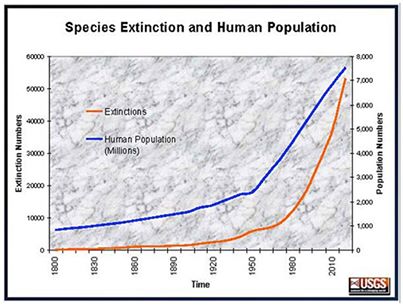
Human population growth and overconsumption are at the root of our most pressing environmental issues, including the species extinction crisis, habitat loss and climate change. To save wildlife and wild places, we use creative media and public outreach to raise awareness about runaway human population growth and unsustainable consumption — and their close link to the endangerment of other species.

There are more than 7 billion people on the planet, and we’re adding 227,000 more every day. The toll on wildlife is impossible to miss: Species are disappearing 1,000 to 10,000 times faster than the natural rate. It’s clear that these issues need to be addressed before it’s too late…

1451324_650954518277931_1616731734_n

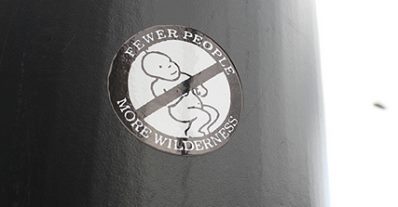
Would You Help Save the Earth by Being Childfree?

http://www.psychologytoday.com/blog/complete-without-kids/201403/would-you-help-save-the-earth-being-childfree

Would You Help Save the Earth by Being Childfree?

Consider the environmental benefits of not having kids.

Most people consider whether or not to have kids based on lifestyle factors such as career goals, finances, and leisure time, but there’s another group of folks who are doing so primarily for environmental reasons.

This past summer, Time Magazine published a cover story about the childfree life that discussed why people decide to not have kids. Author Lauren Sandler wrote that the birthrate in the US is the lowest in recorded history and that the fertility rate actually dropped by 9 percent between 2007 and 2011. She cites cost ($234,900 to raise a child born in 2011 for a family earning less than $100,000 per year) as a major factor in this decline. Careers are also impacted, especially for women, who may lose out on as much as a million dollars because of lost promotions and other missed opportunities in the workplace that result from taking time off to raise kids.

Sandler also points to the sense of freedom that comes from being childfree. Childfree adults have an abundance of time to spend with friends and family, at their jobs, and on their own leisure activities and self-care.

 But there’s a third factor that Sandler neglected to discuss in her popular article—the green angle. Lisa Hymas, writer for Grist.org, wrote about this in a follow-up to the Time story. Hymas points out that the global population is now at 7.1 billion and is projected to reach 9.6 billion by 2050. That’s a lot of people stressing an already exhausted earth. She cites a Global Environmental Change study that boldly discusses the impact of each child on the earth.

The bottom line from this research is that all of the environmentally conscious deeds a person may do — recycling, riding the bus, etc. —  pale in comparison to not having a child. As Hymas states, “The climate impact of having one fewer child in America is almost 20 times greater than the impact of adopting a series of eco-friendly practices for your entire lifetime.”

Hymas is in the lead in her willingness to boldly address this controversial issue and to encourage potential parents to consider the future of the earth when contemplating their own future. Bringing these issues to the forefront may lead them to forego having a child or to adopt instead.

Would you choose to not have kids primarily for the good of the environment? And if you wanted to be a parent, would you choose adoption for this same reason?

safe_image

Wolves Just Doing Their Job

I have the utmost respect for ungulates, yet they sometimes tend to get lazy when what they seek is within easy reach, right there in front of them. That statement (not the “utmost respect” part—the “lazy” part) could also apply to hunters who don’t hesitate to shoot half-tame elk, deer or bison right outside of park boundaries.

In one of their most telling remarks, Montana hunters have complained that wolves make elk “too hard to hunt.” Ever the lackeys, state game departments use that for an excuse to promote wolf hunting, instead of sticking up for wolves by pointing out that they are just doing their job of preventing elk from over-grazing.

The fact is, wolves keep browser and grazer populations healthy precisely by keeping them on the move, making sure they don’t get too complacent. As with human beings, inertia can set in from staying in one place, causing individuals or entire populations to get fat and lazy.

So next time you hear hunters complaining about wolves, remember, it’s not because they really think wolves are going to eliminate all “their” elk—they just don’t want to have to walk too far from the pickup truck to make their kill.