Hunters: Control Your Own Population

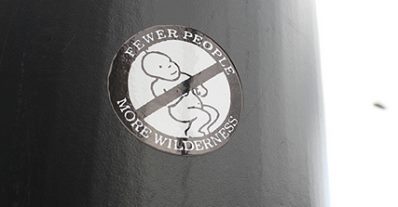
One of the unwelcome, unapproved hunter-comments received today asked the hypothetical question, “So what do you suggest?… Control the human population limiting each family to one child so we stop ‘encroaching’ animal habitat?” He surely knew not the wisdom of his words.

Dave Foreman, founder of the original Earth First!, posits in his book, Man Swarm and the Killing of Wildlife, that no one can call themselves a conservationist (and what hunter doesn’t like to call themselves a “conservationist”?) if they’re unwilling to at least acknowledge the human overpopulation problem.

The following quote from Man Swarm should make this point clear.

“…whenever conservationists spotlight threatened landscapes or wildlife, we need to bring in the ways high population and ongoing growth are behind that threat.

“Right now this is not being done. When horror stories pop up about the dreadful loss of wildlife somewhere in the world, population growth is rarely mentioned, much less blamed for it. A glaring example comes from a 2009 news story about the crash in wildlife numbers in the big game haven of Kenya. Nowhere in the article is Kenya’s skyrocketing population mentioned. Of the fabled big five animals only the buffalo is not now endangered, while Kenya could lose the others—lion, elephant, rhino and leopard. In all cases wildlife are threatened because swarming new populations of Men are pouring into former wildlife habitat. When conflicts arise, the wildeors are killed.

“In 1963, 20,000 lions lived in Kenya. In 2008 there were only 1,970. A ninety percent loss. Elephants went from 167,000 in 1963 to 16,000 in 1989. They are back at 32,000, which is still piddling. Black rhinos were poached down to 20,000 in 1970 to 391 in 1997. Now they are at 603 only with tough protection. Other big, wide-ranging wildlife are at all-time lows. Conservationists need to take such figures and show how exploding human populations are to blame and that, without serious birth reduction, wildlife will go.

“Now, let’s look at how growth is behind the Seven Ecological Wounds. Wound 1: overkill

“When I was in grade school I read the Weekly Reader telling us how more thorough harvesting of the seven seas would feed more and more mouths. Well, we did that. The upshot is crashing fisheries throughout the world, die-off of coral reefs, and the functional extinction of once-teeming highly interactive species such as cod, sharks, and tuna. When highly interactive species are killed off, their neighborhoods crumble and whither.

“As hungry little settlements swell and spread out, they gobble up bigger wildlife from rainforests and other wild lands. Even a little knot of huts with near-Stone Age tools can clean out the bigger wildlife in a nearby protected area. As more babies become more mommies and daddies, hunters go ever farther afield with snares, nets, and old guns. There are tropical National Parks still full of tall, never-cut trees and heavy lianas that are empty of big wildeors thanks to this belly-driven hunting.

“Historically, hunting has caused the extinction, local extirpation, or near extinction of wildlife, including once-highly abundant bison, passenger pigeons, shore birds, whales, cod, elephants, sea turtles, and many more. Such hunting has been driven by the “need” for meat and for new settlements and cropland by growing populations of Men worldwide and locally.”

1451324_650954518277931_1616731734_n

Albania hunting ban takes aim at depopulation


 http://www.aljazeera.com/indepth/features/2014/11/albania-hunting-ban-takes-aim-at-depopulation-2014111812148301986.html

Wildlife numbers falling rapidly, but a controversial new ban on hunting seeks to protect Albania’s animals.

Last updated: 22 Nov 2014

Tirana, Albania – Bujar Hyka and his friends headed out in their jeep west of Albania’s capital on a recent Sunday morning. Dressed in camouflage, the men navigated the vehicle through rough terrain with three restless English Setters eagerly waiting to jump out.

A year ago, this would have been a hunting trip. But under Albania’s new anti-hunting law, Hyka and his friends have been forbidden to kill animals and now simply hike weaponless through the country’s pristine wilderness.

“The government doesn’t understand that hunting is a sport; they are1907320_10152809923380861_1562740061849294556_n ruining our sport,” said Hyka, 59, head of one of Albania’s hunters and fishermen’s organisations. “It’s like someone taking a football away from footballers.”

Earlier this year, the Albanian government imposed a two-year moratorium on all hunting to save its endangered animal population. Reports suggest 30-50 percent of Albania’s wildlife species have seen a steep decline in the past decade. Hunting is one of the main reasons for the loss.

Among the endangered species in the country are the Balkan lynx, the Egyptian vulture, the Dalmatian pelican, the European eel, and the Albanian water frog.

More Here

Thanks to C.A.S.H.: The Committee to Abolish Sport Hunting 


227,000 more people born every day!

10678776_10152936650136840_7539051632152355942_n

Today’s my birthday. Big deal, huh? It may have seemed like a big deal for someone born in 1960, but nowadays, 227 HUNDRED THOUSAND people are born each and every day!

Here’s some light reading on overpopulation, for those who want to take a look at the bigger and bigger picture: http://www.biologicaldiversity.org/programs/population_and_sustainability/

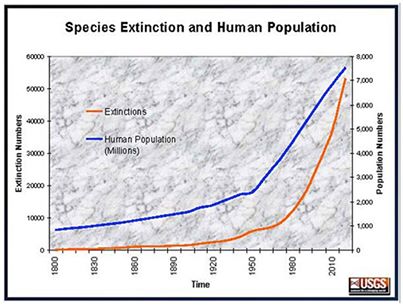
Human population growth and overconsumption are at the root of our most pressing environmental issues, including the species extinction crisis, habitat loss and climate change. To save wildlife and wild places, we use creative media and public outreach to raise awareness about runaway human population growth and unsustainable consumption — and their close link to the endangerment of other species.

There are more than 7 billion people on the planet, and we’re adding 227,000 more every day. The toll on wildlife is impossible to miss: Species are disappearing 1,000 to 10,000 times faster than the natural rate. It’s clear that these issues need to be addressed before it’s too late…

1451324_650954518277931_1616731734_n

“Hunter-Conservationists:” the Most Ridiculous Spin of the Century

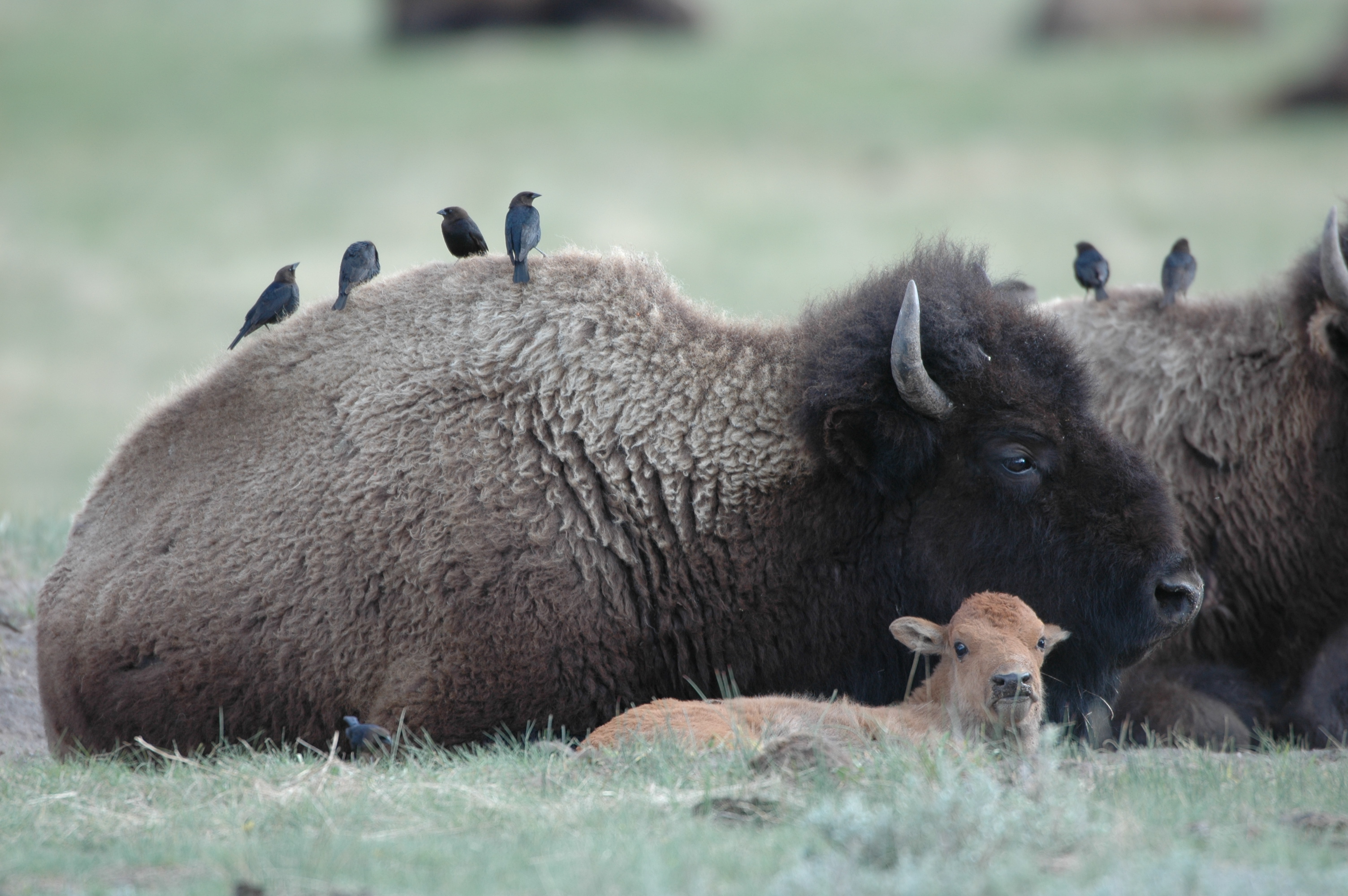
The award for Most Ridiculous Spin of the Century goes collectively to Kit Fischer, sportsmen’s outreach coordinator with the National Wildlife Federation (what the hell kind of environmental/wildlife advocacy group hires an outreach coordinator to attract sport hunters?); Dave Chadwick, executive director of the Montana Wildlife Federation; Jim Posewitz, board member of Helena Hunters and Anglers; Casey Hackathorn, president of Hellgate Hunters and Anglers; Chris Marchion, board member of Anaconda Sportsmen and Glenn Hockett, president of Gallatin Wildlife Association. These revisionists recently had the insolent audacity to try to boast that “hunter-conservationists saved bison from extinction a century ago” in their article, Enlist Montana Hunters to Manage Bison Numbers.

Let’s not forget that the vast herds that once blackened the plains for hundreds of miles on end were almost completely killed off by hide-hunters, market meat-hunters or by sport-hunters shooting from trains just for a bit of fun.

The only reason hunters stopped the insanity was that the bison were all but completely wiped out. By the time they ended their killing spree, only 18 wild bison remained, holed up like wrongfully-accused outlaws in the upper reaches of the Yellowstone caldera.

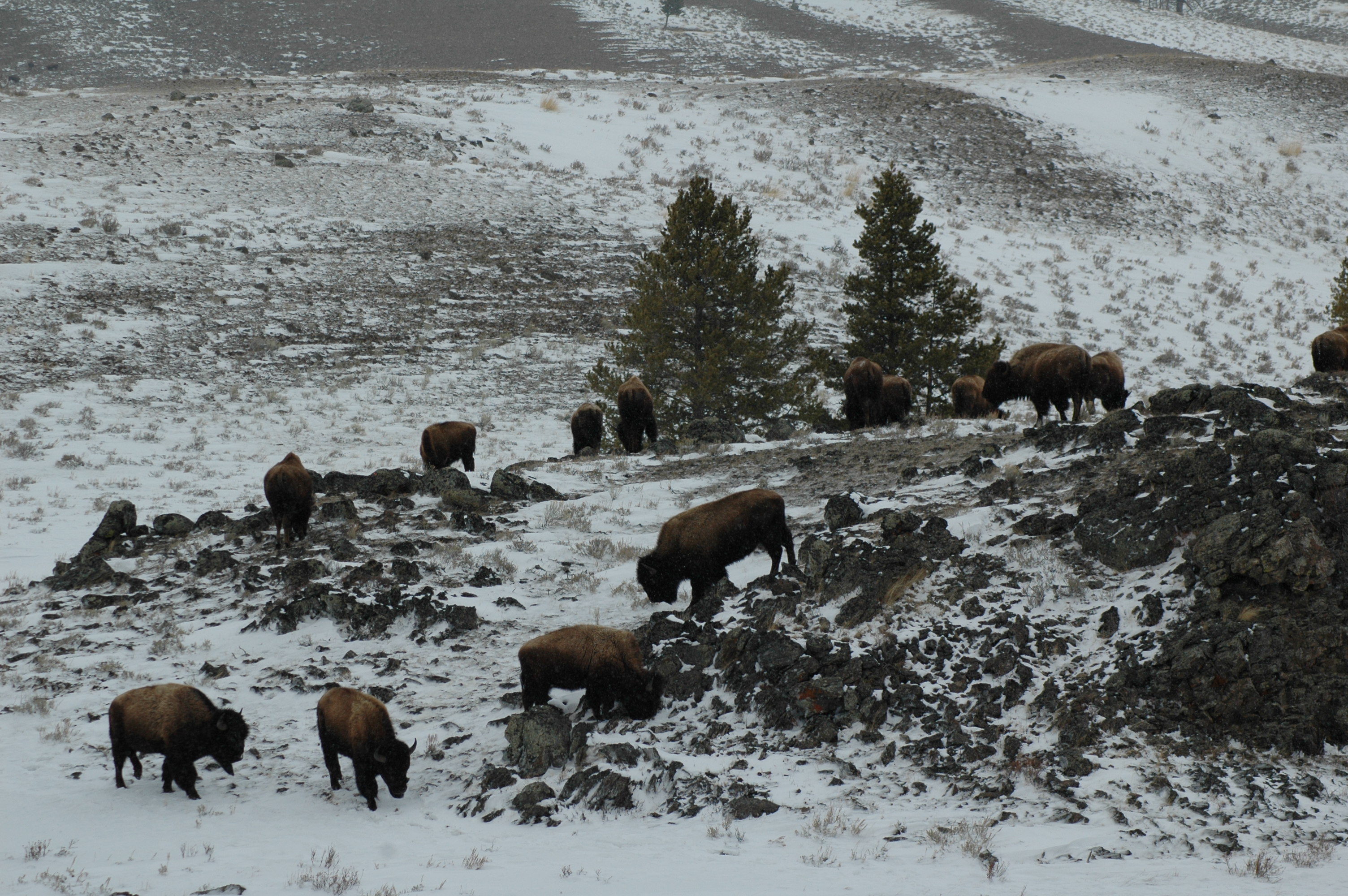
Although Yellowstone National Park is now synonymous with the shaggy bovines, bison would prefer to spend their winters much further downriver, on lands now usurped and fenced-in by cowboys to fatten-up their cattle before shipping them off to slaughter.

If today’s ranchers and hunters had their way, bison, along with wolves and grizzly bears, would be forever restricted to the confines of the park. Rancher-hunters already have such a death-grip on Montana’s wildlife that bison are essentially marooned and forced to stay within park borders, battling snow drifts no matter how harsh the winter, despite an instinctual urge to migrate out of the high country during heavy snow winters.

Instead of making amends for the historic mistreatment of these sociable, benevolent souls, twenty-first-century sport hunters want their chance to lay waste to them again–this time in the name of “tradition.”

______________________________________________

Parts of this post were excerpted from my book, Exposing the Big Game: Living Targets of a Dying Sport

Text and Photo Copyright Jim Robertson

Text and Photo Copyright Jim Robertson

Wildlife needs half of the planet to avoid ‘biological holocaust’

Photo Copyright Jim Robertson

Photo Copyright Jim Robertson

https://exposingthebiggame.wordpress.com/wp-admin/post-new.php

Wednesday, August 27th, 2014 By

A Pulitzer Prize winner and Harvard scientist has said that half of the Earth should be human-free and dedicated solely to the world’s wildlife In order to avoid mass extinction of species.

Prominent biologist and two times Pulitzer winner E.O. Wilson has suggested that half of our planet should be dedicated to the world’s animals, as the only way to avoid critical mass extinction.

85-year old Wilson is considered the father of sociobiology and is a leading expert in biodiversity. His work largely focuses on the extinction crisis and the role human societies played in mass extinctions of the 20th century.

Speaking to the Smithsonian Magazine, Wilson explained his ‘Half Earth theory’ to try stop what he calls a ‘biological holocaust’, the sixth mass extinction event caused by humans, which is wiping out species at an incredible pace.

Wilson said in the interview, “It’s been in my mind for years, that people haven’t been thinking big enough –even conservationists. Half Earth is the goal, but it’s how we get there, and whether we can come up with a system of wild landscapes we can hang onto.

“I see a chain of uninterrupted corridors forming, with twists and turns, some of them opening up to become wide enough to accommodate national biodiversity parks, a new kind of park that won’t let species vanish.”

As an example of effective wildlife protected corridor, Wilson named the Yellowstone-to-Yukon 2,000 miles conservation region, which covers an area from Wyoming in the US to the Yukon territories in Canada.

A study from earlier this year revealed that humans are causing species to disappear at 1,000 times the natural rate, mainly because of the destruction of habitats and hunting, in addition to the effects of manmade climate change.

Would You Help Save the Earth by Being Childfree?

http://www.psychologytoday.com/blog/complete-without-kids/201403/would-you-help-save-the-earth-being-childfree

Would You Help Save the Earth by Being Childfree?

Consider the environmental benefits of not having kids.

Most people consider whether or not to have kids based on lifestyle factors such as career goals, finances, and leisure time, but there’s another group of folks who are doing so primarily for environmental reasons.

This past summer, Time Magazine published a cover story about the childfree life that discussed why people decide to not have kids. Author Lauren Sandler wrote that the birthrate in the US is the lowest in recorded history and that the fertility rate actually dropped by 9 percent between 2007 and 2011. She cites cost ($234,900 to raise a child born in 2011 for a family earning less than $100,000 per year) as a major factor in this decline. Careers are also impacted, especially for women, who may lose out on as much as a million dollars because of lost promotions and other missed opportunities in the workplace that result from taking time off to raise kids.

Sandler also points to the sense of freedom that comes from being childfree. Childfree adults have an abundance of time to spend with friends and family, at their jobs, and on their own leisure activities and self-care.

 But there’s a third factor that Sandler neglected to discuss in her popular article—the green angle. Lisa Hymas, writer for Grist.org, wrote about this in a follow-up to the Time story. Hymas points out that the global population is now at 7.1 billion and is projected to reach 9.6 billion by 2050. That’s a lot of people stressing an already exhausted earth. She cites a Global Environmental Change study that boldly discusses the impact of each child on the earth.

The bottom line from this research is that all of the environmentally conscious deeds a person may do — recycling, riding the bus, etc. —  pale in comparison to not having a child. As Hymas states, “The climate impact of having one fewer child in America is almost 20 times greater than the impact of adopting a series of eco-friendly practices for your entire lifetime.”

Hymas is in the lead in her willingness to boldly address this controversial issue and to encourage potential parents to consider the future of the earth when contemplating their own future. Bringing these issues to the forefront may lead them to forego having a child or to adopt instead.

Would you choose to not have kids primarily for the good of the environment? And if you wanted to be a parent, would you choose adoption for this same reason?

safe_image

Albania to Enforce a Two-Year Ban on All Hunting

http://www.natureworldnews.com/articles/5878/20140204/albania-enforce-two-year-ban-hunting.htm

By James A. Foley Feb 04, 2014

Hunter at Selawik National Wildlife Refuge

Albania’s government will impose a two-year moratorium on all forms of hunting in an effort to protect endangered species, according to media reports. Pictured is a hunter at Selawik National Wildlife Refuge, USA.  (Photo : US Fish and Wildlife Service )

Albania’s government will impose a two-year moratorium on all forms of hunting in an effort to protect endangered species, according to media reports.

Earlier this year, Albania’s environment minister Lefter Koka said the government was considering a two-year hunting ban after the numbers of wild animals in the European nation reportedly decreased significantly.

Albania says the move is drastic, but necessary to protect its animals, including endangered species such as brown bears and eagles.

“We have been forced to adopt strict measures to protect endangered species from illegal hunting,” Koka said, according to an AFP report Tuesday.

Albania is a popular European hunting destination, the AFP reported, noting that hunters from Italy travel to Albania by the thousands largely because of the nation’s relaxed and poorly enforced hunting regulations. Many of these foreign hunters participate in the activity illegally.

The hunting ban will be initiated later this month, the AFP reported.

“This is a drastic measure but necessary in order to stop the further degradation of  wildlife, which is now at a critical minimum, and to impose controls on hunting activities that have been lacking for the last two decades,” Kolka said in January.

Kolka blamed illegal hunting, the large number of hunting weapons in the country and the government’s inability to collect fines as the reason 30-50 percent of the species allowed to be hunted in Albania have faced drastic population declines, according to the website Balkan Insight.

“There are 75,000 registered hunting rifles in Albania, as well as a large number of illegal automatic weapons,” Koka said.

“Although the legal framework for the protection of wildlife has been improved over the last few years, the data unveils a situation that can only be restored through an emergency moratorium on hunting,” Koka added.