Hunters: the More you Harvest, the Faster they Breed

1897936_534225470025483_669736540_n

The hunter population has gotten out of control and it’s time to do something about it.

Certain do-gooders have envisioned a policy of targeting only the males and displaying their manly parts above the fireplace or barn door as trophies. Other self-appointed regulators submit that that would unfairly skew the sex ratio of the species, especially in light of the rapidly increasing epidemic of female hunters. They suggest the best way to ease the overpopulation of hunters is to sell tags for both sexes. To recruit more hunter hunters, children aged ten or younger would be encouraged to join in the cull.

But, unfortunately, the notion that we can control their numbers through regulated harvest is a myth. The more you take down, the more their survivors breed to make up for their losses.

What Goes Up…

To all those of breeding age who are considering starting a family or adding yet another human child to this already dangerously over-crowded world, I politely urge you, with all due respect, to please think again. If not for the fragile planet’s sake or for the sake of every other struggling life form headed for mass extinction, then for the child’s sake, your sake and for sanity’s sake. Go ahead and adopt, whether human or non-human, but please don’t add to every environmental woe known to—and caused by—man by falling prey to the ill-advised notion that propagating is our duty or prerogative.

The world as we know it is headed for collapse. Do you really want your precious offspring to witness the unraveling of all of Earth’s systems or suffer the reckoning that’s soon to befall those unfortunate enough to be here when humankind’s self-serving environmental crimes come back on them? Can’t you see that the sheer weight of the human race is crushing everything and everyone else?

As a good friend, a young woman wise beyond her years, put it, those who consider reproducing to be a positive prospect for the twenty-first century “must be closing their eyes, plugging up their ears, and singing ‘Lalalala!’ very loudly.”

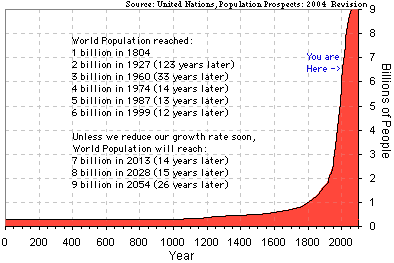
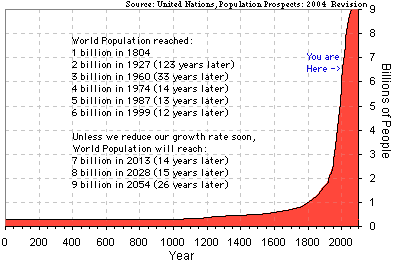
What goes up must come down, people; and for the past couple of hundred years or so, the human population has been accelerating skyward—breaking all sound barriers in a headlong quest to defy gravity, burst out of the Earth’s atmosphere and sail on to oblivion—taking all of creation with it.

graph

2013: The Year of the Big Backslide?

The year of our lord, 2013, could be known as the year of the big backslide, at least in terms of attitudes toward animals and the environment, as well as the general acceptance of scientific fact.

For example, CBS News reports that the number of Republicans who believe in evolution today has plummeted compared to what it was in 2009, according to new analysis from the Pew Research Center. A poll out Monday shows that less than half – 43 percent – of those who identify with the Republican Party say they believe humans have evolved over time, plunging from 54 percent four years ago. Forty-eight percent say they believe “humans and other living things have existed in their present form since the beginning of time,” up from 39 percent in 2009.

I can’t help but think this is because many people still aren’t comfortable admitting they’re animals. And this supremacist attitude is reflected in everything they do in regard to our fellow species.

Anyone who has been following the wolf issue since gray wolves were removed from the Endangered Species List in a handful of backward states has certainly noticed a rapid backslide pertaining to how wolves are perceived, treated and “managed” by those bent on dragging us back to the dark ages for animals—the Nineteenth Century—when concepts like bounties, culls and contest hunts were commonplace. Hunters and ranchers in the tri-state area surrounding Yellowstone National Park, as well as in the Great Lakes region, are doing everything they can to resurrect the gory glory days of the 1800s, and wolves are paying the ultimate price.

Meanwhile, in spite of great efforts to educate people about the myriad of problems associated with factory farming and the dependence on meat consumption in an ever more crowded human world, the number of ruminants raised for food on the planet today is at an all-time high of 3.6 billion, double what is was 50 years ago. Regardless of or our burgeoning human population, not only do we have a chicken in every pot in this country, we now have cow and sheep parts in every freezer and pig parts in practically every poke. This, of course, is all thanks to ever-worsening living conditions for farmed animals.

Professor William Ripple and co-authors of a research paper, “Ruminants, Climate Change, and Climate Policy,” prepared in Scotland, Austria, Australia and the United States, noted that about 25 percent of the earth’s land area is dedicated to grazing, and a third of all arable land is used to grow food for livestock, according to the report. Reducing the number of cattle and sheep on the planet, and thereby reducing the methane gas emissions they produce, is a faster way to impact climate change than reducing carbon dioxide alone, the report concluded. The researchers concluded that greenhouse gas emissions from cattle and sheep are 19 to 48 times higher per pounds of food produced than the gas emitted in the production of plant protein foods such as beans, grains or soy.

To get an idea of how unnatural and unsustainable 3.6 billion large ruminants is, think back to when vast bison herds blackened the plains. At that time there were only 50 million bison in all of North America. There are over 300 million human beef-eaters in the United States, every one of them expecting to see a fully stocked steak house, Subway or McDonald’s on every street corner.

Meanwhile, the media’s busily cooking up a spin to answer to meat’s culpability in this planet’s climate crisis. Articles on how methane from grass-eaters is a primary greenhouse gas are often accompanied by the suggestion that pigs and chickens don’t produce as much. In other words, don’t worry your little meat-addicted heads if this beef-cow-causing-global-warming thing becomes a recognized issue, you can just switch over to other non-ruminants’ carcasses—no one really expects you to become a vegetarian, after all.

One of the most outrageous spins ever concocted aired on a “Ted Talk” just last March. Allan Savory, a former Rhodesian provincial Game Officer, has been spreading the counterintuitive notion that to control desertification and stop global warming we need to turn even more cattle out onto arid land. This notion comes from a man who, as late as 1969 advocated for the culling of large populations of elephants and hippos because he felt they were destroying their habitat. Savory participated in the culling of 40,000 elephants in the 1950s, but he later concluded it did not reverse the degradation of the land and called the culling project “the saddest and greatest blunder of my life.” Now he’s trying to sell us on another blunder with even more destructive consequences. What will this guy do for an encore? Never mind, I don’t want to know.

Speaking of Africa, 2013 saw the fastest growing and second most populous continent on its way to adding another billion people to the planet. By the end of this century, 3/4 of the world’s growth is expected to come from Africa, and projections put its population at four billion—one billion in Nigeria alone. Most African countries will at least triple in population, as there are very high fertility rates and very little family planning in most regions. No one is quite sure how the continent will provide for that many hungry humans; only time will tell.

And even though China’s overwhelming population is already well past a billion, in 2013 they abandoned their one child policy and affectively doubled it by implementing a two child policy at the stroke of a pen.

Sorry, but this shit is scary, at least if you care about the plight of non-human species on this planet. Sure, cultural diversity is important—to people. But it sure as hell doesn’t trump biological diversity in the scheme of things. Regardless of what you may or may not believe about whether we were created in the image of a god, life on Earth as we know it will not go on if we humans are one of the only species left around.

The coming decades are going to test just what Homo sapiens are made of. Are we progressive and adaptable enough to learn to share the planet with others and become plant eaters, as some people have? Or is our incessant breeding and meat consumption going to put us into an all new classification—planet eater?

1535443_10151792030721493_1254752217_n

“Time” Has it Backwards, People Are the Pests

By now, many of you have seen the outrageous Time magazine article egotistically entitled, “America’s Pest Problem: It’s Time to Cull the Herd.” If so, you probably shared my first reaction, which was:

How haughty to label the recovering animal species from whom we stole this land “pests” whenever they cross paths with the real pests, the most overpopulated and rapidly expanding, exploitive, environmentally reckless, imperialistic, pretentious, self-centered, self-important, self-aggrandizing, stuck-up, conceited, condescending –in a word, arrogant—urchins ever to emerge from the primordial ooze, namely humans.

As ethologist Marc Bekoff wrote in a recent blog post,
“There are so many things that are profoundly disturbing in [the Time magazine] essay I’m not sure where to begin or just which points to highlight. Some of the messages I received had quotes from this essay that at once shocked and saddened me. Kill, kill, and kill some more; that’s the only solution for righting the wrongs for which we — yes, we — are responsible. We move into the homes of other animals and redecorate them because we like to see them or because it’s “cool” to do so, or we alter their homes to the extent that they need to find new places in which to live and try to feel safe and at peace. And then, when we decide they’ve become ‘pests’, we kill them. Yes, technically we cull them, but of course the word ‘culling’ is a way to make the word ‘killing’ more palatable. To many people this sanitizing mechanism — using culling instead of killing — is readily transparent. But, a subtitle like ‘It’s Time to Kill the Herd’, would likely offend many people who find it difficult to grasp that that’s what we do – we kill other animals with little hesitation absent any data that this really works.

“We treat them as if they’re the problem when, in fact, whatever ‘problems’ they pose can most frequently, some might say invariably, be traced back to something we did to make them become ‘problems’.”

Well, I’m one of those who would definitely say “invariably.” On the other hand, I’m not real comfortable with the “we” part. Personally, I don’t consider the wildlife to be “pests,” I don’t fear them and I do not kill them. Ultimately, I don’t consider myself superior to the other animals.

Bekoff also writes, “Until we confront the indisputable fact that there are too many of us, we and other animals are doomed.” Talk about uncomfortable… Actually, my wife and I faced that fact decades ago and consciously chose not to add any more children to the burgeoning human horde.

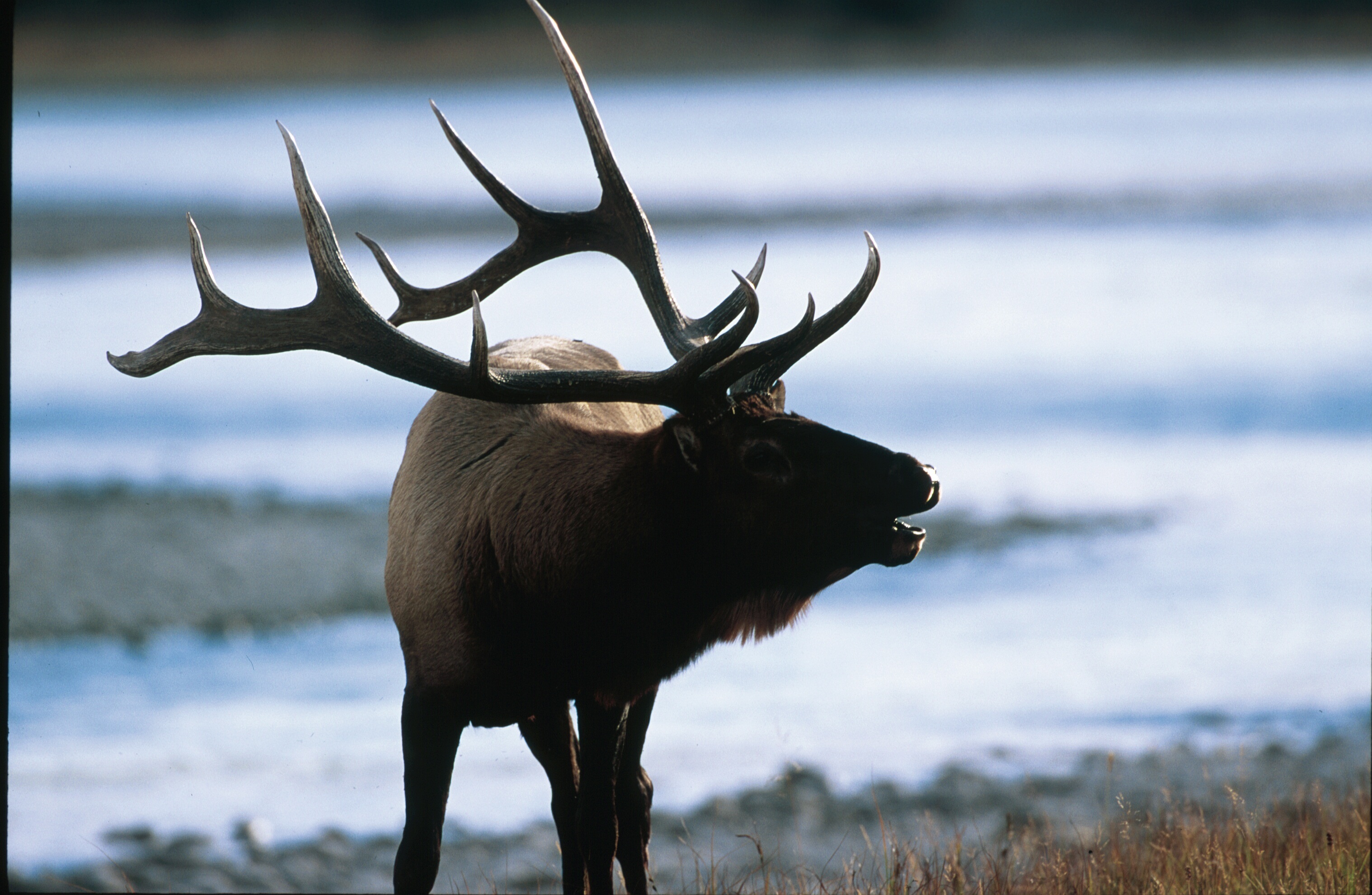
The problem where we live is that, though we’re surrounded by prime habitat which we’ve left wild for the wildlife, we rarely see the deer, elk and bears who’ve had to adapt to locally rampant hunting and poaching pressure by only coming out of the heavy forest at night. The last thing the animals around here need is for Time Magazine to come along and promote more hunting!

Text and Wildlife Photography ©Jim Robertson, 2013

Text and Wildlife Photography ©Jim Robertson, 2013


Here’s Something REALLY Scary!

Center Op-ed: Dear 7 Billionth  Baby

BabyToday isn’t just Halloween — it’s the  second anniversary of the world’s population reaching 7 billion people. A  lot has happened in the first two years of Earth’s 7 billionth baby: The human  population keeps growing, each person leaving a little less of our planet’s  limited resources for other species (with some consuming more than others —  we’re looking at you, fellow Americans).
Stephanie Feldstein, the  Center’s new Population and Sustainability director, has a new op-ed in The  Huffington Post in honor of Baby 7 Billion’s 2nd birthday. It takes a close  look at our growing environmental footprint, and imparts some early wisdom for  the landmark babe on living as sustainably as she can throughout her years  ahead.
“You’ll make choices throughout your life — from what you eat to  where you live to how many kids you have — that will help or hurt other  species,” writes Stephanie. “It’s up to you to make sure future generations  don’t know polar bears and panthers only as stuffed animals.”
Read  Stephanie’s whole op-ed in The Huffington Post and sign up for our monthly  newsletter Pop X.

http://www.biologicaldiversity.org/news/center/articles/2013/huffington-post_10-24-2013.html

Columbus Day: Humanists’ Holiday, Misanthropists’ Lament

No matter how you celebrate it, Columbus Day is a holiday for humanists. By “humanist,” I’m referring to “the concern with the needs, well-being, and interests of people.” Non-humans be damned, this holiday is a celebration of and for “people.”

Some who don’t like the moniker “Columbus Day,” (because of the implication that Columbus “discovered” the Americas and consequently set off the chain of events that led to the demise of the “native” Americans) want to see the name of the day changed to “Explorer’s Day,” or some such. The problem to us biocentrists is that any branching out and exploring of new territory by human beings, arguably the most destructive of all species ever unleashed on the planet, bar none—including the unwieldy dinosaurs—has resulted in the extinction or damn-near eradication of untold other incredible species.

Others want the name changed to “Native American Day,” conveniently ignoring the fact that the first Homo sapiens to make it over here (in their case, across the Bering Land Bridge), were big game hunters who followed their migratory prey species and laid waste to all the isolated, uncorrupted animals they could train a spear on. Animals like horses, camels, ground sloth and mastodon were victims of the “American Blitzkrieg,” the first stage of our ongoing anthropogenic mass extinction event.

No, to those of us who delight in the diversity of life on Earth and pine for the good old days, before the noxious spread of humanity, any day celebrating discovery for the species is a day of grief and sorrow, not festivity.

00-intro

Enough about the “Royal Baby” Already!

If there’s one thing we Americans understand, it’s that royalty isn’t a birthright, it’s a financial status.

A baby is born every 8 seconds—what’s the big deal about this one? Sorry, but to us the so-called “Royal Baby” is just another of the 3,000 human offspring born into this world every 20 minutes (meanwhile, during the same 20 minutes, another plant or animal becomes extinct—27,000 species each year). The majestic brat is really only one more of the hundreds of thousands of little darlings born that day, or the 1.5 million people born every week.

(That’s like adding a city the size of Phoenix or Philadelphia. In just one week! And around the world right now, one in ten people lack access to clean drinking water, one in eight doesn’t have enough food to eat, while one in five lives on less than $1 a day.)

According to the Population Clock, there will be 125 million births in the world this year. By the time this group is ready to start school, there will have been at least another 625 million new humans born.

In light of all this, the birth of the “royal” baby hardly seems newsworthy.

graph

Hunt the Hunters

Here’s a classic vintage quote from the late Cleveland Amory, founder of the Hunt the Hunters Hunt Club…

“Our position is simply this: we want to do for the hunter what the hunter does for the animal–shoot him for his own good! Now, I admit that some hunters are so shortsighted they don’t realize we’re doing this just for them. It must be made clear that hunters are breeding like flies, overcrowding the fields, damaging the forests. But our club isn’t trying to exterminate them; we’re just trying to thin the herd.”

20130609-185147

Chronicling the End, Part 1

The End. Everybody has one. Some are nicer than others. The end is not necessarily a bad thing, just an inevitability. What goes up must come down, but the end of one era can be a new beginning for another. Not all endings are unwelcome.

For instance, while the NRA and the Safari Club view the end of hunting as a bad thing, it would actually spell the beginning of a more agreeable era for wildlife—a time when human beings treat animals with respect and compassion, rather than objectifying and maltreating them.

Just as the end of winter brings the promise of spring, the end of the Anthropocene age will bring hope for new life to flourish.

Now, rumor has it there are those who think I’m too negative when referring to the future of humankind. But although I’m a realist when it comes to the future of our species (or rather, the lack thereof) I don’t secretly hope for the violent demise of humanity. If I hope for anything, it’s that people will learn to accept new ways of living lightly on the planet that include eschewing meat, treading softly rather than stomping out gargantuan carbon footprints everywhere, and of course, voluntarily reducing our population in a big way.

Barring that—and if Homo sapiens continues on the currently charted course—then I’m afraid to say I feel the species’ days are numbered. Call me Malthusian (as detractors call Paul Ehrlich for his theories outlined in The Population Bomb), but I’d have to say Thomas Malthus was far ahead of his time when he published the essay, Principle of Population in 1798, wherein he wrote:

“The power of population is so superior to the power of the earth to produce subsistence for man that premature death must in some shape or other visit the human race. The vices of mankind are active and able ministers of depopulation. They are the precursors in the great army of destruction, and often finish the dreadful work themselves. But should they fail in this war of extermination, sickly seasons, epidemics, pestilence, and plague advance in terrific array, and sweep off their thousands and tens of thousands. Should success be still incomplete, gigantic inevitable famine stalks in the rear, and with one mighty blow levels the population with the food of the world.”

It’s hard to believe that Malthus saw all that as far back as 1798. Even harder to believe is that his predictions have not yet come true. The only two things preventing a “Malthusian catastrophe” are technology and mechanization—neither of which I have much faith in. Now, before you go accusing me of being negative, a pessimist or worse, a misanthropist, at least give me credit for seeing the silver lining in every instance. Why, just today I spotted the following article sharing the uplifting news that “Bird flu brings windfall for businesses”…

BEIJING, April 22 (Xinhua) — A new strain of bird flu that has been spotted across China has brought vegetable dealer Xu Jialiang mixed feelings.

For Xu, who has been selling veggies for 20 years in Wuhan, capital of central China’s Hubei Province, the virus is a cause for concern, but also a commercial opportunity.

“Cabbage that was once left to rot has become a hit,” said Xu, adding that he recently sold more than 50 tonnes of cabbage in a single day, double the amount he was selling just two months ago.

“People have become more reluctant to eat poultry, so vegetables have become much more popular,” he said.

The Wuhan municipal bureau of commodity pricing said vegetable prices have surged since the end of March.

The first human H7N9 infection was reported in late March. A total of 102 cases have been reported to date, resulting in 20 deaths.

The poultry-raising industry, restaurants that sell poultry and even producers of shuttlecocks, which are made using bird feathers, have been impacted by the virus.

Figures from the China Animal Agriculture Association showed that direct economic losses for broiler chicken breeders have exceeded 3.7 billion (593 million U.S. dollars).

However, other sectors have been boosted by the virus’s arrival. In addition to vegetable vendors, sellers of traditional Chinese medicine (TCM) have also profited.

At the Zhangshu TCM Wholesale Market, a major TCM market in east China’s Jiangxi Province, the purchase price of processed isatis root surged from 13 yuan per kilo to 22 yuan after health experts claimed that the root can prevent infection.

Lei Da, head of the purchase department at Zhangshu Tianqitang TCM Co., Ltd., said processed honeysuckle, which some have claimed can prevent bird flu, sold out after the infections were reported.

Lei said the company is watching the status of the epidemic closely to decide whether it will increase its stores of the two items.

Insurance companies are also using the virus as an opportunity to boost income. Ping An Insurance, one of China’s largest insurance companies, is selling bird flu insurance that offers 20,000 yuan in compensation if an insurant is confirmed to have become infected. Other companies, such as Taikang Life and Sinosafe Insurance, are also offering bird flu insurance.

However, health experts say poultry products are still safe to eat as long as they are purchased through regulated channels and are thoroughly cooked.

Li Lanjuan, an academic with the Chinese Academy of Engineering, said the virus is sensitive to high temperatures, ultraviolet rays and several kinds of sanitizer.

She ate chicken meat in front of reporters last week to dispel public worries.

“The virus will be killed in two minutes after the temperature reaches 100 degrees Celsius or half an hour if the temperature is 60 degrees Celsius,” said Li.

If Mr. Malthus were here today I’m sure he’d agree that the act of eating Chinese chicken (even if purchased through regulated channels) is one of those “vices of mankind” and an active and able minister of depopulation. …

Consider this the first installment of a new series which will chronicle the ways in which humans are instigating their own undoing. I’m considering starting a new blog and/or book “Chronicling the End,” depending on the feedback I receive. If you like the idea, “Like” this page, or leave a comment below…

Text and Wildlife Photography ©Jim Robertson, 2013. All Rights Reserved

Text and Wildlife Photography ©Jim Robertson, 2013. All Rights Reserved
Honor Thy Father and Mother—Especially When They’re Right

Last August I wrote a post titled “Honor Thy Father and Mother, Except When They Misbehave,” wherein I argued to those who say, “But my father was a hunter!” Well, so? Look at all the other outdated activities or attitudes we’ve turned our backs on—slavery, racism, sexism all went out of fashion without anyone arguing, “But my father was a racist, sexist, slave owner!” What’s so sacred about hunting that makes it any harder to kiss goodbye than any of our parent’s other wrong-headed behaviors?

On the other hand, I feel sorry for today’s youth whose parents lived during more enlightened times; they really have to work at finding things to rebel about. Lately we’ve been seeing a disturbing new trend: some of today’s young people, who were raised in caring homes by non-hunting parents, are embracing hunting out of some kind of misguided sense rebellion for rebellion’s sake.

Hey kids, if you feel an overwhelming urge to lash out against your parents, please don’t take it out on the animals. Turning to hunting does not make you hip, it makes you an animal abuser, like the budding future serial killer who throws rocks at birds or smashes frogs on the pavement.

(Note to prospective parents: Don’t fool yourself into thinking you can bring a new human into this world and expect to shape their way of thinking—it doesn’t often work out the way you might hope).

As I blogged in a post last July entitled, “The ‘Euphoria’ of Killing,” one young female hipster in her 20s, who decided to go against her progressive parents’ wishes and take up hunting for the first time, wrote of her first kill: “It felt incredible. It really felt pure. Like euphoria to me. It was just this amazing rush of excitement and pride and relief, and I know this word gets overused a lot, but it was empowering. I didn’t believe I had it in me to do that. It shocked me.”

Sure, it’s always shocking when someone learns they get a thrill out of killing. There’s nothing like getting in touch with your inner psychopath, I guess. The hedonistic huntress goes on to relate that she was surprised she didn’t feel much guilt afterwards… Though rarer than their male counterparts, female psychopaths share the same trademark characteristics: a lack of empathy, remorse or guilt.

Part of the case for killing made by modern-day barbarians (or “foodies,” as they sometimes refer to themselves) is that hunting wildlife is a “sustainable” way to feed oneself. The problem is, there’s more than just ONE self in need of feeding.

Since these issues keep coming up, I’m going to share yet another paragraph from an earlier post, this one depicting what would happen on “The Day Seven Billion People Decided to Hunt Their Own Dinner:”

By the end of the day, the bloodlust is satiated, but the Earth is virtually a lifeless wasteland; every animal species has been hunted practically to extinction. Only now do the masses look around for a fresh, new answer. They’re ready to listen to a vision for a truly sustainable future that doesn’t involve killing animals for their dinner.

304224_10150323421256188_1151389461_n