


Before I was an animal rights activist, I was a budding human rights activist. While in law school, I helped victims of domestic violence obtain personal protection orders. I studied human rights and refugee law, participated in an asylum clinic, spent all my summer legal internships working with refugee organizations and focused primarily on helping women who were victims of gender-based persecution and violence such as honor crimes, forced genital mutilation, sex-trafficking, and rape.
My first client let me touch the shrapnel that was embedded under the skin in her knee after the Taliban had bombed her village in Afghanistan and killed most of her family. I also represented men when they were in need, like the gentle Congolese man who had been tortured, and had the marks on his body to prove it, because of dubious ties to the wrong political party.
Refugees and victims of gender based violence are an incredibly vulnerable and deserving group of humans. Many of them have no family, no country. Many live their lives in fear. Without the help of international aid groups and non-governmental organizations, they are at constant risk of exploitation, abuse, persecution, homelessness, and death. And yet, I have chosen to dedicate myself and my life to the animals.
I’m sure every animal activist has been challenged on this point: “How can you waste your time on animals when there are so many humans suffering?!” “Why don’t you start with the humans, and when all of our problems are fixed, then you can help animals?”
Of course this is the dominant mentality, based on a presumed superiority of humans, so much so that the slightest harm to a human is often seen to outweigh a tremendous harm to an animal. Given that the capacity to suffer is in no way limited to human beings, this bias in favor of humans is simple prejudice, favoring those we perceive as similar over those we perceive as different and therefore inferior, the hallmark of all discrimination and oppression.
I desperately wanted to help but didn’t know how I could possibly choose between helping the people in third world countries living in extreme poverty, and the millions of children under the age of five dying every year from malnutrition, or the victims of ethnic and religious wars that so brutally claim the lives of innocents at any given time in modern history, genocides like that in Rwanda, Bosnia, Darfur, atrocities taking place right now in Libya, Syria and Yemen. Millions of people, mostly women and girls, are bought and sold into the world of sex trafficking every year to endure unspeakable crimes. And then there are the animals being used for painful and often cruel experimentation in laboratories, the fur-bearing animals like the playful foxes who are killed by anal electrocution so as not to damage their fur or the Chinese raccoon dogs who are routinely skinned alive in order to make knock off UGG boots or for the cheap fur trim on our winter coats. [1]
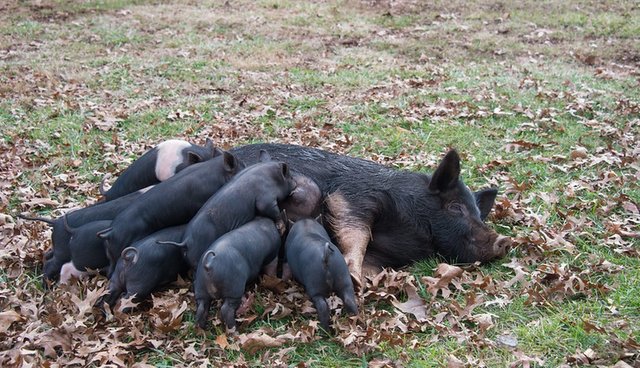
But the number of all of these animals combined is a drop in the bucket compared to the 55 billion farmed animals we kill every year for food. Fifty five billion animals. The entire global human population is about 7 billion, and we kill 55 billion animals every year for food. Each and every one of those fifty five billion was an individual with the capacity to have bonded with family and friends and to have led a joyful life like the rescued pigs seen in this video but who instead led a life of intense misery and often sadistic exploitation before enduring the terror and pain of slaughter.
All of these human and nonhuman beings suffer terribly. All of them are worthy of our compassion. I have always wanted to help them all. I still do. But the reason I choose to dedicate the majority of my time to advocating for nonhuman animals rather than all of those deserving humans is that we as a society all basically agree on human rights.
When I say we as a society, I do not mean the moral outliers of the international community like members of ISIS, or those in our own society like rapists or serial killers, but those who represent the dominant ethic in the world community, the law abiding members of our society and the international community. And according to that dominant ethic, it is wrong to abuse woman and children. It is wrong to murder innocent men. When we see humans who are starving or being exploited, raped, kidnapped, murdered or tortured, we believe it is wrong. Most governmental bodies around the world, non-government organizations (NGOs), and individuals agree that it is wrong to cause intense physical or emotional pain and suffering to human beings. We criminalize such harm, and we punish those who commit these crimes.
Even those of us who shower our dogs and cats with affection do so while sitting down to feast on a meal comprised of the body parts of equally sentient beings whose entire lives were spent in suffering. As a society, we still do not see what we’re doing to animals as wrong. While all animals in our society are still legally considered property, at least abusing dogs and cats is now a felony in all fifty states. However, what is felony cruelty if done to a dog or cat is perfectly legal if done to an animal we have designated as a food animal. [2]
We not only kill 10 billion land animals in the US every year for food, (55 billion globally) it would not be an exaggeration to say that we torture them for the duration of their short lives before we kill them. We confine them in tiny cages that drive them literally insane. [3] We take babies away from their mothers and murder them by the millions (e.g., we kill 260 million baby chicks every year because they are a “by-product” of the egg industry). [4] Dairy cows are impregnated on what the industry calls a “rape rack” in order to ensure the cow will continue to lactate and provide milk that will be denied to her baby, who will be taken away at birth. If that baby is female, she will become a dairy cow and like her mother, she too will be forcibly impregnated, and then after giving birth to four or five babies and milked so much the odds are she will suffer from a painful udder infection called mastitis, she will be slaughtered at a fraction of her natural lifespan when her body becomes too depleted to continue producing milk at the volume modern agribusiness demands. If the baby the dairy cow births is a male, he will either be killed on the spot, or turned into veal (i.e. confined all alone in a dark pen and fed an iron deficient diet to make him anemic because consumers prefer the taste and color of meat that comes from anemic babies). [5]
If we have ever lived with a dog or cat, we probably know this from experience. If we need proof, we can ask the scientific community. In 2012, a prominent international group of cognitive neuroscientists, neuropharmacologists, neurophysiologists, neuroanatomists and computational and neuroscientists gathered at The University of Cambridge and declared that nonhuman animals are conscious – meaning they can think, feel, perceive, and respond to the world in much the same way as humans. [6]
It is hard to measure pain. Usually with humans we just ask them how much pain they feel and they tell us. But when they can’t tell us, we look for external signs of pain such as trying to get away from the source of pain, vocalizing (yelling, crying), grimacing or shaking to name a few. Nonhuman animals demonstrate all of these same signs. If we can bear not to look away, it is plain to see that the egg laying hens crammed into battery cages, or the sows confined to gestation creates so small that can’t turn around, or the dairy cows being dragged to slaughter because they are too lame to walk all suffer tremendously.
Just a few hundred years ago, Rene Descartes, the father of western philosophy, strapped living dogs to tables and cut them open without anesthesia believing that their howls were like the sounds made by machines, no more indicative of pain than was the screech made by the machine’s metal parts. Hard to imagine, that. And yet today even on so called humane farms, we routinely subject cows, pigs, chickens, turkeys and other farmed animals to mutilation without anesthesia. [7] If we think what Descartes did was wrong, how can we possibly condone what we do to farmed animals every single day? There is no reason to believe that a dog feels more pain than a pig or for that matter that a human feels more pain that a dog. Some, like evolutionary biologist Richard Dawkins, think non humans may even feel pain more acutely than humans do. [8] In fact we are so certain that nonhuman animals do feel pain like humans do that we subject animals like mice to pain tests in labs in order to better understand human pain. [9]
The United States Department of Agriculture (USDA) estimates that at least a million chickens and turkeys are boiled alive every year because the production line is so fast that their throats haven’t been slit by the time they get to the tanks of scalding water into which they are dropped, only to be boiled alive. [10] More than 1 million pigs die in transport every year before they even get to the slaughterhouse. [11] They are packed in so tightly they cannot move, and can barely breathe. They die of suffocation, overheating, being trampled.
The suffering of animals we use for experimentation, for fur, for our food is shocking to the conscience. Watch one undercover slaughterhouse video and we might think the vile cruelty we see is an anomaly. Watch hundreds and hundreds of these videos and we begin to realize that the disdain with which the workers treat the animals, kicking chickens like footballs, [12] kicking and stomping turkeys destined for Thanksgiving dinner, [13] slamming piglets onto the concrete floor and leaving them to die, [14] is not anomalous but is the norm.
Polish-born Jewish-American author Isaac Bashevis Singer famously said “In relation to [the animals], all people are Nazis; for the animals it is an eternal Treblinka.” This refers of course to the Nazi concentration camp where close to a million Jews were exterminated in gas chambers. The first time I ever heard the comparison made between factory farming and the Holocaust was by someone who lost most of his family in the Holocaust and who himself is a survivor of it. Alex Hershaft is an animal rights pioneer who has said that his experience in the Holocaust not only contributed to his becoming a vegan and an animal rights activist, it is the cause of it. During a recent trip to Israel, he had this to say in an interview:
“The Jewish Holocaust is a unique event in human history; and the best way to honor the Holocaust is to learn from it and to fight all forms of oppression. We may have been victorious in World War II, but the struggle against oppression and injustice is far from over. For me, the Holocaust isn’t a tool in the struggle, but an experience that shaped my personality and my values, made me who I am today, and drove me to fight all forms of oppression, including the oppression of the weakest creatures, the animals.” [15]
In his latest book, “The Most Good You Can Do,” one of the modern world’s pre-eminent philosophers of ethics, Peter Singer, argues that if we are interested in doing the most good we can do in the world, that is, in reducing the most suffering, there are three main areas that demand our attention. These are saving the environment, ending extreme poverty, and helping the nonhumans animals, especially farmed animals.
In addition to its importance for the nonhumans, vegan advocacy goes beyond helping nonhuman animals. Vegan advocacy seeks to raise consciousness and awareness about the ways in which we treat other beings. The animal rights movement does not just advocate for a select group of beings, it advocates for principles truly universal in their scope.
They bring awareness to structures of power that are oppressive and based on exploitation, that harm nonhuman animals, humans, and the environment. Veganism is rooted in the concept of ahimsa, a Sanskrit word meaning non-harm to all sentient beings as well as the living environment. It is a movement that above all values the reduction of suffering, and calls on us all to bring more awareness into the ways in which we relate with all beings, the nonhumans as well as humans. Fundamentally, vegans advocate for the values that all social justice movements uphold. They focus on the nonhumans, but what they are really advocating for is a society in which no sentient being is used as a means to another’s end. They are fighting for the elimination of all forms of prejudice and oppression. They work to build a world where no sentient being is discriminated against based on morally irrelevant qualities, where all beings are valued and respected, where none are enslaved or tortured, where all beings are allowed the freedom to thrive and pursue their own innate potential for happiness and joy. As long as our society is built on a foundation of brutality, oppression and exploitation of billions of sentient beings, how can we ever hope to have true justice or compassion within human society?
In the world we live, there is no comparison to the enormity of the suffering endured by the nonhuman animals, especially those enslaved by the meat, dairy, and egg industries. I am an animal advocate because the screams of billions of animals remain unheard. I am an animal advocate because no being should suffer, and the suffering of nonhuman animals is so intense, so constant, so massive, and so widespread. I am an animal advocate because humanity is still in denial that it is our own daily choices that are responsible for the immense suffering of a truly unfathomable number of conscious, emotional, sentient beings. I am an animal advocate quite simply because it is the animals who need me the most.
[11] “Research Looks at Transport Losses,” Feedstuffs Apr. 17 2006.
Top photo: Pigs living out their lives at the wonderful Poplar Spring Animal Sanctuary in Poolsville, MD.

NRPLUS MEMBER ARTICLE M ichael Moore and Jeff Gibbs have released a new movie. Entitled “Planet of the Humans,” the film examines the question of whether “green energy” can “save the planet” from global warming. Their answer is an unequivocal “no.” Instead, a more effective final solution is needed for the human problem.
Planet of the Humans has been received warmly by many on the right, and coldly by much of the left, because it forcefully attacks wind, solar, and especially biomass as false solutions to the energy needs of industrial civilization. The film is replete with images of giant solar energy projects built a few years ago with much hullabaloo at taxpayer expense now lying around as fields of junk, rusting broken wind turbines, and devastated forests. It does not hesitate to show how pitiful the energy yields and CO2 emission reductions from such projects have been. It is merciless in portraying Al Gore, Bill McKibben, the Sierra Club, and other noteworthy green energy promoters as profiteers, scamming the public while destroying the environment for personal greed. As a cinematic hit job on the green-energy movement, it is without peer.
That said, Planet of the Humans stands among the most perverse movies ever made, one that should not be touched by conservatives with a ten-foot pole. Green energy cannot sustain industrial civilization, Moore says. Therefore, he says, industrial civilization should not be sustained.
Moore and Gibbs affect concern for the forests that are being incinerated to produce electricity. Yet they express no interest whatsoever in well-proven technologies that make such destruction unnecessary. For example, a single 1000 MWe nuclear power plant produces about 100,000 terajoules (TJ) per year of thermal energy, saving about a million tons of dry wood from combustion. In 2019, the U.S. had the electricity-generation equivalent of 93 such nuclear plants, 182 natural gas-fired plants, 111 coal-fired plants, 22 oil-fired plants, and 32 hydroelectric stations. Collectively, this amounts to a savings of 440 million tons of wood per year, or about 90 times as much wood as actually is being burned.
More: https://news.yahoo.com/michael-moore-embraces-overpopulation-fallacy-103042176.html
also: https://www.commondreams.org/views/2020/04/30/whats-michael-moores-actual-agenda
New Report Sheds Light on the Grossly Unsustainable Meat Industry
1 day ago
By Eliza Erskine
Cows
Lead Image Source : Image Source: ANEK SANGKAMANEE/ Shutterstock.com
A new report from IDTechEx has found that the meat industry is unsustainable in its current output. According to the report, the meat industry is worth $2 trillion and 100 billion pounds of meat was produced in the United States in 2017.
But as the world’s population grows to it’s expected 10 billion, meat production will reach a level detrimental to the environment. Even as the industry grows, experts recognize the industry as an inefficient way to consume and produce calories. Only 33% of protein intake is from meat and dairy.
Advertisement
According to the report, meat is responsible for deforestation, soil degradation, water stress, coastal dead zones and increases in greenhouse gas emissions. Environmental degradation and agriculture is well recorded. But as this report says, 77% of the agriculture land is used for meat and dairy, and we only get 33% of global protein from these sources.
In short, we do not have the land area or environmental resources to use so much land for so little protein benefits. The report suggests a shift to plant-based and cultured meats. Many meat companies including Nestle and Tyson Foods have already introduced plant-based meat products to help fill market requests for products.
Reducing your meat intake and eating more plant-based foods is known to help with chronic inflammation, heart health, mental wellbeing, fitness goals, nutritional needs, allergies, gut health and more! Dairy consumption also has been linked many health problems, including acne, hormonal imbalance, cancer, prostate cancer and has many side effects.
Advertisement
For those of you interested in eating more plant-based, we highly recommend downloading the Food Monster App — with over 15,000 delicious recipes it is the largest plant-based recipe resource to help reduce your environmental footprint, save animals and get healthy! And, while you are at it, we encourage you to also learn about the environmental and health benefits of a plant-based diet.
Here are some resources to get you started:
New Report Sheds Light on the Grossly Unsustainable Meat Industry
Authored by Elias Marat via TheMindUnleashed.com,
For many residents, the sight is something which they have never witnessed in their entire lives…

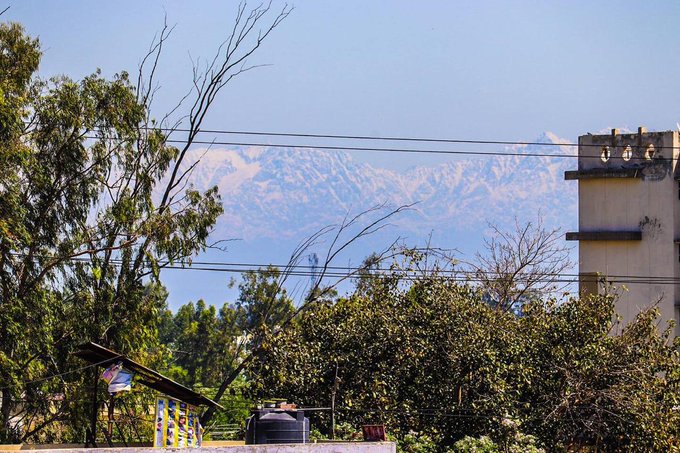
For the first time in 30 years, India’s snow-covered Dhauladhar mountain range has become visible to locals as a result of plunging pollution levels resulting from measures taken to check the spread of the novel coronavirus.
For many residents, the sight of the Dhauladhar Range—which translates to “White Range” and forms part of the Himalayas—is something which they have never witnessed in their entire lives, reports SBS.
Many have been eager to share their feelings about it on social media, including former Indian cricket player Harbhajan Singh, who wrote:
“Never seen Dhauladar range from my home rooftop in Jalandhar. Never could imagine that’s possible. A clear indication of the impact the pollution has done by us to mother earth.”
Harbhajan Turbanator
✔@harbhajan_singh
Never seen Dhauladar range from my home rooftop in Jalandhar..never could imagine that’s possible..clear indication of the impact the pollution has done by us to Mother Earth
.. this is the view
While anti-pollution activist Sant Balbir Singh Seeechewal told SBS:
“We can see the snow-covered mountains clearly from our roofs. And not just that, stars are visible at night. I have never seen anything like this in recent times.”
India, a country with upwards of 1.3 billion residents, has been placed under a strict nationwide lockdown from March 22 until at least April 14. The draconian move limits the movement of the entire population, and has been criticized by rights groups as well as figures from private industry who claim that the measure is arbitrary and damages the country and its economy.
On Tuesday, the Economic Times published an opinion piece by auto company executive Rajiv Bajaj arguing that “virtually no country has imposed such a sweeping lockdown as India has; I continue to believe this makes India weak rather than stronger in combating the epidemic.”
However, the lockdown—which shut down factories, marketplaces, small shops, places of worship, most public transportation and construction projects—has also provided a temporary respite from the suffocating pollution levels India is known for. No less than 21 of the world’s 30 most polluted cities are in the South Asian giant.
Arun Arora@Arun2981From my home town in Punjab…. we had never seen mountains
Aditya@aapkaditya
Seechewal explained:
“Not just normal traffic is off the roads, but most industry is also shut down. This has helped bring the pollution level to unbelievably low levels.”
According to CNN, government data has shown that India’s capital New Delhi has seen a 71 percent plunge of the harmful microscopic particulate matter known as PM 2.5. The particulate matter, which lodges deep into the lungs and passes into vital organs and the bloodstream, causes a number of serious risks to people’s health.
In the meantime, nitrogen dioxide spewed into the air by motor traffic and power plants has also fallen by 71 percent from 52 per cubic meter to 15 in the same period.
Similar drops in air pollutants have been registered in major cities like Bangalore, Chennai, Kolkata, and Mumbai.
Shailen Pratap शैलेन्द्र@shailen_pratap
Today’s best news should be that Dhauladar Range,Himachal Pradesh, Himalayas have started to be visible from Jalandhar ( approximately 300 Kms). This has never happened in our lifetime. Loving Views……
Jyoti Pande Lavakare, the co-founder of Indian environmental organization Care for Air, told the network:
“I have not seen such blue skies in Delhi for the past 10 years …It is a silver lining in terms of this awful crisis that we can step outside and breathe.”
India is hardly alone in experiencing a vast improvement of air quality in association with government clampdowns meant to curb the spread of the pandemic.
From China to Europe and even the notoriously smoggy Los Angeles, business shutdowns and restrictions on movement have seen similar falls in nitrogen dioxide concentrations.
Seechewal is floored by the sharp drop in air pollution. He said:
“I had never imagined I would experience such a clean world around me. The unimaginable has happened. It shows nothing is impossible. We must work together to keep it like that.”
From pollution levels reducing drastically to now marine life being able to breathe in peace, it seems like the coronavirus lockdown is seriously helping nature recoup.
 TWITTER/@_HARIKRISHNAN_S
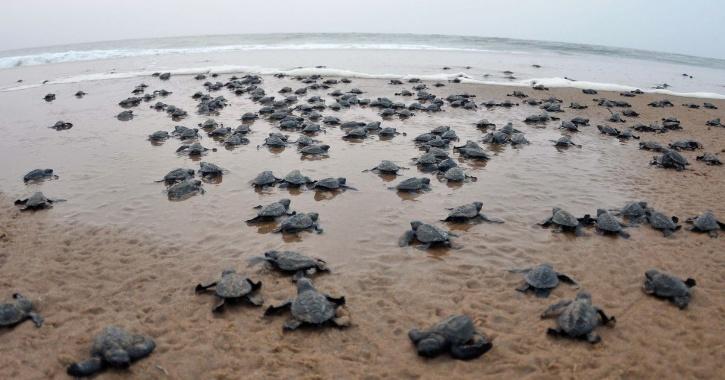
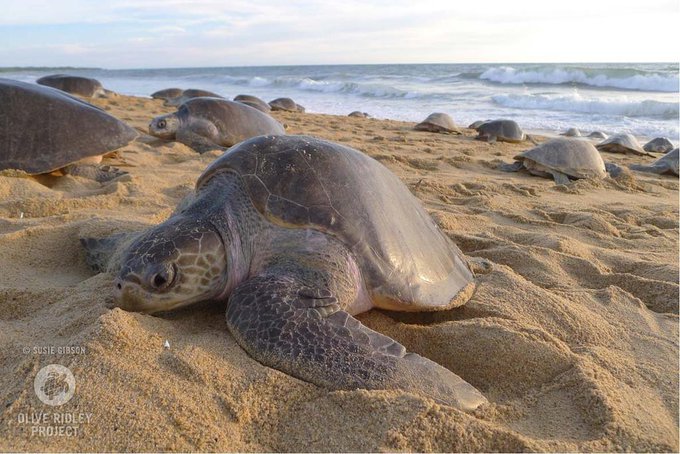
Olive Ridley sea turtles have come ashore for mass nesting at the six-kilometre-long Rushikulya beach of Odisha’s Ganjam district in the last five days and it’s owing to the coronavirus lockdown.
These rare sea turtles are renowned for their mass nesting and come to Indian shores and Odisha’s coast every nesting season; the areas are their largest nesting site in the region. According to the Odisha Wildlife Organisation ( OWO), nearly 50 per cent of the world population of these rare turtles come to Odisha’s coast for nesting.
On March 22 at around 2 am, 2,000 female Olive Ridleys started coming out of the sea to the beach, Berhampur Divisional Forest Officer (DFO), Amlan Nayak, told The Hindu.
 Ankit Kumar, IFS@AnkitKumar_IFS
ARRIBADA ~Spanish Word – means ‘Arrival’
Refers to mass-nesting event when 1000s of Turtles come ashore at the same time to lay eggs on the same beach.
Interestingly, females return to the very same beach from where they first hatched, to lay their eggs.
Olive Ridley Turtle

Warfare became a check on population growth, perhaps the most important one.
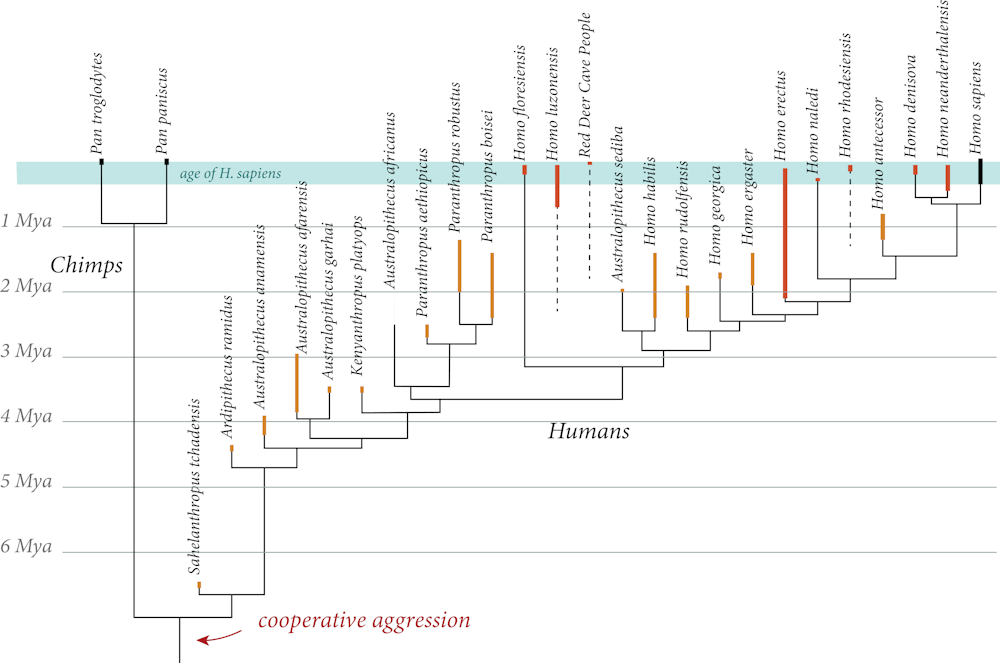
Several short, small-brained species survived alongside them: Homo naledi in South Africa, Homo luzonensis in the Philippines, Homo floresiensis (“hobbits”) in Indonesia, and the mysterious Red Deer Cave People in China. Given how quickly we’re discovering new species, more are likely waiting to be found.
By 10,000 years ago, they were all gone. The disappearance of these other species resembles a mass extinction. But there’s no obvious environmental catastrophe – volcanic eruptions, climate change, asteroid impact – driving it. Instead, the extinctions’ timing suggests they were caused by the spread of a new species, evolving 260,000-350,000 years ago in Southern Africa: Homo sapiens.
The spread of modern humans out of Africa has caused a sixth mass extinction, a greater than 40,000-year event extending from the disappearance of Ice Age mammals to the destruction of rainforests by civilisation today. But were other humans the first casualties?
We are a uniquely dangerous species. We hunted wooly mammoths, ground sloths and moas to extinction. We destroyed plains and forests for farming, modifying over half the planet’s land area. We altered the planet’s climate. But we are most dangerous to other human populations, because we compete for resources and land.
History is full of examples of people warring, displacing and wiping out other groups over territory, from Rome’s destruction of Carthage, to the American conquest of the West and the British colonisation of Australia. There have also been recent genocides and ethnic cleansing in Bosnia, Rwanda and Myanmar. Like language or tool use, a capacity for and tendency to engage in genocide is arguably an intrinsic, instinctive part of human nature. There’s little reason to think that early Homo sapiens were less territorial, less violent, less intolerant – less human.
Optimists have painted early hunter-gatherers as peaceful, noble savages, and have argued that our culture, not our nature, creates violence. But field studies, historical accounts, and archaeology all show that war in primitive cultures was intense, pervasive and lethal. Neolithic weapons such as clubs, spears, axes and bows, combined with guerrilla tactics like raids and ambushes, were devastatingly effective. Violence was the leading cause of death among men in these societies, and wars saw higher casualty levels per person than World Wars I and II.
Old bones and artefacts show this violence is ancient. The 9,000-year-old Kennewick Man, from North America, has a spear point embedded in his pelvis. The 10,000-year-old Nataruk site in Kenya documents the brutal massacre of at least 27 men, women, and children.
It’s unlikely that the other human species were much more peaceful. The existence of cooperative violence in male chimps suggests that war predates the evolution of humans. Neanderthal skeletons show patterns of trauma consistent with warfare. But sophisticated weapons likely gave Homo sapiens a military advantage. The arsenal of early Homo sapiens probably included projectile weapons like javelins and spear-throwers, throwing sticks and clubs.
Complex tools and culture would also have helped us efficiently harvest a wider range of animals and plants, feeding larger tribes, and giving our species a strategic advantage in numbers.
The ultimate weapon
The incompleteness of the fossil record makes it hard to test these ideas. But in Europe, the only place with a relatively complete archaeological record, fossils show that within a few thousand years of our arrival , Neanderthals vanished. Traces of Neanderthal DNA in some Eurasian people prove we didn’t just replace them after they went extinct. We met, and we mated.
But why would our ancestors wipe out their relatives, causing a mass extinction – or, perhaps more accurately, a mass genocide?

The answer lies in population growth. Humans reproduce exponentially, like all species. Unchecked, we historically doubled our numbers every 25 years. And once humans became cooperative hunters, we had no predators. Without predation controlling our numbers, and little family planning beyond delayed marriage and infanticide, populations grew to exploit the available resources.
Further growth, or food shortages caused by drought, harsh winters or overharvesting resources would inevitably lead tribes into conflict over food and foraging territory. Warfare became a check on population growth, perhaps the most important one.
Yet the extinction of Neanderthals, at least, took a long time – thousands of years. This was partly because early Homo sapiens lacked the advantages of later conquering civilisations: large numbers, supported by farming, and epidemic diseases like smallpox, flu, and measles that devastated their opponents. But while Neanderthals lost the war, to hold on so long they must have fought and won many battles against us, suggesting a level of intelligence close to our own.
 ————————————————————————————————————–
Nick Longrich, Senior Lecturer, Paleontology and Evolutionary Biology, University of Bath
This article is republished from The Conversation under a Creative Commons license. Read the original article.
Image: Reuters
Statement sets out ‘vital signs’ as indicators of magnitude of the climate emergency

The world’s people face “untold suffering due to the climate crisis” unless there are major transformations to global society, according to a stark warning from more than 11,000 scientists.
“We declare clearly and unequivocally that planet Earth is facing a climate emergency,” it states. “To secure a sustainable future, we must change how we live. [This] entails major transformations in the ways our global society functions and interacts with natural ecosystems.”
There is no time to lose, the scientists say: “The climate crisis has arrived and is accelerating faster than most scientists expected. It is more severe than anticipated, threatening natural ecosystems and the fate of humanity.”
The statement is published in the journal BioScience on the 40th anniversary of the first world climate conference, which was held in Geneva in 1979. The statement was a collaboration of dozens of scientists and endorsed by further 11,000 from 153 nations. The scientists say the urgent changes needed include ending population growth, leaving fossil fuels in the ground, halting forest destruction and slashing meat eating.
Prof William Ripple, of Oregon State University and the lead author of the statement, said he was driven to initiate it by the increase in extreme weather he was seeing. A key aim of the warning is to set out a full range of “vital sign” indicators of the causes and effects of climate breakdown, rather than only carbon emissions and surface temperature rise.
“A broader set of indicators should be monitored, including human population growth, meat consumption, tree-cover loss, energy consumption, fossil-fuel subsidies and annual economic losses to extreme weather events,” said co-author Thomas Newsome, of the University of Sydney.
Other “profoundly troubling signs from human activities” selected by the scientists include booming air passenger numbers and world GDP growth. “The climate crisis is closely linked to excessive consumption of the wealthy lifestyle,” they said.
As a result of these human activities, there are “especially disturbing” trends of increasing land and ocean temperatures, rising sea levels and extreme weather events, the scientists said: “Despite 40 years of global climate negotiations, with few exceptions, we have have largely failed to address this predicament. Especially worrisome are potential irreversible climate tipping points. These climate chain reactions could cause significant disruptions to ecosystems, society, and economies, potentially making large areas of Earth uninhabitable.”
“We urge widespread use of the vital signs [to] allow policymakers and the public to understand the magnitude of the crisis, realign priorities and track progress,” the scientists said.
“You don’t need to be a rocket scientist to look at the graphs and know things are going wrong,” said Newsome. “But it is not too late.” The scientists identify some encouraging signs, including decreasing global birth rates, increasing solar and wind power and fossil fuel divestment. Rates of forest destruction in the Amazon had also been falling until a recent increase under new president Jair Bolsonaro.
They set out a series of urgently needed actions:
“The good news is that such transformative change, with social and economic justice for all, promises far greater human well-being than does business as usual,” the scientists said. The recent surge of concern was encouraging, they added, from the global school strikes to lawsuits against polluters and some nations and businesses starting to respond.
A warning of the dangers of pollution and a looming mass extinction of wildlife on Earth, also led by Ripple, was published in 2017. It was supported by more than 15,000 scientists and read out in parliaments from Canada to Israel. It came 25 years after the original “World Scientists’ Warning to Humanity” in 1992, which said: “A great change in our stewardship of the Earth and the life on it is required, if vast human misery is to be avoided.”
Ripple said scientists have a moral obligation to issue warnings of catastrophic threats: “It is more important than ever that we speak out, based on evidence. It is time to go beyond just research and publishing, and to go directly to the citizens and policymakers.”


Livestock contributes to climate change through the emission of carbon dioxide, nitrous oxide, and methane, which are potent greenhouse gases (GHGs). They are the largest source of methane emissions, a gas that has 34 times higher global warming potential than carbon dioxide as stated by the Food and Agriculture Organisation of the United Nations. Growing demand for animal-based protein by increasing the human population is likely to further intensify GHG emissions from livestock, which can put more pressure on the global climate.
The recent climate summit in New York and the global momentum for reducing GHG emissions to curb climate change by governments and communities worldwide are pointing towards comprehensive climate action. The Intergovernmental Panel on Climate Change (IPCC) suggests reducing emissions from agriculture and land-use change by changing diets and another report advocates for reducing reliance on fossil fuels. While there is a convincing case for reducing emissions by changing diets and by limiting supply-side fossil fuels, the livestock industry can play a major role in reducing global emissions. The role of livestock in addressing climate change so far has been overlooked.
GHG accounting guidelines of the IPCC and the United Nations Food and Agriculture Organization include enteric fermentation and manure management to capture emissions from the livestock sector. However, these guidelines do not include emissions associated with the entire value chain of livestock such as those associated with animal feed production, emissions from soils, land degradation, transport of feed, livestock, and its products, processing, packaging and distribution, consumption, and waste generated at each stage as pointed by Dr Harpinder Sandhu and his colleagues in their new study published in The Anthropocene Review.
Another study led by the United Nations Environment—the Economics of Ecosystem and Biodiversity for Agriculture and Food (TEEBAgriFood) advocated holistic analysis of value chains to capture all significant impacts of food systems to make appropriate policy responses. While TEEBAgriFood suggested full-scale evaluation of food systems, IPCC and other global assessments continue to produce their reports based on partial assessments. Although the outcomes are not in favor of the livestock industry, there is an urgency for various UN bodies to be consistent in their approach. According to one study, by Jeff Anhang, an environmental specialist at the World Bank Group, emissions from livestock are about 51 percent of the total global GHG emissions if the whole lifecycle is included and not 14.5 percent as estimated by the FAO. It is a matter of grave concern for the planet and people if there is an error in our calculations. A global consensus on livestock-related emissions is the need of the hour to correct GHG accounting and its implications for climate change policy. What if we have been underestimating total GHG emissions from the livestock sector? Therefore, there is a need to address discrepancies related to livestock-related GHG emissions. Correct estimation of all GHG emissions can help to know the full extent of impacts of the livestock industry on global climate change. So far none of the livestock environmental assessment models are being able to capture all emissions through the entire value chain. To comprehensively capture emissions from the livestock sector, a full-scale evaluation using the TEEBAgriFood framework may lead to better outcomes for the livestock industry and the planet. In addition to limiting fossil fuels, managing livestock provides much better option to reduce total global GHG emissions. Global community will be able to manage what it can measure accurately by fixing the livestock emissions metrics.
https://www.cnn.com/2019/10/04/entertainment/justin-bieber-kittens-peta-trnd/?
Justin Bieber defends his $35k cats against PETA scrutiny 01:20
(CNN)Justin Bieber and PETA are engaged in a cat fight.
It all centers around the singer’s part-exotic kittens, Sushi and Tuna.
According to The Hollywood Reporter, Bieber paid $35,000 for the pair of Savannah breed cats from Illinois-based breeder Select Exotics.
“Baby, baby, baby, nooooooo,” PETA said in a statement to CNN. “Justin Bieber could inspire his fans around the world to save a life by adopting a cat from a local animal shelter — rather than fueling the dangerous demand for hybrid cats, contributing to the animal overpopulation crisis, and proving that when it comes to helping animals, his stance so far is ‘I don’t care.'”
Select Exotics’ website says Savannah cats are “a Serval/domestic feline cross” that is “the largest hybrid cat available today.”
“Bright, inventive, intelligent, even ingenious, playful, charming, and intensely energetic, the personable Savannah cat is very dog-like,” the site said. “Readily trainable, most love to play fetch, ride in cars, and relish outdoor walks on a leash.”
The kittens were purchased in the weeks leading up to Bieber’s second wedding to his wife, the former Hailey Baldwin, and he’s clearly enamored with them.
So much so that he launched a @kittysushiandtuna Instagram account to document their lives in the Bieber household.
The Biebs didn’t take too kindly to PETA’s statement.
He posted a screen shot of a story about PETA protesting his purchase on his Instagram stories, writing “PETA can suck it.”
“PETA go focus on real problems. Like poaching and animal brutality,” he wrote in a note posted on his Instagram stories. “Ur tripping because I want a specific kind of cat? U weren’t tripping when I got my dog Oscar and he wasn’t a rescue.”
Bieber added that he believes “in adopting rescues but also think there are preferences and that’s what breeders are for.”
“PETA go help with all the plastic in the ocean, and leave my beautiful cats alone,” he ended his note.
On Friday, PETA responded to Bieber in another statement provided to CNN.
PETA President Ingrid Newkirk said “Sorry, Justin, but you must think more deeply about this issue: When millions of animals are losing their lives every year because not enough people adopt — choosing instead to shop — the animal overpopulation crisis is a ‘real problem.'”
“That’s what ‘sucks,'” she said. “PETA urges you to spend just one hour in a municipal animal shelter with us — we think you’ll understand how hard it is to look into the animals’ eyes and know that because people pay breeders, many of them will pay with their lives. You have the power to be a great role model on this issue — your behavior guides that of tons of your fans — so please put that to good use.”









 Exposing the Big Game