Big news! Shell Oil announced that it is giving up its quest to drill for oil in the U.S. Arctic Ocean. Shell’s retreat from the Arctic is a testament to all those who raised their voices in opposition to risky Arctic drilling. More importantly, Shell’s decision is great news for the bowhead whales, walruses, ice-dependent seals and other wildlife species that could have been devastated by an oil spill in this remote region.
I get why people like Pope Francis—he is charismatic, humble, and has an awfully contagious smile. He’s also radical by papal standards; being the first pope to dominate the social media realm and the first to be named “Person of the Year’ by an LGBT magazine. I’d be lying if I said I didn’t admire his cool tenacity.
But as crowds gather to catch a glimpse of Pope Francis—the religious rock star—on his East Coast tour, I can’t help but wonder about the fans who praise him for his enlightened stance on poverty, inequality, and climate change. Because, unless Francis ends his backwards proscription of birth control, it will be impossible for him to make any long-lasting improvements in those arenas.
From championing efforts to reduce greenhouse gas emissions to speaking out against economic disparity, the pope’s attempts to make the world a better place are futile alongside his reluctance to endorse access to the full range of contraceptives as a necessary and moral good.
Contraception, quite literally, saves lives—especially those of women and girls in the developing world who are deprived of antenatal services. Mothers and babies perish when women are prevented from delaying, spacing, or avoiding pregnancies. And young children whose mothers die during pregnancy and childbirth are cruelly left to fend for themselves.
In fact, if every single woman living in the developing world used modern contraception, the number of unintended pregnancies would be reduced by 70 percent and unsafe abortions would drop by 74 percent. Imagine how much that would enable women and girls to obtain an education and career; not to mention boost entire economies.
Increasing universal access to contraceptives is also central to addressing the challenge of climate change—a cause that the pope considers so important that he revolved his entire encyclical around it. While it’s a welcome step in the right direction, Francis remains opposed to breaking the doctrinal chains that prevent the Vatican from recognizing the environmental impacts of unintended pregnancy and, in turn, unsustainable population growth.
According to a recent study, slowing population growth could significantly reduce carbon emissions and diminish the onslaught of dangerous climate change. It truly is a matter of life and death for millions of, what Francis would term, God’s creatures.
Having the ability to choose when and whether to have children gives people—especially women and girls living in poor nations—a greater shot at enduring and recovering from extreme weather events. Families that can prevent unintended pregnancies are usually much better equipped, financially and otherwise, to counter the effects of climate change.
But, for Francis, science and facts take a backseat to doctrine. It’s a fact that eliminating the barriers that prevent women from accessing birth control reduces the rate of abortion—one of the greatest “sins” in the eyes of the Catholic Church. It’s also a fact that increased use of birth control is crucial for attaining many of the proposed UN Sustainable Development Goals (SDGs), such as empowering women and girls. Yet, even those basic truths are not enough to sway the pope’s edict on modern contraception.
While reformism may have its limits in the Vatican, the championing of human rights shouldn’t. Planning and preventing pregnancy not only saves lives; it helps to fight poverty, close the inequality gap, and reduce the amount of greenhouse gas emissions that get pumped into the atmosphere.
It’s time for His Holiness to cease his condemnation of modern contraception and live up to his reputation as a progressive, egalitarian pope. Otherwise, Francis, the rock star, may become Francis, the one-hit wonder.
Right-wing extremists are coming after Planned Parenthood harder than ever. Republicans are even going as far to say that they will SHUT DOWN THE GOVERNMENT again if Planned Parenthood isn’t defunded.
Add your name to tell Congress to reject any efforts to defund Planned Parenthood and shut down the government:
The GOP is threatening yet ANOTHER government shutdown. This time, Senator Ted Cruz, the ringleader of the defund Obamacare campaign that led to the 2013 government shutdown, is determined to defund Planned Parenthood. Cruz and 27 other Republican men stated that they would oppose ANY bill that continues funding for Planned Parenthood.1
They are planning cuts. BIG cuts that would wipe out the funding Planned Parenthood relies on to provide affordable, critical, and lifesaving healthcare to MILLIONS of women — particularly leaving low-income and uninsured women with nowhere left to turn.
Republicans are determined to continue their attacks on women’s health care, and they are even willing to shut down the government to get their way. 28 Republican men are willing to inflict major damage to the economy unless women are denied critical healthcare services. We can’t stand for this. We only have 18 days to take action. We need to act NOW.
Please, sign the petition and tell Congress to STOP a government shutdown and to continue funding Planned Parenthood:
If humans had never existed, the whole world would look strikingly similar to the Serengeti of Africa. There would be lions in America, and elephants and rhinos roaming Europe.
That’s the conclusion of a new study that details how human-driven animal extinctions have influenced the distribution and populations of large mammals around the world.
“The study shows that large parts of the world would harbor rich large mammal faunas, as diverse as seen in protected areas of eastern and southern Africa today, if it was not for historic and prehistoric human-driven range losses and extinctions,” Dr. Jens-Christian Svenning, a biologist at Aarhus University in Denmark and a co-author of the study, told NBC News.
Credit: Søren FaurbyThe natural diversity of large mammals as it would appear without the impact of humans. The figure shows the variation in the number of large mammals (45 kilograms or larger) that would have occurred per 100 x 100 kilometer. The numbers on the scale indicate the number of species.
Credit: Søren FaurbyThe current diversity of large mammals. It can clearly be seen that large numbers of species virtually only occur in Africa, and that there are generally far fewer species throughout the world than there could have been.
The study was published last Thursday in the journal Diversity and Distributions. The researchers analyzed what the natural distribution of large mammal species would be if not for the impact of humans.
The study expands on the scientists’ previous research, which showed that the mass extinction of large mammals during the last ice age and in subsequent millennia was largely linked to the spread of modern humans, not to climate change.
Based on their most recent analysis, the researchers concluded that sub-Saharan Africa is virtually the only place on Earth with the naturally high diversity and population of large mammals that would be seen elsewhere if not for humans.
“Most safaris today take place in Africa, but under natural circumstances, as many or even more large animals would no doubt have existed in other places,” Dr. Søren Faurby, a postdoctoral fellow in bioscience at Aarhus and lead author of the study, said in a press release. “The reason that many safaris target Africa is not because the continent is naturally abnormally rich in species of mammals. Instead it reflects that it’s one of the only places where human activities have not yet wiped out most of the large animals.”
Overconsumption Pushing Earth Into Overshoot Earlier Each Year
TUCSON, Ariz. – Today is Earth Overshoot Day, the day humanity exhausts the resources the planet can replenish in a year. This year overshoot comes four and a half months too soon and a week earlier than last year. The Center for Biological Diversity is partnering with the Global Footprint Network to raise awareness about overshoot and the impact of unsustainable overconsumption on the planet.
“As we continue to clearcut trees, burn fossil fuels and consume wild animals, the Earth can’t keep up,” said Leigh Moyer, the Center’s population organizer. “We see evidence of this in shrinking habitat, the global climate crisis and crashes in wildlife populations. We’re blowing through nature’s capital, and wildlife and the planet are suffering for it.”
Overshoot takes into account the amount of resources used by the Earth’s human population and the waste we produce, particularly carbon dioxide buildup in the atmosphere. The Global Footprint Network calculates Earth Overshoot Day by dividing the amount of ecological resources the planet generates each year by humanity’s ecological footprint (the amount of land and water needed to produce the resources we consume and absorb the waste we create), then multiplying by 365, the number of days in a year. The result is the number of days that the Earth’s resources will last at humanity’s current rates of consumption. This year the planet’s resources lasted 224 days, or until Aug. 13. The rest of the year is in “overshoot.”
“We’re currently using more than the equivalent of one and a half Earths every year,” said Moyer. “And if everyone lived like Americans, we’d use four and a half Earths. Since we only have one Earth, this clearly isn’t sustainable.”
In addition to raising awareness about overshoot, the Center is launching a public petition urging the Target retail chain to discontinue use of single-use plastic shopping bags from its stores nationwide. Target positions itself as a sustainable retailer with goals to reduce waste and cut back on greenhouse gas emissions, but continues to give away a billion plastic bags a year, many of which end up in landfills, as litter or as ocean pollution.
The Center’s Population and Sustainability program promotes a wide range of solutions to address overshoot, including reducing meat consumption, developing wildlife-friendly renewable energy sources, and universal access to birth control and family planning.
###
At the Center for Biological Diversity, we believe that the welfare of human beings is deeply linked to nature – to the existence in our world of a vast diversity of wild animals and plants. Because diversity has intrinsic value, and because its loss impoverishes society, we work to secure a future for all species, great and small, hovering on the brink of extinction. We do so through science, law, and creative media, with a focus on protecting the lands, waters, and climate that species need to survive.
Last week, Pope Francis and church officials encouraged everyone to consume less and think more about our impact on the environment.
It’s a timely warning because the next six months will be critical to our future.
Ahead of a series of major events later this year, The Foundation for Deep Ecology and the Population Media Center released a collection that illustrates the devastating effects of out-of-control growth and waste, and it’s breathtaking.
“This is an issue that people care about, and oftentimes it’s just not discussed by mainstream media,” Missie Thurston, director of marketing and communications at the Population Media Center, told Mic.It’s difficult to always know the impacts of our daily choices, like the real effect of buying a bottled water or an extra TV or laptop. With 220,000 more people on the planet every day, and the average person generating over 4 pounds of waste a day — an almost 60% increase since 1960 — the impact of that growth and change in behavior is rarely seen like this.
A remote bay in Java, Indonesia, where local residents, without infrastructure for waste disposal, discard waste directly into streams and rivers.
The rest of the year is going to be critical. In September, world leaders will try and agree on sustainable development goals that will take us through 2030. In December, in Paris, the United Nations will attempt to finally set binding limits on pollution. 2015 will dictate how we address our degrading planet over the next few decades.
The Population Media Center and partners hope these photos will help generate awareness and action. Because as the word spreads, so does the will to make sure we never have to see images like these again.
Please remove me from your mailing list. Somehow I got sucked into subscribing to your newsletter, under the wrongful assumption that you folks actually cared about the Earth and its non-human inhabitants. Maybe some of you did at one time, but you’re being shouted-down and bullied by the unabashed flesh-eaters in the crowd.
I used to enjoy your articles on overpopulation and climate change, but lately you’ve been wasting my time (and yours) with campaigns urging the consumption of animals (as though meat-eating were a lost art in America; an important tradition in need of a champion).
You may have started your backslide slowly with your eat-all-things-dead agenda, but lately you’ve been pushing meat like it’s going out of style. The last straw was when you started spelling-out the word “Meat” with the body-parts of your dead victims like something that serial killers Ed Gein or Jeffry Dahmer might have done.
But, whoever came up with this idea obviously modeled it after Lady-Gaga’s infamous and equally bad tasting “meat-dress.”
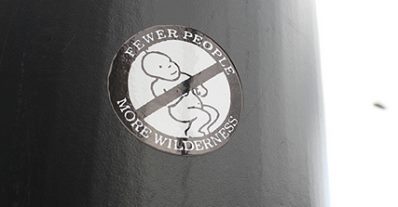
If you’re thinking of adding another baby to this morbidly over-crowded planet, please do the world a favor: don’t. Or at least think first of the other species your little monster love-child would crowd off the Earth.
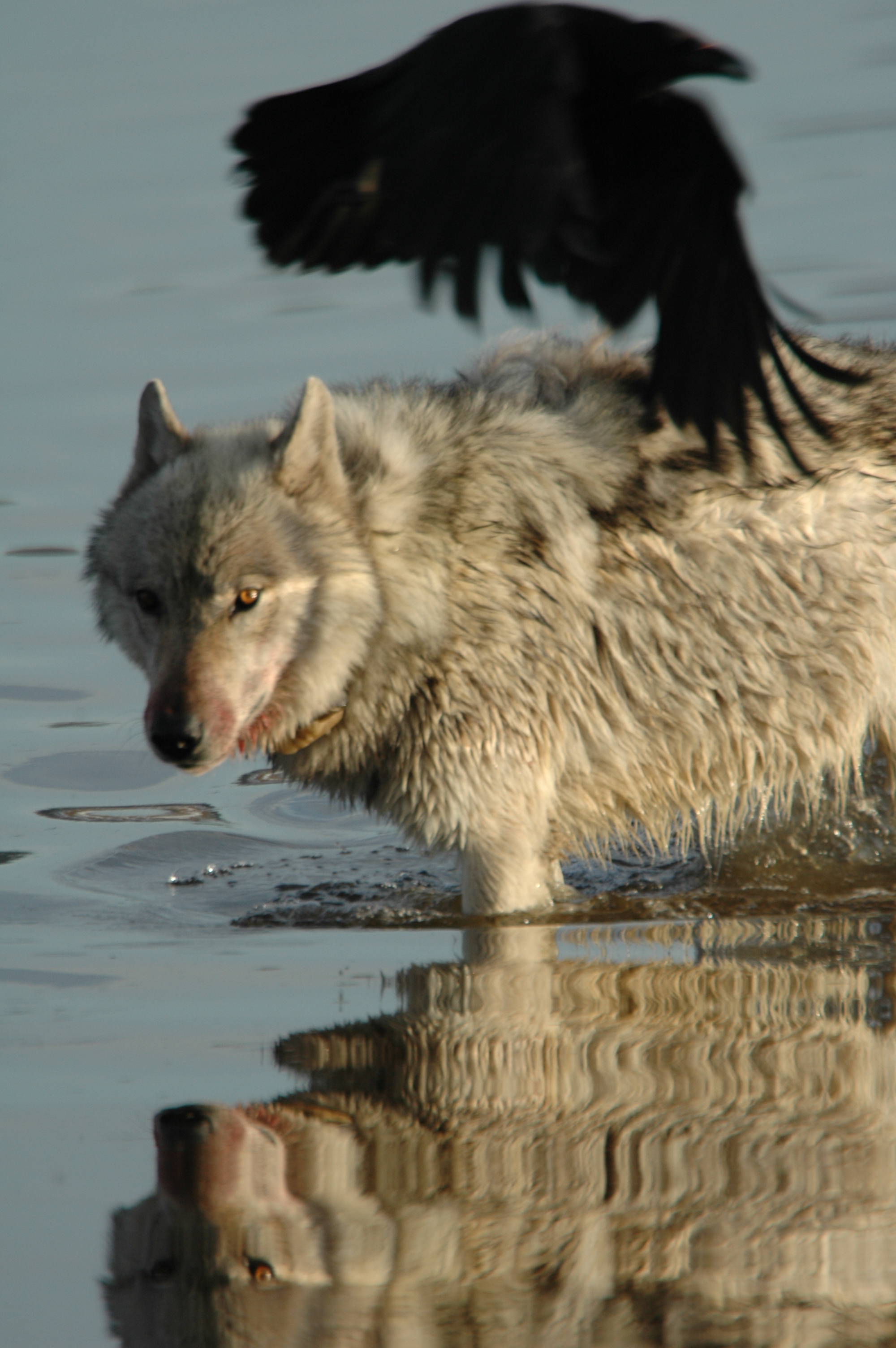
Sure, you plan to raise it right; but there’s still an even chance the little bundle of joy will turn out to be the next Hitler, George W. or Ted Nugent rather than another Jesus, Einstein or Gandhi. The world needs more bison and prairie dogs, more moose, elk and wolves, more salmon, smelt and sea lions, more swans, snow geese and pelicans—more biodiversity—not another climate-warming, Earth-gobbling human baby.




 Exposing the Big Game