The Emergence of Human Evil: the Prequel

There’s a scene from the movie, Dominion: Prequel to the Exorcist, wherein the local African cattle kill and eat several wild hyenas. Almost immediately after ingesting the animal flesh the cows begin to stumble and drop dead. As gruesome as the whole scenario was, it seems symbolic of the first day, one million years ago (or so), also in Africa, when pre-human primates came across or killed another animal and decided to eat its dead flesh. As with the scene from the installment of the Exorcist, the event represented an innocent plant-eater’s first brush with evil.

Unfortunately for all other life to follow, humans did not have an immediate sickened reaction and drop dead like the cattle in the film. Nothing stopped the greedy proto-humans from continuing with their aberrational carnivorous crimes against nature. Instead, the killing and consumption of their fellow animals, bolstered by the lust for power and control, became routine, tradition, and finally enshrined. Now, here we are today (both the unthinking omnivore and the ethical vegetarian alike) paying the penance for our ancestors’ acts.

Yes, there was an original sin, but it had nothing to do with eating apples or any other fruit, nor anything that grew on trees or in the ground for that matter. It had to do with trying to mimic natural predators who’ve had millennia over us primates to adapt physically and psychologically into the role of carrion scavenger or killer. Not that nature’s carnivores were ever evil, but why would we want to emulate such undesirable and offensive behavior?

That first bloody bite of carrion, the first mouth-watering morsel of tender flesh was all it took; all she wrote. Fast-forward a million years—game over.

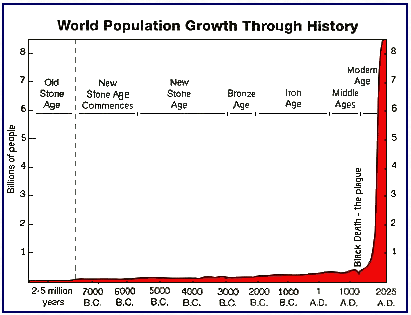
The proud human followed a path from hand-to-mouth, from feed lot to oil field, changing everything from Earth’s biodiversity to its very climate.

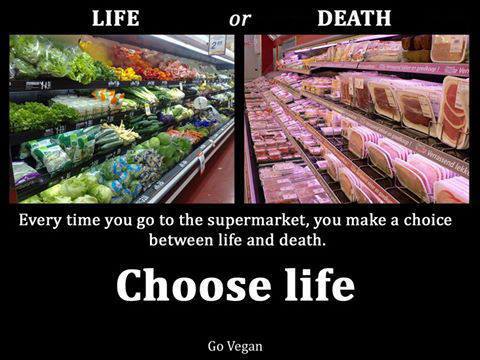
A lot has been made about humans being the only species to cause a mass extinction. But when all is said and done, some may say that we’re not the first species to have a role in a mass extinction; that the over-population of methane producing microbes, methanogens, might have factored in to the third mass extinction event, the Permian extinction. Still the fact remains that humans have the dubious distinction of being the one species to knowingly bring en entire era (in our case, the Age of Mammals—the most diverse in Earth’s history) to a close. Despite ample warning and time to modify our behavior, our species seems bent on making the same mistakes right up to the living end. Not only did the freeways and highways not miraculously clear at the first sign that our carbon over-output was changing the planet’s atmosphere, but relatively few people (relative to the over-all burgeoning human population, anyway) are swearing off carrion after learning that meat production is responsible for an even greater carbon (and methane) footprint.

And it all leads back to that first fateful bloody bite. Mother Nature was too nice to us. If she had made that early proto-human urp it all back up again, projectile-vomit at the very thought of it, or experience some repellant natural reaction, we could all have been spared a lot of misery at the hands of Homo Horribilus Rex, the two-legged mutant, meat-eating monster.

264431_455824994498980_1177070538_n

Population and Meat Consumption

http://www.populationconnection.org/article/population-meat-consumption/

safe_imageAlthough rates of consumption vary greatly from country to country, global meat consumption is on the rise. As their middle classes expand, populous countries like China and India have seen an increased demand for meat products. And although growing concerns about the undeniable health and environmental impacts of meat-heavy diets have led to the meatless Monday trend in the U.S., Americans still eat more meat than almost anyone else in the worldan average of 270.7 pounds per person every year.

Factory farming and the use of pesticides and fertilizers have allowed us to mass-produce more food, including meat, than previously possible. However, this increased productivity comes at a cost. Meat production is incredibly resource intensive and environmentally damaging. And if, as projected, global population reaches 9.6 billion people in 2050, the costs will only grow.

Meat and Resource Consumption

Producing meat is a very inefficient process. Livestock production requires significant inputs of food, water, land, and energy in order to raise, transport, and process the animals. We produce more meat today than ever before—about 300 million tons each year. This increased productivity has been made possible due to factory farming methods and increased feedstock production, which has been enhanced with fertilizers and technological and genetic advances. According to the Worldwatch Institute, global meat production has tripled since the 1970s and has risen by 20 percent just between 2000 and 2010.

Such a high rate of meat production takes a heavy toll on natural resources. Growing sufficient crops to feed livestock requires a tremendous amount of land—land which could be more efficiently used for crops. Taking into account the amount of cropland devoted to feedstock, an estimated 75 percent of the world’s agricultural land goes into meat production. Meat production is also extremely water-intensive; producing one pound of meat requires between 5,000 and 20,000 liters of water, while producing one pound of wheat requires much less—between 500 and 4,000 liters.

And the resource costs of meat production don’t end with food and water; fossil fuels are also an essential part of the equation. In terms of the fossil fuel energy required to produce animal protein, broilers—that is, chickens raised for consumption—are the most efficient with an energy input to kcal ratio of 4:1. Pork is much less efficient at a ratio of 14:1, and beef is even less efficient; the ratio for energy input to protein is 40:1. For all animal protein production, the average ratio of energy input to protein is 25:1, over 10 times greater than the energy needed to produce one kcal of plant protein. The inefficiencies of meat production are also apparent in the feedstock inputs. For each kilogram of broiler meat produced, 2.3 kilograms of grain is required. One kilogram of beef requires a total of 43 kilograms of grain and forage input.

“There will not be enough water available on current croplands to produce food for the expected population of 9 billion in 2050 if we follow current trends and changes towards diets common in western nations.”

—Malin Falkenmark, Senior Scientific Advisor, Stockholm International Water Institute (SIWI)

Meat and Pollution

Meat production is not only resource intensive. It is also a source of significant air and water pollution. In order to feed the growing livestock population, the agricultural process has continued to intensify, relying heavily on the application of chemical fertilizers and pesticides. Aside from the depletion of resources necessary to produce these fertilizers, runoff from their use causes extensive environmental damage. This is compounded by the effect of manure runoff from the livestock production system. In China, agriculture is the leading driver of water pollution due to manure and fertilizer runoff, both associated with the industrialized livestock production system. Phosphorus, nitrogen, and other nutrients from this runoff flow into waterways and cause toxic algal blooms. These blooms then deprive areas of oxygen, hurting fish populations and affecting those who rely on fishing for income or for sustenance.

Global meat production is also responsible for a significant fraction of all greenhouse gas emissions—between 7 and 18 percent, according to the Food and Agriculture Organization of the United Nations. Methane, carbon dioxide, and nitrous oxide are the primary greenhouse gasses associated with livestock production. This includes direct emissions from enteric fermentation (a digestion process for ruminants such as cattle and sheep) and indirect emissions from the conversion of forests and other vegetated lands into arable land for feed production. Additional greenhouse gas emissions linked to the production process come from the application of chemical fertilizers on crops that feed the livestock, manure management, and international transport. According to the U.S. Environmental Protection Agency, ruminant livestock produce 80 million metric tons of methane each year, making up 28 percent of all methane gas emissions worldwide.

Toward a Sustainable Future

Meeting global animal protein demands places a heavy burden on our natural1451324_650954518277931_1616731734_n resources, thus threatening our ability to feed our rapidly growing global population. As demand for meat increases, so too will associated greenhouse gas emissions. Soil will erode as land is continually used for crop production—most of which is converted into livestock feed—water resources will be strained, and forests will be degraded as agricultural land expands to meet animal protein demands.

According to Vaclav Smil, professor of environment and geography at the University of Manitoba, if everyone in the world ate as much meat as the average person in the Western world, we would need two-thirds more land than we are currently using. As global population grows and demand for animal proteins increases, this shortfall will only grow. Reducing meat consumption and choosing sustainably produced meats could help lighten the burden meat production currently places on our resources. However, in order to feed the more than 9 billion people projected to live on our planet by 2050, we will need to make dramatic changes to our meat production systems, as current practices are simply unsustainable. Stabilizing our population will be vital as we strive to meet global nutritional needs.

Mass Extinction: It’s the End of the World as We Know It

http://www.truth-out.org/news/item/31661-mass-extinction-it-s-the-end-of-the-world-as-we-know-it

06 July 2015

 
Written by 
Dahr Jamail   By Dahr Jamail, Truthout | Interview

Guy McPherson is a professor emeritus of evolutionary biology, natural resources and ecology at the University of Arizona, and has been a climate change expert for 30 years. He has also become a controversial figure, due to the fact that he does not shy away from talking about the possibility of near-term human extinction.

To see more stories like this, visit “Planet or Profit?”

While McPherson’s perspective might sound like the stuff of science fiction, there is historical precedent for his predictions. Fifty-five million years ago, a 5-degree Celsius rise in average global temperatures seems to have occurred in just 13 years, according to a study published in the October 2013 issue of the Proceedings of the National Academy of Sciences. A report in the August 2013 issue of Science revealed that in the near term, earth’s climate will change 10 times faster than during any other moment in the last 65 million years.

McPherson fears that we are well along in the process of causing our own extinction.

Prior to that, the Permian mass extinction that occurred 250 million years ago, also known as the “Great Dying,” was triggered by a massive lava flow in an area of Siberia that led to an increase in global temperatures of 6 degrees Celsius. That, in turn, caused the melting of frozen methane deposits under the seas. Released into the atmosphere, those gases caused temperatures to skyrocket further. All of this occurred over a period of approximately 80,000 years. The change in climate is thought to be the key to what caused the extinction of most species on the planet. In that extinction episode, it is estimated that 95 percent of all species were wiped out.

Today’s current scientific and observable evidence strongly suggests we are in the midst of the same process – only this time it is anthropogenic, and happening exponentially faster than even the Permian mass extinction did.

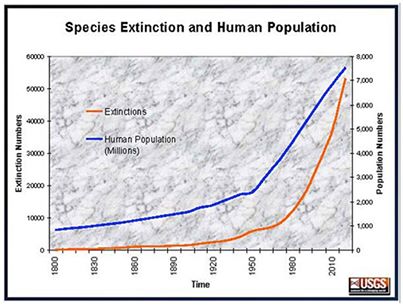
In fact, a recently published study in Science Advances states, unequivocally, that the planet has officially entered its sixth mass extinction event. The study shows that species are already being killed off at rates much faster than they were during the other five extinction events, and warns ominously that humans could very likely be among the first wave of species to go extinct.

So if some feel that McPherson’s thinking is extreme, when the myriad scientific reports he cites to back his claims are looked at squarely and the dots are connected, the perceived extremism begins to dissolve into a possible, or even likely, reality.

The idea of possible human extinction, coming not just from McPherson but a growing number of scientists (as well as the aforementioned recently published report in Science), is now beginning to occasionally find its way into mainstream consciousness.

“A Child Born Today May Live to See Humanity’s End, Unless …” reads a recent blog post title from Reuters. It reads:

Humans will be extinct in 100 years because the planet will be uninhabitable, according to Australian microbiologist Frank Fenner, one of the leaders of the effort to eradicate smallpox in the 1970s. He blames overcrowding, denuded resources and climate change. Fenner’s prediction is not a sure bet, but he is correct that there is no way emissions reductions will be enough to save us from our trend toward doom. And there doesn’t seem to be any big global rush to reduce emissions, anyway.

McPherson, who maintains the blog “Nature Bats Last,” told Truthout, “We’ve never been here as a species and the implications are truly dire and profound for our species and the rest of the living planet.”

Truthout first interviewed McPherson in early 2014, at which time he had identified 24 self-reinforcing positive feedback loops triggered by human-caused climate disruption. Today that number has grown to more than 50, and continues to increase.

A self-reinforcing positive feedback loop is akin to a “vicious circle”: It accelerates the impacts of anthropogenic climate disruption (ACD). An example would be methane releases in the Arctic. Massive amounts of methane are currently locked in the permafrost, which is now melting rapidly. As the permafrost melts, methane – a greenhouse gas 100 times more potent than carbon dioxide on a short timescale – is released into the atmosphere, warming it further, which in turn causes more permafrost to melt, and so on.

As soon as this summer, we are likely to begin seeing periods of an ice-free Arctic. (Those periods will arrive by the summer of 2016 at the latest, according to a Naval Postgraduate School report.)

Once the summer ice begins melting away completely, even for short periods, methane releases will worsen dramatically.

Is it possible that, on top of the vast quantities of carbon dioxide from fossil fuels that continue to enter the atmosphere in record amounts yearly, an increased release of methane could signal the beginning of the sort of process that led to the Great Dying?

McPherson, like the scientists involved in the recent study that confirms the arrival of the sixth great extinction, fears that the situation is already so serious and so many self-reinforcing feedback loops are already in play that we are well along in the process of causing our own extinction.

Furthermore, McPherson remains convinced that it could happen far more quickly than generally believed possible – in the course of just the next few decades, or even sooner.

Truthout caught up with McPherson in Washington State, where he was recently on a lecture tour, sharing his dire analysis of how far along we already are regarding ACD.

Dahr Jamail: How many positive feedback loops have you identified up until now, and what does this ever-increasing number of them indicate?

Guy McPherson: I can’t quite wrap my mind around the ever-increasing number of self-reinforcing feedback loops. A long time ago, when there were about 20 of them, I believed evidence would accumulate in support of existing loops, but we couldn’t possibly identify any more. Ditto for when we hit 30. And 40. There are more than 50 now, and the hits keep coming. And the evidence for existing feedback loops continues to grow.

In addition to these positive feedback loops “feeding” within themselves, they also interact among each other. Methane released from the Arctic Ocean is exacerbated and contributes to reduced albedo [reflectivity of solar radiation by the ice] as the Arctic ice declines. Tack on the methane released from permafrost and it’s obvious we’re facing a shaky future for humanity.

More: http://www.truth-out.org/news/item/31661-mass-extinction-it-s-the-end-of-the-world-as-we-know-it

Leave It All for Generation Y Me?

11078050_10153445915118296_9203086697257993205_n

Yesterday afternoon my wife and I were out on our covered porch watching the thermometer climb toward 90*, taking advantage of the oppressive heat to hang laundry out to dry, when we realized a loaf of fresh bread was about ready to enjoy.

We had been talking about the life-crushing impacts of anthropogenic climate disruption (ACD) and she said, “Ahh, fresh bread, one of life’s little pleasures left for us.” I said, “I think there will still be a few pleasures left for us in this world in the near future, although it sounds like all the shit’s really going to come down for the next generation—whatever they’re going to be called. Let’s see, we had the Baby Boomers, the Now Generation, the Me Generation, Generation X, and I vaguely remember hearing something about follow-up generations Y and Z.

She offered, “How about ‘Generation Y me?’”? I laughed and said, “Well, that one sure fits better that anything I’ve heard yet. After all, they’re the ones who are really going to have to deal with the changes wrought by ACD.”

In case those who vote on such things haven’t come up with a new nick name so far, I hereby petition that the next group of humans born should be labeled, “Generation Y me?”

Human Population Growth: “Anomalous and Unnatural”

“There is one especially interesting aspect of the current political landscape, and that is the matter of human populations. At one time a widely debated and much analyzed problem of the day, human population pressure has mysteriously slipped from both political and popular ‘environmental’ agendas.”[

[So wrote the late Canadian naturalist, and outspoken author, John A. Livingston in his 1994 book, Rogue Primate, back when there were only 5.67 billion of us as opposed to today’s 7.3 billion.]

“There is plenty of talk about food distribution (there is enough food for everyone in the world if we could only get it to them) and both industrial and low-impact agriculture, but the matter of absolute human numbers appears to have receded, if not from our private reflections, from our public utterances.

“The deadliest and most insidious form of thought repression is self-censorship. It has

8 is enough, but 13 is definitely too many for anyone!

8 is enough, but 13 is definitely too many for anyone!

become popular…to label those who would dare weigh the interests of Nature in the context of human populations as “ecofascists.” Yet another trump card [like the derisive term “food Nazi” often used against vegans by hard line meat eaters]. Charges of fascism and misanthropy, as well as of racism and Malthusianism are familiar to all who tend the vineyards of Nature’s inherent worth in the face of the human blight. The self-censorship that sometimes can follow, though craven and submissive, is usually defended as necessary and unavoidable pragmatism.

“It was not always thus. There was a period in which a great deal of attention was given to exploding humanity. From the later1940s to the early 1970’s there was a formidable outpouring of articles and books on the social and ecological implications of unrestrained human breeding.…

“The inexorable laying waste of Nature has broadened, deepened, and accelerated proportionately. By 1975 the world’s human population was no longer 2000 millions [as it was in 1948] but 4000 millions.…

“The fact that the human population bubble has not yet burst in all its horror does not mean that it will not. The fuse is no longer sputtering. It is burning steadily now. No organism can increase its numbers infinitely.

“No doubt the familiar devices of distancing and denial are at work in the disappearance of the population question. It has seemed to me for quite some time that the continuing reportage of the Ethiopian and Somalian famines tends to focus on the human misery, the ‘failure’ of the rains and the bitterly drawn-out political violence. Little attention is given to the human role in the ecological synergy that causes desertification. Although much is made of the hideous suffering of the children, few commentators note that if there were such a thing as natural justice, these little ones would not have been. Even fewer address the ironical human ability to proliferate even under the most appalling privation. No wild animal can do that.

“There are machismo tenets in some human cultures that much rigidly reject family planning no matter what the consequences. In others, repeated reproduction has become a perceived means of offsetting child mortality. There are those whose ‘leaders’ are sufficiently chicken-hearted and sexist to deny women a choice in the matter of abortion. There are still others with ‘policy-makers’ bent on providing more customers for the chain stores, more victims for the financial institutions, and more non-corporate taxpayers by enhancing natural increase through immigration. There are even governments desirous of rapid population increases for purely political reasons. In all nations, rich or poor, there is unanimity on the point that the effect of human numbers on Nature is a second-order consideration, and externality.

“Anyone who knows anything about living organisms knows that the human reproductive wave is anomalous and unnatural. No other animal, especially a large one, could possibly get away with it. In Nature, explosions do occur at times, but either they are cyclic and normal, as with lemmings, or there is some unusual, local reason for them (more often than not traceable to human activity). In either case they tend to die back as suddenly as they arose. [Humans may not have arisen “suddenly,” but one thing is for certain, they will die back.]

A child born today may live to see humanity’s end

http://blogs.reuters.com/great-debate/2015/06/18/a-child-born-today-may-live-to-see-humanitys-end-unless/

Humans will be extinct in 100 years because the planet will be uninhabitable, said the late Australian microbiologist Frank Fenner, one of the leaders in the effort to eradicate smallpox during the 1970s. He blamed overcrowding, denuded resources and climate change.

Fenner’s prediction, made in 2010, is not a sure bet, but he is correct that there is no way emissions reductions will be enough to save us from our trend toward doom. And there doesn’t seem to be any big global rush to reduce emissions, anyway. When the G7 called on Monday for all countries to reduce carbon emissions to zero in the next 85 years, the scientific reaction was unanimous: That’s far too late.

And no possible treaty that emerges from the current United Nations Framework Convention on Climate Change in Bonn, Germany, in preparation for November’s United Nations climate conference in Paris, will be sufficient. At this point, lowering emissions is just half the story — the easy half. The harder half will be an aggressive effort to find the technologies needed to reverse the climate apocalypse that has already begun.

For years now, we have heard that we are at a tipping point. Al Gore warned us in An Inconvenient Truth that immediate action was required if we were to prevent global warming. In 2007, Sir David King, former chief scientific advisor to the British government, declared, “Avoiding dangerous climate change is impossible – dangerous climate change is already here. The question is, can we avoid catastrophic climate change?” In the years since, emissions have risen, as have global temperatures. Only two conclusions can be drawn: Either these old warnings were alarmist, or we are already in far bigger trouble than the U.N. claims. Unfortunately, the latter seems to be the case.

Lowering emissions and moving to cleaner energy sources is a necessary step to prevent catastrophic temperature rises. The general target is to keep global temperatures from rising more than 2 degrees Celsius. Higher increases — like the 5C increase currently projected by 2100 — run the risk of widespread flooding, famine, drought, sea-level rise, mass extinction and, worse, the potential of passing a tipping point (frequently set at 6C) that could render much of the planet uninhabitable and wipe out most species. Even the 2C figure predicts more than a meter’s rise in sea levels by 2100, enough to displace millions. It is no wonder that the Pentagon calls climate change a serious “threat multiplier” and is considering its potential disruptive impact across all its planning.

This is where the U.N. talks fall short — by a mile. The targets proffered by the United States (a 26 percent to 28 percent decrease from 2005 levels by 2025), the European Union (a 40 percent decrease from 1990 levels by 2030) and China (an unspecified emissions peak by 2030) are nowhere near enough to keep us under the 2C target. In 2012, journalist Bill McKibben, in a feature for Rolling Stone, explained much of the math behind the current thinking on global warming. He concluded that the United Nations’ figures were definitely on the rosy side. In particular, McKibben noted that the temperature has already increased 0.8C, and even if we were to stop all carbon-dioxide emissions today, it would increase another 0.8C simply due to the existing carbon dioxide in the atmosphere. That leaves only a 0.4C buffer before hitting 2C. Even assuming the Paris conference implements everything that’s promised, we will be on track to use up the remaining “carbon budget” — the amount of carbon we can emit without blowing past the 2C threshold — within two to three decades, not even at mid-century.

These emissions-reduction frameworks, it is safe to say, are simply insufficient. By themselves, they only offer a small chance of preventing the earth from becoming mostly uninhabitable – for humans at least — over the next few centuries. For the talks to be more than just a placebo, they need to encompass aggressive plans for climate mitigation, with the assumption that current wishful targets won’t be met.

Apart from coordination to cope with climate-driven crises and associated instability, climate-change leadership needs to encourage and fund the development of technologies to reverse what we are unable to stop doing to our planet. Many of these technologies fall under the rubric of “carbon sequestration” — safely storing carbon rather than emitting it. Riskier strategies, like injecting sulfates into the air to reflect more of the sun’s heat into space and ocean iron fertilization to grow algae to suck in carbon, run a high risk of unintended consequences. Better and safer solutions to reduce CO2 concentrations in the atmosphere don’t yet exist; we need to discover them and regulate them, to avoid the chaos of what economists Gernot Wagner and Martin L. Weitzman term “rogue geoengineering” in their book Climate Shock.

None of these approaches are substitutes for emissions reductions. Achieving a carbon-neutral society is a necessary long-term goal regardless of other technological fixes. Technology could buy us the time to get there without our planet burning up. Ultimately, we need a Cold War-level of investment in research into new technologies to mitigate the coming effects of global warming. Without it, the United Nations’ work is a nice gesture, but hardly a meaningful one.

Food for Thought

CFI: Pope’s Climate Encyclical Hampered by “Irrational Opposition” to Family Planning

PRESS RELEASE
For Immediate Release
Contact: Paul Fidalgo
Phone: (207) 358-9785
E-mail: press@centerforinquiry.net

June 18, 2015

The Center for Inquiry has reviewed the encyclical, Laudato Si, issued today by the head of the Catholic Church, Pope Francis.

The Center for Inquiry shares Pope Francis’s concern about the environment and welcomes his recognition of the scientific consensus regarding the cause of climate change, namely greenhouse gases generated by human activity. We also applaud his recognition that our environmental crisis extends beyond climate change, as we are depleting our water supplies and decreasing biodiversity. However, we regret that the Pope does not acknowledge that the Catholic Church has contributed to these problems by its irrational and adamant opposition to responsible family planning.

Indeed, not only does Pope Francis fail to acknowledge the harm caused by the Church’s opposition to birth control, but, astonishingly, he uses this encyclical to inveigh once again against family planning, claiming that legitimate concern about population growth is “one way of refusing to face the issues.”

It is the Catholic Church that is “refusing to face the issues.” Overpopulation is certainly not the sole cause of our environmental crisis, but there’s no question it is a significant contributing cause, and a rapidly expanding population will only exacerbate our environmental problems.

The pope’s continued unjustified opposition to birth control ultimately will detract from the weight given his other observations, some of which have merit. No one who thinks using a condom constitutes a grave moral evil can be taken seriously as an expert on the world’s problems. Pope Francis expends much energy decrying the misuse of technology. In the final analysis, his encyclical demonstrates that the world suffers as much from dogmatic thinking as it does from abuses of technology.

* * *

The Center for Inquiry (CFI) is a nonprofit educational, advocacy, and research organization headquartered in Amherst, New York, with executive offices in Washington, D.C. It is also home to both the Committee for Skeptical Inquiry and the Council for Secular Humanism. The mission of CFI is to foster a secular society based on science, reason, freedom of inquiry, and humanist values. CFI‘s web address is http://www.centerforinquiry.net.

1451324_650954518277931_1616731734_n

People are precipitating “a global spasm of biodiversity loss.”

Sixth mass extinction is here, researcher declares

Jun 19, 2015

There is no longer any doubt: We are entering a mass extinction that threatens humanity’s existence.

That is the bad news at the center of a new study by a group of scientists including Paul Ehrlich, the Bing Professor of Population Studies in biology and a senior fellow at the Stanford Woods Institute for the Environment. Ehrlich and his co-authors call for fast action to conserve threatened , populations and habitat, but warn that the window of opportunity is rapidly closing.

“[The study] shows without any significant doubt that we are now entering the sixth great ,” Ehrlich said.

Although most well known for his positions on human population, Ehrlich has done extensive work on extinctions going back to his 1981 book, Extinction: The Causes and Consequences of the Disappearance of Species. He has long tied his work on coevolution, on racial, gender and economic justice, and on nuclear winter with the issue of wildlife populations and .

There is general agreement among scientists that rates have reached levels unparalleled since the dinosaurs died out 66 million years ago. However, some have challenged the theory, believing earlier estimates rested on assumptions that overestimated the crisis.

The new study, published in the journal Science Advances, shows that even with extremely conservative estimates, species are disappearing up to about 100 times faster than the normal rate between mass extinctions, known as the background rate.

“If it is allowed to continue, life would take many millions of years to recover, and our species itself would likely disappear early on,” said lead author Gerardo Ceballos of the Universidad Autónoma de México.

Conservative approach

Using fossil records and extinction counts from a range of records, the researchers compared a highly conservative estimate of current extinctions with a background rate estimate twice as high as those widely used in previous analyses. This way, they brought the two estimates – current extinction rate and average background or going-on-all-the-time extinction rate – as close to each other as possible.

Focusing on vertebrates, the group for which the most reliable modern and fossil data exist, the researchers asked whether even the lowest estimates of the difference between background and contemporary still justify the conclusion that people are precipitating “a global spasm of biodiversity loss.” The answer: a definitive yes.

“We emphasize that our calculations very likely underestimate the severity of the extinction crisis, because our aim was to place a realistic lower bound on humanity’s impact on biodiversity,” the researchers write.

To history’s steady drumbeat, a human population growing in numbers, per capita 1451324_650954518277931_1616731734_nconsumption and economic inequity has altered or destroyed natural habitats. The long list of impacts includes:

  • Land clearing for farming, logging and settlement
  • Introduction of invasive species
  • Carbon emissions that drive climate change and ocean acidification
  • Toxins that alter and poison ecosystems

Now, the specter of extinction hangs over about 41 percent of all amphibian species and 26 percent of all mammals, according to the International Union for Conservation of Nature, which maintains an authoritative list of threatened and extinct species.

“There are examples of species all over the world that are essentially the walking dead,” Ehrlich said.

As species disappear, so do crucial ecosystem services such as honeybees’ crop pollination and wetlands’ water purification. At the current rate of species loss, people will lose many biodiversity benefits within three generations, the study’s authors write. “We are sawing off the limb that we are sitting on,” Ehrlich said.

Hope for the future

Despite the gloomy outlook, there is a meaningful way forward, according to Ehrlich and his colleagues. “Avoiding a true sixth will require rapid, greatly intensified efforts to conserve already , and to alleviate pressures on their populations – notably habitat loss, over-exploitation for economic gain and climate change,” the study’s authors write.

In the meantime, the researchers hope their work will inform conservation efforts, the maintenance of ecosystem services and public policy.

Explore further: Research group suggests modern extinction rate may be higher than thought

More information: Accelerated modern human–induced species losses: Entering the sixth mass extinction, Science Advances, advances.sciencemag.org/content/1/5/e1400253

Pregnant mom of 12 pleads not guilty to child neglect

8 is enough, but 13 is definitely too many for anyone!

8 is enough, but 13 is definitely too many for anyone!

http://www.komonews.com/news/national/Pregnant-mom-of-12-pleads-not-guilty-to-child-neglect-306992381.html

TULSA, Okla. (AP) – A pregnant mother of 12 pleaded not guilty to a child neglect charge Thursday after authorities found her children in a trash-strewn Tulsa home with collapsing ceilings and no running water.

Special Judge Deborrah Ludi-Leitch entered the plea on behalf of the 38-year-old woman, who appeared by video from jail. The judge also appointed a public defender to represent the woman and set a June 30 court date.

A 41-year-old man who was living with the woman and also charged with child neglect is due in court for his initial hearing on Monday. No attorney information for either could be found in jail records.

The Associated Press is not naming the adults in order to protect the identities of the children.

The woman has had at least 33 Oklahoma Department of Human Services referrals and investigations, according to a police search warrant affidavit. Some of the children have been in and out of state custody throughout their lives, according to the affidavit.

A DHS employee who visited the house last week photographed the home and contacted police.

When officers arrived at the house, the woman told authorities she was three months pregnant with her 13th child, a police detective said.

Tulsa Police Det. Aubrie Thompson said Tuesday that four of the children have been taken into DHS custody and police were trying to locate the other eight. A message left with Thompson was not returned Thursday.

In addition to trash littered feet deep in some areas of the house, the yard was filled with trash and mattresses that the woman said she put outside more than three months ago because they were infested with bed bugs. Police also found a box of drugs, including methamphetamine, in the backyard in a hole covered with leaves, according to the affidavit.

The affidavit says the woman told police that if her children lived at the house all the time, they “would be really sick.”

Endangered Species Aren’t the Only Ones Who Matter

Text and Wildlife Photography ©Jim Robertson, 2015. All Rights Reserved

Text and Wildlife Photography ©Jim Robertson, 2015. All Rights Reserved

I’m getting kind of tired of hearing people talk about endangered species, as though they’re the only non-human animals they care about: ‘How dare some species do well or even begin to recover—it must be their fault that my favorite species is endangered.’

And if the endangered are a species people like to eat (such as salmon), then forget that humans sent them down the road to extinction by building dams along the rivers and heating up the planet so the spawning streams dry up or are too warm for fish eggs: ‘If some other non-human occasionally eats said endangered species, let’s wipe them out too.’

Scapegoating is happening to sea lions, to cormorants and to barred owls. Most people understand so little about the workings of nature that they forget they (all 7.3 billion of them) are a part of it.

It seems, unless they want to eat it, the only species they care about these days are the ones considered endangered.

Some people resent coyotes because they survive and even thrive where wolves sometimes didn’t. Sea lions are one of the most lovable creatures (and were nearly killed off once themselves during the fur trade), but it’s beyond appalling how many people hate them for eating fish, whether endangered or not.

I care about the fate of all individual animals, and don’t want to see any species extinctified. But this new policy of species favoritism has to go. I hate to break it to people, but we’re all endangered in today’s world of rapid climate change.

Whichever species makes it through the next century should be allowed to do so.

Now is really not the time for humans to think they can manage other species’ populations. They’ve done a pretty crappy job up of it so far. If anything, humans should be concentrating on their own kind.

1451324_650954518277931_1616731734_n