Exposing the Big Game

Forget Hunters' Feeble Rationalizations and Trust Your Gut Feelings: Making Sport of Killing Is Not Healthy Human Behavior

Exposing the Big Game

We Are Breeding Ourselves to Extinction

 Mar 8, 2009

AP photo / Andy Wong
China has long imposed a limit of one child per family in an effort to reduce population growth.

By Chris Hedges

All measures to thwart the degradation and destruction of our ecosystem will be useless if we do not cut population growth. By 2050, if we continue to reproduce at the current rate, the planet will have between 8 billion and 10 billion people, according to a recent U.N. forecast. This is a 50 percent increase. And yet government-commissioned reviews, such as the Stern report in Britain, do not mention the word population. Books and documentaries that deal with the climate crisis, including Al Gore’s “An Inconvenient Truth,” fail to discuss the danger of population growth. This omission is odd, given that a doubling in population, even if we cut back on the use of fossil fuels, shut down all our coal-burning power plants and build seas of wind turbines, will plunge us into an age of extinction and desolation unseen since the end of the Mesozoic era, 65 million years ago, when the dinosaurs disappeared.

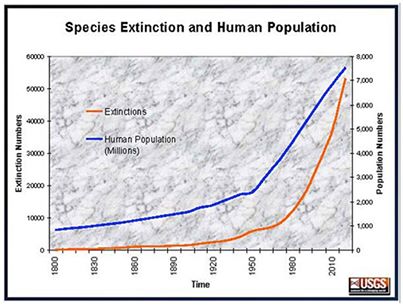
We are experiencing an accelerated obliteration of the planet’s life-forms—an estimated 8,760 species die off per year—because, simply put, there are too many people. Most of these extinctions are the direct result of the expanding need for energy, housing, food and other resources. The Yangtze River dolphin, Atlantic gray whale, West African black rhino, Merriam’s elk, California grizzly bear, silver trout, blue pike and dusky seaside sparrow are all victims of human overpopulation. Population growth, as E.O. Wilson says, is “the monster on the land.” Species are vanishing at a rate of a hundred to a thousand times faster than they did before the arrival of humans. If the current rate of extinction continues, Homo sapiens will be one of the few life-forms left on the planet, its members scrambling violently among themselves for water, food, fossil fuels and perhaps air until they too disappear. Humanity, Wilson says, is leaving the Cenozoic, the age of mammals, and entering the Eremozoic—the era of solitude. As long as the Earth is viewed as the personal property of the human race, a belief embraced by everyone from born-again Christians to Marxists to free-market economists, we are destined to soon inhabit a biological wasteland.

The populations in industrialized nations maintain their lifestyles because they have the military and economic power to consume a disproportionate share of the world’s resources. The United States alone gobbles up about 25 percent of the oil produced in the world each year. These nations view their stable or even zero growth birthrates as sufficient. It has been left to developing countries to cope with the emergent population crisis. India, Egypt, South Africa, Iran, Indonesia, Cuba and China, whose one-child policy has prevented the addition of 400 million people, have all tried to institute population control measures. But on most of the planet, population growth is exploding. The U.N. estimates that 200 million women worldwide do not have access to contraception. The population of the Persian Gulf states, along with the Israeli-occupied territories, will double in two decades, a rise that will ominously coincide with precipitous peak oil declines.

The overpopulated regions of the globe will ravage their local environments, cutting down rainforests and the few remaining wilderness areas, in a desperate bid to grow food. And the depletion and destruction of resources will eventually create an overpopulation problem in industrialized nations as well. The resources that industrialized nations consider their birthright will become harder and more expensive to obtain. Rising water levels on coastlines, which may submerge coastal nations such as Bangladesh, will disrupt agriculture and displace millions, who will attempt to flee to areas on the planet where life is still possible. The rising temperatures and droughts have already begun to destroy crop lands in Africa, Australia, Texas and California. The effects of this devastation will first be felt in places like Bangladesh, but will soon spread within our borders. Footprint data suggests that, based on current lifestyles, the sustainable population of the United Kingdom—the number of people the country could feed, fuel and support from its own biological capacity—is about 18 million. This means that in an age of extreme scarcity, some 43 million people in Great Britain would not be able to survive. Overpopulation will become a serious threat to the viability of many industrialized states the instant the cheap consumption of the world’s resources can no longer be maintained. This moment may be closer than we think.

A world where 8 billion to 10 billion people are competing for diminishing resources will not be peaceful. The industrialized nations will, as we have done in Iraq, turn to their militaries to ensure a steady supply of fossil fuels, minerals and other nonrenewable resources in the vain effort to sustain a lifestyle that will, in the end, be unsustainable. The collapse of industrial farming, which is made possible only with cheap oil, will lead to an increase in famine, disease and starvation. And the reaction of those on the bottom will be the low-tech tactic of terrorism and war. Perhaps the chaos and bloodshed will be so massive that overpopulation will be solved through violence, but this is hardly a comfort.

A Seattle high school is taking birth control access to the next level

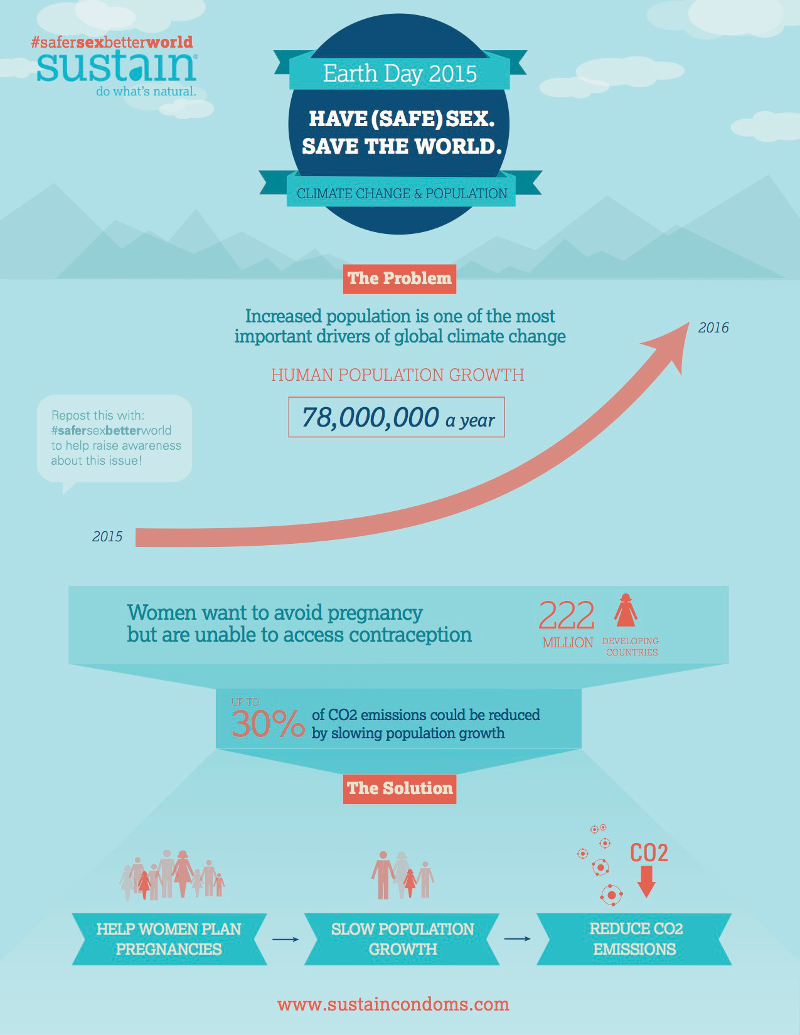
sustainEDinfographic800

This is part 2 of our first-hand look at reproductive health access for teen girls in our home state of Washington. Read our introduction to the series here.

Chief Sealth International is a Seattle public school in the diverse neighborhood of Delridge, on the southwest end of the city. It’s a modern building, airy and light-filled, and the surprisingly buoyant mood set by gleefully yelling teenagers almost makes you forget how awful high school actually is. Unassumingly perched over the atrium is the school-based health center, where the students can get treatment for sore throats (both feigned and not), bandages for sprained ankles, and IUDs.

At the end of 2009, the American College of Obstetricians and Gynecologists formally recommended long-acting reversible contraceptives (LARCs) — IUDs and hormonal implants — as the most effective ways for teen girls to avoid unintended pregnancy, and Seattle’s public health department quickly decided that they should be available in school-based clinics. (These clinics, which have also provided other forms of birth control to students since the mid 1990s, are funded by a city-wide Families and Education Levy, which voters have supported since 1991.)

Neighborcare Health, which runs nonprofit medical and dental clinics in Seattle for low-income and uninsured families and individuals, was the first organization to step up to the plate and provide LARC placement services in certain Seattle public high schools and middle schools, where it sponsors the school-based health centers — and within just a few months of the ACOG recommendation, the first Seattle public school student got a Nexplanon hormonal implant through the program.

LARCs, because they’re meant to last for so long, are the most expensive forms of birth control available. But free, in-school LARC placement is made possible in part by Take Charge, a Washington State Medicaid program that’s specifically targeted toward minors seeking contraceptive services. Because of Take Charge, girls under 19 who don’t want to use their parents’ private insurance to get birth control have a way to get contraception in school at no cost.

Now, it’s as easy for a Chief Sealth student to get an IUD as it is to get a Coke – actually, easier, because pop is banned in Seattle schools.

More: http://grist.org/living/a-seattle-high-school-is-taking-birth-control-access-to-the-next-level/?utm_source=newsletter&utm_medium=email&utm_term=EDIT%20Weekly&utm_campaign=weekly

Who is Making More Waves?

Text and Wildlife Photography ©Jim Robertson, 2015. All Rights Reserved

Text and Wildlife Photography ©Jim Robertson, 2015. All Rights Reserved


Blind anti-sea lion hatred or anti-cormorant animosity, like anti-wolf bigotry, seems born into in-bred, backwards communities, but it is a product of “nurture,” not nature and will (as with racism and sexism) surely fade away over time.

DSC_0030

The question is, how many of these animals will be left after all the arrogant, narcissistic, speciesist, selfish blood lust is finally appeased?

DSC_0046

And when it comes down to it, who is really making more waves—the sea lions for eating fish as they have for tens of millions of years (not hundreds, not thousands, but tens of MILLIONS) or the humans who are in the process, generally, of destroying the planet by changing the climate, polluting everything from the seas to the air we breathe, overfishing, overhunting, overpopulating and single-handedly bringing to an end the Age of Mammals?

DSC_0089

Hats off to all the good folks with the Sea Lion Defense Brigade who stand up for sea life, despite local animosity, on a daily basis.


Wildlife Photography ©Jim Robertson

Wildlife Photography ©Jim Robertson


Paul Ehrlich Was Right After All

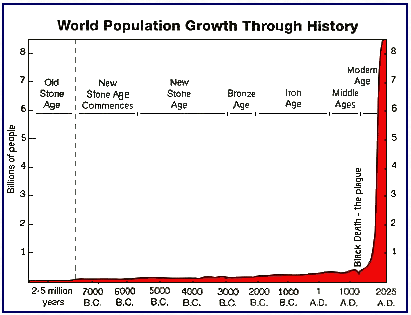
world-population-through-history-to-2025

Looking back through some old copies of the National Wildlife Magazine, I came across an article from April/May, 1990, by John Nielsen entitled, “Whatever Happened to the Population Bomb? Two decades after Paul Ehrlich’s doomsday predictions, the biologist answers his critics with a new book.” The article came out at the time of Ehrlich’s then new book, Population Explosion, 22 years after his best-selling book (more than 20 million copies), Population Bomb. Ehrlich told National Wildlife, “What we were seeing on a global scale, was the rise to total dominance of a single species, man. This phenomenon was absolutely new and it threatened to wreck the planet.”

The article states, What about the population bomb? What happened to the notion that exponential population growth is the cause of almost all environmental woes? If to Ehrlich his 1968 message was clear, to his more extreme critics it has proved inaccurate and wrong-headed.

Like other ‘doomsayers,’ economist Julian Simon says, ‘Ehrlich underestimates the human ability to respond to change.’

But what about the rest of nature’s ability to respond to change wrought by humans?

Other critics point to Ehrlich’s erroneous predictions of traffic riots in Los Angeles, cataclysmic famines and dead oceans…

We may not be hearing a lot about traffic riots in LA—aside from road rage and regular drive-by shootings, but over-exploited fisheries and massive dead zones are cropping up in oceans across the globe.

Meanwhile, Right- to-Life activists attack him for favoring abortion. His notions of coercive population control in countries such as India and China have been called inhuman.

The problem with these charges, he says, is that they miss the point. Ehrlich admits that some of the scenarios that he made did not unfold [yet]. But he maintains, scenarios are not predictions and being out of date is not the same as being wrong.

Though a new environmental awareness is sweeping the United States [again, this was 1990], population control doesn’t seem to be generating as much concern in the press…The very notion, charges Ehrlich, is becoming ‘taboo’. “Politically, the pressure has been on to stay away from this issue,” he says.

“Each hour,” Ehrlich writes, “there are 11,000 more mouths to feed.”

Nowadays that number is roughly 16,000 per hour. (But of course that’s not taking into account people’s ability to respond to change.)

About his then new book, The Population Explosion, Ehrlich concedes that readers might ignore him this time around. They do so, he says, at the peril of their children’s world. Either way, this will be the last written warning.

“About the only thing I can guarantee is that this will be the last book on population by Paul Ehrlich,” he says. “You can only spend so much time alerting people to a problem. After that, they do their own thing.”

From Bad to More Bad

Demonstrators depart after morning protesting Shell oil rig

And, more bad:
Climate change meets population shift: More people will be hotterworld-population-through-history-to-2025
The Associated Press

WASHINGTON (AP) — The combination of global warming and shifting population means that by mid-century, there will be a huge increase in the number of Americans sweating through days that are extremely hot, a new study says.

More:

http://www.seattletimes.com/seattle-news/science/future-for-warming-us-not-just-the-heat-but-the-humanity/

Nature Climate Change: http://www.nature.com/nclimate

The demand for oil is growing exponentially

addict2 Crude oil Clock: http://www.oildecline.com/
The time to kick the habit is now…safe_image

It has taken between 50-300 million years to form, and yet we have managed to burn roughly half of all global oil reserves in merely 125 years or so.

The world now consumes 85 million barrels of oil per day, or 40,000 gallons per second, and demand is growing exponentially.

Oil production in 33 out of 48 out countries has now peaked, including Kuwait, Russia and Mexico. Global oil production is now also approaching an all time peak and can potentially end our Industrial Civilization. The most distinguished and prominent geologists, oil industry experts, energy analysts and organizations all agree that big trouble is brewing.

The world is not running out of oil itself, but rather its ability to produce high-quality cheap and economically extractable oil on demand. After more than fifty years of research and analysis on the subject by the most widely respected & rational scientists, it is now clear that the rate at which world oil producers can extract oil is reaching the maximum level possible. This is what is meant by Peak Oil. With great effort and expenditure, the current level of oil production can possibly be maintained for a few more years, but beyond that oil production must begin a permanent & irreversible decline. The Stone Age did not end because of the lack of stones, and the Oil Age won’t end because of lack of oil. The issue is lack of further growth, followed by gradual, then steep decline. Dr King Hubbert correctly predicted peaking of USA oil production in the 1970’s on this basis.

It is now widely acknowledged by the world’s leading petroleum geologists that more than 95 percent of all recoverable oil has now been found. We therefore know, within a reasonable degree of certainty, the total amount of oil available to us. Any oil well has roughly the same life cycle where the production rate peaks before it goes into terminal decline. This happens when about half of the oil has been recovered from the well. We have consumed approximately half of the world’s total reserve of about 2.5 trillion barrels of conventional oil in the ground when we started drilling the first well at a current rate of over 30 billion a year, meaning the world is nearing its production plateau.

Worldwide discovery of oil peaked in 1964 and has followed a steady decline since. According to industry consultants IHS Energy, 90% of all known reserves are now in production, suggesting that few major discoveries remain to be made. There have been no significant discoveries of new oil since 2002. In 2001 there were 8 large scale discoveries, and in 2002 there were 3 such discoveries. In 2003 there were no large scale discoveries of oil. Given geologists’ sophisticated understanding of the characteristics that would indicate a major oil find, is is highly unlikely that any area large enough to be significant has eluded attention and no amount or kind of technology will alter that. Since 1981 we have consumed oil faster than we have found it, and the gap continues to widen. Developing an area such as the Artic National Wildlife Refuge in Alaska has a ten year lead time and would ultimately produce well under 1% of what the world currently consumes (IEA).

Oil is now being consumed four times faster than it is being discovered, and the situation is becoming critical.

“The consumption of a finite resource is simply a finite venture and the faster we use the quicker it peaks”  (M. Simmons)

Global oil production is rapidly approaching its peak, even if natural gas liquids and expensive, destructive, risky deepwater and polar oil are included.

Recent Warnings:

“Peak oil is now.” German Energy Watch Group –2008

“By 2012, surplus oil production capacity could entirely disappear..…” U.S. Department of Defense –2008 & 2010.

“A global peak is inevitable. The timing is uncertain, but the window is rapidly narrowing.” UK Energy Research Centre -2009

“The next five years will see us face … the oil crunch.” UK Industry Taskforce on Peak Oil and Energy Security –2009


The Saudi Arabia Case

With more than fifty oil-producing countries now in decline, focus on the oil-rich Middle East has sharpened dramatically. Countries of the Middle East have traditionally been able to relieve tight oil markets by increasing production, but, as the this region nears its own oil peak, any relief it can provide is limited and temporary.

Saudi Arabia is a major oil producer with 73% of all incremental world demand being met by this country. The worrying fact is that 90% of their production comes from only 5 mega fields (one is the Ghawar field which is the biggest ever discovered), and are all at risk of unplanned production collapse. In 2004 there were warning signs of production falling into depletion. For years, Aramco, the Saudi national company, use secondary recovery techniques by injecting enormous amounts of seawater (7 million  barrels daily) into their biggest field to boost production. These methods have only temporary effects, and lead to accelerated rates of depletion in the future.

Matt Simmons, long time energy analyst who studied energy for 34 years, in his book “Twilight in the Desert” effectively confronts the complacent belief that there are ample oil reserves in Saudi Arabia and has created a compelling case that Saudi Arabia production will soon reach a peak, after which its production will decline and the world will be confronted with a catastrophic oil shortage. The factual basis of the book is over 200 technical papers published over the last 20 years which individually detail problems with particular wells or particular fields, but which collectively demonstrate that the entire Saudi oil system is “old and fraying” with reserves deliberately vastly overestimated.

Geologist Dr Colin Campbell in a 1998 article in Scientific American also details numerous discrepancies about estimates in Middle East reserves. The extent of reserves reported remained amazingly constant from year to year and then jumped dramatically. A similar unexplainable jump occurred in other countries in the Middle East, sometimes even in the total absence of exploration, strongly suggesting that OPEC’s reserves are overstated.


Peak Oil Imminent

The only uncertainty about peak oil is the time scale, which is difficult to predict accurately. Over the years, accurate prediction of oil production was confronted by fluctuating ecological, economical, and political factors, which imposed many restrictions on its exploration, transportation, and supply and demand. At the end of 2009, the Kuwait university and the Kuwait Oil company collaborated in a study to predict the peak date using multicylic models, depending on the historical 2 oil production trend and known oil reserves of 47 major oil production countries, to overcome the limitations and restrictions associated with other previous models. Based on this model, world production is estimated to peak in 2014. Other experts, oil companies and analyst firm estimate the peak date between now and around 2020. What’s certain is that the global production will go into a permanent decline within our generation.

“One of nature’s biggest forces is exponential growth” 

(Albert Einstein)

At a current average global consumption growth rate of 2% annually (1995-2005), by 2025 the world will need 50% more oil (120 mbd), and the International Energy Agency (IEA) admits that Saudi will have to double oil production to achieve this, which is not feasible in even the most optimistic scenario. And that’s not even taking into account that 80% of the world is only just starting to use oil & gas. In recent years, energy demands from mostly emerging economies have increased dramatically in populous countries as their oil consumption per capita grows. The International Energy Agency estimates that 93% of all incremental demand comes from non-OECD countries. Therefore, in time oil prices will continue to rise.

Based on Simmon’s analysis, sudden and sharp oil production declines could happen at any time. Even under the most optimistic scenario, Saudi Arabia may be able to maintain current rates of production for several years, but will not be able to increase production enough to meet the expected increase in world demand. There is no likely scenario that some new frontier can replace Middle East oil declines.

From Wiki leaks it has emerged that Senior Saudi energy officials have privately warned US and European counterparts that Opec would have an “extremely difficult time” meeting demand and that the reserves of Saudi have been overstated by as much as 40%.

“Even an attempt to get up to 12 mbd would wreak havoc within a decade by causing damage to the oil fields. 
-Saudi Aramco official

Exxon Mobil Corporation, one of the world’s largest publicly owned petroleum companies, is the most forthright of the major oil companies having had the courage and honesty to quietly publish the declining discovery trend, based on sound industry data with reserve revisions properly backdated. Furthermore, the company is running page-size advertisements in European papers stressing the immense challenges to be faced in meeting future energy demand, hinting that the challenges might not be met despite its considerable expertise. Chevron recently joined their campaign publishing an advertisement in national newspapers stating that the ‘Era of Easy Oil is Over’ (see here to view full ad).

“Initially it will be denied. There will be much lying and obfuscation. Then prices will rise and demand will fall. The rich will outbid the poor for available supplies.” 


The fallacy of Alternatives

The public, business leaders and politicians are all under the false assumption that oil depletion is a straightforward engineering problem of exactly the kind that technology and human ingenuity have so successfully solved before. Technology itself has become a kind of supernatural force, although in reality it is just the hardware and programming for running that fuel, and governed by the basic laws of physics and thermodynamics. Much of our existing technology simply won’t work without an abundant underlying fossil fuel base. In addition, physicist Jonathan Huebner has concluded in The History of Science and Technology that the rate of innovation in the US peaked in 1873, and the current rate of innovation is about the same as it was in 1600. According to Huebner, by 2024 it will have slumped to the same level as it was in the Dark Ages. Hence, without sufficient innovation and a comfortable surplus of fossil fuels, we may simply lack the tools to move forward.

With this energy base dwindling, there is simply not enough time to replace a fluid so cheap, abundant and versatile. It is rich in energy, easy to use, store, and transport. Nothing has the bang for the buck of oil, and nothing can replace it in time – either separately or in combination. Wind, waves and other renewables are all pretty marginal and also take a lot of energy to construct and require a petroleum platform to work off.

Natural gas is a diminishing resource as well and cannot satisfy the growing demand for energy. US Gas supplies were so low in 2003 after a harsh winter that to preserve life and property supplies were close to being cut off to manufacturers, electric plants and lastly homes.

Ethanol has a net energy value of zero (not accounting for soil and water damage and other costs due to unsustainable agricultural practices) – it is subsidized as a boon to agribusiness and would have a negligible effect (Prindle, ACEEE).

Solar energy produces marginal net energy, but are still decades away at best from being a viable substitute given the recent rate of progress in efficiency and costs (averaging about five percent a year) and is nowhere ready to meet the world’s energy needs. More importantly, solar photovoltaic cells (PVC) are built from hydrocarbon feed stocks and therefore require excess resources. It is estimated that a global solar energy system would take a century to build and would consume a major portion of world iron production (Foreign Affairs, Rhodes).

The widespread belief that hydrogen is going to save the day is a good example of how delusional people have become. Hydrogen fuel cells are not an energy source at all, but are more properly termed a form of energy storage. Free hydrogen does not exist on this planet. It requires more energy to break a hydrogen bond than will ever be garnered from that free hydrogen. The current source of hydrogen is natural gas – that is, a hydrocarbon. In the envisioned system of solar PVC & hydrogen fuel cells, every major component of the system, from the PVC to the fuel cells themselves will require hydrocarbon energy and feedstocks. The oil age will never be replaced by a hydrogen fuel-cell economy.

Coal is abundant, but its net energy profile is poor compared to oil and its conversion process to synthetic fuels is very inefficient. Coal would have to be mined at much higher rates to replace declining oil field. In addition, coal production is extremely harmful to the environment. One large coal burning electric plant releases enough radioactive material in a year to build two atomic bombs, apart from emitting more greenhouse gases than any other fuels.  Coal is implicated in mercury pollution that causes 60.000 cases of brain damage in newborn children every year in the USA. Resorting to coal would be a very big step backwards and what we may face then may be more like the Dim Ages. More importantly,  coal is distributed very unevenly with the top three countries (China, USA, USSR) possessing almost 70% of total. Much of the current oil and gas supply is in low-population countries, such as Saudi Arabia, that cannot possibly use all of the production for themselves. They are hence quite willing, indeed eager, to sell it to other countries. When oil and gas are gone, and only coal remains, and the few (large-population) countries that possess it need all of it for their own populations, it will be interesting to see how much is offered for sale to other countries.

Obtaining usable oil from tar sands requires huge amounts of energy, as it has to be mined and washed with super hot water. From an energy balance, it takes the equivalence of two barrels of oil to produce three, which is still positive but poor in terms of energy economics. In the early days of conventional oil, this ratio used to be one to thirty.

Nuclear power plants are simply too expensive and take ten years to build, relying on a fossil fuel platform for all stages of construction, maintenance, and extracting & processing nuclear fuels. Additionally, uranium is also a rare and finite source with its own production peak. Since 2006, the uranium price has already more than doubled.

Nuclear fusion is the kind of energy that the world needs. However, mastering it has been 25 years away for the past 50 years, and still is…

Fossil fuels allowed us to operate highly complex systems at gigantic scales. Renewables are simply incompatible in this context and the new fuels and technologies required would simply take a lot more time to develop than available and require access to abundant supplies of cheap fossil fuels, putting the industrial adventure out of business.

In an interview with The Times, former Shell CEO Jeroen van der Veer calls for a “reality check” and warns that the world’s energy crisis cannot be solved by renewables. “Contrary to public perceptions, renewable energy is not the silver bullet that will soon solve all our problems. Just when energy demand is surging, many of the world’s conventional oilfields are going into decline. The world is blinding itself to the reality of its energy problems, ignoring the scale of growth in demand from developing countries and placing too much faith in renewable sources of power”.

Alternative energies will never replace fossil fuels at the scale, rate and manner at which the world currently consumes them, and humankind’s ingenuity will simply not overcome the upper limits of geology & physics.  

Current Global Energy Production: No substitutes can replace fossil fuels at the same scale & rate at which the world currently use them


Just FYI: Fox calls it ‘The worst bird flu outbreak on record’

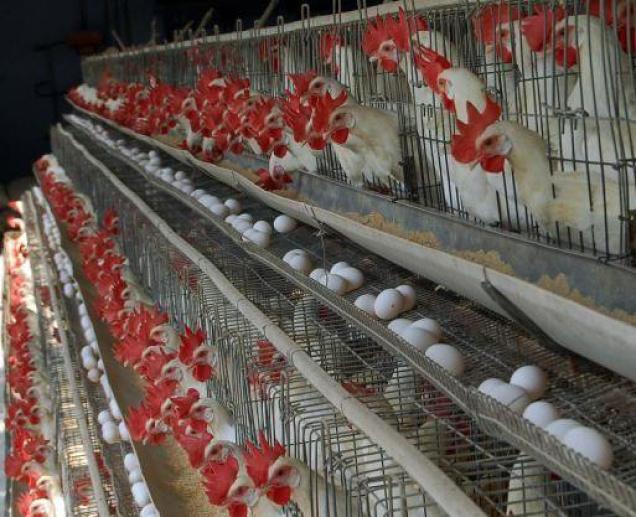
poultry_845904f_jp_1463316f

From: http://www.foxnews.com/health/2015/05/15/nebraska-declares-state-emergency-in-bird-flu-outbreak/

Government officials were working closely with the nation’s poultry industry Friday to contain the worst outbreak of bird flu on record, one that already has prompted the governors of four states to declare emergencies and led to the culling of 33 million birds in 16 states.

Nebraska became the latest state to declare an emergency amid the outbreak, which has seen three deadly strains of avian influenza have hit North America since December. That action by Gov. Pete Ricketts followed similar moves in Wisconsin, Minnesota and Iowa. With the spread of infection picking up speed in recent weeks, the battle to stem the crisis has become an all-hands-on-deck situation.

_____________________________________

Also see, from:   http://www.nytimes.com/2015/05/15/business/bird-flu-outbreak-chicken-farmers.html?emc=eta1&_r=1

By  MAY 14, 2015

Deadly avian flu viruses have affected more than 33 million turkeys, chickens and ducks in more than a dozen states since December. The toll at Center Fresh farms alone accounts for nearly 17 percent of the nation’s poultry that has either been killed by bird flu or is being euthanized to prevent its spread.

While farmers in Asia and elsewhere have had to grapple with avian flu epidemics, no farmers in the United States have ever confronted a health crisis among livestock like this one, which seemed to travel along migratory bird pathways from the Pacific Northwest to the Midwestern states. Almost every day brings confirmation by the Agriculture Department that at least another hundred thousand or so birds must be destroyed; some days, the number exceeds several million.

On Thursday, South Dakota reported its first possible infection on a chicken farm with 1.3 million birds in the eastern part of the state.

Mounds and mounds of carcasses have piled up in vast barns here in the northwestern corner of Iowa, where farmers and officials have been appealing for help to deal with disposal of such a vast number of flocks. Workers wearing masks and protective gear have scrambled to clear the barns, but it is a painstaking process. In these close-knit towns that include many descendants of the area’s original Dutch settlers, some farmers have resorted to burying dead birds in hurriedly dug trenches on their own land, while officials weighed using landfills and mobile incinerators.

Iowa, where one in every five eggs consumed in the country is laid, has been the hardest hit: More than 40 percent of its egg-laying hens are dead or dying. Many are in this region, where barns house up to half a million birds in cages stacked to the rafters. The high density of these egg farms helps to explain why the flu, which can kill 90 percent or more of a flock within 48 hours, is decimating more birds in Iowa than in other states.

Continue reading the main story

The Limits to Human Carrying-Capacity

Harvard archeologist Steven Le Blanc writes in “War or Peace for the Future,” the final chapter of his book, Constant Battles; Why We Fight (pg. 224), “…let’s examine the myths of a peaceful past and of humans living in ecological balance and contrast them with a careful assessment of reality that turns the more traditional view on its head. These myths assume that for long periods of time the earliest humans were simple foragers [hunter-gatherers] who lived in harmony with nature, had few wants, and were able to control their populations. When agriculture was developed, populations grew, but farmers managed to remain inherent environmentalist and continued to avoid the environment. Then finally, but not until the rise of complex societies, we humans lost our ability to live in ecological balance. At that point, the appealing story of millions of years of peaceful coexistence with nature turns ugly, and violent, environmentally threatened societies—in particular Western European society—command a starring role. As Western societies spread or affected much of the planet, the myth continues, warfare and environmental degradation spread like an infectious disease, engulfing most of the world—except where vestigial remains of this peaceful, ecologically balanced existence survived among such groups as the !Kung [bushmen], Australian aborigines, Eskimos, Siriono, and the like. In other words, noble Cro-Magnon humans were replaced by warlike, modern imperialists.

“Reality paints a different picture, one with many opportunities for peace and ecological harmony, but it is a portrait of opportunities lost. Looking back through history, several radical changes in human societies occurred, and each change provided, in theory, an opportunity to improve the population-ecological balance and usher in a new era of peace. Each time one of these dramatic changes took place, peace and ecological balance remained elusive.

“The first of these transformations was becoming human. As proto-humans became fully human beings and gained superior intelligence, language, and cultural norms, these initial human foragers were hardly peaceful. Greater intelligence did not result in greater peacefulness. Although some ecologically benign behaviors did develop, they were never effective enough to regulate population growth and to establish a peaceful, stable system. Except in the harshest environments, forager populations grew, reaching the carrying-capacity limit, and then competed for resources. For more than a million years, humans lived in a precarious balance between population growth and the limitations and variability of the environment. Periodic population increases that could not be sustained by an ever-changing resource base lead to chronic starvation, infanticide, and warfare. These early people modified the environment by such means as fire and were no more ‘environmentalists’ than their short-term goals dictated. Since their numbers, by necessity, low, and their technology limited, the impact of the first foragers was relatively minor.

“Beginning around ten thousand to twelve thousand years ago, people began to farm in the Middle East, China, and later in Africa and Central and South America. This new situation might have resulted in a peaceful world. Farmers were able to get far more food from an acre of land than had ever before been possible, and there was potential for plenty for all—but the balance was not maintained. Farmers could reproduce at rates far beyond those of foragers, and they spread quickly over much of Earth. In spite of its potential, farming itself solved no problems. The benefits of every new plant domesticated, every new animal tamed, and every new technology invented were quickly consumed by the growing number of people such advances could additionally support. Horticulture and domestic animals caused environmental degradation that went way beyond the effects of just the higher population numbers. More people translated into more degradation. In any given region, in spite of efforts to control growth or to develop new foods and technologies, the population soon grew to stress the resources once again. Malnutrition, if not starvation, and even more intense and chronic warfare were common among the early farmers.

“Once again, a major social transformation occurred. Complex societies developed. The leadership in these societies had the mechanisms and potential ability to control population growth and to force people to be more ecologically sensitive. Along with more complex societies came complex technologies. The chiefdoms and early states had developed enough technology to harm the world’s environment at levels and rates not seen before. The result was even more degradation of the environment. Although some efforts were made to control population growth, such mechanisms were always far from fully successful, and resource stress was as common as ever.”      etc…

graph

The Gravest Problem Animals Face: Man’s Self-Appointed Supremacy Over Them

1451324_650954518277931_1616731734_n

“Time is running out” (A final message from John A. Livingston)

The following thoughts appear in the last chapter of the late John A. Livingston’s 1973 book, One Cosmic Instant; Man’s Fleeting Supremacy (a book I can especially relate to in that it dissects and begins to dismantle the entrenched, arrogant attitude that humans are apart from, and even superior to, the rest of life here on Earth). Livingston begins by comparing this complex, arrogant, human attitude to an ecosystem:

“In their natural environment, living beings face an infinity of survival problems—food shortages, predators, diseases, competitors, population stresses, and so on. The gravest problem they now face, however—man’s self-appointed supremacy over them—is strangely like an ecosystem. It has a vast and complicated array of interlocking components…

“As any naturalist knows, the quickest and neatest way to destroy an eco-system is to simplify it, to reduce its complexity and thus short-circuit the equilibrium maintained by the mutual interdependence of its component parts. Perhaps the traditional, cultural, institutional, conceptual eco-construct can be decomplexified by our deliberate manipulation—by the exercise of our conscious choice. Intervention in its workings will require degrees of courage, sacrifice, imagination and generosity which have not frequently been displayed in the course of man’s relationship with his environment. One hesitates to predict whether we will be willing to undertake it. The destruction of the power hierarchy over nature will require a shift in attitudes more profound than we can presently imagine.

“The process of simplification or decomplexification will be drastic. Suppose one were to elect to have an initial go at the “rights of man”—the God-given rights of man the individual and man the species. Suppose it were feasible to actually remove some of those rights, one after the other. The consequences might be astonishing… Environmental forces are already ‘eroding’ traditional rights.

“Then there is the right to have children. Suppose people were no longer permitted to reproduce beyond the replacement level. Replacement level means one adult, one child—zero population growth…The environmentalist must look hard at traditional human freedoms.

“There are other ‘rights’ such as the imagined right of man to kill non-human animals for amusement. Clearly the environment itself will deal with this tradition, simply as the effect of men having joyfully massacred so many ducks, geese, rhinos, elephants and Cape buffaloes that there will not be enough of them to go round. A similar end will come to the fashion industry’s apparent determination to exploit to the bitter end the final stocks of leopard, tiger, jaguar, and the rest.

“What of the more fundamental, unquestioned rights of man the species? The right to populate at will must certainly be removed, either by our own conscious choice or by a natural backlash on the part of the biosphere itself. The right to dominate animals of other species, and to dominate landscapes, will not be subverted as readily. Other beings, as species and as landscapes, do not have the ‘clout’ of the combined forces of the biosphere. But that right, too, will disappear. It will be a sad process, for we will not give up the right to dominate without a struggle—a struggle which will cost both human and non-human nature exorbitantly.

“It will not be in our best interests to allow the environment to dismantle our conceptual power structure for us. In such an eventuality, cosmic forces would make life devastating. We should not expect the environmental counter attack to be nearly so dramatic or spectacular as the ancient vision of the Apocalypse, but it would be equally disastrous. Because it would not be sudden, it would be even more agonizing…

“Time is running out for the dismantling of the institutions which have kept us so grimly locked in step with ‘progress.’ There is even less time for reflection on the merits of the traditional components of our culture which have brought us—and all of nature—to the present point of departure. A point of departure it is, either from the narrow and egocentric culture course we have adopted, or premature departure from the blue planet itself. If we are not capable of identifying the specific threads in the fabric of our beliefs which have sustained the entire tapestry upon which the myth of human dominance is emblazoned, then it may be too late already.

“The hope for survival of non-human nature is dim. There is a familiar scenario. As conditions worsen for human populations—as they will, initially, in underprivileged parts of the world—every ounce and erg of our most refined technological skills and energies will be brought into play to extract from Earth and its non-human inhabitants the basic ingredients for human survival. We will first destroy all of the larger animals, either for meat or because they compete with us for space, together with those which may be intolerant of our activities because of their specific natural specializations. Extinctions of non-human species, without replacement, will continue at an accelerating rate, until the only non-human beings remaining will be those who are willing to share their squalor with us—rats, gutter curs, and parasites and micro-organisms which thrive in time environmental dislocation.

“Our capacity for seeing into the future—and we do not want to know about futures of that kind. We withdraw behind the opaqueness of closed imaginations and familiar fancies. We acknowledge that, yes, the situation is bad, but human ingenuity, creativity, enterprise and good will overcome all difficulties.

“While we should be unravelling the threads of tradition, we are weaving ever more elaborate curtains of rationalization. Every avenue of questioning closed off is another route to intellectual and spiritual freedom barricaded forever.

“There is no engineering answer to a problem created by culture. The worst in humanistic ways of thinking opened and kept open the conceptual man/nature dichotomy, and only mature wisdom and insight that categorize the best in natural philosophic tradition can mend it.”