Covid vaccine offers exhausted health-care workers hope—but not immediate relief—as ICUs fill across U.S.

PUBLISHED WED, DEC 9 202012:37 PM ESTUPDATED WED, DEC 9 20201:08 PM ESTNoah Higgins-Dunn@HIGGINSDUNNKEY POINTS

https://www.cnbc.com/2020/12/09/covid-vaccine-offers-exhausted-nurses-hope-but-not-immediate-relief.html

  • Around the U.S., hospitals are reaching their limits. There are 104,600 Covid-19 patients in the nation’s hospitals, the most at any point during the pandemic.
  • Some health-care facilities, especially those in rural areas, have struggled to recruit and retain nurses even before the pandemic, experts say.
  • Now, exhausted health-care workers continue to treat sick patients months into the pandemic, even those who don’t believe the virus exists, some nurses say.
A medical staff member Gabriel Cervera Rodriguez closes his eyes while taking a. short brake in the COVID-19 intensive care unit (ICU) at the United Memorial Medical Center on December 2, 2020 in Houston, Texas.

A medical staff member Gabriel Cervera Rodriguez closes his eyes while taking a. short brake in the COVID-19 intensive care unit (ICU) at the United Memorial Medical Center on December 2, 2020 in Houston, Texas.Go Nakamura | Getty Images

Tayler Oakes, a 27-year-old travel nurse from Tennessee treating Covid-19 patients at a small Navajo Nation health-care facility, is exhausted.

Working six days a week, Oakes has lived in a motel in a rural part of Arizona since July, assisting patients at a critical access hospital that treats people in dire need of care. Despite the endless hours she and her co-workers have put in, the number of Covid-19 patients is still rising rapidly, she said.

The Navajo Nation extended its stay-at-home order by three weeks beginning Monday after President Jonathan Nez announced that nearly all of the Navajo Area Indian Health Service’s ICU beds were full and there’s “little to no options” to move patients to nearby facilities, which are also at capacity.

“We are so tired — emotionally, physically, spiritually,” Oakes told CNBC. “But then you also have this guilt of like, ‘I have to go to work because this isn’t a normal job. People are dying.’ It’s a big moral burden to carry.”

The coronavirus is pushing the U.S. health-care system to its limits. But unlike the first wave of Covid hospitalizations in the spring when nurses rushed to hot spots to help care for sick patients, several parts of the country are now simultaneously experiencing strains on their health systems. Relief isn’t coming so soon this time, medical experts say, and the health-care workers who are battling the virus are fatigued after months of treating ill patients. In some cases, they’re even sick with Covid themselves. A coming vaccine offers hope, but it will be months before it can be widely distributed.

U.S. hospitals are treating 104,600 Covid patient, the most at any point during the pandemic, according to data compiled by the COVID Tracking Project, which is run by journalists at The Atlantic.

Over 2,200 people are dying from Covid in the U.S. every day on average, according to data compiled by Johns Hopkins University. States like New York, Massachusetts and Rhode Island have erected field hospitals to prepare for an influx of sick patients. In California, Gov. Gavin Newsom has implemented a fresh stay-at-home order on many residents to preserve the state’s ICU capacity.

Dr. Robert Redfield, the Centers for Disease Control and Prevention director, warned last week that the next few months of the pandemic will be among “the most difficult in the public health history of this nation.” In another dire warning, White House coronavirus response coordinator Dr. Deborah Birx said Sunday that the winter surge will be the “worst event that this country will face.”

Health-care workers and long-term care facility residents will be the first in line for a vaccine when it’s cleared for public use, which experts say will help ease the strain on the nation’s health-care system. However, the White House task force warned states in its weekly report, which was obtained by CNBC, that the drugs’ implementation likely won’t help the virus’ spread and deaths “until the late spring.”

“We’re scared, we’re tired, we’re frustrated,” Oakes said. “We’re human beings just like everyone else.”

Hospitals face staffing crunch

Trusted Health, a company that connects travel nurses with open positions at hospitals across the U.S., has about 2,000 open ICU nursing positions. That’s about three times the number of open positions last year, and more roles compared with April when states along the East and West coasts were in desperate need for more medical workers, said Dan Weberg, head of clinical innovation at Trusted Health.

“What’s different about this time is that instead of it being in a few states like Michigan, in New York and Washington, Florida early on, now it’s a bunch of needs across every state,” Weberg said. “And so everyone’s in crisis, especially the middle part of the country.”

Every hospital typically has a surge plan ready in case of emergencies, such as hurricanes, fires or mass shootings, where they could draw on resources like staffing and equipment from other facilities in the country, said Nancy Foster, vice president of quality and patient safety at the American Hospital Association.

However, those plans assume the needs would be regional, not the broad emergencies hospitals nationwide are now responding to, she said. CDC director Redfield warned during an event hosted by the U.S. Chamber of Commerce last week that about 90% of hospitals in the country are in “hot zones and the red zones.” He added that 90% of long-term care facilities are in areas with high level of spread.

“It’s really about having the staff to care for people. You can get creative without a bed, but nurses and doctors and respiratory therapists and other staff are critical,” Foster said. “And you can’t just invent those overnight.”

Medical staff members sort lines and pipes connected to a patient in the COVID-19 intensive care unit (ICU) at the United Memorial Medical Center on November 19, 2020 in Houston, Texas.

Medical staff members sort lines and pipes connected to a patient in the COVID-19 intensive care unit (ICU) at the United Memorial Medical Center on November 19, 2020 in Houston, Texas.Go Nakamura | Getty Images

The demand for nurses is especially pronounced in rural parts of the country, where health-care talent has been in short supply even before the pandemic took hold in the U.S., said Katie Boston-Leary, nursing practice and work environment director at the American Nurses Association.

“The work force has become more unstable because the pandemic has challenged nurses, the ones that are working, physically and mentally, and they’re getting sick from the disease and in some cases dying,” Boston-Leary said.

States like Iowa, South Dakota, North Dakota, Wisconsin, Tennessee, Virginia, West Virginia, Kentucky, Georgia, Florida and Alabama have historically struggled to recruit and retain nurses, she said.

There was also a preexisting need for more nurses in the ICU, where talent has been “decimated tremendously,” she said. Nursing homes, where the virus has sickened and killed residents at disproportionately high rates, have never fully recovered from the spring, she added.

‘Something we’ve never seen’

“Nurses are used to being busy. We accept the fact that it’s hard work,” Boston-Leary said. However, the current surge “is something we’ve never seen,” she said.

In Iowa, rural critical access facilities have struggled to recruit health-care workers like nurses, respiratory therapists and physicians, said Eli Perencevich, an infectious disease physician and epidemiologist at the University of Iowa.

“It’s a major issue even without the pandemic, and then when you add that the hospitals are being kind of overwhelmed and when you have staff being sick all the time, it’s been really untenable,” Perencevich told CNBC on Saturday.

A forthcoming coronavirus vaccine could soon help alleviate some of the burden facing hospitals and long-term care facilities since health-care workers and vulnerable people, like nursing home residents, will be first in line to be inoculated, AHA’s Foster said.

“Then you have greater ability to maintain your full staff,” she said. “Nobody out because they were exposed to Covid or contracted Covid because they’re vaccinated.”

PfizerBioNTech and Moderna have applied for emergency authorization from the Food and Drug Administration for their vaccines, which could be given the green light in the coming days to weeks.

Moncef Slaoui, who is leading the Trump administration’s vaccine program Operation Warp Speed, has predicted that the U.S. should be able to distribute enough vaccine doses to immunize 100 million people by the end of February. That will be enough to protect a “significant portion” of the most at-risk Americans, which are the elderly, health-care workers and people with preexisting conditions, he said.

It could take longer than the Trump administration anticipates to vaccinate the initial wave of people against the disease, according to a STAT News report on Monday. People involved in vaccine planning at health-care systems in California, Illinois, Wisconsin and Kansas told STAT that they’ll begin vaccinating their staff in mid-January rather than December.

‘They believe it’s the flu’

It will still take months for the general U.S. population to get vaccinated against Covid, likely returning to some semblance of normal in late 2021, health experts predict. In the meantime, exhausted health-care workers continue to treat sick patients, even those who don’t think the coronavirus is a serious threat.

“I think the hardest emotional thing, and the biggest moral burden for me this year has just been the general indifference toward other people’s well-being and the unwillingness to do the things necessary to slow the spread,” said Oakes, the travel nurse helping the Navajos.

Oakes said some patients have told her the virus is a hoax, only to succumb to the disease a few days later. Kaithlyn Rojas, a 28-year-old nurse in the Oakland-area, said she has experienced similar indifference toward Covid while treating patients across California.

“I have taken care of some patients who don’t really believe the virus exists,” Rojas said. “They believe it’s the flu, and the numbers are being made up by the government. I don’t know who they think is making up the numbers, but they think the numbers are being made up.”

States that didn’t take extra precaution to slow the virus spread, like requiring mask wearing and encouraging social distancing, have also added to the frustrations nurses are experiencing, Trusted Health’s Weberg said.

“Nurses are committed to the community, but it hurts,” he said regarding a decision in North Dakota to allow nurses infected with the virus to continue working in the state’s hospitals. “It hurts to be able to go into a community who kind of disregarded this disease and now have to pick up the pieces.”WATCH NOWVIDEO04:19How one hospital is preparing to distribute coronavirus vaccines

— CNBC’s Will Feuer and Berkeley Lovelace Jr. contributed to this report.

What you need to know about coronavirus on Friday, November 20

https://www.cnn.com/2020/11/20/world/coronavirus-newsletter-11-20-20-intl/index.html

By Eliza Mackintosh, CNN

Updated 7:33 AM ET, Fri November 20, 2020

Screengrab coronavirus 2nd wave 2

A version of this story appeared in the November 20 edition of CNN’s Coronavirus: Fact vs. Fiction newsletter. Sign up here to receive the need-to-know headlines every weekday.

(CNN)As the coronavirus surges unchecked across the United States, officials at the Centers for Disease Control and Prevention on Thursday urged Americans not to travel for Thanksgiving, and to celebrate only with members of their own households.”What is at stake is the increased chance of one of your loved ones becoming sick and then being hospitalized and dying around the holidays,” said Henry Walke, the CDC’s Covid-19 incident manager.The appeal, issued at the first CDC press conference in months, came on the same day that the nation reported more than 185,000 new coronavirus cases and 2,000 deaths in 24 hours — yet another grim record. More than a quarter-million Americans have died of Covid-19, exceeding public health officials’ worst predictions. Now, experts are forecasting 471,000 Americans will die from the virus by March.Still, many are planning to celebrate with friends and family this Thanksgiving — one of the most heavily traveled weeks of the year — as shown by the hours-long lines at Covid-19 testing centers in some cities. But even for those that can get tested, experts warn a negative result doesn’t guarantee you’ll be Covid-free by the time relatives, old and young, gather around the table for the turkey to be carved.Content by AmazonSmall town company’s big time growth through AmazonSince 2010 Amazon has invested over $270 billion in the US, including infrastructure and compensation to our employees – $72 billion in 2018 alone.As the US tries to make it through a coronavirus Thanksgiving unscathed, Europe is already worried about Christmas.Europe’s leaders have forced hundreds of millions of people back into lockdown to combat a second wave of the virus, in the hopes that the crisis will improve by the holidays. Someone in Europe died from Covid-19 every 17 seconds over the past week, WHO Europe’s Regional Director Hans Kluge said Thursday. But there are some positive signs that tier-based systems of restrictions are beginning to work: Cases dropped by 10% across the continent last week.close dialog

Do you want the news summarized each morning?We’ve got you.Sign Me UpBy subscribing you agree to ourprivacy policy.“It’s a small signal, but it’s a signal nevertheless,” Kluge said.

YOU ASKED. WE ANSWERED

Q: Is it still safe to go to the gym?A:It seems to be at one Virginia gym. Velvet Minnick, the owner and head coach of 460 Fitness, thought she had a nightmare scenario on her hands when she learned that 50 athletes were potentially exposed to Covid-19 by one of the gym’s coaches. But not a single member ended up contracting the virus, thanks to the extra safety precautions and ventilation measures she put in place.When Virginia entered Phase 2 of reopening in June and gyms were allowed to reopen, Minnick consulted one of her members — a professor of civil and environmental engineering at Virginia Tech — for help making the facility safe. Lindsey Marr, who joined 460 Fitness about two years ago, has an expertise in airborne transmission of viruses, air quality and nanotechnology.Among the measures she put in place: Opening bay doors around the facility, workout stations spaced 10 feet apart, no sharing equipment, no traveling around the gym, and a carbon dioxide monitor to track indoor levels — a good indicator of whether viruses are building up in the air.Send your questions here. Are you a health care worker fighting Covid-19? Message us on WhatsApp about the challenges you’re facing: +1 347-322-0415.

WHAT’S IMPORTANT TODAY

Europe averted a Covid collapse — here’s what the US could learnCovid-19 is spreading faster than ever in the US, with hospitals in some states running at capacity. America is now in the same situation that France, Belgium and the Czech Republic were last month, when rapidly rising infections put their health care systems weeks away from collapse.For now, these countries have managed to avoid the worst-case scenario, in which people die because hospitals are full and they can’t access the care they need. They slowed down the epidemics by imposing lockdowns — a strategy that the US could learn from. The problem: Many governments are still making decisions based on politics, not science, Ivana Kottasová writes.”By no means what we have done in Europe is perfect, these governments are probably reacting a little bit slowly, but they are at least reacting, they are doing what they can to make sure that health services are not overwhelmed … and I think this is clearly what’s needed in the US,” said one expert and UK government scientific adviser.First White House Covid briefing in months presents two divergent realitiesStanding in front of a map of the US awash in red, the White House coronavirus response coordinator appeared with other top health officials for the first time in months on Thursday. Dr. Deborah Birx delivered a grim assessment of the rapidly worsening pandemic — spurred in part by a cold snap in the country’s heartland — and urged Americans to “increase their vigilance” as they eagerly await a vaccine.Dr. Birx, once a senior member of the task force, said she’s been traveling the country trying to encourage governors and other state and local leaders to enact measures that will stop the spread of the virus, repeatedly urging people to wear masks — and wearing one herself throughout the briefing. But she’s had mixed results at best — including getting through to the Trump administration itself.Striking a dramatically different tone, Vice President Mike Pence offered a far rosier assessment of the pandemic in America, saying the US “has never been more prepared” to take on the virus, as he spoke out against the need for nationwide lockdowns and school closures.Dr. Birx speaks at a coronavirus task force briefing at the White House on Thursday.Dr. Birx speaks at a coronavirus task force briefing at the White House on Thursday.WHO says remdesivir should not be used on hospitalized Covid patientsThe WHO has advised against using the antiviral drug remdesivir to treat hospitalized patients, no matter how severe their illness may be. According to the update, published in the medical journal the BMJ, current evidence does not suggest remdesivir affects the risk of dying from Covid-19 or needing mechanical ventilation, among other important outcomes.WHO’s new update comes about a month after Gilead Sciences, the maker of remdesivir, announced that the US Food and Drug Administration approved the drug for the treatment of coronavirus infection. Remdesivir became the first coronavirus treatment to receive FDA approval. On Thursday, FDA gave emergency use authorization to a combination of remdesivir and the rheumatoid arthritis drug baricitinib to treat suspected or confirmed cases of Covid-19.Remdesivir may have received FDA approval but not WHO’s recommendation because of emerging research, said Dr. Amesh Adalja, senior scholar at the Johns Hopkins Center for Health Security, who was not involved in the WHO guidance. Studies initially showed some benefit against Covid-19, but as more data accumulates, that appears to be changing.

ON OUR RADAR

  • US Treasury Secretary Steven Mnuchin is pulling the plug on funding for emergency Federal Reserve, as the pandemic continues to rage across America.
  • Supervisors at a Tyson meat plant in Iowa took bets on how many workers would get infected with Covid-19, even as they denied knowledge of the spread of the virus, according to new allegations in a lawsuit against the company and some employees.
  • A major coronavirus outbreak aboard a US Navy guided missile destroyer has spread to nearly one-quarter of the ship’s 300 strong-crew, according to two US Navy officials.
  • Mexico has surpassed 100,000 Covid-19 deaths — making it the fourth country to hit the grim milestone, after the US, Brazil and India.
  • South Australia will lift its six-day lockdown on Saturday — a few days before originally planned — after health authorities found that a person lied to contact-tracing officials.
  • Japan has recorded yet another daily high of Covid-19 cases, but the government says no state of emergency is needed.

TOP TIPS

Public health experts have made it abundantly clear that you should not travel for Thanksgiving, or celebrate with people outside of your immediate household. But still, it’s tough to thwart tradition — especially when it means saying “no” to your family.If you opt to bail on Thanksgiving plans this year, etiquette experts say it’s a good idea to express your choice as a personal one. Here are some more tips on declining invitations in the name of Covid, and how you might consider giving thanks a bit differently this year.

TODAY’S PODCAST

“You’re one handshake away from heaven with this virus.” — Reverend David Sealy’s doctorReverend Sealy’s congregation needs him for many things — socially distant services, phone calls, and funerals for those who’ve died from Covid-19. The problem is, he’s at high risk himself. CNN Senior Writer Thomas La

Deep Frozen Arctic Microbes Are Waking Up

Thawing permafrost is releasing microorganisms, with consequences that are still largely unknown

Deep Frozen Arctic Microbes Are Waking Up
Thermokarst, Russia. Credit: Getty Images

In August 2019, Iceland held a funeral for the Okjökull Glacier, the first Icelandic glacier lost to climate change. The community commemorated the event with a plaque in recognition of this irreversible change and the grave impacts it represents. Globally, glacier melt rates have nearly doubled in the last five years, with an average loss of 832 mmw.e. (millimeters water equivalent) in 2015, increasing to 1,243 mmw.e. in 2020 (WGMS). This high rate of loss decreases glacial stores of freshwater and changes the structure of the surrounding ecosystem.10 Sec

In the last 10 years, warming in the Arctic has outpaced projections so rapidly that scientists are now suggesting that the poles are warming four times faster than the rest of the globe. This has led to glacier melt and permafrost thaw levels that weren’t forecast to happen until 2050 or later. In Siberia and northern Canada, this abrupt thaw has created sunken landforms, known as thermokarst, where the oldest and deepest permafrost is exposed to the warm air for the first time in hundreds or even thousands of years.

As the global climate continues to warm, many questions remain about the periglacial environment. Among them: as water infiltration increases, will permafrost thaw more rapidly? And, if so, what long-frozen organisms might “wake up”?ADVERTISEMENT

Permafrost covers 24 percent of the Earth’s land surface, and the soil constituents vary with local geology. Arctic lands offer unexplored microbial biodiversity and microbial feedbacks, including the release of carbon to the atmosphere. In some locations, hundreds of millions of years’ worth of carbon is buried. The layers may still contain ancient frozen microbes, Pleistocene megafauna and even buried smallpox victims.As the permafrost thaws with increasing rapidity, scientists’ emerging challenge is to discover and identify the microbes, bacteria and viruses that may be stirring.

Some of these microbes are known to scientists. Methanogenic Archaea, for example metabolize soil carbon to release methane, a potent greenhouse gas. Other permafrost microbes (methanotrophs) consume methane. The balance between these microbes plays a critical role in determining future climate warming.

Others are known but have unpredictable behavior after release. New evidence of genes moving between thawing ecosystems indicates a restructuring at multiple levels. In the Arctic Ocean, planktonic Chloroflexi bacteria recently acquired genes used for degrading carbon from land-based Actinobacteria species. As melt-swollen Arctic rivers carried sediments from thawing permafrost to the sea, the genes for processing permafrost carbon were also transported.

Permafrost thaw in Siberia led to a 2018 anthrax outbreak and the death of 200,000 reindeer and a child. But the hardy spores of Bacillus anthracis may represent an exception to the brutal freeze-thaw cycle that degrades more delicate bacterial and viral pathogens. Their adaptable characteristics have allowed them to remain frozen and viable over centuries of inactivity.

Organisms that co-evolved within now-extinct ecosystems from the Cenozoic to the Pleistocene may also emerge and interact with our modern environment in entirely novel ways. A potential example, the emerging Orthopoxvirus species Alaskapox causing skin lesions, has appeared and disappeared in Alaska twice in the last five years. It is possible that the virus was transmitted through animal-human contact, but this novel virus’s origin remains unknown.https://112a65d74e1de1d0ca21c1453242b3e1.safeframe.googlesyndication.com/safeframe/1-0-37/html/container.htmlADVERTISEMENT

The microbiomes of the Arctic contain resilient and tenacious cold-adapted microbes. Some species survive as psychrophiles, a type of specialist specieshighly adapted to prolonged exposure to subfreezing conditions. These species may be lost with warming. Others survive by being highly adaptable, inhabiting many, varied niches. Understanding more about these generalists’ ecology and genomic diversity offers a window into the microbiome of the New Arctic. These generalist microbes that adapt to diverse conditions are the likely winners, as we lose the cryosphere.

And then there are microbes that are entirely unfamiliar to scientists, which may represent a novel threat.

It is clear that the warmer we make the Arctic, the weirder it will get, as temperatures at the surface become more extreme and thawing deepens. With the coalescence of microbes reawakening from the deep and surface conditions unprecedented in human history, it is challenging to assess risks accurately without improved Arctic microbial datasets. We should pay attention to both known unknowns, such as antibiotic-resistant bacteria,and unknown unknowns, including the potential risks from the resurrection of ancient and poorly described viral genomes from Arctic ice by synthetic biologists.

North Denmark in lockdown over mutated virus in mink farms

https://apnews.com/article/mutated-virus-mink-farm-denmark-lockdown-98ede7f921eb6ef3b312e53743fc3edb

By JAN M. OLSENtoday

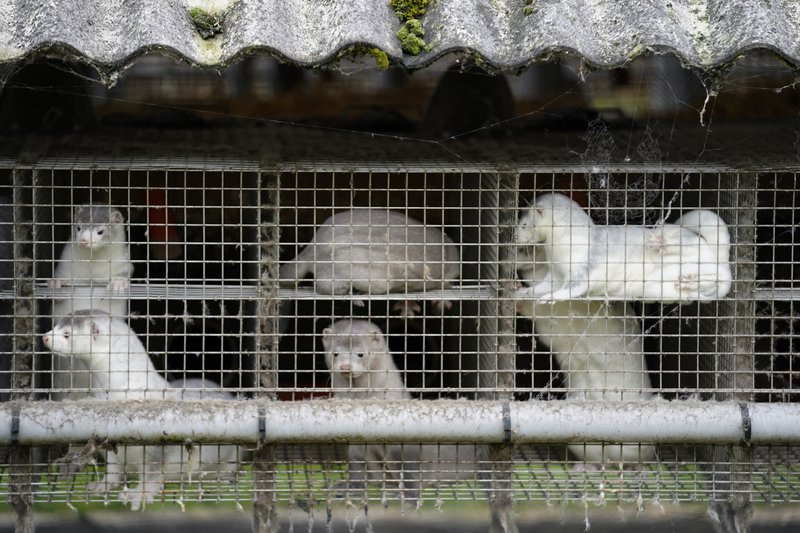
1 of 5FILE – In this Friday, Oct. 9, 2020 file photo, minks in a farm in Gjoel in North Jutland, Denmark. Denmark’s prime minister says the government wants to cull all minks in Danish farms, to minimize the risk of them re-transmitting the new coronavirus to humans. She said Wednesday, Nov. 4, 2020, a report from a government agency that maps the coronavirus in Denmark has shown a mutation in the virus found in 12 people in the northern part of the country who got infected by minks. (Mads Claus Rasmussen/Ritzau Scanpix via AP, File)

COPENHAGEN, Denmark (AP) — More than a quarter million Danes went into lockdown Friday in a northern region of the country where a mutated variation of the coronavirus has infected minks being farmed for their fur, leading to an order to kill millions of the animals.

Prime Minister Mette Frederiksen said the move was meant to contain the virus, and it came two days after the government ordered the cull of all 15 million minks bred at Denmark’s 1,139 mink farms.

The coronavirus evolves constantly and, to date, there is no evidence that any of the mutations pose an increased danger to people. But Danish authorities were not taking any chances.

“Instead of waiting for evidence, it is better to act quickly,” said Tyra Grove Krause, head department at Statens Serum Institut, a government agency that maps the spread of the coronavirus in Denmark.

In seven northern Danish municipalities with some 280,000 residents sport and cultural activities have been suspended, public transportation has been stopped and regional borders have been closed. Only people with so-called “critical functions” such as police and health officials and different authorities are being permitted to cross municipal boundaries.ADVERTISEMENThttps://598824f24255f8188d3ac7c9665c3618.safeframe.googlesyndication.com/safeframe/1-0-37/html/container.html

People in the region have been urged to to be tested. As of Saturday, restaurants must close and school students from fifth grade and up will switch to remote learning Monday.

“We must knock down completely this virus variant,” Health Minister Magnus Heunicke said Thursday, adding that the mutated virus had been found in 12 people.

Last month, Denmark started culling millions of minks in the north of the country after COVID-19 infections were reported among the stock there. Nationwide, at least 216 out of the 1,139 fur farms in Denmark have now been infected.

Kaare Moelbak of Statens Serum Institut said the virus variant was registered in August and September, and no mutations have been found since, so it was not known if it still exists. The mutated virus was found in five mink farms, according to the government body.

WHO officials said each case needs to be evaluated to determine if any of the changes mean the virus behaves differently.

“We are a long, long way from making any determination of that kind,” said Mike Ryan, the WHO emergencies chief. He said that such mutations happen all the time in viruses.

“Right now the evidence that we have doesn’t suggest that this variant is in any way different in the way it behaves,” he said in Geneva.

Peter Ben Embarek, a WHO expert on food safety, said that initial studies on pigs, chickens and cattle “show that these species are not at all susceptible in the same way that mink are, for example. So even if these animals were infected, they would not be able to sustain and spread the disease in the same way.”

Britain on Friday said that people coming from Denmark must self-isolate for 14 days, adding the country to a list of countries it deems risky.

The Danish government said a mutation of the virus had been found in 12 people infected by minks, which farmers have been ordered to cull en masse, but experts said the significance of any variant strain and its effect on humans was unclear because it was yet to be studied.

Denmark, the world’s largest mink fur exporter, produces an estimated 17 million furs per year. Kopenhagen Fur, a cooperative of 1,500 Danish breeders, accounts for 40% of the global mink production. Most of its exports go to China and Hong Kong.

The pelts of the mink will be destroyed and Danish fur farmers have said the cull, which is estimated to cost up to 5 billion kroner ($785 million), may spell the end of the industry in the country.

Overall, Denmark has reported 53,180 cases of coronavirus and 738 deaths.

___

Jamey Keaten in Geneva contributed to this report.

Record number of daily new coronavirus cases reported in Washington state

 day ago

The majority of cases have been reported among the 20-39 age group

By Madeline Farber | Fox News

https://static.foxnews.com/static/orion/html/video/iframe/vod.html?v=20201106051818#uid=fnc-embed-1

Fox News Go

Washington state this week reported a record number of daily new coronavirus cases, according to official estimates. https://cb132b8aa97b9600bca28114fe01a577.safeframe.googlesyndication.com/safeframe/1-0-37/html/container.html

The Evergreen State on Tuesday recorded an additional 1,469 cases of the novel virus, a record, according to data from the Washington State Department of Health. In total, the state has reported some 111,480 cases of COVID-19 to date. 

Washington state this week reported a record number of daily new coronavirus cases, according to official estimates. (iStock)

Washington state this week reported a record number of daily new coronavirus cases, according to official estimates. (iStock)

Also as of Tuesday, an estimated 16 additional deaths were recorded, bringing the number of lives lost to the novel virus in the state to 2,416. 

The last record for daily new cases of the coronavirus was set on Oct. 30, when 1,047 new COVID-19 cases were reported in a single day, according to a news release from the health department at the time. Prior to that, the last daily record was set in mid-July, officials said. 

CORONAVIRUS-INFECTED COLLEGE STUDENT IN INDIANA DIES IN DORM ROOM, FAMILY SAYS

The majority of cases have been reported among the 20-39 age group (40%), while the 40-59 age group follows behind at 28%, per state health data. 

The news comes as the U.S. recorded 100,000 new cases of COVID-19 in a single day for the first time, surpassing a record set at the end of October when some 99,000 daily new cases were reported. 

Wisconsin reports 1,165 new confirmed COVID-19 cases Saturday, another single-day record

Natalie BrophyAppleton Post-Crescent0:001:33https://imasdk.googleapis.com/js/core/bridge3.400.1_en.html#goog_1674849591

https://www.postcrescent.com/story/news/2020/08/08/wisconsin-coronavirus-1-165-new-covid-19-cases-another-record/3326419001/

Wisconsin health officials reported an additional 1,165 people have tested positive for COVID-19, another single-day record. 

Those positive cases made up 8.9% of the 13,162 test results reported by the Department of Health Services on Saturday. The seven-day average for positive tests stands at 6.1% as of Saturday. 

The state health department also reported Saturday that six more people have died, bringing the state’s total number of deaths to 996. Those who have died as a result of COVID-19 make up 1.7% of all those diagnosed, according to DHS. The majority of deaths are among those 70 and older. https://www.usatodaynetworkservice.com/tangstatic/html/papn/sf-q1a2z32fe45021.min.html

RELATED: Small businesses say masks, distancing are key to protecting and reviving local economies

RELATED: UW-Oshkosh football players, coach deal with canceled season

In total, 59,933 people have tested positive for COVID-19 in Wisconsin. According to the state health department, around 16% of those cases remain active. DHS defines an active case as someone who is still alive, has been diagnosed with COVID-19 in the last 30 days, and still has symptoms or has not been released from isolation. https://tpc.googlesyndication.com/safeframe/1-0-37/html/container.html

Recent research from those studying the virus have found that even after someone has recovered from COVID-19 and no longer has symptoms, it’s possible for the virus to flare up again in some patients and symptoms can return. 

As of Saturday morning, 311 people with COVID-19 were hospitalized, 96 of them in intensive care. An additional 152 patients were hospitalized awaiting the results of a COVID-19 test. 

Deadly diseases from wildlife thrive when nature is destroyed, study finds

Rats and bats that host pandemic pathogens like Covid-19 increase in damaged ecosystems, analysis shows

Damian Carrington Environment editor @dpcarrington

Wed 5 Aug 2020 11.00 EDTLast modified on Wed 5 Aug 2020 11.18 EDT

Shares6,785

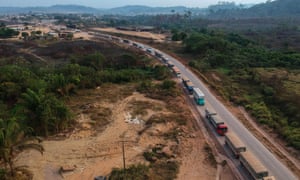
The BR163 highway in Moraes Almeida district in the Amazon rainforest, Brazil, September 2019.
 The BR163 highway in Moraes Almeida district in the Amazon rainforest, Brazil, September 2019. Photograph: Nelson Almeida/AFP via Getty Images

The human destruction of natural ecosystems increases the numbers of rats, bats and other animals that harbour diseases that can lead to pandemics such as Covid-19, a comprehensive analysis has found.

The research assessed nearly 7,000 animal communities on six continents and found that the conversion of wild places into farmland or settlements often wipes out larger species. It found that the damage benefits smaller, more adaptable creatures that also carry the most pathogens that can pass to humans.

The assessment found that the populations of animals hosting what are known as zoonotic diseases were up to 2.5 times bigger in degraded places, and that the proportion of species that carry these pathogens increased by up to 70% compared with in undamaged ecosystems.Advertisementhttps://tpc.googlesyndication.com/safeframe/1-0-37/html/container.html

Humans populations are being increasingly hit by diseases that originate in wild animals, such as HIV, Zika, Sars and Nipah virus. Since the coronavirus pandemic began, there have been a series of warnings from the UN and WHO that the world must tackle the cause of these outbreaks – the destruction of nature – and not just the health and economic symptoms.

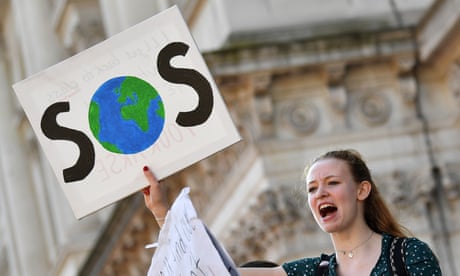
In June, experts said the Covid-19 pandemic was an “SOS signal for the human enterprise”, while in April the world’s leading biodiversity experts said even more deadly disease outbreaks were likely unless nature was protected.

The new analysis is the first to show how the demolition of wild places, as the world’s population and consumption grows, leads to changes in animal populations that increase the risk of disease outbreaks. The research demonstrates that disease surveillance and healthcare needs to be ramped up in those areas where nature is being ravaged, the scientists said.

Sign up to the Green Light email to get the planet’s most important stories

 Read more

“As people go in and, for example, turn a forest into farmland, what they’re doing inadvertently is making it more likely for them to be in contact with an animal that carries disease,” said David Redding, of the ZSL Institute of Zoology in London, who was one of the research team. The work is published in the journal Nature.

Redding said the costs of disease were not being taken into account when deciding to convert natural ecosystems: “You’ve then got to spend a lot more money on hospitals and treatments.” A recent report estimated that just 2% of the costs of the Covid-19 crisis would be needed to help prevent future pandemics for a decade.

“The Covid-19 pandemic has awakened the world to the threat that zoonotic diseases pose to humans,” said Richard Ostfeld, at the Cary Institute of Ecosystem Studies, US, and Felicia Keesing at Bard College, US, in a commentary in Nature.

“With this recognition has come a widespread misperception that wild nature is the greatest source of zoonotic disease,” they said. “[This research] offers an important correction: the greatest zoonotic threats arise where natural areas have been converted to croplands, pastures and urban areas. The patterns the researchers detected were striking.”

The reason for species such as rodents and bats simultaneously thriving in ecosystems damaged by humans and also hosting the most pathogens is probably because they are small, mobile, adaptable and produce lots of offspring rapidly.

“The ultimate example is the brown rat,” Redding said. These fast-living species have an evolutionary strategy that favours large numbers of offspring ahead of a high survival rate for each one, which means they invest relatively little in their immune systems. “In other words, creatures that have rat-like life histories seem to be more tolerant of infections than do other creatures,” said Ostfeld and Keesing.

“In contrast, an elephant has a calf every couple of years,” said Redding. “It has to make sure that offspring survives, so it is born with a very strong and adaptive immune system.”

The analysis found that small, perching birds were also disease hosts that do well in habitats suffering from the impact of human activities. Such birds can be reservoirs of diseases such as West Nile virus and a type of chikungunya virus.

Humans have already affected more than half of the Earth’s habitable land. Prof Kate Jones, of the University College London, and also part of the research team, said: “As agricultural and urban lands are predicted to continue expanding in the coming decades, we should be strengthening disease surveillance and healthcare provision in those areas that are undergoing a lot of land disturbance, as they are increasingly likely to have animals that could be hosting harmful pathogens.”

Weak enforcement sees surging trade in Philippine pangolin, study shows

by Elizabeth Claire Alberts on 4 August 2020

A new report published by TRAFFIC found that the illegal pangolin trade in the Philippines increased nine-fold in the last two years, with the authorities confiscating an estimated 6,894 pangolins between 2018 and 2019.
Data included seizures of pangolin scales and retrievals of live pangolins that escaped from wildlife traffickers.
TRAFFIC researchers also conducted ad hoc surveys around Manila to discover pangolin meat being served at restaurants and shops selling pills made from pangolin derivatives.
It’s estimated that Philippine pangolins, a critically endangered species of the pangolin, have declined up to 95% in the last 40 years.

A single, wild pangolin wandered across a golf course in the Philippine’s Cavite province in March 2018. When the golf club staff spotted the scaly anteater, which was hundreds of miles from its natural habitat on the island of Palawan, they contacted the authorities to come retrieve it. The pangolin was eventually put into a rehabilitation program in an attempt to release it back into the wild; in the end, however, it didn’t make it.

While it’s not entirely clear how this Philippine pangolin (Manis
culionensis) wound up on a golf course, the most likely explanation is that it had escaped from the wildlife trade. In the Philippines, pangolins are a protected species, and anyone caught trading them faces hefty fines and prison sentences of up to 12 years. But this hasn’t stopped traders from stealing pangolins from the Palawan region and transporting them to various towns and cities to sell them for meat consumption or medicinal use.
A Philippine pangolin. Image by TRAFFIC.

According to a new report released today by TRAFFIC, an NGO that monitors the international trade of wild animals and plants, an estimated 740 Philippine pangolins were seized between 2000 and 2017.
But in the next two years, the trade increased nine-fold — between 2018 and 2019, authorities intercepted an estimated 6,894 pangolins, representing 90% of all pangolins caught up in the illegal trade in the Philippines over the last two decades.

But these estimates are probably quite conservative, according to Richard Thomas, global communications coordinator at TRAFFIC.

“[C]ertainly the detected seizures are just the tip of the iceberg,”
Thomas told Mongabay. “How many more seizures are ‘under water’ is anyone’s guess but I suspect the true figure would be jaw-dropping.”

The figures include a record-breaking bust in September 2019. Following a raid in Puerto Princesa City, Palawan, authorities confiscated 1154 kilograms (2,545 pounds) of pangolin scales and other wildlife parts from a two-story home there. A Chinese national, who was already known to Palawan authorities for a previous attempt to smuggle wildlife, was implicated in the seizure. He may have been preparing to export the pangolin scales to China, according to TRAFFIC.
Confiscated pangolin scales in Cagayan de Oro City in 2017, reportedly heading to Guangdong, China. Image by TRAFFIC.

In the last two years, there were also 18 “retrieval incidents” of live pangolins found roaming the streets of towns near Manila or nearby provinces, including the pangolin spotted on the golf course, the report states.

TRAFFIC researchers also conducted ad hoc surveys in the Manila metropolitan area in 2018 and 2019, and discovered pangolin meat being served in at least five restaurants, although it was not advertised on the menu and only available on a pre-order basis. They also found three shops in Manila selling pills that were manufactured in China using pangolin derivatives.

“While the rise in pangolin seizures speaks to successful enforcement action, it is also deeply alarming news for this rare animal,” Elizabeth John, senior communications officer at TRAFFIC in Southeast Asia, said in a statement.
Imported “Armadillo antipyretic pills” reportedly containing pangolin derivatives. Image by TRAFFIC.

The Philippine pangolin is one of the most heavily poached and trafficked of the eight pangolin species, and is currently listed as critically endangered on the IUCN Red List. Due to the shy, elusive nature of the pangolin, its population status is difficult to assess, but it’s believed that the subspecies has declined up to 95% over the past 40 years.

While comprehensive data isn’t yet available for 2020, the trade doesn’t appear to be slowing down. In January, authorities seized 20 Philippine pangolins from a local wildlife trafficker in El Nido, Palawan, and released them back into the wild. There have also been three more retrieval incidents of smuggled pangolins since the start of the year.

Historically, law enforcement officials haven’t penalized convicted traffickers to the full extent of the law, and this may be one element that’s exacerbating the illegal trade, according to TRAFFIC.
Poached pangolins in a trafficker’s facility in El Nido, Palawan. Image by TRAFFIC

“I think you’d have to say sentences simply haven’t been in the realm of acting as a sufficient deterrent,” Thomas said. “Take the example of the first successful conviction of traffickers outside Palawan — on paper they received a three month prison sentence and USD1,970 fine for illegally transporting 10 live pangolins but all three were released from custody after paying the fine and being granted probation.”

The Department of Environment and Natural Resources (DENR) in the Philippines recently acknowledged that the current penalties were not helping put a stop to wildlife crime in the Philippines, and officials have suggested that any convicted traffickers be given a mandatory minimum jail term of six years, and not be eligible for probation.

“With pressure continuing to mount, the only hope for the Philippine Pangolin is by stamping out the illegal trade through thorough investigations into poaching and trafficking cases, more prosecutions and solid convictions of traffickers,” John said.

Citation:

Sy, E. Y., & Krishnasamy, K. (2020). Endangered by Trade: The Ongoing Illegal Pangolin Trade in the Philippines. Retrieved from TRAFFIC, Southeast Asia Regional Office website:
https://www.traffic.org/site/assets/files/13052/philippine-pangolin-trade.pdf

https://news.mongabay.com/2020/08/weak-enforcement-sees-surging-trade-in-philippine-pangolin-study-shows/

The pandemic highlights the gruesome animal abuses at US factory farms

Andrew Gawthorpe

https://www.theguardian.com/commentisfree/2020/aug/03/coronavirus-animal-abuse-us-factory-farms

Stories have emerged of mass killings of chickens and pigs, a tiny fraction of daily abuses heaped on farmed animals

Mon 3 Aug 2020 08.53 EDT

Shares297

Among other methods, pigs have been killed by a method known as ventilator shutdown, in which the airways to a barn are closed off and steam is introduced.
 Among other methods, pigs have been killed by a method known as ventilator shutdown, in which the airways to a barn are closed off and steam is introduced. Photograph: Bloomberg/Bloomberg via Getty Images

More than any event in recent history, the coronavirus pandemic has made plain the consequences of our abuse of animals. From the Chinese wet market where the virus likely emerged to the American slaughterhouses which have become key vectors of transmission, our ravenous demand for cheap meat has been implicated in enormous human suffering. But the suffering is not ours alone. The pandemic has also focused our attention on how American agribusiness – which has benefited from deregulation under the Trump administration – abuses animals on an industrial scale.

Republican proposal slashes weekly unemployment benefits to $200 – as it happened

 Read more

As slaughterhouses across the nation have been forced to close by the virus, gruesome stories have emerged of the mass killing of millions of chickens and pigs who can no longer be brought to market. Chickens have been gassed or smothered with a foam in which they slowly suffocate. Among other methods, pigs – whose cognitive abilities are similar to dogs – have been killed by a method known as ventilator shutdown, in which the airways to a barn are closed off and steam is introduced. A whistleblower’s video shows thousands of pigs dying as they are slowly suffocated and roasted to death overnight.

Although the pandemic has focused attention on these incidents, they represent a tiny fraction of the daily abuses heaped on farmed animals. The billions of animals slaughtered every year in the United States are intelligent, sensitive beings capable of feeling a range of emotions. They are driven to raise their young and form complex social structures, both impossible under the conditions of modern farming. Instead, they live short, painful, disease-ridden lives. Chickens, who make up over 90% of the animals slaughtered every year, suffer the worst. Their deaths are subject to effectively no federal regulation, meaning the birds are frequently frozen, boiled, drowned or suffocated to death.

Trump has moved to deregulate agribusiness even further, giving companies that abuse animals freer rein to prioritize profit over welfare

Unsurprisingly, the Trump administration has moved to deregulate agribusiness even further, giving companies that abuse animals freer rein to prioritize profit over welfare. The administration dropped enforcement of animal welfare statutes and moved forward with proposals to reduce the role of government inspectors in overseeing conditions at slaughterhouses – proposals which an inspector general says are based on faulty data. The administration also removed from public view a searchable database of animal inspection reports, shielding abusers from scrutiny. The records only went back online when Congress forced the administration’s hand.Advertisementhttps://tpc.googlesyndication.com/safeframe/1-0-37/html/container.html

As in other areas, the culture war waged by Trump’s supporters has enabled his pro-business policies. “Soy boy” has emerged as the insult of choice among the alt-right, identifying meat consumption and complicity with animal suffering as markers of masculinity. When the right cast the Green New Deal as an assault on the American way of life, they were sure to include copious meat consumption among the precious tenets under threat. “They want to take your hamburgers,” former White House aide Sebastian Gorka told a conservative audience, equating the Green New Deal with “Communism”. The reactionary writer Jordan Peterson, who has made a fortune from trolling the left, even chimed in by claiming to follow an all-beef diet.

Bringing an end to the atrocity which is America’s system of animal agriculture requires challenging both the coziness of the government-agribusiness connection and the cultural norms which underpin it. But other recent developments have shown how hard this will be. Sales of meatless meat have exploded in recent years, but they remain a tiny fraction of overall sales. Meanwhile, although Cory Booker became only the second vegan to seek a major party presidential nomination, the strength of cultural and political headwinds prevented him from drawing a link between his dietary preferences and public policy. When pushed, he embraced the framing of the issue favored among the right, declaring the freedom to eat meat “one of our most sacred values”.

As concern over abusive practices on factory farms and public interest in alternative diets have grown, businesses and their political allies have fought back with laws intended to restrict the information and choice available to consumers. So-called “ag-gag” laws, which criminalize undercover investigations of conditions on farms, have been joined by state laws preventing plant-based alternatives from using labels such as “meat” or “sausage”. The Food and Drug Administration is even considering a nationwide ban on the use of the word “milk” to label alternatives derived from soy or oats, in an effort to protect the dairy industry.

In the face of so many vested interests, even the harm caused by the pandemic looks unlikely to lead to fundamental change in America’s system of food production anytime soon. But there are glimmers of hope. When meat supplies dwindled in the first weeks of the lockdown, sales of plant-based products surged, suggesting consumers see them as a genuine alternative. If these products can be improved to a point where they can compete with meat on taste and cost, consumers and even the meat industry might embrace them on a large scale, potentially spelling the end of industrialized animal abuse.

For both the billions of animals raised and killed each year and for ourselves, that day cannot come soon enough. There is nothing natural or inevitable about factory farms, which have transformed human agriculture into a monstrosity which would be unrecognizable to previous generations. After they pass into history, future generations will view them as one of the greatest crimes ever perpetrated by humankind. As coronavirus ravages our economies and our bodies, it is clearer than ever that only a pervasive and self-defeating blindness prevents us from seeing factory farms the same way.

  • Andrew Gawthorpe is a historian of the United States at Leiden University