


Jul 30, 2020,05:16pm EDT
Alexandra SternlichtForbes StaffBusinessI cover breaking news
Over 10,000 Tyson Foods meat processing employees have contracted Covid-19 since the pandemic began, according to a study by the Food & Environment Reporting Network, which was released today as the company announced it would implement weekly Covid-19 testing at a number of plants.
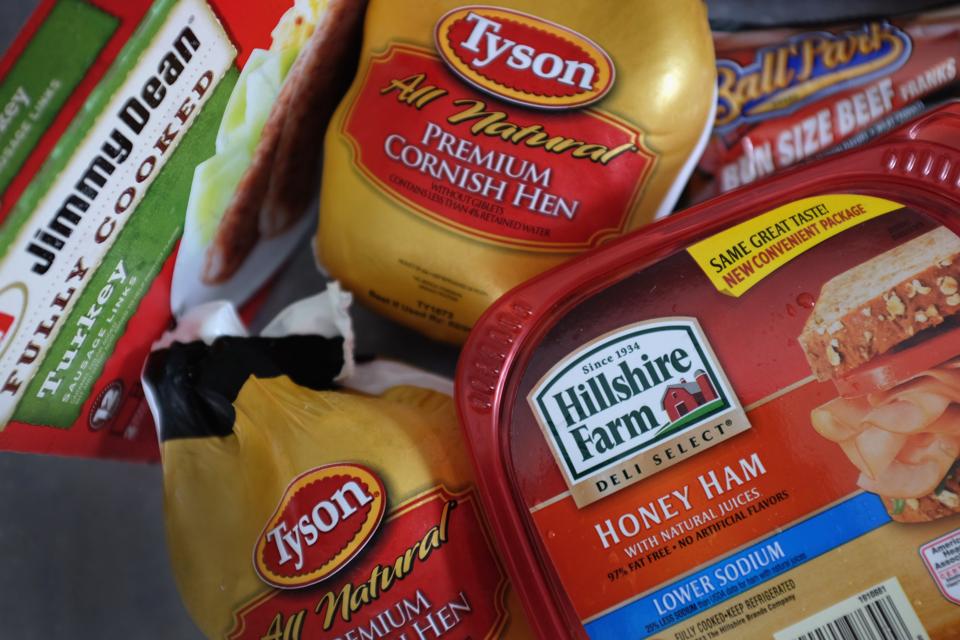
At least 49,369 U.S. meatpacking, food processing and farmworkers have contracted Covid-19 since March, 10,104 of whom were meatpackers at Tyson foods, according to a July 30 report by the FERN.
Also July 30, Tyson Foods announced they would hire a chief medical officer, 200 nurses and implement weekly Covid-19 testing for employees at 140 meat production factories.
Second quarter revenue dropped 15% for the meat giant whose brands include Jimmy Dean, Hillshire Farm and Sara Lee.
“While the protective measures we’ve implemented in our facilities are working well, we remain vigilant about keeping our team members safe and are always evaluating ways to do more,” Donnie King, Tyson Foods group president and chief administrative officer said in the announcement.
Other meatpacking companies JBS and Smithfield Foods have 2,000-plus workers who have tested positive for Covid-19.
PROMOTEDP&G BRANDVOICE | Paid ProgramP&G Paves Path For Meaningful Virtual Internship ExperienceP&G BRANDVOICE | Paid ProgramP&G Paves Path For Meaningful Virtual Internship ExperienceGrads of Life BRANDVOICE | Paid ProgramYear Up’s Shift To Virtual Operations
100,000. That’s roughly the number of Tyson Foods employees, according to CNN.
In April, Tyson said that “millions of pounds of meat” will disappear from grocery store shelves with closures of meat processing facilities due to Covid-19 outbreaks among workers. At that point, Tyson employees told CNN they were being pressured to come to work, though they did not feel working conditions were safe.
On April 16, Smithfield Foods’ meat processing plant in Sioux Falls, South Dakota became the largest Covid-19 hotspot in the U.S. with 735 Covid-19 cases among workers, according to Forbes.
Mapping Covid-19 outbreaks in the food system (FERN)
Tyson Foods Launches New, Nationwide COVID Monitoring Strategy; Expands Health Staff (Tyson)
‘The food supply chain is breaking,’ Tyson says as plants close (CNN)
Highlights
•
Calls to ban wildlife trade have been a key response to COVID-19 but are not the solution.
•
The major drivers of the emergence of infectious diseases include habitat destruction and industrialised livestock production.
•
Indiscriminate wildlife trade bans risk doing more harm than good, both from a conservation and development perspective.
•
Conservation–linked responses to COVID-19 need to address the key drivers, respect rights and ensure local participation in decision-making.
Abstract
One of the immediate responses to COVID-19 has been a call to ban wildlife trade given the suspected origin of the pandemic in a Chinese market selling and butchering wild animals. There is clearly an urgent need to tackle wildlife trade that is illegal, unsustainable or carries major risks to human health, biodiversity conservation or meeting acceptable animal welfare standards. However, some of the suggested actions in these calls go far beyond tackling these risks and have the potential to undermine human rights, damage conservation incentives and harm sustainable development. There are a number of reasons for this concerns. First calls for bans on wildlife markets often include calls for bans on wet market, but the two are not the same thing, and wet markets can be a critical underpinning of informal food systems. Second, wildlife trade generates essential resources for the world’s most vulnerable people, contributing to food security for millions of people, particularly in developing countries. Third, wildlife trade bans have conservation risks including driving trade underground, making it even harder to regulate, and encouraging further livestock production.
Fourth, in many cases, sustainable wildlife trade can provide key incentives for local people to actively protect species and the habitat they depend on, leading to population recoveries. Most importantly, a singular focus on wildlife trade overlooks the key driver of the emergence of infectious diseases: habitat destruction, largely driven by agricultural expansion and deforestation, and industrial livestock production. We suggest that the COVID-19 crisis provides a unique opportunity for a paradigm shift both in our global food system and also in our approach to conservation. We make specific suggestions as to what this entail but overriding all is that local people must be at the heart of such policy shifts.
See: https://www.sciencedirect.com/science/article/pii/S0305750X20302485
Reducing deforestation and the exploitation of wildlife are the first steps in breaking the chain of disease emergence
Tue 28 Jul 2020 01.00 EDTLast modified on Wed 29 Jul 2020 14.10 EDT
Shares3,128Comments524

In late 2013, in the village of Meliandou in rural Guinea, a group of children playing near a hollow tree disturbed a small colony of bats hiding inside. Scientists think that Emile Ouamouno, who later became the first tragic “index” case in the west African Ebola outbreak, was likely exposed to bat faeces whileplaying near the tree.
Every pandemic starts like this. An innocuous human activity, such as eating wildlife, can spark an outbreak that leads to a pandemic. In the 1920s, when HIV is thought to have emerged in what is now the Democratic Republic of the Congo, scientists believe transmission to humans could have been caused by a bushmeat hunter cutting themselves while butchering a chimpanzee. In 2019, we can speculate that a person from south-west China entered a bat cave near their village to hunt wildlife for sale at the local wet market. Perhaps they later developed a nagging cough that represents the beginning of what we now know as Covid-19.Now, a growing human population, ever-encroaching development and a globalised network of travel and trade have accelerated the pace of pandemic emergence. We’re entering a new pandemic era.Advertisementhttps://6e1601c5dd35a5062108976ebb5bcf12.safeframe.googlesyndication.com/safeframe/1-0-37/html/container.html
Most pandemics begin in the emerging disease hotspots of the world; the edges of forests in regions such as west Africa, the Amazon basin and south-east Asia. Tropical rainforests are home to a rich diversity of wildlife, which in turn carry an array of viruses. We know far more about these animals than we do about the viruses they carry. An estimated 1.7m viruses exist in mammals and birds (the origins of most pandemics), but less than 0.1% have been described. They spread to millions of people each year; though they often don’t cause noticeable symptoms, the sheer volume means that plenty can.
Before humans became an agricultural species, our populations were sparser and less connected. A virus infecting a hunter-gatherer might only reach family members or perhaps a hunting group. But the Anthropocene, our new geological epoch, has changed everything. A great acceleration of human activity has dramatically altered our planet’s landscapes, oceans and atmosphere, transforming as much as half of the world’s tropical forest into agriculture and human settlements.
Read more
About one-third of emerging diseases are the product of these rapid changes in land use, as people are pushed into contact with wildlife they would once have rarely encountered. The viruses that emerge, such as Zika, Ebola and Nipah, include the latest of our foes, Covid-19, transported from the altered rural landscape of China to a city near you.
Human activity has created a continuous cycle of viral spillover and spread. Our current approach is to wait for outbreaks to start, and then design drugs or vaccines to control them. But as we’ve seen with Covid-19, this approach isn’t good enough: while we wait for a vaccine, hundreds of thousands of people have died, and millions have been infected. By the time the US produced sufficient doses to vaccinate against the H1N1 influenza pandemic in 2009, the virus had already infected about a quarter of the people on our planet.
If we are to prevent future pandemics, we will need to reassess our relationship with nature, blocking each step in the chain of disease emergence. This should begin with reducing the rampant consumption that drives deforestation and wildlife exploitation. We’ll also need to remove viral-risk species from wildlife markets, crack down on the illegal wildlife trade and work with communities to find alternatives. We should be putting more pressure on industries that harvest tropical timber and wildlife products, rewarding corporate sustainability and legislating against overconsumption. Consumer-led campaigns against palm oil, for example, have had a ripple effect on sustainability.
In a recently published paper, a number of scientists, myself included, laid out the economic case for preventing the disease spillover that leads to pandemics by reducing deforestation and the wildlife trade. We estimate that the annual costs of programmes to reduce deforestation and the wildlife trade and build pandemic surveillance in disease hotspots would be $17.7–26.9bn, more than three orders of magnitude smaller than the current estimate cost of Covid-19 economic damages, of $8.1-15.8tn. Our costs include the collateral benefits of carbon sequestration by reducing forest loss. While the coronavirus pandemic has devastated the global economy, our current trajectory could see the cost of future pandemics rocket into the tens of trillions.
As we rebuild our economies after the coronavirus pandemic, rather than returning to the system of unchecked consumption that brought us Covid-19, we have an opportunity to green our economies. Centuries of environmental exploitation have put us in a fragile position on this planet. While some may balk at the costs of avoiding environmental breakdown, or fail to understand the value of preserving a species of butterfly, frog or fish, most of us recognise that Covid-19 has brought death and economic misery on a global scale. Once we accept that human activity is what led to this, we may finally be empowered to escape the pandemic era.
• Peter Daszak is president of EcoHealth Alliance, a non-profit dedicated to analysing and preventing pandemics
https://www.bizcommunity.com/Article/196/858/206652.html
27 JUL 2020SAVE | EMAIL | PRINT | PDF Some scientists feel that the current Covid-19 pandemic, which has already infected more than 16-million and killed more than 600,000 worldwide, is only a dress rehearsal for an even bigger pandemic.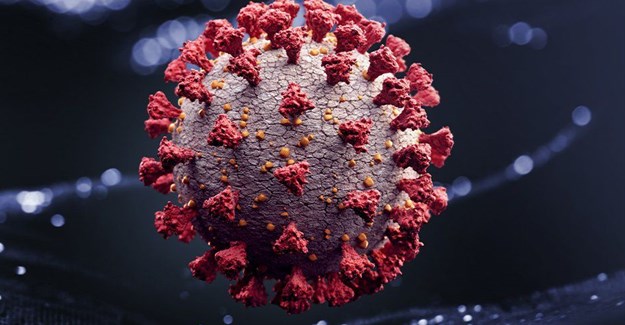 Professor Robert Bragg, researcher in the Department of Microbial, Biochemical and Food Biotechnology, and Professor Aliza le Roux, assistant dean: natural and agricultural sciences and associate professor: zoology and entomology at the University of the Free State (UFS), warn about future pandemics, saying that humans’ interaction with animals and lack of learning from the past are the reasons for this.
Another researcher, Dr Martin Nyaga, senior lecturer/ researcher: next generation sequencing (NGS), agrees with Bragg and Le Roux about new viruses and says viruses will keep emerging due to their general nature.
“There is a feeling among some scientists that this could just be a dress rehearsal for the real big pandemic. Many virologists, including me, have been predicting an influenza pandemic for many years. Mankind has been warned about the coming pandemics for many years, but people seem to want to listen only when they are in the midst of a pandemic.
“The bird-flu virus, Influenza H5N1, has a mortality rate of around 60-65%, but it has not yet developed human-to-human transmission. If it does, we could be in for a really serious pandemic,” says Bragg.
Humans’ need for affordable meat on a regular basis is creating the perfect breeding ground for more diseases like this. “This means our demand for meat is driving cheaper and less controlled agricultural practices, cramming more animals into smaller spaces, feeding them less and less natural fodder.
“Remember mad cow disease? Have you seen chicken batteries? We should not blame ‘exotic’ eating practices, but look at our own. If we could see eating meat as a ‘treat’ and not a daily ‘right’, we can reduce pressure on the environment and reduce the speed at which another zoonotic virus can evolve,” says Le Roux.
Nyaga says that more viruses are possible in other organisms as well. “In as much as research on viral particles continues, more outbreaks are possible within not only the coronavirus domain, but also any other class of organisms. The ever-changing nature of viruses, mainly due to mutations and other mechanisms of genetic diversity, could occur through chain of transmission, including via the intermediate hosts. This kind of antigenic mutations could make the general population vulnerable due to lack of immunity against the new strains of emerging strains or completely novel viruses.”
According to Bragg, the previous coronavirus that led to SARS and caused major concerns, also started in a wet food market in China – just like Covid-19. That virus was traced to a civet cat meat. This virus had a very high mortality rate but could only be transmitted when a person showed clinical signs. Therefore, measuring the temperature of people was useful and beneficial.
“There are many other examples of serious human pandemics which was spread from animals to humans. Another good example is the Ebola virus, which has also been traced to people eating bats in Africa. Yet another example is HIV, which is believed to have spread to man as a result of the consumption of chimpanzee meat.
“The most serious has been the 1918 Spanish flu, which started off in pigs and spread to man. All of these have to do with the mistreatment of animals by man.“
Le Roux says past pandemics can teach us how to respond from a public health perspective. “If we found treatments that worked before, we can use that as a starting point for current treatments. But if we can’t even control human behaviour (learning from past mistakes), think of how much more challenging it is to develop a vaccine against a virus that is so adaptable.”
Prof Bragg adds: “Mankind should also have learned lessons from the 1918 pandemic, but man is notoriously slow at learning lessons from the past. Each generation wants to make their own mistakes. One can only draw parallels from the people who defined lockdown regulations in 1918 to celebrate the end of the First World War and the demonstrations currently underway in the USA.
“The celebrations in 1918 caused more deaths than have occurred during the four years of the First World War. I predict that within a week or two, the number of cases and mortalities in the USA (and around the world) are going to skyrocket,” says Bragg.
Nyaga explains that identification of the source (reservoir hosts) and the intermediate host(s) is crucial in devising strategies, including palliative measures and designing drugs or vaccines against a potential pathogenic agent such as SARS-CoV-2. This will help in understanding the genomic dynamics and likely immunological responses that could be triggered along the chain of transmission to humans, and more importantly, how the compounds in the therapies can terminate the different stages of viral replication.
Le Roux says she is not sure if a vaccine would be developed based on knowledge of a host species, but there is the possibility that (depending on the species) we can use some of the host’s antibodies to develop our own antibody therapies. “But generally, the knowledge can help more long-term planning on how to avoid future host shifts to humans. If we know where the virus originated, we can study that species or group of species better, and understand how the mutations occurred, etc. It would help us with future prevention more than current mitigation, I think.”
According to the experts, various research efforts are afoot on the control of the disease. These range from the development of a vaccine, development of antiviral drugs, and the development of monoclonal antibodies or antibody fragments. Research is also needed on improved, faster, and cheaper diagnostic tests to test for the presence of the virus as well as for the detection of antibodies against the virus in people. This last test is needed to demonstrate the efficacy of vaccines as well as people in the population who have recovered from the virus.
Bragg says research on the epidemiology of the virus is also needed. How far it can spread and how long it can survive are critical questions, particularly when talking about social distancing. Much of the current information is based on guesswork. “Worldwide, research efforts are gaining an understanding of the virus and how it is causing disease in humans. If you think that this virus was unknown before December 2019, mankind has very quickly learned a lot about this virus and there are many very interesting articles coming out on what receptors the virus binds to and how the virus causes damage to the host and overcomes the host defence mechanisms.”
Nyaga says while the understanding of SARS-CoV-2 and Covid-19 is still in its infancy, results are already emerging on the molecular dynamics and immunological perspectives of the virus. With the characterisation of the genomic sequences of the virus, it has been possible to design several vaccines, including the inactivated virus, viral vectors, nucleic acid-based and protein-based vaccines. A good number of them are currently under clinical trials for possible WHO qualification towards global use. “Just recently, a clinical trial on one of these vaccines, called ‘the South African Ox1Cov-19 Vaccine VIDA-trial’, was on schedule locally to be championed by the University of the Witwatersrand, Johannesburg,.”
According to him, effective prevention essentially requires an in-depth understanding of the clinical severity of Covid19, the extent of transmission and infection, and the efficacy of treatment options in order to accelerate the development of diagnostics and treatment options.
Bragg says that the socio-economic impact of the virus is very serious at this stage. The final number of human cases and fatalities are still a long way from completion. This virus is going to be with us for quite some time and the mortality rate in some countries with high levels of HIV and TB could become very high.
Country cracking down on illegal wildlife trade after coronavirus originated in Chinese wet market Vietnamese officials sort seized pangolin scales at a port in southern Vietnam in 2019.
Vietnamese officials sort seized pangolin scales at a port in southern Vietnam in 2019. Photograph: Vietnam News Agency/AFP/Getty Images Rebecca Ratcliffe Published on Fri 24 Jul 2020 14.10 BST
8
Vietnam has banned all imports of wild animals, dead or alive, and announced a crackdown on illegal wildlife markets as part of efforts to reduce the risk of future pandemics such as Covid-19.
A directive issued by the country’s prime minister, Nguyen Xuan Phuc, halts the trading of wild species, as well as animal products such as eggs, organs or body parts. It also calls for tougher action against people involved in illegal hunting, killing or advertising of wild animals.
The announcement has been welcomed by conservation groups, who have accused the government of failing to stop the flourishing trade in endangered species. Vietnam is one of Asia’s biggest consumers of wildlife products, and the country’s trade in wildlife – both illegal and “legal” – is thought to be a billion-dollar industry.
What is a wet market?
Read more
Among the most frequently smuggled animal goods are tiger parts, rhino horn and pangolins, used in traditional medicine. Animals are also purchased as pets or status symbols.
In February, 14 conservation organisations in Vietnam sent a joint letter warning the government that “new viruses will continue to move from wildlife to people while illegal wildlife trade and wildlife consumption continue”.
On top of the sale of animals in markets, there is a booming online wildlife trade, where images of species are posted on Facebook and YouTube. Conservationists have also raised serious concerns over poorly regulated commercial animal farms, where snakes, bears or tigers are reared in tiny cages.
The announcement has been welcomed by campaigners, though some warn the ban does not go far enough.
Nguyen Van Thai, director of Save Vietnam’s Wildlife, told Reuters the directive “is insufficient as some uses of wildlife such as medicinal use or wild animals being kept as pets are not covered”.
Others point out that enforcement across the country’s borders may also prove a challenge.
The global wildlife trade has come under greater scrutiny following the coronavirus pandemic, which has been linked to a market in the Chinese city of Wuhan, where animals including snakes, beavers and badgers were sold.
The United Nations’ biodiversity chief, Elizabeth Maruma Mrema, has called for countries to ban wildlife markets, which are seen by many to be a driver of zoonotic diseases. The Chinese government has introduced a temporary ban on such markets, where animals are sold in often cramped and unhygienic conditions.
https://www.theguardian.com/world/2020/jul/24/vietnam-bans-imports-of-wild-animals-to-reduce-risk-of-future-pandemics-coronavirus
https://www.cnbc.com/2020/07/25/us-coronavirus-deaths-top-1000-for-four-straight-days.html
PUBLISHED SAT, JUL 25 202010:53 AM EDTUPDATED 5 HOURS AGONoah Higgins-Dunn@HIGGINSDUNNKEY POINTS

Medical personnel move a deceased patient to a refrigerated truck serving as make shift morgues at Brooklyn Hospital Center on April 09, 2020 in New York City.Angela Weiss | AFP | Getty Images
The U.S. reported more than 1,100 coronavirus deaths on Friday, marking the first time since May the morbid daily death toll rose above 1,000 for four consecutive days, according to Johns Hopkins University data. close dialogStream live CNBC TV from around the world.START FREE TRIAL
There were 10 states across the U.S. that reported record daily coronavirus deaths based on a seven-day moving average, according to a CNBC analysis of data compiled by Johns Hopkins. CNBC uses a seven-day trailing average to smooth out spikes in data reporting to identify where cases and deaths are rising and falling.
Covid-19 cases across the country remained steady, however, with the nation’s seven-day average growing by less than 1% compared with a week ago, according to Hopkins data. Deaths and hospitalizations typically lag behind an increase in cases because it can take a while after someone is diagnosed to become seriously ill and potentially die, epidemiologists say.
Some states that have reported climbing cases for weeks, including California, Texas and Florida, are now seeing record daily coronavirus deaths based on a seven-day moving average.
Texas had an average of 138 new deaths on Friday, which is more than 29% higher compared with a week ago, according to a CNBC analysis of Johns Hopkins data. California had an average of 104 new deaths, which is more than 13% higher compared with a week ago. Florida reported an average of 121 daily deaths, a near 21% increase compared with a week ago.
On Thursday, Adm. Brett Giroir, an assistant secretary for health at the U.S. Department of Health and Human Services, said that the rate of deaths from the coronavirus in the United States should begin to fall in the “next couple of weeks.” WATCH NOWVIDEO05:17How to stay financially sound during the coronavirus pandemic
The seven-day rolling average of coronavirus infections is beginning to drop, and U.S. health officials predict hospitalizations will go down next week and mortality rates will follow in about two weeks, he said during a press briefing with reporters.
Giroir’s prediction differs from forecasts at the Centers for Disease Control and Prevention. National and state-level forecasts suggest that the number of new deaths in the U.S. over the next four weeks will likely exceed the number reported over the previous four weeks, according to the CDC.
“Nobody’s letting up their foot from the gas,” he added. “If we throw caution to the wind, go back to the bars, this will all go into reverse.”
Texas Gov. Greg Abbott told CNBC Friday that the state has not yet “conquered” the coronavirus and it’s “going to take a little while” to eliminate, although the state has made some strides. State officials and funeral home directors are ordering extra body bags and refrigerated trucks as they prepare for an increase in deaths from Covid-19, which has already killed at least 4,717 people in the state.
“I feel like we have reached a plateau where we’ve contained the exponential growth of Covid at this particular time, but we have a lot more work to do in the coming weeks,” Abbott said. “We don’t have Covid conquered right now.”
By BRIAN MCGLEENONPUBLISHED: 14:07, Sun, Jul 19, 2020 | UPDATED: 14:26, Sun, Jul 19, 2020
Global Head of Research and Animal Welfare for Animals in Farming Kate Blaszak described the growth of intensive farming units not just in China but across the world and pointed to them as having the potential to both increase antibiotic resistance and create a deadlier pathogen than COVID-19. Speaking to Express.co.uk Ms Blaszak said: “China is incubating two new strains of bird flu. It is also dealing with an outbreak of swine flu, which is a mixture of human, pig, and avian influenza viruses.
“These different viruses mixed together to form a very potent pathogen.
“The current swine flu virus that has broken out in China has the potential to bind very successfully in the human throat and respiratory system.”
The veterinary scientist said in the last ten to 15 years China has seen a vast and rapid shift away from traditional farming practices and is now emulating the US model of high-intensity farming were animals are kept in dark, confined environments.
Ms Blaszak described the new factory farming system in China as lacking regulations and operating with very poor animal welfare principles.

Chinese pig farms are propagating viruses (Image: GETTY)
The hundreds of millions of animals contained within the new factory systems are under so much stress that is lowering their immune systems making them need constant feeds of antibiotics to stay healthy and alive.
Ms Blaszak said: “These kinds of low welfare environments lower animals immunities and allows viruses to propagate.
“They create the perfect scenario for the mixing of viruses and the mutation and amplification of viruses.”
She added waste from farms, the movement of large amounts of animals and the processing of animals are also a risk to humans.
READ MORE: ISIS return? Jihadi fighters are rebuilding Daesh, warns terror report

A duck farm in China (Image: GETTY)
The scientist warned of the high risk of animal to human infections from having live animals at wet markets.
The cause for concern in China is the fact that it is moving towards a US model of intensified meat production, where the majority of animals are factory farmed.
China is the biggest pig producer in the world and the second-biggest chicken producer in the world.
Ms Blaszak describes how the high numbers of high density, genetically uniform animals are the perfect conditions for another virus to propagate that could potentially jump to humans.
DON’T MISS
China reports NEW unknown disease spreading across Asian country [DATA]
USA vs China: How is UK ban of Huawei a victory for Donald Trump? [ANALYSIS]
China blames BRITISH food for coronavirus pandemic [VIDEO]

A chicken farm in China (Image: GETTY)
The animals that are genetically uniform and crammed side by side need yearly inoculations to protect them against the ravages of quickly mutating viruses.
It takes a long time and considerable expense to develop vaccines for the new viruses being formed, and when a vaccine comes out it is not long before it must be changed because of the rapid mutation of these influenza viruses.
Furthermore, because 75 percent of antibiotics are used in the rearing of farm animals there is the added risk of creating extremely resistant bacteria.
Much of these antibiotics are used to promote growth rather than cure illness.

A Chicken processing plant in China (Image: GETTY)
Ms Blaszak said: “Without huge amounts of anti-biotics a lot of animals would be unwell and die and these intensified farming systems would not work.
“So, antibiotics just prop up the system for the next pandemic.”
However, Ms Blaszak said: “To be fair China is banning the use of antibiotics in animal food and water at the end of 2020.”
Since 2018 African swine flu, which originated in factory farms in Mexico, has wiped out the vast majority of smallholder pig farmers in China.

A pig factory in China (Image: GETTY)
Two little blue penguins (Eudyptula minor), the world’s smallest penguin species, on the rocks of St Kilda breakwater. Photograph: Douglas Gimesy/Photography Doug Gimesy, or, Picture: Doug Gimesy
Australian scientists have found evidence of antibiotic-resistant bacteria in about a dozen species, including bats, penguins, sea lions and wallabies
by Graham Readfearn Photography by Doug GimesySupported byAbout this content
Sat 18 Jul 2020 16.00 EDTLast modified on Sat 18 Jul 2020 20.11 EDT
Shares63Comments3
For 13 years now, scientist Michelle Power has been grabbing samples of human waste and animal poop from Antarctica to Australia to try and answer a vital question.
Has the bacteria in humans that has grown resistant to antibiotics – an issue considered to be one of the world’s greatest health challenges – made its way into wildlife?
The answer, it seems, is a resounding yes.

“I don’t think there’s been an animal where we haven’t found it,” says Power, an associate professor at Macquarie University in Sydney.
The sorts of animals Power has chosen to look at most live close to humans or are urbanised – like possums – or animals that spend time with humans either in wildlife care facilities or in conservation breeding programs.
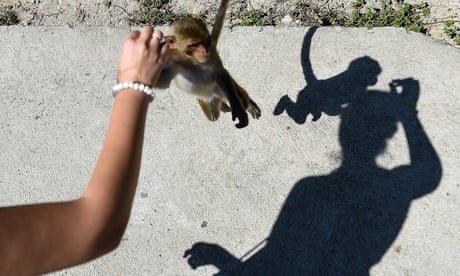
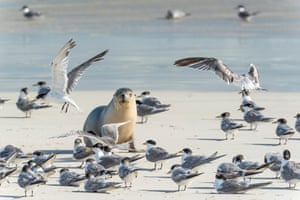
So far, Power says she has found evidence of antibiotic-resistant bacteria in about a dozen animals, including bats, penguins, sea lions and wallabies.
Read more
“You have organisms moving from us, to animals, and then potentially back to us again,” she says. “At the moment it’s hard to track what’s coming back and forth, but we know humans have driven this emergence of antibiotic-resistant bacteria.”
Power’s work on the issue started in 2007 when she looked at faeces samples of endangered brush-tailed rock wallabies being raised in captivity in New South Wales as part of conservation efforts.
About half the wallabies had antibiotic-resistant bacteria in their faeces. Those animals were released back into the wild.
In late 2009, Power fulfilled a romantic 20-year-old dream of travelling to Antarctica to do scientific research. The rather less romantic goal was to sample the human sewage from a research station there, and to “sneak up behind penguins and seals” and take their poo.

Advertisement
But again, her findings revealed that bacteria from humans was making its way into the Antarctic wilderness, including antibiotic-resistant bacteria.
Between 2017 and 2019, Power’s scientific colleagues together with wildlife carers have collected 448 poo samples from the little penguins of Philip Island and St Kilda, and from the penguins in zoos (one method to collect samples from wild penguins is to leave a piece of card near the entry to a nesting box because, Power says, they “like to poo out the door”).
Almost half the little penguins in captivity have antibiotic-resistant bacteria, compared with 3% of the wild population.
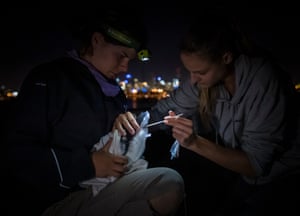
Power has also been part of an ongoing citizen science project encouraging others to do the faeces collecting – this timer the secretions of possums.
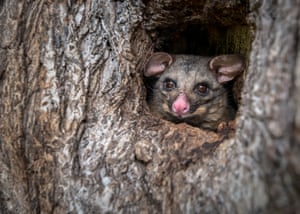
After analysing abut 1,800 samples so far, Power says the Scoop a Poop project has shown about 29% of Australia’s brush-tailed possums are carrying antibiotic-resistant bacteria.
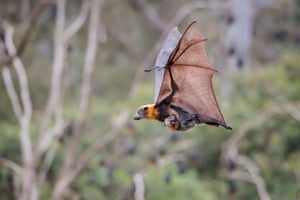
In 2019, Power was part of a study that found antibiotic resistance in grey-headed flying foxes – a species listed as vulnerable.
In research yet to be published, Power says she has found evidence of antibiotic-resistant bacteria in wild populations of Tasmanian devils.
So how did our bacteria get into the animals?
Power says about three-quarters of the antibiotics that humans take are actually excreted, ending up in wastewater systems. Places where antibiotics are manufactured are also potential avenues for escape of antibiotics.
And then there are the times when animals are taken into care, or raised in captivity and exposed to humans, and then released into the wild.
“We are seeing a variation in the prevalence [of antibiotic-resistant bacteria] across different wildlife species but why that is the case, we are not sure,” Power says.
Advertisementhttps://3a19b14f435b66a70fed7272384cb84e.safeframe.googlesyndication.com/safeframe/1-0-37/html/container.html
Possums are a species that are highly urbanised, sometimes feed on the ground, and live and eat close to humans – close enough that many find homes in the roof space of Australian houses. But they tend to be solitary.
Flying foxes on the other hand hang around in trees in tightly packed camps that can run into the thousands. About 5% of wild grey-headed flying foxes had antibiotic-resistant bacteria in their excretions, compared with 40% of those in care facilities.
Power says: “Maybe the possums are getting closer to our organisms, but also they’re solitary species. Flying foxes on the other hand live up in trees but live in higher densities.”
According to the World Health Organisation, the emergence of bacteria resistant to antibiotics is one of the world’s greatest health challenges facing humans, making treatment of dangerous diseases ever more challenging.
But the impact of this bacteria on wildlife, Power says, “is the big unknown” and she says there’s no direct evidence yet that it’s doing harm.
Advertisementhttps://3a19b14f435b66a70fed7272384cb84e.safeframe.googlesyndication.com/safeframe/1-0-37/html/container.html
She says: “The gene transfer of endemic bacteria could alter microbial communities and know more and more each day about the significance of friendly microbes to healthy immunity.”
Dr Wayne Boardman is a wildlife veterinarian at the University of Adelaide and the former head vet at London Zoo who has been collaborating with Power on research.
One big concern Boardman holds is that the antibiotic resistance could make it harder for vets to care for sick animals.
But also, he says, the bacteria and the genes associated with them that are being passed from humans to animals could then evolve and come back into the human population.
“It’s in the bacteria’s interest to try and protect themselves,” he says. “Whilst the risks are relatively small, they could be compounded over the years because we have more of these antimicrobial resistant genes occurring and then we get further and further into the mire.
“It’s a human induced issue. We can’t blame the animals. It’s only humans using antibiotics.”
Prof Clare McArthur, a behavioural ecologist at the University of Sydney, says Power has answered the first important question – are human bacteria being passed into our wildlife?
“The next questions is, does it matter,” she says. “I think of this from a gut perspective. We know that the gut biome is important and we know from humans that if you tweak it then things can go pear shaped in terms of our health.
Read more
“In the back of my mind is the question – if they’re picking up antibiotic-resistant bacteria, is that altering their gut biome? We don’t have an answer for that yet.”
As for Power, she’s worried that wildlife picking up human pathogens could be another pressure on species already vulnerable.
“These bacteria are pathogens and they can cause diseases in us. I’m worried about wildlife health and what some of these resistant bacteria might mean for wildlife species, many of which are already vulnerable.”
BY NATACHA LARNAUD
JULY 18, 2020 / 11:41 AM / CBS NEWS
https://www.cbsnews.com/news/coronavirus-cannabis-treatment-potential-cbd-covid-19/
As new daily coronavirus infections continue to break records in the U.S., researchers are considering whether the cannabis plant has the potential to be used in the treatment of COVID-19.
Experts from the University of Nebraska and the Texas Biomedical Research Institute are recommending that scientists study the anti-inflammatory properties in CBD as a potential treatment for lung inflammation caused by the coronavirus.
There is no scientific evidence that cannabis or its compounds can help with COVID-19 specifically, but in a peer-reviewed article in Brain, Behavior, and Immunity, the authors said further research is needed to understand if CBD can help patients infected by the virus.
Emily Earlenbaugh, a Forbes contributor and co-founder of Mindful Cannabis Consulting, joined CBSN to discuss the study. She explained that in severe cases of COVID-19, the body’s immune system overreacts and releases too many cytokines, which is called a “cytokine storm.”
“Cytokines will normally help to create inflammation to fight off infections,” Earlenbaugh said. “But in these extreme cases, you see so much cytokines being released into the system that it creates a cytokine storm. You might see high fever, inflammation, severe fatigue and nausea, and in serious cases, it can lead to death through organ failure.”
Earlenbaugh said CBD is known from previous research as an IL-6 cytokine inhibitor, meaning it helps reduce the production of cytokines.
The authors of the study wrote that one drug, Tocilizumab, resulted in the “clearance of lung consolidation and recovery” in 90% of the 21 treated patients. The drug, however, resulted in adverse side effects like pancreas inflammation and hypertriglyceridemia.
Researchers then turned to cannabis, specifically CBD. The authors said that several cannabinoids in the cannabis plant have anti-inflammatory properties. They said CBD “has shown beneficial anti-inflammatory effects in pre-clinical models of various chronic inflammatory diseases” and noted that the FDA approved one CBD product to treat certain forms of epilepsy.
“CBD has very few side effects, so it’s something that’s being looked at as a much more mild treatment that still has a lot of anti-inflammatory powers,” Earlenbaugh told CBSN.
The authors of the study said that CBD can help reduce anxiety in patients and increase the production of interferons, a protein that helps that body fight infections.
But given the very early stages of this research, Earlenbaugh warns that people should “definitely express caution” against using cannabis to fight COVID-19. She said some researchers have warned using the drug early on in the infection stages could cause negative side effects.
“We’re very pretty far away from human research that could really definitively answer those questions for us,” Earlenbaugh says. “The other reason for caution is that cytokines are important in fighting off infections. So, we don’t want to reduce them as a preventative measure or in early stages of the infection.”
 Exposing the Big Game