Donald Trump is due to attend a fireworks display at Mount Rushmore in South Dakota on Friday night. Photograph: Scott Olson/Getty ImagesAdam Gabbatt in New York@adamgabbattPublished onFri 3 Jul 2020 13.28 EDT
228
The Fourth of July is traditionally for barbecues, fireworks, boisterous partying and various hijinks to celebrate Independence Day. But this year, with coronavirus cases soaring to all-time highs, medical experts warn that the normal US holiday exuberance could instead create infection “superspreader” events.‘It’s very troubling’: alarm grows over Covid-19 spike among young AmericansRead more
Across the country, thousands of official public celebrations have been canceled in an effort to prevent mass gatherings. Two notable exceptions are the fireworks planned by the Trump administration in the center of Washington, and an event on Friday night at Mount Rushmore in South Dakota where the president will attend a fireworks display.
This event has managed simultaneously to upset Native American leaders who consider the location stolen tribal land; irritate those worried about wildfires in the parched landscape, where fireworks have been banned in recent drought years; and further divide views on health precautions, with the Republican governor of South Dakota saying social distancing will not be enforced and anyone who doesn’t like that idea can “stay home”.Advertisementhttps://355a7bd648d7d5585dd18118c232a4c6.safeframe.googlesyndication.com/safeframe/1-0-37/html/container.html
Most municipal celebrations will not happen. But large groups are still expected in backyards, homes and streets, as Americans strain to celebrate their liberation from British rule.
And with the country reporting record highs of new coronavirus cases, officials say the impact of Fourth of July events could be catastrophic.
“It’s set up a perfect storm,” Joshua Barocas, an infectious disease physician at Boston Medical Center, said during a briefing by the Infectious Diseases Society of America.
“The combination of travel, the combination of reopening – perhaps in some cases too early – and the combination of people not necessarily following some of these preventive guidelines.”
The US recorded 52,000 new cases on Wednesday, according to Johns Hopkins University figures, a new all-time daily high for the US in the outbreak. It was the fifth daily high in the last eight days.
On Thursday morning, infections were rising in up to 40 states, and 14 states reported record daily highs.
About 40% of the US is now changing course on reopening in an attempt to quell the unprecedented surge, and states are pleading with people not to engage in group revelry.
The mayor of Florida’s most populous county, which includes Miami, on Friday ordered indefinite overnight curfews from 10pm to 6am.
“This curfew is meant to stop people from venturing out and hanging out with friends in groups, which has shown to be spreading the virus rapidly,” Carlos Gimenez said in a statement, citing staffing shortages at hospitals.
In Austin, Texas, that warning took the form of an emergency alert to people’s phones, which urged them to celebrate Independence Day responsibly.
“Coronavirus is spreading rapidly in Austin-Travis county,” read the alert, which buzzed up on screens across the city.
“Stay home. Avoid non-household gatherings. Keep six feet apart from there. Wear a face covering. Wash your hands frequently.”
Texas is among the states worst affected by the recent surge. The state, which was one of the first to reopen bars, restaurants and hair salons in May, recorded its highest ever number of daily coronavirus cases this week, and several hospitals in Houston are at or near full capacity.
Trump at a ‘Spirit of America Showcase’, at the White House on Wednesday. Photograph: Michael Reynolds/EPA
In Alabama, a group of students held “Covid parties” this week, according to Tuscaloosa city councilor Sonya McKinstry, where students wagered over who would become infected.
“They put money in a pot, and they try to get Covid. Whoever gets Covid first gets the pot. It makes no sense,” McKinstry told ABC News. “They’re intentionally doing it.”
The parties fly in the face of advice from the Alabama department of public health, which has asked people to maintain a 6ft distance, and explained the concept of superspreader events in guidance sent out to local governmental officials.
“Asymptomatic spread of Covid-19 is a major risk factor. These ‘superspreaders’ do not know they are carrying the disease,” the health department said.
“It is estimated one in four infected people are ‘superspreaders’. For this reason, we strongly recommend wearing masks in public gatherings.”
California, which had been making progress on getting infections down, is now the new US’s worst hotspot. The Riverside county public health officer, Cameron Kaiser, warned that the effect of people gathering to toast Memorial Day, a public holiday in May, was stark.
The California, governor ordered the closure of all recently reopened bars on Wednesday, banned indoor movie theater-going and dining at restaurants. Arizona’s governor, Doug Ducey, abruptly ordered bars, gyms, movie theaters and water parks to close.
Many beaches, a traditional Fourth of July rallying point, have been ordered to close. A majority of beaches in southern Florida will shut down from Friday, as will beaches in Texas and Los Angeles county.
Amid the warnings over the celebrations, Trump has remained defiant. He has insisted that the “Salute to America”, a huge firework-laden display of national pride which was started by the president last year, will go ahead in Washington, despite the city’s mayor urging against it.
Trump will speak at the event, which thousands attended last year, and the department of the interior said the display will be “a patriotic tribute to our men and women in uniform”.
While COVID-19 and protests for racial justice command the world’s collective attention, ecological destruction, species extinction and climate change continue unabated. While the world’s been focused on other crises, an alarming study was released warning that species extinction is now progressing so fast that the consequences of “biological annihilation” may soon be “unimaginable.”
Dr. Jane Goodall, the world-renowned conservationist, desperately wants the world to pay attention to what she sees as the greatest threat to humanity’s existence.
CBS News recently spoke to Goodall over a video conference call and asked her questions about the state of our planet. Her soft-spoken grace somehow helped cushion what was otherwise extremely sobering news: “I just know that if we carry on with business as usual, we’re going to destroy ourselves. It would be the end of us, as well as life on Earth as we know it,” warned Goodall.
Dr. Jane Goodall at a reception in honor of Disney Conservation Funds 20th anniversary on April 18, 2016 in Orlando, Florida.GUSTAVO CABALLERO / GETTY IMAGES
What follows is a lightly edited transcript of our conversation.
Jeff Berardelli:Destruction of nature is causing some really big concerns around the world. One that comes to the forefront right now is emergent diseases like COVID-19. Can you describe how destruction of the environment contributes to this?
Dr. Jane Goodall: Well, the thing is, we brought this on ourselves because the scientists that have been studying these so-called zoonotic diseases that jump from an animal to a human have been predicting something like this for so long. As we chop down at stake tropical rainforest, with its rich biodiversity, we are eating away the habitats of millions of animals, and many of them are being pushed into greater contact with humans. We’re driving deeper and deeper, making roads throughout the habitat, which again brings people and animals in contact with each other. People are hunting the animals and selling the meat, or trafficking the infants, and all of this is creating environments which are perfect for a virus or a bacteria to cross that species barrier and sometimes, like COVID-19, it becomes very contagious and we’re suffering from it.
But we know if we don’t stop destroying the environment and disrespecting animals — we’re hunting them, killing them, eating them; killing and eating chimpanzees in Central Africa led to HIV/AIDS — there will be another one. It’s inevitable.
Do you fear that the next [pandemic] will be a lot worse than this one?
Well, we’ve been lucky with this one because, although it’s incredibly infectious, the percentage of people who die is relatively low. Mostly they recover and hopefully then build up some immunity. But supposing the next one is just as contagious and has a percentage of deaths like Ebola, for example, this would have an even more devastating effect on humanity than this one.
I think people have a hard time connecting these, what may look like chance events, with our interactions and relationship with nature. Can you describe to people why the way that we treat the natural world is so important?
Well, first of all, it’s not just leading to zoonotic diseases, and there are many of them. The destruction of the environment is also contributing to the climate crisis, which tends to be put in second place because of our panic about the pandemic. We will get through the pandemic like we got through World War II, World War I, and the horrors following the World Trade towers being destroyed. But climate change is a very real existential threat to humankind and we don’t have that long to slow it down.
Intensive farming, where we’re destroying the land slowly with the chemical poisons, and the monocultures — which can be wiped out by a disease because there is no variation of crops being grown — is leading to habitat destruction. It’s leading to the creation of more CO2 through fossil fuels, methane gas and other greenhouse gas [released] by digestion from the billions of domestic animals.https://c08e3ca301573b8802c73c1c8cc0e9db.safeframe.googlesyndication.com/safeframe/1-0-37/html/container.html
It’s pretty grim. We need to realize we’re part of the environment, that we need the natural world. We depend on it. We can’t go on destroying. We’ve got to somehow understand that we’re not separated from it, we are all intertwined. Harm nature, harm ourselves.
If we continue on with business as usual, what do you fear the outcome will be?
Well,if we continue with business as usual, we’re going to come to the point of no return. At a certain point the ecosystems of the world will just give up and collapse and that’s the end of us eventually too.
What about our children? We’re still bringing children into the world — what a grim future is theirs to look forward to. It’s pretty shocking but my hope is, during this pandemic, with people trapped inside, factories closed down temporarily, and people not driving, it has cleared up the atmosphere amazingly. The people in the big cities can look up at the night sky and sea stars are bright, not looking through a layer of pollution. So when people emerge [from the pandemic] they’re not going to want to go back to the old polluted
Now, in some countries there’s not much they can do about it. But if enough of them, a groundswell becomes bigger and bigger and bigger [and] people say: “No I don’t want to go down this road. We want to find a different, green economy. We don’t want to always put economic development ahead of protecting the environment. We care about the future. We care about the health of the planet. We need nature,” maybe in the end the big guys will have to listen.
I often think our economic future, which is always put at the forefront, is actually dependent upon our ecological future. Without an ecological future, there is not going to be any economic growth. Would you agree?
Absolutely. I mean, it’s all been said again and again, but fossil fuels are not infinite, they will come to an end, leading to a lot more destruction of the environment for sure. Forests and natural resources are not infinite and yet we’re treating them as though they are, and in some places using them up more quickly than nature can replenish them.
We have to have a different kind of economy, we need a different way of thinking about what is success.Is it just about having more and more money, more and more stuff, being able to show off to your friends, and the wasteful society we live in? We waste clothes, we waste food, we waste laptops and cellphones. That pollutes the environment. So we’ve got to think differently, haven’t we?
So what do we do? Right now our worldview is based on GDP. You suggest that we think of it in a different way. So do you have a suggestion of how we rate our success other than GDP?
I’m not an economist.I just know that if we carry on with business as usual, we’re going to destroy ourselves. It would be the end of us, as well as life on Earth as we know it.
So one thing we can do, those of us in affluent societies can almost all do with a bit less. We have a very unsustainable lifestyle. You can’t really blame people, they grew up into it. But if you went through World War II like I did, when you took nothing for granted, one square of chocolate for a week is what we had and everything was rationed. So, you appreciate it. We never wasted even an ounce of food; not like today.
Then, we also have to alleviate poverty. Because if you’re really poor you destroy the environment, you cut down the last trees to make land to grow more food for your family, or fish the last fish. Or if you’re in an urban area you buy the cheapest junk food. You don’t have the luxury of asking: how is this made, did it harm the environment, did it lead to the suffering of animals like in the factory farms, is it cheap because of child slave labor? You just have to buy the cheapest in order to survive.
Then the third thing, which nobody wants to talk about, but nevertheless … there are approximately 7.8 billion of us on the planet today and already in some places we’re using up natural resources faster than nature can replenish them. In 2050 it’s estimated that there will be 9.7 billion of us. What will happen? We can’t just go on burying it under the carpet.
Population issues are politically sensitive so I talk about voluntary population optimization. So that’s OK, it’s voluntary, it is your choice. You optimize it for your financial situation. People are desperate to educate their children and they can’t educate eight anymore. So they love family planning, and women can space out their children so that they can have a child and look after it. https://c08e3ca301573b8802c73c1c8cc0e9db.safeframe.googlesyndication.com/safeframe/1-0-37/html/container.html
Let’s switch gears. I don’t eat animals. I have a dog. I love my dog. Let’s talk about the idea that animals have feelings and that pigs are as intelligent as dogs…
You know, animals are so much more intelligent than people used to think, and they have feelings and emotions and personalities, like your dog, any animal you share your life with. You know, birds now are making tools and octopus are incredibly intelligent. And when we think of all this trafficking of animals, selling them in meat markets or factory farms, when you think that each one one is an individual, can feel fear and pain, can suffer mentally as well as physically, isn’t it shocking? I’m glad you don’t eat them. I don’t either, of course.
Jane Goodall, the world’s foremost authority on chimpanzees, communicates with a chimp named Nana at the zoo in Magdeburg, Germany, on June 6, 2004.JENS SCHLUETER/DDP/AFP VIA GETTY IMAGES
The shock and horror because in China and South Korea they eat dogs — well, the thought of eating a dog makes me feel particularly sick, but not more sick than eating a pig. They eat dogs and we don’t like it, but we eat pigs, and they are as intelligent as dogs.
Isn’t the point, if you must eat an animal shouldn’t you treat it really well, like the Native Americans, respect the animal and give thanks that it’s sacrificed itself for you?
This is a bit more of a thought-provoking question: What has led us to this over-consumption in society? There is an idea that perhaps there is a Biblical basis, that we have dominion, that we’re in charge, and because we’re in charge we’re able to do what we want. Can you give me an idea of why we are where we are, as a world right now, and what led us here?
[Laughing]You think I’m going to be able to answer all these questions?
I know it’s a lot, but I know that you must have some thoughts on this.
Well, first of all, I do think that religion has played a role. I was told by a Hebrew scholar the original translation of that word that you just mentioned, “dominion,” is wrong. It’s actually something more like “stewardship.” That’s very different. If God gave us stewardship that’s different from saying we have dominion. So I think religion started this thinking that we’re so different from all the other animals and I was taught there was a difference in kind, not degree. Thank goodness the chimpanzees are so like us biologically, as well as behaviorally, that science had to start thinking differently.
So how did we get there? It’s sort of been like this all throughout human history. There were so many fewer of us back then that we could have these unsustainable lifestyles and it didn’t really matter; they were sustainable. Think of how people have always exploited the natural world just because we can. And so there’s been a lag between developing new technologies [which enable us to] destroy whole forests. Whereas the indigenous people might take a week to cut down the big tree, we can do it in an hour. And the moral evolution and the sense of a spiritual awareness and connection to the natural world on which we depend, that’s lagged behind as well.
So how do we repair that? How do we rediscover our connection to the rest of the natural world?
As I think you know, I began a program for young people back in 1991 called Roots and Shoots because young people had lost hope in the future. I’ve met them all over the world. They were mostly apathetic and didn’t seem to care. Or they were angry or deeply depressed and they told me they felt like that because we compromised their future and there was nothing they could do about it. And we have compromised their future. We’ve been stealing it for years and years. And yes, we still are still stealing it today. But when they said there was nothing they could do I thought, no, that’s not right. We got this window of time. If we all get together, take action, we can start healing some of the harm, we can start slowing down climate change and we can work on educating people.
Kids are really good at educating their parents and grandparents, some of whom may be in positions to make a huge difference, like CEOs of big companies or people in government. That program is now kindergarten to university and everything in between. It’s in 68 countries and growing. Every group has the message: Each one of us — and that means you as well as me — we make some impact every single day and we have the luxury of choosing the impact that we make.
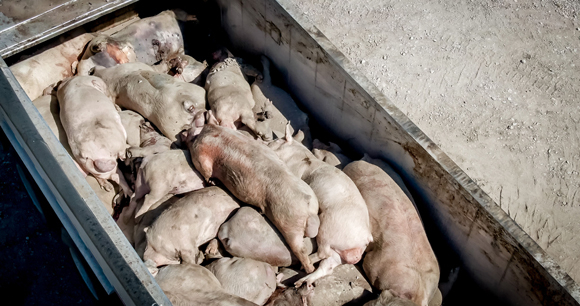
Washington, DC—COVID-19 has shut down, at least temporarily, dozens of pig, chicken, and turkey slaughter plants in the United States, leaving millions of farm animals with nowhere to go. Some producers have arranged to keep animals on the farm until plants reopen, while others have chosen to kill healthy animals and bury or compost their bodies.
The term euthanasia, which literally means “a good death,” has been inappropriately used to characterize the killing by inhumane methods of healthy farm animals due to slaughter and processing capacity problems. The American Veterinary Medical Association (AVMA) uses the term “depopulation” to describe the rapid destruction of a population of animals in response to urgent circumstances. One method that has been used to kill large numbers of farm animals is “ventilation shutdown,” which involves turning off the airflow in a barn and ratcheting up the heat to as high as 120 degrees, leaving trapped birds and pigs to die from a combination of heat stress and suffocation.
Dena Jones, director of the farm animal program at the Animal Welfare Institute (AWI), issued the following statement regarding the use of ventilation shutdown to kill farm animals due to limited slaughter capacity during the pandemic:
The ventilation shutdown process can take hours and likely results in severe animal suffering. Intentionally inflicting death in a manner that causes elevated and prolonged distress is unacceptable and does not qualify as “euthanasia.” It is particularly insupportable for the AVMA — a professional scientific body representing veterinarians sworn to protect animals — to allow its guidelines to be used in such an inappropriate manner.
When the AVMA proposed allowing the use of ventilation shutdown to kill animals “in constrained circumstances,” AWI warned that the AVMA guidelines might not prevent producers from using this extreme method in situations that instead call for euthanasia. In fact, that is exactly what is happening now; healthy animals posing no public health risk are being killed by a grossly inhumane method to aid the meatpacking industry.
Ventilation shutdown was last used in 2015 in response to an outbreak of highly pathogenic bird flu, which killed nearly 50 million chickens and turkeys in the United States. During the current pandemic, however, animals are not suffering from disease, nor are they at risk of transmitting disease to other animals or to humans. Instead, they are being destroyed because meat companies have failed to properly protect their slaughterhouse workers.
The modern animal agriculture industry in the United States routinely puts profits over the well-being of both animals and workers. It runs slaughter lines as fast as possible, provides animals the lowest level of care required, and offers minimal health and safety protections to its workers. There is no margin for error in this intensive, high-production system. As a result, the wave of plant closures has left millions of animals in limbo. Nevertheless, the current situation does not justify subjecting any animal to a cruel death.
White House coronavirus advisor Dr. Anthony Fauci said U.S. health officials are keeping an eye on a new strain of flu carried by pigs in China that has characteristics of the 2009 H1N1 virus and 1918 pandemic flu.
The virus, which scientists are calling “G4 EA H1N1,” has not yet been shown to infect humans but it is exhibiting “reassortment capabilities,” Fauci told the Senate Health, Education, Labor and Pensions Committee during a hearing Tuesday.
The H1N1 swine flu emerged in Mexico in April 2009, infecting 60.8 million people in the U.S. and at least 700 million worldwide. An estimated 151,700 to 575,400 people died from the virus across the globe, according to the CDC.
WATCH NOWVIDEO01:23Fauci: New virus in China has traits of 2009 swine flu and 1918 pandemic flu
White House coronavirus advisor Dr. Anthony Fauci said Tuesday that U.S. health officials are keeping an eye on a new strain of flu carried by pigs in China that has characteristics of the 2009 H1N1 virus and 1918 pandemic flu.
“In other words, when you get a brand new virus that turns out to be a pandemic virus it’s either due to mutations and/or the reassortment or exchanges of genes,” he told lawmakers. “And they’re seeing virus in swine, in pigs now, that have characteristics of the 2009 H1N1, of the original 1918, which many of our flu viruses have remnants of that in it, as well as segments from other hosts, like swine.”
The H1N1 swine flu and 1918 pandemic flu were both considered horrific viruses that spread across the globe.
The H1N1 swine flu emerged in Mexico in April 2009, infecting 60.8 million people in the United States alone and at least 700 million worldwide. An estimated 151,700 to 575,400 people died from the virus across the globe, according to the Centers for Disease Control and Prevention. It is now seen as one of a variety of seasonal flu viruses.
The 1918 flu, which Fauci has often compared to Covid-19, is estimated to have killed between 30 million and 50 million people, according to the CDC. More than 20 million people died in World War I, by comparison.
The new strain that is spreading in pig farms in China has been identified as having “all the essential hallmarks of a candidate pandemic virus,” scientists say.
WATCH NOWVIDEO01:33Scientists find potential new strain of ‘pandemic’ swine flu in China
Fauci said Tuesday there’s always “the possibility that you might have another swine flu-type outbreak as we had in 2009.”
“It’s something that still is in the stage of examination,” he said. It’s not “an immediate threat where you’re seeing infections, but it’s something we need to keep our eye on, just the way we did in 2009 with the emergence of the swine flu.”
Public health officials and physicians have criticized the Trump administration’s lack of coordinated response to the virus. In recent weeks, President Donald Trump has downplayed the virus, saying the U.S. is nearing the end of the pandemic, contrary to experts in his own administration.
Earlier this month, Fauci said Covid-19 turned out to be his “worst nightmare” come to life as the coronavirus continues to rapidly spread across the globe.
He said the virus is “very different” from other outbreaks such as Ebola and HIV. The virus jumped from an animal host and has a high degree of transmissibility and mortality, he said. It is historically one of the worst pandemics the world has ever experienced, he said, adding people have compared it to the 1918 flu.
First detected in Wuhan, China, about six months ago, the new coronavirus has already infected more than 10.4 million people across the globe, killing more than 500,000.
On Tuesday, Fauci told lawmakers that he is concerned about the rise in new cases in places such as Texas and Florida.
He said reopening schools in the fall season will depend on the dynamics of the outbreak and the particular location of the school in question.
Testing has found positive cases at North Carolina facilities, but officials refuse to release the information
Pilgrim’s Pride chicken processing plant in Marshville, North Carolina. Photograph: Francisco Kjolseth/APAnimals farmed is supported byAbout this contentLewis Kendall in Durham, North CarolinaPublished onWed 1 Jul 2020 05.00 EDT
2,915
Achicken processing facility in western North Carolina reportedly underwent widespread testing for Covid-19 in early June.
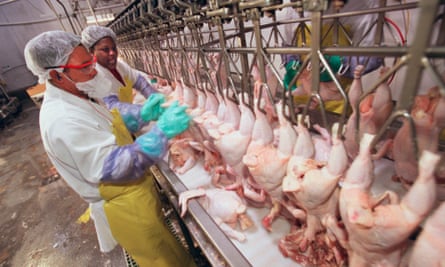
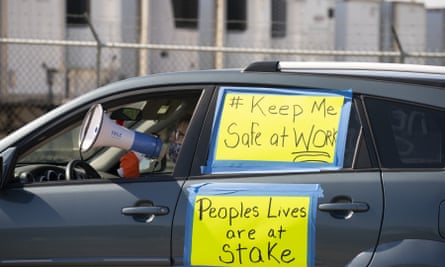
Workers at the plant were scared. Several employees had already tested positive and the company, Case Farms – which has been repeatedlycondemned for animal treatment and workers’ rights violations – was not providing proper protective equipment.
“We don’t have a lot of space at work. We are shoulder to shoulder,” said one worker, who declined to be identified, during a recent union call. “I’m afraid to go to work, but I have to go.”
The testing turned up 150 positive cases at the facility, the worker said.
On 8 June, the health department for Burke county, where the Case Farms facility is located, reported 136 new Covid cases, a 25% increase in its total caseload. Yet neither the company, county officials nor the North Carolina department of health and human services would confirm whether those cases were connected to Case Farms.
It is just one example of the currently taut relationship between public health and the economy in North Carolina, as the number of Covid-19 cases and hospitalizations rises.
North Carolina is one of the largest pork and poultry producing states in the US, exporting roughly $1.25bn in hogs, chickens and turkeys every year. Health departments in rural parts of the state, areas that often lean on large meatpacking or food processing facilities as primary sources of employment, have so far been tight-lipped about Covid-19 outbreaks in those plants.
In late April, while outbreaks began emerging at meat processing plants across the country, Donald Trump signed an executive order forcing the facilities to remain open. That same month, the US exported a record amount of pork to China, despite industry claims of a domestic shortage.
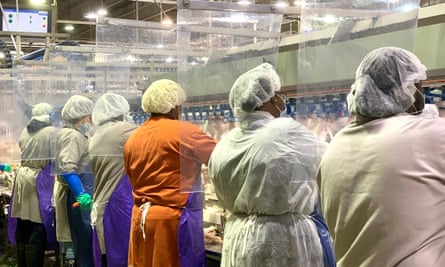
Workers wear protective masks and stand between a plastic dividers at a Tyson Foods poultry plant in Georgia. Photograph: AP
Since the pandemic began, more than 36,000 meat processing and farm workers have tested positive for Covid-19 and at least 116 have died, according to a tally by the Food and Environment Reporting Network, though the true number is likely higher.
Through case interviews and contact tracing, the Burke county health department, where Case Farms is located, does have data about where people with positive cases work, but are choosing not to release it, said spokeswoman Lisa Moore.
“We know where they are, but we are not a county that can divulge every place where they are,” Moore said.
Case Farms requested the health department direct all questions regarding their facility to a company representative, Moore added.
In response to a series of detailed questions from the Guardian, a Case Farms spokesperson wrote that the company is “committed to continue producing food for our nation’s food supply, while taking additional safety measures to protect our employees, our company and our customers, in accordance with USDA regulations and CDC guidelines.”
Earlier this year, North Carolina’s health department had reported the names of farms with two or more positive cases, but in May replaced the names with addresses in order to “better reflect the location of the outbreak”, according to a department spokesperson.
“Why, when a nursing home has an outbreak, it’s in the paper, but when a meatpacking facility does, it’s not?” said Mac Legerton, a longtime grassroots policy advocate and co-director of the Robeson County Cooperative for Sustainable Development, and is among those who have criticized local and state governments’ approach to case reporting.
“The law needs to be that in a pandemic all outbreaks at public and private facilities are made public to protect the employees of the institutions and to inform the public.”
As of Thursday, there were 2,772 confirmed cases of Covid-19 in 28 meat processing plant “clusters” around the state, the department said, but would not specify further.
North Carolina as a whole has seen a marked increase in cases and hospitalizations over the past several weeks, prompting a “concerned” Governor Roy Cooper to announce last week that the state would pause in the second phase of its reopening plan.
Demonstrators protest working conditions at a Pilgrim’s Pride poultry processing facility in Minnesota. Photograph: Jeff Wheeler/APAdvertisementhttps://tpc.googlesyndication.com/safeframe/1-0-37/html/container.html
The state requires only a few types of businesses to report outbreaks, which it defines as two or more cases, including congregate living facilities, daycare centers and schools. For all other businesses, local health departments and the state DHHS depend on companies volunteering their own data or tracking down clusters through case interviews.
But failure to disclose outbreaks demonstrates that officials and company executives are prioritizing economic interests over the wellbeing of marginalized workers and communities, Legerton said.
“That lack of information puts both employees and the public at risk,” he said.
In a letter to several of the largest meat companies last week, senators Elizabeth Warren and Cory Booker called on the corporations to disclose infection figures in their plants.
Virginia also recently moved to create a set of safety rules to protect workers from Covid-19 – the first of its kind in the nation – following a petition from workers in the state’s poultry processing and meatpacking industries. The drafted rules, which include requiring employers to mandate social distancing and notify employees of potential exposure, would be enforceable through fines and closures.
The Occupational Safety and Health Administration has received nearly 350 Covid-related complaints from employees at North Carolina businesses. One business, Pilgrim’s Pride, a poultry processing plant in Sanford, was the subject of at least eight separate complaints, with workers alleging the company was not informing them of positive tests or mandating the wearing of some protective equipment. A worker there died in May.
In Robeson county – home to a large Campbell’s Soup facility, Mountaire Farms and Sanderson Farms poultry processing plants, as well as many factory farms – businesses have been generally forthcoming with the health department, according to Bill Smith, the county’s health department director.
Smith’s office received $600,000 in federal Covid funding, which it used to set up testing sites around the county and hire school nurses as contact tracers. Smith and his team have also been collaborating on daily calls with health departments from surrounding counties, as well as coordinating closely with the local Lumbee Tribe.
But companies can make this work difficult, muddying the waters for case reporting in communities where they are one of very few employers, Smith said.
“A lot of the packing places are your largest employers, therefore it’s an economic issue,” he said. “There may be pressures from them to stay out of the packing world, if you will.”
Companies also choose to weigh public health considerations alongside public relations in determining what information to release, Smith said, pointing to publicly traded giants like Sanderson Farms and Smithfield Foods, which have “a brand they’re trying to protect”.
“If you say something about Smithfield Foods, they’ll see an effect immediately: you’ll see someone not buy Smithfield in the grocery,” he said.
Still, the decision by state and county health departments to report some outbreaks and not others appears inconsistent with the need for transparency in a public health crisis, Smith noted.
“When you’re releasing nursing home names with two illnesses, yet another place that has 900 you refuse to give, there’s some disagreement there from a public health perspective,” he said.
HOLLY SECONJUN 30, 2020, 23:29 ISTLocal animal husbandry workers inject a pig to collect a blood sample at a pig farm in Zhangye, Gansu province, China on October 28, 2019.REUTERS/Stringer
A study published on Monday describes a new strain of influenza found in pigs in Chinese slaughterhouses.
The flu strain was also found in a small number of farmers, but it doesn’t seem to spread human-to-human. The researchers said that could change, however.
A nearly decadelong study of Chinese pigs has found a potentially dangerous new type of influenza virus.
The study, published on Monday in the journal Proceedings of the National Academy of Sciences, describes a flu strain that shares genes with the one that caused the 2009 swine-flu pandemic. The researchers behind the work warned that the flu strain has “pandemic potential.”They described the virus as a combination of three strains: one from European and Asian birds, the one that caused the 2009 pandemic, and one from North America that has genes from bird, human, and pig flu viruses.Advertisementhttps://06db0d292e84275a90b6d094dae35c6f.safeframe.googlesyndication.com/safeframe/1-0-37/html/container.html
The new strain could pose a major threat if it’s able to circulate among humans, the researchers wrote. It doesn’t seem to do that yet, but antibodies to this type of virus were detected in 35 slaughterhouse workers, indicating that they may have been infected at some point in the past few years. The researchers said that because the strain contains parts of the 2009 swine-flu virus, it “may promote the virus adaptation” that leads to human-to-human transmission.
Dr. Anthony Fauci, director of the National Institute of Allergy and Infectious Diseases, said at a Senate briefing Tuesday that this new virus was “not an immediate threat” but something to “keep your eye on.”Given the devastation the coronavirus pandemic has caused, the researchers behind the study said, it’s critical to take proactive measures now to protect people against this swine flu.Advertisement
A patient suffering from the coronavirus in the intensive care unit at the Circolo hospital in Varese, Italy, on April 9, 2020.REUTERS/Flavio Lo Scalzo
An emerging type of swine flu
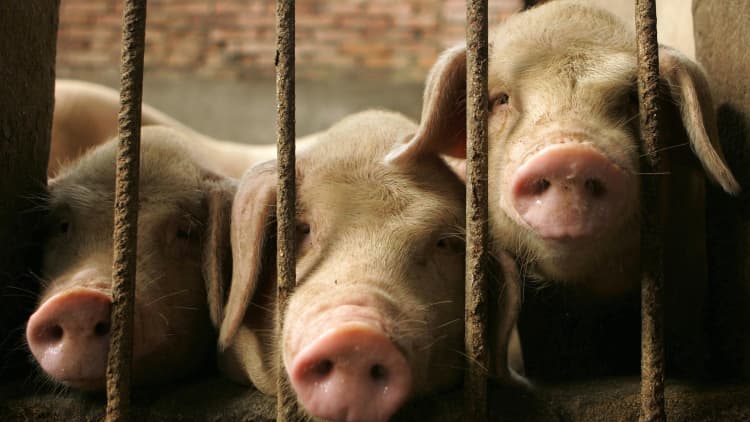
Identifying new virus strains in pigs is crucial for preventing another pandemic. The 2009 H1N1 pandemic was caused by an influenza A virus that emerged from pigs. The animals can serve as a reservoir for infectious diseases, since they can be infected with bird, pig, and human influenza strains.Advertisementhttps://06db0d292e84275a90b6d094dae35c6f.safeframe.googlesyndication.com/safeframe/1-0-37/html/container.html
When multiple strains of influenza infect the same pig, the viruses can swap genes in a process called reassortment, leading to the creation of a new disease.
The team of Chinese researchers that conducted the new study aimed to identify those types of potentially dangerous, never-before-seen viruses in pigs. From 2011 to 2018, they looked at nearly 30,000 swabs from pigs in slaughterhouses in 10 Chinese provinces and another 1,000 swabs from pigs with respiratory symptoms at a local veterinary teaching hospital.The researchers found 179 virus strains, but this one stood out.Advertisementhttps://06db0d292e84275a90b6d094dae35c6f.safeframe.googlesyndication.com/safeframe/1-0-37/html/container.html
Thomas Suen/Reuters
The worrisome new strain, which the researchers named G4 EA H1N1, has emerged on a larger scale in pig populations since 2016, the study said — it was “the predominant genotype in circulation in pigs detected across at least 10 provinces,” they wrote.They added that the virus was “distinct from current human influenza vaccine strains, indicating that preexisting immunity derived from the present human seasonal influenza vaccines cannot provide protection.”Advertisementhttps://06db0d292e84275a90b6d094dae35c6f.safeframe.googlesyndication.com/safeframe/1-0-37/html/container.html
The team tested the virus in a lab and found that it reproduced in animals’ respiratory systems. It can spread via airborne particles. The flu strain also transmits easily among ferrets, a species scientists frequently use as an indicator of how bad a virus may be in humans because they display human-like flu symptoms.
Whether or not the virus mutates to start spreading human-to-human will determine how dangerous it is.”Controlling the prevailing G4 EA H1N1 viruses in pigs and close monitoring in human populations, especially the workers in the swine industry, should be urgently implemented,” the researchers wrote.Advertisementhttps://06db0d292e84275a90b6d094dae35c6f.safeframe.googlesyndication.com/safeframe/1-0-37/html/container.html
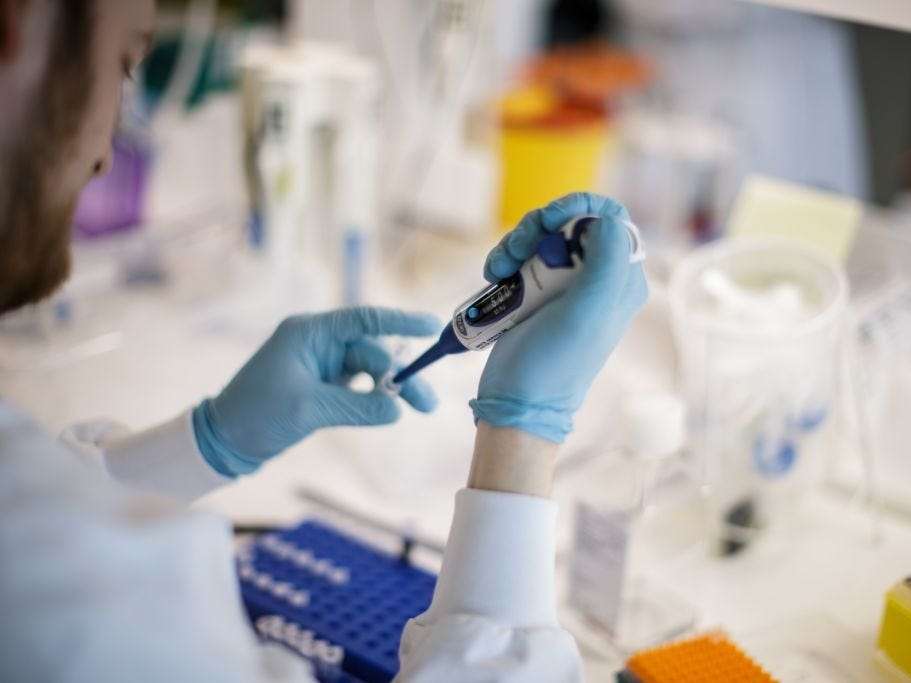
A researcher works on a vaccine for the coronavirus at the Copenhagen University research lab in Copenhagen, Denmark, on March 23, 2020.THIBAULT SAVARY/AFP via Getty Images
The threat of another swine-flu pandemic
H1N1, which emerged at the end of 2008, infected about 60.8 million people in the US through 2010. It was referred to as “swine flu” because it originally jumped to humans from pigs. Estimates of global H1N1 deaths range from 151,700 to 575,400. But H1N1 differed from other flu outbreaks in that 80% of the virus-related deaths were people younger than 65; in other flu outbreaks typically about 70% and 90% of deaths are people older than 65.Advertisementhttps://06db0d292e84275a90b6d094dae35c6f.safeframe.googlesyndication.com/safeframe/1-0-37/html/container.html
Scientists think mammals and birds around the globe host about 1.7 million undiscovered types of viruses. Viruses in birds, bats, and pigs are especially risky for people.
Because China has the world’s largest pig population, scientists there monitor the animals to try to find emerging diseases before they spread.”Systematic surveillance of influenza viruses in pigs is essential for early warning and preparedness for the next potential pandemic,” the researchers behind the new study wrote.Advertisementhttps://06db0d292e84275a90b6d094dae35c6f.safeframe.googlesyndication.com/safeframe/1-0-37/html/container.html
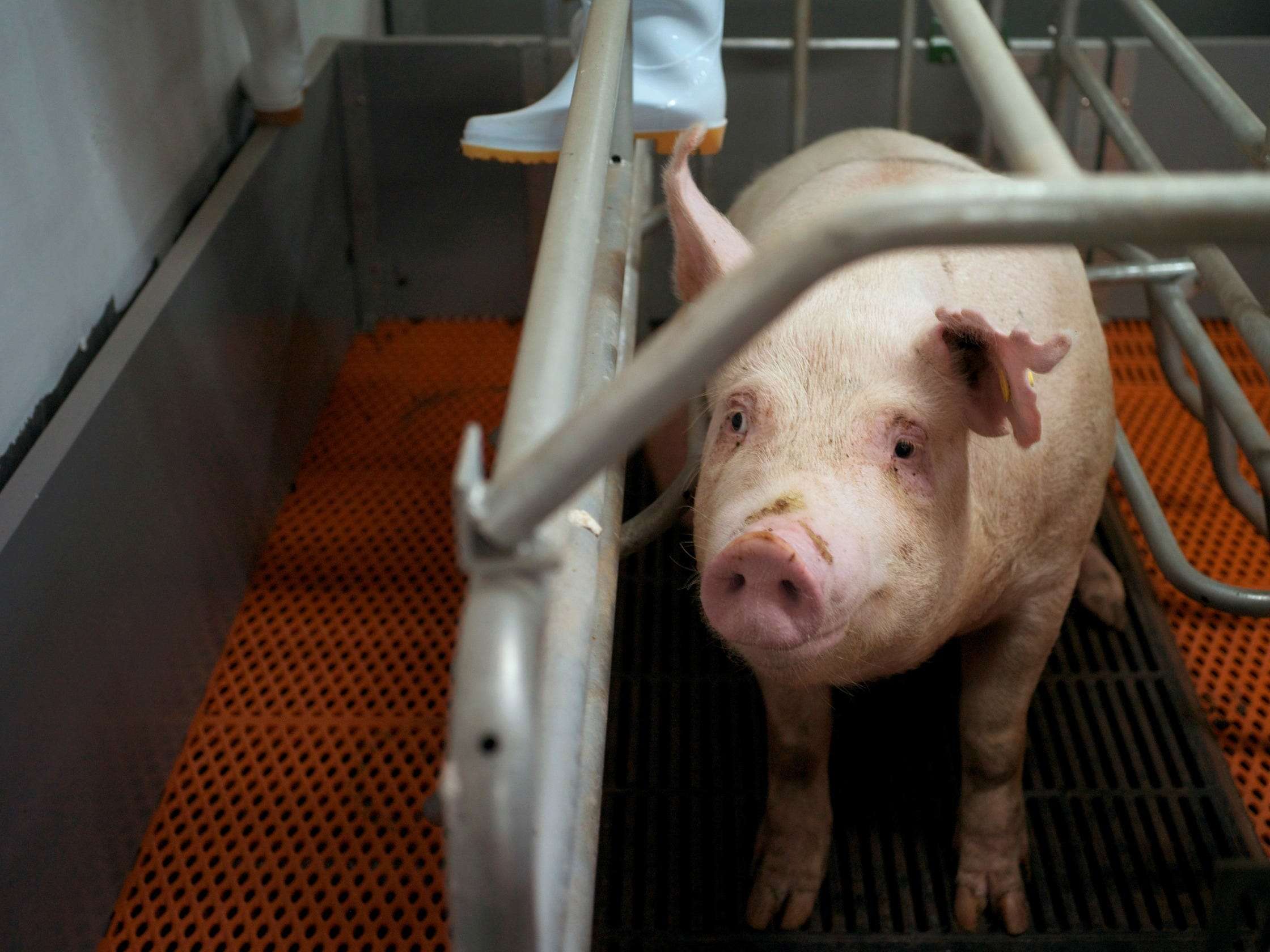
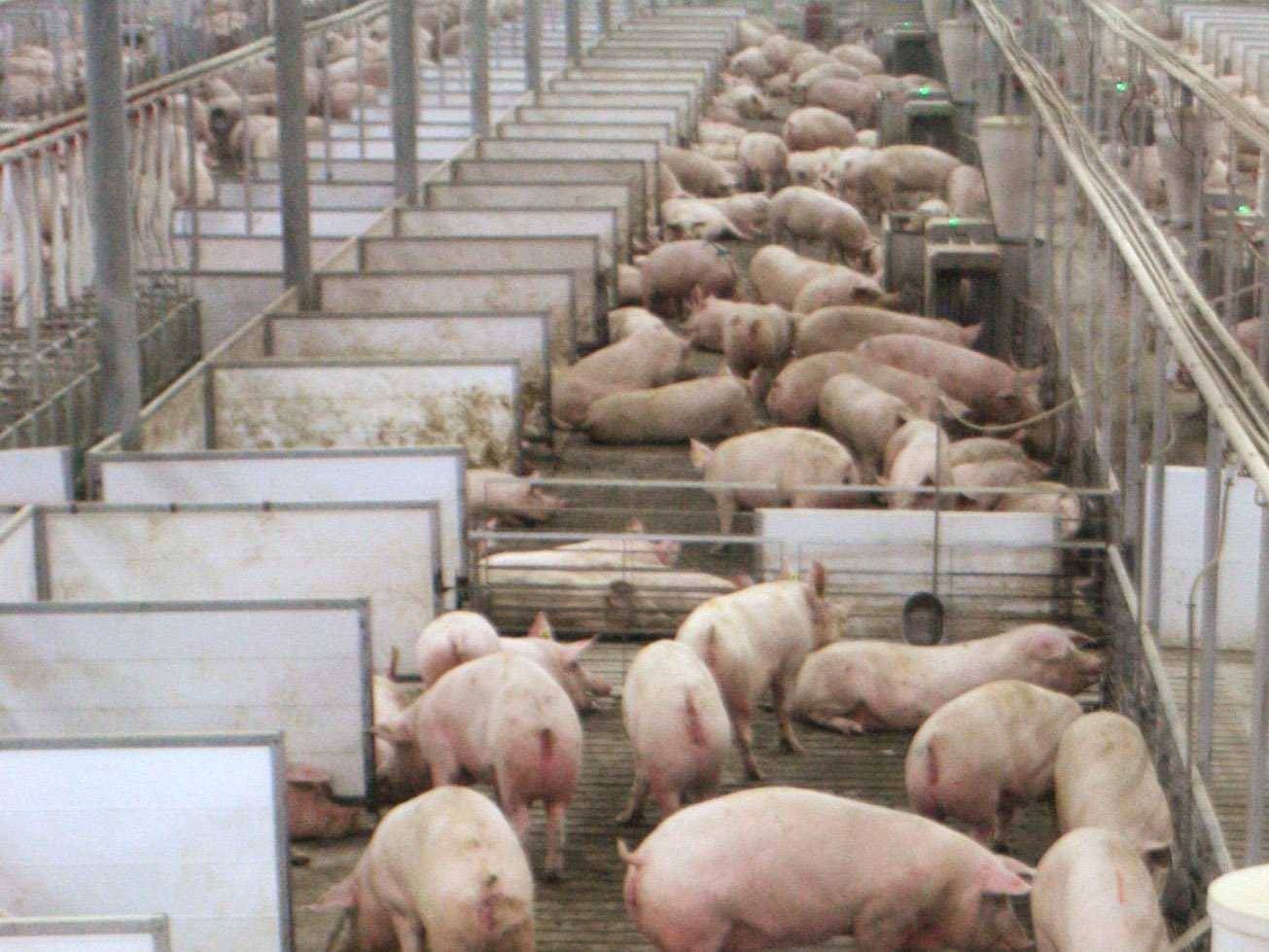
Pigs walk across a slatted floor at Fair Oaks Farms in Fair Oaks, Indiana on May 18, 2015.AP/M.L.Johnson
Their surveillance uncovered other concerning trends: The researchers found that the portion of pigs studied that had diseases increased over time, rising to 8.2% in 2018 from 1.4% in 2011, with a sharp increase after 2014.A similar surveillance system also exists for coronaviruses in bats. Scientists think that the novel coronavirus, known as SARS-CoV-2, jumped to people from bats, likely via an intermediary animal species.Advertisementhttps://06db0d292e84275a90b6d094dae35c6f.safeframe.googlesyndication.com/safeframe/1-0-37/html/container.html
Correction: An earlier version of this story incorrectly said the new flu strain had not yet been seen in humans. The story has been updated.
Image captionThe new flu strain is similar to the swine flu that spread globally in 2009
A new strain of flu that has the potential to become a pandemic has been identified in China by scientists.
It emerged recently and is carried by pigs, but can infect humans, they say.
The researchers are concerned that it could mutate further so that it can spread easily from person to person, and trigger a global outbreak.
While it is not an immediate problem, they say, it has “all the hallmarks” of being highly adapted to infect humans and needs close monitoring.
As it’s new, people could have little or no immunity to the virus.
Pandemic threat
A bad new strain of influenza is among the top disease threats that experts are watching for, even as the world attempts to bring to an end the current coronavirus pandemic.
The last pandemic flu the world encountered – the swine flu outbreak of 2009 that began in Mexico – was less deadly than initially feared, largely because many older people had some immunity to it, probably because of its similarity to other flu viruses that had circulated years before.
That virus, called A/H1N1pdm09, is now covered by the annual flu vaccine to make sure people are protected.
The new flu strain that has been identified in China is similar to 2009 swine flu, but with some new changes.
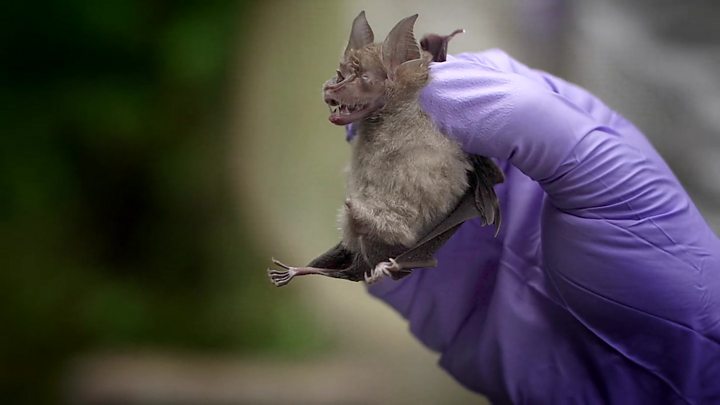
Media captionSearching for viruses in Thai bats – watch scientists collect samples from the animals in order to look for clues about coronaviruses
So far, it hasn’t posed a big threat, but Prof Kin-Chow Chang and colleagues who have been studying it, say it is one to keep an eye on.
The virus, which the researchers call G4 EA H1N1, can grow and multiply in the cells that line the human airways.
They found evidence of recent infection starting in people who worked in abattoirs and the swine industry in China.
Current flu vaccines do not appear to protect against it, although they could be adapted to do so if needed.
Prof Kin-Chow Chang, who works at Nottingham University in the UK, told the BBC: “Right now we are distracted with coronavirus and rightly so. But we must not lose sight of potentially dangerous new viruses.”
While this new virus is not an immediate problem, he says: “We should not ignore it”.
The scientists write in the journal Proceedings of the National Academy of Sciences that measures to control the virus in pigs and closely monitor working populations should be swiftly implemented.
Prof James Wood, Head of the Department of Veterinary Medicine at the University of Cambridge, said the work “comes as a salutary reminder” that we are constantly at risk of new emergence of pathogens, and that farmed animals, with which humans have greater contact than with wildlife, may act as the source for important pandemic viruses.
Media captionHow swine fever devastated China’s pigs in 2019
Even those of us who have avoided falling ill are feeling the impact of the COVID-19 pandemic — social distancing, wearing masks, and staying home have come to define most aspects of our lives.Meanwhile, across the country, communities are grappling with how to slow the spread of the disease, care for the sick, and mitigate its severe impact on the economy. But, now that we have seen the destruction that can be wrought by a pandemic disease, we must also understand its cause and source. Because we have an opportunity to use that knowledge to prevent the next pandemic.Virtually all pandemics, and most infectious diseases, are zoonotic, meaning they originate in animals. COVID-19 likely originated in wildlife, as did AIDS, SARS, and Ebola. But other diseases, notably influenza, including the deadlier pandemic versions that have swept the world periodically, typically come from chickens, turkeys, and pigs. The common denominator is animal exploitation, confinement, and cruelty. Changing the way we treat animals is essential to preventing pandemics.The Animal Legal Defense Fund, as experts in animal law and policy, has published the first in a series of white papers providing background and recommendations to lawmakers to reduce our risk of zoonotic diseases. The paper — COVID-19 and Animals — documents the alarming rate of zoonotic disease produced by industrial animal agriculture in the U.S. Some of these diseases have already caused outbreaks in people, including the 1997 Bird Flu (H5N1) and the 2009 Swine Flu (H1N1). In April 2020, a highly pathogenic strain of Bird Flu (H7N3) — a strain which has caused illness in humans — was discovered in a turkey farm in South Carolina. Unless we bring an end to factory farming, it is simply a matter of time before another one of these diseases makes the jump to people, potentially with results far worse than COVID-19.COVID-19 and Animals identifies and quantifies the risks from specific industries. Further white papers, already in development, will offer in-depth legal analysis and policy recommendations for each industry. Ultimately, we will all need to lobby our elected officials to pass laws that prevent the conditions for animals that not only lead to horrific cruelty, but also put us all at unacceptable risk for pandemic diseases. Perhaps the most important lesson of COVID-19 is: An ounce of prevention is worth a pound of cure.You can read the full white paper here
The Department of Justice is launching a probe into beef companies, following beef prices almost doubling earlier this year, after more than 20 slaughterhouses across the U.S. were forced to shutter due to COVID-19 outbreaks.
Bloomberg reports that ‘regulators are also scrutinizing potential price manipulation, and on Capitol Hill, lawmakers are clamoring for a crackdown’, adding that ‘farmers have long complained about the dominance of just a handful of companies in beef and poultry markets, but antitrust enforcers haven’t before taken significant action against the companies’.
Antitrust laws
The probe follows reports that while consumers were paying these staggeringly high prices for meat, meat packing giants were extremely low prices to ranchers and farmers.
The probe will investigate whether these meatpacking companies are manipulating prices. If so, they could be violating antitrust laws – aka competition laws – statutes developed by the U.S. government. They were put in place to protect consumers by ensuring that fair competition exists in an open-market economy
‘Broken’
Ben Gotschall is interim executive director for the Organization for Competitive Markets, which advocates against consolidation in agriculture.
He told Bloomberg: “The market’s been broken for a long time, and the pandemic has just made it worse. Meatpackers are making record profits, and the ranchers are going out of business.
“Whatever Trump’s motivation might be, if he does the right thing you have to take it. I hope it’s more than just lip service.”







 Local animal husbandry workers inject a pig to collect a blood sample at a pig farm in Zhangye, Gansu province, China on October 28, 2019.REUTERS/Stringer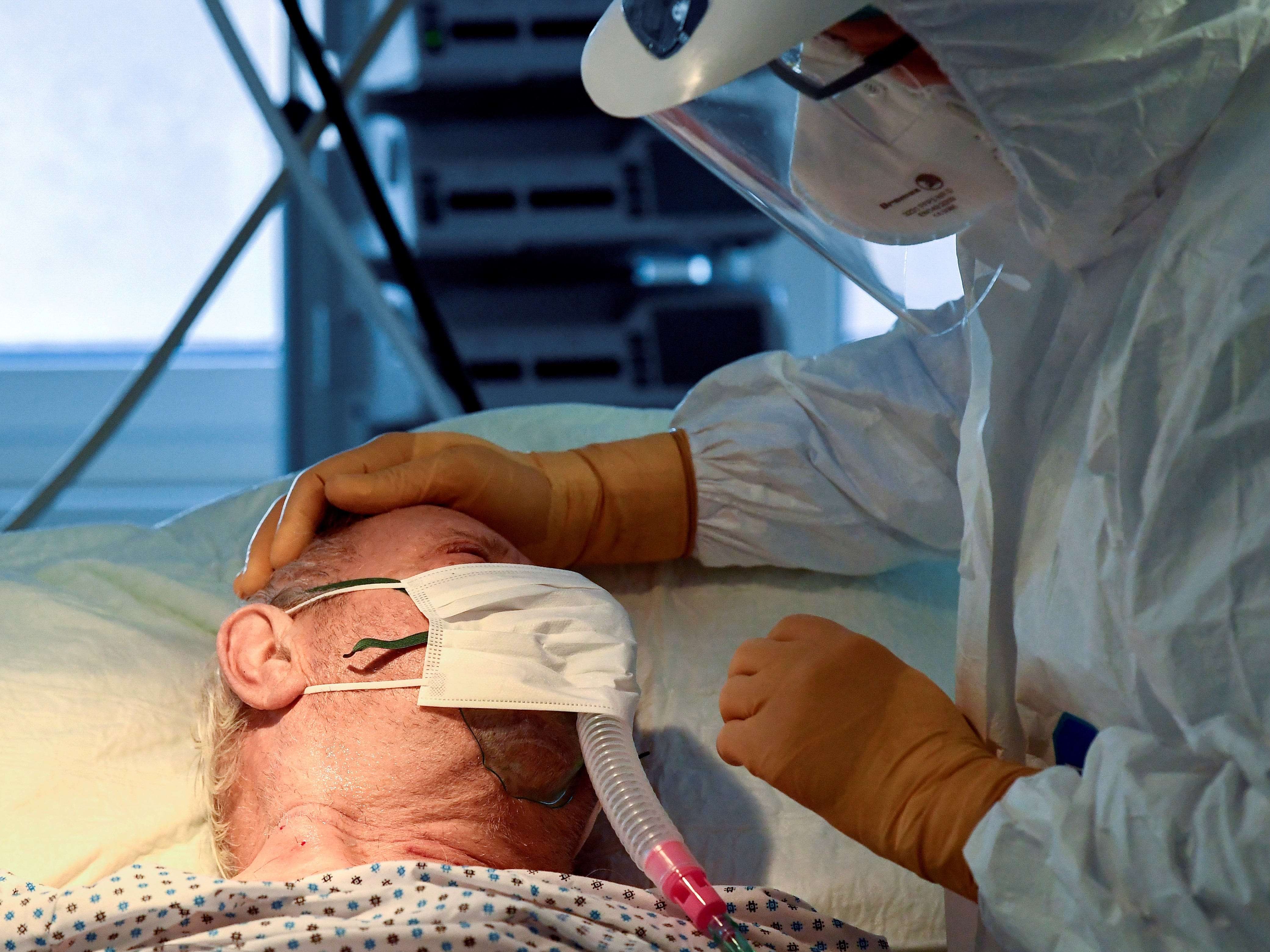


 Exposing the Big Game