Exposing the Big Game

Forget Hunters' Feeble Rationalizations and Trust Your Gut Feelings: Making Sport of Killing Is Not Healthy Human Behavior

Exposing the Big Game

Not just cruel to animals, these farms may breed the next pandemic

 | Opinion

ASPCA op-ed

As a consequence of the pandemic, slaughterhouses are shutting down as they become COVID-19 hotspots, their employees becoming sick in record numbers. Meanwhile, farmers who have no flexibility to hold animals for even a few extra weeks are deploying brutal forms of “depopulation,” including shutting off ventilation systems and allowing the animals to die from heat stress or suffocation, according to the ASPCA.

By Matt Bershadker

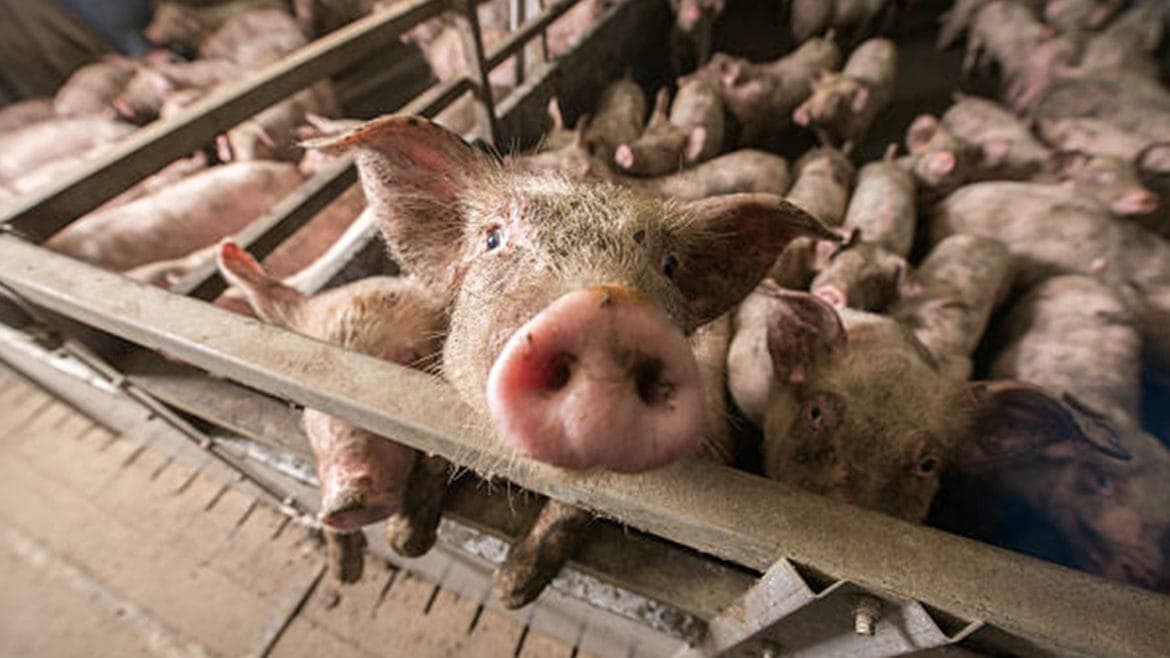
Today’s industrial farms raise massive numbers of pigs, chickens, turkeys, and cows in intensive confinement, mired in their own waste and lacking enough space to simply move about freely. These farms also breed animals for extreme growth and production rates that further endanger their health and welfare. Conditions like these have torturous consequences including lameness, skeletal disorders, and painful skin lesions. Yet, they are still standard operating procedure for the few large companies that control how most farm animals are raised and slaughtered in this country.

As a consequence of the pandemic, this cruel machine is now starting to crumble under the weight of its callous greed, layering even more tragedy on top of longstanding suffering. Slaughterhouses owned by enormous meat companies are shutting down as they become COVID-19 hotspots, their employees becoming sick in record numbers due to wholly inadequate worker protections.

Meanwhile, farmers raising animals for these companies — pressured by strict contracts to maintain factory-like production rates with razor-thin margins — have no flexibility to hold animals for even a few extra weeks and are deploying brutal forms of “depopulation.” One method involves shutting off barns’ ventilation systems with animals sealed indoors to die from hours of heat stress or suffocation.

Industrial animal agriculture isn’t just cruel to animals, dangerous for workers, and economically unstable for farmers — it may also become a breeding ground for the next global pandemic. While COVID-19 likely originated in wildlife, groups like the Food and Agriculture Organization and scientists around the world have long been warning that industrialized animal farming practices can increase the risks of zoonotic diseases. Industrial animal agriculture hallmarks like extreme crowding of animals, poor air quality, inadequate waste management, and reliance on antibiotics are all kindling for the brushfire of pandemics.

The real-life evidence to justify these warnings is stark and sobering. Between 1997 and 2006, highly pathogenic strains of H5N1 bird flu were linked to poultry farms in China, with a 60% mortality rate in humans who caught the virus. In 2009, the H1N1 swine flu jumped from commercially raised pigs in Mexico to humans and killed hundreds of thousands of people worldwide.

To prevent illness in stressful conditions that would typically sicken animals, many farms resort to the prevalent use — and overuse — of antibiotics. Currently, in the EU and the U.S., over 75% of all produced antibiotics are used in animal agriculture. The bacteria found in animals — Salmonella, Campylobacter, E. coli — are the same ones that cause illness in humans, and the drugs used by industrial farms are the same ones we use to cure those illnesses. This indiscriminate misuse of antibiotics to prevent — rather than treat— infections is vastly increasing the rate at which bacteria gain resistance. A 2019 study showed that antibiotic resistance has nearly tripled in farm animals.

As drugs lose their effectiveness on farms, they’re not working to cure human infections either. In the U.S. alone, 35,000 people die each year from antibiotic-resistant diseases.

This dangerous situation has long demanded a bold solution, but the pandemic has raised the stakes even higher for humans and animals, creating even more urgency but also a unique opportunity for action.

First and foremost, the U.S. Department of Agriculture (USDA) should immediately stop allowing slaughterhouses to convert to even faster slaughter speeds, which endanger animals as well as workers. The USDA must also heed the call of Rep. Lloyd Doggett (D-TX) and 21 other members of Congress who recently urged the agency to block the use of the most inhumane depopulation methods. But we cannot stop there.

Congress should also promptly enact the Farm System Reform Act, ambitious legislation introduced by Senator Cory Booker (D-NJ) and Representative Ro Khanna (D-CA) that would put an end to factory farming by 2040. The legislation includes a phase-out plan that would provide funds to help farmers transition from the factory farm model to more humane and sustainable farming systems. The public can help by asking their congressional representatives to support and co-sponsor this vitally important bill.

These goals may seem too lofty to some, but the unprecedented dangers we now face makes this the right moment to build a more humane and resilient food system that values animals, people, and the planet.

Why Experts Warn Factory Farms Could Cause Another Pandemic

Read More: Why Factory Farms Could Cause Another Pandemic, Says This Doctor | https://thebeet.com/why-experts-warn-factory-farms-could-cause-another-pandemic/?utm_source=tsmclip&utm_medium=referral

In today’s factory farms, animals are being raised packed so closely together that there is a risk of sparking the next pandemic, according to experts in a new scientific paper that warns we have to rethink agriculture in America.

“When we overcrowd animals by the thousands, in cramped football-field-size sheds, to lie beak to beak or snout to snout, and there’s stress crippling their immune systems, and there’s ammonia from the decomposing waste burning their lungs, and there’s a lack of fresh air and sunlight — put all these factors together and you have a perfect storm environment for the emergence and spread of disease,“ says Michael Greger, the author of Bird Flu: A Virus of Our Own Hatching, who previously wrote How Not to Die and How Not to Diet.

00:09

Powered by Minute Media powered-by-strip

Factory Farms Make Up the Majority of the Meat Industry

You may think that the free-range beef or the farm-raised eggs are a healthier and more ethical alternative to the environmentally devastating impacts of factory farming. But current conditions in industrial agriculture are rife for future disease spread, and though “free-range” sounds idyllic, it’s just a way of saying the birds have access to being outside for part of the day, but can still be jammed into large pens by the tens of thousands of animals and birds per yard, it’s hardly safe or ethical.

Today, so-called factory farming still accounts for an estimated 99 percent of the meat we raise around the globe and 90 percent of the meat consumed in the United States. The Sentience Institute estimates that “around 31.0 billion land animals and 38.8 to 215.9 billion fish are being farmed globally at any given time.”

Options that some think of as more ethical such as free-range or family farmed animal proteins do not makeup as nearly as much of the industry’s share as one may think from a quick glance at your local Whole Foods shelves. The devastating effects of factory farming include water and air pollution, deforestation and methane gas emissions. Beyond these highly deleterious environmental impacts, factory farms provide a hotbed for spreading the next animal-to-human disease, which the coronavirus COVID-19 pandemic has put front and center on our radar.

How Could Factory Farming Cause Another Pandemic?

Some scientific journals have cited animals such as the endangered pangolin as a possible link to how the COVID-19 outbreak lept from animals to humans, as it carries a coronavirus genetically almost identical to the one that caused the current pandemic. So how do factory farms that are filled with common farm animals like cows, pigs, and chickens pose a threat to our health? It has to do with the unsanitary conditions in these factories and meat processing units, according to experts.

The ASPCA describes a factory farm as any “industrial facility that raises large numbers of farm animals such as pigs, chickens or cows in intensive confinement where their movements are extremely inhibited. Animals are kept in cages or crates or are crowded together in pens. These types of farms are sometimes referred to as concentrated or confined animal feeding operations (CAFOs).”

With this type of overcrowding, diseases can spread rapidly and are difficult to control. A recent FAIRR report for investors noted the danger that the meat industry poses to both animals and consumers. The report describes, “Three in four emerging infectious diseases in humans are passed on from animals (termed zoonotic diseases). Increasingly these are coming from livestock, including strains of swine flu, avian flu, and Nipah virus. Intensive animal production systems involve high stocking density, indoor confinement, chronic stress, lowered immunity and live transport. Together these factors create the perfect environment for deadly diseases to mutate and spread rapidly. Zoonotic diseases can spread to humans through direct contact with infected animals or indirectly through animal waste or animal products. If a highly deadly strain of avian or swine flu were to become highly transmissible between humans, we would be facing the next pandemic.”

Optimizing Our Food Systems Against Factory Farming with Veganism

So how can we optimize our food systems to avoid these risks? It’s not surprising that investors and consumers alike are betting big on plant-based and vegan alternatives to meat right now. In light of the COVID-19 outbreak, a survey found that 23 percent of Americans are eating more plant-based foods right now. The vegan “egg” giant JUST recently announced a partnership with the largest egg distributor in the US, helping to introduce a more sustainable, plant-based alternative to chicken eggs.

As more consumers reach for plant-based options, and more processors and distributors transition to animal-free products, the risk of a zoonotic disease spreading from factory farm to consumer lessens. In a recent report, the vegan food market is estimated to grow nearly 10 percent by 2025, which will hopefully propel more producers from animal products into the plant-based space.

Read More: Why Factory Farms Could Cause Another Pandemic, Says This Doctor | https://thebeet.com/why-experts-warn-factory-farms-could-cause-another-pandemic/?utm_source=tsmclip&utm_medium=referral

It’s Time to Rethink Our Food Choices

United Poultry Concerns <http://www.UPC-online.org>
June 7, 2020

JUNE 6, 2020

UPC President Karen Davis’s Letter to the Editor appears in the printed and
screen versions of Virginia’s *Eastern Shore Post* this week.

Dear Editor:

The coronavirus pandemic focuses our attention on the link between
cleanliness
and avoidance of disease. As much as possible, people are sanitizing their
hands, social distancing, and covering their faces to prevent the virus from
spreading. Yet most people consume products from chickens and other animals
who
have spent their life in polluted, overcrowded facilities.

Infectious microbes are drawn to population density, dirt, and weakened
immune
systems – the perfect conditions in which to spread in animals and humans
alike.

One of the worst things we do to animals in industrial farming is to prevent
them from practicing hygiene.

When chickens come to our sanctuary from a confinement facility, their
first act
in being placed on the ground is to take a dustbath. They instinctively
want to
clean their skin and feathers with particles of earth. This, for them, is
comparable to a waterbath for us.

Forcing animals to live in filth and breathe air rife with pathogens is an
experience they would not choose on their own.

Recognizing the importance of hygiene and staying healthy, we need to
remember
that the same link between health and hygiene applies to other species.
Animals
in nature would never survive if they carried the load of diseases and
immunological weaknesses that characterize modern farmed animals.

Let us think carefully about our food choices. A plant-based diet free of
animal
products is increasingly desirable and obtainable in today’s society. While
providing an opportunity for a more peaceful world, it is also an
intelligent
food safety choice.

A plant-based diet will not sacrifice jobs or hurt the economy. As long as
people exist, the same amount of food will be produced and consumed. Just
because we stop eating animal products doesn’t mean we stop eating.

Karen Davis, President
United Poultry Concerns, Machipongo

*Eastern Shore Post:*
It’s Time to Rethink Our Food Choices
<https://www.easternshorepost.com/2020/06/06/its-time-to-rethink-our-food-choices/

On Pandemics, Pork Chops and Chicken Nuggets

I’ve wasted too much time lately combing the news for an answer to a crucial question about pandemics like Covid-19: Are they inevitable?

Newscasters and the scientists, doctors and politicians they interview rarely venture beyond daily counts of the stricken to explain why we have pandemics. I suspect it’s because the answer is harder to stomach than the horror of the pandemic itself.

Animals humans raise for food are typically the intermediary hosts of viruses between the wildlife in which they arise – e.g. bats and wild birds – and humans. Consequently, pandemics are a price we pay for eating animals and otherwise using them.

Comedian and political commentator Bill Maher came close to getting it right during the pithy New Rules segment of his April 10 show when arguing for naming Covid-19 the Chinese virus because it seemingly jumped to humans in China’s “wet markets” where live fish, poultry and mammals – including exotics like bats, raccoon dogs and civet cats – are slaughtered on site to satisfy the palate of some Chinese for fresh and exotic meats.

Maher was correct that Chinese wet markets might be culpable for a number of lethal human virus outbreaks, including SARS coronavirus in 2003 and H7N9 Avian flu in 2013.

However, Maher’s initial foray into the origin of pandemics overlooked the uncomfortable fact that Americans’ insatiable taste for animal meat was at the root of other killer virus outbreaks. The H1N1 swine flu of 2009 emerged from a pig confinement operation in North Carolina and was a mutated descendant of a swine flu virus that sprang from U.S. factory farms in 1998. And, even though Chinese chicken farms are credited with the deadly H5N1 bird flu outbreak of 1997 (which killed 60 percent of infected humans), just five years ago a similar bird flu broke out in U.S farms, prompting the slaughter of tens of millions of chickens and turkeys.

Recall also that the 1918 Spanish flu that killed over 50 million people worldwide sprang from farms in Kansas, possibly via pigs or sheep, before transmitting around the world via WWI U.S. soldiers.

To his credit, Maher subsequently course-corrected in an April 24 New Rules segment, proffering that “factory farming is just as despicable as a wet market and just as problematic for our health” and “torturing animals is what got us into this mess.”

U.S. factory farms provide 99% of Americans’ meat, dairy and eggs and are ideal breeding grounds for infectious diseases because of the crowded (and unspeakably inhumane) conditions in which animals are kept. Hence, an overwhelming preponderance of medically important antimicrobials sold nationally are used in food-producing animals.

A hard to swallow truth: Factory farms are America’s cultural equivalent of China’s wet markets.

Many virus pandemics have much to do with society’s dietary choices. Plants do indeed get viruses, but genetic studies provide no evidence that plant viruses are causative agents of disease in humans. A pandemic from eating lentils and broccoli seems highly unlikely.

Humans readily accept the suffering animals endure to satisfy our appetite for meat, and pandemics are just one of the painful costs to us. Others include cardiovascular disease, diabetes, antibiotic resistance, global warming, rainforest destruction and aquifer depletion.

For those who believe that only meat can provide adequate protein to fuel our brains and bodies, consider that Socrates was vegetarian and Patrik Baboumian, dubbed “strongest man on earth,” is vegan.

An athletics documentary available on Netflix, The Game Changers, is an eye-opening starter for doubters that a plant-based diet can sustain optimal health.

Historically, epidemics and pandemics have led to important advances in public health, like widespread understanding of the germ theory, improved sanitation, penicillin and vaccinations. What will Americans learn from Covid-19?

Will we rethink the decades-long erosion of the social safety net, including lack of universal healthcare and opposition to guaranteeing all workers a living wage? Will we reconsider the true value to society of so-called “unskilled” workers, like supermarket checkers, who put themselves at risk now every time they show up for work? And what does it say about our priorities that meat factories are being forced to continue to operate despite high rates of Covid-19 infections among the workers?

Both history and science tell us that, unless we do something different, the next pandemic is somewhere just around the corner. This is driven home by study findings just published in April of six new coronaviruses discovered in Myanmar bats.

My hope is that the global heartache and societal disruptions from Covid-19 will spur a conversation that reaches deeper than blaming pandemics on wet markets and factory farming, but rather confronts humanity with the very real connection between pandemics and eating animals.

Why a 17% emissions drop does not mean we are addressing climate change

A chimney in an industrial area of Sydney emits vapour June 22, 2009. Australia's government, facing Senate defeat of key emission trading laws, vowed on Friday to bring its climate-fighting regime to the upper house a second time, opening the door for a possible snap election.        REUTERS/Tim Wimborne    (AUSTRALIA ENERGY POLITICS ENVIRONMENT IMAGES OF THE DAY) - RTR24WOS
‘The COVID-19 pandemic is only a wake-up call.’
Image: REUTERS/Tim Wimborne
  • Restrictions imposed as a result of coronavirus have seen emissions fall.
  • They offer an insight into the significant changes that will be needed to bring emissions down to mitigate the worst effects of climate change.
  • Long-term action and thinking is needed.

The global COVID-19 quarantine has meant less air pollution in cities and clearer skies. Animals are strolling through public spaces, and sound pollution has diminished, allowing us to hear the birds sing.

But these relatively small and temporary changes should not be mistaken for the COVID-19 pandemic actually helping to fix climate change. Quite the contrary: the pandemic that made the world stop offers a glimpse of the deep changes in lifestyles and economic structures that we need to implement if we are to effectively mitigate the worst of climate change.

The short-term effects are not in doubt. A new study in Nature Climate Change led by scientists from the University of East Anglia and Stanford has found that daily global CO₂ emissions in early April 2020 were down 17% compared to the mean level of emissions in 2019.

This finding backs up an earlier report from the International Energy Agency (IEA) which found that CO₂ emissions from fossil fuel combustion – globally, the main source of greenhouse gas emissions – in the first three months of 2020 were 5% lower compared to the same period last year.

But the short-term and long-term effects of pollution are different things, and a few months without driving or flying will do little in the long run. Climate change is caused by rising concentrations of greenhouse gases in the atmosphere. Quarantine measures have affected emissions of these gases in the short term, and many places have seen a drop in air pollution. But these measures were not enough to curb the overall concentration in the atmosphere, which is still increasing. Why? Because molecules of these gases stay in the atmosphere for a long time: methane for around 12 years, for instance, and carbon dioxide for up to 200 years.

What’s the World Economic Forum doing about climate change?

Emissions declined, but it won’t last

The new Nature climate change study predicts that if some restrictions are kept throughout the whole of 2020 annual emissions reductions would reach 7.5%.

emissions carbon dioxide environment climate change coronavirus
Daily CO2 emissions fell sharply.
Image: Carbon Brief

This would, in theory, be great news for the environment, especially if we could maintain it for years to come. After all, in order to meet the Paris Agreement target of limiting global warming to 1.5℃, we need to reduce global CO₂ emissions by 7.6% per year between 2020 and 2030.

But this level of emissions reduction will not last unless economic activity remains depressed. And as lockdowns end and people return to work, emissions will inevitably rise once again – this happens as activity resumes after every economic downturn, including the financial crisis of 2008.

Keeping economic activity depressed to April 2020 levels is not a feasible long-term strategy. But we could use this opportunity productively to steer our societies towards a new paradigm that truly addresses the core issue of the climate conundrum.

We need to restructure our economies

Fossil fuels are the basis of our economies. Our energy systems are built around them and surprisingly little has changed since the first oil shocks in 1973. Back then, coal, oil and gas accounted for 87% of the world’s total primary energy supply, while in 2017 these fossil fuels still accounted for 81%. Over that same period, the total amount of energy supplied more than doubled.

Yes, there is lots of new renewable energy, but this has been deployed alongside fossil fuels, rather than replacing them. All over the globe, there are still plans to build new coal-fired power plants and oil & gas infrastructure. Even countries like Norway, where fossil fuels count for only about 30% of the total energy supply and almost all electricity comes from hydropower, still often rely heavily on fossil fuel profits to fund welfare systems and pension schemes.

If we are to truly progress towards a low carbon economy, we must address the roots of the problem. For instance, how can we encourage further divestment from fossil fuels if the sector is still among the most secure and profitable investments? Or how can we build clean energy systems if we keep subsidising fossil fuels? Despite promises to phase out these tax breaks and other incentives, the richer G20 countries still provided US$127 billion in subsidies to coal, oil and gas in 2017 (remarkably, that figure excludes Saudi Arabia).

And how can we resume activity without “going back to normal”? We need long-term recovery strategies that value nature as the overarching framework within which we all exist, not a mere economic resource. To date, several post-pandemic recovery plans include generous help to the fossil fuel sector with no strings attached.

The pandemic is no climate change panacea. We now know that we can act collectively and adopt measures that significantly curb emissions – in the short term at least. But long-term change does not come about directly as a result of a crisis, but from consistent action changing what caused the crisis in the first place. The COVID-19 pandemic is only a wake-up call: we still have a lot of work to do.

COVID-19 Exposes Flaws in Animal Protein Production

 from Sentient Media

COVID-19 Exposes Flaws in Animal Protein Production
Reading Time: 3 minutes

Our food system is breaking due to COVID-19 closures, but this collapse has been looming for decades.

We were warned years ago that another deadly pandemic was inevitable—but we did not listen. Instead, humans have continued prioritizing low food prices and convenience over public safety and pandemic prevention.

Though there are many contributors to the current collapse—including a growing global population and deep-rooted cultural norms—big meat and dairy companies, farmers, producers, and consumers are all to blame for the system’s demise. Demand for animal protein and deep-seated industrialization of animal farming have created the perfect breeding grounds for disease.

Due to the COVID-19 pandemic, many slaughterhouses across North America have been shut down or are working at limited capacity because of large outbreaks among farm and slaughterhouse workers. The closing of restaurants, schools, and hotels—responsible for significant amounts of meat and dairy consumption—has contributed to a drop in demand for animal products.

As a result, there are now major backlogs of animals on farms. Eggs are being crushed, milk is being dumped, and our animal protein production system appears to be crumbling before our eyes—a reality that demonstrates the dire need for reform within our animal-dependent food system.

“The system is breaking up,” says Dr. Sylvain Charlebois, professor of food distribution and policy in the Faculties of Management and Agriculture at Dalhousie University, in Canada. What we see happening today, he says, “is really showing the limits of our system,” and the cost “are the lives of animals that were produced for no reason.”

Meat Production Is Showing No Signs of Slowing Down
Though COVID-19 has threatened food supply chains, meat production in 2021 is forecast to rise nearly 4 percent higher than in 2020 due to recovery in all major types of meat.

From an economic perspective, “the problem remains in processing,” Charlebois explains. Our food system was transformed over a century ago from local abattoirs to massive corporate slaughter plants. A centralized food system, he adds, “makes the entire supply chain vulnerable.”

Adam Clark Estes—Deputy Editor of Recode at Vox—explains that “Meatpacking remains consolidated to a few dozen Midwestern processing plants, many of which are owned by a handful of huge corporations, like JBS and Smithfield.” That’s why, he says, “when a few of these processors get shut down, due to a pandemic or something else, the country’s entire meat supply suffers.”

Read the full story

Covering COVID-19
With the worst global pandemic we’ve seen in over a century, it’s more important than ever to make sure the truth is reported in its entirety, not just what’s convenient.

Why a 17% emissions drop does not mean we are addressing climate change

Why a 17% emissions drop does not mean we are addressing climate change
As well as fossil fuels—not instead of. Credit: science photo / shutterstock

The global COVID-19 quarantine has meant less air pollution in cities and clearer skies. Animals are strolling through public spaces, and sound pollution has diminished, allowing us to hear the birds sing.

But these relatively small and temporary changes should not be mistaken for the COVID-19 pandemic actually helping to fix climate change. Quite the contrary: the pandemic that made the world stop offers a glimpse of the deep changes in lifestyles and economic structures that we need to implement if we are to effectively mitigate the worst of climate change.

The  are not in doubt. A new study in Nature Climate Change led by scientists from the University of East Anglia and Stanford has found that daily global CO₂ emissions in early April 2020 were down 17% compared to the mean level of emissions in 2019.

This finding backs up an earlier report from the International Energy Agency (IEA) which found that CO₂ emissions from —globally, the main source of greenhouse gas emissions—in the first three months of 2020 were 5% lower compared to the same period last year.

But the short-term and long-term effects of pollution are different things, and a few months without driving or flying will do little in the long run. Climate change is caused by rising concentrations of greenhouse gases in the atmosphere. Quarantine measures have affected emissions of these gases in the short term, and many places have seen a drop in air pollution. But these measures were not enough to curb the overall concentration in the atmosphere, which is still increasing. Why? Because molecules of these gases stay in the atmosphere for a long time: methane for around 12 years, for instance, and carbon dioxide for up to 200 years.

Emissions declined, but it won’t last

The new Nature climate change study predicts that if some restrictions are kept throughout the whole of 2020 annual emissions reductions would reach 7.5%.

This would, in theory, be great news for the environment, especially if we could maintain it for years to come. After all, in order to meet the Paris Agreement target of limiting global warming to 1.5℃, we need to reduce global CO₂ emissions by 7.6% per year between 2020 and 2030.

But this level of emissions reduction will not last unless  remains depressed. And as lockdowns end and people return to work, emissions will inevitably rise once again—this happens as activity resumes after every economic downturn, including the financial crisis of 2008.

Keeping economic activity depressed to April 2020 levels is not a feasible long-term strategy. But we could use this opportunity productively to steer our societies towards a new paradigm that truly addresses the core issue of the climate conundrum.

We need to restructure our economies

Fossil fuels are the basis of our economies. Our  are built around them and surprisingly little has changed since the first oil shocks in 1973. Back then, coal, oil and gas accounted for 87% of the world’s total primary energy supply, while in 2017 these  still accounted for 81%. Over that same period, the total amount of energy supplied more than doubled.

Yes, there is lots of new renewable energy, but this has been deployed alongside fossil fuels, rather than replacing them. All over the globe, there are still plans to build new coal-fired power plants and oil & gas infrastructure. Even countries like Norway, where fossil fuels count for only about 30% of the total energy supply and almost all electricity comes from hydropower, still often rely heavily on fossil fuel profits to fund welfare systems and pension schemes.

If we are to truly progress towards a low carbon economy, we must address the roots of the problem. For instance, how can we encourage further divestment from fossil fuels if the sector is still among the most secure and profitable investments? Or how can we build clean energy systems if we keep subsidizing fossil fuels? Despite promises to phase out these tax breaks and other incentives, the richer G20 countries still provided US$127 billion in subsidies to coal, oil and gas in 2017 (remarkably, that figure excludes Saudi Arabia).

And how can we resume activity without “going back to normal”? We need long-term recovery strategies that value nature as the overarching framework within which we all exist, not a mere economic resource. To date, several post-pandemic recovery plans include generous help to the fossil  sector with no strings attached.

The pandemic is no  panacea. We now know that we can act collectively and adopt measures that significantly curb emissions—in the short term at least. But long-term change does not come about directly as a result of a crisis, but from consistent action changing what caused the crisis in the first place. The COVID-19 pandemic is only a wake-up call: we still have a lot of work to do.

Millions of US farm animals to be culled by suffocation, drowning and shooting/’A terrible way to go for £9 an hour’: fear at meat plant after three coronavirus deaths

Closure of meat plants due to coronavirus means ‘depopulation’ of hens and pigs with methods experts say are inhumane, despite unprecedented demand at food banks

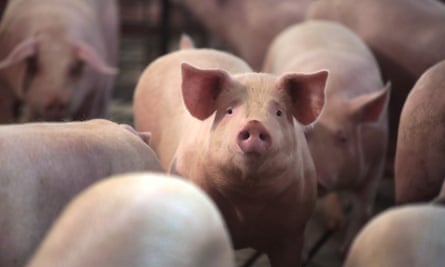
A pig in Illinois, US

The pig industry is facing a major glut of market-ready hogs. Photograph: Scott Olson/Getty

More than 10 million hens are estimated to have been culled due to Covid-19 related slaughterhouse shutdowns. The majority will have been smothered by a water-based foam, similar to fire-fighting foam, a method that animal welfare groups are calling “inhumane”.

The pork industry has warned that more than 10 million pigs could be culled by September for the same reason. The techniques used to cull pigs include gassing, shooting, anaesthetic overdose, or “blunt force trauma”.

In “constrained circumstances”, according to the American Veterinary Medical Association (AVMA), techniques [pdf] might also include a combination of shutting down pig barn ventilator systems with the addition of CO2 so the animals suffocate.

The ‘depopulation’ comes despite food banks across the US reporting unprecedented demand and widespread hunger during the pandemic, with six-mile-long queues for aid forming at some newly set up distribution centres.

The American meat supply chain has been hit hard by the closure of slaughterhouses, due to Covid-19 infection rates among workers. 30 to 40 plants have closed, which means that in the highly consolidated US system beef and pork slaughtering capacity has been cut by 25% and 40% respectively, according to the United Food and Commercial Workers (UFCW).

The closures have meant that animals cannot be killed for food and many must instead be culled, or “depopulated” at home.

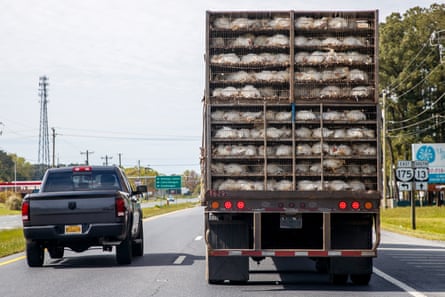
A truck loaded with chickens drives on the highway to deliver fowl to a meatpacking plant

10 million hens have already been culled due to slaughterhouse shutdowns. Photograph: Shawn Thew/EPA

More pigs to be ‘depopulated’

As it is comparatively easier to keep cattle on farms, cow culls do not appear to be an issue as yet, and the chicken cull may have peaked, said Adam Speck, an agribusiness analyst with IHS Markit.

“[Cattle] could stay on ranches another six months if necessary. The peak of the chicken cull has passed for now. North of about 10 million chickens were depopulated, either at the chick or egg stage,” Speck said.

At the hen stage, Leah Garcés, president of US welfare organisation Mercy for Animals, said it is hard to be sure of the numbers. But, “what we know with certainty is that 2 million meat chickens [and] 61,000 laying hens”, have been killed on farms.

Compared with poultry, said Garcés, stopping or slowing the production cycle of pigs is harder, mainly because pig growing periods are about six months compared to six weeks for hens. “Pregnancies had already been set in motion when the slaughterhouse closures occurred,” she said, and pigs were already in the system.

The National Pork Producers Council (NPPC) has estimated that: “up to 10,069,000 market hogs will need to be euthanised between the weeks ending on 25 April and 19 September 2020, resulting in a severe emotional and financial toll on hog farmers”.

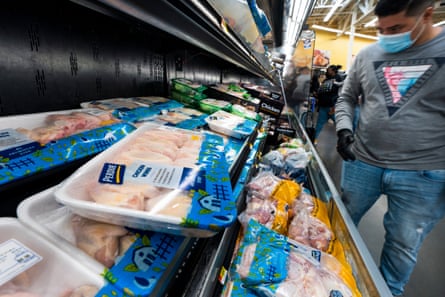
chicken on supermarket shelf

The peak of the chicken cull has passed, experts said, but pigs may now need to be ‘depopulated’ in large numbers. Photograph: Jim Lo Scalzo/EPA

For pig culls, AVMA “preferred methods” include injectable anaesthetic overdose, gassing, shooting with guns or bolts, electrocution and manual blunt force trauma. AVMA methods “permitted in constrained circumstances” include ventilator shutdown (VSD), potentially combined with carbon dioxide gassing, and sodium nitrite which would be ingested by pigs.

Speaking more graphically, Garcés said manual blunt force trauma can mean slamming piglets against the ground while VSD would “essentially cook the pigs alive”.

Asked to estimate numbers of pigs that have already been culled, Speck said producers are very reluctant to depopulate. “About two million might have been culled so far due to the Covid-19 pandemic, over the last six or so weeks.”

Speck added that with slaughterhouses likely to return to 85% capacity by the end of May, the NPPC’s depopulation estimate of 10 million pigs could be significantly reduced.

Speck said breeders are thinning herds and slowing growth to reduce pig supply. “They are sending breeding sows to slaughter, aborting pregnant sows on a small scale and [keeping market-bound pigs] on maintenance style rations with less protein. Coming into the summer months the pigs will also gain weight more slowly as the weather heats up.”

Methods are ‘inhumane’

Asked about growth slowdown, Garcés said it posed other welfare risks. “One method to slow down growth is to turn the heat up inside of the warehouses beyond the pigs ‘comfort zone’ because pigs eat less when they are too hot,” she said.

The combination of feed restrictions and higher barn temperatures, she said, mean pigs are “hungry and hot, increasing their overall discomfort, which is already high in a factory farm setting”.

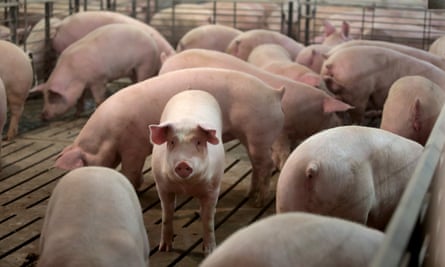
Hogs at a farm in Illinois, US

Many farmers now face having to cull market-ready pigs. Photograph: Scott Olson/Getty Images

In what appears to be an attempt by the industry to reduce any negative depopulation impact, a blog managed by the National Pork Board called Real Pig Farming offers social media sharing tips for farmers. The blog suggests farmers: “Think twice before engaging with posts that show what may be happening on farms right now.”

It said: “Most people do not understand the complexity of raising pigs and getting pork from the farm to their table. That means, “[a] good rule of thumb is to speak to a level a third grader [eight to 10 years old] would understand to ensure that things are not taken out of context.”

NPPC spokesperson Jim Monroe said that as of the week ending on 15 May, less than 25% of overall slaughter capacity was idled and the situation was improving. Monroe, added that the “tragic need to euthanise animals is to prevent animal suffering.”

For poultry, culling options are no easier. Filling sheds with carbon dioxide gas is one method, said Kim Sturla, director of welfare organisation Animal Place. Another cull method, she said, is to smother hens with water-based foam, similar to firefighting foam. Water-based foaming is categorised as the “preferred” method by the AVMA.

Previously asked about water-based foaming and other cull methods such VSD, an AVMA spokesperson said depopulation decisions were difficult and “and contingent upon several factors, such as the species and number of animals involved, available means of animal restraint, safety of personnel, and other considerations such as availability of equipment, agents and personnel”.

European campaigners said firefighting foam causes prolonged suffering. Although risks of similar livestock culls appear low in Europe so far, welfare group, Compassion in World Farming advised using foam that contains nitrogen gas because death is faster.

A 2019 European Food Safety Authority journal report said it did not find water-based or firefighting foam acceptable because “death due to drowning in fluids or suffocation by occlusion of the airways” is not seen as “a humane method for killing animals, including poultry”.

—————————————————————————————

https://www.theguardian.com/environment/2020/may/20/its-a-terrible-way-to-go-for-9-an-hour-fear-at-meat-plant-after-three-deaths-coronavirus

Family of worker at a South Yorkshire food processor with multiple Covid-19 cases and three deaths have criticised treatment of staff

The Cranswick Convenience Foods processing plant at Wombwell, South Yorkshire.

The Cranswick processing plant at Wombwell, South Yorkshire. Photograph: Christopher Thomond/The Guardian

Published onWed 20 May 2020 11.34 EDT

The South Yorkshire meat processing plant where three workers have died from coronavirus has been criticised for failing to adequately protect workers.

Three workers at a Cranswick food processing facility in Wombwell, Barnsley, which supplies UK supermarkets, are confirmed to have died after testing positive for coronavirus.

The UK-based company, which has annual revenue approaching £1.5bn, said there had been nine confirmed cases at the Wombwell plant, with one worker currently in hospital. The most recent confirmed case was on 11 May.

Speaking on condition of anonymity, the family of a worker at the plant said staff had initially been told that social distancing in some parts of the factory was not possible, that they couldn’t wear face masks “because they would be taking them away from the NHS”, and that any staff off sick only got statutory sick pay.

“If you don’t feel well and know if you don’t go to work you’re only going to get the statutory sick pay [£95.85 a week] and are not going to be able to pay the bills, what are you going to do? I am scared he could bring it home to us and our kids. They [plant workers] have not been happy, but they’re all scared to say anything because of losing their jobs. It’s a shit way to go for £9 an hour [worker is paid £9.40 an hour].”

Meat plants across the world are grappling with serious coronavirus outbreaks. The US has been hardest hit, with confirmed cases at more than 200 meat and food processing plants and the death of at least 66 workers. There have also been clusters of cases at meat plants in FranceGermany and Ireland, where more than 500 workers have tested positive.

Giving evidence to MPs yesterday, Ian Wright, the CEO of the Food and Drink Federation, said although the UK food sector had not experienced major infection rates, it had seen “a couple of relative hotspots”. Labour MP Geraint Davies said data from the Office for National Statistics up to and including 20 April has found that plant workers in England and Wales were almost six times more likely die from Covid-19 than the average worker.

The family of the staff member said the Wombwell site had not been closed for a deep clean after the workers’ deaths as has been the case in Ireland, and that social distancing was only properly implemented in the canteen area in the past week. “It’s really hard and physical work, the plant has been busier than ever and there’s not a lot of scope for social distancing when they’re on the factory floor.”

The GMB union, which has some members at the Wombwell plant, said it was “ready to work with the company and our members at the site to review operations, and identify any issues that could impact on the safety of our members”.

Meat being processed at a Cranswick plant in Milton Keynes.

Meat being processed at a Cranswick plant in Milton Keynes. Photograph: Darren Staples/Reuters

A spokesperson for Cranswick said it had rigorous cleaning procedures ongoing throughout the day and that the plant was sanitised at night. Social distancing had been in place in the plant since the middle of March and, in production areas where a 2m gap between people was not possible, the company had put in shielding screens or provided visors. Staff are entitled to contracted or statutory sick pay depending on their individual circumstances.

The spokesperson went on to say that while the company may initially have said it couldn’t get face masks due to NHS demands, they now had visors available for anyone who wanted to use them. Some canteen seats had been taped off with additional space provided and the company had now started sourcing single-seat tables. Equipment to temperature-check staff was also being installed this week.

“Why are they now implementing things this far into it after the deaths have happened and we’ve had the risk?” said the worker’s family.

Nick Allen, the CEO of the British Meat Processors Association, said the initial guidance provided by the government was “fairly minimal”, but that it had started issuing its own industry guidelines to members at the end of March. “This [social distancing] was something that had not been done before and has been a steep learning curve. There has been a considerable effort to get it right.”

Labour MP Geraint Davies, who sits on the Environment, Food and Rural Affairs committee, said safe social distancing and PPE for all meat plant workers needed to be made legally enforceable. “If you work in a plant and fear for your personal safety, but realise there is a queue of people outside who will take your job now they’re unemployed, you’re left with an impossible choice. The government needs to ensure workers’ safety.”

Cranswick said in a statement: “The health and safety of all of our colleagues is our number one priority and we are doing everything we can to protect our workforce. Sadly, three of our colleagues have passed away with Covid-19. Our thoughts and condolences are with their families and we are providing full support to them and to all of our colleagues directly affected by Covid-19.

“From the outset of the pandemic, we have followed all governmental and regulatory guidance, in many cases going beyond the guidelines provided. We have evolved our practices and implemented additional measures to protect our colleagues including social distancing as far as practical, regular deep cleaning at our sites, visors and recommended PPE for all employees in line with the Public Health England and World Health Organization guidelines.

“All colleagues have been told not to attend work if they, or anyone they live with, have any symptoms. Cranswick employees are designated key workers and are at the forefront of maintaining vital supplies of fresh food into the supermarkets. We continue to do everything we can to protect them while they carry out this critical role.”

LETTER: Hope Smithfield focuses on vegan meats

  • 2
  • 3
  • 4

Never Miss A Story

Subscribe to The Register-Mail

Subscribe Now

OUR PICKS

Previous

Latest Highlights for Your Favorite Teams

Editor, Register-Mail: I hope Smithfield Foods stays closed for a while — and then focuses on vegan meats rather than animal flesh when it’s safe to reopen (“PETA demonstrators take to Monmouth Public Square,” May 13).

Filthy, crowded factory farms, meat markets, and slaughterhouses threaten the health of everyone — not just workers and meat-eaters— by providing a breeding ground for deadly diseases, such as COVID-19, swine flu, bird flu, and more. And the bloody, gruesome process of slaughtering, cutting up, and packaging the corpses of once-sentient individuals can cause those who inflict cruelty to animals to suffer from mental and physical health problems.

Fortunately, meat is not essential. There are tasty, healthy, humane, and environmentally friendly vegan options. Let’s enjoy them. See www.PETA.org for more information and a free vegan starter kit.

Sincerely

 — Heather Moore, PETA Foundation, Norfolk, Virginia

Doctors Protest Continued Operation of Smithfield Foods Slaughterhouses In Virginia

Doctors to Protest Continued Operation of Smithfield Foods Slaughterhouses In Virginia

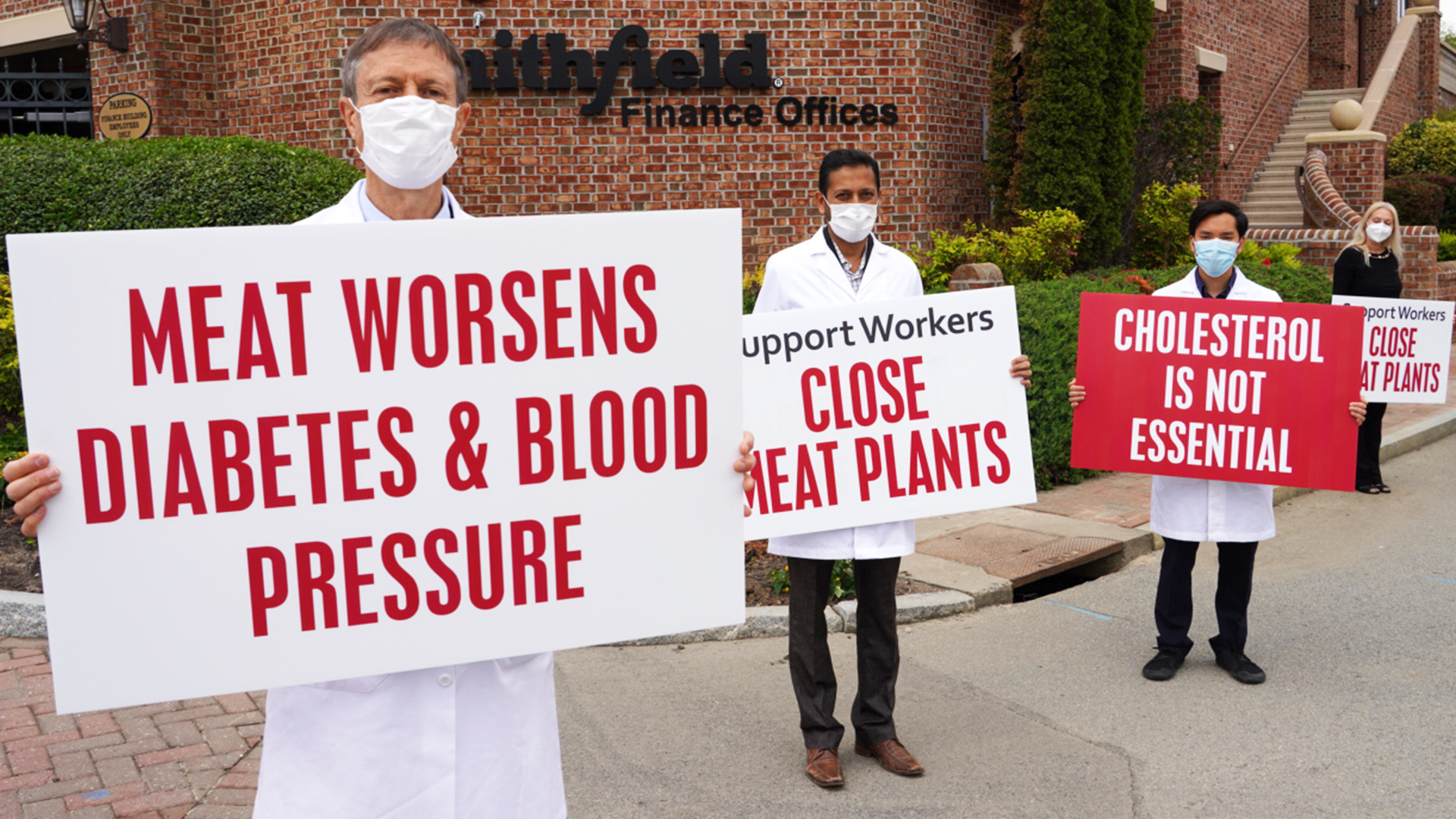
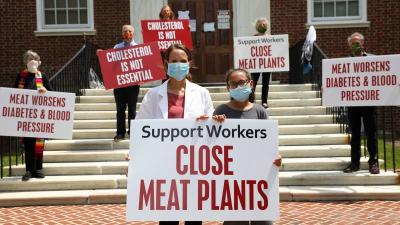
SMITHFIELD, Va.—Doctors with the Physicians Committee for Responsible Medicine called for the closure of meatpacking plants during a demonstration on May 14. The doctors will held signs reading “Support Workers, Close Meat Plants,” “Meat Worsens Diabetes & Blood Pressure,” and “Cholesterol Is Not Essential.” They maintained social distance while protesting outside of Smithfield Foods Headquarters, 200 Commerce Street, Smithfield, VA 23430, at the corner of Commerce Street and Luter Drive.

“Keeping Smithfield plants open harms the health of workers, the surrounding community, and consumers—all to line the pockets of the meat industry,” says Neal Barnard, MD, FACC, president and co-founder of the Physicians Committee for Responsible Medicine.

More than 15,500 meat plant workers are infected with COVID-19, and at least 60 have died. With workers lined up in close proximity, viruses are easily spread within the slaughterhouse environment. Although studies show that infectious viruses easily survive during refrigeration and freezing, meat companies do not routinely test the extent to which meat products are contaminated with the virus.

Meat consumption raises the risk for many of the underlying medical conditions—diabetes, hypertension, obesity, and chronic obstructive pulmonary disease—that can make COVID-19 infections more deadly. A recent study found that regular consumption of processed meat, red meat, or poultry increases the risk for cardiovascular disease. Research also links red meat, poultry, and fish to an increased risk for diabetes.


Media Contact

DONNA STEELE

202-527-7342

dsteele@pcrm.org

Founded in 1985, the Physicians Committee for Responsible Medicine is a nonprofit organization that promotes preventive medicine, conducts clinical research, and encourages higher standards for ethics and effectiveness in education and research.

More on COVID-19