


Iowa’s agriculture secretary says the animal activist group is ‘kicking farmers when they’re down.” Des Moines Register
A California animal rights group says an Iowa pork producer “roasted pigs alive” when it euthanized thousands of hogs it was unable to send to Midwest meatpacking plants that had slowed or halted production as workers fell ill with COVID-19.
Direct Action Everywhere describes the pigs as “shrieking in agony” after Iowa Select Farms, a large pork producer, shut down the ventilation in a rural confinement facility near Aplington in Grundy County to euthanize them.
Jeff Hansen, the company’s CEO, said it “exhausted every possible option,” from finding more barn space to donating pork to food banks and employees, before deciding to euthanize the animals.
Employees are in “tremendous pain knowing that this awful decision had to be made,” Hansen said.
Direct Action Everywhere said it worked with Iowa Select whistleblowers to secretly film company employees destroying the animals.
► Previously: Iowa livestock producers may have to euthanize pigs as packing plants struggle
The company confirmed the video was taken at the Grundy Center facility where Iowa Select pigs were taken to be destroyed.
“This group illegally infiltrated our facility and installed cameras to record video of the euthanasia process and our team members,” Hansen said in a statement, adding that the group’s actions “only reinforce the hurt” felt by employees.
The video, which the group said was taken with a hidden camera last week, opens with a shot of pigs milling in a large, enclosed space. In another scene shot through a fog that the group says was steam, the barely visible pigs can be heard squealing. In a third scene, two men carrying what the group says are bolt guns walk among the apparently dead pigs, nudging them with their feet. In a final scene, a front-end loader scoops up the carcasses.
The state estimates that 600,000 pigs in Iowa could be destroyed as they back up on farms and cannot be processed into food. Iowa, the nation’s largest pork producer, raises about 50 million pigs a year.
Iowa Agriculture Secretary Mike Naig called the activists’ tactics “disgusting.”
“No producer wants to be faced with this decision. It goes against everything they stand for and do on a daily basis,” caring for the animals and raising them to feed families, Naig said Thursday when asked about the video during a press conference with Gov. Kim Reynolds about the coronavirus’ impact.
“We have folks with a clear agenda who are kicking our farmers when they’re down,” he said, adding that the producers are working with veterinarians who follow national guidelines when euthanizing animals.
► More: Iowa farm forced to euthanize pigs was ‘infiltrated’ by animal activists
The American Association of Swine Veterinarians says shutting down a confinement’s ventilation — which raises the herd’s temperature and causes animals to die of hyperthermia — is an acceptable form of euthanasia in “constrained circumstances.”
The group’s board this month identified the COVID-19 meatpacking disruption as one of those situations. But the board said priority should be given to eight other preferred methods, including shooting, electrocution, gassing with carbon dioxide and manual blunt force, which is used primarily on small pigs.
Chris Rademacher, an Iowa State University Extension swine veterinarian, said shutting down ventilation is likely the best approach to euthanizing a large number of pigs. It’s safer for farmers than shooting, electrocution or using other preferred methods, which are more appropriate options when euthanizing a small number of animals, he said.
Rademacher also said mass depopulation takes less toll on farmers emotionally. “I can’t tell you how many producers get choked up” talking about euthanizing animals, he said.
Matt Johnson, the Direct Action Everywhere investigator, filed a complaint last week with the Grundy County Sheriff’s Office, alleging Iowa Select committed criminal animal neglect.
Grundy County Sheriff Rick Penning said he talked with state veterinarian Jeff Kaisand, who indicated that Iowa Select followed proper procedures in euthanizing the animals. Penning said he would not take further action on the group’s complaint.
However, after filing their complaint last week, Johnson of Berkeley, California, and coworker Linda Cridge of Fishers, Indiana, were charged with trespass, a simple misdemeanor.
A veterinarian who works with Direct Action Everywhere and reviewed the group’s video said shutting down the ventilation “resulted in extreme, prolonged and unnecessary suffering.”
The group said that pigs are “blasted with steam and heat exceeding 140 degrees in a barn.” Two or three hours into the process, the group said, Iowa Select workers walk through the barn, “shooting pigs exhibiting obvious signs of life” with bolt guns.
The American Veterinary Medical Association states that additional action may be needed to ensure pigs succumb after shutting down ventilation systems, such as adding heat and humidity to the confined space. Rademacher said the pigs should quickly lose consciousness with the increased heat and humidity before dying.
The Iowa Department of Agriculture sent a letter to the state’s county attorneys this week, saying that “it is not uncommon for people to question the methods employed” in the challenging situation. It said the swine veterinarians association “recognizes the dire situation” producers face.
Johnson said an Iowa Select whistleblower contacted Direct Action Everywhere because he was concerned about animal welfare.
“When we have a system that is fundamentally broken — with government reinforcing, rather than regulating, an abusive industry which only serves those at the very top — it’s left to ordinary people to take action ourselves and hold our elected officials accountable to the will of the people,” Johnson said in a statement.
He and Direct Action Everywhere targeted state Sen. Ken Rozenboom’s family pig facility for an undercover investigation a year ago, releasing photos and video from the Oskaloosa farm in January.
The group said it sought to expose inhumane treatment of animals at the facility, which was leased to another farmer, because of Rozenboom’s support for the state’s so-called “ag-gag” law. The statute makes it a crime for animal welfare activists, journalists and others to go undercover at meatpacking plants and livestock facilities to document conditions.
Rozenboom called the action a “professional hit job.” State and local investigators said a complaint Johnson filed against Rozenboom, alleging animal abuse, was unfounded.
The Coalition to Support Iowa’s Farmers (CSIF) sent an urgent message to pork producers today, warning of animal welfare activists taking videos of hogs being euthanized on farms.
Direct Action Everywhere (DXE) has members on the ground in Iowa, says CSIF, and all farms and processing plants should be on high alert that they may be targeted in an attempt to capture video footage and cause a disruption to normal business activity.
Livestock farmers must be vigilant in monitoring the security of farms at all times, for the safety of people and livestock.
“Most people think they will never be the target, but no one can assume they are safe,” says CSIF executive director Brian Waddingham. “There are many preventive measures you can take to protect your farm and your livestock.” For a complete list of ways to keep your farm out of the crosshairs, click here.
If you find a suspicious vehicle near your farm or discover criminals on your property, do not try to apprehend them, says Waddingham. Contact local law enforcement.
This is an extreme animal rights group that is taking advantage of a heart-wrenching, crisis situation some livestock farmers are faced with to advance their own agenda – which is to eliminate animal agriculture, he says.
For additional suggestions on preventive measures you can take to reduce your risk, as well as suggestions of what to do if you are the victim of a criminal act, visit our website.
More than 36 million Americans have filed for unemployment benefits since coronavirus lockdown began; insight from Labor Secretary Eugene Scalia.

The coronavirus pandemic has dealt a new blow to the American meat industry, as farmers will have to euthanize as many as 10 million pigs by the middle of September to avoid overcrowding in their facilities, the National Pork Producers Council (NPPC) has warned.
Though President Trump invoked the Defense Production Act in late April to keep meat processing plants open through the COVID-19 crisis, outbreaks of the viral disease have shuttered some plants and slowed operations at others. Consequently, pork farmers have not been able to send or sell tremendous numbers of market-ready hogs in recent weeks, creating a bottleneck in the supply chain.
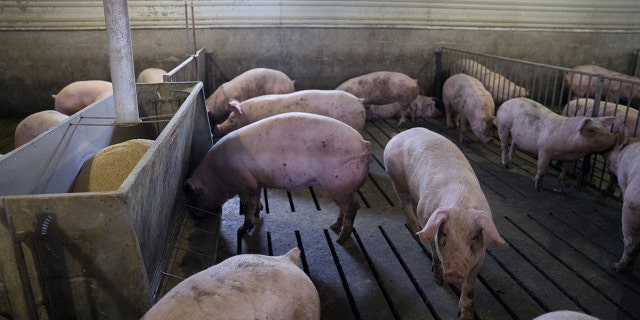
Young female pigs stand in pen at a hog farm in Smithville, Ohio, in this April photo. (Dane Rhys/Bloomberg via Getty Images)
TYSON FOODS TEMPORARILY CUTTING PRICES ON BEEF PRODUCTS AMID SPIKE IN GROCERY PRICES
Now, there are few viable accommodations for an estimated 170,000 pigs to be sent to the operative plants each day for processing into the food supply, the NPPC says. According to the council, these hogs will eventually grow “too large” for admission to harvest facilities, creating a “tragic reality” for farmers in the U.S., who have raised “10 million hogs with nowhere to go.”
Producers cannot continue to house the market-ready hogs, the council said, as they need make room for younger hogs entering the supply chain. Farmers plan about 10 months in advance for how many hogs to prepare for market through the spring and summer, with the pandemic greatly upending their 2020 projections.
“Producers face a wrenching and tragic choice; watch their mature animals suffer because they can’t care for them or euthanize them. The only humane option is to euthanize them, a tragedy for farmers who work to produce food for people,” the NPCC said in a statement last week. “Destroying these animals and the food they represent goes against every farmer instinct.”
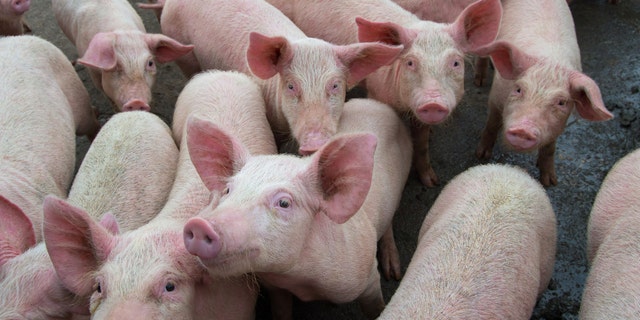
There are few viable accommodations for an estimated 170,000 pigs to be sent to the operative plants each day for processing into the food supply, the NPPC said. (iStock)
Overcrowding on hog farms can result in aggression and injuries, impacting the pigs’ ability to eat, drink and rest. It is also a challenge to maintain a comfortable air quality and environment for the animals.
FOLLOW US ON FACEBOOK FOR MORE FOX LIFESTYLE NEWS
As of May 6, pork harvest capacity is down almost 40 percent due to coronavirus-related slowdowns and shutdowns, the NPPC said.
Now, the pork council is asking for federal assistance to address the unprecedented crisis. The NPPC seeks congressional authorization to fund $1.173 billion for the USDA Farm Service Agency Emergency Assistance for Livestock, Honeybees and Farm-Raised Fish (ELAP) for pork producers who cannot market their pigs due to coronavirus-related plant shutdowns and slowdowns.
The group also hopes to receive an additional $505 million for euthanasia and depopulation expenses as well as the facilitation of environmentally responsible disposal, in partnership with the USDA Animal and Plant Health Inspection Service, National Resource Conservation Service and FEMA.
Without this assistance, the NPPC argues, thousands of farmers will have to liquidate their assets, ultimately driving up pork prices for the American people.
CLICK HERE FOR FOX NEWS’ CONTINUING CORONAVIRUS COVERAGE
In response, the USDA established a National Incident Coordination Center last month to help farmers euthanize and dispose of these animals because of the processing plant closures, National Hog Farmer reports.
“None of us want to euthanize hogs, but our producers are facing a terrible, unprecedented situation,” said Bob Krebs, president of meatpacking company JBS USA Pork.
Last month, JBS announced that it would be reopening a temporarily closed pork production plant in Minnesota as a humane euthanasia facility, which capacity to euthanize about 13,000 hogs per day.
Using the term “euthanasia,” which literally means “a good death,” to describe the mass killing of overpopulated farmed animals is a misnomer. They suffer horrific deaths.
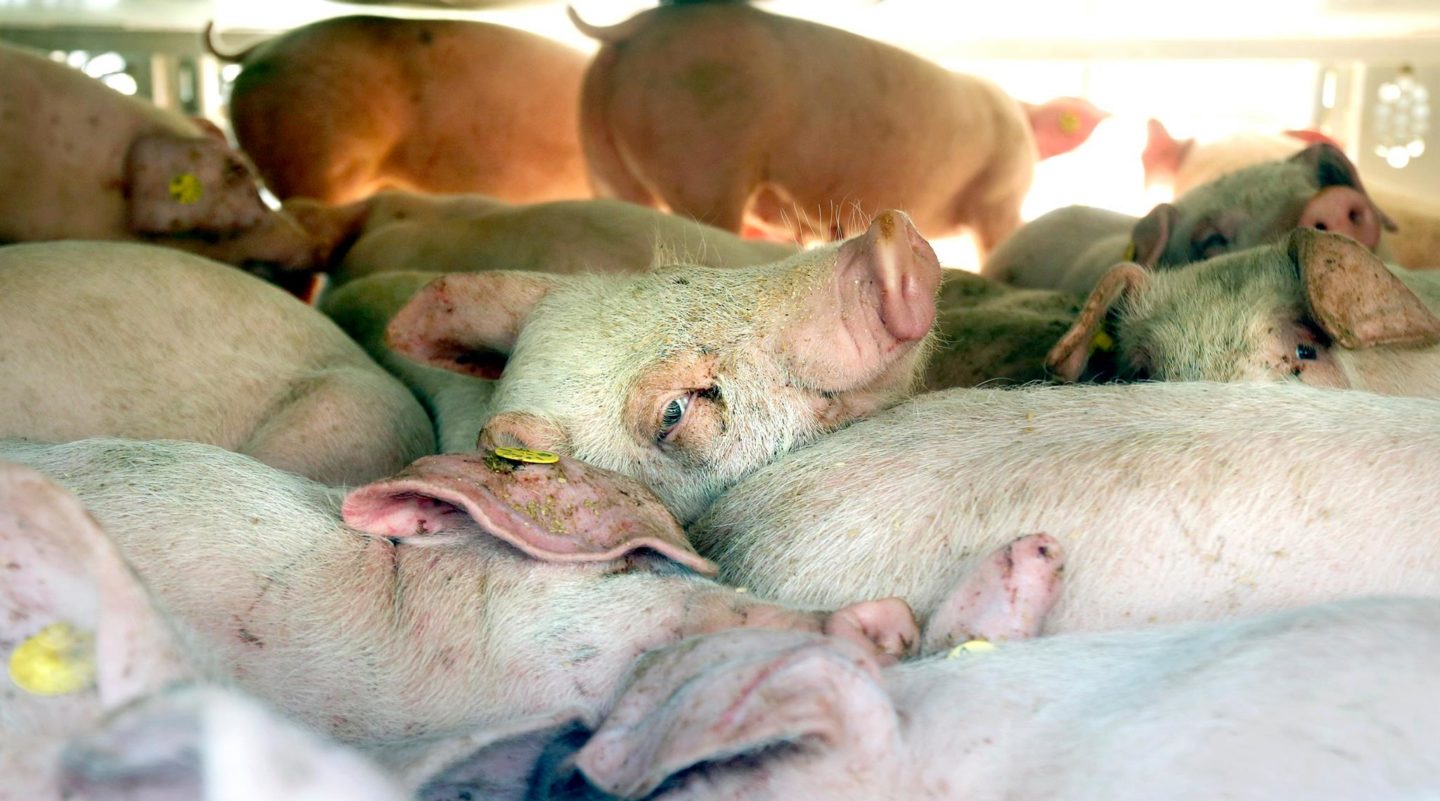
Now that the COVID-19 outbreak has shut down, at least temporarily, an estimated 20 major slaughterhouses and processing plants in North America, millions of farm animals are left in limbo with nowhere to go.
In Iowa, the nation’s biggest pork-producing state, farmers are reportedly giving pregnant sows abortions by injection and composting dead baby pigs to be used for fertilizer. Amid supply chain bottlenecks, local political leaders warn that producers might be forced to “euthanize” around 70,000 pigs a day.
In Minnesota, JBS, the world’s largest slaughter operation, reopened its Worthington plant last month for the sole purpose of killing and dumping excess pigs. The meat processing plant partially reopened for business last week. Roughly one-quarter of the facility’s 2,000 workers have tested positive for the coronavirus.
And in Delaware and Maryland, Allen Harim Foods depopulated 2 million chickens last month, citing a 50 percent decline in its workforce.
Using the terms “slaughter” or “euthanasia” to describe the rapid destruction of farm animals is a misnomer. Slaughter is killing for human consumption; to ensure meat quality, the animal typically dies from blood loss. Under the federal humane slaughter law, animals (except birds) are first stunned, which means they are rendered insensible to pain.
Euthanasia literally means “a good death.” It involves ending an animal’s life in a way that minimizes or eliminates pain and distress, according to the American Veterinary Medical Association (AVMA).
The AVMA defines the term “depopulation” as “the rapid destruction of a population of animals in response to urgent circumstances with as much consideration given to the welfare of the animals as practicable.”
Among the depopulation methods deemed acceptable is using a layer of water-based foam to drown and suffocate birds. During ventilation shutdown, operators flip a switch to turn off the airflow in a barn and ratchet up the heat to as high as 120 degrees, leaving trapped birds and pigs to die from a combination of heat stress and suffocation. The process can take hours and likely results in severe suffering. In fact, other than burning animals to death or burying them alive, it is difficult to imagine a more horrific end.
The last time such gruesome depopulation methods were widely used was in 2015 in response to highly pathogenic bird flu—the worst animal disease outbreak in U.S. history—which killed nearly 50 million chickens and turkeys. In that case, birds were sick and suffering, and the justification given for the extreme step of depopulation was that it would slow the spread of the disease in the shortest time possible.
During the current pandemic, however, animals are not suffering from disease and they are not at risk of transmitting disease to other animals or to humans. Instead, they are being killed, and their bodies disposed of because meat companies failed to properly protect their workers from exposure to COVID-19.
The meat industry is using depopulation as a quick fix for its lack of emergency preparedness. The conventional animal agriculture industry operates a highly consolidated system that has a hard time adjusting in response to a crisis. It routinely runs slaughter lines at dizzying speeds, provides the lowest level of care to animals crammed in stressful, unsanitary environments, and extends minimal health and safety protections to its workers (to date, thousands have become ill or been exposed to the coronavirus and some have died). This intensive, high-production system leaves no room for error, yet giant corporations give little consideration to how animals will fare in emergency situations—from disease outbreaks to natural disasters to devastating barn fires.
That hasn’t stopped industrial agriculture from begging for federal assistance—warning of meat shortages and skyrocketing prices. Farmers are also asking the federal government to bankroll depopulation efforts, along with compensating them for their losses.
Already, the USDA has pledged that government officials and veterinarians will step in, if necessary, to “advise and assist on depopulation and disposal methods.” Because there are no federal or state regulations governing farm animal euthanasia or depopulation, more than 20 members of Congress sent a letter last week to Agriculture Secretary Sonny Perdue urging his department to curb extreme measures, including ventilation shutdown and water-based foam methods.
We simply cannot trust powerful industry players and federal regulators to safeguard animal welfare. According to a recent report by the Animal Welfare Institute, JBS’ Worthington plant, a Smithfield Foods plant in Sioux Falls, South Dakota, and a Tyson Foods plant in Waterloo, Iowa, were the top three worst large livestock slaughter plants in the country for animal welfare violations from 2016 to 2018. These three facilities account for 12 percent of all U.S. hog production. Violations included multiple incidents of failing to stun animals before shackling and hanging them to be dismembered, likely causing the animals excruciating pain.
Depopulation during the current pandemic is being pursued solely as a consequence of the meat industry’s failure to protect its workers, not because the animals present any real risk to human or animal health. These blatantly inhumane killing methods are completely unjustifiable.
Because these animals cannot be brought to market, millions of animal lives will be wasted. At the very least, we should spare them a cruel death.

Raleigh, North Carolina (CNN Business)Tyson Foods says its largest US pork plant will reopen Thursday after a major coronavirus outbreak forced the company to shut down the facility two weeks ago.

DES MOINES, Iowa (AP) — After spending two decades raising pigs to send to slaughterhouses, Dean Meyer now faces the mentally draining, physically difficult task of killing them even before they leave his northwest Iowa farm.
Meyer said he and other farmers across the Midwest have been devastated by the prospect of euthanizing hundreds of thousands of hogs after the temporary closure of giant pork production plants due to the coronavirus.
The unprecedented dilemma for the U.S. pork industry has forced farmers to figure out how to kill healthy hogs and dispose of carcasses weighing up to 300 pounds (136 kilograms) in landfills, or by composting them on farms for fertilizer.
Meyer, who has already killed baby pigs to reduce his herd size, said it’s awful but necessary.
“Believe me, we’re double-stocking barns. We’re putting pigs in pens that we never had pigs in before just trying to hold them. We’re feeding them diets that have low energy just to try to stall their growth and just to maintain,” said Meyer, who also grows corn and soybeans on his family’s farm near Rock Rapids.
It’s all a result of colliding forces as plants that normally process up to 20,000 hogs a day are closing because of ill workers, leaving few options for farmers raising millions of hogs. Experts describe the pork industry as similar to an escalator that efficiently supplies the nation with food only as long as it never stops.
More than 60,000 farmers normally send about 115 million pigs a year to slaughter in the U.S. A little less than a quarter of those hogs are raised in Iowa, by far the biggest pork-producing state.
Officials estimate that about 700,000 pigs across the nation can’t be processed each week and must be euthanized. Most of the hogs are being killed at farms, but up to 13,000 a day also may be euthanized at the JBS pork plant in Worthington, Minnesota.
U.S. Rep. Collin Peterson, a Minnesota Democrat who chairs the House Agriculture Committee, went to the plant Wednesday, in part to thank JBS officials for agreeing to kill the hogs at his request.
“The only thing they wanted out of me was for me to come down here and say I’m the one who asked for this, not them. … Blame me if you don’t like it,” he said.
It all means that meat can’t be delivered to grocery stores, restaurants that now are beginning to reopen or food banks that are seeing record demand from people suddenly out of work. Some of that demand is being met by high levels of meat in cold storage, but analysts say that supply will quickly dwindle, likely causing people to soon see higher prices and less selection.
To help farmers, the USDA already has set up a center that can supply the tools needed to euthanize hogs. That includes captive bolt guns and cartridges that can be shot into the heads of larger animals as well as chutes, trailers and personal protective equipment.
Iowa officials have asked that federal aid include funding for mental health services available to farmers and the veterinarians who help them.
Meyer said euthanizing healthy animals is a difficult decision for a farmer.
“It is a tough one,” he said. “We got keep our heads up and try to be resourceful and if we can make it through this cloud, I think there will be good opportunities if we’re left standing yet.”
The USDA has a program designed to connect farmers with local meat lockers and small processors that can slaughter some hogs and donate the meat to food banks. However, that effort has been hindered by the fact that small processors already were overwhelmed with customers who have turned away from mass-produced meat and instead bought a hog or cow to be processed locally.
Chuck Ryherd, owner of State Center Locker in State Center, Iowa, said he’s almost completely booked through the end of the year and has been turning away customers.
Chris Young, the executive director for the American Association of Meat Processors, a trade group for about 1,500 smaller meat lockers, said that while some local processors in Indiana, Illinois and Wisconsin have been able to take a few extra hogs, the shortage is being felt nationwide.
“When the pandemic started, all across the country, a lot of these small processing plants with a retail store in the front were just overrun,” he said. “They’re still crazy busy. It hasn’t really backed off.”
On Wednesday, President Donald Trump used the Defense Production Act to order that large meat processors remain open, giving hog farmers hope the situation could improve.
However, Howard Roth, a Wisconsin farmer and president of the National Pork Producers Council, said farmers will need to keep euthanizing pigs as the slaughterhouses struggle to resume their full production. Farmers will definitely need federal help to keep them afloat.
“We are going to need indemnity money for these farmers,” he said. “This situation is unprecedented.”
Peterson also said he’ll seek a change in the law so that the USDA can retroactively compensate farmers for euthanizing healthy animals in such emergencies. He said the USDA told him it doesn’t have the authority at the moment to do that for healthy animals, just diseased animals, as it did during for chickens and turkeys in the bird flu outbreak.
“It’s going to be in there, I’ll guarantee you,” he said.
___
Associated Press Writer Steve Karnowski contributed to this report from Minneapolis.


DES MOINES, Iowa (AP) — After spending two decades raising pigs to send to slaughterhouses, Dean Meyer now faces the mentally draining, physically difficult task of killing them even before they leave his northwest Iowa farm.
Meyer said he and other farmers across the Midwest have been devastated by the prospect of euthanizing hundreds of thousands of hogs after the temporary closure of giant pork production plants due to the coronavirus.
The unprecedented dilemma for the U.S. pork industry has forced farmers to figure out how to kill healthy hogs and dispose of carcasses weighing up to 300 pounds (136 kilograms) in landfills, or by composting them on farms for fertilizer.
Meyer, who has already killed baby pigs to reduce his herd size, said it’s awful but necessary.
“Believe me, we’re double-stocking barns. We’re putting pigs in pens that we never had pigs in before just trying to hold them. We’re feeding them diets that have low energy just to try to stall their growth and just to maintain,” said Meyer, who also grows corn and soybeans on his family’s farm near Rock Rapids.
It’s all a result of colliding forces as plants that normally process up to 20,000 hogs a day are closing because of ill workers, leaving few options for farmers raising millions of hogs. Experts describe the pork industry as similar to an escalator that efficiently supplies the nation with food only as long as it never stops.
More than 60,000 farmers normally send about 115 million pigs a year to slaughter in the U.S. A little less than a quarter of those hogs are raised in Iowa, by far the biggest pork-producing state.
Officials estimate that about 700,000 pigs across the nation can’t be processed each week and must be euthanized. Most of the hogs are being killed at farms, but up to 13,000 a day also may be euthanized at the JBS pork plant in Worthington, Minnesota.
U.S. Rep. Collin Peterson, a Minnesota Democrat who chairs the House Agriculture Committee, went to the plant Wednesday, in part to thank JBS officials for agreeing to kill the hogs at his request.
“The only thing they wanted out of me was for me to come down here and say I’m the one who asked for this, not them. … Blame me if you don’t like it,” he said.
It all means that meat can’t be delivered to grocery stores, restaurants that now are beginning to reopen or food banks that are seeing record demand from people suddenly out of work. Some of that demand is being met by high levels of meat in cold storage, but analysts say that supply will quickly dwindle, likely causing people to soon see higher prices and less selection.
To help farmers, the USDA already has set up a center that can supply the tools needed to euthanize hogs. That includes captive bolt guns and cartridges that can be shot into the heads of larger animals as well as chutes, trailers and personal protective equipment.
Iowa officials have asked that federal aid include funding for mental health services available to farmers and the veterinarians who help them.
Meyer said euthanizing healthy animals is a difficult decision for a farmer.
“It is a tough one,” he said. “We got keep our heads up and try to be resourceful and if we can make it through this cloud, I think there will be good opportunities if we’re left standing yet.”
The USDA has a program designed to connect farmers with local meat lockers and small processors that can slaughter some hogs and donate the meat to food banks. However, that effort has been hindered by the fact that small processors already were overwhelmed with customers who have turned away from mass-produced meat and instead bought a hog or cow to be processed locally.
Chuck Ryherd, owner of State Center Locker in State Center, Iowa, said he’s almost completely booked through the end of the year and has been turning away customers.
Chris Young, the executive director for the American Association of Meat Processors, a trade group for about 1,500 smaller meat lockers, said that while some local processors in Indiana, Illinois and Wisconsin have been able to take a few extra hogs, the shortage is being felt nationwide.
“When the pandemic started, all across the country, a lot of these small processing plants with a retail store in the front were just overrun,” he said. “They’re still crazy busy. It hasn’t really backed off.”
On Wednesday, President Donald Trump used the Defense Production Act to order that large meat processors remain open, giving hog farmers hope the situation could improve.
However, Howard Roth, a Wisconsin farmer and president of the National Pork Producers Council, said farmers will need to keep euthanizing pigs as the slaughterhouses struggle to resume their full production. Farmers will definitely need federal help to keep them afloat.
“We are going to need indemnity money for these farmers,” he said. “This situation is unprecedented.”
Peterson also said he’ll seek a change in the law so that the USDA can retroactively compensate farmers for euthanizing healthy animals in such emergencies. He said the USDA told him it doesn’t have the authority at the moment to do that for healthy animals, just diseased animals, as it did during for chickens and turkeys in the bird flu outbreak.
“It’s going to be in there, I’ll guarantee you,” he said.

Broad shutdowns of major U.S. meat packing plants due to COVID-19 are deepening woes for Canadian pork farmers, choking food supply chains and snuffing out demand for thousands of baby piglets sold across the border each week.
Pork slaughtering capacity in the United States has fallen by about 25 per cent after at least 13 abattoirs were forced to temporarily halt operations due to outbreaks of the virus, according to the United Food and Commercial Workers International Union.
Those closures include three of the largest pork processing plants in the country — Smithfield Foods in Sioux Falls, South Dakota, JBS pork processing in Worthington, Minnesota and Tyson Fresh Foods in Waterloo, Iowa — which together represent about 15 per cent of U.S. capacity.
With no room at meat packing plants, thousands of pigs remain on American farms, limiting space and demand for young piglets from Canada.
Indeed, Canadian farmers sell about six million piglets or “feeder pigs” to farmers in the United States every year — about 20 per cent of the country’s total. Delivered to finishing barns at an age of 24 days old or 40 lbs, the piglets are subsequently grown to a weight of about 250 lbs and then slaughtered.
Now, problems at the meat packing level have created backups throughout the highly integrated North American supply chain, cratering demand and prices for both live hogs at processing plants and for Canadian piglets at U.S. finishing barns.
“Every day those piglets go on a train to the U.S.,” said Rick Bergmann, a Manitoba pork farmer and chair of the Canadian Pork Council. “But now the finishing barns in the U.S. are jammed up. Farmers down there are telling us ‘if I can’t sell my big pigs how am I going to take your piglets?’”
Bergmann, who typically ships 800 piglets south of the border each week, recently gave a delivery of the animals away for free rather than incur the added cost of keeping them on his farm. With each of the 800 piglets costing $40 to raise, the hit to Bergmann’s bottom line was more than $32,000.
The picture is even darker in the U.S., where discussions have turned to culling herds of animals before they grow too large for slaughter, Bergmann said.
“We’re not there yet, but these are ugly numbers we’re seeing,” he said.
As the spread of coronavirus infections in Canada delays both the delivery of animals into processing plants and the flow of finished pork products to grocery store coolers, the parallel crisis in the U.S. is likely to exacerbate any domestic shortages and price increases here, said Chad Hart, an agricultural economist at Iowa State University.
That’s because, just as Canadian farmers send feeder pigs to the U.S., American farmers send pork products back to Canada, a “rhythm has been messed up by COVID-19 and the closure of plants,” Hart said.

Much of the reduced supply pumped out by U.S. meat packers is expected to be absorbed by the local market, reducing the potential for American meat to backfill any shortages of Canadian pork.
“We are in a weird situation where pork prices will be rising at the grocery store at a time when hog prices are the lowest in a decade and all because of a pinch point at the processing plants,” he said. “If you’re a hog producer, this is easily the most challenging time you have seen in your career.”
In a full-page advertisement in the New York Times on Sunday, Tyson Foods Inc.’s board chairman John Tyson warned that “millions of pounds of meat” will disappear from the supply chain as the pandemic forces processing plants to close, leading to product shortages in grocery stores.
“The food supply chain is breaking,” Tyson wrote. “Millions of animals — chickens, pigs and cattle — will be depopulated because of the closure of our processing facilities.”
If you’re a hog producer, this is easily the most challenging time you have seen in your career


A cruel twist for farmers is that the bottleneck in processing arrived at a time when global demand for pork exports soared following an outbreak of African swine fever that eliminated half of China’s domestic herd — sending the country on a global hunt for protein.
Canada was expected to benefit from that rise in demand after Beijing lifted a temporary ban on Canadian meat in January. Pork exports to China rose 46.4 per cent in February (before the COVID-19 virus swept through North America) compared to the same month a year ago, according to the Canadian Pork Council. March figures are not yet available.
“This is not a demand problem, it’s a supply chain problem,” Hart said.
But with social distancing and other procedures to protect against COVID-19 likely to be required for some time, jumping on that demand will likely remain a challenge.
“One reason the North American industry is so efficient is we can produce a lot of meat in a short amount of time,” said Hart. “To do that you need a lot of employees working very closely together. So the same characteristics that make our industry efficient are also what this virus preys upon.”
Bringing home the bacon will cost more. Blame African swine fever.
Pork is heading for the steepest annual increase in 15 years
Source: Food & Agriculture Organization of the United Nations
“It doesn’t matter where you are in the world at the moment, pork prices are up,” said Justin Sherrard, Rabobank’s Utrecht-based global animal-protein strategist, in a telephone interview. “China is the market to focus on. Firstly, because it’s big and, secondly, because this is really the first place that African swine fever started to hit.”
Read More: The Deadly Virus That’s Killing Off Millions of Pigs
Prices will remain high for at least the next three months in the lead up to the Lunar New Year on Jan. 25, a peak time for pork consumption in China, Vietnam and other countries that celebrate the festival. Retailers will have “no choice” but to pass on at least some of the extra cost to consumers, Sherrard said.
A snapshot of what shoppers are paying for 500 grams (18oz) bacon
Source: Online retail data
By the end of 2020, China’s swine herd will slump to 275 million head, down almost 40% since the beginning of 2018, before the world’s largest animal disease outbreak began, according to the U.S. Department of Agriculture. That will pull down global pork production by 10% in 2020.
China’s annual pig production has been savaged by African swine fever
Source: U.S. Department of Agriculture
2019 & 2020 are forecasts
“African swine fever has had a significant impact on the production of pork in China and increasingly in Vietnam and other Southeast Asian countries,” said Tim Foulds, Euromonitor International’s head of research for Australasia. “Government attempts to control the crisis, including the large-scale culling of animals, resulted in pork production dropping dramatically in 2019.”
Prices in China have surged 120% since deadly pig outbreak reported
Source: China Ministry of Commerce
Reduced domestic supplies will boost China’s demand for foreign pork, resulting in record prices and imports. However, Chinese consumers will “feel the pinch,” with a 32% slump in per-capita pork consumption over two years, the USDA said in an Oct. 10 report.
 Bloomberg TicToc
✔@tictoc
African swine fever, which kills most pigs in a week but isn’t known to harm humans, has had a greater impact in China than in any country or previous outbreak, and the disease there is now considered endemic, or generally present, according to the USDA.
China’s $118 billion market dominates global pork sales
Source: Euromonitor International

 Exposing the Big Game