Seaspiracy: The 7 biggest claims from the new documentary

As Netflix’s newest sustainability documentary racks up views, Sophie Gallagher looks at the biggest takeaways from the 90-minute film on fishing, marine destruction and modern slavery

4 days ago 5 comments
(Netflix/Seaspiracy)

Leer en Españolhttps://buy.tinypass.com/checkout/template/show?displayMode=inline&containerSelector=.above-article-prompt-donations&templateId=OT5EPQ0EFYOW&templateVariantId=OTV98APZR6XXX&offerId=fakeOfferId&showCloseButton=false&trackingId=%7Bjcx%7DH4sIAAAAAAAAAFWQXW-CMBRA_0ufkbRA-XpjG4uaLTpnsPrW1A47a22giLLsv1sZ22Lfbs85ucn9AlRsQQre8w4_ZrP1ZQocoGnJC8HbyY3sFeo0_WT-pYy6RESW87PmleCK8d7ISU6mfvEyfsqKO5qfOWuMOKpeQzGMqw8IGziC9nlNcDzsI4klTqCikZT7RMR3fcb-4np3bJf8oCU1PFhNFmi1eXgdE4J83yY7Wv9CkJqq4Q4ww9zXsyXO528wf17PVuCfFbQSVJlBKZI4m28WISHEOoweNBWlqkGqGikdcBK1-FFPo-EmutL4ws4nan2hLQl9FwWe68HI9QP72dS8ykqujGXblt1WGwlSFKII4xDB8PsKLe7z6YABAAA&experienceId=EXEXJ3VLHDAV&widget=offer&tbc=%7Bjzx%7D0hRl93QRmnQWEMayU4HVECNTirPe62qePhDM8ZA03-tKIBO2aJ-CUudwgTb8BGWxDznyWfY0j_DZOiWsb9e3Xg&iframeId=offer-0-3nvln&url=https%3A%2F%2Fwww.independent.co.uk%2Flife-style%2Fseaspiracy-netflix-fishing-cowspiracy-b1824343.html%3Futm_content%3DEchobox%26utm_medium%3DSocial%26utm_source%3DFacebook%26fbclid%3DIwAR0ZlevaX8TRJqIEg5l5PTVpoJmOXSg8bN7KAdXyToHjA19mDgNYWJtrmjI%23Echobox%253D1617104326&parentDualScreenLeft=0&parentDualScreenTop=0&parentWidth=1139&parentHeight=537&parentOuterHeight=607&aid=SEz5CAOYyJ&tags=article&contentSection=Lifestyle&contentAuthor=Sophie+Gallagher&contentCreated=2021-03-31T09%3A45%3A21Z&pageViewId=kn1zpajc3yg7z9i7&visitId=v-kn1zpajprp5ycxva&userProvider=publisher_user_ref&userToken=&customCookies=%7B%22_pc_reg_gating%22%3A%22control%22%7D&hasLoginRequiredCallback=true&width=624&_qh=ccddddc1d5T

he internet is home to tens of thousands of documentaries on everything from cat killers to Fyre festival, but some manage to cut through the noise, change the conversation and get people thinking differently. Just as Blackfish did in 2013 on animals in captivity, then Cowspiracy: The Sustainability Secret in 2014 on meat farming, now Netflix presents the 2021 version – Seaspiracy.

From the co-creators of Cowspiracy, this documentary on the fishing industry breaks new ground on the conversation around what it really means for seafood to be sustainable. It examines global fisheries, and shows how while many of us have been distracted by the problems caused by land agriculture, there was another problem brewing in our waters.

Travelling across the world from the Faroe Islands, to Thailand, Japan and Scotland, filmmaker and narrator Ali Tabrizi (and his partner) chart a journey from a childhood love of the ocean to pulling back the curtain on some of the biggest problems it faces, and whether those tasked with caring for it are really the stewards the public believe they are.

Here are the seven biggest lessons The Independent learned from the documentary that will shape the way we see fish forever.https://imasdk.googleapis.com/js/core/bridge3.448.1_en.html#goog_1019278848

Plastic is a problem for our seas

The documentary opens with all-too-familiar headlines of whales and other sea animals being washed up on beaches, their stomachs filled with plastic. As well as snapshots of highly-publicised campaigns about reducing the amount of plastic humans contribute to the ocean – in particular, cotton buds, straws and plastic bottles.

Tabrizi says: “There is a garbage truck load of plastic dumped every minute into the ocean and over 150 billion tonnes of microplastics are already there – they [the microplastics] now outnumber the stars in the milky way.” So far, nothing we don’t already know or haven’t seen in a David Attenborough documentary.

But it is not necessarily the plastic you might imagine

Given the amount of attention given to reducing household or personal plastic use and government campaigns to ban plastic cotton buds, straws and drinks stirrers, it is only fair that the public would see these as the greatest threats to the marine environment.

INDY/LIFE Newsletter

Be inspired with the latest lifestyle trends every week

Please enter your email addressPlease enter a valid email addressPlease enter a valid email addressSIGN UPI would like to be emailed about offers, events and updates from The Independent.Read our privacy notice

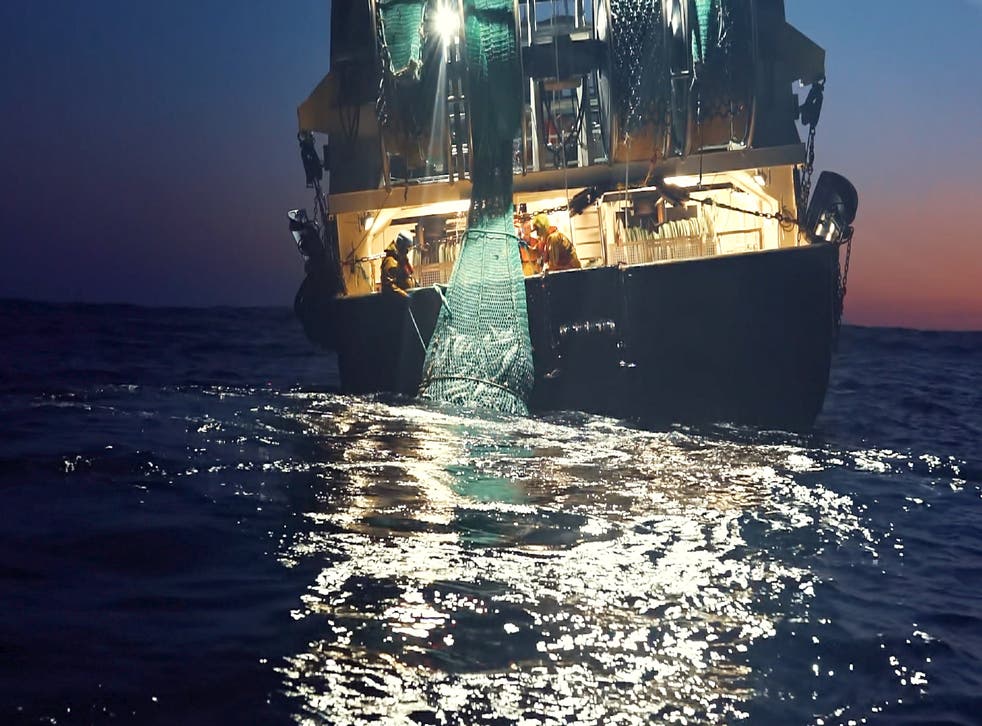
But Seaspiracy argues that actually one of the biggest plastic deposits are byproducts of commercial fishing, such as nets, claiming 46 per cent of waste in the great pacific garbage patch [a collection of marine debris in the North Pacific Ocean, also known as the Pacific trash vortex] is made up of fishing nets, while plastic straws only account for 0.03 per cent of plastic entering the ocean. And long-line fishing sets down enough lines to wrap around the planet 500 times every day.

(Netflix/Seaspiracy)

Environmentalist George Monbiot says: “Discarded fishing nets are far more dangerous for marine life than our plastic straws because they are designed to kill.”

It also claims that while 1,000 turtles are killed by plastic in the oceans, 250,000 sea turtles are captured, injured or killed by fishing vessels. Professor Calumn Roberts, a marine scientist, claims that the Deepwater Horizon oil spill in 2010 actually “benefited” marine life because “large areas were closed to fishing” giving the oceans a “respite”.

Bycatch is a huge problem caused by fishing

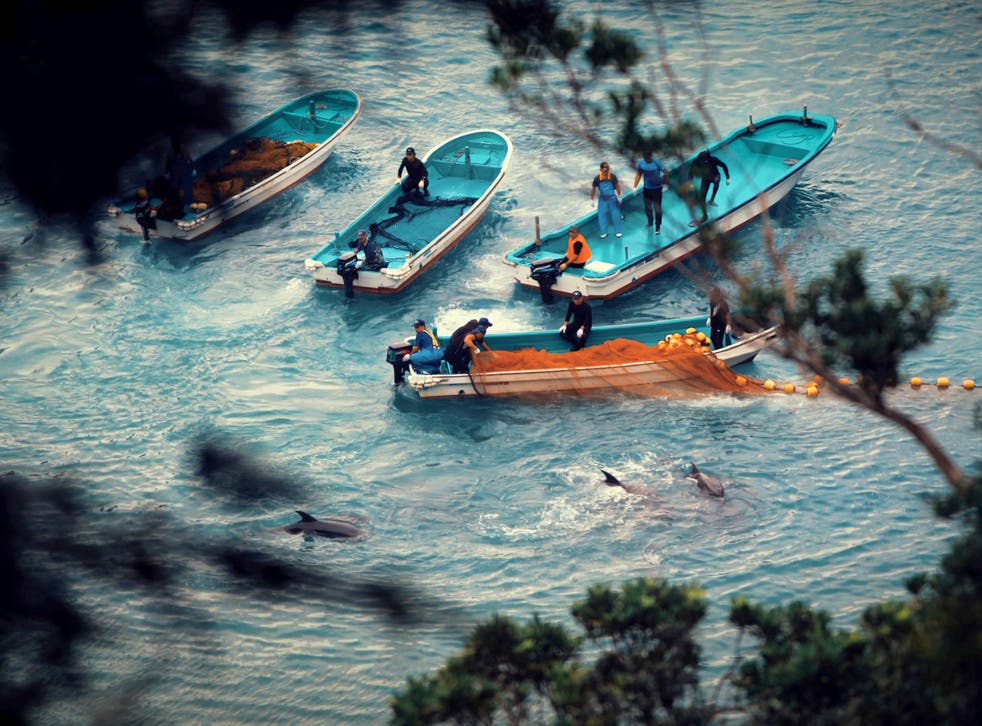
Bycatch is the fish or other mammals unintentionally caught when fishermen are trying to catch a target fish – for example, catching dolphins in nets designed for tuna fishing. Some of this bycatch is killed instantly but even that which is thrown back into the sea, it says is unlikely to survive. The film suggests that as many as 50 million sharks are caught annually as bycatch.about:blankabout:blank✕

Captain Peter Hammarstedt, from the Sea Shepherd nonprofit conservation society, says: “One of the most shocking things that most people don’t realise is that the greatest threat to whales and dolphins is commercial fishing. Over 300,000 whales and dolphins are killed every single year as a bycatch of industrial fishing.” Sea Shepherd also claims that up to 10,000 dolphins are caught in the Atlantic, off the west coast of France, every year during fishing.

Not only is this problematic in terms of destroying species but also for the climate, because whales and dolphins play a crucial role in fertilising phytoplankton in the sea, which Seaspiracy says absorbs four times as much carbon dioxide as the Amazon rainforest, and generates 85 per cent of all oxygen on earth. 

(Netflix/Seaspiracy)

Labels aren’t all they are cracked up to be

If you are reassuring yourself that your seafood consumption is not harming dolphins as bycatch – or any other marine life – because it has the ‘dolphin safe’ label on the tin, or the Marine Stewardship Council labels, then Seaspiracy urges consumers to think again.Top Articles

Asked whether he could guarantee that every can of fish labelled ‘dolphin safe’ is actually so, Mark J. Palmer of the Earth Island Institute, in charge of the dolphin safe program, says: “No – nobody can [guarantee the product is dolphin safe] – once you’re out there in the ocean. How do you know what they’re doing? We have observers on board but the observers can be bribed and are not out on a regular basis.”

However in a followup statement on their website, Palmer has clarified: “When asked whether we could guarantee that no dolphins were ever killed in any tuna fishery anywhere in the world, I answered that there are no guarantees in life, but that by drastically reducing the number of vessels intentionally chasing and netting dolphins as well as other regulations in place, that the number of dolphins that are killed is very low. 

We have observers on board but the observers can be bribed and are not out on a regular basis

“The film took my statement out of context to suggest that there is no oversight and we don’t know whether dolphins are being killed. This is simply not true.

“The bottom line is that the Dolphin Safe label and fishing restrictions save dolphin lives. Yes, commercial fishing is out of control in many cases worldwide.  But canned Dolphin Safe tuna is far more protective of dolphins and target fish stocks than the vast majority of other fisheries.”

A spokesperson for the Marine Stewardship Council (MSC) added in defence of its own certification labels: “This certification process is not carried out by the MSC – it is independent of us and carried out by expert assessment bodies. It is an entirely transparent process and NGOs and others have multiple opportunities to provide input. All our assessments can be viewed online at Track a Fishery. Only fisheries that meet the rigorous requirements of our Standard get certified. 

(Netflix/Seaspiracy)

“Contrary to what the film-makers say, certification is not an easy process, and some fisheries spend many years improving their practices in order to reach our standard. In fact, our analysis shows that the vast majority of fisheries that carry out pre-assessments against our criteria, do not meet these and need to make significant improvements to gain certification.”

Sustainable is not a defined term in seafood

As well as raising questions over labels such as ‘dolphin safe’ the film also asks whether there is any way that fishing can be sustainable or any type of fish we can eat that is not as bad for the oceans as large-scale commercial fishing. But much of the documentary seems to suggest sustainability is still too much of a grey term to be useful.

María José Cornax is the fisheries campaigns manager for Oceana Europe, a nonprofit ocean conservation organisation, says: “There is not a definition of sustainability as a whole for fisheries…The consumer cannot assess right not properly what fish is sustainable and what is not. The consumer cannot make an informed decision right now.”

There will be practically empty oceans by 2048

Dr Sylvia Alice Earle, an American marine biologist, explorer, author, and lecturer, says; “The estimate is by middle of 21st century if we keep taking wild fish at the level we are today there won’t be enough fish to catch,” predicting virtually empty oceans by by as soon as 2048.

Seaspiracy claims fishing catches up to 2.7 trillion fish per year, or 5,000,000 every single minute, and says that no industry on earth has killed as many mammals. It also highlights the problems generated by fishing methods such as bottom trawling [a method of fishing that involves dragging heavy weighted nets across the sea floor], which it claims wipes out an estimated 3.9 billion acres of sea floor per year.

Farming not the answer

The programme presents the option of farming as an alternative to catching wild fish from the seas. But on a visit to a salmon farm in Scotland, it reveals the problems of breeding in captivity such as illness, lice, and waste production.

It says that each salmon farm produces as much organic waste as 20,000 people and that the Scottish salmon industry produces organic waste equivalent to the entire population of Scotland each year. It also claims that as a result of shrimp and prawn farming, 38 per cent of the world’s mangrove forests have been destroyed.

(Netflix/Seaspiracy)

Slavery at sea is a massive problem

George Monbiot makes the comparison to “blood diamonds” when talking about the human impact of fisheries on the labour market, saying that slavery is still used on boats.

The documentary makes a comparison between the number of American soldiers that died during five years of the Iraq War – 4,500 – to the reported 360,000 deaths of fish workers during the same period. Captain Hammarstedt from Sea Shepherd says: “[It is] the same criminal groups behind drug trafficking and human trafficking.”

Former fishermen are interviewed at a safehouse in Thailand and claim that they were kept on boats for years – one says he was at sea for a decade – living in squalid conditions, facing death threats and being held at gunpoint. One claimed the ship’s captain kept dead bodies of other sailors in the freezer on board.

As well as human misery in the form of slavery – the documentary also makes the connection between the destruction of local fishing communities and people in poor communities being driven to subsistence on the land, eating more bush meat and land mammals, where fish is in short supply. The documentary makes the link between this increase and the outbreak of Ebola in west Africa.
(Netflix/Seaspiracy)

The best thing you can do is stop eating fish

Although the documentary does explore different options – such as eating more sustainable fish or only fish from farms rather than from the wild – it concludes that the “best thing to do for marine ecosystems is not eat fish” at all. It also says that there should be established “no take zones” for fishing around the world in order to preserve underwater habitats.

It says that long-held beliefs that fish do not feel pain or are not intelligent enough to be fearful is unfounded, and that other reasons to avoid fish include the heavy contamination of industrial pollutants – including mercury, heavy metals and dioxins.

As far as Seaspiracy is concerned, fish should be off the menu altogether. 

But MSC says: “Sustainable fishing does exist and helps protect our oceans…One of the amazing things about our oceans is that fish stocks can recover and replenish if they are managed carefully for the long-term. 

“While we disagree with much of what the Seaspiracy documentary-makers say, one thing we do agree with is that there is a crisis of overfishing in our oceans. However, millions around the world rely on seafood for their protein needs. With the global population set to reach 10 billion by 2050, the need to harness our natural resources more responsibly is more urgent than ever. Sustainable fishing has a vital role to play in securing those resources.”
Is it snowing microplastics in Siberia? Russia scientists take samples

MARCH 19, 20215:14 AMUPDATED 3 HOURS AGO

By Reuters Staff

https://www.reuters.com/article/us-environment-plastic-siberia-snow-idUSKBN2BB19Y

2 MIN READHe says that view washttps://imasdk.googleapis.com/js/core/bridge3.447.1_en.html#goog_335510389 

MOSCOW (Reuters) – Russian scientists are trying to understand the scale of a potential threat to the environment in Siberia: snow polluted with microplastics that then melts and seeps into the ground.

Scientists at Tomsk State University (TSU) say they have gathered snow samples from 20 different Siberian regions – from the Altai mountains to the Arctic – and that their preliminary findings confirm that airborne plastic fibres are turning up in snow in remote parts of the wilderness.

ADVERTISEMENT

“It’s clear that it’s not just rivers and seas that are involved circulating microplastics around the world, but also soil, living creatures and even the atmosphere,” Yulia Frank, scientific director at TSU’s Microplastics Siberia centre, told Reuters.

Microplastics, which are created when bigger pieces of plastic litter break up over time, are increasingly being found in the air, food, drinking water and even Arctic ice. Scientists are increasingly worried they may pose a risk to human health and marine life, though there is no consensus yet on the issue.

ADVERTISEMENThttps://aa929b8618476383f8e3fe8b31ed4d39.safeframe.googlesyndication.com/safeframe/1-0-37/html/container.html

Tomsk scientists have previously found microplastics in the digestive systems of fish caught in Siberian rivers, confirming that they are contributing to polluting the Arctic Ocean with plastic.

“Siberia is absolutely under-researched in this aspect and our (Russia’s) interest in this problem comes late compared to the rest of the world,” Frank said.

Scientists are now studying the snow samples to understand to what degree population density, the proximity of roads and other human activity contributes to the pollution.

Reporting by Dmitry Turlyun; Writing by Maria Vasilyeva; Editing by Alex Richardson

Dumped fishing gear is biggest plastic polluter in ocean, finds report

https://amp.theguardian.com/environment/2019/nov/06/dumped-fishing-gear-is-biggest-plastic-polluter-in-ocean-finds-report?fbclid=IwAR1h_HPV6ferfDXKjvILXpctxAEh-Rl9DrO0WyMd8MhtjR14x1xmV-IOwwA

Greenpeace calls for global action over nets, lines and traps that are deadly for marine life

Tue 5 Nov 2019 19.01 EST

Lost and abandoned fishing gear which is deadly to marine life makes up the majority of large plastic pollution in the oceans, according to a report by Greenpeace.

More than 640,000 tonnes of nets, lines, pots and traps used in commercial fishing are dumped and discarded in the sea every year, the same weight as 55,000 double-decker buses.

The report, which draws on the most up-to-date research on “ghost gear” polluting the oceans, calls for international action to stop the plastic pollution, which is deadly for marine wildlife.

About 300 sea turtles were found dead as a result of entanglement in ghost gear off the coast of Oaxaca, Mexico, last year. And in October, a pregnant whale was found entangled in ghost gear off the Orkney coast. The fishing gear was jammed in the animal’s baleen, the filter-feeder system inside its mouth, and scientists said the net would have hugely impaired the minke whale’s feeding and movement.

Louisa Casson, an oceans campaigner at Greenpeace UK, said: “Ghost gear is a major source of ocean plastic pollution and it affects marine life in the UK as much as anywhere else.

“The UK’s waters do not exist in a vacuum as oceans have no borders. The world’s governments must take action to protect our global oceans, and hold the under-regulated fishing industry to account for its dangerous waste. This should start with a strong global ocean treaty being agreed at the United Nations next year.”

The report said abandoned fishing gear was particularly deadly. “Nets and lines can pose a threat to wildlife for years or decades, ensnaring everything from small fish and crustaceans to endangered turtles, seabirds and even whales,” it said.

“Spreading throughout the ocean on tides and currents, lost and discarded fishing gear is now drifting to Arctic coastlines, washing up on remote Pacific islands, entangled on coral reefs and littering the deep seafloor.”

Ghost gear is estimated to make up 10% of ocean plastic pollution but forms the majority of large plastic littering the waters. One study found that as much as 70% (by weight) of macroplastics (in excess of 20cm) found floating on the surface of the ocean was fishing related.

A recent study of the “great Pacific garbage patch”, an area of plastic accumulation in the north Pacific, estimated that it contained 42,000 tonnes of megaplastics, of which 86% was fishing nets.

Another expedition to the south Pacific found an estimated 18 tonnes of plastic debris on a 2.5km stretch of beach on the uninhabited Henderson Island and it was reportedly accumulating at a rate of several thousand pieces per day. In a collection of 6 tonnes of garbage, an estimated 60% originated from industrial fisheries.

Greenpeace said ghost gear was particularly prevalent from illegal, unregulated and unreported fishing, but overcrowded fisheries also contributed to the problem. “Poor regulation and slow political progress in creating ocean sanctuaries that are off-limits to industrial fishing allow this problem to exist and persist,” the report said.

Greenpeace is calling for the UN treaty to provide a comprehensive framework for marine protection, paving the way for a global network of ocean sanctuaries covering 30% of the world’s oceans by 2030.

Topics

Dead whale washed up in Philippines had 40kg of plastic bags in its stomach

Marine biologists horrified to find 16 rice sacks and multiple shopping bags inside Cuvier’s beaked whale

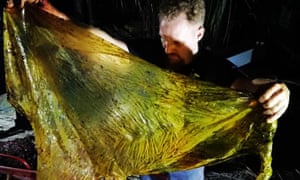
Darrell Blatchley pulling plastic out of the juvenile male Cuvier’s beaked whale
 Darrell Blatchley pulling plastic out of the juvenile male Cuvier’s beaked whale Photograph: Darrell Blatchley/D’ Bone Collector Museum Inc.

A young whale that washed up in the Philippines died from “gastric shock” after ingesting 40kg of plastic bags.

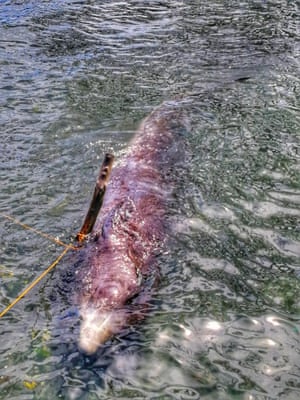
Marine biologists and volunteers from the D’Bone Collector Museum in Davao City, in the Philippine island of Mindanao, were shocked to discover the brutal cause of death for the young Cuvier’s beaked whale, which washed ashore on Saturday.

In a damning statement on their Facebook page, the museum said they uncovered “40 kilos of plastic bags, including 16 rice sacks. 4 banana plantation style bags and multiple shopping bags” in the whale’s stomach after conducting an autopsy.

Images from the autopsy showed endless piles of rubbish being extracted from the inside of the animal, which was said to have died from “gastric shock” after ingesting all the plastic.

The juvenile male curvier beaked whale died from ingesting plastic bags
Pinterest
 The juvenile male curvier beaked whale died from ingesting plastic bags Photograph: Darrell Blatchley/D’ Bone Collector Museum Inc.

The D’ Bone Collector Museum biologists who conducted the autopsy said it was “the most plastic we have ever seen in a whale”.

The use of single-use plastic is rampant in south-east Asia. A 2017 report by Ocean Conservancy stated that China, Indonesia, the Philippines, Thailand, and Vietnam have been dumping more plastic into the ocean than the rest of the world combined.

Marine biologist Darrell Blatchley, who also owns the D’Bone Collector Museum, said that in the 10 years they have examined dead whales and dolphins, 57 of them were found to have died due to accumulated rubbish and plastic in their stomachs.

In June last year, a whale died in southern Thailand after swallowing more than 80 plastic bags, which weighed up to 8kg (18lb) in the creature’s stomach, and marine biologists estimate around300 marine animals including pilot whales, sea turtles and dolphins, perished each year in Thai waters after ingesting plastic.

Humans, Fish and Other Animals Are Consuming Microfibers in Our Food and Water

It’s 7:48 pm on January 8, 2018, and rain is quenching San Mateo, California’s parched suburban streets. I park my car and don my waterproof jacket and pants, yank on knee-high plastic rain boots, and trudge over to Carolynn Box, science programs director for the 5 Gyres Institute, and Diana Lin, environmental scientist with the San Francisco Estuary Institute (SFEI). Standing on a footbridge over San Mateo Creek, we are all wrapped, head to toe, in foul weather gear — all of it plastic in one textile form or another. Box plunges a rigid plastic tube into the swiftly moving creek as Lin turns on a pump. Making a loud wamp-wamp-wamp sound, like a sewing machine, it slurps up a 5-gallon (19-liter) sample of water from the swiftly moving stream.

A passerby inquires what we’re up to. Someone quips, “We’re bottling water to sell it!” Everyone chuckles.

In fact, the creek sampling is part of a two-year research project in which SFEI and 5 Gyres are analyzing microplastics — synthetic fragments 5 millimeters (0.2 inches) or smaller — in water, sediment, fish and wastewater treatment plant effluent released into San Francisco Bay. This includes microfibers — thread-shaped microplastics — shed from synthetic apparel, like the clothes we are all wrapped in.

Animal Impacts

To date, laboratory studies have largely looked at microplastics as a whole rather than specifically at microfibers. However, since microfibers are a primary constituent of microplastics, such research can provide useful insights.

Lab studies have found that microplastics can harm small aquatic organisms that eat them — including plankton, a hugely important food source for aquatic organisms. These harms include decreased ability to feed and reproduce. Zooplankton given food laced with microplastics in a lab had decreased nutrition and poorer health than the control group. And pearl oysters fed polystyrene microbeads had less energy.

Microfiber researcher Chelsea Rochman, assistant professor in the Department of Ecology & Evolutionary Biology at the University of Toronto, and other researchers, including Matthew Cole, a research scientist at Plymouth Marine Laboratory, hypothesize that the physical shape of synthetic fibers might affect organisms. For example, they could increase the likeliness of blockages in the digestive tracts of some organisms that consume them, depending on the fiber’s size and the animal’s size, they say.

A small number of lab studies have sought to analyze how ingesting fibrous microplastics affects aquatic organisms. For a 2015 study, European researchers embedded 1- to 5-millimeter (0.04- to 0.2- inch) microfibers from polypropylene rope in food given to crabs for four weeks. The crabs that were fed the fiber-laced food ate less overall than the control group and had less energy available for growth. After moving through the digestive tracts, the fibers were balled up, so they did not seem to cause physical blockages.

But in a lab study published last year, Australian researchers found that microfibers harmed Ceriodaphnia dubia, a freshwater crustacean, more than microbeads did. Complete mortality occurred at lower concentrations of microfibers than of microbeads; at sublethal concentrations, the crustaceans showed more severe stunted growth and reduced reproduction when exposed to fiber than when exposed to beads. The researchers hypothesized that the beads harmed the organisms by filling their guts without providing nutrition, while the fibers entangled, exhausted, immobilized and deformed them.

In his experiments, Cole also has shown that copepods — crustaceans that are found in marine and nearly all types of freshwater and serve as a key food source for small fish — readily ingest microfibers.

There is concern about impacts due to chemicals that attach themselves to microfibers, too. Rochman fed fish microplastic pellets that had absorbed toxins via prolonged exposure to seawater near San Diego. The fish accumulated the chemicals — which included polycyclic aromatic hydrocarbons (PAHs), polychlorinated biphenyls (PCBs), and polybrominated diphenyl ethers (PBDEs), all known carcinogens — and suffered liver toxicity and other pathological changes.

Advocacy groups such as 5 Gyres pointed to Rochman’s study, and to concern that microplastics, including microfibers, could cause large-scale harm by introducing toxins found in waterways (including the legacy industrial contaminants PCB and DDT) into the food chain, to successfully lobby for a US ban on the sale of soaps and cosmetics with added plastic microbeads. (Canada and the United Kingdom have followed suit.)

Thus far, however, scientists cannot say whether microfibers from textiles harm nonhuman animals in different or more severe ways than other types of microplastics. But some suspect so. Since many synthetic garments are treated with synthetic dyes, waterproofing or antimicrobial agents, and because clothing accumulates flame retardants and sends them into wastewater, scientists are especially interested in studying microfibers shed from apparel as a source of toxic chemicals.

“It’s understood that [microfibers] may have unique effects because of their shape and maybe the cocktail of chemicals associated with them — like all of the dyes and sometimes flame retardants or waterproof chemicals [applied to textiles],” says Rochman.

Humans, Too

Humans consume microfibers via bottled and tap water, salt, beer, and seafood, according to a growing list of studies.

In a study published in April, student Mary Kosuth and associate professor Elizabeth Wattenberg from the University of Minnesota and Sherri Mason, a chemistry professor at the State University of New York at Fredonia, analyzed 159 samples of tap water from 14 countries, 12 brands of beer brewed with Laurentian Great Lakes water, and 12 brands of commercial sea salt. Eighty-one percent of the tap water samples contained human-generated debris, as did all of the beer and salt samples. Nearly all of the debris was composed of microfibers, most likely synthetic.

Earlier this year Orb Media published a study of bottled water led by Mason. Microplastics were found in all but 17 of the 259 bottles of water analyzed. Fibers were the second most common type of particle found. Polypropylene, which is the type if plastic used in bottle caps, was the most common type found. Nylon accounted for 16 percent of the fibersand polyester made up 6 percent.

In response to this study, the World Health Organization is launching a review of its own to explore the potential risks of plastics in drinking water. A WHO spokesperson told The Guardian that the organization is planning to assess existing evidence, identify areas where more research is needed and make plans to address them.

There is also concern that humans may be exposed to microfibers through what we eat. In a 2015 study published in NatureRochman reported that microfibers were found in the intestines of market fish and shellfish. Since people consume the guts of shellfish, they are likely consuming microplastics when they do.

Recently, researchers from Shiraz University in Iran found microplastics — most of them microfibers — embedded in the tissues of four species of fish (shrimp scad, orange-spotted grouper, pickhandle barracuda and bartail flathead) caught in the Persian Gulf. The researchers recommended caution in consuming such fish.

In the Air

We also might be coming into contact with microfibers through the air we breathe. Think, for example, of tiny fibers that might be getting past filters in clothes dryers, or those sent airborne when you shake out a blanket or sheet.

Several years ago Rachid Dris led a study as a graduate student at Université Paris-Est that involved collecting atmospheric fallout on rooftops in two locations, one urban and the other, suburban. Nearly all the material collected was fibrous, and a third of the fibrous materials were synthetic. In a second study, Dris, now a researcher at the University of Bayreuth, compared the fallout at three indoor sites with that of an outdoor site and found far more airborne fibers indoor. A bit more than a third of the indoor fibers were synthetic.

Dris and colleagues have also studied potential human health impactsfrom breathing microfibers. Their research found that how likely a fiber is to be inhaled (brought into the nose or mouth and deposited into the upper airway) or respired (brought into the lung) depends on size and shape — but that inhaled fibers can settle in the lung and can cause inflammation. Fibers bigger than 5 microns in diameter are not likely to enter the lung, according to the paper. The fibers in the fallout studies Dris performed were between 7 and 15 microns — however, only fibers 50 microns long and up were analyzed (smaller ones could not be analyzed) so shorter fibers may have smaller diameters.

Biopsies of the lungs of textile plant workers have shown lesions whose suspected causes, based on animal studies, were acrylic, polyester or nylon dust.The researchers looked to studies of textile workers dating back to the mid-1970s and late ’90s. These show that synthetic microfibers have been found in lung biopsies, and biopsies of the lungs of textile plant workers have shown lesions whose suspected causes, based on animal studies, were acrylic, polyester or nylon dust. Some of these past studies have shown higher respiratory inflammation linked to prolonged exposure to airborne fibers (a similar pattern of biological response to asbestos exposure). Yet others have found that pulmonary fibrosis and cancer can follow extended periods of inflammation.

Dris and colleagues note that airborne fibers, like those found in water, could be manufactured or coated with harmful chemicals. And they call for more research both on the human health impacts of microfibers and on whether and how consumers are inhaling microfibers through sources such as household dust.

Now What?

In a nutshell, we know very little about the impacts of microfibers on the health of nonhuman animals and people. But what we do know suggests a need for additional research.

Indeed, researchers are working to find out more about actual animal and human impacts. And at the same time, efforts are underway among advocacy groups, researchers and apparel brands aimed at everything from understanding how and which apparel sheds fibers, to preventing fibers from entering wastewater, to potentially altering how textiles are made to reduce shedding. View Ensia homepage

Read part 1 and part 3 of this series for the whole story.

Massive boom will corral Pacific Ocean’s plastic trash

Massive boom will corral Pacific Ocean’s plastic trashPhoto: AP Photo.

https://www.whec.com/news/-massive-boom-will-corral-pacific-oceanrsquos-plastic-trash-/5063246/

September 08, 2018 03:03 PM

SAN FRANCISCO (AP) — Engineers will deploy a trash collection device to corral plastic litter floating between California and Hawaii in an attempt to clean up the world’s largest garbage patch in the heart of the Pacific Ocean.

The 2,000-foot (600-meter) long floating boom will be towed Saturday from San Francisco to the Great Pacific Garbage Patch — an island of trash twice the size of Texas.

The system was created by The Ocean Cleanup, an organization founded by Boyan Slat, a 24-year-old innovator from the Netherlands who first became passionate about cleaning the oceans when he went scuba diving at age 16 in the Mediterranean Sea and saw more plastic bags than fish.

“The plastic is really persistent and it doesn’t go away by itself and the time to act is now,” Slat said, adding that researchers with his organization found plastic going back to the 1960s and 1970s bobbing in the patch.

The buoyant, a U-shaped barrier made of plastic and with a tapered 10-foot (3-meter) deep screen, is intended to act like a coastline, trapping some of the 1.8 trillion pieces of plastic that scientists estimate are swirling in that gyre but allowing marine life to safely swim beneath it.

Fitted with solar power lights, cameras, sensors and satellite antennas, the cleanup system will communicate its position at all times, allowing a support vessel to fish out the collected plastic every few months and transport it to dry land where it will be recycled, said Slat.

Shipping containers filled with the fishing nets, plastic bottles, laundry baskets and other plastic refuse scooped up by the system being deployed Saturday are expected to be back on land within a year, he said.

The Ocean Cleanup, which has raised $35 million in donations to fund the project, including from Salesforce.com chief executive Marc Benioff and PayPal co-founder Peter Thiel, will deploy 60 free-floating barriers in the Pacific Ocean by 2020.

“One of our goals is to remove 50 percent of the Great Pacific Garbage Patch in five years,” Slat said.

The free-floating barriers are made to withstand harsh weather conditions and constant wear and tear. They will stay in the water for two decades and in that time collect 90 percent of the trash in the patch, he added.

George Leonard, chief scientist of the Ocean Conservancy, a nonprofit environmental advocacy group, said he’s skeptical Slat can achieve that goal because even if plastic trash can be taken out of the ocean, a lot more is pouring in each year.

“The plastic is really persistent and it doesn’t go away by itself and the time to act is now,” Slat said, adding that researchers with his organization found plastic going back to the 1960s and 1970s bobbing in the patch.

The buoyant, a U-shaped barrier made of plastic and with a tapered 10-foot (3-meter) deep screen, is intended to act like a coastline, trapping some of the 1.8 trillion pieces of plastic that scientists estimate are swirling in that gyre but allowing marine life to safely swim beneath it.

Fitted with solar power lights, cameras, sensors and satellite antennas, the cleanup system will communicate its position at all times, allowing a support vessel to fish out the collected plastic every few months and transport it to dry land where it will be recycled, said Slat.

Shipping containers filled with the fishing nets, plastic bottles, laundry baskets and other plastic refuse scooped up by the system being deployed Saturday are expected to be back on land within a year, he said.

The Ocean Cleanup, which has raised $35 million in donations to fund the project, including from Salesforce.com chief executive Marc Benioff and PayPal co-founder Peter Thiel, will deploy 60 free-floating barriers in the Pacific Ocean by 2020.

“One of our goals is to remove 50 percent of the Great Pacific Garbage Patch in five years,” Slat said.

The free-floating barriers are made to withstand harsh weather conditions and constant wear and tear. They will stay in the water for two decades and in that time collect 90 percent of the trash in the patch, he added.

George Leonard, chief scientist of the Ocean Conservancy, a nonprofit environmental advocacy group, said he’s skeptical Slat can achieve that goal because even if plastic trash can be taken out of the ocean, a lot more is pouring in each year.

Rare sighting of leatherback off B.C. coast raises issue of plastic pollution

Endangered giant turtle, a ‘living dinosaur,’ often bears brunt of waste in ocean, marine biologist says

Jennifer Wilson · CBC News · Posted: Aug 25, 2018 8:00 AM PT | Last Updated: an hour ago

<https://i.cbc.ca/1.4795678.1535143174!/fileImage/httpImage/image.jpg_gen/derivatives/16x9_780/leatherback-turtle.jpg>

There have been fewer than 135 leatherback sightings in B.C. waters since the 1930s. The giant turtles swim from Indonesia to feed on jellyfish. (Willie Mitchell / Jeremy Koreski)

A rare sighting of the endangered leatherback turtle off the B.C. coast is an opportunity to celebrate — but also to reflect on the danger of plastic waste in the oceans, a marine biologist says.

Earlier this month, two Vancouver Island men captured photos of the enormous sea turtle. It was one of fewer than 135 sightings recorded in B.C. waters since the 1930s.

The leatherback is one of the largest reptiles on the planet and can grow to the size of a Smart car. Instead of a shell, the turtles have a thick, collapsible leather-like back that allows them to dive to extreme ocean depths of up to 1,270 metres.

The turtles, which travel from Indonesia to feed on jellyfish, have seen their populations decline drastically in recent years, in part due to frequent entanglement in plastic pollution, according to the the Department of Fisheries and Oceans.

Turtles confuse balloons with jellyfish

In Jackie Hildering’s experience, marine species are often the first to bear the brunt of environmental problems and leatherbacks are no exception, as many are found with plastic in their stomachs.

Hildering, a researcher with the Marine Education and Research Society, said many people in B.C. may not even know the species exists in local waters, but that even small actions such as releasing a balloon into the air without thinking about where it might land can have an impact on the turtles’ survival.

“One of the powerful things to realize is that they can’t discern plastics and balloons from their jellyfish prey,” she told Jason D’Souza, host of CBC’s <https://www.cbc.ca/listen/shows/all-points-west> All Points West.

Leatherback turtles in Canada have been designated as an endangered species under the Species at Risk Act. The species has lost 70 per cent of its numbers in the past 15 years.

Tracking jellyfish

A major challenge in tracking and restoring leatherback populations in B.C. waters is first tracking their food source, the jellyfish, said Lisa Spaven, a scientist with the DFO’s Pacific Biological Station.

Marine biologists rely on fish surveys to include jellyfish population data, including density and location. Jellyfish are hard to track and scientists are still figuring out whether leatherbacks prefer areas with a high density of small jellyfish or a low density of large jellyfish, Spaven said.

<https://i.cbc.ca/1.4522193.1535071363!/fileImage/httpImage/image.jpg_gen/derivatives/original_780/jellyfish-bloom-b-c-ubc.jpg>

Hundreds of jellyfish float beneath the surface off Canada’s West Coast. They are the food source that draws the leatherback turtle across the ocean from Indonesia. (Keith Holmes/Hakai Institute)

“We’re still trying to get a handle on the currents and where the jellyfish are. There’s a lot of work yet to be done,” she said.

Funding for leatherback conservation was not approved by the DFO this year according to Spaven but her department continues to carry out habitat protection work in Indonesia, where nests are at risk from predators such as wild pigs.

‘​Smallest needle in the biggest haystack’

Former Vancouver Canucks defenceman Willie Mitchell and photographer Jeremy Koreski spotted the turtle on Aug. 6 just west of Tofino, B.C., and forwarded their photos to Hildering.

Hildering said the men recognized the turtle as a leatherback but, like many in B.C., did not know how important the sighting was.

“​I don’t think they knew that I would fall off my chair when they sent the photos, I don’t know that they knew they found the smallest needle in the biggest haystack,” she said.

Leatherbacks are “living dinosaurs” that “belong in B.C. waters,” Hildering said, and their presence is a reminder of the wide variety of species B.C. coastal waters should support under optimal conditions.

“It’s a testament to how rich our waters are supposed to be.”

http://www.cbc.ca/news/canada/british-columbia/rare-sighting-of-leatherback-off-b-c-coast-raises-issue-of-plastic-pollution-1.4795676

THIS BEAUTIFUL, HAUNTING FILM HIGHLIGHTS THE HORRORS OF PLASTIC POLLUTION

Dreamlike visuals give way to animals trapped in plastic film in campaign by FF New York

By Alexandra Jardine. Published on Apr 12, 2018

http://creativity-online.com/work/sea-shepherd-the-plastic-ocean/54311

Editor’s Pick

Environmental nonprofit Sea Shepherd covers the outlines of sea animals in plastic film in a haunting short film and social campaign highlighting the topical issue of plastic pollution in the oceans.

Sea Shepherd worked with FF New York (formerly Fred & Farid) on the film, which is aimed at capturing the attentions of millennials on social media. It starts out as a mesmerizing, almost trippy colorful piece set to a dreamy music track, the kind of thing you might relax to in yoga — before gradually you realize that what you’re watching is animals such as a dolphin, turtle and shark trapped in plastic.

The spot aims to draw attention to the one million ocean animals that die each year due to plastic debris. It comes at a time when mainstream brands are starting to pay attention to banning single use plastic: for example, this week supermarket Waitrose in the U.K. banned its giveaway disposable coffee cups.

A sperm whale that washed up on a beach in Spain had 64 pounds of plastic and waste in its stomach

How can I save the ocean from plastic? 01:36

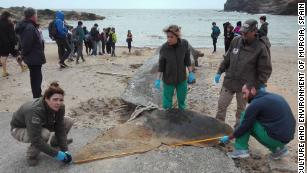
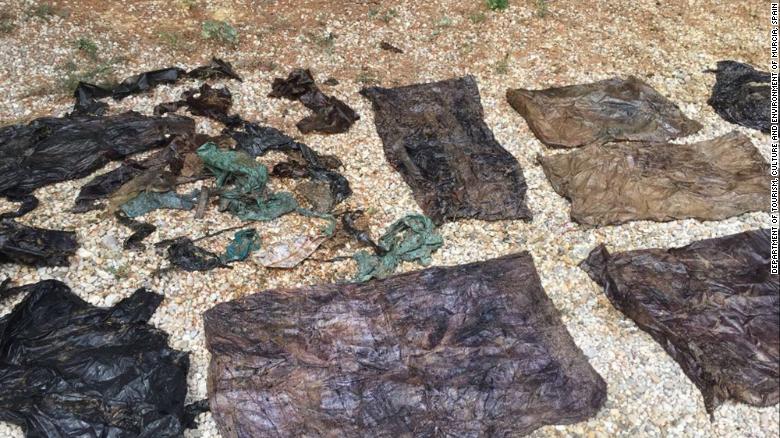
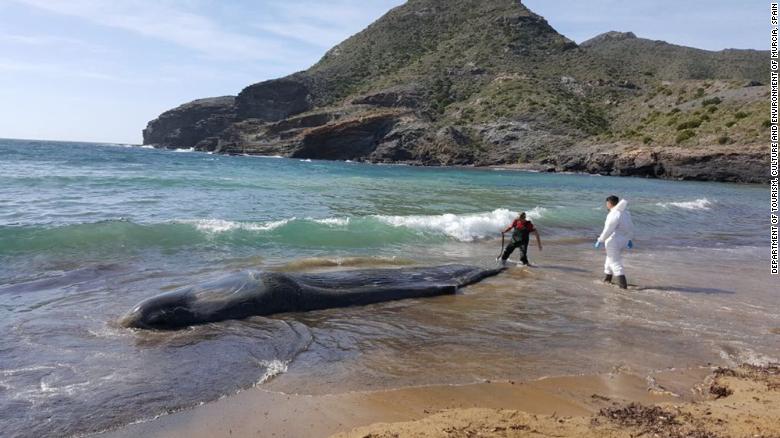
(CNN)When a young sperm whale washed up on a beach in southern Spain, scientists wanted to know what killed it. They now know: waste — 64 pounds of it. Most of it plastic, but also ropes, pieces of net and other debris lodged in its stomach.

The discovery has prompted authorities in Murcia, Spain, to launch a campaign to clean up its beaches.
“The presence of plastic in the ocean and oceans is one of the greatest threats to the conservation of wildlife throughout the world, as many animals are trapped in the trash or ingest large quantities of plastics that end up causing their death,” Murcia’s general director of environment, Consuelo Rosauro said in a statement.

El Valle Wildlife Center found 64 lbs of plastic waste on a young sperm whale.

A sperm whale’s diet is usually comprised of giant squid. But the 33-foot long mammal that washed up on the beach of Cabo de Palos on February 27 was unusually thin.
The necropsy results, released last week, listed just some of the items scientists found stuck in its stomach and intestines: plastic bags, pieces of net, a plastic water container.
Officials said the whale died of an abdominal infection, called peritonitis: It just couldn’t digest the waste it had swallowed, causing its digestive system to rupture.

The six-ton mammal was found on February 27 on the beach of Cabo de Palos.

This, say officials, is a concern not only because sperm whales are endangered, but also because it’s another grim reminder of just how much plastic waste is being dumped into the ocean.
Around 150 million tons of plastic are already floating in our oceans — with an additional eight million tons entering the water each year, according to the World Economic Forum.
A report, released last month, found 70% of marine litter is non-degradable plastic. And that figure is expected to triple within a decade.
Plastic has been found to choke marine wildlife, and has also entered the ocean food chain — exposing marine life to toxic chemicals that can end up in the food on our plates.
Murcia’s new campaign will include 11 events to clean the beaches. Jaime Escribano, spokesman for Murcia’s environmental department, said the region will use both regional funds and assistance from the EU for the campaign.

Pacific plastic dump larger than feared

AMSTERDAM: The vast dump of plastic waste swirling in the Pacific ocean is now bigger than France, Germany and Spain combined, far larger than previously feared, and is growing rapidly, a study warned.

Researchers based in the Netherlands used a fleet of boats and aircraft to scan the immense accumulation of bottles, containers, fishing nets and microparticles known as the “Great Pacific Garbage Patch” (GPGP) and found an astonishing build-up of plastic waste.

“We found about 80,000 tonnes of buoyant plastic currently in the GPGP,” Laurent Lebreton, lead author of the study published in the journal Scientific Reports, told AFP.

That’s around the weight of 500 jumbo jets, and up to sixteen times greater than the plastic mass uncovered there in previous studies.

But what really shocked the team was the number of plastic pieces that have built up on the marine gyre between Hawaii and California in recent years.

They found that the dump now contains around 1.8 trillion pieces of plastic, posing a dual threat to marine life.

Microplastics, tiny fragments of plastic smaller than 50mm in size that make up the vast majority of items in the GPGP, can enter the food chain when swallowed by fish.

The pollutants they contain become more concentrated as they work their way up through the food web, all the way to top level predators such as sharks, seals and polar bears.

“The other environmental impact comes from the larger debris, especially the fishing nets,” said Lebreton.

These net fragments kill marine life by trapping fish and animals such as turtles in a process known as ‘ghost fishing’.

The research team from the Ocean Cleanup Foundation, a Dutch start-up aiming to scoop up half the debris in the GPGP within five years, were surprised in particular in the build-up of larger plastic items, which accounted for more than 90 percent of the GPGP’s mass.

This might offer a glimmer of hope, as larger plastics are far easier to find and fish out than microplastics.

Single-use, throwaway society

Global plastics production hit 322 million tonnes in 2015, according to the International Organisation for Standardisation.

The Ocean Cleanup project, which carried out the study, says eight million tonnes of plastics enter the oceans every year, much of which has accumulated in five giant garbage patches around the planet.

To increase their ability to identify plastic pieces, researchers used 30 vessels and two aircraft including a C-130 Hercules fitted with advanced sensors that produced 3D scans of the GPGP.

They found that it now stretches 1.6 million square kilometres and, they warn, it’s growing.

“The inflow of plastic to the patch continues to exceed the outflow,” Lebreton said.

What’s more, the scale of the largest plastic dump on the planet literally only scratches the surface of the problem.

“Levels of plastic pollution in deep water layers and seafloor below the GPGP remain unknown,” the study warned.

The Foundation’s team of 75 researchers and engineers plan to construct dozens of floating barriers to drift on the winds and currents and hoover up half the plastic in the patch within five years.

But Lebreton is keen to stress that the global damage wrought by plastic waste can only be mitigated by coordinated action.

“People look at the quantity of fishing gear (in the patch), and point a finger at the fishing industry, but then again they’re eating the fish too. It’s not so much this or that sector or region, it’s the way we consume and live, single-use plastics, throwaway society,” he said.

“We need to take some serious action on that front. We’ll solve this problem on a global scale.”

The Ocean Cleanup was founded by 18-year-old Dutchman Boyan Slat in 2013.