2014 Has Already Set A Record For Rhino Poaching

https://www.thedodo.com/rhino-poaching-south-africa-831606895.html

By Melissa Cronin

Same Backyard Buck Shot With Arrow Again This Year!!

Many of you may remember this event and photo from last year:

IMG_1185

Now it’s happened again–same place, same deer, same psychotic bloodsport. Here’s the new account and photo from the same woman who reported this last year…

“If anyone ever tells me again that the poachers “make the law abiding hunters look bad” I’m going to punch them in the face and then shoot them with an arrow. All hunting is evil. Poachers have killed 3 deer here (illegally on our property) this year. One hunter literally tried to kill me a couple of weeks ago with his truck. Last year, we had a buck (named “Buck”) suffer with an arrow in his back for two months before it came out and he miraculously healed. I wish I could have healed like he did. Buck showed up today WITH ANOTHER FUCKING ARROW in his hind end. I’m going to have a stroke. I was chasing these f#ckers since Thursday as they’ve been lurking around our property. I can’t believe Buck was shot again. I literally can’t take this. Not one more day.”

10170838_412268015587115_39692154425774576_n

And if you need to know more about why bowhunting is sick and twisted bloodsport that should be banned, watch, A Veterinarian’s Perspective on Bowhunting:

HSUS among groups offering reward in wolf shooting

http://www.capitalpress.com/Washington/20141118/conservation-groups-offer-reward-in-wolf-shooting

Conservation groups offer reward in wolf shooting

Don Jenkins

Capital Press

Published:November 18, 2014 10:13AM

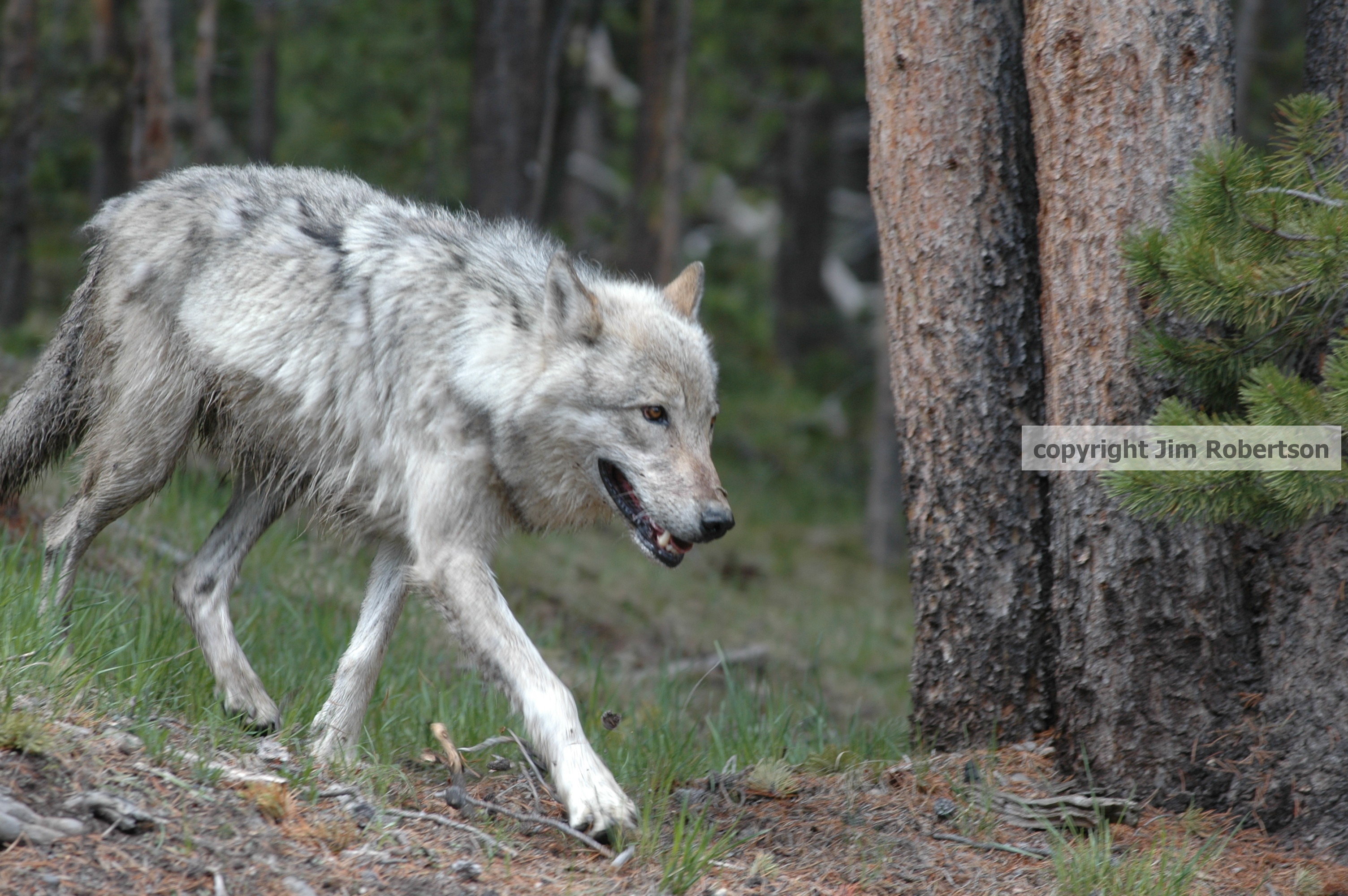
Photo courtesy of Washington Department of Fish and Wildlife In this 2011 file photo taken by the Washington Department of Fish and Wildlife, a Teanaway pack wolf recovers after being tranquilized and collared. Conservation groups are offering a reward for tips leading to the conviction of the person who shot and killed a pack member last month in Kittitas County.

<!–

–>

Conservation groups are offering a $15,000 reward for information leading to a conviction in the killing last month of a gray wolf in Kittitas County.

The adult female was shot in the hindquarters and her carcass was found Oct. 28 on the north side of the Paris Creek drainage in the Okanogan-Wenatchee National Forest, according to U.S. Fish and Wildlife Service spokesman Brent Lawrence.

The wolf, a member of the Teanaway pack, was wearing a telemetry collar. When the signal stopped moving, federal and state wildlife officials searched for the wolf, Lawrence said.

Officials are focusing on the Oct. 17-28 time period in their investigation. Anyone with information can call USFWS at 425-883-8122.

First documented in 2011, Teanaway is the pack farthest west in Washington. Before the shooting, the pack had six members, according to the state Department of Fish and Wildlife.

The department did not link the pack to any livestock predations this year. In 2011, the pack injured a herd dog, according to WDFW. The department paid the veterinarian’s bill.

“This wolf pack has essentially had no problems,” said Shawn Cantrell, director of Defenders of Wildlife, one of the groups offering the reward.

“It doesn’t make a lot of sense that somebody thought they needed to shoot this wolf.”

USFWS is leading the investigation because the killing occurred in the western two-thirds of Washington, where wolves are federally protected.

Lawrence said the person who killed the wolf could be charged with taking an endangered species. The maximum penalty is a $100,000 fine and up to one year in jail. The crime is not a felony.

The animal is protected under the state endangered species list in all of Washington. The maximum state penalty for taking an endangered species is a $5,000 fine and up to one year in jail.

The conservation groups say they are concerned that wolf killings, particularly of breeding females, will threaten the species’ recovery.

WFDW in August authorized shooting up to four wolves to stop the Huckleberry pack in Stevens County from preying on sheep. Only one wolf was killed, but conservation groups were angered that it was a breeding female.

The WDFW absolved of any wrongdoing a Stevens County hunter who reported shooting at a wolf Oct. 30.

The hunter said he had fired a warning shot to scare away one wolf, but another one appeared 15 to 20 yards away and approached him, according to a WDFW description of the incident.

The hunter said he believed he hit the wolf, which ran away.

The WDFW is still awaiting DNA results to determine whether an animal shot last month by a farmer in Whitman County was a wolf or a hybrid, the department’s game program manager, Dave Ware, said today.

If the animal was a hybrid, WDFW will not file charges, he said. If it was a wolf, the department will pursue an investigation, he said.

Ware said the department doesn’t know how the wolf killings will affect recovery. The department will count wolves in December and January and hopes to have an updated census by February, he said.

The last count showed there were 52 wolves in Washington, all east of the Cascades.

The other conservation groups offering the reward are the Center for Biological Diversity, Conservation Northwest, Woodland Park Zoo, The Humane Society of the United States and The Humane Society Wildlife Land Trust.

Interpol launches most-wanted list of environmental fugitives

http://www.theguardian.com/environment/2014/nov/17/interpol-launches-first-appeal-for-environmental-fugitives?CMP=share_btn_fb

International policing agency’s public appeal targets nine dangerous fugitives suspected of crimes involving poaching and illegal logging

Interpol wanted Operation Infra-Terra (top row from left to right): Adriano Giacobone, Sudiman Sunoto, Bhekumusa Mawillis Shiba and Ben Simasiku; (bottom raw from left to right): Nicolaas Antonius Cornelis Maria Duindam, Ariel Bustamante Sanchez, Sergey Darminov and Feisal Mohamed Ali
Interpol wanted Operation Infra-Terra (top row from left to right): Adriano Giacobone, Sudiman Sunoto, Bhekumusa Mawillis Shiba and Ben Simasiku; (bottom raw from left to right): Nicolaas Antonius Cornelis Maria Duindam, Ariel Bustamante Sanchez, Sergey Darminov and Feisal Mohamed Ali Photograph: Photograph: Interpol

Interpol’s public appeal hopes to catch nine fugitives suspected of environmental crimes costing hundreds of millions of dollars, in a move to catapult the issue to the forefront of international law enforcement.

Stefano Carvelli, the head of Interpol’s fugitive investigative support unit, said that the offences were only the tip of the iceberg of an environmental crime wave, which agency reports have estimated to be worth $70bn-$213bn annually.

“If we talk about illegal logging, we have many pending cases,” he said. “We also have many serious biodiversity cases. The problem is very big, I can feel it. These are crimes with many, many different parameters.”

One fugitive, Ahmed Kamran, 29, is charged with smuggling over 100 live animals – including giraffes and impalas – from Tanzania’s Kilimanjaro airport to Qatar on a military airplane.

Sergey Darminov, 50, is thought to have led an illegal crab-fishing operation in Russia that netted $450m. Another, Adriano Giacobone, 57, is wanted on charges that include illegal transport and discharge of toxic waste, poisoning water beds, kidnapping, illegal detention, carrying of firearms, aggravated theft and violence against a police officer.

A joint Interpol-UNEP report earlier this year linked the revenues from environmental crime to extremist militias such as the Lords Resistance Army in Uganda, the Janjaweed in Sudan and al-Shabaab in Somalia.

While sources say there are indications connecting some of the fugitives under investigation to terrorist groups, Interpol will officially neither confirm nor deny them.

The law enforcement agency stresses that members of the public should report any sightings of the fugitives to Interpol or their national police force, and not approach them directly.

“We consider all of these people to be dangerous, especially because the nature of these crimes required the involvement of organised criminal networks,” Carvelli said.

The public appeal follows an inquiry by 23 officers into the whereabouts of 139 suspects wanted by 36 countries. The investigation has been code-named Operation Infra-Terra.

Since its launch last month, Operation Infra-Terra has raised the profile of Interpol’s environmental crimes unit, which focuses on illegal exploitation of the world’s flora and fauna, and hazardous waste dumping.

Past Interpol public appeals have focused on themes like fugitives in the Americas, and led to over 600 arrests. Officers working on Operation Infra-Terra now hope for similar results.

“Until recently, environmental offences were not even considered a crime by many countries but as the years have passed, they have realised that environmental crime is a serious internal threat to our societies,” said Andreas Andreou, a criminal intelligence officer with Interpol’s environmental security unit. “It involves organised criminal networks which smuggle drugs, weapons and people. If a poacher need guns, for instance, here we have a crossover with arms trafficking.’

Routes for trafficking ivory may also be used for trafficking weapons and the more profitable line may then be used to finance other ventures, Interpol say.

In the future, the agency intends to focus its activities geographically, with illegal logging and timber trade inquiries centred on the Americas, efforts to protect wildlife species – particularly tigers – undertaken in Asia, pollution investigations that pinpoint Europe, and a crackdown on the poaching of elephants and rhinos in Africa.

Rhinos have already disappeared from several Asian and African countries and 94% of rhino poaching takes place in just two countries – Zimbabwe and South Africa – where it has increased from an estimated 50 animals in 2007, to over 1,000 in 2013, due to the involvement of crime syndicates.

Between 20,000-25,000 elephants are killed every year in Africa, and forest elephant populations are thought to have declined by 62% between 2002-2011.

A letter co-signed by 81 MEPs was sent to the European commission last week calling for urgent action to address the problem.

“The unprecedented scale of illegal poaching is fuelling instability and driving many species to the brink of extinction,” the Liberal MEP Catherine Bearder said. “Unless we take action now, our grandchildren will only be able to see wild animals such as elephants, lions and rhinos in their history books.”

Persuading officials in some countries to address the problem remains an uphill battle, and stricter law enforcement efforts and penalties may be needed internationally, Interpol sources say.

The man accused of re-enacting Noah’s Ark in reverse

Ahmed Kamran is wanted for an environmental crime that resembles a macabre inversion of Noah’s Ark, re-enacted at Tanzania’s Kilimanjaro airport. Shortly before he jumped bail, witnesses told a Tanzanian court how Kamran, 29, paid for and oversaw the loading of more than 100 live animals and birds – including giraffes, impalas and wildebeest – onto a military plane bound for Qatar.

The animal cargo, worth $113,715, reportedly included: two lappet-faced vultures, two serval cats, two impalas, two black verreaux’s eagles, three elands, four giraffes, four ground hornbill, five spring hares, six oryx, seven kori bustard, 10 dik-dik, 20 Grant’s gazelle, 68 Thomson’s gazelle, and a secretary bird.

The smuggling operation in November 2010 was fraught and dramatic. Three giraffes died in a cage before being taken to the airport, according to one self-declared member of Kamran’s gang. “We went back to the game park and captured three giraffes and other animals and transported them into the cage of animals to compensate for the dead ones,” Maulid Hamis reportedly testified.

At the airport, Kamran and the plane’s pilot allegedly directed proceedings, which began when four men decamped from a minivan on the runway to unload the animal cargo. One witness said that he was threatened with the loss of his job when he asked why no national security agents were present at the airport that night. Although the passengers of the Qatar defence force airplane carrying the animals had no diplomatic passports, they were given clearance for take-off.

Three Tanzanian nationals and Kamran were charged over the incident, but Kamran skipped bail, and may now be in Kenya, Pakistan or Qatar. Interpol officers hope that a blotchy and pixelated photo of him may help to trigger a memory somewhere.

“Even the smallest detail, which you might think is insignificant, has the potential to break a case wide open when combined with other evidence the police already have,” said Ioannis Kokkinis, criminal intelligence officer with Interpol’s fugitive investigative support unit. “Sometimes all it takes is a fresh pair of eyes to bring new momentum to an investigation and provide the missing clue.”

Wildlife groups post $15,000 reward to catch wolf poacher after female killed

copyrighted Hayden wolf in lodgepoles

http://blog.seattlepi.com/seattlepolitics/2014/11/14/wildlife-groups-post-15000-reward-to-catch-wolf-poacher/

William White turned out to be a serial poacher. He pleaded guilty not only to killing wolves, but to importing an illegally poached moose and deer from Alberta.

November 14, 2014 |

An alliance of wildlife groups, including the Woodland Park Zoo, are offering a $15,000 reward for information leading to the conviction of the person or persons who killed a breeding female wolf in the state’s Teanaway wolf pack.

The dead wolf was discovered in the Salmon la Sac area, north of Cle Elum, on Oct. 28 and had been dead for about 10 days.

“It is our hope that this reward will help law enforcement bring the person responsible for the killing of this wolf to justice and defer future tragic killings,” said Shawn Cantrell of Defenders of Wildlife.

Poachers have posed a problem since the gray wolf began repopulating the Washington Cascades, and the Kettle and Selkirk mountains in Northeast Washington, early in the past decade.

One group was caught and punished. In 2012, three members of an Okanogan County family were each fined $73,000, and two sentenced to home confinement, for killing two wolves — including a breeding female — from the Lookout pack in the Methow Valley.

Senior U.S. District Judge Frem Nielsen rejected a slap-on-the-wrist probation penalty negotiated by the U.S. Attorney’s Office in Spokane. Instead, he sentenced William White to six months’ home confinement, and his son Tom White to three months.

William White turned out to be a serial poacher. He pleaded guilty not only to killing wolves, but to importing an illegally poached moose and deer from Alberta.

The Whites were apprehended after the third person in the case, Erin White, apparently tried to ship a blood-dripping parcel to Canada from the Federal Express office in Okanogan. It contained a wolf pelt. She claimed it was a rug.

There were 52 wolves in Washington as of the end of last year. Canis lupus is protected under the federal Endangered Species Act through the entire Cascade Range.  East of U.S. Route 97, which runs north-south in Central Washington, wolves enjoy state protection.

“The tragic, illegal killing of yet another alpha female clearly demonstrates why all our state’s gray wolves need protection,” said Dan Paul of the Humane Society of Washington.

The state Department of Wildlife has worked closely with Kittitas Valley ranchers and conservationists to minimize conflicts between the Teanaway Pack and commercial livestock operations. The pack’s habitat centers in a wild area at the border of the Alpine Lakes Wilderness Area.

Anybody with evidence on the latest wolf poaching is urged to call federal enforcement at 206-512-9329 or 509-727-8358, or state enforcement at 1-877-933-9847.

Wolf hatred has spread west to Washington State

From Defenders.org:

Yesterday, we learned that the alpha female of the Teanaway pack was shot and killed, throwing the entire pack’s future into jeopardy. Disturbingly, the killing may have been intentional and a criminal investigation is underway since wolves in Washington State are protected under both state and federal law.

Fear and demonization of wolves is like a virus.

Defenders of Wildlife and our conservation partners are offering a reward for any information leading to the apprehension and conviction of the wolf’s killer.

There are barely 60 known wolves in the entire state of Washington. With the tragic loss of the alpha female, the fate of the Teanaway pack is now uncertain. This is a major blow to wolf recovery in the Pacific Northwest.

copyrighted Hayden wolf walking

U.S. charges South Africans in illegal rhino hunting case

http://www.reuters.com/article/2014/10/23/us-usa-alabama-rhino-idUSKCN0IC2NH20141023

(Reuters) – A South African company has been indicted in Alabama for selling illegal rhinoceros hunts to Americans and secretly trafficking in the endangered animals’ horns, which sell on the black market at prices higher than gold, prosecutors said on Thursday.

The 18-count indictment charged Valinor Trading CC, which operated in the United States as Out of Africa Adventurous Safaris, and company owners Dawie Groenewald, 46, and his brother, Janneman Groenewald, 44, with conspiracy, Lacey Act violations, mail fraud, money laundering and structuring bank deposits to avoid reporting requirements.

All species of rhinoceros are protected under U.S. and international laws, including the Lacey Act, which addresses illegal poaching and wildlife trafficking, according to a statement from the U.S. Department of Justice.

“This case should send a warning shot to outfitters and hunters that the sale of illegal hunts in the U.S. will be vigorously prosecuted regardless of where the hunt takes place,” Acting Assistant Attorney General for the Environment and Natural Resources Division Sam Hirsch said in the statement.

The whereabouts of the Groenewalds, and whether they have hired a lawyer, could not immediately be determined.

National Geographic magazine reported that Dawie Groenewald was arrested in 2010 in South Africa, along with 10 others and that a multi-count case has been under way for four years.

Both Groenewald brothers are South African nationals. Janneman Groenewald lived and operated out of Alabama’s Autauga County, where he maintained company bank accounts.

Nine American hunters paid up to $15,000 per animal for a total of 11 hunts sold at hunting conventions and gun shows in the United States between 2005 and 2010.

None of the hunters was charged because prosecutors said the hunters were tricked by the Groenewalds into believing they were shooting legally at “problem” rhinos. The Groenewalds obtained no hunting permits from the Republic of South Africa or local government, the indictment said.

The hunts took place at a ranch in Mussina, Limpopo Province, South Africa co-owned by the Groenewalds and American investors, according to the indictment.

After killing or capturing a rhino, the hunters posed for photos with the carcasses that appeared on company marketing brochures, the indictment said. Dawie Groenewald, who supervised the hunts, then cut off the horns with chainsaws and knives.

The population of rhinos, indigenous to southern Africa, is being decimated by poachers who supply a demand for horns for decorative and supposed medicinal purposes, prosecutors said.

The investigation was part of ongoing Operation Crash, named for a term used to describe a rhino herd, led by the U.S. Fish and Wildlife Service. It has resulted in 26 arrests and 18 convictions, with prison terms as high as 70 months for illegal rhino hunting or trafficking in horns.

10527782_10152510443027086_4248475377290093494_n


‘Breeding factory for trophy hunters’

http://www.timeslive.co.za/thetimes/2014/09/09/breeding-factory-for-trophy-hunters

Gareth Wilson | 09 September, 2014

Lions and tigers from Port Elizabeth’s Seaview Predator Park are being sold to game farms known for hunting and the exporting of animal bones.

And one of the farms has been linked to Laos-based Xaysavang Network, which has been described “as one of the most prolific international wildlife trafficking syndicates in operation”.

Although the park has refused to comment, Eastern Cape department of economic development, environmental affairs and tourism MEC Sakhumzi Somyo has confirmed that:

  • The park has sent 22 lions to Cradock hunting reserve Tam Safaris since 2008; and
  • Two tigers have been sent from the park to the country’s leading bone exporter, Letsatsi la Africa, in the Free State since 2008. Nine lions were sent last year.

Last week, Somyo responded to questions by the DA’s chief whip in Bhisho, Bobby Stevenson, regarding the transportation of lions and tigers in and around South Africa.

The revelations come after the Nelson Mandela Bay Municipality refused to give Seaview Predator Park an annual rates rebate earlier this year, saying it could not be sure the park was not participating in “canned hunting”.

Earlier this year, the Weekend Post revealed television show hosts, major league sports stars, wealthy entrepreneurs and a former US Congressman were among those who had hunted at the family-run Tam Safaris.

Departmental permits indicate there have been 86 lion hunts at the reserve over the past six years.

Tam Safaris owner Irvin Tam confirmed it had bought lions from Seaview Predator Park, owned by Janice and Rusty Gibbs.

“I have an agreement with them but can assure you that none of these lions from Seaview are used for hunting.

”They are specifically used to breed and bring new blood into our breeding projects,” he said.

“Those lions are then either sold or used for hunting.

“I must stress again that all our hunts are legal and completely by the book.”

Tam Safaris exported 32 lion carcasses to Vietnam in 2011, 738kg of lion bones and teeth in 2012 and 459kg of lion bones, claws and teeth last year.

Letsatsi la Africa has been linked to the Laos-based Xaysavang Network by former Environmental Affairs Minister Edna Molewa.

The network has also been described as “one of the most prolific international wildlife trafficking syndicates in operation” by US Secretary of State John Kerry.

Letsatsi la Africa owner Jacobus van der Westhuizen refused to comment on his company’s links with Seaview Predator Park.

“It has nothing to do with you. Ask them [Seaview] if you want to know why.”

Several requests for a meeting with Seaview Predator Park were turned down but park owner Janice Gibbs said in an e-mail: “I trust you enjoyed your visit to the Park yesterday. We do not wish to comment to the media who publish untruths and are very biased.”

The department’s findings come as no surprise to Chris Mercer of the Campaign Against Canned Hunting, who said the lion trade was fuelled by parks that disguised “lion breeding factories” as petting zoos and wildlife sanctuaries.

“We have proved that the entire industry is corrupt, full of liars and just toxic. This now proves the known link between bone exporters, canned hunters and the petting industry.

“The bottom line is that these breeders are outsourcing their lions to petting zoos to generate money and when the lions are big enough they get exchanged with cubs and sent to hunting farms,” Mercer said.

“This proves that cub petting parks sell their lions for canned hunting and are fuelling the market. They constantly hide behind smoke screens but we all know that cub petting is feeding the canned industry.

“What else happens to the lions? They [predator parks] are breeding factories who pose as conservationists but are really feeding the lion bone and canned industry.”

10527782_10152510443027086_4248475377290093494_n

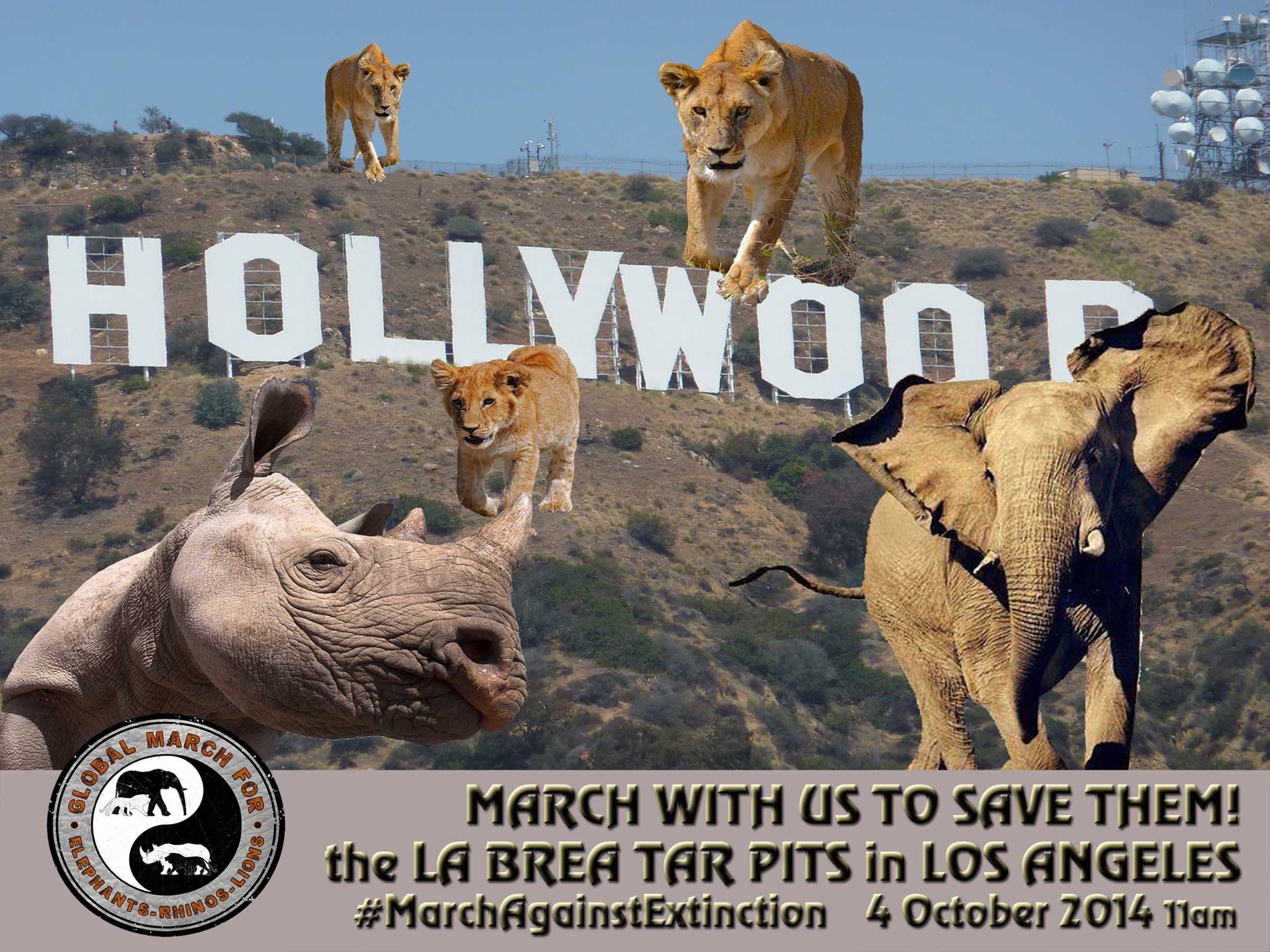
Global March for Elephants, Rhinos & Lions – October 4, 2014

hollywood march

Dear Friends,

Please excuse the heavy news, but this is too important not to share.

  • 100,000 elephants were slaughtered for their ivory tusks in the last 3 years.
  • Over 1,000 rhinos were killed for their horns last year.
  • Wild lion populations are in alarming decline due to “trophy” hunting and the lion bone trade.

We’re losing these animals. The good news is, you can help save them.

On October 4th, people in over 115 cities around the world will march with one voice to save these iconic endangered species.  

MARCH WITH US IN LOS ANGELES

We’ll gather at the La Brea Tar Pits Park in front of the Page Museum (5801 Wilshire Blvd, LA 90036) at 11am and march down Wilshire Blvd to the South African Consulate.

Promote your group or business

We’re encouraging people to bring signs promoting their business or group. We know that ALL people want to save these endangered animals, and we want the media and the world to see that.


Bring the kids!

After the march we will return to the park for a festive, educational event. Experts acting as animal ambassadors will help people understand the crisis facing each animal and take action to save them. The program includes speakers (stay tuned for celebrity info!) and music by African drummers, the talented Kat Kramer, and the Agape International Children’s Choir.

Find us Facebook

Join the Los Angeles Facebook event page: https://www.facebook.com/events/1449025795334300/

NOT IN LOS ANGELES? #FINDYOURCITY

London, Rome, Johannesburg, Austin, Chicago, Nairobi, Mombasa, Arusha, Seattle, Kilimanjaro, New York, Toronto, Boston, Baltimore, New Orleans… The list of cities marching goes on and on. Visit the global website to find a full list, as well as a wealth of other information, such as strategy and objectives of the march, graphics and other media, march merchandise, and much more.

http://www.march4elephantsandrhinos.org

HELP US RAISE MONEY

Organizing an event like this is expensive. We have to print flyers, posters, signs, banners, and educational materials. We have to rent sound equipment, tents and tables and chairs. Please donate if you can. Any help, no matter how small, is greatly appreciated.

Donate here: https://www.youcaring.com/GMFERL-LA

SPREAD THE WORD

Please SHARE this email far and wide. Many people don’t know elephants, rhinos and lions face extinction. Even if they’re aware of the crisis, they don’t know they can take action to help save them.

We hope that you’ll march with us on October 4 to help prevent the extinction of these endangered species. On behalf of Earth’s threatened elephants, rhinos, and lions, thank you!

With love for the animals,

Susan

Susan Campisi, Co-organizer

Global March For Elephants, Rhinos & Lions – Los Angeles

ooooooooooooooooooooooooo.◙..◙.ooooooooooooooooooooooooooo

global website: http://www.march4elephantsandrhinos.org/

LA website: http://www.saveourwildlife.org

LA Facebook page: https://www.facebook.com/events/1449025795334300/

email: march.for.elephants.rhinos.LA@gmail.com

WTF HSUS?

You could say that I am more than a bit peeved at the HSUS these days. Their shameless promotion of meat-eating—especially their sponsoring the hedonistic “Hoofin’ It” event—has me downright pissed off. 

I have to wonder if they can even see above the bullshit they’ve sunk into this time. 

For years I was an ardent supporter of their policies—until they went out of their way to join Whole Foods in perpetuating the myth of “humane” meat. Instead of sticking to their guns and helping to usher in an era of evolution that takes us beyond animal agriculture, they’re bent on reviving the “Old McDonald’s Farm” fantasy.

I live next door to Old McDonald, and I’ve seen how he treats his farm animals. It isn’t pretty.

One of the flesh food purveyors featured in the “Hoofin’ It” event (the ranch that raises bison) waxes poetic about their “product” as though it were a hand-crafted ale or fine wine: “Our bulls are…finished with a natural diet of whole corn, sunflower pellets…” and “are harvested and processed at the prime age of 24-30 months, weighing approximately 1,100 pounds.” 


Photo Copyright Jim Robertson

Photo Copyright Jim Robertson

Prime age for whom? Certainly not for the Bison! Bison don’t even reach maturity until 3 years of age and can live well over 30 years in the wild when allowed to. The bison whose flesh they’re selling are still babies. In the wild, male bison remain with their mothers for at least 3 years before joining in with groups of other bulls. It’s like eating a lamb who is never allowed to grow up to be a sheep. And who the fuck eats a lamb anyway, HSUS? 

The big question is, how does one “humanely” kill (“harvest” or “process”) a 1000 pound, gregarious, empathetic herd animal who relates enough to others to make a habit of mourning over their dead? “Processing” day must be a real sad, morbid, not to mention horrifying day for those waiting in line for their turn to get slaughtered. 

This whole alternative “humane” meat issue reminds me of the popular new micro-brewery that cropped up in the small town of Twisp, WA, where I used to live. Their menu featured grass-fed, organic beef from a local rancher who turned out to be none other than wolf-hater/poacher Bill White. White, along with his son, was responsible for baiting and killing off most of Washington State’s first wolves, the Lookout Pack. (Yes, they’re the same folks who got caught trying to send a bloody wolf hide through the mail to Canada.) 

Is the HSUS being led down the garden path by other (possibly wolf-hater/poacher) ranchers who are eager to sell a higher-priced product to a new generation of starry-eyed foodies who think the sentient animals they’re eating were happy to know they were “sustainably” harvested? 

It was partly because of the wisdom of a few friends working for the HSUS on wildlife issues that my wife and I went vegan 16 years ago. Those friends are still as dedicated to the animal rights cause as ever, but somehow the HSUS as a group must have lost its nerve, its soul and now, its ever-loving mind.

1173835_594069293967592_2141908188_n