Wildlife Products May Finance Terrorism

[Finally they have a good reason…]

The U.S. government is stepping up its crackdown on the illegal trafficking of wild animal products across the nation’s borders, saying some may be linked to terrorists, federal officials said Monday.

“Poaching in Africa is funding terrorist groups,” U.S. Trade Representative Michael Froman told a news conference at Kennedy International Airport.

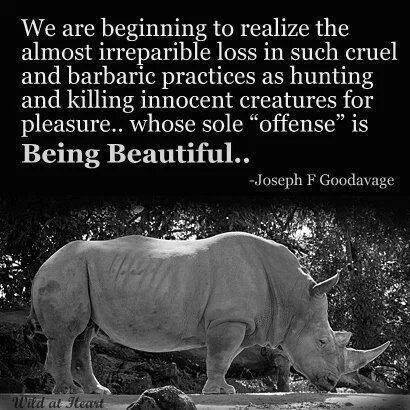
He said such illegal trade is a threat to global security because it’s driven by criminal elements, including terrorists using profits from items such as rhinoceros horns and elephant tusks to finance their activities.

Paul Chapelle, the agent in charge of New York for the U.S. Fish and Wildlife Service, said one horn case resulted in 16 arrests, including that of a mobster from Ireland now serving 13 months behind bars.

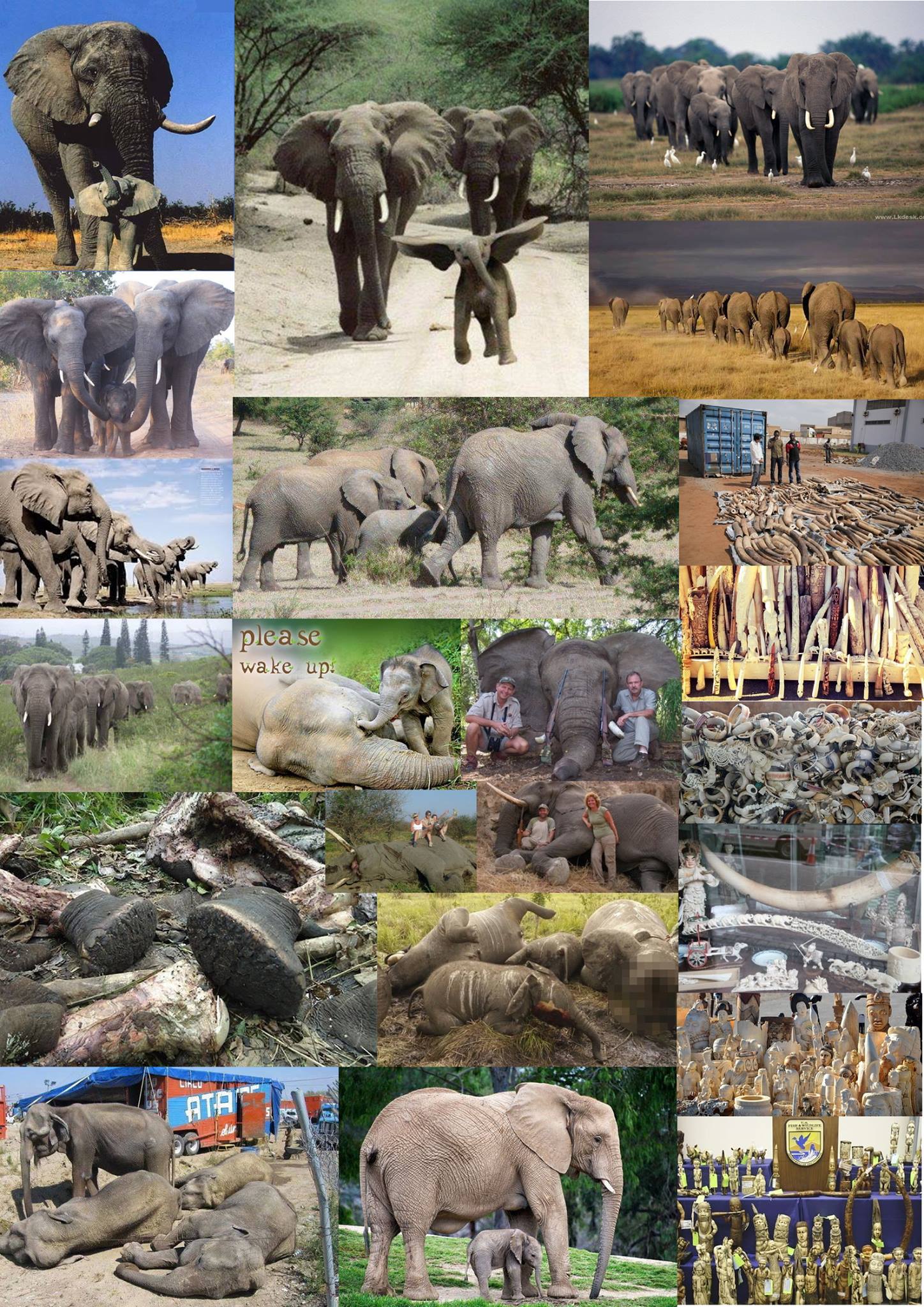
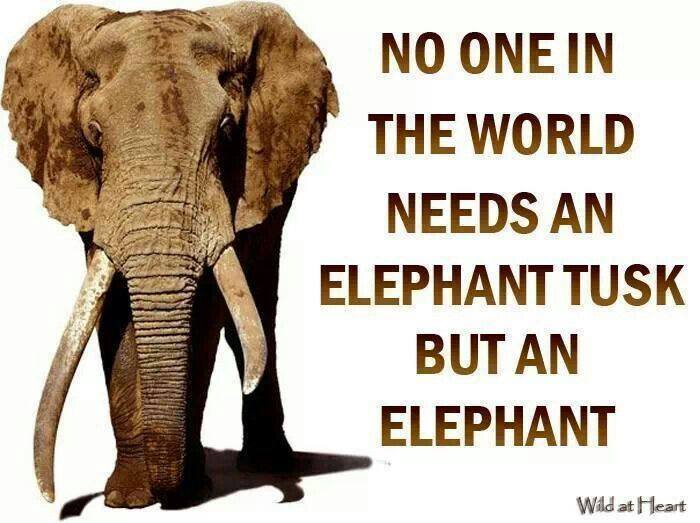
A dead elephant is worth about $18,000 — mostly from the tusk.

Kennedy handles the largest cargo volume of any U.S. airport, about $100 billion a year, said Patrick Foye, executive director of the Port Authority of New York and New Jersey, which runs the airport.

And the wildlife element plays an especially powerful role in national security, said Froman, the chief U.S. trade negotiator and adviser to President Barack Obama.

More than 20,000 elephants were killed last year along with about 1,000 rhinos, meeting a rising world demand resulting in declining populations across Africa, according to officials with the Convention on International Trade in Endangered Species of Wild Fauna and Flora.

This treaty was signed by more than 170 countries to protect animals that end up as contraband including live pets, hunting trophies, fashion accessories, cultural artifacts and medicinal ingredients.

U.S. trade officials believe that groups benefiting from the poaching include the militant Lord’s Resistance Army in Uganda and South Sudan, the Janjaweed comprised of Sudanese Arab tribes, and al-Shabab, a jihadist group based in Somalia.

In February, Obama approved a new strategy for fighting trafficking through enforcement, as well as partnerships with other countries, communities and private industry. For the first time, U.S. officials are asking trading partners to agree to conservation measures for wildlife and the environment in return for signing agreements.

Kennedy customs officials are reaching out to local businesses, plus auction houses like Christie’s and Sotheby’s and even Carnegie Hall to alert them to illegally traded valuables that may come their way.

1924891_10152211828561061_1647642544_n

Poachers and Pedophiles are Like Apples and Oranges

Comparing poachers to pedophiles may seem like comparing apples and oranges; but like the two fruits, there are more similarities than differences. Both apples and oranges are round, grow on trees, have a skin, contain seeds, are about the same size, etc. By the same token, the poacher and the pedophile both engage in socially unacceptable or illegal behavior for self-serving purposes, without regard for their victims. 

Likewise, the catch and release fisherman can be compared to the serial rapist: both put their pleasures over the suffering of their targets. The more their prey struggles, the more exciting the event for the perpetrator. Only when the victim has been completely conquered and has lost all will to fight are they set free, the vanquisher having no more use for them. 

And the analogy between a trophy hunter and a serial killer has been well established: both are single-minded in their quest for the kill, placing their own perverse desires above the self-interests—indeed, the very lives—of their victims. Both perpetrators like to take souvenirs from their kills, and neither one cares what the rest of the world thinks of their actions.

Text and Wildlife Photography ©Jim Robertson

Text and Wildlife Photography ©Jim Robertson

FWP Seeks Tips on Wolf Poached in Burnt Fork of the Bitterroot

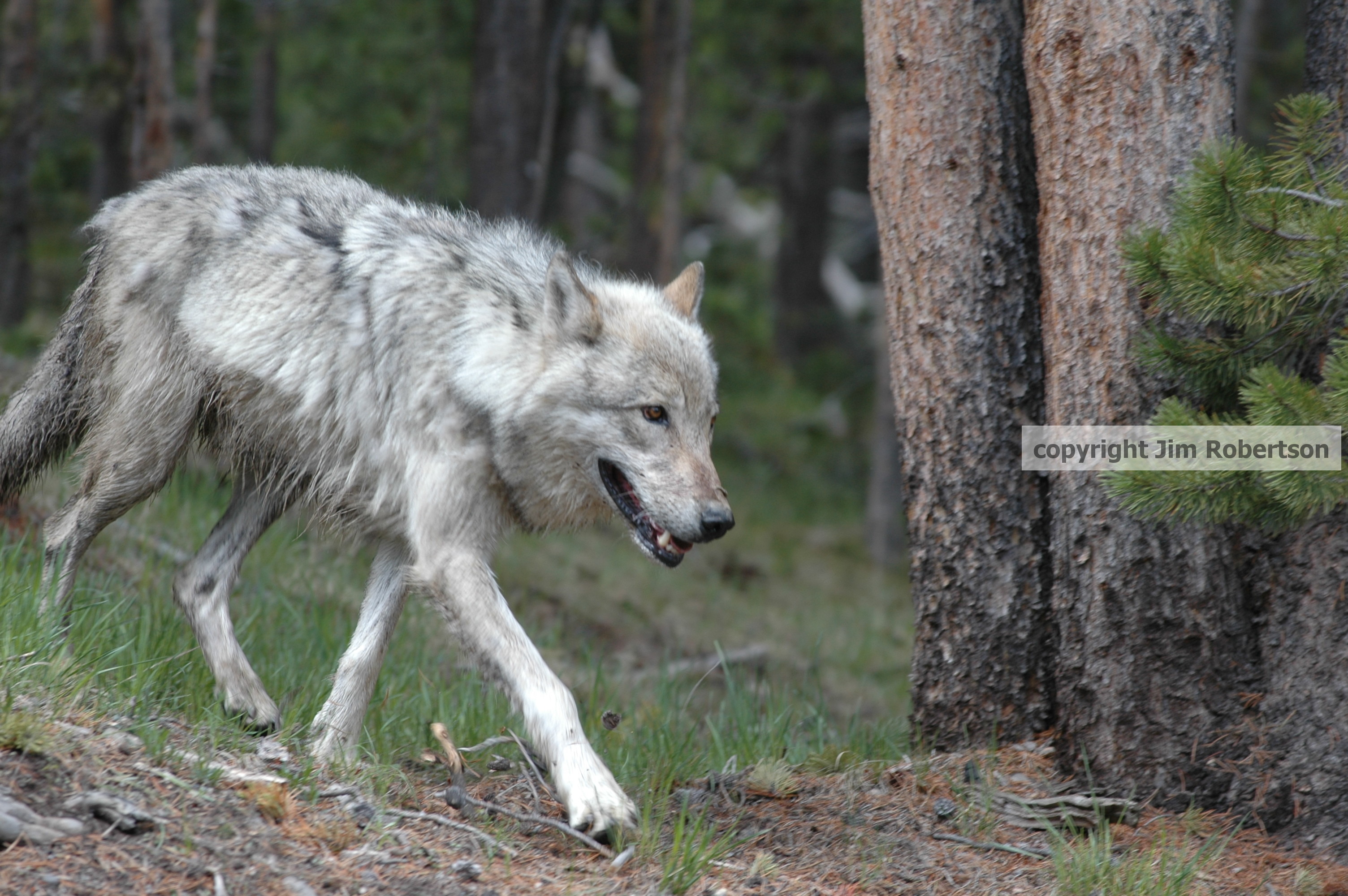
copyrighted Hayden wolf walking

Montana Fish, Wildlife & Parks is looking for tips on a wolf that was poached in the Burnt Fork area of the Bitterroot Valley, east of Stevensville, on Saturday, May 31.

The two year old male wolf had dispersed to Montana from Oregon and was wearing a GPS collar, which provided wildlife officials with movement data and gave an estimated time of death between 6 and 9 pm on May 31.  The wolf was found shot near a road between Sawmill Saddle and Ambrose Saddle in upper Haacke Creek.

The wolf was collared in Oregon in 2013 and had made its way through Idaho and the Big Hole Valley before prior to arriving in the Bitterroot earlier this month.

Anyone with information about this incident is encouraged to call 1-800-TIP-MONT (1-800-847-6668). Callers can remain anonymous and may be eligible for a reward up to $1,000 for providing information that leads to a conviction.

-fwp-

‘I’m a redneck, it’s what we do for fun’: Canadian man accused of murdering four women told police he was covered in blood because he had clubbed a deer to death

An alleged serial killer told Canadian authorities who had pulled over his vehicle that he was covered in blood because he had just clubbed a deer to death, it has emerged.

But Royal Canadian Mounted Police officers knew there was more to the story when they stopped Cody Legebokoff, 24, for speeding on a rural road near Prince George, British Columbia.

He is now on trial for the murders of Loren Leslie, 15, Jill Stuchenko, 35, Cynthia Maas, 35, and Natasha Montgomery, 23, who all died in 2009 or 2010.

Legebokoff had allegedly just killed Leslie, whom he met after they chatted online, when he was pulled over on a quiet stretch of highway on November 27, 2010, the National Post reported.

RCMP Constable Aaron Kehler, who was just a rookie at the time, had spotted the truck speeding through a forest and thought it was strange when the vehicle didn’t slow down when it hit the highway.

He guessed that the driver was speeding so signaled for him to stop and waited for another officer,
K.P. Sidhu, to meet him. The two constables had been about to meet to exchange a lost purse.

When they approached the vehicle, Legebokoff had blood smears on his face and chin, blood on his legs and a pool of blood on the driver’s mat. But it was an open beer can that allowed the constables to conduct a thorough search of the truck under the Liquor Control Licence Act, the Post reported.

Read more: http://www.dailymail.co.uk/news/article-2648491/Im-redneck-fun-Canadian-man-accused-murdering-four-women-told-police-covered-blood-beaten-deer-death.html#ixzz33ncbGNKo
Follow us: @MailOnline on Twitter | DailyMail on Facebook

DNA Links Rhino Horns to Namibia

1959301_512822552156794_8144645164928185909_n

By Werner Menges, 19 May 2014

DNA tests done in South Africa indicate that the rhino horns allegedly
discovered in the luggage of three Chinese men at Hosea Kutako International
Airport at the end of March were of Namibian origin.

This was revealed by the national head of the police Protected Resources
Unit, Detective Chief Inspector Barry de Klerk, during a bail hearing in the
Windhoek Magistrate’s Court in Katutura on Friday.

De Klerk told Magistrate George Mbundu that samples from the 14 rhino horns
found in two suitcases at the airport were sent to South Africa for a DNA
analysis to be carried out.

The DNA profiles of the samples were compared to DNA profiles on record in
the Rhino DNA Index System (RhODIS) database, and the results showed that
all of the horns came from Namibia, De Klerk testified.

The RhODIS database was developed by the University of Pretoria’s Veterinary
Generics Laboratory with the aim of keeping a record of the unique DNA
profile of individual rhinos, which could then be used to prove the origin
of rhino horns confiscated from suspected smugglers.

De Klerk said one of the horns found in the suitcases at the airport was
micro-chipped; it came from a white rhino that had been imported into
Namibia from South Africa some years ago.The three men applying to be
granted bail – Chinese nationals Li Xiaoliang (30), Li Zhibing (53), and Pu
Xunin (49) – are suspected to be the foot soldiers being used by the
faceless figures in control of an international wildlife poaching and
smuggling syndicate, De Klerk said.

The three accused were arrested and charged with possessing and exporting
controlled wildlife products after 14 rhino horns and a leopard skin were
found in two suitcases that two of them – Li Zhibing and Li Xiaoliang – had
checked in as part of their luggage on a flight on which they were supposed
to leave Namibia on 24 March.

All three men have claimed during their bail hearing that they did not know
what was in the suitcases. Li Zhibing told the magistrate last week that a
Chinese citizen living in Zambia had asked him to take the suitcases to
China. He said he was promised US$3 000 as payment if he delivered the
suitcases to someone in Shanghai.

He also told the court that he had asked Li Xiaoliang to book one of the
suitcases in as part of his luggage. Pu Xunin denied having any involvement
with or knowledge of the suitcases.

However, De Klerk testified that closed-circuit television recordings at the
Windhoek Country Club Hotel, where the three men stayed the night before
they were due to leave Namibia, showed that the two suitcases in which the
rhino horns were later found were first taken to Pu’s room, where he and an
unknown man then spent about an hour with the pieces of luggage, before the
suitcases were moved to the room of the two Lis.

De Klerk said that poachers, who have killed hundreds of rhinos in South
Africa in recent years, could try to target Namibia’s rhino population next.
The country’s courts should make it clear to would-be poachers and rhino
horn smugglers that Namibia would not be a soft target for them, he said.

The bail hearing is scheduled to continue on Wednesday.

http://allafrica.com/stories/201405191469.html

People In Hawaii are Killing Cats For Sport

http://news360.com/article/239475774

The Huffington Post

Are People In Hawaii Killing Cats For Sport?

 05/16/2014

While one Hawaiian island is being overrun by thousands of mice, another is seeing a disturbing trend of cat disappearances and murders.

In the past two months, according to Basil Scott, president of the Kauai Community Cat Project, more than 50 cats on Kauai have either been killed or have disappeared.

“We’ve had some shootings, poisonings, (and) one intentional running over,” Scott told The Garden Island. “There’s five places where we are very certain, or fairly certain, that people are killing cats. And some of it is crazy.”

The organization has received several reports of “sport type” cat shootings late at night and in public areas. People “have seen dead and dying cats,” according to a statement. “This is not only a violation of animal cruelty laws but is also prosecutable under firearms and public safety laws.”

According to Scott, a security guard witnessed one of the shootings, which involved several men shining a spotlight on a cat from a car before firing at it.

“We’re talking about guys who have been drinking, who have loaded firearms in the car, which is illegal,” Scott said.

The Kauai Police Department told The Garden Island paper that it had no knowledge of the alleged crimes, but the Humane Society is offering up to $5,000 for information leading to an arrest.

GRIZZLY NEXT TO YELLOWSTONE PARK ILLEGALY SHOT IN IDAHO SPRING BEAR HUNT

May 10

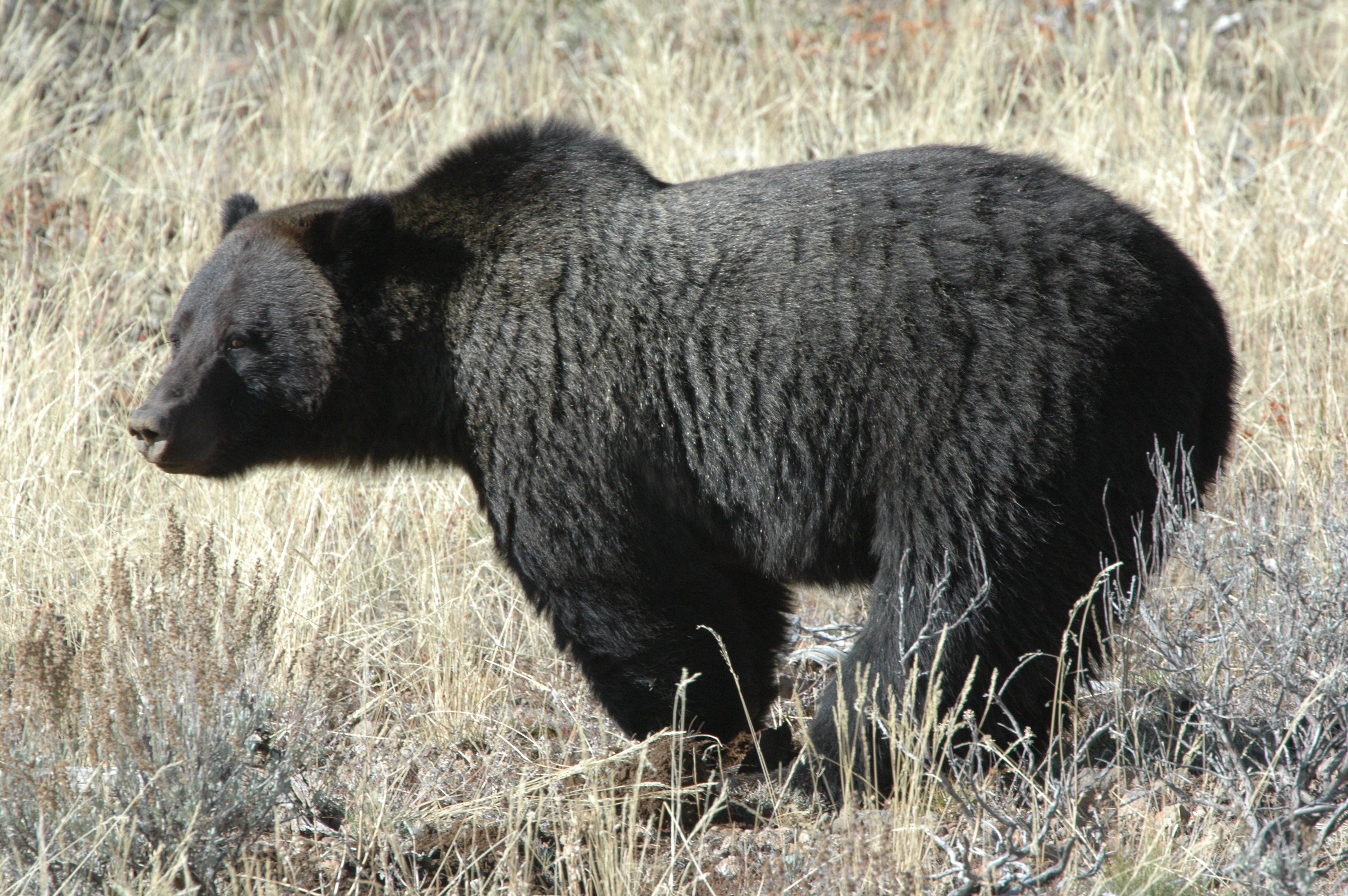
Adult male grizzly was shot May 7 near the Cave Falls Road-
Idaho spring black bear season began April 15, and the first Greater Yellowstone grizzly death of the season has been logged.

An eleven-year old male griz was shot by someone (so far unidentified) just off the Cave Falls Road near the southwest
corner of Yellowstone Park. In a news release, Idaho Fish and Game said they were investigating and promised any information gathered would be released.

The location of the illegal killing is generally flat with meadows where bears come to dig early season roots, bulbs, and rodents.
It is often hard to distinguish grizzlies from black bears, especially early in the year when they are thin from hibernation. Critics wonder why an area so rich with grizzlies is open to spring black bear hunting.

In recent years, U.S. Forest Service road closures after the completion of timber harvest has made the general area safer for grizzlies. The Cave Falls road (gravel) runs close to the southwest corner of the Park, dead-ending inside the Park at Cave Falls.

The death of a male grizzly is generally not regarded as serious
as that of a fertile female, especially one with cubs.

Photo Copyright Jim Robertson

Photo Copyright Jim Robertson

China Steps Up: Politician Pledges A Whopping $100 Million To Stop Poaching‏

China, a notorious source of demand for a massive illegal wildlife trade, is stepping up its game to save wildlife with a massive $100 million donation to combat poaching in Africa. The Chinese Premier, Li Keqiang, announced the fund during a visit to the African Union headquarters in Addis Ababa.

The fund is not a moment too soon — an estimated 22,000-35,000 elephants are killed every year by poachers, while last year poachers killed over 1,000 rhinos in South Africa alone. The funds will surely be helpful to curb supply of wildlife products in Africa, but meanwhile campaigns are working to stem demand from Chinese consumers, who value exotic animal products in traditional medicine and ivory ornaments.

1924891_10152211828561061_1647642544_n


Every 15 minutes – another elephant, gone forever

1794802_600379583390084_2056398278_n

Experts believe that 35,000 elephants were killed last year for their tusks, which are made into useless trinkets and decorations. That’’s one elephant killed every 15 minutes, on average.

Regional extinctions of elephants are a danger within the next decade if we don’t act now.

The U.S. Fish & Wildlife Service has proposed strong new protections for elephants, including a ban on sales of non-antique ivory in the United States. But some special interest groups are trying to weaken the new rules.

We need to ensure that the rules protecting elephants stay as strong as possible.

Wildlife crime, including ivory trafficking, is increasingly linked to organized crime, militancy and destabilization in fragile democracies in Africa and around the world. The United States is part of the problem, with unenforceable regulation of our domestic ivory markets and a large amount of illegal ivory being smuggled past our borders each year.

The rest of the world is watching to see what actions we take. Just as several countries followed our ivory crush in Denver with similar efforts, these new rules could provide the momentum for a worldwide trade ban.

IFAW, in partnership with Dr. Jane Goodall, IFAW Honorary Board Member Leonardo DiCaprio, and a lineup of businesses, NGOs, and concerned individuals, has written an open letter to President Obama asking him to stay strong for elephants and implement the proposed rules without weakening them.

You can help save elephants. Ask President Obama and Dan Ashe, Director of the U.S. Fish & Wildlife Service, to stand strong for elephants.