8 charged in connection with illegal hunting activity

http://www.wcsh6.com/news/article/269817/2/8-charged-in-connection-with-illegal-hunting-activity

Feb 6, 2014
Kerry Leary

ALLAGASH, Maine (NEWS CENTER) – The Maine Warden Service has charged eight people with various hunting violations after executing search warrants.

As a result of an ongoing investigation into illegal hunting activity, six search warrants were executed. Five in the town of Allagash, Maine and one in Palermo, Maine.

Eight people were charged, two of whom were taken to the Aroostook County Jail. Maine Game Warden Lt. Dan Scott said the suspects are “intentional wildlife violators who display a complete disregard for fish and game laws.”

He also said the current and past poaching practices of those charged “have undoubtedly had an impact on local wildlife resources.”

The charges range from illegal possession of moose and deer to hunting with a suspended license. The following list details the charges filed:

1. Carter McBreairty of Allagash, charged with “hunting deer after having killed one.”
2. Kim Hafford of Allagash, charged with “false registration of a deer.”
3. Jess McBreairty of Allagash, charged with “hunting with a suspended license,” and arrested for a violation of bail.
4. Reid Caron of Allagash, arrested on a warrant for night hunting moose.
5. Hope Kelly of Allagash, charged with “possession of moose killed at night,” and “possession of an unregistered moose.”
6. Gregory Hughes of Allagash, charged with “possession of a firearm by a felon.”
7. Arlo Caron of Allagash, charged with “unlawful possession of gift deer.”
8. Gerald Pollard of Palermo, charged with “illegal possession of moose.”

The Warden Service is working with the Aroostook County District Attorney’s Office on the investigation. More charges are likely to be filed.

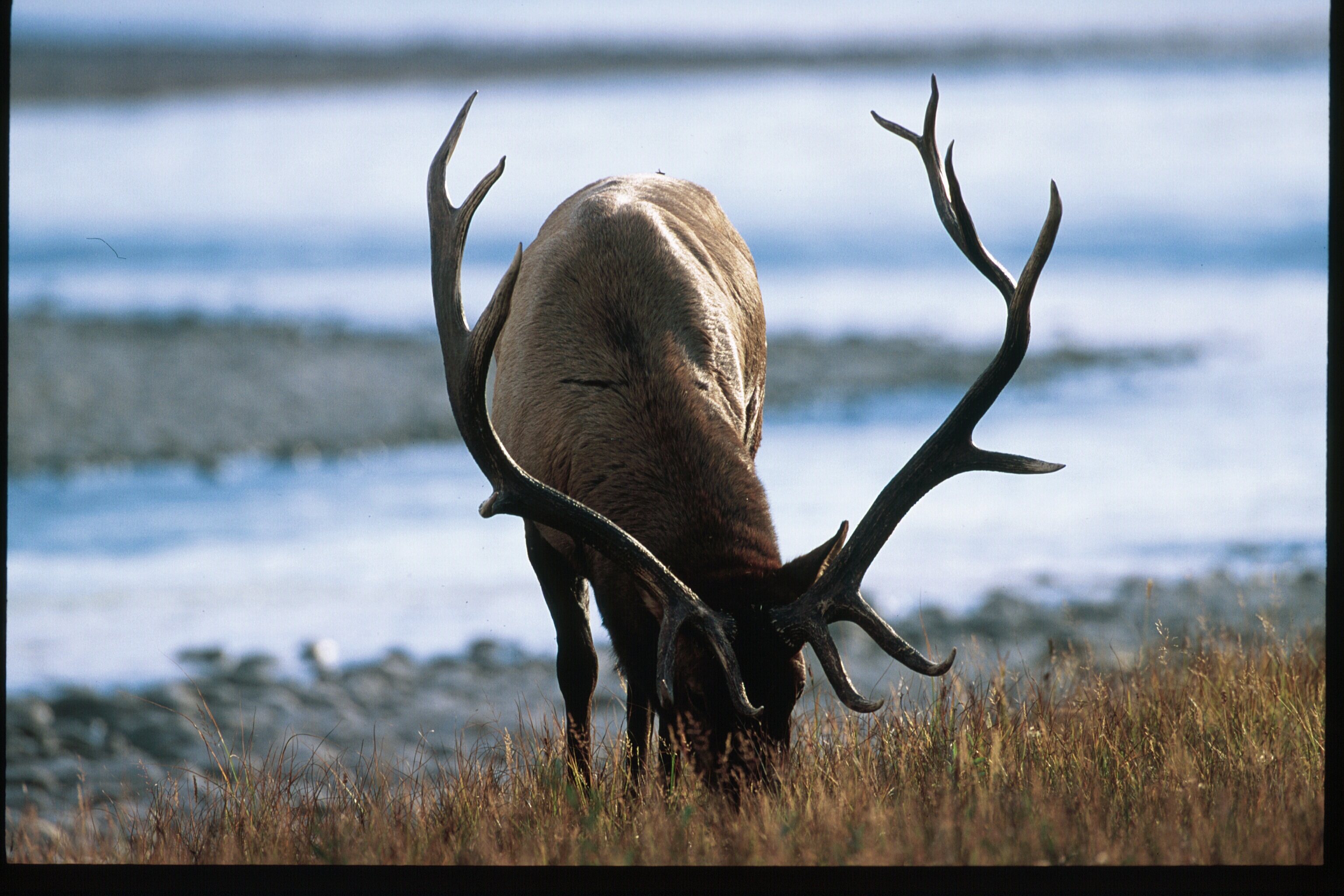
Photo Copyright Jim Robertson

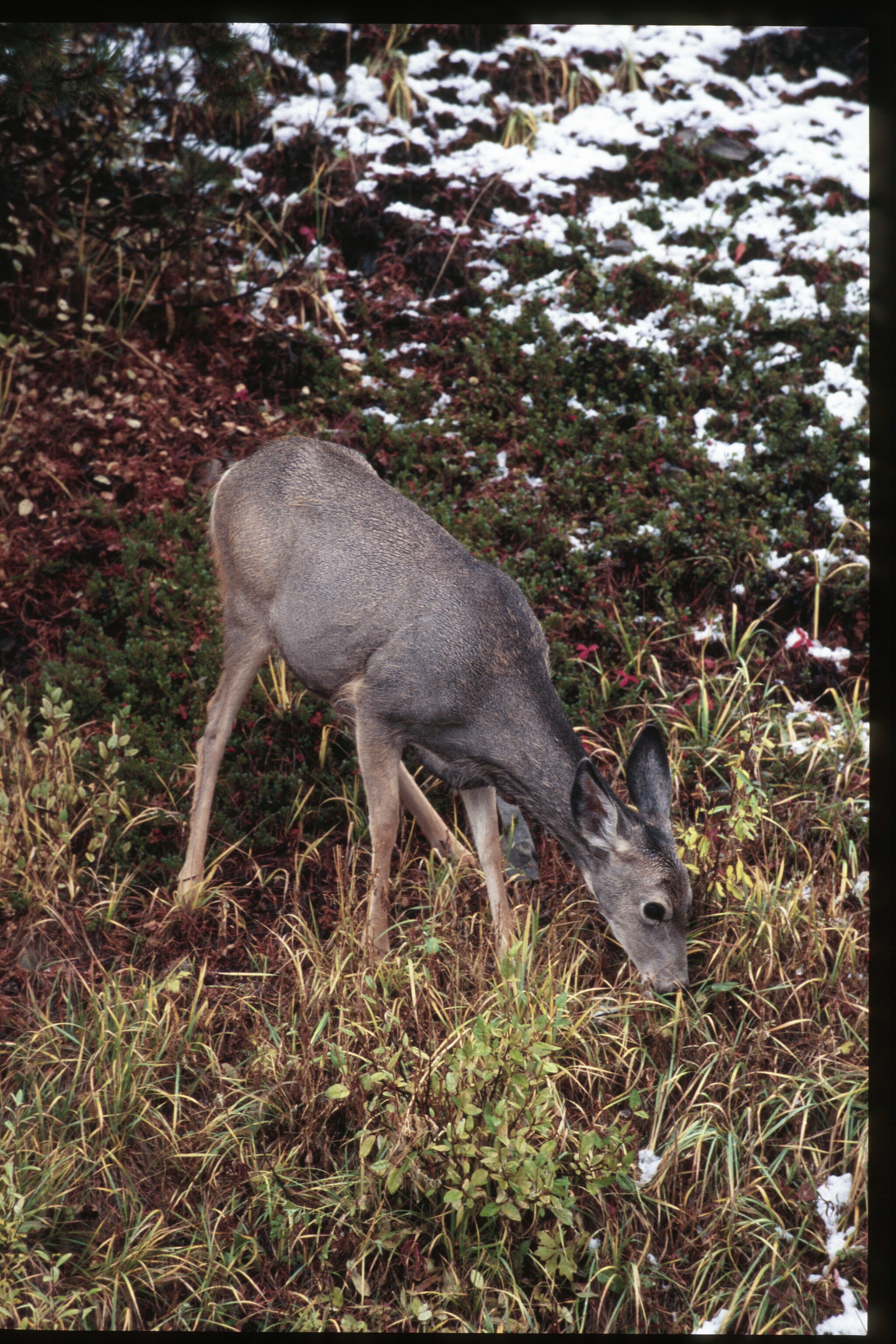
Photo Copyright Jim Robertson

Hunting guide permanently banned in plea deal

[The lesson here is, you can hunt and kill all you want, but you’d better not “waste” anything.]

ANCHORAGE, Alaska — The license of an Alaska hunting guide has been permanently revoked as part of a plea agreement.

Alaska State Troopers say 45-year-old Michael Vanning of Verdale, Wash., pleaded guilty last week to guide offenses near Fort Yukon and Kotzebue.

The offenses include wanton waste, failure to salvage game and failure to supervise clients and assistant guides.

Vanning was fined $90,000, with $80,000 suspended, and banned from hunting for 12 years.

Vanning owned Gateway Guiding Inc. and operated sheep, grizzly bear and moose hunts.

The state dismissed other cases from Sand Point and Fairbanks. He had faced charges of guiding on private land, failing to report a violation and possessing or transporting illegally taken game.

The sentence is Vanning’s third since 1998. He forfeited an airplane in a previous case.

Read more here: http://www.adn.com/2014/01/30/3298549/hunting-guide-permanently-banned.html#storylink=cpy

Photo Copyright Jim Robertson

Photo Copyright Jim Robertson

Why are poaching, bush meat trading and elephant killing still happening?

ele-with-tusks-feature

http://www.themalaysianinsider.com/sideviews/article/why-are-poaching-bush-meat-trade-and-elephant-killing-still-happening-james

The year 2013 will go down in history as an annus horribilis. The gruesome death of 14 Borneo pygmy elephants (near Gunung Lara Forest Reserves) will not be easily forgotten nor can the killers be forgiven.

It was a horrible year; bush meat was sold in broad daylight while poachers were flouting the laws.

Bush meat markets

During an operation on December 11, Sabah Wildlife Department (SWD), arrested three sellers and confiscated 145kg of sambar deer meat and 15kg of barking deer meat which were being sold at a “tamu” without valid permits.

Trade of wildlife meat occurred in Nabawan as well as in Keningau where the SWD office is located and it has been going on for quite sometime.

The credit for the tip-off should go to the bloggers (http://tengoktvonline.blogspot.com/2013/12/keunikan-pasar-tamu-di-sabah.html) who uploaded the pictures.

Wildlife meat trading in Nabawan is just the tip of the iceberg. What were SWD enforcement officers doing all this while?

Why was the arrest of small-time offenders given so much media publicity?

It appears that our politicians, bureaucrats and Danum Girang Field Centre were competing for public attention.

Sabah’s Tourism, Culture and Environment Minister Masidi Manjun was talking tough when he warned: “The war on illegal wildlife trade and poaching has just begun, so hunters and poachers in Sabah be warned that there will be no compromise as we will be prosecuting and we will charge them to the highest extent of the law. Be ready to go to jail”.

The bureaucrats were talking big too. SWD director Laurentius Ambu said: “SWD will be increasing regular surveillance on all districts in Sabah for illegal poaching and trading by beefing up its wildlife enforcement capabilities and efficiency by setting up a separate unit.”

On December 20, nine days after the Nabawan raid, yet another case of poaching was exposed.

Senior Programme Manager for WWF and three SWD honorary wardens were patrolling near Benta Wawasan Tawau (palm oil plantation wholly owned by Innoprise Corporation, Yayasan Sabah) when they stopped a four-wheel-drive vehicle with a cooler box containing two Palanok (greater mouse deer) carcasses and one Lutung merah (maroon or red leaf monkey/langur) carcass and six Bekakuk (homemade guns).

The patrol team was told by two men wearing military fatigues that they went hunting to get some meat (pusas) for Christmas and that they were waiting for three other people who were still in the jungle.

The hunters spoke Murut among themselves; they bragged to the patrol team that they went hunting with “permission” from a high-ranking law enforcer in Sandakan.

Even after being threatened, the WWF senior manager and wardens insisted that the carcasses should be surrendered to SWD in Tawau.

The patrol team lodged a police report but no action was taken against the armed hunters.

Poaching is rampant

Poaching is still rampant, right under the SWD’s nose. Illegal bush meat trading is the unintended consequences of government intervention in a market with shrinking supply but expanding demand.

The Wildlife Enactment 1998 is a primary example where the coercive power of the law has reduced the supply for bush meat.

It works both ways, the permissions for sporting, commercial and animal kampung licences are granted with temporal and spatial limitations. Another is the trading licence for selling bush meat.

Not sure if SWD is aware of the fact that licensing is more efficient if it is used for monitoring hunting activities rather than to generate revenue.

This is because what licensing actually does is, it rations wildlife or bush meat, it is a means to an end, one of the ways used by the authorities to allocate limited resources.

In this case, licensing on hunting and trading of wild animal meat is like throwing sand in the wheels. The end market result of substantial reduction in supply is the vicious cycle of ever increasing price of exotic meat that encourages more hunting.

Licensing will never generate substantial revenue, mainly because hunters can and will evade it. Furthermore, the fees have always been less than the real value of the wildlife.

What then is a real price and value of wildlife died – or alive, endangered or otherwise?

The licensing fee for sport hunting a sambar deer is RM100 per head (RM150 for commercial); common barking deer is RM50 (RM75 for commercial); greater mouse deer is RM20 per head (RM35 for commercial) and bearded wild boar RM5 (RM50 for commercial).

The market price for these four species is the price per kg a consumer is willing to pay at the illegal market place.

The fees, however, must be paid before going on a hunt, if the chance of catching an animal is less than 50-50, then it is only rational for hunters to evade getting a licence and having to pay the fees.

Again, if the fee for licences is not the real value of wildlife, why is SWD still charging more for a commercial hunting licence but less for sport and animal kampung?

The real value of these species is determined by the remaining wild population. Bearded pigs are red listed as vulnerable by the International Union for Conservation of Nature (IUCN) due to the rapid loss of its forest habitat and high hunting pressure.

Studies by Bennett L.Elizabeth et al (2000) and A.A.Tuen et al (2002) in the Crocker Range Park and Sunda Bearded Pig Specialist Group shows that wild boars are still in abundance, especially in oil palm plantations and areas with Muslim population.

The market prices of wild boars are not that high as compared with its close substitutes – the feral and domesticated pigs.

The higher price during festive seasons is due to the restriction on pork importation rather than dwindling population.

Most oil palm plantation owners, whether big or small, do not value the wild boar; when there is a population explosion, wild boars become a pest.

Sambar deer is also red listed as vulnerable to extinction by IUCN, studies shows some population survived in Danum Valley (Heydon, 1994), in Tabin Wildlife Reserve (Matsubayashi and Sukor, 2005) and in Deramakot Forest Reserves (Matsubayashi et al, 2007).

The market price of sambar deer will continue to increase faster than the price of meat from domesticated deer as more hunters enter poaching hotspots.

The barking deer and both the greater and lesser mousedeer are listed by IUCN as least concern; they are still in superabundance in Danum Valley, Ulu Segama, Malua Biobank, Lower Kinabatangan Wildlife Sanctuary, Luasong and Karamuok.

That is why the barking deer and mousedeer are the cheapest exotic food in town.

Who are the poachers?

The records on arrest show that the majority of poachers are local people from the lower income group. Almost all are married men who lives in urban areas but maintain close family connection with their villagers (place of origin).

Three sellers arrested at Nabawan “tamu” are “orang kampung”. Arresting them for not having licences to sell bush meat will have no deterrent effects.

Firstly, due process at the district level takes forever. The district SWD officer said there were 10 similar cases pending prosecution.

Justice delayed is not justice denied, you said? Wrong! Sellers at the “tamu” are poor people.

Income from selling high-priced bush meat means a lot to them. I am surprised how very obedient they were; only one of them resisted the arrest by SWD.

What with the three sellers who managed to run away? They were either related to the poachers or are the poachers themselves.

Secondly, arrest and fines will make poor sellers even worse off. It seems to me that sellers at the Nabawan “tamu” is just like the Bakas Sinalau hawkers (sellers of roasted wild pigs located along Kimanis-Keningau-Tambunan roads), they rather pay fines than get a licence.

The reason is simple: they are not qualified to apply for a licence as they don’t have a licensed gun. To transfer an ownership of a licensed gun is a very lengthy and daunting process, getting a new one is almost impossible.

So, they buy illegal bekakuk, again taking a high risk of getting caught (14 years jail under section 4 of the Firearms Act 1971).

The cartridges can be bought from licensed gun owners. Don’t you think it is kind of sad that poor people are taking so many risks?

The poor, relative to the rich, have more to gain and less to lose by taking risks that are likely to result in small increases in income, as long as the increased probability of total loss remains relatively small.

Prosecuting poor people may be counterproductive

So, what will happen to the offenders? If and when they are prosecuted, can they not plea bargain? Can the accused agree to plead guilty in exchange for some reduction in sentence sought by the prosecution?

Ignorance of law is no defence. However, prosecuting poor people may be counterproductive when it creates fear rather respect or trust towards the SWD.

Fines are a punishment best imposed against the wealthy; they are in a position to afford it although it also encourages them to commit more offences.

Rich offenders usually can get away with impunity by using their political connections or bribery or simple misuse of their positions.

In addition, convicting rich criminals is costly as they have better lawyers.

Thirdly, the fines are a punishment for not having a licence. It said nothing about how wrong it is to hunt species listed in appendix II CITES (the Convention on International Trade in Endangered Species of Wild Fauna and Flora) such as the lutung merah. If the poachers in Tawau were prosecuted, found guilty and went to jail, will they be feeling guilty or remorseful?

Grand finale – dead elephants

The grand finale of this article is the story told by the “orang kampung” during my family’s New Year celebration.

My cousins seated at one of the tables were talking about the 14 elephants which died last January.
I overheard my cousin who lives in Tabin saying loudly that four dead elephants were believed to have been poisoned.

Another very competitive but already inebriated cousin (he lives in Kinabatangan) interjected, saying: “Try Kinabatangan, we saw another eight dead elephants also poisoned. You can smell the pesticide from the carcass.”

So, I went to join their table. Stop spreading rumours, I said. Being a researcher, I asked those at the table what kind of people would be so sadistic as to let the elephants die a slow death?

My cousins answered with clear and penetrating insights. They are not heartless but angry, frustrated and hopeless not with Nenek (elephants) but with the oil palm big players for greedily taking and fencing off all the space, including the elephants’ forage routes and their natural habitats.

Forget the SWD, if they were doing their job, the elephants would not have ended up destroying farms and palm oil and forest plantations.

Who is going to compensate the owners for that? It all makes sense, what my cousins were talking is the distribution of costs and benefits of conserving the elephants.

The benefits of having more elephants alive appeal mostly to the general public, NGOs, State (SWD) and tourism players in Kinabatangan. But none of them actually have to pay the private costs in term of damaged crops.

It is not that these people don’t love animals. Elephants cannot be conserved successfully unless gainers are willing to compensate the losers. – January 1, 2014.

Note: This article is dedicated to those risking their lives and working beyond the call of duty to protect endangered wildlife.

* James Alin is with the School of Business and Economics, Universiti Malaysia Sabah.

* This is the personal opinion of the writer or publication and does not necessarily represent the views of The Malaysian Insider.


Austrian poacher-turned-killer committed hundreds of crimes, at cost of millions

[Interesting that the title reads: “poacher-turned-killer.” Isn’t poaching also killing?]

http://www.foxnews.com/world/2013/12/19/police-austrian-poacher-turned-killer-committed-hundreds-crimes-at-cost/?intcmp=obnetwork

December 19, 2013

Associated Press
  • 95c9de829f2a612a460f6a7067004f99.jpg

    This picture provided by the Police Department of Lower Austria (Landespolizeidirektion Niederoesterreich) shows trophys police found at the poacher’s house, who killed four people and then himself. Police say nearly 100 other crimes that caused estimated damages and losses valued around 10 million euros (nearly US dollar 14 million). Police published their conclusions Thursday, Dec. 19, 2013, three months after Alois Huber, 55, killed three policemen and a paramedic after police tried to question him. He then barricaded himself on his farm before setting fire to his hideout and shooting himself in the head. (AP Photo/Landespolizeidirektion Niederoesterreich) (The Associated Press)

  • cf6720969f2a612a460f6a706700ddb7.jpg

    This picture provided by the Police Department of Lower Austria (Landespolizeidirektion Niederoesterreich) shows trophys police found at the poacher’s house, who killed four people and then himself. Police say nearly 100 other crimes that caused estimated damages and losses valued around 10 million euros (nearly US dollar 14 million). Police published their conclusions Thursday, Dec. 19, 2013, three months after Alois Huber, 55, killed three policemen and a paramedic after police tried to question him. He then barricaded himself on his farm before setting fire to his hideout and shooting himself in the head. (AP Photo/Landespolizeidirektion Niederoesterreich) (The Associated Press)

VIENNA –  Austrian police say the poacher who killed four people and then himself this year committed nearly 100 other crimes that caused estimated damages and losses valued around 10 million euros (nearly $14 million).

Police published their conclusions Thursday, three months after Alois Huber, 55, killed three policemen and a paramedic after police tried to question him. He then barricaded himself on his farm before setting fire to his hideout and shooting himself in the head.

The report says Huber committed 91 crimes between 1994 and the time he killed himself. They included burglaries, arson, car break-ins, license plate thefts and motorcycle thefts.

Police believe that most of the 600 deer and chamois trophies found on his property came from illegal kills, including 29 deer heads discovered in a freezer.

Guilty plea in major rhino horn smuggling case

Kevin Johnson, USA TODAY

December 19, 2013 A Chinese antique dealer, described as one of the most prolific wildlife traffickers in the world, pleaded guilty Thursday as the director of conspiracy to smuggle $4.5 million in rhinoceros horn and elephant ivory from the U.S. to China.

Zhifei Li, 29, faces a maximum punishment of 10 years in prison on each of 11 criminal counts when he is sentenced April 1.

New Jersey U.S. Attorney Paul Fishman, whose office prosecuted the case, said the trafficking of such things as rhino horn, which can fetch up to $17,500 per pound on the illegal market, has swelled to “unprecedented levels.”

“The brutality of animal poaching, wherever it occurs, feeds the demand of a multibillion-dollar illegal international market,” Fishman said.

More Kids With Guns and Evil Intent…

At least 9 elk shot in 5 minutes near Sula; young hunters cited

SULA – In a five-minute span on the day before Thanksgiving, the French Basin near Sula sounded like a war zone.

Some elk had wandered out onto an open hillside and a group of young hunters opened fire.

“Nine elk that we could account for were shot in about five minutes,” said Montana Fish, Wildlife and Parks warden Lou Royce. “There were a few wounded ones that we never recovered.”

Royce wrote citations to the parents of the five young hunters who broke the law in one way or another.

“There was a lot of unethical behavior that happened that day,” he said.

People were shooting into herds of elk running across the hillside. Some were shooting right off the roadside. Others were shooting elk on private property without permission.

“We ended up finding a few dead elk that no one claimed,” Royce said. “A few of the wounded elk were killed in the next few days by other youth hunters.”

That episode and several others that occurred during the last week of hunting season in the Sula Basin has state officials, landowners and local sportsmen searching for ways to ensure that it doesn’t happen again.

Tony Jones of the Ravalli County Fish and Wildlife Association said the situation in the Sula Basin is unique in the Bitterroot Valley.

The open hillsides found there are used as winter range by elk that migrate annually out of the Big Hole Valley after the snow starts to pile up. Several landowners offer access through the block management program. And there are enough roads that allow people to drive fairly close to elk in the late part of the season.

For the most part, the only hunters allowed to shoot an antlerless elk in the area are youth between the ages of 12 and 15.

“Elk hunting has become more restrictive in the valley,” Jones aid. “Hunters figured out the most liberal part of the season, which turns out to be youth hunting.”

“It wasn’t necessarily youth doing bad things,” he said. “It was the adults with the youth who were putting the youth in bad situations.”

When situations like that occur, Jones said sportsmen worry that some landowners will close off access to their properties.

“With access getting tougher and tougher, we don’t want to lose prime acres of block management because of the actions of a few bad apples,” he said.

***

Last week, sportsmen and local landowners sat down with FWP officials to talk about what happened and to start talks on what should be done in the future.

“If done right, the youth hunting opportunities are a great thing,” Royce said. “Some of the things we were seeing were not good situations at all.”

For instance, Royce said he pulled up to one block management entry point and found a number of vehicles parked there and a large group of hunters milling about.

“There were fewer than 10 adults and somewhere around 30 to 40 kids standing there in the parking area,” he said.

It appeared that all of the 12- to 15-year-old hunters were armed.

“That’s not a good situation,” he said. “It’s a safety issue. It’s a resource issue. And it’s a legal issue, too. We don’t want to create a situation where people feel like it’s OK to break the law.”

Becky Doyle is a local landowner who is worried about the safety aspect. She said there are buildings in the Sula Basin that have bullet holes in them due to unsafe practices by hunters.

“What we saw happening up here this year isn’t what we teach kids in their hunter safety classes,” she said. “We see parents who race up a road in hopes of heading elk off and then getting out and having their kids shoot from the road. It’s unethical.”

“Unfortunately, this kind of stuff has been going on for years in the Sula Basin,” she said. “Now, instead of it being adults, it’s kids.”

Travis Goodsell of Conner spent most of the last week of the season in the area. He saw a good deal of illegal and unethical behavior as well.

At one point, he watched a father direct his son to shoot at some elk that were about 100 yards away from the edge of the road. He fired five times and didn’t hit anything.

Earlier, he saw a herd of elk that couldn’t get over a fence being pursued by about 10 people. One youngster was yelling as loud as he could in an attempt to spook them back to where a group of 16 or so young hunters were waiting.

“Half of them didn’t have parents with them,” Goodsell said. “I was up there four or five days and I probably saw 20 people leave with elk that were shot right off the road.”

***

Royce said that’s not the intention of the youth hunt.

“When a kid goes through hunter safety, they are taught the difference between what’s right and wrong,” he said. “They are supposed to have a good mentor with them as they learn how to hunt.”

When he was young, Royce said, he hunted with his father, uncle and grandfather.

“I didn’t get out of their sight until I was 16 or 17,” he said. “It was a controlled situation. My dad, uncle and grandpa were right there to make sure I did it right.”

The youth hunt is supposed to be just that.

“It can be a great thing if people do it right,” he said. “I don’t think anyone likes to see wounded or dead elk out there that no one gets to harvest. I hope we can come up with some changes that will at least cut down on some of the unethical things we saw this year.

“I think we can do better,” Royce said.

FWP regional wildlife manager Mike Thompson said it’s important that everyone realizes that same situation in the East Fork has repeated itself over the years.

Since the antlerless opportunities were now limited to youth, “we’ve kind of set them up to fail,” Thompson said. “People from all walks of life have fallen into that same trap when they see lots of elk on an open hillside.”

Thompson plans to broaden the conversation in the search of a solution.

“We want to look for a way that youth can learn in a more safe environment,” he said. “When I say safe, I mean not out on the highway shooting into a herd of elk, but instead, one on one with them in mountains, like it’s supposed to be.”

[Like it’s supposed to be? So by that logic, mass murder is bad, but serial killing is okay?]

Wildlife Photography ©Jim Robertson, 2013. All Rights Reserved

Wildlife Photography ©Jim Robertson, 2013. All Rights Reserved

A Blood Trail in the Snow

Walking the road along my property I discovered that my friend had been shot. Following the blood trail back to its origin, it was clear he was shot by my neighbor. The tracks and drops of blood—bright red against the stark white snow—led onto my land where at least he could die in peace.

I don’t usually say this about people, but I really loved this gentle soul; consequently, I hate whoever shot him.
I wish I could have warned him to always steer clear of that neighbor, whose thirst for blood is a well-known trademark among some of the other locals.

You’d think I would have called an ambulance for a wounded friend and a sheriff to put away the psychopathic neighbor. But medics and sheriff’s departments in this country don’t cotton to my friend’s kind.

The thing is, he’s an elk; and according to the law (enacted by humans exclusively for humans), shooting a non-human—especially a “game” animal—is considered “harvesting” or “sport,” rather than what it undeniably is: murder.

Text and Wildlife Photography ©Jim Robertson, 2013. All Rights Reserved

Text and Wildlife Photography ©Jim Robertson, 2013. All Rights Reserved


A HUGE Positive Step: China to Finally Criminalize Poaching

http://www.onegreenplanet.org/news/a-huge-positive-step-china-to-finally-criminalize-poaching/?utm_source=Green+Monster+Mailing+List&utm_campaign=fdb7346a41-GM_RSS_EMAIL_CAMPAIGN&utm_medium=email&utm_term=0_bbf62ddf34-fdb7346a41-102169273

Kristina Pepelko                       
December 5, 2013

Many never thought they’d see the day come, but it finally has – China, one of the world’s largest importers of ivory, has announced, that it, along with 29 other nations, will help protect the world’s elephants by criminalizing poaching.

Now, that’s something to celebrate.

For the past year, it seemed that poaching was reaching a whole new level, with poachers resorting to tactics like cyanide poisoning to hack off precious elephant tusks and a death toll skyrocketing to 22,000 dead elephants across Africa in 2012 – a number that a new report by the Convention on International Trade in Endangered Species (CITES) recently revealed.

The same report estimates that if poaching continues at around the same rate it is now for the next 10 years, 20 percent of Africa’s elephants will be wiped out, further devastating the ecosystem and an already vulnerable population.

These numbers are almost as hard to hear as this recording of an elephant slaughter and the heartbreaking fact that elephants are still affected by mass killings years later.

Plenty of tactics have been proposed to combat this crime and the grim future

 facing Africa’s wildlife including shooting poachers on the spot and hiring more park rangers. But what has sorely been missing from the conversation is a collective crack-down on the crime by the international community.

Thankfully, nations have finally been shaken into action. At a summit this week in Bostswana’s capital Gaborone, 30 nations, including China, Germany, Zambia, Nigeria, Zimbabwe, Botswana, Thailand, Vietnam, the Philippines, and the United States, signed an agreement to adopt 14 measures to protect wildlife crime victims.

According to Bloomberg, the steps “include classifying poaching as a serious crime, strengthening cross-border law-enforcement and reining in demand for ivory in Asia with information campaigns.”

“The conference resulted in concrete improvements for elephants in Africa,” German Environment Minister Peter Altmaier said via Bloomberg. “I hope that we can now break the dangerous

 trend toward more poaching.”

Ultimately, what this new agreement does is “render the trade of ivory … a serious crime, enforceable under international law, with stricter prison sentences,” reports International Business Times.

Now, isn’t that something? It’s always said that good things happen when you least expect it, and turns out, it’s true. Many thought poaching was getting beyond control, and that there was little hope left for major steps to be taken against it. But perhaps we threw down our hats too soon.

While time will tell how well this new agreement will be upheld, for now, let’s take the good news and celebrate properly (cake, anyone?).

Image source: Voices in the Wilderness / Flickr

ele-with-tusks-feature

“Time” Has it Backwards, People Are the Pests

By now, many of you have seen the outrageous Time magazine article egotistically entitled, “America’s Pest Problem: It’s Time to Cull the Herd.” If so, you probably shared my first reaction, which was:

How haughty to label the recovering animal species from whom we stole this land “pests” whenever they cross paths with the real pests, the most overpopulated and rapidly expanding, exploitive, environmentally reckless, imperialistic, pretentious, self-centered, self-important, self-aggrandizing, stuck-up, conceited, condescending –in a word, arrogant—urchins ever to emerge from the primordial ooze, namely humans.

As ethologist Marc Bekoff wrote in a recent blog post,
“There are so many things that are profoundly disturbing in [the Time magazine] essay I’m not sure where to begin or just which points to highlight. Some of the messages I received had quotes from this essay that at once shocked and saddened me. Kill, kill, and kill some more; that’s the only solution for righting the wrongs for which we — yes, we — are responsible. We move into the homes of other animals and redecorate them because we like to see them or because it’s “cool” to do so, or we alter their homes to the extent that they need to find new places in which to live and try to feel safe and at peace. And then, when we decide they’ve become ‘pests’, we kill them. Yes, technically we cull them, but of course the word ‘culling’ is a way to make the word ‘killing’ more palatable. To many people this sanitizing mechanism — using culling instead of killing — is readily transparent. But, a subtitle like ‘It’s Time to Kill the Herd’, would likely offend many people who find it difficult to grasp that that’s what we do – we kill other animals with little hesitation absent any data that this really works.

“We treat them as if they’re the problem when, in fact, whatever ‘problems’ they pose can most frequently, some might say invariably, be traced back to something we did to make them become ‘problems’.”

Well, I’m one of those who would definitely say “invariably.” On the other hand, I’m not real comfortable with the “we” part. Personally, I don’t consider the wildlife to be “pests,” I don’t fear them and I do not kill them. Ultimately, I don’t consider myself superior to the other animals.

Bekoff also writes, “Until we confront the indisputable fact that there are too many of us, we and other animals are doomed.” Talk about uncomfortable… Actually, my wife and I faced that fact decades ago and consciously chose not to add any more children to the burgeoning human horde.

The problem where we live is that, though we’re surrounded by prime habitat which we’ve left wild for the wildlife, we rarely see the deer, elk and bears who’ve had to adapt to locally rampant hunting and poaching pressure by only coming out of the heavy forest at night. The last thing the animals around here need is for Time Magazine to come along and promote more hunting!

Text and Wildlife Photography ©Jim Robertson, 2013

Text and Wildlife Photography ©Jim Robertson, 2013


3 Hamilton men lose hunting privileges for killing 25 deer

“As best as we could determine, they were shooting deer for the thrill of it.”

http://billingsgazette.com/news/state-and-regional/montana/hamilton-men-lose-hunting-privileges-for-killing-deer/article_50676767-b60a-58a9-a4a0-e30af3061de8.html

HAMILTON – Three Hamilton men have forfeited their hunting privileges after being

Photo Copyright Jim Robertson

Photo Copyright Jim Robertson

found guilty of killing deer for the thrill of it last year.

One defendant told investigators the men shot as many as 25 deer, but wardens were only able to locate nine, said Montana Fish, Wildlife and Parks warden Lou Royce.

“We really don’t have a clue exactly how many deer they shot,” Royce said. “One defendant said they shot between 20 and 25 deer with a .22. The deer could have run off and died in the woods or been hauled off by predators. There could still be deer out there with bullets in them.”

The case began a little more than a year ago after a landowner off the Westside Road near Hamilton called to report a poaching case.

Royce said the property owner and his son had heard a shot after dark near their home. A few minutes later, they saw headlights shine on their front yard to illuminate a deer. A moment later, a shot rang out and the deer dropped.

“The shot was made right toward the building,” Royce said.

The property owner’s son chased after the vehicle and was able to obtain a license number.

“That was our big break in the case,” Royce said.

Royce said a newspaper article in the Ravalli Republic about the poaching also led investigators to several carcasses.

“The news article helped,” he said. “People told us about a number of different deer after they had read it.”

Ravalli County Justice Jim Bailey handled all of the cases.

Gabe Rinehart, 19, pleaded guilty in August to 18 misdemeanor citations that included hunting without a license, hunting after dark, using a spotlight, as well as others.

Rinehart was fined $7,580 and ordered to pay $700 in restitution to FWP. He was sentenced to 1,980 days in jail, with all but two suspended.

Rinehart also lost hunting privileges for 20 years, but may apply with the court for reinstatement after five years.

Nicholas Cropp, 19, was found guilty of eight citations in a jury trial on Oct. 24.

Cropp was required to serve 15 days of his 1,100-day sentence in jail. He was ordered to pay $4,569 in fines, $639 in jury fees, and $800 in restitution. Cropp also forfeited a .270-caliber Savage bolt-action rifle.

Cropp lost his hunting privileges for 10 years.

Jedidiah Schmitt, 19, was sentenced on Nov. 7 for two citations for illegally killing one deer following a bench trial.

He was required to pay $1,370 in fines and $300 in restitution. Schmitt lost hunting privileges for six years. He was also sentenced to 360 days in jail, with all of it suspended.

“They later claimed that they were going to go back and get the meat, but they never did,” Royce said. “As best as we could determine, they were shooting deer for the thrill of it.”