Two Rangers Killed by Tiger Poachers-Thailand

90823_Pred_ATACS

Sep 13 (23 hours ago)

JANJIRA PONGRAI
THE NATION September 14, 2013 1:00 am

TWO FOREST rangers were killed and two others seriously injured in the
latest fierce gun battle in Tak with a group of tiger hunters.

The latest loss has raised the number of casualties among men hired to
protect against wildlife poaching and tree cutting. Since 2009, 42 forest
rangers have been killed on duty and 48 others injured, 22 of them
seriously, according to statistics from the National Park, Wildlife and
Plant Conservation Department.

The hunters were believed to be members of a Hmong hilltribe gang active in
the Thungyai Naresuan and Huai Kha Khaeng wildlife sanctuaries in Tak’s
Umphang district.

The fatal armed clash took place on Thursday night in the eastern section of
Thungyai Naresuan. The forest rangers, assisted by soldiers and local
administrative officials, had followed the hunters since Monday after the
carcass of a boar was found in the forest, according to the department’s
deputy director-general, Theerapat Prayurasiddhi. He said the carcass of the
boar, killed by poisoning, was believed to be used as bait by the tiger
hunters.

Theerapat said the hunters opened fire first and a gunfight ensued. Four
forest rangers were seriously injured in the clash and were sent to Tak’s
Mae Sot Hospital. Two of them were pronounced dead – Boonsri Inthapanya, 51,
and Anthong Ngamying, 22. The injured rangers were identified as Piriya
Khaoluang, 35, and Sanan Ongkarn, 54.

One hunter was shot dead during the gunfight. His identity remained unknown.

The hunters, believed to number five, were heavily |armed with AK-47 assault
|rifles and carbine automatic rifles. Four other hunters managed to flee the
scene, and some of them were believed to have suffered injuries, according
to Theerapat. He expressed his condolences to family members of the slain
rangers, adding that they would get “full assistance” from the department.

The senior official also said the department had begun implementing a policy
of buying life-insurance policies for its forest rangers, as part of
increased employment benefits.

The department has about 20,000 forest rangers.

http://www.nationmultimedia.com/national/Two-forest-rangers-killed-in-gun-ba
ttle-with-tiger-30214823.html

Chinese customs seize 645 wolf skins from Greece

Pelts arrived on July 29 flight from Athens

 Author: Damian Mac Con Uladh

The 645 wolf skins were concealed in bags that were labelled ‘fur scraps’. It is not clear if the skins are from Greece’s indigenous wolf population, which is estimated to number 500-700 animals

Customs officers check wolf skins at Beijing Capital International Airport, 8 August 2013 (Reuters)


Customs officers check wolf skins at Beijing Capital International Airport, 8 August 2013 (Reuters) Customs officials in China on Thursday seized almost 650 pieces of wolf skins that arrived on a flight from Greece last month.

The pelts, which cover a total area of 200m2 when spread out, were imported into China on July 29 on a flight from Greece to Beijing Capital International Airport, officials said, describing the haul as the biggest case of suspected smuggling of skins of endangered wild animals in China in over a decade.

According to Chinese media, the goods were packed into 30 sacks, each of which was labelled “fur scraps”. The accompanying documentation stated that the total weight of the freight was 1,400kg and was valued at $3,700.

But as that represented a price of $3 per kilo – well below the average market price for fur scraps – customs officials became suspicious and decided to carry out on inspection.

Customs officers check wolf skins at Beijing Capital International Airport, 8 August 2013 (Reuters)


Customs officers check wolf skins at Beijing Capital International Airport, 8 August 2013 (Reuters) After x-raying the consignment, officials opened the bags to find up to twenty pelts in each sack concealed beneath fur scraps on top.

The seized skins are mostly brown in colour but there are also black- and grey-haired pelts.

A trading firm in Beijing is suspected of smuggling the wolf skins and arrests have been made, customs officials told the media. They estimate that the market value of the skins could be in the region of 1m yuan (€125,000) or more.

It is not clear if the skins are from Greece’s indigenous wolf population, which is estimated to number 500-700 animals, or were imported from elsewhere.

NC Groups offering $20,000 in dead bear case

Jun. 21, 2013   |
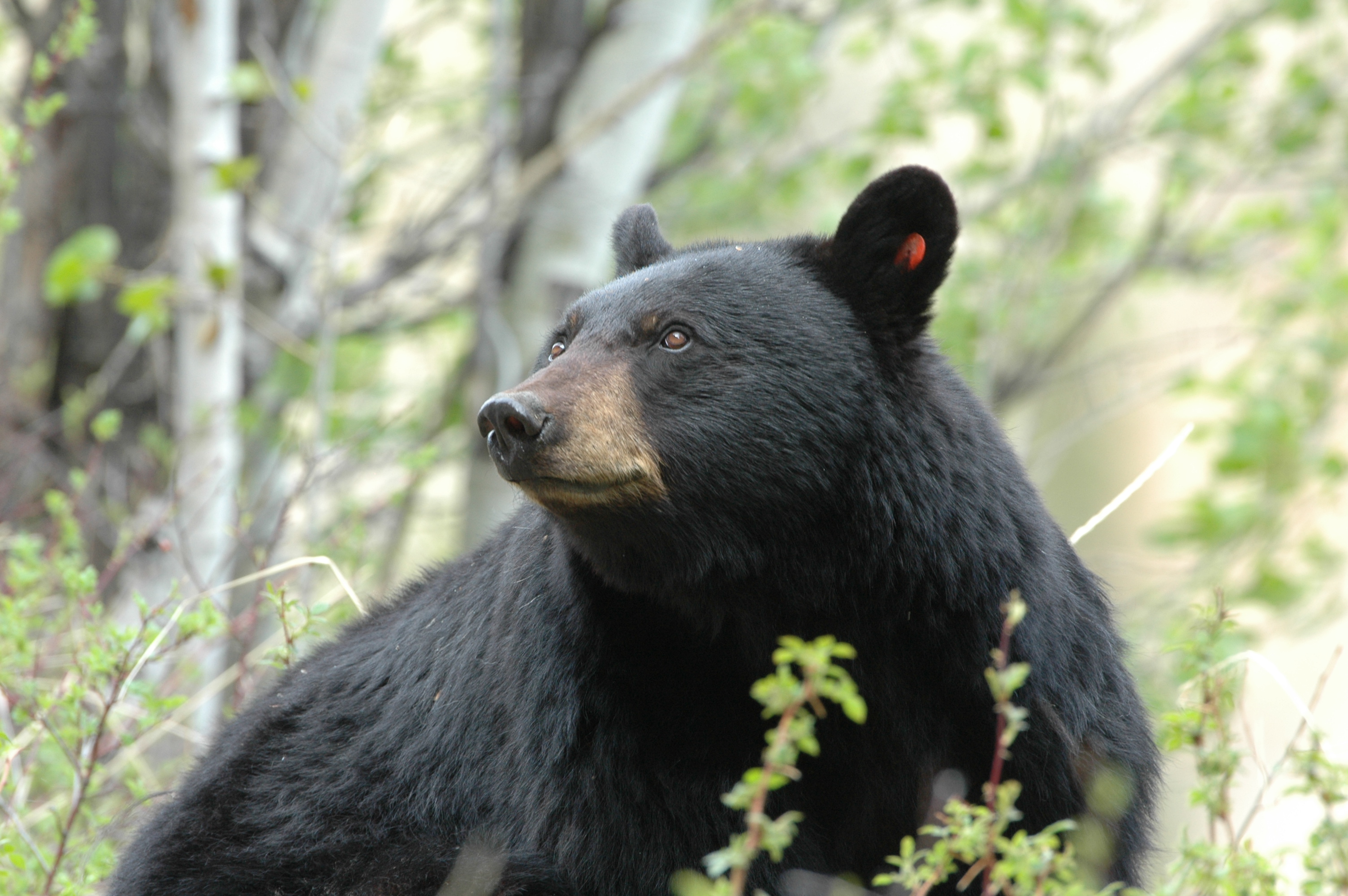
A black bear snacks on birdseed while visiting the home of Greg Perry in Black Mountain this spring.

A black bear snacks on birdseed while visiting the home of Greg Perry in Black Mountain this spring.  /  Special to the Citizen-Times
Written by
Romando Dixson


Anyone with information about a dead, painted bear dumped on a road in Buncombe County is asked to call the N.C. Wildlife Resources Commission at 800-662-7137. Callers may remain anonymous. It is a 24-hour hotline.

ASHEVILLE — As authorities Friday continued their investigation into who killed a bear, painted its head and claws, and dumped the carcass in Buncombe County, the N.C. Wildlife Federation added $17,000 in potential reward money in hopes anyone with information will speak up.

The conservation group’s addition raises the reward pool to $20,000 for the person or persons who provide information that directly leads to an arrest and criminal conviction, civil penalty assessment or forfeiture of property by the perpetrator. The U.S. Fish and Wildlife Service and U.S. Service Forest offered the initial $3,000 in reward money.

The $17,000 is the largest amount of reward money the state Wildlife Federation has offered in a poaching case, CEO Tim Gestwicki said Friday.

“This kind of ridiculous behavior necessitates a large reward to get folks to provide some tips,” he said.

“WHATS BRUIN” was written in white paint on the bear’s head, along with “w-h-a-t-s” across the claws on the right paw and “b-r-u-i-n” across the claws on the left paw, the N.C. Wildlife Resources Commission said Thursday. The carcass was found this week on a road in northwest Buncombe County.

Authorities believe the paint was referencing Operation Something Bruin, a collaborative undercover investigation focused on the illegal poaching of bears and other wildlife in North Carolina and Georgia.

Ten individuals were convicted this month in U.S. District Court of federal charges stemming from four years of undercover work during Operation Something Bruin [see: NC Bear Poachers Finally Getting Punished.] More cases are pending in Haywood County.

It is unclear how the bear was killed, said Lt. Tim Sisk of the N.C. Wildlife Resources Commission.

“We hope the investigation yields results and that the message is crystal clear: poaching, destroying wildlife in any ways, especially cowardly acts of wanton waste in North Carolina, will not be tolerated,” Gestwicki said. “We condemn in full any illegal wildlife violations and remain resolved to assisting state and federal agencies in upholding the regulations and guiding principles of fish and wildlife management.”

The nonprofit conservation group has a wildlife poaching reward fund. Private donors provide the money, Gestwicki said. In July 2012, the state Wildlife Federation offered $15,000 for information about a case in which three elk were shot and killed in May near Great Smoky Mountains National Park.

The group usually provides rewards between $1,000 and $5,000 in poaching cases. Gestwicki said can’t recall such an act and described it as atrocious and intolerable.

“We feel strongly that this malicious and cowardly act of illegal activity has no place in North Carolina,” Gestwicki said. “We are upping the ante to hopefully entice anyone with information to come forth. We are providing these resources to underscore the seriousness we place on the poaching and outright desecration of this animal.”

NC Bear Poachers Finally Getting Punished

Men get prison for poaching in WNC

Four-year probe uncovers illegal bear, deer hunting in WNC national forests

BRYSON CITY — A judge sentenced seven men to time in prison for poaching bears and deer and other illegal hunting activities on national forests in Western North Carolina after they were charged following a years-long law enforcement probe.

The arrests were the result of a four-year undercover investigation called Operation Something Bruin, in which officers infiltrated poaching circles to document violations, said Anne Tompkins, U.S. Attorney for the Western District of North Carolina.

Ten defendants pleaded guilty and were sentenced this week in U.S. District Court in Bryson City by Magistrate Judge Dennis Howell. Seven of the men received prison terms of up to 30 days.

“We anticipate that the success of Operation Something Bruin will send a strong message to poachers and would-be violators to think twice before they engage in illegal hunting activities,” Tompkins said. “Together with our federal and state law enforcement partners we will combine forces to combat illegal hunting, protect our wildlife and conserve our natural resources.”

Officials announced in February that the undercover operation netted 81 wildlife violators and some 980 violations in WNC and northern Georgia. About 100 wildlife officers began serving warrants at the time.

Posing as hunters and using social media to make contacts, officers with the N.C. Wildlife Resources Commission and the Georgia Department of Natural Resources infiltrated groups suspected of poaching.

Officials said the violations included:

• Bear baiting

• Illegal taking of bears, deer and other wildlife;

• Illegal use of dogs: and

• Operation of illegal bear enclosures and guiding hunts on national forest lands without the required permits.

“The continued success of Operation Something Bruin is a fine example of state and federal agencies coordinating efforts to protect the resources of our national forests,” said Steve Ruppert, special agent in charge with the U.S. Forest Service.

More: http://www.citizen-times.com/article/20130615/NEWS/306150024/Men-get-prison-poaching-WNC?nclick_check=1

Photo Copyright Jim Robertson

Photo Copyright Jim Robertson


Elephant Kills His Poacher and People Aren’t Exactly Sad

Speaking of karma…

Elephant Kills His Poacher and People Aren’t Exactly Sad

Since the African elephant population has been devastated in recent years, it’s pretty hard to see things from the poacher’s point of view.

http://www.takepart.com/article/2013/05/15/african-elephant-poacher-killed-zimbabwe?cmpid=tp-ad-outbrain-general

May 15, 2013, by

Noluck Tafuruka may not sound like a lucky man, but he’s lucky to be alive. His “business partner,” Solomon Monjoro, was recently discovered, a crushed corpse in blood-stained bushes. How did it happen? And what was the motive? One really mad elephant that didn’t want to become a poaching statistic.

It all happened last month in Zimbabwe’s magnificent Charara National Park. The two alleged poachers entered the park with firearms, but apparently were not able to immediately kill their target elephant, which took karma into its own hands, or shall we say tusks, and charged, trampling one of the men to death.

The other man, Tafuruka, was arrested shortly thereafter along with one other in the capital city of Harare.

Elephant poaching has soared in recent years thanks to a growing demand for ivory sculptures and trinkets among China’s emerging middle class, who view the items as status symbols. A recent report by the Wildlife Conservation Society estimated that about 62 percent of forest elephants in Africa have been poached over the past ten years. Just this spring, poachers on horseback, armed with AK47s, gunned down almost 90 elephants in Chad in just one week, including 33 pregnant females.

Ivory currently fetches about $1,300 per kilo in China.

This level of destruction would be tragic for any species, but it is especially sickening in this case, because elephants are extremely intelligent creatures with tightly knit family communities, sophisticated communication systems, and, some researchers believe, highly developed emotions.

In recent years there have been increasing reports from throughout Africa that elephants are changing their behavior because of the enormous emotional stress caused by poaching.

“Elephants in areas that have been heavily poached, display an understandable fear of humans,” said Catherine Doyle, Director of Science, Research, and Advocacy at PAWS. “They often display aggressive behavior when approached.”

Joyce Poole of Elephant Voices recounted how a Masai friend in Kenya was noticing a difference too. “When the elephants come down on that old trail, as they do every year, they no longer come down during the day trumpeting their arrival; they now slip down quietly at night, and when we look at the tracks of these animals, we only see small footprints.”

It’s hard to imagine a world without elephants, but it’s almost equally disturbing to imagine a world where majestic elephants have to cower in the bushes like scared rabbits in order to survive.

elephant-range-map

On to Other Important Issues

It’s Election Day and you’re probably on pins and needles waiting to find out which lucky candidate will be the next President of the United States. But I want to talk about something more important.

I don’t have anything in particular in mind. It could be the weather (or more specifically, how the weather is changing because of global warming). Or, it could be the rhino poaching problem in Africa, the dolphin slaughter going on right now in Japan or the perilously low numbers of big cats left on the planet. Or how, for some people, attitudes towards wolves haven’t changed since the barbarically backwards days of dark ages past.

The point is, no matter how this hyped-up human election turns out, there are other important issues going on at the same time that aren’t getting the media attention they deserve.

Text and Wildlife Photography ©Jim Robertson

I Call Horse Pucky on That!

As I believe I mentioned in an earlier blog post, the mainstream media is often full of shit—especially when reporting on animal issues. It’s not necessarily that they knowingly or willingly distort the truth, just that they keep re-hashing the same old bovine excrement that they pick up off the AP or some other newswire, without first checking out the facts for themselves.

For example, I can’t count how many times I’ve seen the following statement in papers over the past few days: “Washington Fish and Wildlife officers confirmed on Friday that two more cattle had been killed by Wedge Pack wolves in northern Stevens County.” If I were of a mind to trust the news—or Washington’s Fish and Wildlife officers for that matter—I might think there’s a reason the game department is resuming their lethal “removal” (read: sniping and trapping) of four more pack members.

But a little digging revealed these interesting details: Of the two carcasses found on Diamond M-owned land this Wednesday, one was intact, the other eaten. “We marked ‘confirmed’ on both individuals,” said the agency’s wolf policy coordinator Steve Pozzanghera this morning, “recognizing that there will be some question about confirming on an entirely consumed carcass.”

Damn right there’s “some question,” in fact there’s practically no way of knowing how a calf was killed after it’s been “entirely consumed” by hungry carnivores and/or scavengers!!!  Pozzanghera said at the end of the day, WDFW considered it a kill rather than a calf that had died of other causes and then was subsequently fed on by wolves…

I’m sorry, but if that’s how these “wildlife officers” go about determining whether an animal has been killed by wolves or not, I don’t have any faith in their decision that any calves or cows were ever killed by the Wedge pack. It all seems awfully coincidental to me that an outspoken wolf hater would suddenly start having problems with wolf depredation. It’s a little too reminiscent of when Washington’s first confirmed wolf pack, the Lookout pack, started hanging around convicted poacher Bill White’s ranch—just a mile out of the town of Twisp—of all places. I lived fourteen miles from the White’s place—fourteen miles further up the Twisp River, in a remote setting surrounded by the Lake Chelan Sawtooth Wilderness Area—and I never had a problem with wolves.

After a lengthy and costly police investigation (which resulted only in a measly slap on the wrist for the wolf poachers), it was determined that Bill White and his son set out deer carcasses as bait to attract wolves to the traps they had set for them. As ranchers, White claimed not to want wolves around, yet he lured them onto his property with bait.

How do we know that the folks at the Diamond M ranch aren’t luring in wolves with carcasses of calves who have died of one of the many other causes that cows naturally die from? We don’t. Unfortunately, we can’t count on our Wildlife officers to reveal the truth either. And don’t bother checking the local media; they’re too busy recycling horse pucky to get to the bottom of it.

Text and Wildlife Photography ©Jim Robertson


Leave Wolves the Hell Alone

Northeastern Washington cattle rancher Len McIrvin has made it clear: he really hates wolves—especially members of the local Wedge pack. Though the rancher way of life depends on government handouts and write-offs, he’s been unwilling to accept compensation for the cows he claims to have lost to wolves, fearing it would legitimize protection of the natural predators.

It may not be fair to compare him and his son to poachers Bill White and son, who illegally killed most of the Lookout Pack (Washington’s first confirmed wolf pack to return home from Canada), since the McIrvins appear to operate above board by deferring to the state game department to do the dirty work for them. But they are all cut of the same cloth—cattle ranchers who think wolves serve no Earthly purpose and should be eliminated (once again).

It’s no wonder some ranchers feel they can get away with murder, so to speak. They’ve gotten used to having everything handed to them, ever since the government paid for the cavalry to wage war with the Indians and bankrolled bounties and poisoning campaigns against wolves to make room for their private ranches—and ensure “Manifest Destiny” (the doctrine or belief prevalent in the 19th century that the United States had the God-given right to expand into and possess the whole of the North American continent). But Western ranchers aren’t satisfied with keeping cows on their vast tracts of private land (possibly given to their ancestors free of charge back in the homesteading era); they want the Feds to throw in a few thousand acres of cleared national forest land so they can expand their claim out into the neighboring wildlife habitat.

The US Forest Service contends that grazing fees bring in funds as part of their “Multiple Use” policy, but ranchers contribute only about $1.35 per “Animal Unit Month” (a detached, depersonalizing term for a cow and calf pair feeding for four weeks on public forests). According to a 2005 Government Accounting Office report, that paltry one dollar and thirty-five cent fee covers only a tiny fraction of the grazing program’s administrative costs, making this in essence just another a subsidy program in disguise.

Still, McIrvin feels entitled to prevail upon his buddies in the game department and local politicians to do whatever they can to make the entire Wedge pack disappear. He recently told the Capital Press that the only compensation he’s interested in is a dead wolf for every dead calf, copping a Bill White-like attitude: “This isn’t a wolf problem, we always could take care of our own problems,” adding that the only acceptable option is trapping and poison. Now he’s at it again, making extreme statements in any paper that’ll print them. Yesterday he showed his hand by making this fanatical comment to the Seattle Times: “Wolves have never been compatible with raising livestock.”

Okay, so you want to be an extremist, eh, rancher? (I’m doing the Clint Eastwood talking to a chair bit now…) Go ahead, punk, make my day. Two can play at that game; I’ll show you extreme. Hows about you damned cattle barons gettin’ your cows off my national forest and leavin’ my wolves the Hell alone. The wolves were here first and your poor cows don’t want to be livin’ out on some steep, brushy clearcut anyway. In fact, maybe it’s time you got outta cattle-ranchin’ altogether and started growin’ some healthy, organic crops insteada turnin’ your introduced livestock out into the woods to tempt the wolves and compete with the native deer, elk and moose who belong there.

Text and Wildlife Photography © Jim Robertson