What Could Happen to Walter Palmer and Hunters?

http://www.nbcnews.com/news/world/cecil-lion-what-could-happen-walter-james-palmer-hunters-n400461

What is the legal case against the guides?

The two Zimbabweans — professional hunter Theo Bronkhorst and farmowner Honest Ndlovu — were in court to face poaching charges. Authorities say they did not have the valid hunting permits.
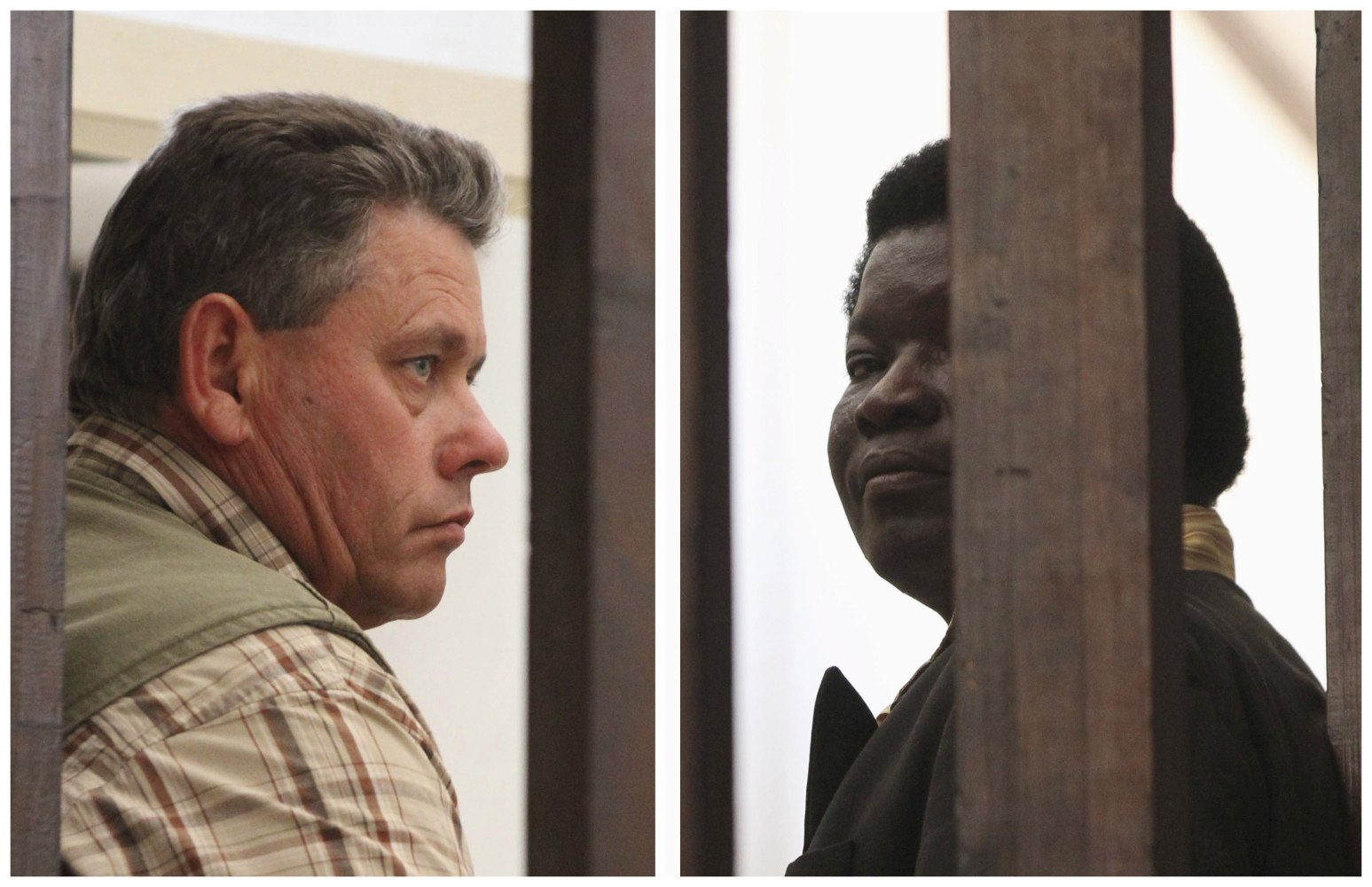
<img class=”img-responsive img_inline” src=”http://media4.s-nbcnews.com/j/newscms/2015_31/1146066/lion-hunters-ejo-072915_d2c2ca3b3a964dcae3fe0d3df2ed6126.nbcnews-fp-360-360.jpg” alt=”Image: A combination photo shows Zimbabwean safari operator Ndlovu and fellow countryman and hunter Bronkhorst waiting to appear in Hwange magistrates court” title=”Image: A combination photo shows Zimbabwean safari operator Ndlovu and fellow countryman and hunter Bronkhorst waiting to appear in Hwange magistrates court” itemprop=”image”/> Image: A combination photo shows Zimbabwean safari operator Ndlovu and fellow countryman and hunter Bronkhorst waiting to appear in Hwange magistrates court
A combination photo shows Zimbabwean safari operator Honest Ndlovu (rigjt) and fellow countryman and hunter Theo Bronkhorst waiting to appear in Hwange magistrates court on July 29, 2015. PHILIMON BULAWAYO / Reuters

Wildlife officials accuse the men of taking $50,000 from Palmer in order to coax Cecil out of the Hwange National Park and onto private land, where he was beheaded and skinned.

Johnny Rodrigues, chairman of the Zimbabwe Conservation Task Force, said Palmer is the one who fatally shot the creature.

Bronkhorst has been stripped of his license while he faces criminal charges, according to a joint statement from the Zimbabwe National Parks and Wildlife Authority and the Safari Operators Association.

Bronkhorst’s bail was set at $1,200 and he’s due back in court in one week. If found guilty, he and Ndlovu could be fined $20,000 and get a sentence of up to 10 years in jail.

What charges could Palmer face — and could he be extradited?

Police would like to question the 55-year-old trophy hunter for his role in the killing, but have not commented on any possible charges.

He may not face any charges depending on the circumstances, according to the U.K.-based charity LionAid, which advocates for the animal’s protection. The group says it is legal to bait lions in Zimbabwe, and even to kill them using a bow and arrow outside of national parks during private hunting trips. Whether or not they’re wearing a radiocollar — Cecil was — also doesn’t matter, the group says.

But the landowner in this case allegedly never obtained a “quota” for the number of lions that could be killed on his property, making it illegal, LionAid said.

Palmer, meanwhile, was merely the “client” and entrusted his guides — a defense that could get him off the hook for any charges, the group added.

Palmer said in a statement Tuesday that he had “no idea” who the lion was and the legalities of the hunt. He added that he has not been contacted by Zimbabwean authorities.

The U.S. does have an extradition treaty with Zimbabwe that covers crimes punishable for more than a year in jail. Minnesota Congresswoman Betty McCollum has asked the U.S. Attorney’s Office and U.S. Fish and Wildlife Service to investigate whether any American laws were violated.

Palmer in 2008 pleaded guilty to making false statements to U.S. wildlife officials about a black bear he had fatally shot in western Wisconsin.

Why was Cecil so celebrated?

The black-maned beast was a fixture of Hwange National Park, making him a local favorite among parkgoers and wildlife researchers. He was named after Cecil Rhodes, a British businessman who was also the namesake for the former southern African territory of Rhodesia, now Zimbabwe.

Since 2008, Cecil was being studied by an Oxford University research program. “The lion, Cecil, was a remarkable individual. Remarkable particularly because we have studied him for so long,” Professor David MacDonald, founding director of the Wildlife Conservation Research Unit at Oxford University, told NBC News.

What could happen to Cecil’s cubs?

Although the exact number of cubs that 13-year-old Cecil fathered is unclear, researchers believe about eight to 10 of them could wind up dead. That’s because in a lion’s social circle, when one male dies, incoming males in a new coalition typically kill the cubs of the old incumbents, MacDonald said.

“The death of one male lion can cause a cascade of effects that leads to other lions being killed,” he said, adding, “We are working hard to follow the consequences of Cecil’s death.”

More: http://www.nbcnews.com/news/world/cecil-lion-what-could-happen-walter-james-palmer-hunters-n400461

Two Zimbabweans freed on bail in death of Cecil the lion

http://www.cnn.com/2015/07/29/africa/zimbabwe-cecil-the-lion-killed/

(CNN)Two men arrested in the death of Cecil the lion — a case in which an American dentist has also been accused, unleashing a torrent of anger online — were released Wednesday by a court in Zimbabwe on $1,000 bail each.

Theo Bronchorst, a professional hunter, and Honest Trymore Ndlovu, a land owner, both Zimbabweans, said through their attorney that they were innocent of poaching charges, which officials said could bring a sentence of 10 years in prison.

Zimbabwean authorities said that Walter J. Palmer, a dentist from Minnesota, paid at least $50,000 for the hunt. Palmer has said he relied on the expertise of local guides “to ensure a legal hunt.”

But the lion that he and his local guides killed wasn’t just any lion, according to Zimbabwean officials.

He was Cecil, a major tourist draw at Zimbabwe’s Hwange National Park.

The 13-year-old lion, recognizable by the black streaks in his mane, suffered a slow death, according to the Zimbabwe Conservation Task Force.

The hunters lured him out of the sanctuary of the park with a dead animal on top of a vehicle, the conservation group said.

Palmer, officials said, then shot the lion with a crossbow, a method for which he is known. But Cecil survived another 40 hours until the hunters tracked him down and shot him with a gun.

Walter J. Palmer, left, a U.S. hunter wanted in the killing of Zimbabwe's Cecil the lion, poses with a dead ram.

<img alt=”Walter J. Palmer, left, a U.S. hunter wanted in the killing of Zimbabwe's Cecil the lion, poses with a dead ram.” class=”media__image” src=”http://i2.cdn.turner.com/cnnnext/dam/assets/150728212459-03-walter-james-palmer-large-169.jpg”>

Cecil was skinned and beheaded, and the hunters tried to destroy the GPS collar that Cecil was wearing as part of research backed by Oxford University, the group said.

“I had no idea that the lion I took was a known, local favorite, was collared and part of a study until the end of the hunt,” Palmer said Tuesday in a statement. “I relied on the expertise of my local professional guides to ensure a legal hunt.”

Torrent of anger online

His alleged role in Cecil’s death brought a wave of online anger crashing down on him.

The Yelp page for his dental practice in Bloomington, Minnesota, was inundated with reviews posted by people irate over his lion hunting.

Only four northern white rhinos are left

<img alt=”Only four northern white rhinos are left ” class=”media__image” src=”http://i2.cdn.turner.com/cnnnext/dam/assets/150728201741-northern-white-rhino-large-169.jpg”>

Only four northern white rhinos are left

MUST WATCH

Only four northern white rhinos are left 01:10
PLAY VIDEO

“Shame on you, killing a majestic creature,” wrote a user named Charmie P.

The website for Palmer’s business, River Bluff Dental, appeared to have been taken down.

A torrent of outrage flowed on social media, with celebrities such as Sharon Osbourne lambasting the dentist.

“I hope that #WalterPalmer loses his home, his practice & his money,” Osbourne tweeted. “He has already lost his soul.”

At least $50,000 allegedly paid for hunt

Investigations suggest the killing of Cecil was illegal because the land owner “was not allocated a lion on his hunting quota for 2015,” said a statement from the Zimbabwe Parks and Wildlife Management Authority and Safari Operators Association of Zimbabwe.

The dentist said in his statement that no authorities in Zimbabwe or the United States had contacted him but that he would assist them in any inquiries.

“I deeply regret that my pursuit of an activity I love and practice responsibly and legally resulted in the taking of this lion,” Palmer said.

#WalterPalmer: Internet seeks revenge for Cecil the lion

At least $50,000 allegedly paid for hunt

Investigations suggest the killing of Cecil was illegal because the land owner “was not allocated a lion on his hunting quota for 2015,” said a statement from the Zimbabwe Parks and Wildlife Management Authority and Safari Operators Association of Zimbabwe.

The dentist said in his statement that no authorities in Zimbabwe or the United States had contacted him but that he would assist them in any inquiries.

“I deeply regret that my pursuit of an activity I love and practice responsibly and legally resulted in the taking of this lion,” Palmer said.

Dentist’s enthusiasm for hunting with bow and arrow

But Cecil’s killing doesn’t appear to be the first time Palmer has got into trouble while hunting.

A man by the same name and age, and from the same town, illegally killed a black bear in Wisconsin several years ago, according to court documents.

That individual pleaded guilty to making false statements knowingly to the U.S. Fish and Wildlife Service, and was sentenced to one year on probation and ordered to pay a fine of nearly $3,000, records show.

A New York Times article in 2009 that profiled Palmer and his hunting methods said he had served a year of probation over the false statements case.

Palmer, right, poses with a dead black-tailed deer. The dentist said he "deeply" regrets killing Cecil the lion.

<img alt=”Palmer, right, poses with a dead black-tailed deer. The dentist said he "deeply" regrets killing Cecil the lion.” class=”media__image” src=”http://i2.cdn.turner.com/cnnnext/dam/assets/150728212457-02-walter-james-palmer-large-169.jpg”>

The Times article detailed Palmer’s skill and enthusiasm for using archery rather than firearms to slay animals.

He is “said to be capable of skewering a playing card from 100 yards with his compound bow,” it said, recounting his killing of a large elk with an arrow in Northern California.

More: http://www.cnn.com/2015/07/29/africa/zimbabwe-cecil-the-lion-killed/

When is it hunting and when is it poaching?

http://www.bbc.com/news/world-africa-33699347

Cecil the lion was a renowned figure in Zimbabwe’s Hwange National Park.

Earlier this month, however, American dentist Walter Palmer paid roughly $50,000 (£32,000)for the chance to kill the popular animal, although he says he was unaware of Cecil’s fame and reputation.

That prompted revulsion from many on social media, with tens of thousands signing a petition calling for Cecil’s killer to be brought to justice.

But what is the difference between hunting an animal and poaching?

What is poaching?

The crucial distinction to be made between poaching and hunting is where each sits in the eyes of the law. Put simply, poaching is hunting without legal permission from whoever controls the land.

Hunting lions is not prohibited per se in Zimbabwe, and indeed in many other countries in Africa. Hunting is regulated by the government, and hunters must obtain permits authorising them to kill certain animals.

Tourists who wish to hunt in the country may do so. Where and what they hunt, and what type of weaponry they use, is all the subject of regulation.

Foreigners hunting in Zimbabwe must be accompanied by a licensed professional hunter, and tour operators which sell hunting packages to tourists are regulated by the government.

Browsing online, it is possible to find package hunting trips in Zimbabwean game reserves for around $50,000 – about the same amount Mr Palmer says he paid for the hunt which has earned him global infamy.

The dentist who has attracted numerous unwanted headlines over the last couple of days, has insisted that he believed “everything about this trip was legal and properly handled”, prior to killing Cecil the lion.

Why do people poach?

Some animals, such as elephants and rhinos, attract poachers because selling their tusks can prove extremely lucrative.

Earlier this year, Kenya’s president set fire to a pile containing 15 tonnes of seized elephant ivory with an estimated value of more than $30 million (£19 million).

Uhuru Kenyatta lamented that the tusks had been taken from elephants which had been “wantonly slaughtered by criminals”.

Rhino and elephant tusks are routinely exported to Asia, where ivory is used to make ornaments, and in traditional medicines.

For some, like Walter Palmer, however, the act of hunting itself is the attraction. That, and the prospect of a “trophy”, such as a lion’s head, after the kill is made.

Since he acknowledged having killed Cecil, photographs of the hunter with the carcasses of other animals have been widely shared online.

He has expressed regret that “my pursuit of an activity I love” had resulted in the death of such a popular animal.

It is estimated that more than 650 lion carcass “trophies” are exported from Africa each year.

What are the effects of poaching?

The main argument against unauthorised hunting is the effect it has on the numbers of animals living in the wild.

The level of public outcry when a case such as the slaying of Cecil the lion comes to the fore is accentuated by the fact that poachers often target some of the planet’s most impressive and treasured creatures.

The Born Free Foundation estimates that between 30% and 50% of Africa’s lion population has been wiped out over the course of the last two decades. Just 32,000 of the animals remain in the wild.

Can hunting have a positive impact?

Hunting big game in its natural habitat is undoubtedly an attractive prospect for some tourists – and something many are willing to pay tens of thousands of dollars to experience.

Emmanuel Fundira, president of the Safari Operators Association of Zimbabwe, has described Cecil’s killing as a “tragedy” for tourism in Zimbabwe.

Critics say the money paid by trophy hunters rarely reaches those most in need
Critics say the money paid by trophy hunters rarely reaches those most in need….
More: http://www.bbc.com/news/world-africa-33699347 

One Shot During Confrontation With Hunters

 http://www.northescambia.com/2015/07/one-shot-during-confrontation-with-hunter

  • July 20, 2015

    One person was shot after getting into an argument with hunters northeast of Munson Saturday night.

    According to witness accounts, there were several individuals deer hunting the area of Green Road and Yearling Lane. A confrontation began between the group of hunters and and another individual, the Santa Rosa County Sheriff’s Office said.

    At one point during the confrontation, a gun was pointed at the group of hunters when a shot was heard. The individual who was pointing the gun at the group was shot with a high powered rifle during the incident, the Santa Rosa County Sheriff’s Office said. The victim was airlifted to an area hospital.

    The victim remained in the hospital late Sunday recovering from a gunshot wound; their exact condition was not available.

    Detectives with the Santa Rosa County Sheriffs are actively working this investigation. The individual who shot the victim was identified and is being questioned about the incident.

    More information has not been released.

Does This Mean “Bear” “Has to Go” too?

Killer Alligator Killed In Eastern Texas

An alligator that was illegally poached in Texas on Monday has been identified as the one that attacked and killed 28-year-old Tommie Woodward early last Friday morning.

Woodward ignored posted and verbal warnings about alligators at a marina in eastern Texas and dove into the water late at night. A gator quickly grabbed him and dragged him under the water, where he died.

A game warden found his body shortly after, about 200 yards from the scene. Woodward died from drowning, an autopsy found, but the gator had severed his left arm below the elbow.

A customer at the same marina who identified himself only as “Bear” brought in the dead alligator on Monday, saying he’d baited it with a chicken and then shot it in the head, according to the Houston Chronicle. “He had to go,” “Bear” said. “That’s what happens when you kill someone.”

alligator attack

Texas game wardens get assistance from Orange firefighters as they lift the body of an alligator into the back of a truck at Burkart’s Marina, Monday, July 6, 2015, in Orange, Texas.

More: http://www.huffingtonpost.com/2015/07/07/killer-alligator-killed_n_7743910.html?utm_hp_ref=green&ir=Green

Island Nation Burns Boats to Deter Illegal Fishing

The president of Palau decries those who are “raping our marine environment.”

3 / 

Texas game warden wounded while illegally hunting avoided felony charges, kept job

http://www.dallasnews.com/news/state/headlines/20150705-texas-game-warden-wounded-while-illegally-hunting-avoided-felony-charges-kept-job.ece

AUSTIN — A Texas Parks and Wildlife game warden who was illegally hunting when he was shot in 2013 was allowed to keep his job and face a fine rather than felony charges, according to a newspaper report Sunday.

Off-duty Game Warden Chris Fried was bow hunting without a permit when he was shot in December 2013. But he had also hunted without permits at least three times during the 2013-2014 license year, an investigation by the Austin American-Statesman found.

Instead of facing felony charges or dismissal upon his shooting, though, Fried got a ticket for about $800.

That’s because a Parks and Wildlife Department-led investigation found Fried transitioned “into a game warden law enforcement mode” just before he was shot. That let him file for workers’ compensation for the injury.

The state agency that issues workers’ compensation won’t say whether Fried received money. However, state rules say an insurance carrier isn’t liable for an injury suffered during off-duty recreational activity.

Two men from Illinois were charged in connection with Fried’s shooting, but their lawyers say it was an accident.

Parks and Wildlife Department spokesman Josh Havens said the agency “stands by the accuracy of its internal investigation.” He said Fried didn’t receive preferential treatment.

Fried disclosed his violation of hunting rules while still hospitalized and recovering from the shooting. Last fall, he got a reprimand from his Parks and Wildlife Department superiors.

In a response from last July to state inquiries about why he violated hunting rules, Fried wrote, “I have no excuses for my actions.” Among his hunting violations: killing a white-tailed buck on public land without a permit, which is punishable as a state jail felony.

Instead, authorities filed misdemeanor charges against Fried that resulted in a fine of $769.88. Havens said that’s consistent with how Texas typically prosecutes illegal hunting.

Over the past five years, there have been 10 charges filed for hunting on public lands without the proper permit that also involved the illegal taking of a deer. And all were misdemeanors that required restitution to be paid for the illegal harvest of dear.

State officials also eventually directed that Fried be suspended without pay for 30 days and be made ineligible for promotion or pay increases for two years. He also was banned from hunting on any Texas wildlife management area as long as he remains a Texas Parks and Wildlife employee. But the workers’ compensation wasn’t addressed.

This past January, Fried also was ordered to attend the ethics class at the game warden training academy as part of continuing discipline for his hunting violations.

Police reports say the shooting occurred when the men arrested were in the barn at a private ranch and one of them fired a rifle at a sign attached to the boundary fence separating the private property from the state wildlife management area. Just then, Fried was making his way through the woods.

The shooter, initially charged with a felony, eventually received two years of deferred adjudication, but only for damage to the fence. Other charges were dismissed, attorneys said.

The shooter’s friend still faces a misdemeanor charge of not reporting the accident.

Protect Imperiled Elephants and Wolves

From HSUS.org…

On June 16, the House Appropriations Committee will vote on a harmful federal bill that would protect ivory traffickers and open up trophy hunting and commercial trapping of wolves. Some members of Congress slipped language into an annual spending bill that would block the U.S. Fish and Wildlife Service from cracking down on the illegal ivory trade. Approximately one African elephant is poached every fifteen minutes, putting the species on a path toward extinction in our lifetime.

This language would also force the removal of gray wolves from the Endangered Species Act, resuming the mass killing of wolves in the Great Lakes. The best available science shows that gray wolves, which only occupy a tiny portion of their historic range, need to maintain their federal protections.

TAKE ACTION
Please make a brief, polite phone call to your U.S. Representative today You can say: “I’m a constituent and I would like you to protect wolves and elephants. Please oppose any Interior Appropriations riders that allow the illegal ivory trade in the U.S. to continue unchecked and that remove federal protections for endangered gray wolves.”

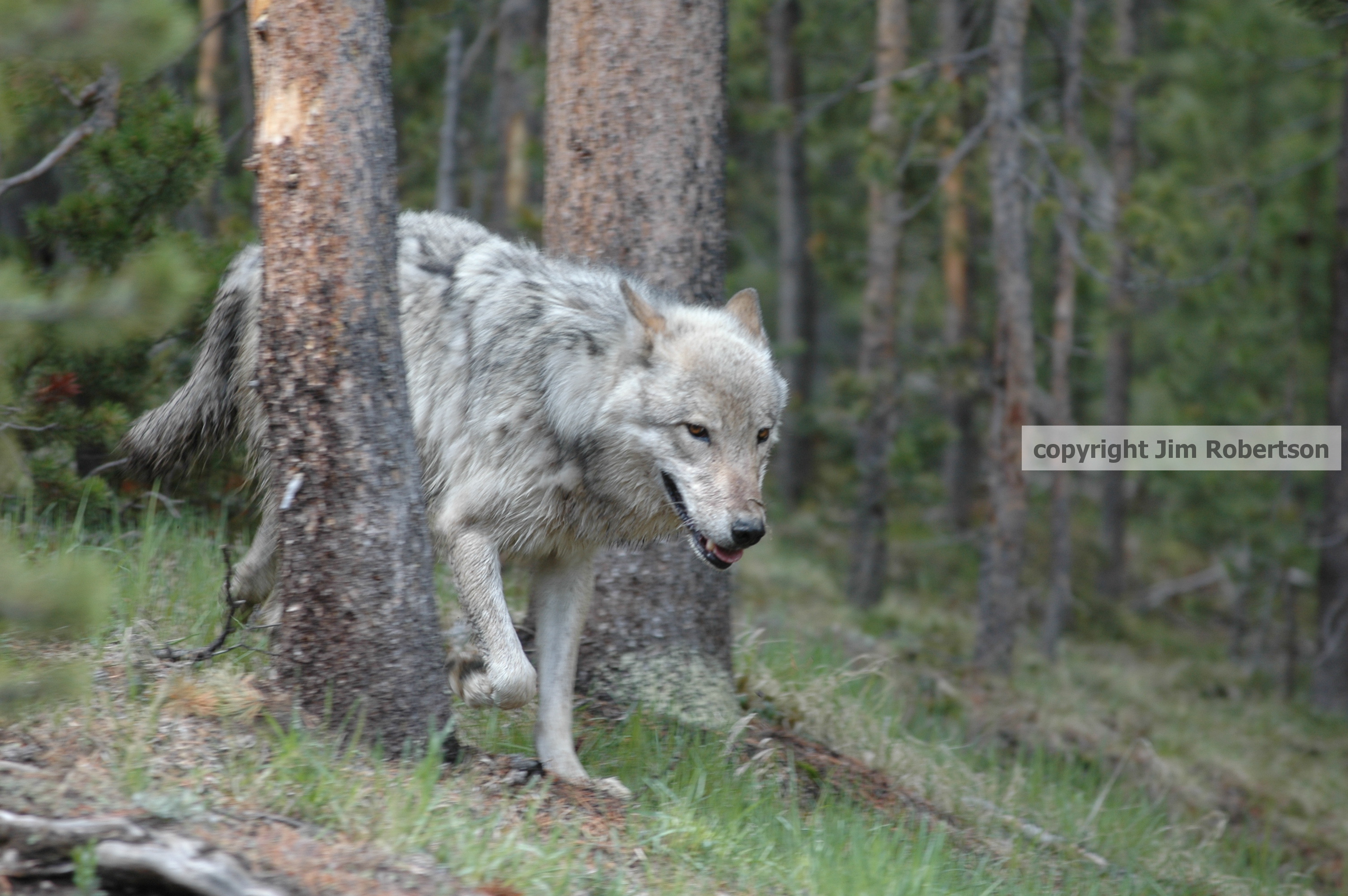
copyrighted Hayden wolf in lodgepoles

Dr. Goodall Applauds China’s Action to End the Domestic Sale of Ivory

Monday, June 1, 2015 – 11:53am
In a statement from today, Dr. Jane Goodall congratulates China on their announcement to end the domestic sale of ivory. Dr. Goodall and the Jane Goodall Institute appluad the government’s destruction of 1,500 pounds of their ivory stocks, expressing their commitment to supporting the international action against the poaching of elephants and rhinos.

If we could stop the demand from the world’s two largest ivory markets – China and the United States – we could turn the tide on illegal poaching. Illegal poaching has taken 64 percent of Central Africa’s elephants in the last decade alone. The only way we will put an end to this senseless slaughter is to put an end to the market for ivory. I applaud China’s action and urge them to do more in hopes that other countries will follow their lead, both in banning ivory and in cracking down on its illegal trade.
Sincerely,
Jane Goodall, Ph.D., DBE
Founder, the Jane Goodall Institute &
UN Messenger of Peace
the Jane Goodall Institute-USA Headquarters
1595 Spring Hill Road | Suite 550 | Vienna, VA 22182

Phone 703.682.9283 | Fax 703.682.9312

Reward Offered in Astoria, Oregon Sea Lion and Harbor Seal Shootings

Photo @ Jim Robertson

Photo @ Jim Robertson

May 28, 2015

The Humane Society Wildlife Land Trust

The National Oceanic and Atmospheric Administration is investigating the deaths of approximately ten California sea lions and one harbor seal found floating in the waters near Astoria, Oregon, over the past two months. The Humane Society of the United States and the Humane Society Wildlife Land Trust are offering a $5,000 reward for information leading to the identification, arrest and conviction of the person or persons responsible.

According to NOAA, multiple expended shell casings of various calibers were found during the months of April and May on the causeway at the East End Mooring Basin and at the water’s edge at the foot of 9th Street in Astoria. The deceased sea lions and harbor seal were found floating in the vicinity. The locations of the shell casings are known haul-out areas for marine mammals. The cause of death for the animals was determined to be gunshot wounds.

A recent rash of sea lion killings is coinciding with a die-off of sea lions in Southern California that has seen stranding response centers in California scrambling to rescue over 2,000 starving young animals.

Scott Beckstead, Oregon state director for The HSUS, said: “It is ironic that, on one hand we see humans reaching out to help suffering animals at the same time that others are breaking the law and killing them. Shooting sea lions and harbor seals is a violation of the Marine Mammal Protection Act and is punishable by criminal penalties up to $100,000 and one year of imprisonment. Civil penalties up to $11,000 per violation may also be assessed. The HSUS is grateful for NOAA’s work to investigate this crime and hope someone comes forward with information.”

Anyone with information concerning the shootings is asked to call NOAA’s Office of Law Enforcement in Astoria, Oregon, at 503-325-5934 or the NOAA Enforcement Hotline at 1-800-853-1964. Callers may remain anonymous.

Media Contact: Naseem Amini: 301-548-7793; namini@humanesociety.org