Exposing the Big Game

Forget Hunters' Feeble Rationalizations and Trust Your Gut Feelings: Making Sport of Killing Is Not Healthy Human Behavior

Exposing the Big Game

Botswana elephant poaching ‘no hoax’

Elephants in BotswanaImage copyrightAFP

One of the last elephant sanctuaries in Africa has “a significant elephant-poaching problem”, according to the final results of an aerial wildlife survey in Botswana seen by the BBC.

Elephants Without Borders, which conducted the four-yearly survey with the government, said there was a six-fold increase in the number of “fresh” or “recent” elephant carcasses in northern Botswana amid “obvious signs” of poaching.

Mike Chase, the scientist who carried out the survey, sparked a fierce debate in the country when he went public half-way through his study in August last year with accusations there was a poaching problem and alleging the authorities were ignoring him.

Media captionDozens of dead elephants have been discovered in poaching hot spots in Botswana, Africa

He told the BBC at the time that while flying over northern Botswana, he had discovered 87 recently killed elephants in one “hotspot” area – a number now revised to 88 – and 128 overall.

The government called his figures “false and misleading” and criticised “unsubstantiated and sensational media reports”.

He received death threats and has since had one of his two research licences suspended by the government.

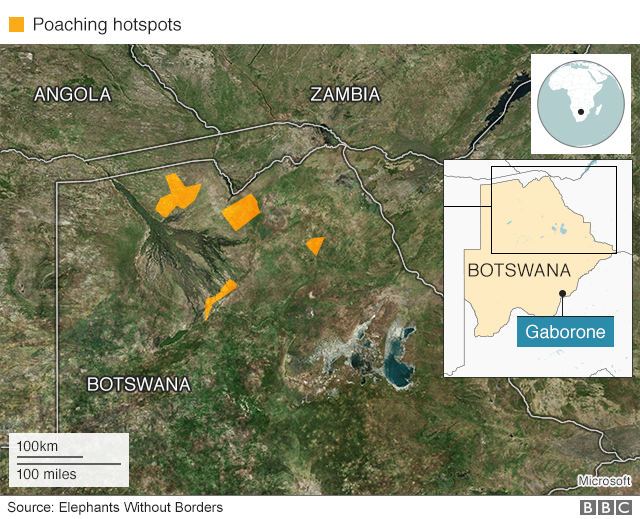
Poaching hotspots

President Mokgweetsi Masisi at the time described the allegations as the “biggest hoax of the 21st Century” and denied there had been a spike in poaching in the country.

But the final report identifies four poaching hotspots, provides photographic evidence from ground surveys and has been peer-reviewed by nine international elephant experts.

“The response from… various people was to try and deny or whitewash – label me a traitor and a liar – without having actually verified the evidence we bore witness to,” said Mr Chase.

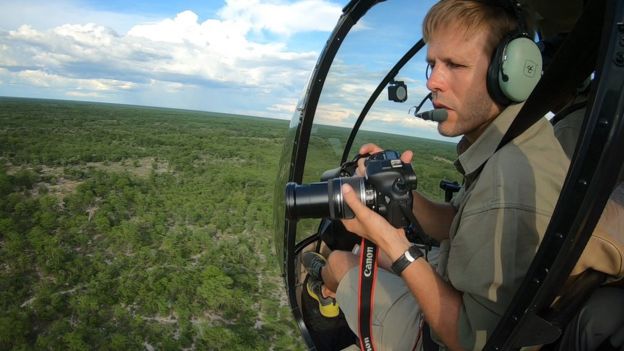
Man taking photographs from a helicopter
Image captionMike Chase said he found a six-fold increase in the number of “fresh” carcasses in northern Botswana

The government didn’t respond to the BBC’s request for an interview about the final report, but issued a statement criticising the methods used in carrying out the survey.

The statement from Thato Raphaka, permanent secretary of the Ministry of Environment, Natural Resources Conservation and Tourism, said it was “regrettable” the report showed an “astonishing number of pictures of dead elephants”.

It was critical of some of the scientific details in the report and requested the raw data to be submitted to the elephant specialist group at the International Union for Conservation of Nature for further independent review.

Otisitwe Tiroyamodimo, the director of the Department of Wildlife and National Parks, said the government acknowledged there was a poaching problem.

“Nobody can deny that elephants are being killed in Botswana,” but those reported by Mr Chase had mainly died “from natural causes and retaliatory killings.”

“We went there and we couldn’t find the 87 carcasses,” said Mr Tiroyamodimo.

Tusks missing

The authorities flew with Mr Chase but admit they spent only two days trying to verify carcasses seen over two months.

The BBC was given permission by the government to have access to the coordinates of one of the four areas identified as a “poaching hotspot” by the research team, and we visited the sites of 67 elephant carcasses.

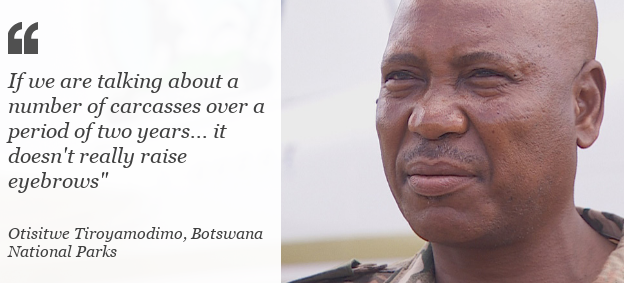
Quote: If we are talking about a number of carcasses over a period of two years it doesn't really raise eyebrows,"

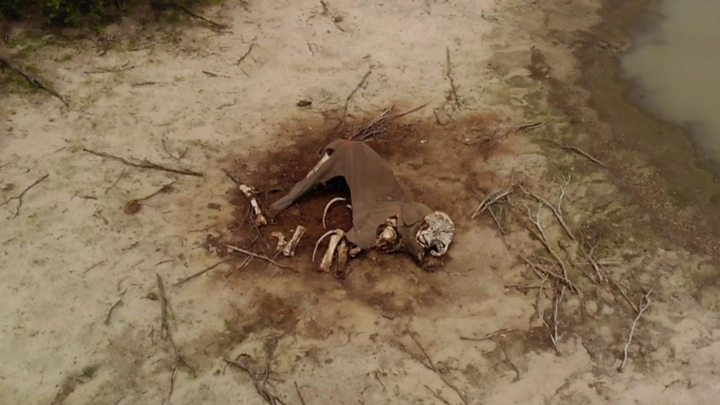
A few had apparently died of natural causes, but most had the characteristics associated with being poached: tusks were missing and branches had been used to cover the bodies to prevent them being found.

But Botswana is home to 130,000 elephants – a third of the total number in Africa – and it is an obvious target for poachers.

Even when extrapolating poaching figures from the sample found in the survey, the numbers killed will not have a major impact on such a large population.

“If we are talking about a number of carcasses that have accumulated over a period of two years, given the population of elephants in Botswana it doesn’t really raise eyebrows,” said national parks director Mr Tiroyamodimo.

Map showing the poaching hotspots

This was not satisfactory for Mr Chase.

“At what point do we say we have a problem?” he asked.

“Is it at 10? 50? 100? 150? 1,000? Lessons have taught us – when we look at Tanzania that lost 60% of its elephant population in five years – that’s how quickly poaching can settle into a population.

“We saw with our own eyes 157 confirmed poached elephants. We estimate that the total poached in the last year is at least 385 and probably far more because that is based on what we actually saw and have not had time or finances to visit all carcasses on the ground.”

But the storm over the reported spike in poaching appears to have more to do with Botswana’s bitter and complicated new politics than its wildlife.

Political feud

President Masisi was vice-president until April 2018, when then-President Ian Khama handed power over to his deputy.

Since then the two men have fallen out.

The new president has his own vision on a number of issues, among them conservation, and has reversed some of the previous policies.

Hunting was banned under President Khama and Botswana was known for a zero-tolerance approach to poachers.

It was reported that in 2015 alone 30 Namibians, 22 Zimbabweans and an unknown number of Zambians were shot on suspicion of poaching.

Presentational grey line

Humans v elephants

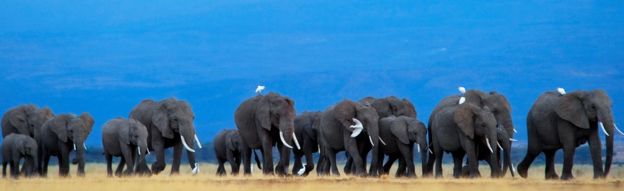
Herd of elephantsImage copyrightGETTY IMAGES

Elephants can be very destructive when they encroach on to farmland and move though villages – destroying crops and sometimes killing people. Many rural communities believe the number of elephants is increasing, even though there is no evidence of this from scientific surveys.

But their “range” – how far the elephants travel – is expanding for a number of different reasons and that is increasing conflict between wildlife and humans. Many people believe this worsened after hunting was banned in 2013, and want it to be re-introduced.

The government has to balance lifting the hunting ban to win votes against the impact it may have on Botswana’s international reputation as a luxury safari destination.

Presentational grey line

President Masisi removed “weapons of war” from the national parks’ small anti-poaching unit, saying they were illegal for non-military officers.

A consultation he initiated has just recommended that the hunting ban be lifted and that elephants be culled and their meat canned for pet food.

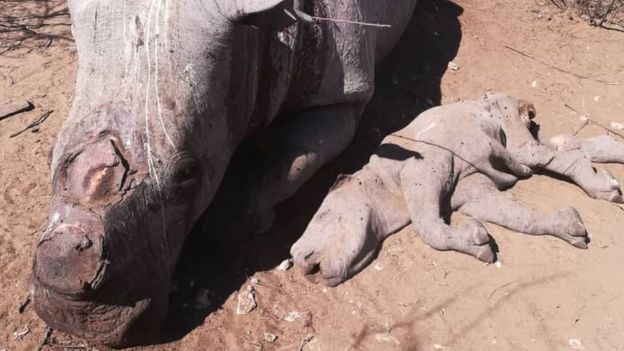
Two dead rhinos, one a calf, in Botswana
Image captionThirteen rhinos have also been killed by poachers in the last year

Botswana is also now backing regional efforts to lift a ban on the ivory trade.

The two men are locked in a political feud ahead of a party congress which will choose a new leader, with national elections due later in the year.

Mr Chase has a close relationship with the former president, so the timing of his allegations has been seen by some as a political attack on the new president – even if the final report provides evidence that poaching was going on before Mr Masisi took office.

Botswana attracts high-end tourists from across the world because of its international reputation for successful conservation.

But with the continuing political storm – and a dependency on government permits to run high-end safaris – few of the big safari operators would comment on how big a problem poaching has become.

‘Don’t shoot the messenger’

Thirteen rhinos have been killed by poachers in the last 12 months – an unprecedented number.

David Kays, who owns Ngamiland Adventure Safaris in the Okavango Delta, said it was time to admit there was a poaching problem and work together to deal with it.

“I think the government has been hiding it for a while, and now that it’s been brought out into the open, we’re now realising how serious the problem is, and these big poachers have actually infiltrated further than we expected them to be.”

Kim Nixon from Wilderness Safaris
Image captionKim Nixon from Wilderness Safaris says all cases of poaching are reported

Wilderness Safaris operates luxury lodges in one of the concessions where some of the 88 carcasses were found.

Its chief executive Kim Nixon rejected any suggestion there was a denial of the problem.

“Whenever poaching has occurred in any of our concession areas, each and every incident has been reported as a criminal case,” he said.

“We’re not in any way mandated or allowed to do any anti-poaching – our role at best is monitoring.”

Mr Chase says “don’t shoot the messenger” adding: “I think it requires all stakeholders working together – government, private, public sectors, the NGOs.”

Botswana is still the safest place in the world to be a rhino or an elephant, but with a continuing demand for ivory in Asia, it is now firmly in the poachers’ sights.

IVORY TRADE: NOT JUST AN ELEPHANT CRISIS

IT’S NOT JUST ELEPHANTS THAT ARE THREATENED BY PEOPLE’S DESIRE FOR IVORY. AS PART OF OUR ELEPHANTS IN CRISIS CAMPAIGN, BORN FREE’S HEAD OF POLICY DR MARK JONES EXAMINES THE OTHER ANIMALS AT RISK

Ending the ivory trade is key to securing a future for the world’s elephants, more than 20,000 of which are killed by poachers each year for their tusks. The international community is finally waking up to this theat. The USA and China have already introduced near-total bans. France has tightened up its legislation. Taiwan and Hong Kong have committed to act. In the UK, the Ivory Bill is currently working its way through Parliament.

These measures are encouraging, and while much remains to be done, they bring hope that one day the slaughter may end.

But it’s not just elephants that are threatened by people’s desire for ivory. The teeth from several other species, including hippos, walruses and narwhals, are also on the traders’ and traffickers’ wish lists.

Common hippos are much less common than elephants – as few as 115,000 remain across their rapidly reducing range in sub-Saharan Africa. Yet more than 38,000 individual teeth, 26 tonnes of teeth by weight, 6,550 hippo tusks, almost 6,500 ‘carvings’, and various other hippo products were legally traded between countries in the 10 years to 2016 – many destined for EU Member States.

Walruses are also in demand for their ivory. Between 2007 and 2016, more than 150,000 carvings, 12,500 items of ‘jewellery’, and various other walrus items including teeth and tusks were declared to have been traded internationally.

The distinctive long helical ‘tusk’ of the male narwhal, which is actually an elongated canine tooth, is also coveted. More than 2,500 tusks, 2,100 carvings and various other products from these toothed whales were traded commercially between countries in the decade to 2016.

Other species such as warthogs are also targeted for their teeth, although because they are not currently classified as threatened, data on international trade is lacking.

While the international community is rightly focused on protecting elephants, we must not forget that the trade in ivory for trinkets and carvings also threatens several other species. Some UK traders have already flagged increasing interest in hippo ivory as a replacement for elephant ivory to maintain the value of some objects from which the ivory has been lost or broken, or as a means of getting around a future ban on elephant ivory.

The UK’s Ivory Bill is very welcome, but it currently only covers elephant ivory. Thanks to Born Free’s efforts, the Government has committed to consulting on extending the ban to other ivory-bearing species once the Bill becomes law. For the sake of hippos, walruses, narwhals and others, we must hold them to this commitment, so the UK can act as an example to the rest of the world.

These precious and diminishing wild animals will only be safe once we end the demand for, and trade in, all ivory products for good.

https://www.bornfree.org.uk/articles/ivory-bearing-species

MALAWI REMAINS FREE FROM TROPHY HUNTING!

December 21, 2018

http://www.lilongwewildlife.org/> Lilongwe Wildlife Trust

Great news.the Government have confirmed that they have rejected the hunting
proposal!

Following debate on the introduction of trophy hunting inside Malawi’s
protected areas, we collected over 3,500
<http://www.lilongwewildlife.org/no-hunting-in-malawi/> petition signatures
in the first 48 hours – thank you so much to all who signed and shared it.
Read the statement
<http://www.lilongwewildlife.org/government-statement-on-trophy-hunting/>
here.

Special thanks go to the Malawi Parliamentary Conservation Caucus for their
strong stance. Hon Commodius Nyirenda, MP and MPCC Spokesperson, said,
“Public opinion reflects that of the Malawi Parliamentary Conservation
Caucus: that trophy hunting is not welcome in Malawi. We value our
reputation as a tourism destination too highly. And – where legal hunting
can be used as a cover for illegal wildlife trade and undermine community
sensitisation efforts – we believe that the questionable revenue is not
worth the associated risks that could ultimately undermine conservation
efforts.”

Thanks also to PASA, the Born Free Foundation, Olsen Animal Trust, Love
Support Unite and Green Paw for their extra support.

Merry Christmas everyone!

* <http://www.lilongwewildlife.org/trophy-hunting-resources

Taiwan nabs truck-load of illegal shark meat

Fisheries Agency seizes over 30 tons of illicit shark meat in southern Taiwan

Over 30 tons of contraband shark meat. (Image courtesy of Fisheries Agency)

Over 30 tons of contraband shark meat. (Image courtesy of Fisheries Agency)

TAIPEI (Taiwan News) – Taiwan authorities seized over 30 tones of illegal shark meat at Kaohsiung Xiagang Fishing Harbor (高雄小港漁港) on Sept. 5, the Fisheries Agency (漁業署) said in a statement yesterday.

The seizure is the biggest haul since revised offshore fishing rules entered into force in 2006, according to the Fisheries Agency.

Fishing of silky shark is banned by the Western and Central Pacific Fisheries Commission, which led Taiwan to do the same.

30 tons of silky shark (carcharhinus falciformis) meat was seized during an inspection of a small fishing boat named “Jin-chang 6” (金昌6號). The boat came under suspicion after authorities noted the vessel made unscheduled stops in two other fishing ports.

The suspicious catch was confirmed to be that of the banned silky shark days later, after a positive DNA test, which led the contents of the boat to be seized on Sept. 13.

The Fishery Agency said that according to relevant regulation, the boat operators face of a fine of between NT$2-10 million (US$65,000-325,000), and potential revocation of fishing licenses.

The Fisheries Agency urges the public to not catch illegal aquatic animals, adding it has set up a 24-hour monitoring center to tackle illegal fishing.

Although some forms of shark are legal to eat in Taiwan, the practice has gained increasing opposition from environmental groups. According to a recent survey by the WildAid and Life Conservationist Association found 76 percent of Taiwanese people surveyed had eaten shark fin soup in the past three years, but only 32 percent within the last year.

Man pleads “not guilty” in unlawful trapping case

    http://www.moabsunnews.com/news/article_106ddd58-390b-11e8-b82c-73c40bd9e593.html

    Wildlife officials allege that suspect involved in new violation

    Posted: Thursday, April 5, 2018 1:53 pm | Updated: 1:57 pm, Thu Apr 5, 2018.

    The alleged owner of the trap that killed a local teenager’s dog near Hunter Canyon this past February has been charged in connection with the incident, and is scheduled to appear at a bench trial on Tuesday, April 11.

    Timothy Shawn Gardner of Moab has pleaded “not guilty” to six misdemeanor charges of “unlawful methods of trapping.” He could not be reached for comment.

    Moab high school student Ali Hirt was hiking with her two dogs and some friends on Feb. 10 when her Australian shepherd/pit bull mix, Stoic, was caught in the trap in Kane Creek and died within minutes. The incident was reported in the Feb. 22-28, 2018, edition of the Moab Sun News.

    Utah Division of Wildlife Resources (DWR) officials set up surveillance cameras in the area and allegedly identified the owner of the trap as Gardner.

    Gardner has a license to trap, and was allegedly operating during open trapping season in an area where trapping is legal. But DWR officials said the trap in question was not labeled with the required registration number and was not modified to protect non-targeted wildlife in accordance with state regulations.

    “Each trapping device must have a permanent and legible trap registration number,” Utah DWR Lt. Ben Wolford said. “This is the same number found on a trap registration license. A person is only assigned one number, and it must be on the device. None of the traps had this number attached.”

    The state requires that traps of the type Gardner allegedly used, set within 100 yards of tributaries to the Colorado River in the Moab area, must be modified to protect river otters. The modification involves relocating a trigger mechanism so that otters, which have a slimmer profile than beavers, can navigate the trap without activating the trigger. Otters are listed as a sensitive species in Utah, and efforts have been made over several decades to increase their population distribution in the state and to protect them from accidental trapping, aside from “nuisance” individuals.

    However, the modification to protect otters would not necessarily have saved Stoic, Wolford said.

    “We don’t know where the dog actually was hit with that trigger mechanism,” he said. “He may or may not have hit it, if it was modified.”

    If Gardner is convicted, he will likely face fines. Wolford said the amount could be anywhere from $100 to thousands of dollars, depending on what the prosecuting and defending attorneys agree upon.

    Since the incident near Hunter Canyon, Gardner has allegedly been found to be involved in another trapping violation, in another location.

    A local property owner, whose name is not being publicly released, found an unauthorized box trap on his land and contacted DWR officials. This trap is a style used for live capture of a variety of animals, including bobcats, skunks and raccoons.

    Gardner allegedly approached the scene while a DWR officer was investigating.

    “He (Gardner) came up the road,” Wolford said, “And my officer made contact with him and found out it was his trap.”

    This incident is still under separate investigation, and so far, no official charges have been filed. Wolford expects that charges will be filed shortly, and may include trespassing and failure to properly label the trap with the license registration number.

    Hirt said she is disappointed to hear that Gardner will plead “not guilty” to the misdemeanor offenses stemming from the Feb. 10 incident.

    “Those were definitely his traps, and he definitely knew what he was doing when he put them so close to the trail,” she said. “I’d have a lot more respect for him if he’d pleaded guilty and owned up for the terrible thing that he did.”

    Even if Gardner’s traps had been set according to current regulations, loose dogs in popular hiking areas could still be at risk from wildlife traps. Hirt acknowledged this.

    “(It’s) something that I feel like should be addressed,” she said. “I think that they should have a restriction on how close you can set those traps in popular areas, especially right near a trailhead like that.”

    Hirt, whose grandfather is a trapper, has initiated discussions of the issue on Facebook.

    “I would like to see something done,” she said. “It could have been so avoidable, which is terrible.”

    When Stoic was killed, he left behind his brother, Neko.

    “He was really sad and lonely in the house,” Hirt said of the surviving dog. “So we went and got a rescue pup. His name is Pumbaa, and he’s been really good. They get along really well.”

    Hirt said she is glad that Neko has a companion again, though the family is still sad about the loss of their dog.

    Wolford has said that the DWR encourages trappers to avoid areas popular with other recreationists, but there is no enforcement. Trappers are free to operate on public lands.

    Bureau of Land Management (BLM) Public Affairs Specialist Lisa Bryant has said that the agency tries to inform the public about wildlife traps, and encourages dog owners to leash their pets. But BLM officials cannot realistically place signs in every area where traps may be set, and there are no existing restrictions on trap placement in high-use areas.

    Moab resident Frank Darcey is an organizer for the currently dormant Moab Sportsman’s Club. The club is not specifically associated with trapping, but Darcey is familiar with trapping techniques and some local trappers.

    Darcey referred to the death of Hirt’s dog as “a terribly unfortunate accident.” However, he also feels that owners should leash their dogs in areas where there is a risk of traps.

    “Nobody in the Sportsman’s Club wants to see anybody’s pet harmed, or in this case, killed,” Darcey said. “It’s also incumbent upon the pet owners to control their pets.”

    “All trappers should be aware of the regulations,” Darcey added. “If you’re going to be trapping, you need to abide by all of the rules and regulations.”

    The Rocky Road to Wolf Recovery

    http://www.earthisland.org/journal/index.php/elist/eListRead/the_rocky_road_to_wolf_recovery/

    These apex predators returned to the North Cascades 10 years ago. Are we giving them a fair chance?

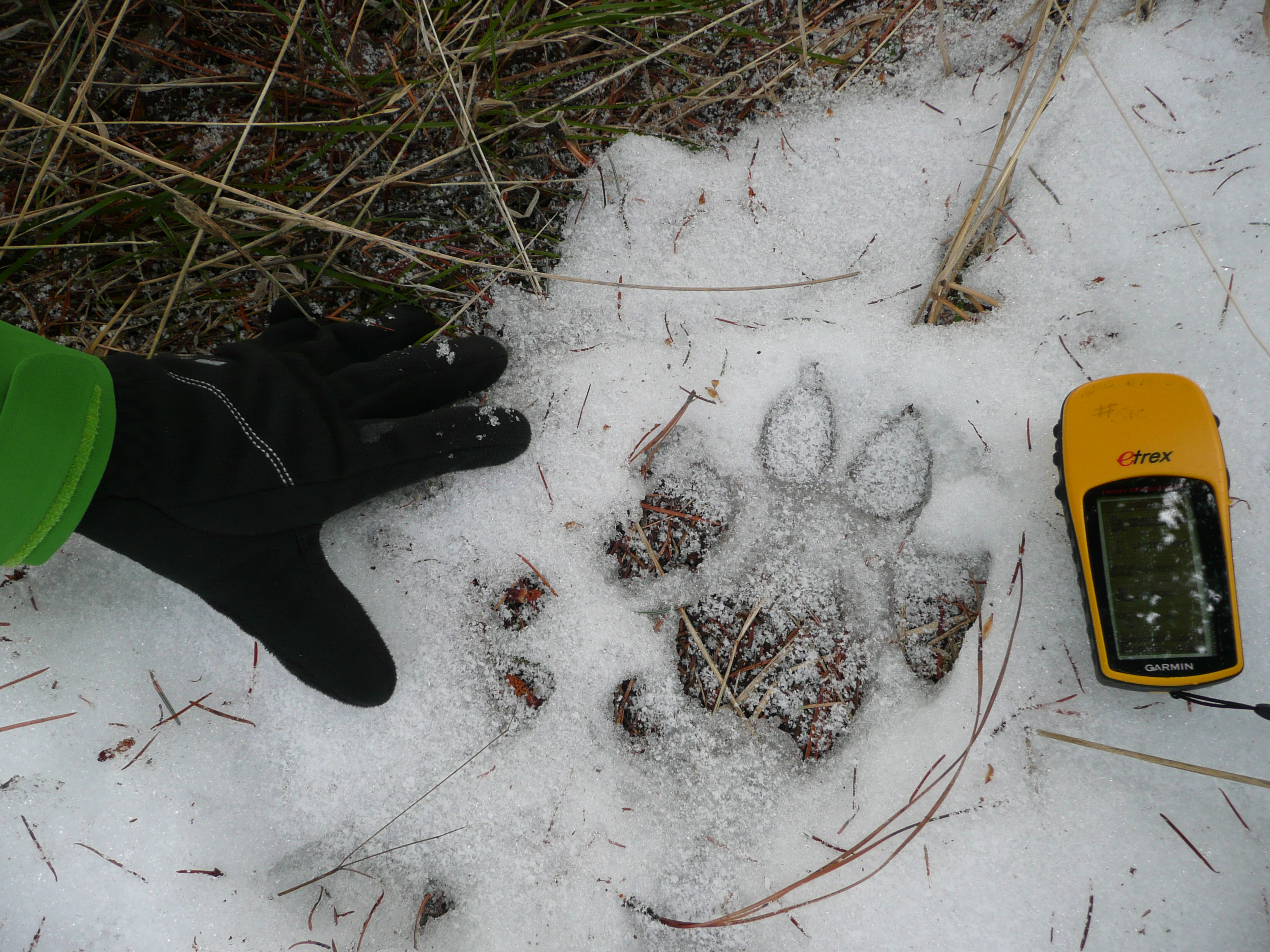
    Winter is not my favorite season. I lived in Vermont for too many years to get excited about snow, and I don’t like having to brace myself to walk out the front door. But today was different. Today I was on a scientific mission – more of a pilgrimage, really – and the impressive tracks at my feet trumped the raw, westerly breeze biting at my face. Each symmetrical print showed four toes and pronounced claws, like that of a coyote, only much bigger. Maybe a dog out for a walk? I wondered. No, the gait was too steady, the trail too straight. Besides, these paws would put a German shepherd to shame. I smiled at my husband, Robert Long, whose satisfied grin transcended his curiosity as a biologist. We were both relieved the Teanaway wolves had survived their first year.
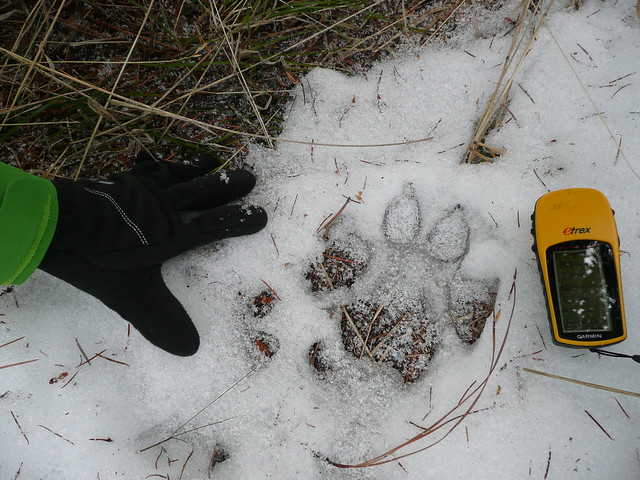
    photo of a wolf track, human hand for comparisonPhoto by Robert LongA wolf track in the snow. This paw would put a German shepherd to shame.

    When we relocated to central Washington in 2007, the dry, dusty terrain challenged my sensibilities as a native New Englander. Our new hometown was surrounded by windblown hills that seemed hostile and barren – an inhospitable moonscape of sagebrush and grass. This was the Pacific Northwest, for heaven’s sake; where were the rhododendrons, the drippy mosses, the giant Douglas firs?

    Then I discovered Teanaway country, a surprisingly fertile place on the eastern flanks of the Cascade Range. The region’s namesake, the Teanaway River, is a tributary of the Yakima, which in turn flows into the Columbia – the largest river on the continent draining into the Pacific Ocean. Clear as a desert sky and cold enough even in June to make my bones ache during stream crossings, the salmon-supporting waters of the Teanaway are spawned by snowmelt from the adjacent high peaks.

    Although the Teanaway valley floor is peppered with homesteads, the abutting forests and alpine meadows are tantalizingly wild. To the north lies a vast stretch of national forest and other public lands crowned by North Cascades National Park. To the south, more national forest – broken by clearcuts and Interstate 90 – and Mount Rainier National Park. All told, the North Cascades Ecosystem, which runs from I-90 to British Columbia, covers an area larger than Yellowstone, Glacier, and Yosemite National Parks combined. Other than the northern Rockies, nowhere else in the contiguous US offers so much room for wide-roaming carnivores. And for people like me who yearn for wilderness.

    Robert and I were part of a research team that helped deploy motion-triggered wildlife cameras in the Teanaway in early 2011, soon after evidence of wolves began to surface. Local residents had reported numerous wolf sightings, and volunteers had photographed a large canid during their camera surveys the previous fall. When follow-up efforts yielded images of at least three adult wolves, the Teanaway pack became official. By summer, government biologists had documented an additional four pups.

    On this mid-February afternoon, we were visiting the Teanaway to learn more about how the wolves were using their new territory. Washington’s Department of Fish and Wildlife was monitoring the pack with radio telemetry, but Robert and his graduate student wanted to collect sign on the ground. My own goals were more complicated, reflecting my dual career as a field biologist and a writer.

    As the icy logging road crunched beneath my boots, I strived to imagine my surroundings from the perspective of a wolf. Weathered firs and pines dotted the arid slopes, heavily traveled by mule deer and elk. The brushy creek drainage below provided cover for predators and prey alike, while the ridgeline above afforded an expansive, 360-degree view. By late spring, the Teanaway’s meadowlands would be loud with glacier lilies, purple lupines, and exuberant hikers eager to get out on the trails again. But in winter, this was mostly a quiet place. Only the hum of a distant snowmobile reminded me we weren’t alone.

    My forward momentum was interrupted when I noticed one of the two sets of tracks we’d been following splitting off to the left. “I can’t resist!” I called out to my companions before heading downslope alone. Soon I found myself jogging alongside the trail of a loping wolf. I was practically giddy as I leapt from print to print imitating the animal’s stride: So THIS is what it’s like to run like a wolf! Until I heard the howl.

    I skidded to a halt. Scanning the trees in front of me, I tried to trace the sound to its source, which seemed alarmingly close to where I stood. In my rational mind, I’m far warier of people than wolves, who practically never attack humans. But in the moment, I was reacting from a more primal place, a place where I no longer fancied myself queen of the food chain. As David Quammen wrote in Monster of God: “For as long as Homo sapiens has been sapient – for much longer if you count the evolutionary wisdom stored in our genes – alpha predators have kept us acutely aware of our membership with the natural world.” My genes were reminding me I’m made mostly of meat.

    Partway into the second howl, the adrenaline hit me like a double shot of espresso. The wolf was now directly behind me – how could that be? I spun around to face my stalker and was chagrined by what I found. The howls were coming from my own goddamned backpack. My sister was calling me on my cell phone. Her ringtone? A Mexican wolf.

    Once I shook off the embarrassment, I couldn’t help but feel elated. With I-90 visible on the horizon, there were wolf tracks next to mine. Robert and I had traveled that very highway across the country less than five years before to start our new life in Washington. At the time, I wouldn’t have believed I could be in the company of wolves today, as they’d been gone from the state for several decades. Suddenly, they were here again – why now, nobody knew. The Teanaway wolves were the second pack to recolonize the Cascades. Genetic tests indicated the Teanaway’s alpha female emerged from the Lookout pack about 100 miles north of us. She was lucky to have gotten away.
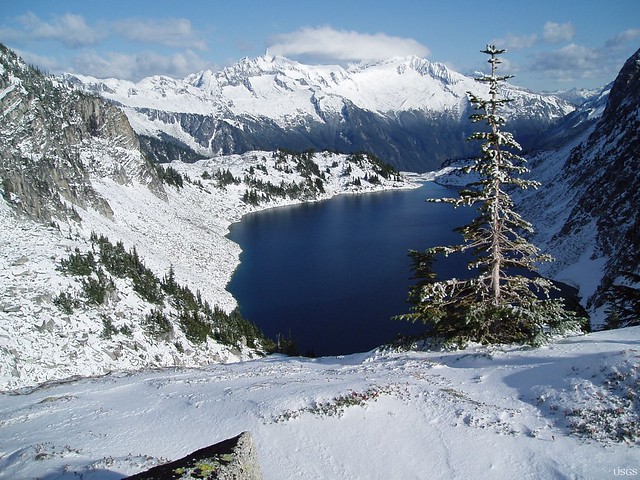
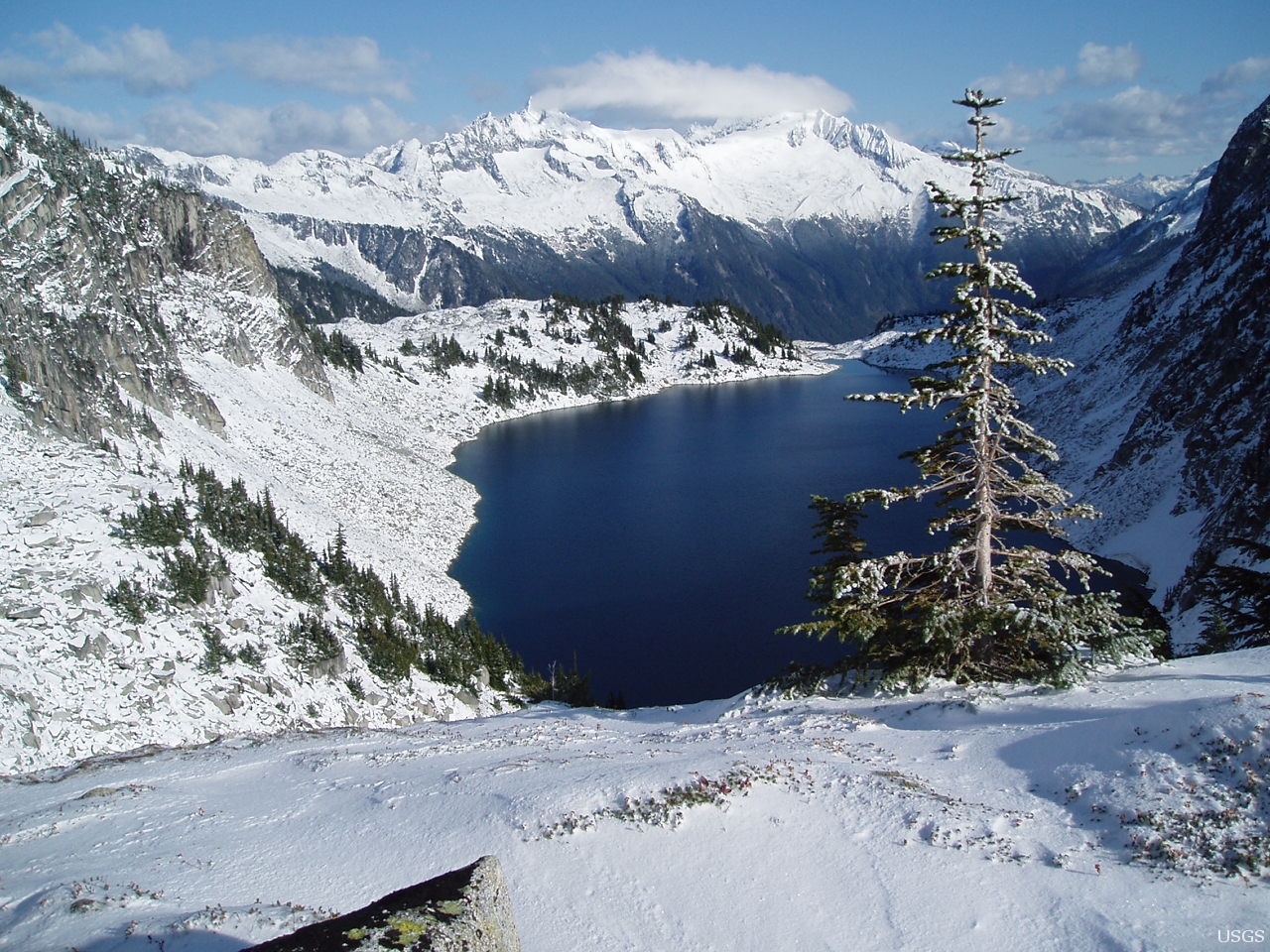
    photo of a lake in a snowy valleyPhoto courtesy of USGSAs in the rest of the American West, wolves were eradicated from Washington during the nineteenth and early twentieth centuries. Then a decade ago they were spotted again near the North Cascades National Park (pictured above).

    Wolves were no more a reality of my early childhood in Boston than were witches, talking tigers, or any of the other make-believe characters I encountered in coloring books and cartoons. Like most kids, I was drawn to animals at the zoo, but the concept of living among them was as foreign to me as the suburbs, where I was ultimately to pass my painful adolescence. Not until moving to Vermont as a young adult did I begin to feel the seduction of wildness, which beckoned me to its loneliness like the open sea beckons a sailor. In Vermont, I discovered the thrill of seeing scars left by black bears on the smooth bark of beeches, of hearing barred owls squawk like howler monkeys at dawn. Still, something was missing. The more I learned about our long lost wild predators, the more our hardwood forests felt tame. Wolves and cougars were gone from the Green Mountains – gone from the entire Northeast. After becoming a professional conservationist, I became involved in efforts to bring them back. But I got tired of chasing ghosts.

    Washington has its phantoms, too. Pacific fishers were reintroduced to the Olympic Peninsula and Mount Rainier in recent years but remain absent everywhere else. The fisher’s brawnier cousin, the wolverine – eliminated by trappers by the mid-1900s – has only recently reappeared from the north. Grizzly bears are a ghost story unto themselves, with the last known grizzly in the Cascades legally shot by a hunter in 1967. A few grizzlies inhabit the “Wedge,” a hearty slice of forest sandwiched between the Kettle and Columbia Rivers in the northeast corner of the state. But despite occasional sightings, grizzlies have yet to repopulate the North Cascades (though they are currently the subject of a proposed federal restoration plan).

    And then there are the wolves.

    As in the rest of the American West, wolves were eradicated from Washington during the nineteenth and early twentieth centuries – slaughtered for their fur and persecuted for being predators in emerging sheep and cattle country. They were trapped. Shot. Burned. Poisoned. Pursued with such abandon that no den was left unscathed. Most of all, wolves were killed for being wolves.

    From 1821 to 1859, nearly 15,000 wolves from the Pacific Northwest lost their hides to four Washington-based trading posts. Only a scattering remained by 1900, and when they were found, they didn’t last long. As many as 5,000 wolves once inhabited the landscape we’ve come to know as Washington. A century after Lewis and Clark reached the West Coast, their howls fell silent.

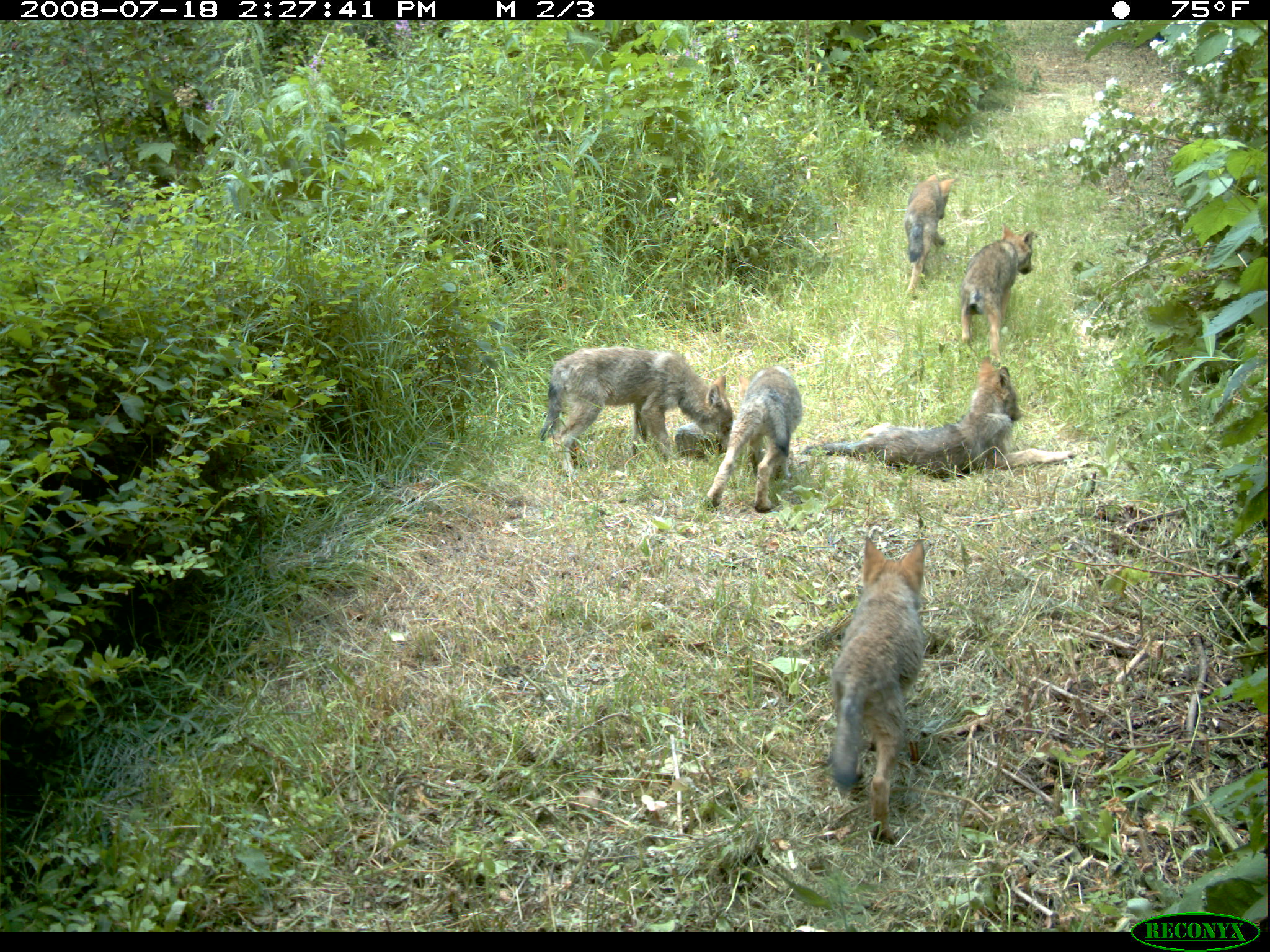
    The story as I know it picked up again with six wolf pups photographed in a forest clearing. Three months old, coated in fuzzy tan and gray, they were all legs and ears and curiosity. Five of the pups explored the world around them. One poked at the grass with its paw, two sniffed the soil next to a stone. Maybe a sibling had peed there, or a bobcat left its mark for the new kids on the block. The sixth pup relaxed, its black-tipped tail and lanky body sprawled lazily across the ground. The pups’ mother and father – the pack alphas – were probably out hunting for food. Life was good at the rendezvous site.

    This image, recorded in 2008 by a remote camera east of North Cascades National Park, helped confirm the first breeding wolves known to inhabit Washington since the 1930s. That same week, the pups’ parents were radio-collared by state biologists, who determined the Lookout pack (named after nearby Lookout Mountain) included at least two more animals. The pack’s alpha male was related to wolves in British Columbia. Like the Teanaway’s alpha female, he had ventured south in search of a new home.
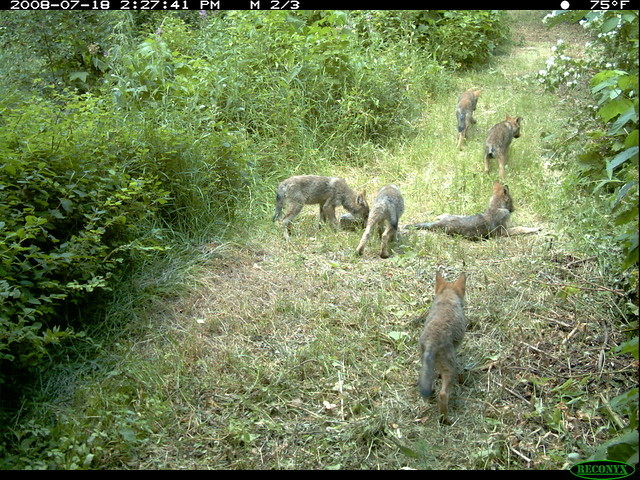
    photo of wolf pups exploringPhoto courtesy of Conservation NorthwestIn 2008, a remote camera in Methow Valley captured an image of six wolf pups in a forest clearing. Biologists named them the Lookout pack after the nearby Lookout Mountain.

    Many Washingtonians gave the Lookout wolves a hero’s welcome, like they were veterans returning from a long-forgotten war. Polls showed that three-quarters of the public supported the return of their top-dog predator, and wildlife officials scrambled to finish a wolf recovery plan for the state. Meanwhile, wolf sightings in northeast Washington increased, with another pack, christened the Diamond pack, confirmed near the Idaho border less than a year after the Lookout wolves made their public debut. But just as we were celebrating a new era for wolves in the Pacific Northwest, the story turned darker.

    It was Christmas season, five months after the Lookout alphas were collared. The Federal Express counter in Omak, Washington, was no doubt abuzz with activity. Clerks would have come to work expecting the usual holiday madness as shoppers dropped off gifts for loved ones far afield. But one of the packages didn’t look right. The box was dripping blood.

    According to the indictment, police confiscated the package and found a wolf hide inside. The hide once belonged to a member of the Lookout pack. With photos, emails, and other grim evidence, investigators pieced together the illegal killing of several Lookout wolves between May 2008 and January 2009. Three people – a father, his son, and the son’s wife – were charged with the crimes, which took place near their residence in Lookout territory. The pelt in the box was destined for tanning in Canada.

    This high-profile case dragged on for years. Finally, in July 2012, the wolf killers were prosecuted, fined, and put on probation. That was the human toll. The wolves, guilty only of choosing the wrong neighborhood for rearing their young, paid a much greater price.

    By early 2009, the Lookout pack had been reduced to the alpha male and female and one yearling; the other pups from the photo had perished. Four more pups were born in the spring, but things continued to unravel for the wolves. That fall, an unidentified male wolf was found shot and skinned along Highway 20, the main road through North Cascades National Park. Then, in May 2010, the Lookout pack’s alpha female suspiciously disappeared. She’d been seen pregnant in April, but her pups were also presumed dead. Not surprisingly, the alpha male began to range more widely. Maybe he was looking for his mate. Or maybe he just had to keep moving.

    In the spring of 2013, a lactating female wolf was documented in Lookout territory – the first indication of pups there in four years. The pack’s legacy of perseverance was also carried forth in the Teanaway, where a second litter of pups was born in 2012 and a third a year later. In typical wolf fashion, some members of the expanding Teanaway pack dispersed, with one of them helping to establish the Wenatchee pack to the east. Another yearling female roamed farther from home. She was formally known as WA-015F. I’ll call her Lupa.

    Iexperienced my first wild wolves during a visit to Yellowstone. As newcomers to the park, Robert and I had joined the caravan of veteran wolf watchers who cruised the Lamar Valley every day. We saw more than a dozen wolves from the road, even witnessed a coyote harass a small female wolf until she squatted to pee and then left the area in what I could only interpret as disgust. But the highlight came late one afternoon when we were driving back to the park’s gateway town of Gardiner.
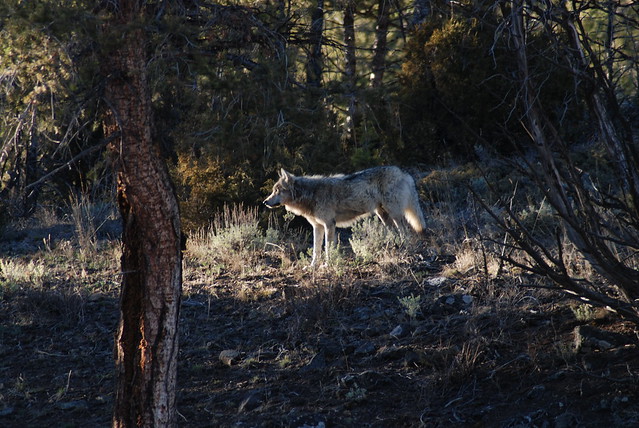
    photo of a wolf in a forestPhoto by Paula MacKayThe author saw her first wild wolf in Yellowstone National Park.

    Several cars had pulled over onto the shoulder. Robert jumped out to investigate and soon came sprinting back to get me. “A black wolf – come quick!” he said, grabbing his camera from the front seat. Moments later, peering through my binoculars, I spotted a sleepy black wolf lying on a rock. Downhill, flanked by ravens and magpies, a couple of coyotes were feeding on a dead elk. They had apparently taken the wolf’s place when she’d had her fill, observing her nervously while they ate.

    The coyotes abruptly shied off the carcass as a smoky-gray wolf entered the scene. He had a thick, luxurious coat and was wearing a radio-collar. The wolf extracted various organs from the elk, taking particular interest in the shiny red liver. He was highly selective, like a butcher choosing the best cut of meat. Must be the alpha, I thought.

    The black wolf began to howl. She had risen to her feet on the boulder, her blood-splattered muzzle lifted high toward the sky. Another wolf accompanied her from behind the rocks, and the two were joined by a third. The alpha male stopped eating. He stepped away from the elk and sauntered uphill to the black wolf before he, too, raised his voice in song. Together, they howled for a full 30 seconds. Not demons. Not demigods. Just wolves.

    With modern technology, we can collect heaps of information about wolves. We can even fit them with GPS collars and track their movements from satellites circling the Earth. But despite all of our tools and efforts and knowledge, we will never understand what compelled Lupa to leave her territory one winter’s day.

    A month after we tracked the Teanaway wolves in the snow, Lupa had life-or-death choices to make. She could head south, across the formidable I-90 and toward Mount Rainier, into what was considered some of the best vacant wolf habitat in the state. She could travel east or west, but either would bring her closer to people and farther from potential mates. Or she could go north – far north – toward a place with more wolves. And that’s what she did.

    Data from Lupa’s GPS collar indicate her journey went something like this:

    After leaving the Teanaway, Lupa eventually reached the edge of Lake Chelan – the third-deepest lake in the country – and plunged into its frigid waters. She continued north when she emerged on the other side, passing just east of Lookout territory. At some point, Lupa crossed the Canadian border and entered British Columbia’s Okanogan Valley, where she traversed the scenic Crowsnest Highway. She then skirted Okanagan Lake before heading northeast and swimming again, this time across the Columbia River. Finally, she turned back toward the south – thus sealing her fate.

    Lupa traveled some 575 miles in 2 months, only to be shot by a farmer north of Kootenay Lake in British Colombia. A spokesman for the US Fish & Wildlife Service said her skin would be used in an educational display to teach people about wolves.

    Although Lupa’s voyage was remarkable by human standards, it wasn’t unusual for a wolf. Reports of long-distance dispersals are becoming increasingly common given advances in tracking equipment. In 2009, a yearling female from Yellowstone traveled 3,000 miles in 6 months before she was illegally poisoned in Colorado. Another wolf, dubbed OR-7 – born in northeast Oregon also in 2009 – left his natal pack in September 2011, crossed numerous highways and Oregon’s Klamath River, and arrived in northern California just before the new year. There hadn’t been a wolf confirmed in that state since 1924. Unlike Lupa and the Yellowstone female, OR-7 is still on the move.

    Young wolves, like people, disperse to find new territory and potential mates. But a lone wolf is a vulnerable wolf, and traveling in today’s crowded world can have lethal consequences – as Lupa discovered when she chose to go north in search of who knows what. There’s no doubt she was on a mission. Mountains couldn’t stop her. Water couldn’t stop her. Political boundaries couldn’t stop her. Not even highways could stop her. There was but one insurmountable barrier between where she was and where she wanted to be. It looked a lot like you and me.

    The purpose of Washington’s Wolf Conservation and Management Plan is to “ensure a self-sustaining population of gray wolves in the state and to encourage social tolerance for the species by reducing and addressing conflicts.”  There is a widely held assumption among management agencies that killing wolves accused of preying on livestock promotes tolerance among ranchers. Whether or not this assumption is valid is a matter of heated debate in the conservation community. Research suggests government-sanctioned killing may actually convey that wolves don’t have value, thereby serving to decrease the acceptance of wolves.
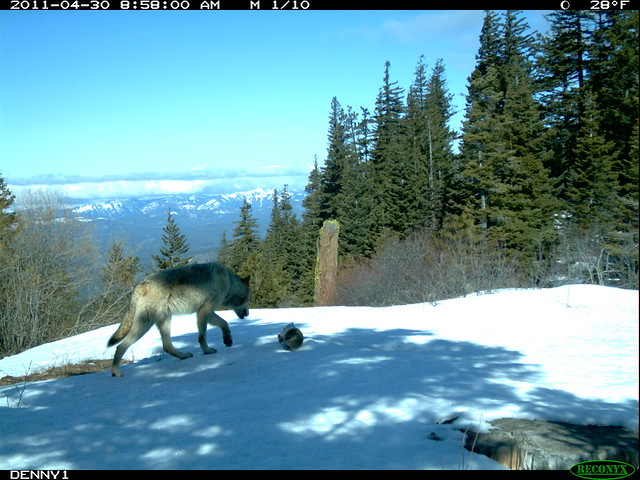
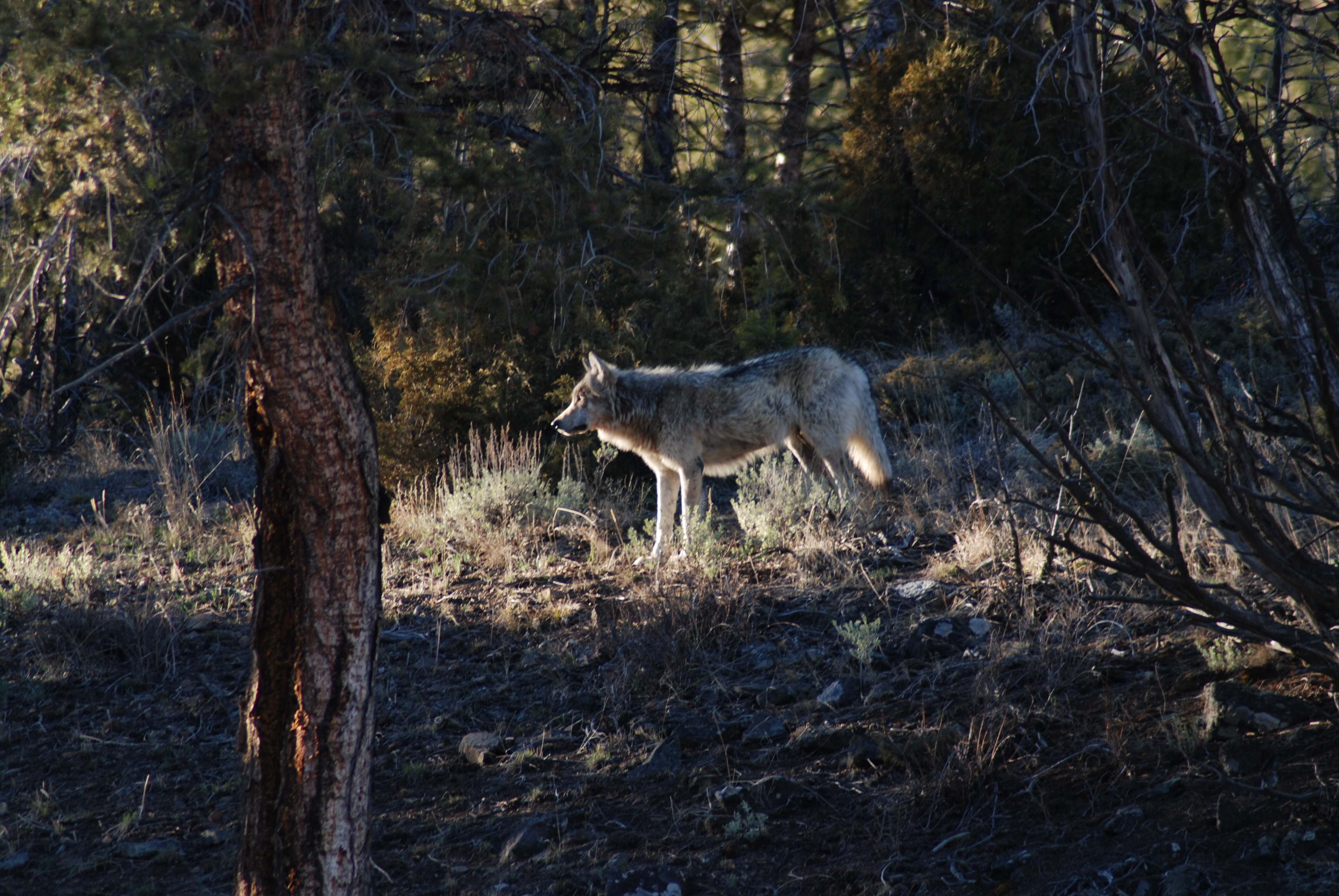
    photo of a wolf on a hillPhoto by Western Transportation InstituteA lone wolf from the Teanaway pack.Some scientists have questioned the extermination of wolves as a means to reducing human-wolf conflicts.

    Some scientists have questioned the extermination of wolves as a means to reducing human-wolf conflicts. Wolf packs are highly social entities whose members each play a role in helping the family survive. Wolves that are protected from hunters and poachers – like those living in Yellowstone – tend to form complex, intergenerational groups led by a breeding pair (usually the alphas) and accompanied by young pups and animals born in previous years. More experienced wolves teach younger ones how to hunt wild prey and stay out of trouble; without the leadership of elders, packs fall apart.

    Only a few years passed before Washington’s recuperating wolf population tested the limits of human tolerance. In 2012, state fish and wildlife officials gunned down a total of 7 wolves in the Wedge, where 16 cows had allegedly been injured or killed by wolves. The ranchers involved wanted the wolves gone, and so it would be. One by one, members of the Wedge pack were “lethally removed” by aerial sharpshooters.

    I can’t erase the scene I’ve conjured in my head. The wolf hears the helicopter before he sees it. He’s running fast, but can’t seem to shake the shadow of the noisy machine overhead. A man hangs out the door looking for a clean shot. He’s weary, too, as they’ve killed five wolves in the past two days. The wolf glances up at the helicopter one last time, his pace beginning to slow. He hears the bullet at about the same time that he feels it. Legs spin out from under him and he rolls head over tail before coming to his final resting place. The alpha male – the leader of the Wedge pack – is dead. He’s the last known family member to die.

    The rugged, heavily wooded terrain of the Wedge is a notoriously challenging place to raise cows. I imagine it’s also a difficult place to avoid cows if you’re a wolf. Although most wolves never develop a taste for livestock, attacks on cattle are likely to happen once in a while when they share wild country. The fact that wolf depredation doesn’t occur more often is a testament to the wolves’ restraint (consider how most people behave at an all-you-can eat buffet). According to the US Department of Agriculture’s (2011) Cattle Death Loss report, 5.5 percent of cattle losses in the US are attributed to predators, and wolves statistically fall well below coyotes, cougars, dogs, and even vultures as a documented cause of death. The same report indicates that the vast majority of cattle succumb to health-related issues and bad weather. Beyond the slaughterhouse, that is.

    Wolves are wild wanderers. That’s how they live and that’s how they die – too often at the hands of humans. But are wolves truly wild if they’re not allowed to roam free, or if they’re penalized for ignoring abstract human boundaries? Beginning with the Wedge pack in 2012, Washington Department of Fish and Wildlife has killed a total of 18 “problem” wolves in Washington since wolves returned to the region – 15 of these on behalf of the same cattle operation. I know there are no simple answers when it comes to co-existing with large carnivores; if there were, we presumably wouldn’t have eradicated them to begin with. I only wish we would ask harder questions of ourselves than we do of the wolves, who are giving us a second chance to act as peaceful neighbors.

    To be sure, there are reasons for hope in Washington. Wildlife officials currently report 20 wolf packs residing in the state, and wolves continue to recolonize their former habitat. Numerous ranches have employed range riders and other non-lethal strategies for reducing conflicts with wolves, who have now re-established themselves in the Wedge. On I-90, wildlife bridges and underpasses are being constructed to facilitate the north-south movement of animals through the Cascades; it’s only a matter of time before wolves will make their way further into human-dominated landscapes. When they do, will we have the courage to let wolves be wolves?

    Late summer now, and Robert and I are camped with another biologist in the backcountry of North Cascades National Park. We’re searching for grizzly bears on this trip, but our colleague has a different predator on his mind as we prepare to sit down for dinner. He walks over to a rocky outcrop and gazes into the darkening basin below. After cupping his hands around his nose and mouth, he releases a spot-on wolf song that penetrates the mountain stillness and echoes through the valley. The mere possibility that wolves could be out there listening brings wildness to this place. In the emptiness that follows, I wait, willing the night to answer.

    Conservationists find birds in central African rain forest are facing major threats from bushmeat hunting

    https://www.eurekalert.org/pub_releases/2018-03/sdzg-cfb022818.php

    SAN DIEGO ZOO GLOBAL

    In a new study released this month, conservationists are sounding the alarm about a growing hunting crisis plaguing rainforests in central Africa. The study, published in the journal Biological Conservation, found that more large forest birds such as raptors and hornbills are being killed to provide bushmeat (wildlife taken for food) than previously thought. Researchers concluded that unless the threat posed by unsustainable hunting is reduced, bird populations will continue to decline–potentially leading to devastating consequences for the biodiversity of the region.

    The study was conducted in the Littoral Region of Cameroon, where scientists surveyed 19 villages that border the proposed Ebo National Park in the western part of the country. Researchers used direct and indirect questioning and statistical models to quantify the socioeconomic predictors, scale and seasonality of illegal bird hunting, and bird consumption in the area.

    “Understanding why people eat birds and quantifying how many are killed is just the first step in understanding how bushmeat hunting can affect birds like hornbills and eagles,” said Robin C. Whytock, a Ph.D. researcher at the University of Stirling in Scotland and lead author of the study. “I think birds such as crowned eagles are particularly threatened by hunting in Cameroon, both because of direct persecution and because their prey base has been depleted by hunting. These and other similar large-bodied birds that reproduce slowly are therefore a conservation priority.”

    The science team also found surprising information they believe ties education levels to the amount of time people spend hunting and how much wildlife they consume.

    The team originally thought that younger, unemployed men at lower education levels would consume more wild birds than other hunters. While the study did conclude that birds were primarily hunted and consumed by unemployed men during the dry season, the data unexpectedly revealed that hunting has increased among those with higher education.

    This discovery may change the way scientists tailor future conservation programs, in reaching out to urban populations as well as rural communities. Conservationists could also focus on better informing those at higher education levels about the importance of specific bird species to their ecosystem. Moving forward, researchers said closer examination of other habitats will be necessary to fully understand the totality of the growing bushmeat hunting crisis.

    The two-year study and analysis was conducted by numerous conservation and educational facilities, including the University of Stirling, the University of Dschang, Drexel University, Wageningen University and Research Centre, The Peregrine Fund, the Royal Society for the Protection of Birds, and San Diego Zoo Global.

    Bringing species back from the brink of extinction is the goal of San Diego Zoo Global. As a leader in conservation, the work of San Diego Zoo Global includes on-site wildlife conservation efforts (representing both plants and animals) at the San Diego Zoo, San Diego Zoo Safari Park, and San Diego Zoo Institute for Conservation Research, as well as international field programs on six continents. The work of these entities is inspiring children through the San Diego Zoo Kids network, reaching out through the internet and in children’s hospitals nationwide. The work of San Diego Zoo Global is made possible by the San Diego Zoo Global Wildlife Conservancy and is supported in part by the Foundation of San Diego Zoo Global.

    Gray wolf in Loup Loup pack gets new GPS collar from WDFW

    By Ann McCreary

    State wildlife officials replaced a GPS collar on a gray wolf in the Loup Loup pack earlier this month as part of an ongoing effort by Washington Department of Fish and Wildlife (WDFW) to monitor and study wolves throughout Washington.

    Using a helicopter on Feb. 8, WDFW biologists darted the Loup Loup pack wolf with an immobilizing drug in order to capture him. They replaced a collar that was placed on the wolf in 2016 with a new GPS collar, said Ben Maletzke, statewide wolf specialist for WDFW.

    The captured wolf is the breeding male of the Loup Loup pack, and was seen with the pack’s breeding female, which also has a collar. No other Loup Loup pack wolves were spotted, Maletzke said.

    The male was examined, and his health was evaluated by biologists. “He was an older male, getting up in years. He seemed to be doing OK, a little bit underweight,” Maletzke said. A wolf his size would be expected to weigh 95-100 pounds, but the wolf was 89 pounds.

    The Loup Loup pack wolves were located through signals emitted by their collars. Because the male’s collar was almost 2 years old, the battery was likely to die before long. “We wanted to get that one switched out,” Maletzke said.

    Biologists had also hoped to collar a wolf in the Lookout pack, which currently has no collared animals, but were not successful in locating any wolves. “We had a ground crew that found a track from the previous day, but the day of the flight we weren’t able to find them,” Maletzke said.

    Placing collars on wolves helps wildlife managers keep track of wolf packs throughout the state, Maletzke said. In the case of the Loup Loup pack, the collars are also essential for an ongoing research project conducted by WDFW and the University of Washington that is examining how the presence of wolves affects other wildlife species. “This pack overlaps the research project,” Maletzke said.

    The GPS collar on the Loup Loup male can be programmed to provide location data remotely via satellite several times a day. The female of the Loup Loup pack wears a VHS collar, which has a longer lifespan, and emits a signal that is located using a receiver and antennae.

    Maletzke said he is gathering data for the state’s annual status report on wolf packs in Washington, which is usually released in March. Last year’s report, which surveyed the 2016 wolf population, estimated that there were 20 packs in Washington that year. The report estimated that the Loup Loup pack had up to eight wolves at the end of 2016, and the Lookout pack had three members. 

    The Lookout Pack, named for Lookout Mountain, was first documented in 2008 and was the first wolf pack found in Washington in more than 30 years.

    The pack had up to 10 members in 2008, but over the next year the pack was decimated by poaching, until only the breeding pair and one yearling survived in 2009. The breeding pair, which had been collared in 2008, had both disappeared by 2011.

    Gray wolves, virtually eliminated from western states in the last century, are protected under state law as an endangered species throughout Washington and are managed under a state recovery plan. They are listed as endangered under federal law in the western two-thirds of the state, which includes the Methow Valley.

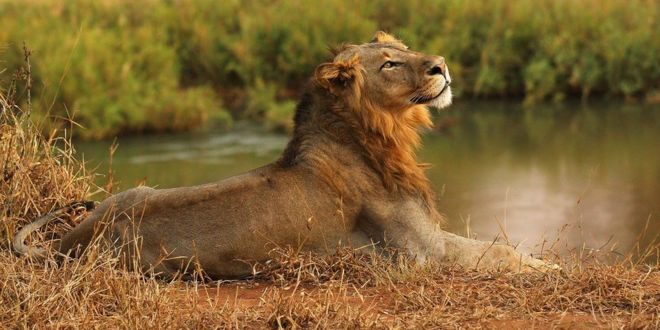
    South African lions eat ‘poacher’, leaving just his head

    A lion stretches out by the Luvuvhu river in Kruger National Park, South AfricaImage copyrightCAMERON SPENCER/GETTY IMAGES
    Image captionLocal police said the lions ate almost all of the man’s body (file picture)

    A suspected big cat poacher has been eaten by lions near the Kruger National Park in South Africa, police say.

    The animals left little behind, but some body parts were found over the weekend at a game park near Hoedspruit.

    “It seems the victim was poaching in the game park when he was attacked and killed by lions,” Limpopo police spokesman Moatshe Ngoepe told AFP.

    “They ate his body, nearly all of it, and just left his head and some remains.”

    Police have not yet established the victim’s identity. A loaded hunting rifle and ammunition were found next to the body, South African website Eyewitness News reports.

    Lion poaching has been on the rise in Limpopo province in recent years.

    The big cats’ body parts are sometimes used in traditional medicine, both within Africa and beyond.

    Wildlife charity the Born Free Foundation says lion bones and other body parts are increasingly sought-after in South East Asia, where they are sometimes used as a substitute for tiger bones.

    In January 2017, three male lions were found poisoned in Limpopo with their paws and heads cut off.

    State drops deer cruelty charge against Washington hunter

     https://knox.villagesoup.com/p/state-drops-deer-cruelty-charge-against-washington-hunter/1685380

    By Stephen Betts | Sep 06, 2017

    WASHINGTON — A 58-year-old Washington man was convicted Wednesday, Sept. 6, of a trio of hunting violations,but the most serious charge, felony cruelty to a deer, was dismissed by the state.

    Ronald Mole pleaded no contest in Knox County Superior Court to night hunting, placing bait to entice deer and discharging a firearm near a dwelling. The no contest plea results in a conviction, but allows him to challenge the facts in separate administrative or civil proceedings.

    The District Attorney’s Office dismissed a more serious charge of aggravated cruelty to animals. The charge was considered to be the first time that the animal cruelty law had been used in relation to the shooting of a deer by a hunter.

    Mole will be fined $1,000 if he adheres to terms of a deferred disposition over the next 12 months. The terms require him to obey all laws during the next year. If he commits any new offenses, he could face up to the maximum of 365 days in jail for the night hunting conviction.

    The offenses occurred Nov. 6 and Nov. 7 on the Old Union Road in Washington, according to paperwork filed in court by Maine Game Warden Joey Lefebvre of the Maine Inland and Fish and Wildlife department.

    The animal was shot while Mole was illegally night hunting, according to investigators. The deer was left to suffer during the night until Mole returned the following morning, the state claimed.

    The cruelty charge had alleged that Mole acted in a way that “manifested a depraved indifference to animal life or suffering, did intentionally, knowingly or recklessly cause extreme physical pain to an animal, cause the death of an animal, or physically torture an animal.”

    Generally, animal cruelty cases involve abuse to pets.

    After Mole was charged, his attorney, Christopher MacLean, of Camden, had said he was amazed that his client had been charged with animal cruelty.

    “In a state with such a proud hunting tradition, it absolutely amazes me to see a felony prosecution for animal cruelty in a case where the deer was lawfully shot and properly tagged by a licensed Maine hunter. Cases like this slowly erode hunting rights in the state; I fear the next step will be to restrict gun ownership itself by those who have no understanding of Maine’s hunting tradition,” MacLean said at the time the charges were brought.

    The state said the hunting occurred at 8 p.m. Nov. 6. Sunset was at 4:19 p.m. Hunting is prohibited from 30 minutes after sunset to 30 minutes before sunrise.

    Then District Attorney Geoffrey Rushlau said after the charge was filed that the theory of prosecution for this case was that there was a far greater chance of a deer’s suffering if it was hunted illegally at night when a clean shot is less likely and when the deer cannot be tracked as easily.

    Firing a gun within 100 yards of a residential dwelling is illegal in Maine without the permission of the property owner.

    A companion case against Lisa Black, 47, of Washington, was dropped by the state. Black had been charged with unsworn falsification and false registration of a deer.