A chimpanzee, several monkeys, some lemurs and an uncounted number of birds have died after a nonprofit San Antonio-area wildlife sanctuary lost power amid record-low temperaturesByThe Associated PressFebruary 16, 2021, 4:36 PM• 2 min read
SAN ANTONIO — A chimpanzee, several monkeys, some lemurs and an uncounted number of birds died when a nonprofit San Antonio-area wildlife sanctuary lost power early Monday, yet another casualty of unforgiving winter weather that has seized much of Texas.
Brooke Chavez, executive director of Primarily Primates, told the San Antonio Express-News that the power went out about 6 a.m. Monday at the 70-acre sanctuary that housed more than 400 primates.Advertisement
Chavez said her 12 staff members and volunteers mobilized generators, space heaters, propane tanks and blankets in an effort to save the residents. As temperatures reached single-digit levels, the staff broke out carriers to evacuate animals to the San Antonio Zoo and another sanctuary in North Texas, but Chavez said she and her staff began to find dead animals throughout the sanctuary.
“I never, ever thought my office would turn into a morgue, but it has,” she said. “Someone asked me how many animals have died. I don’t know yet. I know we lost lots of monkeys, lemurs and tropical birds… We won’t truly know how many animals have died until the temperatures rise and the snow starts to melt.”
Now, with the big freeze expected to continue for a few more days and the electric grid for most of Texas ordering more rolling blackouts, Chavez and her staff asked for the public’s help to protect the sanctuary’s animals, most of which are elderly. Many animals remain at the sanctuary, including 33 chimpanzees that were too difficult to transport.
Polar vortex set to unleash Arctic air after a two-year hiatus
Frigid temperatures already sending gas prices to record highs
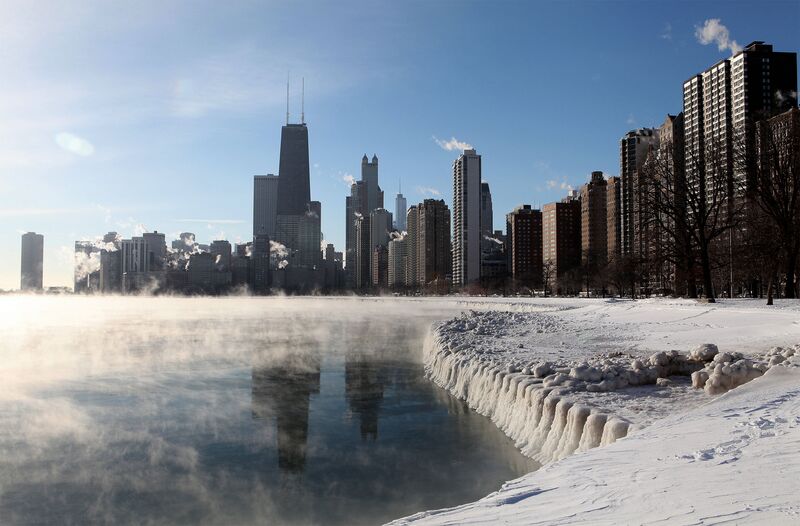
Lake Michigan as the Polar Vortex sent temperatures well below zero in Chicago on Jan. 7, 2014. Photographer: Raymond Boyd/Getty Images
High in the atmosphere above the North Pole, a spike in temperatures may soon send bone-rattling chills spilling down through the Northern Hemisphere.
The icy blasts threatening to sweep across North America, Europe and Asia starting in late January are from the same weather pattern that triggered the 2014 cold snap known as the polar vortex, which plunged temperatures in Chicago to minus 16 degrees Fahrenheit (minus 27 Celsius).
It’s common during winter for frigid air to roar down from the Arctic. But the cold mostly stayed bottled up around the North Pole in the season of 2019-2020. Now, after a nearly two-year hiatus, winter is threatening to return at last.
To be clear, forecasters aren’t expecting the cold to be as brutal as during the 2014 polar vortex, which was an extreme example of Arctic weather marauding south. But it will feel unmistakably like winter.
The cold has already descended upon Western Europe and China, sending prices for gas in Spain, and liquefied natural gas in Asia, to record highs. Paris has been 3.5 degrees below normal and Madrid 6.9 degrees cooler, while Beijing temperatures fell to a record low of minus 9 Thursday, said Tyler Roys, a meteorologist at AccuWeather Inc.
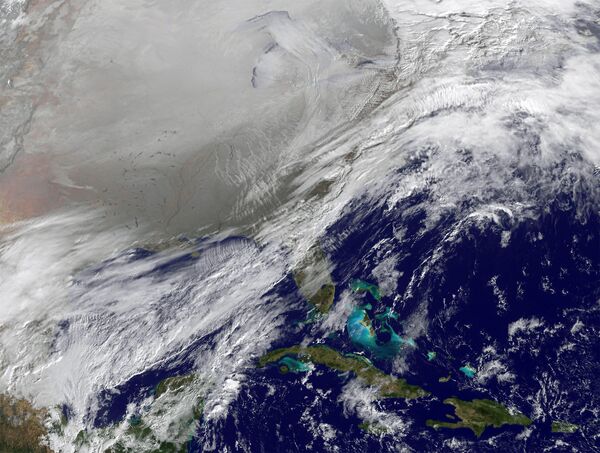
A satellite image shows the entry of a large area of low pressure, from the Polar Vortex, into the Northern U.S., on Jan. 6, 2014.Photographer: NOAA/Getty Images
The vortex of seven years ago kept shoppers indoors, grounded flights and made it harder for shippers to fill product orders. This year, the pandemic has already hobbled travel and in-store shopping. Snowstorms, however, could be a nightmare for delivery services.
Technically, the polar vortex refers to a band of winds that encircle the Arctic and keep the cold locked far to the North. But with that temperature spike, known as sudden stratospheric warming, the band can buckle, allowing frigid air to head south. Gas traders used to call it the “polar pig.”
That could mean chills anywhere in the Northern Hemisphere, though this year it’s likely to end up in the U.S. according to Ryan Truchelut, president of Weather Tiger LCC. A wave of deep cold could give the Great Lakes and East Coast their first real blast of frigid winter weather, along with a storm pattern that delivers snow storms as well.
It will be a big shift for the U.S., where winter has been a bit lackluster so far. In New York, January readings have been 5.1 degrees above normal through Thursday, and Chicago has been 7.2 degrees warmer for the month.
Still, there’s no guarantee it will happen. While a sudden stratospheric warming usually leads to a burst of frigid weather, sometimes the clockwork of gears in the atmosphere doesn’t deliver.
“Many times in the past, the forecast for a cold weather event across the country resulted in a false alarm,” said Jim Rouiller, lead meteorologist with the Energy Weather Group LLC.

 Exposing the Big Game