Exposing the Big Game

Forget Hunters' Feeble Rationalizations and Trust Your Gut Feelings: Making Sport of Killing Is Not Healthy Human Behavior

Exposing the Big Game

Colorado Parks & Wildlife is hitting a new level of absurdity.

cougar pc Colorado Parks and Wildlife

From Wild Earth Guardians
The State has a new plot to kill cougars and bears in an attempt to boost mule deer populations so that it can sell more hunting tags. Yup, that’s right, they want to kill native animals so that more people will pay to kill other animals. Join us in telling our state’s wildlife managers it is past time to put wildlife first.

Poorly disguised as two “predator control studies” aimed at increasing sport-hunting opportunity for mule deer over the coming years, the state is putting bears and cougars in the crosshairs. The first plan calls for trapping and killing between 15-45 cougars and 30-75 black bears over a period of three years. The “study” part is a post-killing analysis of the impact of removing native predators on mule deer fawn survival rates. The science shows that removing native carnivores from the landscape undermines ecosystem functions. Adding insult to injury, the state plans to have the federal government’s rogue wildlife killing program—Wildlife Services—do the dirty work by setting cruel and indiscriminate traps and using hounds to capture the bears and cougars before shooting them dead. So, both your state and federal public resources would be used for the killing.

And, as if one so-called “research” project wasn’t good enough, another is set to begin this year. This second cruel project allows for dramatically increased trophy hunting of mountain lions over a nine-year “study” period. Fully six years of the study involve increasing cougar harvests by 50% to purposefully suppress the population. The “study’s” goal is to analyze the impact of using sport-hunting to control the wildcat population and increase deer density. Again, state sponsored killing of one native species purportedly to benefit hunters trying to kill another.

Killing Colorado’s native carnivores to benefit sport-hunters is just plain wrong. It’s also biologically unsound. Please join us in speaking out for Colorado’s wildlife and thriving natural ecosystems. Help us talk some sense into our state’s leading wildlife managers.

The State is hosting a public listening session on September 19th from 6:30 to 8:30p at the Hunter Education Building in Denver (6060 Broadway). Join Guardians in showing your support for Colorado’s native carnivores by attending and sharing your thoughts on the State’s proposed “research” plans.

Coloradans are proud of the healthy, wild ecosystems that make the state unique. Don’t let bloodthirsty minority interests destroy the balance for us all. Tell Colorado Parks & Wildlife native carnivores belong in Colorado.

Hunters fear fading voice at Fish and Game Commission

http://www.sacbee.com/news/state/california/article58345048.html

Hunting advocate resigns in frustration from pivotal state panel

Appointment of new commissioners by Gov. Brown could signal changes for state’s wildlife policies

Animal rights groups say commission is now more receptive to their concerns

Lifelong hunter and fisherman Jim Kellogg

Award-winning film exposing America’s secret war on wildlife coming to Idaho, the biggest wolf-killing state

Oct. 5, 2015

MEDIA CONTACT:
Brooks Fahy
Executive Director
(541) 520-6003
 
Jane Goodall wants millions to hear government agents blow the whistle in “EXPOSED: USDA’s Secret War on Wildlife.” Idaho is Ground Zero for wildlife-killing in America, especially wolves.
– Screenings Oct. 12-16 in Coeur d’Alene, Moscow, Boise and Pocatello | See schedule
EUGENE, OR – An award-winning wildlife documentary that Jane Goodall wants millions to see is coming to Idaho, the biggest wolf-killing state in the nation. Idaho also has a reputation as a veritable playground for hunters, trappers and federal agents, who slaughter hundreds of thousands of wild animals unnecessarily there each year.

The film, EXPOSED: USDA’s Secret War on Wildlife, features three former federal agents and a prominent Congressman blowing the whistle on a barbaric and wasteful wildlife management program within the USDA called “Wildlife Services.” Every year agents from this program kill millions of animals across the nation. They are highly active in Idaho, and their methods-which are taxpayer funded-ignore science, harm humans, and kill pets and endangered species.

Idaho earned its reputation as the country’s biggest wolf-killing state by slaughtering close to 2,000 gray wolves since 2011, when they lost federal endangered species protection and management was turned over to state wildlife agencies. Idaho has even allowed Wildlife Services agents to gun down wolves from helicopters over the “Lolo Zone,” a prime wolf habitat in the North-Central part of the state. The Lolo Zone features some of the most rugged and beautiful public wildlands in the Lower 48. Idaho’s stated goal is to reduce their wolf population to 150, a scientifically disastrous objective that destroys the positive effect apex predators have on ecosystems and the biodiversity they foster.

Wildlife Services is charged with taking out any threat to livestock-real or alleged. This killing is done largely for the benefit of private individuals who don’t take responsibility for protecting their animals.
The whistle-blowers in the film “EXPOSED” reveal deeply entrenched problems within this federal agency, not the least of which is lack of accountability with federal funds. Another problem is Wildlife Services’ obstinacy in ignoring science, which clearly shows the exponentially accelerating ecological damage caused by killing off predator species.

But the biggest outcry is about the inhumane and indiscriminate methods the agents use-traps, snares, aerial gunning and poisons. Ironically, these devices often pose a greater risk than the very wild animals they purport to control. Many proven nonlethal alternatives that minimize conflicts with wild animals are available, but Wildlife Services does not require landowners to use them before their trappers apply lethal force.

To date, countless people and pets have suffered injury and death due to negligent use of traps and poisons. And while Wildlife Services’ own directives require agents to post warnings to alert the public, they often don’t post them. When they do, the signs are only marginally effective, as animals and young children don’t understand them.

Wildlife Services has been publicly condemned by Jane Goodall, PH.D., DBE, who said “I hope EXPOSED will be watched by millions, so Americans will learn of the unforgivable actions of those who have exercised their power to cause untold agony to thousands of innocent fellow creatures on our planet.” The agency has also been excoriated by The Humane Society of the United States, the American Society of Mammalogists, and many other credible organizations and individuals.
“EXPOSED” won Best Short Film at the 2015 Animal Film Festival and Best Wildlife Activism at the 2014 Wildlife Conservation Film Festival.

Screenings will be held in four cities and will be followed by an audience question and answer session with film co-producer/director Brooks Fahy. The events are being sponsored by Predator Defense, Friends of the Clearwater, Advocates for the West, Western Watersheds Project, and the Kootenai Environmental Alliance.

schedule“EXPOSED” Screening Schedule

COEUR D’ALENE
Monday, October 12, 6 p.m.
Coeur d’Alene Library Community Room
702 E. Front Ave.
FREE
MOSCOW
Tuesday, October 13, 7 p.m.
1912 Center, Great Room
412 E. Third St.
FREE
BOISE
Thursday, October 15, 4 p.m.
4:00 p.m., Boise State University
Student Union Building, Lookout Room
FREE
Thursday, October 15, 7:30 p.m.
The Flicks, 646 W. Fulton St, Boise
$5 at door
POCATELLO
Friday, October 16, 7 p.m.
Idaho State University
Student Union Building, POND Wood River Room
$5 at door
#  #  #

 
About Predator Defense
Founded in 1990, Predator Defense is a national nonprofit working to protect native predators and create alternatives for people to coexist with wildlife. Our efforts take us into the field, onto America’s public lands, to Congress, and into courtrooms.  Visit us at

They’re getting out of control!

From John A. Livingston’s The Fallacy of Wildlife Conservation:

“I happen to loath and abominate blood ‘sports.’ I think that killing any sensate being for recreation—for fun—is evil and contemptible. I have said so, for public consumption, many times.

“The most frequent theme in the resulting letters I receive is that I have absolutely no rational argument to present, and that as the result I (sneakily) resort to purelyDSC_0192 emotional appeals. Some of the mail, by the way, has to be opened with my asbestos gloves.

“An acquaintance of mine in the arctic town of Inuvik once said to me, ‘John, we’ve got to do something about all these ravens here in town!’ ‘Why so?’ I asked. ‘For heaven’s sake, man, look around you—there are so many of them they’re getting out of control!’

“Loss of control is the abdication of power. It is tantamount to chaos. The universe is orderly, therefore chaos is unnatural. …

“So, it is seen that the ravens of Inuvik (prospering on our garbage) are thumbing their amiable beaks at universal order and thus at us. …

“Death is the final sting, the ultimate victory of uncontrollable, unmanageable, immoral, chaotic nature—from which experience we are snatched at the final exhalation by the gorgeous rationalization. Spirit over flesh, man over nature.”

Wildlife Photography ©Jim Robertson

Wildlife Photography ©Jim Robertson

Killing Canadian Wolves Violated Accepted Welfare Guidelines

Wed 2/11/15 6:15 PM

Killing Canadian Wolves Violated Accepted Welfare Guidelines

Killing Canadian Wolves Violated Accepted Welfare Guidelines

By Marc Bekoff Ph.D. on February 11, 2015 in Animal Emotions
A team of scientists has published an essay, just released today, that clearly shows that the killing spree by the Canadian government that resulted in the slaughter of 890 wolves should never have been conducted nor published because it violated clearly stated welfare guidelines. This new essay is a much-needed response to the horrific slaughter of the wolves.

Sportsmen, Environmentalists Clash Over Predator Hunting

http://kjzz.org/content/98282/sportsmen-environmentalists-clash-over-predator-hunting

By  Stina Sieg

February 05, 2015

This week, a convention of predator hunters is gathering in Tucson. The group, called Predator Masters, hunts such animals as coyotes and raccoon and has drawn national criticism for what critics say amount to killing contests. The group disputes that term and says it isn’t planning an organized hunt during the convention. Still, controversy surrounding the sport remains.

It’s hard to tell the difference between an actual coyote’s howl and the plaintive yell longtime hunter Rich Higgins can make with one of his many breath-powered calling devices.

“I truly believe that humans are hard-wired, genetically, as hunter gatherers,” he said, after showing off a few of the cries. “So we’re just being true to our nature.”

Higgins is the president of Arizona Predator Callers, one of the many organizations in the state that legally hunts predators like coyotes on public land. He said it isn’t so much about killing, as it about everything else involved with the sport he loves.

“Everything from building your own calls and your own howlers, learning the behavior of that animal, so you can exploit its vulnerabilities,” he said. “All of this is fascinating to us.”

And that’s the real point, he added, of what some people call “killing contests.” That’s when a group like his tries to kill as many coyotes as they can in a certain period of time. The reality is that most hunters don’t even bag a coyote, Higgins said. It’s more about hanging out with people who also enjoy the thrill of the hunt.

“It’s an incredible experience,” he said. “And becomes addicting.”

That doesn’t exactly comfort predator hunting opponents, who say it’s a waste to kill animals without using them for food or fur. Sandy Bahr is the president of the Sierra Club’s Grand Canyon Chapter. Her organization is not against all hunting, she said, but with some predator hunters, “there is this attitude, which is pretty disrespectful of the animals, that ‘we’ll just go out and kill as many as possible.’”

Even if you take away the emotional side of this, Bahr said there could be real consequences from this kind of hunting. If the coyote population dips, there could be a large spike, followed by a crash, of prey species that coyotes usually keep in check. On the other hand, coyotes could actually increase in number.

The more they feel threatened, “the more they’ll have larger litters,” she said. “They’ll breed earlier, they actually respond by doing more to build the population.”

But the Arizona Game and Fish Department sees it differently, including Jim Paxon, special assistant to the director.

“Under no circumstances and in geographic area, have hunters made a dent in the coyote population,” he said.

He said there are an estimated 25,000 to 40,000 coyotes in the state. Game and Fish attempted to regulate hunting contests about 15 years ago, without success. But Paxon said the department doesn’t take an official stance now. Instead, it enforces current rules. Those allow people with valid hunting licenses to kill as many coyotes as they want.

“So, it’s recognized that coyote hunting is a legitimate activity for hunters and sportsmen,” Paxon said.

But that doesn’t mean it’s always easy, even for a seasoned predator hunter like Rich Higgins.

“I always have a tinge of regret. Always, always, always,” Higgins said. “And sometimes, when it becomes a little bit strong, I will pick up my camera only.”

In his heart, Higgins said, he is a hunter. And that’s regardless of whether he’s hunting coyotes with a lens — or a rifle.

10885301_1568094566769883_1971170912125979956_n

Hunting contests don’t put dent in coyote population

Jim Robertson-wolf-copyright

http://www.koat.com/news/game-and-fish-hunting-contests-dont-put-dent-in-coyote-population/29730964

By

ALBUQUERQUE, N.M. —In less than 24 hours, coyotes will be the target of a controversial hunting contest in New Mexico.

Read more: http://www.koat.com/news/game-and-fish-hunting-contests-dont-put-dent-in-coyote-population/29730964#ixzz3JGJwvZQA

The two-day contest begins Saturday morning.

Animal rights activists have been pushing for a law to make such events illegal, but that won’t stop this weekend’s event from occurring.

It may not seem like coyotes are a big threat to day-to-day life in New Mexico, but they are for ranchers and dairy farmers in the state. Those in favor of the event feel the coyotes are a nuisance. Those who aren’t don’t feel it is legitimate wildlife management to allow contestants to go out and shoot as many coyotes as they can.

The New Mexico Game and Fish Department doesn’t regulate the hunting of coyotes, and coyotes aren’t protected or endangered animals.

Game and Fish officials said contestants may not even be making a dent in the coyote population, and don’t believe the contests have a negative impact. About 10,000 coyotes are hunted every year, according to Game and Fish. That’s about 8 percent of the total coyote population in New Mexico.

Activists have emailed the Governor’s Office calling for the contests to be stopped. The emails were referred to game and fish.

Contestants pay $300 for a two-person team.

Winners get assault rifles. The contest is sponsored by Larry’s Gun Shop in Roswell.

Read more: http://www.koat.com/news/game-and-fish-hunting-contests-dont-put-dent-in-coyote-population/29730964#ixzz3JGIouvNY

On hunting predators

1453351_1488724231352782_186999841_n

We hunt predators but we can’t say why

The New West / By Todd Wilkinson | Posted: Wednesday, November 12, 2014 1:15 pm

Consider this loaded question: Should grizzly bears, wolves and cougars be hunted for sport? Worldwide, given their rarity and declining numbers, should lions, leopards, cheetahs, jaguars and tigers?

If so, why?

Across North America we find ourselves in another big game hunting season. For many the harvest is as much about putting meat in the freezer — a form of modern subsistence — as it is about the profoundly personal act of communing with nature.

From an early age, a lot of us were taught two guiding ethical principles: Don’t take the life of an animal unless you intend to eat it, and, if you do kill, there ought to be a good reason.

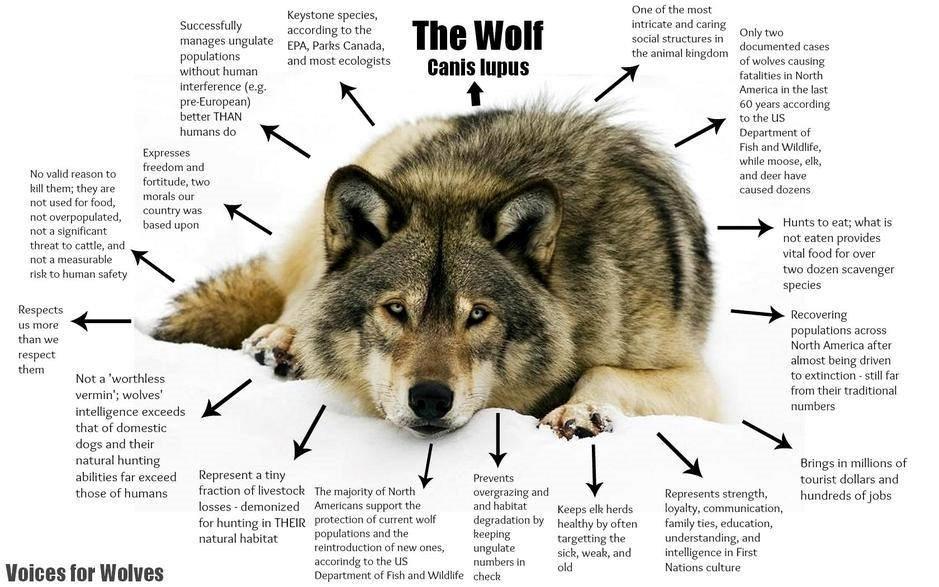
As states sanction hunts of iconic predators (grizzlies and black bears, wolves, mountain lions and coyotes), there remains a fact: People will eat little of those animals that they kill.

The search for a rationale in targeting predators must necessarily speak to reasoning beyond the simplistic argument advanced by fish and game departments that selling hunting tags generates revenue.

The issue of whether there’s an underlying moral — and compelling biological — justification for killing predators is taken up by two university professors in a new thought-provoking scientific analysis, “Wolf Hunting and the Ethics of Predator Control,” soon to be included in a new book, “The Oxford Handbook of Animal Studies.”

Author John Vucetich is a well-known Midwest wolf researcher and conservation biologist at Michigan Tech University; Michael P. Nelson is on the faculty at Oregon State University. In their paper they examine why large carnivores — which possess undeniable ecological value — are hunted.

Before we proceed let it be clear that Vucetich and Nelson did not write the paper to advance an anti-hunting agenda. They wanted to determine if any “good reason” for hunting predators exists.

“What counts as an adequate reason to kill a sentient creature?” they ask. “The hunting community has long recognized the value of this question to understanding the conditions under which various kinds of hunting is appropriate.”

Vucetich and Nelson consider the spectrum of societal attitudes toward predator hunting as expressed by trophy hunters, government wildlife managers, those who hunt for food, those who eat no meat and animal rights advocates.

They dissect the premise that predators must be controlled to ensure healthy populations of elk, deer, moose and pronghorn — and even, as is sometimes asserted, to protect people. They test the assertion that the best way of promoting conservation of a species is to place a value on its head and hunt it.

They also scrutinize the attitudes of so-called “wolf haters,” pointing out that unlike hunters of edible big game, whose pursuit seems to make humans more respectful of the animal, many who kill wolves are actually driven by a lack of empathy.

In a statement certain to spark debate, they charge: “Many instances of wolf poaching … are wrong because they are primarily motivated by a hatred of wolves. These instances of poaching qualify as wrongful deaths, if not hate crimes.

“To legalize such killing does not make them any less wrong. Moreover, people who threaten to poach wolves unless wolf killing is legalized are engaging in a kind of ecological blackmail … .”

Vucetich and Nelson also share thoughts about trapping: “A trophy is a kind of prize, memento or symbol of some kind of success. To kill a sentient creature for the purpose of using its body or part of it as a trophy is essentially killing it for fun or as a celebration of violence.

“And although there was once a time when trapping wolves for their pelts might have been a respectable means of making a living because wolf pelts were then a reasonable way to make warm clothing,” they state, “we no longer live in that time.”

Ultimately Vucetich and Nelson conclude that killing predators for sport isn’t justified biologically or on moral and ethical grounds.

They take government agencies and universities to task for not brokering honest discussions about such controversial issues as wolf management and predator control with citizens and students.

So often we do things in our society, they suggest, without bothering to provide the “good reason” for why.

Readers can judge for themselves. A copy of the analysis is attached to the online version of this story.

Idaho wolf/coyote killing derby wants double the area for hunt

Sep 29, 2014
Salmon – Salmon, Idaho may be a small town by anyone’s standards, with a little over 3,000 people, but they have big ideas. Located in the middle of the state along the banks of the Salmon River, it is famous for fishing, rafting, and now, wolf hunting.

Last year, Salmon, Idaho held their first annual Predator Derby on December 28-29. The news of the derby was condemned by people all over the world. Threatening letters and emails poured in, many with threats of bodily harm. But one Salmon resident, Billijo Beck defended the hunt, saying it was just the way they lived. “If you look up the definition of murder, it’s defined in human terms. Not in animal terms,” said Beck.

After winning a court challenge allowing them to hold their hunt last year, the group is holding their 2nd Annual Predator Derby on Jan. 2-3. 2015. There is one difference though. They want to expand the killing zone to almost double the size it was last year. They have petitioned the U.S. Bureau of Land Management (BLM) for approval.

Today the BLM said they would issue an environmental analysis on Thursday, and then take public comment for 15 days before issuing an answer. The contested area involves around 1,500 square miles. Environmental groups are saying they will protest the permit.

The group behind the killing derby, Idaho for Wildlife, is the same group that hosted the derby last year. At that derby, a number of activists and a journalist, Christopher Ketcham infiltrated the hunt. Ketcham wrote a scathing story, “How to kill a wolf,” for Vice. In the story, Ketcham describes a “good old boy” local who bought his group a round of drinks at a local bar. Cal Black then told the “supposed hunters” to “Gut-shoot every goddamn last one of them wolves.”

For those of you who wonder why a gut-shot is recommended, it’s the best way to kill a wolf, but the death is prolonged. Sick, yes. But that’s what these guys like to do. The only thing killed last year, besides a lot of hot air and liquor, was 21 coyotes, but no wolves. No one claimed the $1,000 prize.

Idaho for Wildlife is a supposedly patriotic organization, wrapped in the flag10171053_10152319527762440_4831074600876870909_n and espousing American ideals. Dedicated to the preservation of Idaho’s wildlife.The group also states they will “fight against all legal and legislative attempts by animal-rights and anti-gun organizations who are attempting to take away our rights and freedoms under the Constitution of the United States of America.” Interestingly, the group says they believe that wildlife management should be governed by science.

Read more: http://www.digitaljournal.com/news/environment/op-ed-idaho-wolf-coyote-killing-derby-wants-double-the-area-for-hunt/article/405980#ixzz3F1CGPs87