Exposing the Big Game

Forget Hunters' Feeble Rationalizations and Trust Your Gut Feelings: Making Sport of Killing Is Not Healthy Human Behavior

Exposing the Big Game

How the chaos of Hurricane Katrina helped save pets from flooding in Texas  

 https://www.washingtonpost.com/news/animalia/wp/2017/08/31/how-the-chaos-of-hurricane-katrina-helped-save-pets-from-flooding-in-texas/?utm_term=.7ea77055919f
 August 31

People and their pets seek shelter at the George R. Brown Convention Center in Houston on Aug. 28. (Jabin Botsford/The Washington Post)

As Hurricane Harvey pelted Houston with heavy rains over the weekend, a local television news station broadcast footage of flood evacuees sitting outsidethe George R. Brown Convention Center. The people weren’t waiting for space inside what would become a massive emergency shelter. They were choosing to remain outdoors because their pets were not allowed in with them.

That policy changed within a day, after a top elected official made clear both humans and animals were welcome at the city’s evacuation centers.

“We all saw what followed Hurricane Katrina, where people weren’t allowed to keep their pets with them, so they said, ‘Well, never mind, we’ll just stay outside,’” Harris County Judge Ed Emmett told reporters Sunday evening. “We obviously don’t want that to happen.”

Emmett wasn’t making just a passing reference to the catastrophe that hit New Orleans in 2005. During that disaster, many residents stayed put — and died in some cases — rather than heed rescuers’ instructions to leave pets behind as waters inundated homes. Others faced wrenching choices when they arrived at shelters that would not allow animals. One small white dog, Snowball, became a national symbol of these emotional separations after he was taken from the arms of a child who was boarding a bus to Texas that did not take pets. The boy cried so hard, according to an Associated Press report, he vomited.

One 2006 poll found 44 percent of people who chose not to evacuate during Katrina did so because they did not want to abandon their pets. Even so, the Louisiana SPCA estimated, more than 100,000 pets were left behind and as many as 70,000 died throughout the Gulf Coast.

A dozen years later, Katrina is viewed as a watershed moment in planning for pets during natural disasters. It changed federal and state policies — and, animal advocates and experts say, made clear Americans have widely embraced the idea of dogs and cats as family members.

“You saw pictures of dogs standing on roofs and cats swimming in these toxic waters, and there was a huge public outcry,” said journalist David Grimm, who wrote about the impact in his book, “Citizen Canine.” Katrina “was a real turning point,” he added, “where suddenly it wasn’t just, ‘This is how I view my pets.’ It’s, ‘This is how everyone views their pets.’”


Volunteers in boats rescue people and their pets from neighborhoods near Interstate 45 in Houston on Aug. 29. (Jabin Botsford/The Washington Post)

At the time, emergency management plans took only people into account. The result was an ad hoc approach to animals, with some responders flat-out turning away dogs and others agreeing to evacuate them. Animal protection groups, which quickly became overwhelmed with displaced critters separated from their owners, often found themselves at odds with local and state officials, recalled Wayne Pacelle, chief executive of the Humane Society of the United States.

The sense that systems had failed both pets and people quickly reached Capitol Hill. In 2006, Congress overwhelmingly passed legislation requiring local and state authorities who want federal emergency grants to include pets in disaster plans. It authorized the use of federal funds for pet-friendly emergency shelters.

Snowball was the impetus.

“The dog was taken away from this little boy, and to watch his face was a singularly revealing and tragic experience,” Rep. Tom Lantos said at the time. The California Democrat, who died in 2008, sponsored the House version of the Pet Evacuation and Transportation Standards (PETS) Act — legislation “born at that moment” with Snowball, Lantos said.

More than 30 U.S. states now have laws that address disaster planning for pets and service animals. Texas requires its emergency management officials to help localities devise plans “for the humane evacuation, transport and temporary sheltering of service animals and household pets in a disaster.”

Not all evacuation centers in Texas are accepting pets this week, but many are accommodating them in separate areas or coordinating with off-site shelters to house them. In San Antonio, for instance, a state-run reception center for Harvey evacuees routes pets to a city-run animal shelter, after assigning them and owners individual ID numbers that will help reunite them later.

The images and stories out of Southeast Texas — of rescue boats loaded with dogs and people — are far different from those that emerged during Katrina. Lisa Eicher’s experience offers just one example. When the Conroe, Tex., resident woke Monday, floodwaters had nearly submerged the 15 feet of steps up to the first floor of her family’s home. Before she, her husband and four children could pack more than a garbage bag of clothes, firefighters had rolled up outside in a muddy dump truck and were telling them to leave.

“We have two kids with Down syndrome, a pig and a three-legged dog,” Eicher recalled telling them.

“Sounds good,” one firefighter responded. “Let’s do this.”

Soon Eicher’s husband and a firefighter were helping Pip, a terrier mix, swim across the murky water. Next up was Penny, a mottled potbellied pig that floated on a yellow life jacket.

“A dog is one thing, but a pig is different,” Eicher said in a phone interview from Austin, where the family — pets included — are staying with friends. “I was worried that we weren’t going to be able to bring her. … The fact that they were so good with our pets was really sweet and meant a lot.”

The American Society for the Prevention of Cruelty to Animals and the Humane Society both greatly expanded their disaster response divisions after Katrina. The latter now has memorandums of understanding with many local organizations and localities — including the Houston suburbs of League City and Dickinson — that allow for more nimble and organized responses, Pacelle said.

“In a general sense, Katrina was the teaching moment in the United States for people to understand … that the lives of humans and animals in our communities are intertwined,” he said. “You couldn’t look at individuals. You had to look at the family group when you approached disaster response.”

Animals that do not remain with owners also have more places to go these days, advocates say. As Harvey approached, several Texas shelters shipped dogs and cats out to distant facilities to make room for furry refugees. Those far-off places, such as the Humane Rescue Alliance in Washington, in turn revved up adoptions to clear even more space.

“We’re working nonstop to get out every single animal that was currently adoptable in some of these cities where we know that these evacuees are going to need to come,” said Katie Jarl, senior state director in Texas for the Humane Society. The organization sent more than 100 shelter animals out of San Antonio between Monday and Wednesday.


The first rescue dog is offloaded as St. Hubert’s Animal Welfare Center in New Jersey welcomes nearly 100 dogs displaced by the hurricane in Texas. (Bob Karp/Daily Record/AP)

Much of the movement is relying on sophisticated transport networks, many of which grew out of the chaos during Katrina. On Tuesday night at 10 p.m., eight mixed-breed dogs — labs, hounds and pit bulls — arrived at the Somerset Regional Animal Shelter in Bridgewater, N.J. They had come from San Antonio on a plane flown by Wings of Rescue, a California-based charity that uses private aircraft to fly animals from high-kill southern shelters to northern areas where euthanasia rates are lower.

“We saw a lot of dogs out of that plane getting a second life,” said Brian Bradshaw, who manages the Somerset shelter. “By helping these animals, we are also helping people, and that goes hand in hand.”

The Harvey efforts are by no means “copacetic or settled,” Pacelle said. Citing health concerns, some emergency shelters are turning away people with pets, as are hotels — though both face shaming on social media when they do so. The corporation that owns Holiday Inn Express apologized this week after reportsthat its Katy, Tex., hotel rejected a family with three dogs.

And though animal advocates say arrangements have greatly improved since 2005, they are still not ideal for some pet owners. One Corpus Christi couple who evacuated to San Antonio opted to go to a hotel after learning their dog would be temporarily housed at the city-run shelter, rather than with them at an evacuation center.

“This isn’t a dog. This is a child,” Kevin Pogue told the Corpus Christi Caller-Times. “I’m not going to be separated from my child; it’s that simple.”

That Pogue’s sentiment is now enshrined in legal code, which has long viewed pets as property, is one of Katrina’s lasting legacies.

“Pets essentially became members of society: You rescue the people, and you also try to rescue the cats and dogs,” said Grimm, the journalist. “Nobody is passing laws saying you should rescue the toasters. It’s really a huge, fundamental shift that happened.”

Stephanie Kuzydym and Emily Wax in Houston contributed to this report. 

Read more:

These rescuers take shelter animals on road trips to help them find new homes

Harvey is also displacing snakes, fire ants and gators

A photo of a dog carrying a bag of food after a storm hit Texas went viral. Here’s his story.

Harvey is a 1,000-year flood event unprecedented in scale

11 unforgettable animal rescues in brutal aftermath of Hurricane Harvey

http://www.sandiegouniontribune.com/opinion/the-conversation/sd-animal-rescued-in-texas-after-hurricane-20170829-htmlstory.html
“Countless stories and images out of Texas have revealed the
generosity with which Americans are treating their neighbors in the
aftermath of Hurricane Harvey. But humans were not the only ones in
need of rescue.
“Ongoing efforts across badly flooded areas of southeast Texas also
involve saving hundreds of animals — dogs, cats, cows, donkeys, horses
and even birds — that were immediately displaced after the storm.
“Animal rescue groups outside of Texas also swooped in to take some of
those displaced animals and temporarily shelter them on dry land in
states like California. Some 100 dogs and cats arrived in San
Diegothis week.
“These 11 unforgettable images and videos show how humans came to the
aid of animals affected by the storm.”

Daily Harvey Update: Watch this happy reunion

HSUS logo
Jim, the Animal Rescue Team is going above and beyond to be a light in Harvey’s dark destruction. The devastation is difficult to witness, but we’re trying to deliver as many happy endings as possible. We rescued an English bulldog and poodle and just yesterday, they were reunited with their family. The rescue aired on CNN’s Anderson Cooper 360. Watch the heartwarming moment:

Rescued dogsToday, two additional boat teams and veterinary support are on the ground to assess ill and injured animals and prepare hundreds of animals for transport from Dickinson and League City to our partners at the Houston Humane Society and Emancipet.

Families and pets alike have experienced life-shattering loss at the hands of Harvey. The HSUS community is one of compassion and love, and we stand by these impacted families today.

We will continue to serve these communities and their animals, and pull these pets to safety.

We are here for you, Texas.

Katie Jarl
Texas Senior State Director, The Humane Society of the United States

P.S. As an important member of The HSUS community, please make an emergency gift to our Disaster Relief Fund today to make our preparedness, rescue and relief work during this and future disasters possible. If you’ve recently donated to our Disaster Relief Fund, thank you so much! We’re still processing gifts.

Port aux Choix men help free beached whale

A group of men from Port au Choix, on Newfoundland’s Northern Peninsula, spent a cold 45 minutes in the water this week trying to help a beached minke whale get back out to sea.

‘I just went in with my pants, a pair of jeans and my sneakers on.’ – Todd House

Todd House and two others ventured into the frigid water near an area known as Eastern Point on Monday night to try to rescue the whale.

“I just went in with my pants, a pair of jeans and my sneakers on,” he told the Corner Brook Morning Show.

“At that time I didn’t know what to do. One of the young men there was actually grabbing it by its back fin and trying to push it out by himself.”

Minke whale Port au Choix <https://i.cbc.ca/1.4181799.1498668143%21/fileImage/httpImage/image.jpg_gen/derivatives/original_620/minke-whale-port-au-choix.jpg>

House says the minke whale was clearly distressed and running low on energy as they tried to get it back out in the open waters of the North Atlantic. (Brenda’s Photography)

House said the whale was visibly distressed and quite tired-looking, and he and the other men weren’t having much luck getting it to move across the sand and farther out.

With stamina running low, House got the idea to run ashore and find a few pieces of two-by-four to try to lift the whale off the ground.

“That’s what we used, just to slowly put it in under so far and just push the whale so much,” he said.

minke whale port au choix 2×4 <https://i.cbc.ca/1.4181801.1498668276%21/fileImage/httpImage/image.jpg_gen/derivatives/original_620/minke-whale-port-au-choix-2×4.jpg>

The three men used two-by-fours to try and dislodge the whale from the sticky sand below. They managed to get it out farther than it had been but had to give up their efforts after 45 minutes. By the morning, the whale was gone. (Brenda’s Photography)

After 45 minutes up to their knees in the icy waters — and having moved the whale only a few feet — the three men finally gave up, with the hope that the tide would come in and help the whale get free. They went home, and agreed they would keep an eye on it.

When they returned the next morning, the whale was gone, presumably having swam off in deeper waters.

A wildlife officer on the beach told them if the whale was wounded or sick it would likely return to the beach to die, but so far that hasn’t happened which is a good sign.

House said he’s content knowing the men may have played a role in saving the whale’s life.

“I felt good about it,” he said. “I’d do it all over again.”

http://www.cbc.ca/news/canada/newfoundland-labrador/port-au-choix-whale-beached-free-1.4181692

minke whale port au choix 2x4

11 Elephants Rescued from a mud hole

Asian elephants got stuck in a mud-filled old bomb crater in Cambodia. A collaborative rescue effort saved them all.

Our annual fund-raiser is here! Help EarthSky stay an independent voice.

On March 24, 2017, a collaborative effort between local farmers and conservationists saved 11 Asian elephants that had gotten stuck in a mud hole in the Keo Seima Wildlife Sanctuary in Cambodia.

The hole – a mud-filled old bomb crater that dates to the Vietnam War – had been enlarged by farmers to store water. Its roughly 10-foot (3-meter) walls were too high for the elephants to scale and, as the mud dried, the elephants became further entrenched.

When the farmers discovered the elephants, they notified the Department of Environment, who in turn notified the World Conservation Society (WCS) to mobilize a rescue.

The elephants, before they were freed. Image via Wildlife Conservation Society.

The team helped water and feed the elephants to hold them over while a ramp was constructed for the elephants to escape.

A few hours after the work began, all were free.

The rescue averted what would have been a tragedy, said Tan Setha, WCS Technical Advisor to the protected area. Setha said in a statement:

This herd consisted of three adult females and eight juveniles of various ages, including a male that had almost reached maturity. These elephants represent an important part of the breeding population in Keo Seima Wildlife Sanctuary, and their loss would have been a major blow for conservation.

Dr Ross Sinclair, WCS Cambodia Country Director, added:

This is a great example of everyone working together in Cambodia to save wildlife. Too often the stories around conservation are about conflict and failure, but this is one about cooperation and success. That the last elephant to be rescued needed everyone to pull together on a rope to drag it to safety is symbolic of how we have to work together for conservation.

Bottom line: Eleven Asian elephants were rescued from a mudhole in Cambodia in March 2017, thanks to a collaboration between local farmers and conservatioinists.

Jethro Tull’s Ian Anderson invites you to a Fundraiser for UK Wildlife

CHARITABLE CAUSES

OAK AND FURROWS WILDLIFE RESCUE CENTRE

Charity Gala Dinner and Auction, 4th March 2017MORE INFO

If you have a fondness or a passion for wildlife, or simply vague feelings of guilt about the plight of our many UK species of wild fauna, please consider helping with a donation to Oak and Furrows.

We, the human species, have made life and reproduction difficult for our many indigenous animals through our creation of roads, railways and the encroachment of agriculture on the wild spaces of our countryside.

As a result many animals are found injured or lost by members of the public each year. With the help of and redirection by local vets, Oak and Furrows receives, cares for, nurtures and releases back into safer habitats, hundreds of creatures every year. The Centre with its small overworked team of dedicated professionals and volunteers relies on donations and the goodwill of you, the public.

For more information please visit: http://www.oandf.co.uk

Thank you.

Ian Anderson

Beloved pets also lost, displaced by mudslide

[Only now, after the human death toll has been tallied up, do we hear about the no-human casualties of the Oso slide.]

imagesCALYDLG2

http://www.komonews.com/news/local/Beloved-pets-also-lost-displaced-by-mudslide-253195501.html

By MANUEL VALDES, Associated Press Published: Mar 31, 2014
DARRINGTON, Wash. (AP) – After a rescue worker called her animal clinic saying dogs had been extracted from the destruction left behind by a massive mudslide, veterinary assistant Cassna Wemple and her colleagues raced to this small Washington town near the debris field.

They found one of the dogs at the fire station among a flurry of rescue workers and townspeople. Bonnie, an Australian shepherd, was wrapped in a comforter. She was muddy and had a broken leg in a splint. One of Bonnie’s owners had just died in the slide. The other had been pulled out.

“She was just very much in shock,” Wemple said.

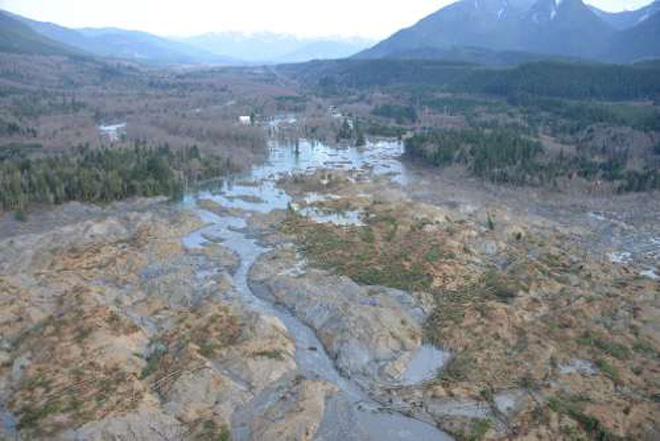
In this rural community north of Seattle, Wemple said it’s common for residents to have plenty of animals, including pigs, horses, rabbits, chickens, dogs and cats. When the deadly slide struck March 22, beloved pets and livestock also perished.

The full number of pets and livestock killed may never be known. Authorities also don’t have a clear number of how many pets are missing or displaced by the slide, incident spokespeople have said. There are at least 37 horses displaced and at least 10 dogs that were missing, according to different animal services helping the recovery efforts.

“To know that their animals are lost and may or may not be found. It’s heartbreaking. It’s heartbreaking for the people and the animals,” said Dee Cordell of the Everett Animal Services.

Wemple said rescue workers could hear horses crying from the debris hours after the slide, but because of the unsafe conditions, rescuers couldn’t go in.

For those animals that survived, the community and outsiders have rallied in support with donations. Bag after bag of food for dogs, cats and chickens have filled up the rodeo grounds outside Darrington, which are serving as a makeshift shelter. At last count, it totaled nearly 45,000 pounds. On Saturday alone, 27 tons of donated food from Purina arrived.

Lilianna Andrews’s seven horses are now at the rodeo grounds. Their house wasn’t buried in the mud, but the displaced earth formed a dam, backing up the Stillaguamish River into a lake that rose waist-high in the house and as high as 10 feet in the barn.

“We got them out before they got any water on them,” the 13-year-old said after helping unload hay at the rodeo grounds on Saturday. “But they would have drowned. So we just had to evacuate them from the water, and they’ve been staying here ever since.”

The Andrews were in Seattle when a friend called to check on their whereabouts. When they realized it wasn’t just a small mudslide blocking the road, they hurried home. Their dog, cats and chickens are fine too, Andrews said, although they haven’t been able to get in to feed the chickens.

Volunteers are also tending to 20 horses that belonged to Summer Raffo, a farrier who died in the slide.

Wemple’s clinic, Chuckanut Valley Veterinary, treated three dogs hurt from the slide. One of those dogs, named Blue, had to have one of his legs amputated last week. His owner is still hospitalized. The owner’s daughter has visited the dog daily.

“He’ll be happier in the long run. No more pain in that leg,” Wemple said.

Bonnie’s owner was Linda McPherson, a retired librarian. She was in her living room reading newspapers with her husband, Gary “Mac” McPherson, when the slide hit. She died. He lived. Bonnie has been kept at the clinic for rehabilitation. At night, one of the staffers takes her home.

A memorial is planned for next week for Linda McPherson. Wemple said the staffer will bring the Australian shepherd to the memorial for a reunion with her surviving owner.

___

Associated Press writer Jonathan J. Cooper contributed to this report.

Bring Out Your Dead

There’s a point reached in every search and rescue effort when you realize that you’re no longer searching for survivors, you’re looking for bodies. The Malaysian jet searchers surely reached it long ago, while the rescuers in the tragic Oso mudslide are still grappling with it. Today they began using cadaver-sniffing dogs, which must have been an ominous sign for those on the scene. I know as long as there’s still the slightest chance of finding someone alive they must keep searching. The thought of anyone floating the Pacific or trapped for days in the dark is enough to spur people on beyond the usual bounds of reasonability.

I grappled, and then reached the point of realization on day four of a search for a missing trail worker, ironically also in that same area. I was working on a trail crew on the Darrington district for the U.S. Forest Service where I not only experienced the anguish of not being able to find someone, but also frustration with a disorganized search party, led by an overly bureaucratic Forest Service and local sheriff’s department.

It was my first day out with this particular trail crew. I hadn’t yet had the chance to

Text and Photograph©Jim Robertson, 2014.

Text and Photograph©Jim Robertson, 2014.

meet the victim we would soon frantically be looking for. Her name was Jill; I remember because we yelled it over and over the first night we searched for her. She was only 18 and not very skilled in outdoor survival.

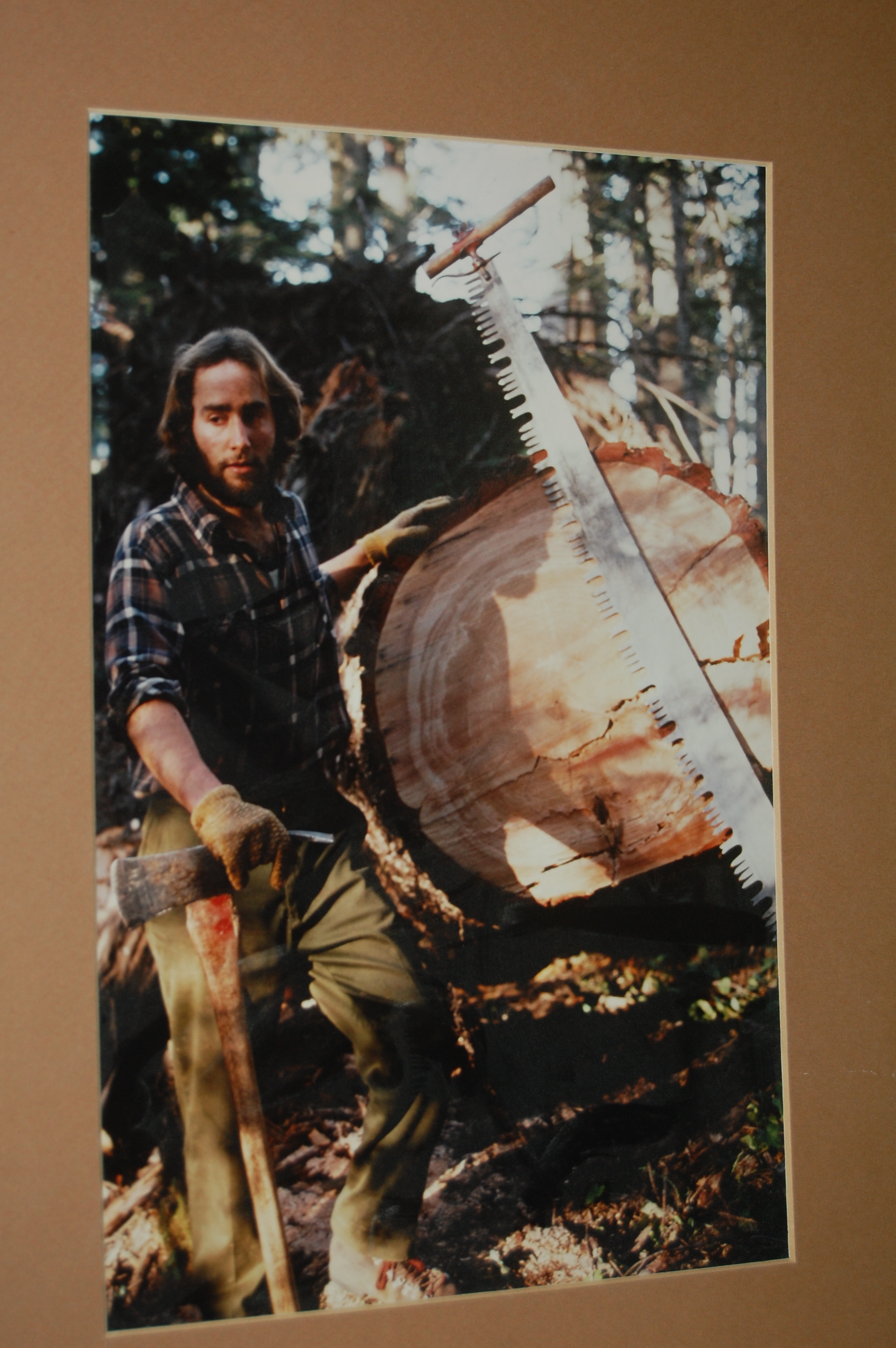
Our assignment that day had been to split into two groups and teach the wilderness rangers about clearing trails while they told us what they knew about wilderness ethics. The group I was in hiked up the Suiattle River in the Glacier Peak Wilderness area, sawing out blown down trees with a cross cut saw as we went. The other group, that included Jill, was to hike up the Sulfur Mountain trail to the snowline, cutting out blow-downs as they went.

That group was led by a gung ho wilderness ranger who was more interested in a race to the top of the mountain for a view than with staying together. They skipped past the logs across the trail and hastily made for the mountaintop. When Jill had to rest, exhausted, she told them, “You guys go on without me,” and they did just that.

The climb up to the view took a couple of hours and Jill probably got hungry or tired of waiting. Deciding to head down to camp, she must have accidentally taken an animal trail that led down toward a steep ravine—or at least that’s what we surmised later. She wasn’t there when her group returned down from their single-minded climb and she never made it back to camp. My group was about to have dinner when they burst into camp and asked if we’d seen Jill. We abandoned our meals and started up the switchbacks yelling her name but heard no reply.

Long story short, we searched for four days, over the same ground, all the while staying well clear of the steep ravine—as per the search leaders’ orders. At the morning meeting on the third day I told the sheriff I had been with a couple of volunteers and their bloodhound called in from Canada the day before. The dog had tried to drag us toward the steep mountainside that led to the ravine above Sulfur Creek, so we should be searching there. Since I was a nobody, the sheriff ignored me and ordered yet another search of the same territory, down the gentler slope to the Suiattle River, that we had covered several times already.

By the fourth day, the wilderness ranger who had abandoned Jill in the first place announced, “I really have the feeling we’re going to find her today.” No matter how I tried to share in his enthusiasm, I couldn’t help but think to myself, “We’re looking for a body now.” Anyone injured out there would have a hard time surviving so many cold nights without help. It was only then that climbers with ropes and gear were called in to check the ravine. Soon we heard the radio call to return to basecamp and abandon the search.

We weren’t told if Jill was alive or dead, just that we should stay in basecamp for “debriefing.” After several hours of waiting, we finally saw a helicopter heading our way, dangling a body bag. Those who knew her burst into tears. The morbid sight was a bit easier for me to take; by then I had known for a while that we were on a body recovery mission. During the debriefing we were told that she died instantly from the fall; I just have to trust that that was true. At least she was found; the news from Oso tells us, “Grim reality: some slide victims may not be found.”

Jill’s father later tried to sue those responsible, but learned that you can’t sue the federal government. In typical Forest Service fashion, the wilderness ranger who left Jill alone on the mountainside was not fired, but promoted to conceal any wrongdoing on his part.

140326_usgs_slide_07