The Guns of Mid-Winter

When I wrote my book, Exposing the Big Game, its subtitle, Living Targets of a Dying Sport, was appropriate. But like so many things in this rapidly changing world, by the time the book came out, that subtitle was becoming obsolete. Now, in the second decade of the 21st century, the sport of blasting birds, murdering deer, culling coyotes and plunking at prairie dogs—in a word, hunting—is seeing a seemingly inexplicable resurgence.

Lately we’re seeing longer hunting seasons on everything from elk to geese to wolves, with more new or expanded “specialty” hunts like archery, crossbow, spear (and probably soon, poison blow gun) in states across the country, than at any time in recent memory. Meanwhile, more Americans are taking up arms against the animals and wearing so much camo—the full-time fashion statement of the cruel and unusual—that it’s starting to look ordinary and even, yuppified.

So, when did cruel become the new cool and evil the new everyday? Are the recruiting efforts of the Safari Club and the NRA finally striking a cord? Did the staged “reality” show “Survivor” lead to the absurdly popular thespian cable spin-offs like, “Call of the Wildman,” “Duck Dynasty” and a nasty host of others? Is “art” imitating life, or is life imitating “art?” Did the author of the Time Magazine article, “America’s Pest Problem: It’s Time to Cull the Herd,” ratchet up the call for even more animal extermination?

Whatever the reason, I don’t remember ever hearing so many shotguns and rifles blasting away during the last week of January. By the sound of the gunfire, coupled with the unseasonably dry and warm weather here in the Pacific Northwest, you’d swear it was early autumn.

Text and Wildlife Photography ©Jim Robertson, 2014. All Rights Reserved
Text and Wildlife Photography ©Jim Robertson, 2014. All Rights Reserved
Dallas Safari Club Lauds Obama Admin Decision on Antelope

http://www.gilmermirror.com/view/full_story/24425321/article-Three-Amigos–Becomes-Law–DSC-Lauds-Move-for-Rare-Species?instance=home_news_bullets

Three Amigos’ Becomes Law; DSC Lauds Move for Rare Species

WASHINGTON (Jan. 21, 2014)—President Obama has signed into law the 2014 Omnibus Bill, which includes a Dallas Safari Club (DSC)-backed provision to ensure the future of three antelope species nearly extinct in their native countries but flourishing on ranches in Texas.

The “Three Amigos” provision, for which DSC has lobbied over the past several years, exempts U.S. populations of scimitar horned oryx, Dama gazelle and addax from Endangered Species Act protections. The exemptions clear the way for ranchers to maintain herds of these exotic game animals and to offer hunts without federal intervention. Hunting revenue incentivizes ranchers to ensure that populations will continue to thrive.

Author of the provision, Rep. John Carter (R-TX-31), said, “This legislation gets big government out of the way so that ranchers can begin working to bring these rare antelope populations back to former levels. This has been a long time in coming, but we got it done.”

Rep. Pete Sessions (R-TX-32) and Rep. Ken Calvert (R-CA-42) also were key supporters.

“I’m pleased that the House and Senate were able to reach an agreement that allows American sportsmen to continue conserving the ‘Three Amigos,’” said Sessions. “Despite the onerous and unnecessary federal regulations that have recently threatened the ongoing work to preserve the existence of these endangered antelope, this Omnibus Bill takes important steps to protect the ‘Three Amigos’ and preserve a rich sporting heritage.”

The antelope were exempt from the Endangered Species Act from 2005 until 2012. During that time, populations experienced dramatic growth in the U.S. However, the U.S. Fish and Wildlife Service was forced to remove the exemptions due to legal action that prompted a cumbersome and lengthy permitting process, all of which led to a dramatic population decreases. For example, scimitar horned oryx numbers in Texas are now at nearly half of 2010 levels.

“We’re very grateful to Congressman Carter for offering ‘Three Amigos’ legislation, and to Congressman Pete Sessions and Senator John Cornyn for insisting that it be part of the Omnibus Bill. This conservation measure wouldn’t have happened without their dedicated leadership. Senator Cornyn also played a big role behind the scenes in securing Senate support for this specific legislative fix,” said Ben Carter, DSC executive director. “Thanks to our DSC team and the Exotic Wildlife Association (EWA) reps in Washington for helping to make this happen.”

Organizations partnering with DSC on this legislation include the EWA, Congressional Sportsmen’s Foundation, National Rifle Association, Safari Club International and North American Deer Farmer’s Association. DSC’s Washington representative Glenn LeMunyon and EWA’s Liz Williams and John Blount also played vital roles in the process.

About Dallas Safari Club (DSC)

Desert bighorns on an unbroken landscape, stalking Cape buffalo in heavy brush, students discovering conservation. DSC works to guarantee a future for all these and much more. An independent organization since 1982, DSC has become an international leader in conserving wildlife and wilderness lands, educating youth and the general public, and promoting and protecting the rights and interests of hunters worldwide.

Read more: The Gilmer Mirror – Three Amigos Becomes Law DSC Lauds Move for Rare Species

It’s Terrible About Those Death Threats

I don’t know who is sending would-be rhino Corey Knowlton all those death threats we keep hearing about, but I think it’s just terrible.

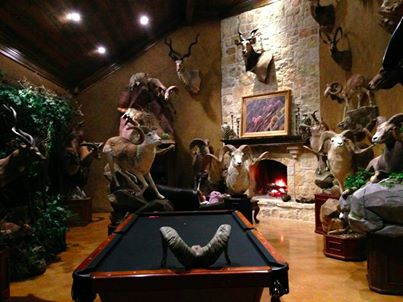
It’s terrible they waited until after he’d killed all those other 120 species—from every continent—that line the walls of his trophy1613918_577895065613412_412557772_n room. Too bad they held off until he had a chance to murder one of every species of wild sheep in existence, for instance. It’s a shame the 35 year old lived long enough to become the co-host of a hunting show on The Outdoor Channel which extols the virtues of snuffing out wildlife and encourages animal assassination in the name of sport.

It’s an absolute tragedy they waited until he won last week’s Dallas Safari Club auction to hunt a black rhino in Namibia. Now, unless the threats are in fact serious and carried out in the coming weeks, he will get the chance to destroy yet another undeserving sentient being in the name of ego, selfishness, arrogance and hedonism.
____________________________

For those not keen on lethal action, here are 3 things you can do to help:

1) PETITION: http://e-activist.com/ea-action/action?ea.client.id=104&ea.campaign.id=24844
2) PETITION: http://www.ifaw.org/united-states/get-involved/protect-black-rhinos-trophy-hunters
3) FB page with USFWS contact info and sample letter for writing to ask them to deny permit: https://www.facebook.com/events/242483775925213/

1017393_10202261526713538_1876940690_n

“Endangered” Hunter Auctioned off to Save Species

Believing the spin that “hunters are an endangered species,” trophy-hunter hunting group, the Sahara Club, a conservation group dedicated to preserving the hunter herd for future generations of trophy-hunter hunters to harvest, auctioned off asuccessful anti-hunt chance to hunt an aging, expendable hunter to raise funds for their cause. Taxidermy services will also be awarded to the winning bidder. Proceeds will be used to enhance hunter habitat for the species known taxonomically as Homo huntsman horribilis and will go towards funding more logging roads to allow access for their trucks and four-wheelers, as well as building more conveniently located gas station/mini-marts, taverns and mobile home parks.

Biologists blame a long history of inbreeding for the decline in hunter fertility and viability. When asked about the ethics of hunting down and killing this unfortunate individual, a Sahara Club spokesman stated, “Overall I think it will be a good thing. While it may bad for this individual hunter, it is in the interest of conservation of the hunter species.” If the auction idea proves to be a success, the group plans to hold similar events for loggers, ranchers, commercial fishermen and other resource extractors also said to be endangered species by industry spin doctors.

Individuals chosen to be hunted down and harvested can thank the Safari Club for recently coming up with the idea of auctioning a rhino trophy hunt on an endangered black rhinoceros.

______________________

(This has been another installment in EtBG’s “Headlines We’d Like to See.”)


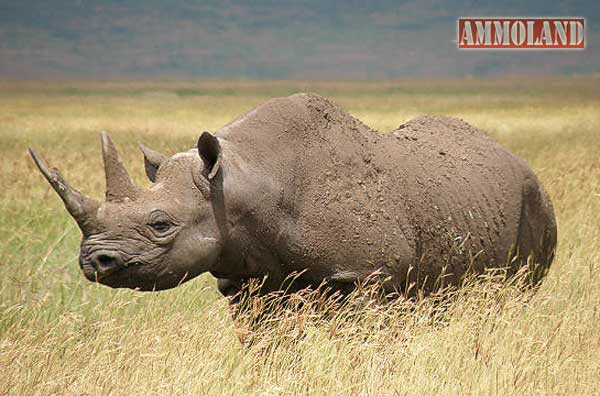
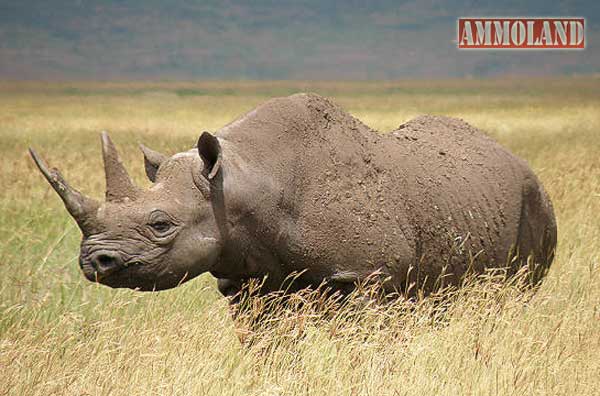
Black Rhino Auctioned for $350K in the Name of Conservation

black-rhino

http://www.psychologytoday.com/blog/animal-emotions/201401/black-rhino-auctioned-350k-in-the-name-conservation

by Marc Bekoff

Should we kill in the name of conservation? Individual animals are not disposable commodities

We live in a troubled and wounded world in which humans continue to dominate and to relentlessly kill numerous nonhuman animals (animals).

A Texas hunting club recently auctioned off an endangered black rhino purportedly to save other black rhinos and their homes in Namibia. The Dallas Safari Club says, “Namibian wildlife officials will accompany the auction winner through Mangetti National Park where the hunt will occur, ‘to ensure the correct type of animal is taken.'” This is not a very comforting thought.

This sale, in which an animal is objectified and treated like a disposable commodity, raises many questions about how we try to save other species. One major question is, “Should we kill in the name of conservation?” People disagree on what is permissible and what is not. My take and that of compassionate conservation is this is not an acceptable trade-off. (Please see “Ignoring Nature No More: Compassionate Conservation at Work”, Ignoring nature no more: The case for compassionate conservation, and a Forbes interview for more on compassionate conservation.) The life of every individual matters.

The world is in dire need of healing and we must revise some of the ways in which we attempt to coexist with other animals. Some of these methods center on heinous ways of killing them “in the name of conservation” or “to foster coexistence”. Compassionate conservation stresses that the life of every individual matters and trading off an individual for the good of their own or another species is not an acceptable way to save species. And, there doesn’t seem to be much evidence that it works in any significant way.

Black rhinos do indeed find themselves trying to avoid humans out to kill them, but in Namibia only 10 rhinos have been killed since 2006. Of course, this is 10 too many, but far fewer than have been killed in neighboring South Africa where around 1000 were killed in 2012 alone.

“To destroy nature is not to conserve nature. To mount the head of a wild animal in your trophy room is not conservation, it is repugnant.”

The above quotation comes from an essay in examiner.com called “Must conservation of wildlife including killing wildlife”. It was based on a 60 Minutes report titled “Hunting animals to save them?” While it dealt with wildlife ranches in Texas where people can pay a small fortune to kill various animals in canned hunts, it does raise important questions about killing in the name of conservation. Some other valuable snippets worth deep consideration include:

“If we want to conserve a population of, for instance, people native to a particular section of our country, would we kill a few to conserve the others? Isn’t that saying the group is more important than the individual? Isn’t it saying the individual gives up his or her rights to life because he or she belongs to a particular group, a particular species?”

“Each life—human animal and nonhuman animal—is an individual with an individual personality. Take a group of purebred puppies, for example—they may all look the same but they aren’t. They are their own individual beings with individual traits and personalities. Wildlife are individuals with their own individual traits and personalities. To say one is more deserving to live than another, in the name of conservation, bastardizes the word.”

Killing animals to save others sets a bad example and a regrettable precedent and is not the way to foster peaceful coexistence. When people say they kill animals because they love them this makes me feel very uneasy. I’m glad they don’t love me.

Cruelty can’t stand the spotlight and it is important that news about the sorts of activities discussed above be widely disseminated and openly discussed. That major media is covering them is a step in the right direction.

Bob Barker Says Dallas Safari Club’s Black Rhino Auction Is A ‘Cheap Thrill’

http://keranews.org/post/bob-barker-says-dallas-safari-club-s-black-rhino-auction-cheap-thrill

By

Credit The Price Is Right/Facebook
Bob Barker recently returned to “The Price Is Right” to celebrate his 90th birthday.

Bob Barker, the legendary game show host, has chimed in on the Dallas Safari Club’s black rhino auction that’s taking place this weekend. He wants the club to call off the event.

The club hopes to raise as much as $1 million to protect the rare black rhino by auctioning off the right to hunt one. But the auction has kicked up international controversy. Club members have been receiving death threats, and the FBI is investigating. (Update: On Saturday, the rhino hunt permit was sold for $350,000, the Associated Press reported.)

Friday afternoon, PETA released a letter from Barker, who hosted “The Price is Right” for 35 years. He’s also an animal rights advocate. (You remember his classic sign-off, right?: “Help control the pet population. Have your pets spayed or neutered.”)

The rhino to be hunted is an old bull that’s past the point of helping sustain the herd. This is the sixth such auction in Namibia, but the first to be held outside the country. The Dallas Safari Club says 100 percent of the money raised will go toward conservation efforts.

But in his letter, Barker says it is “presumptuous to assume that this rhino’s life is no longer of any value.”

“The rhino that your organization reportedly has in its crosshairs is an older ‘non-breeding’ male who has apparently been deemed expendable,” Barker wrote. “As an older male myself, I must say that this seems like a rather harsh way of dealing with senior citizens.”

Barker continues:

“Just because you’re ‘retired’ doesn’t mean you don’t have anything more to offer. In fact, I personally feel that I’ve accomplished a great deal since I quit my day job. Surely, it is presumptuous to assume that this rhino’s life is no longer of any value. What of the wisdom that he has acquired over the course of a long life? What’s the world coming to when a lifetime’s experience is considered a liability instead of an asset?

The Safari Club’s executive director, Ben Carter, recently spoke with KERA about his group’s efforts. Listen to that conversation here.

Here’s Barker’s full letter, provided by PETA:

I am writing to ask you to call off your planned auction of a chance to kill an endangered black rhino in Namibia. The rhino that your organization reportedly has in its crosshairs is an older “non-breeding” male who has apparently been deemed expendable. As an older male myself, I must say that this seems like a rather harsh way of dealing with senior citizens.

I can certainly sympathize with this animal’s plight (and I would think that many of your older members could as well). How many seniors have been written off simply because they have a certain number of birthdays under their belts? But just because you’re “retired” doesn’t mean you don’t have anything more to offer. In fact, I personally feel that I’ve accomplished a great deal since I quit my day job. Surely, it is presumptuous to assume that this rhino’s life is no longer of any value. What of the wisdom that he has acquired over the course of a long life? What’s the world coming to when a lifetime’s experience is considered a liability instead of an asset?

There are only about 5,000 black rhinos still alive in Africa. What kind of message does it send when we put a $1 million bounty on one of their heads? These animals are endangered for that very reason: money. What makes you any better than the poachers who kill rhinos to feed their families? At least, they are honest about their less noble motives. You try to dress up greed under the guise of “conservation.”

True conservationists are those who pay money to keep rhinos alive—in the form of highly lucrative eco-tourism—as opposed to those who pay money for the cheap thrill of taking this magnificent animal’s life and putting his head on a wall.

If you want someone’s head to go on a wall, pick mine. I will happily send you an autographed photo to auction off instead. My mug may not fetch as much money as that of a dead rhino, but at least we’ll all live to enjoy another sunrise in our sunset years.

Sincerely,

Bob Barker

MT Sentators Host “Sportsmen’s” Town Hall

Bitterroot Valley legislators to host sportsmen’s town hall on regulation changes

HAMILTON – Two Ravalli County state senators will host a sportsmen’s town hall meeting this week on proposed changes to hunting in the Bitterroot Valley.

The meeting will be held at the Bitterroot River Inn in Hamilton on Thursday, Dec. 19 at 6:30 p.m.

Sen. Fred Thomas, R-Stevensville, and Sen. Scott Boulanger, R-Darby, will host the event.

The purpose of the meeting is to allow sportsmen to offer ideas, comments and concerns about proposed changes to the local hunting regulations, including requiring all hunters to obtain an unlimited permit to hunt elk in three of the four districts in the valley.

Other topics will include the youth cow elk season, whitetail doe seasons, hunting district boundary changes, anti-trapping initiatives and wolves.

Guest speakers include Keith Kubista of the Montana Sportsmen for Fish and Wildlife, who will address the anti-trapping ballot initiative.

Safari Club Regional Representative Jon Wemple will talk about the loss of elk hunting opportunity under the

Photo Copyright Jim Robertson

Photo Copyright Jim Robertson

proposed valleywide permit system.

……Meanwhile in Oklahoma……

local OKC hunting news:

Oklahoma deer hunters have a final opportunity to take firearm into the woods
when the 10-day holiday antlerless gun season opens Saturday in most
of the state.
Deer taken during the antlerless season are not included in the hunter’s combined season limit.
Okla. state wildlife officials encourage a high doe harvest to reduce overpopulation and improve buck-doe ratio for a more healthy deer herd.

Archery deer season continues thru Jan. 15th statewide.

The Washita National Wildlife Refuge, which is located west of Butler, Okla., still has duck blinds available for three midweek hunts this season.
This refuge offers some of the best goose hunting in the state.
All the weekend dates have been filled. However, the midweek hunts are still available.

Safari Club A-Holes Auction Permit to Kill a Rhino

[And finally, this article, the last of today’s series on anti-animal A-holes (brought to you by good folks at “Ammoland”), needs no introduction…]

black-rhino

Rhino Permit to be Auctioned at Dallas Safari Club Convention
Published on Friday, October 11, 2013

DALLAS, TX – -(Ammoland.com)- —Through an historic collaboration between  governments, one hunter will have a chance to hunt a black rhino, help manage  and conserve the species, and import a rare trophy to the US in 2014.

The Dallas Safari Club (DSC) has been selected by the Government of the  Republic of Namibia to auction a special hunting permit with all proceeds  earmarked for rhino conservation in that country.

The US Fish and Wildlife Service has promised full cooperation with a  qualified buyer.

DSC will sell the permit during its annual convention and expo Jan. 9-12 in  Dallas.

An unprecedented sale price is expected.

“This fundraiser is the first of its kind for an endangered species,” said  DSC Executive Director Ben Carter, “and it’s going to generate a sum of money  large enough to be enormously meaningful in Namibia’s fight to ensure the future  of its black rhino populations.”

The Government of the Republic of Namibia approved the permit in accordance  with CITES provisions to generate crucial funding for rhino conservation  initiatives including anti-poaching efforts—while at the same time managing the  black rhino population within Mangetti National Park, where the hunt will take  place.

Science has shown that removing certain individual animals can help rhino  populations grow.

Black rhinos commonly fight to the death. In fact, the species has the  highest combat mortality rates of any mammal. Approximately 50 percent of males  and 30 percent of females die from combat-related injuries. Extremely aggressive  bulls are known to be population-limiting factors in some areas. Selectively  harvesting these animals can lead to population increases and greater  survival. [This is total b.s., by the way. Don’t these people have any faith in nature whatsoever?]

Rampant and indiscriminate poaching is threatening rhino populations across  Africa. Rhino horn has high black-market value, especially in Southeast Asia,  for ornamental uses and folk remedies, although medical research has disproved  actual benefits.

The Conservation Trust Fund for Namibia’s Black Rhino will receive 100  percent of the hunting permit sale price. Both DSC and contracted auctioneer Ed  Phillips of Houston offered to forego their customary sales commissions to  support the special cause.

Louisiana conservation attorney John J. Jackson, III, helped facilitate the  auction item and proceeds will be channeled through his Conservation Force, a  501(c)(3) nonprofit public charity, for income tax deduction purposes.

The winning bidder may hire his or her qualified outfitter or guide to lead  the hunt, which will be accompanied by Namibian wildlife officials.

About Dallas Safari Club (DSC) Desert bighorns on an  unbroken landscape, stalking Cape buffalo in heavy brush, students discovering  conservation. DSC works to guarantee a future for all these and much more. An  independent organization since 1982, DSC has become an international leader in  conserving wildlife and wilderness lands, educating youth and the general  public, and promoting and protecting the rights and interests of hunters  worldwide. Get involved at www.biggame.org.

Read more: http://www.ammoland.com/2013/10/rhino-permit-to-be-auctioned-at-dallas-safari-club-convention/#ixzz2iO32pdcv

BEING VEGAN – If I Were a Lion

September 21, 2013 | Filed under: Being Vegan | Posted by: Paul Graham
Las Vegas Informer

If I were a lion, people would often refer to me as “The King of the Beasts.”  We have been a part of stories, legend and lore from the very beginning.  We are majestic.  We have complex systems between us and are very social when we are resting, enjoying lots of head rubbing, touching, licking and purring.  We live in groups that we call “prides” of around 15 lions. Over the past 50 years or so life has become very difficult for us.  Most believe that our numbers are half of what they used to be, but our numbers are even lower than that.  There are only between 15,000 and 20,000 of us lions left in Africa, which is our primary habitat.  It is estimated that if things remain as they are, we all will be gone in as little as 20 years.

If I were a lion, I would be facing many challenges like habitat loss, conflict with humans, a smaller prey base, climate change and hunting.  We are allowed less and less to roam free.  The weather is simply not what it used to be and droughts are forcing us into smaller and smaller areas.  Men continue to hunt us, whether there are laws against it or not.  Trophy hunters from America killed over 500 of us last year alone.  Others hunt and kill us and sell our bones openly to Chinese markets for medicinal purposes. They can’t even prove that it helps people but people will buy it anyway. Pieces of us can be found cooked and served in restaurants throughout China and other places.  Because so many of us being killed are males, it is throwing off our entire system and is causing others in our prides to die as well.  It is the small-mindedness and great greed of men that are killing us off by the day.  When we are gone, who will they begin to hunt and come after?  Maybe they will begin to hunt each other.

If I were a lion, I could be captured and find myself in a zoo or circus.  They say that were are in the zoos for educational purposes, but what are people really learning?  To see how unhappy we are to be confined in such small areas and actually face the taunts of the people who are supposed to be there to learn about us and appreciate  us?  To pace back and forth, wanting every day to be back in the wild with our pride and the way things are supposed to be.  We are not meant to be caged.  Often times we are not treated well and when we grow old we can sometimes be sold to private parties for more captivity, experimentation or even to be eaten as part of some exotic dinner.  In the circus we are kept in even smaller cages where there is no room to even roam, just to lay and think about this miserable existence.  We are paraded out in front of people to put on a show.  What most don’t see or know about is how they beat and prod us to get us to do what they want.  Why do people bring their young to see a magnificent lion reduced down to this as some sort of cheap spectacle?  Then we are forced back to that small cage with not enough food or water and no protection from the elements. Why is this even allowed?

If I were a lion, I can see that the end is near.  While we have lived and thrived for centuries upon centuries, we are now going away primarily at the hands of men.  We have survived many things over the course of time, but we cannot seem to stem the tide on our own as every day we are being picked off one by one.  What will the day be like when no one will be able to say that a Lion King exists anymore?  People will tell their children about these remarkable creatures who used to roam this Earth.  “Why did they die Mommy…did they have to die?” No, we do not have to die.  We are not dying just on our own, we in fact are being killed…murdered for the pleasure and profit of men.  If I were a lion, I would need your help.  Help keep these hunters and poachers away and to protect our lands and habitats. Make the laws and back them up. Please allow us to do what we have always done.  Let us go from the cages of zoos, circuses and amusements we are kept in.  Back to the wild or at least a sanctuary.  It is not too late to change this, but if the kind and compassionate do not act…it will be.  And then we will be gone from this Earth only to be found in your story books forever more.

01bfb39948b2f313b238ba43f926ea25

IDA Action Alert: Tell Your Senator to Oppose The Sportsmen’s Act 2013 (S. 1335)

from: In Defense of Animals

The formula to protect wild animals from cruelty is simple: anything that the Safari Club International (SCI) supports MUST be opposed.

The SCI, an atrocious trophy hunter organization, is currently lobbying heavily for Selk-000-home17300 1335, sponsored by Sen. Lisa Murkowski (R-AK). If passed, the Act would make hunting and trapping a priority to be considered on federal lands–public lands that are owned and funded by us, the Public.

The bill would allow hunting and trapping in designated wilderness areas, allow “volunteers” to help in the killing of so-called “excess” animals on Federal land, including National Parks, increase the share of federal lands turned into shooting ranges, and legalize the transporting of bows through national parks and the importation of “trophies” from polar bears kills in Canada.

Please contact your Senator immediately and tell her/him to vote “NO” on the Sportsmen’s Act 2013 (S. 1335). The threats our wildlife face come from many directions- loss of habitat, trophy hunters, poaching, conflicts with humans and or human-based activities, as well as the hardships of living in the wild as predator or prey. The last thing we need right now is to open our national parks or wilderness areas that currently do not allow hunting to more killing.