Exposing the Big Game

Forget Hunters' Feeble Rationalizations and Trust Your Gut Feelings: Making Sport of Killing Is Not Healthy Human Behavior

Exposing the Big Game

Things you see when you don’t have a camera

A trip to town yesterday was pretty amazing, wildlife-wise. Unfortunately I didn’t bring my camera. From the north side of the Astoria bridge we saw the humpback whale who’s been seen hanging out around in the lower Colombia River for a few days.

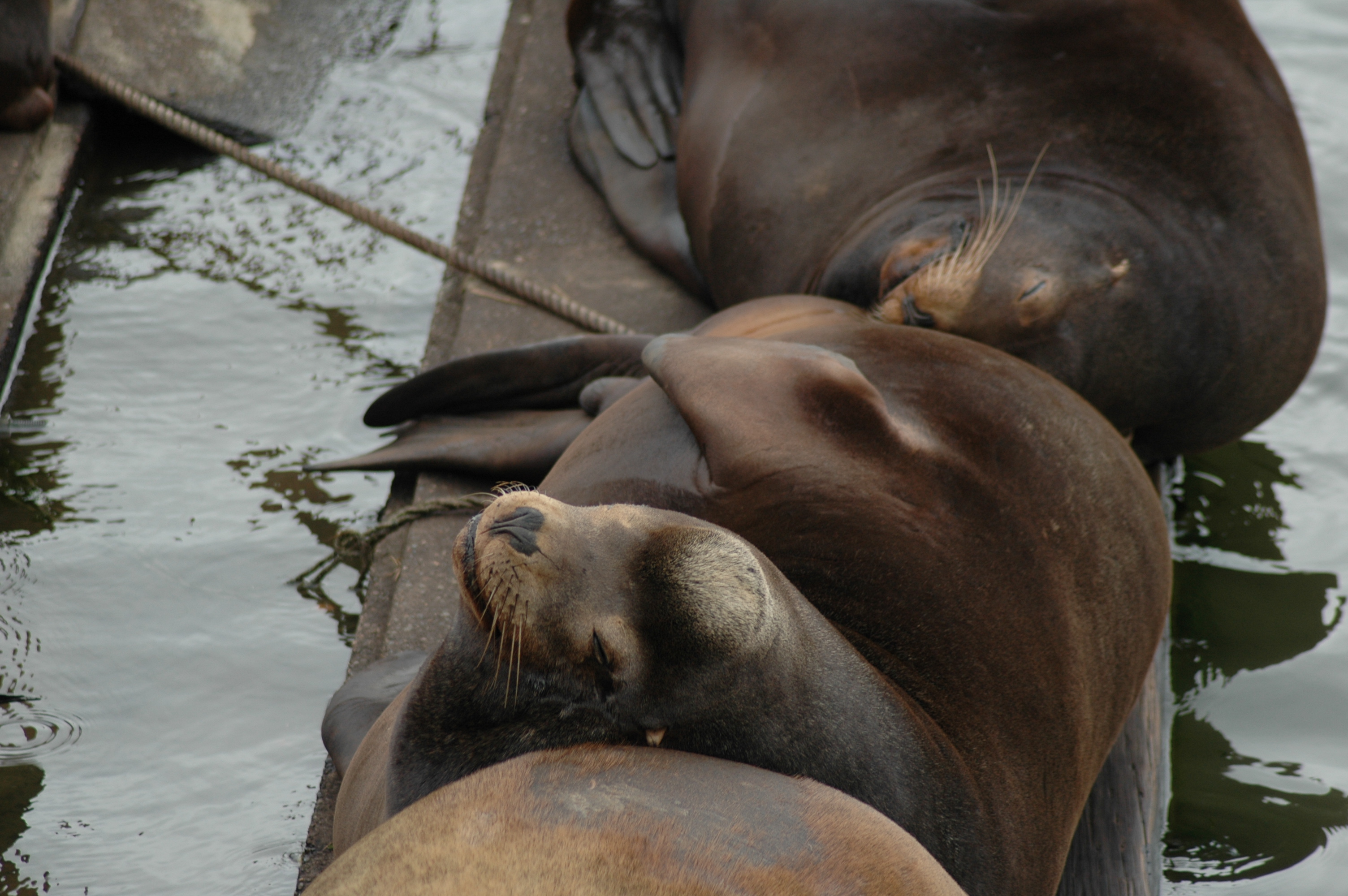
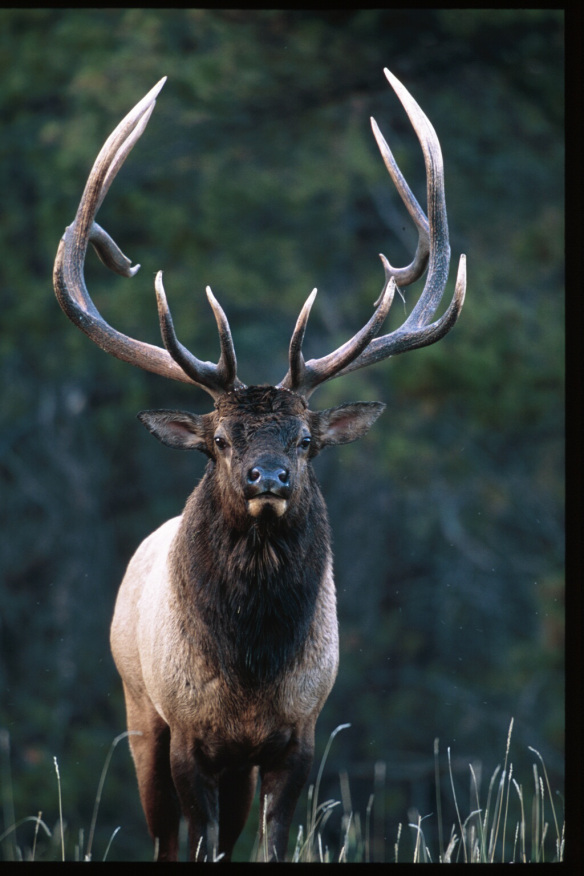
Then, after visiting the sea lions who reside on the East Moring Basin docks, we went to Hammond, by to Fort Stevens State Park, and watched a friendly herd of elk close up in a scene reminiscent of Mammoth Village in Yellowstone National Park. 

For a grand finale, we stopped to walk the dog at the “Dismal Niche”* rest area (*a name indicative of Lewis and Clark’s lack of appreciation of the area),  and saw a group of around 30 harbor seals just offshore in a channel of river. They were treading water, popping up and going under, probably looking for fish though we never saw them catch any). Perhaps they were just enjoying the gentle current in the eddy they found there. 

Text and Wildlife Photography ©Jim Robertson, 2015. All Rights Reserved

Text and Wildlife Photography ©Jim Robertson, 2015. All Rights Reserved

Toxic Algal Bloom Causes Another Sea Lion Crisis

Latest News
Sea Lion

California sea lions are having a tough year. As you know, starving sea lion pups were stranding along the California coast in record numbers earlier this year. Now, sea lions are facing another crisis: a dangerous neurotoxin called domoic acid.

Researchers say the massive algal bloom producing this toxin is the biggest and most toxic they’ve ever seen, extending from southern California all the way up to Alaska. And it’s leaving sick sea lions in its wake. About three-quarters of our current sea lion patients are suffering from the effects of this toxin, including lethargy, disorientation and seizures.

Since discovering this condition in sea lions in 1998, our researchers have learned a lot about domoic acid toxicity and how to treat it effectively. Thanks to support from people like you, we’ve been able to successfully release hundreds of healthy patients over the years that had stranded due to this toxin.

Toxic Algal Bloom Causes Another Sea Lion Crisis
Sea Lion

California sea lions are having a tough year. As you know, starving sea lion pups were stranding along the California coast in record numbers earlier this year. Now, sea lions are facing another crisis: a dangerous neurotoxin called domoic acid.

Researchers say the massive algal bloom producing this toxin is the biggest and most toxic they’ve ever seen, extending from southern California all the way up to Alaska. And it’s leaving sick sea lions in its wake. About three-quarters of our current sea lion patients are suffering from the effects of this toxin, including lethargy, disorientation and seizures.

Since discovering this condition in sea lions in 1998, our researchers have learned a lot about domoic acid toxicity and how to treat it effectively. Thanks to support from people like you, we’ve been able to successfully release hundreds of healthy patients over the years that had stranded due to this toxin.

Group ups reward for information on June sea lion killings

Wildlife Photography ©Jim Robertson

Wildlife Photography ©Jim Robertson

http://www.wral.com/group-ups-reward-for-information-on-june-sea-lion-killings/14765222/

— A Cordova group has raised the government reward offered for information on those responsible for killing at least half a dozen Steller sea lions near the fishing community last month.

KTUU-TV reports (http://bit.ly/1NY3bzT ) that the National Oceanic and Atmospheric Administration said Thursday the reward is now $7,500 after Cordova District Fisherman United added $5,000 to NOAA’s original $2,500 reward for help solving the case of the sea lions.

The sea lions were found on a Cordova-area beach June 1. NOAA officials say biologists examined the dead animals and determined they were intentionally killed.

The western United States population of Steller sea lions is protected under the Endangered Species Act, with harassing, harming or killing them banned except in extremely limited situations.
Read more at http://www.wral.com/group-ups-reward-for-information-on-june-sea-lion-killings/14765222/#45HXfKChj8wZMmkX.99

Massive algae bloom causing seizures in sea lions

http://www.king5.com/story/tech/science/environment/2015/06/16/noaa-toxic-algae-bloom-domoic-acid-sea-lion/28841659/

Alison Morrow 6:51 a.m. PDT June 17, 2015

In recent video from Long Beach, a sea lion does something researchers have never seen before on Washington’s coast.

“A sea lion with his head arched back, he’s basically having seizures,” said NOAA Fisheries Research Oceanographer Vera Trainer.

The reason for the seizure is in a laboratory refrigerator at NOAA’s Northwest Fisheries Science Center in Seattle.

It’s an algae called pseudo-nitzschia, and while each cell is microscopic, millions together on Washington’s are massively destructive.

“We’re seeing effects on marine ecosystem we haven’t seen before,” Trainer said.

The algal bloom is unprecedented in size. It extends from southern California to Alaska. Though invisible, it produces a toxin called domoic acid.

The toxin has already closed crab and razor clam fisheries. Now, its effects are spreading to mammals.

“I think it’s scary,” Trainer said. “When we see marine mammals suffering from these toxins, they’re not that far in the food chain from us.”

NOAA fisheries scientists have deployed to study it. They’re joining other researches to trace where the toxic cells are, just how toxic they are, and what’s feeding their growth.

They believe “the blob” is partially to blame, a large expanse of warmer water off the coast.

With the information, they suspect they may not be able to stop the algae, but learn how to live with it.

“But we’re able to figure out how to live with them,” Trainer said. “This is just one animal found on the beach. You wonder what animals that aren’t on the beaches, what’s happening to them.”

NOAA investigates Steller sea lion deaths near Cordova


(L-R) Kate Savage (NOAA), Noah Meisenheimer (NOAA), Lt. Matthew Keiper (US Coast Guard), and Sadie Wright (NOAA) collect samples from a dead Steller sea lion near Cordova, Alaska. (Photo courtesy NOAA)

The National Oceanic and Atmospheric Administration is investigating the deaths of several Steller sea lions southwest of Cordova.

Julie Speegle, spokesperson for NOAA Fisheries, Alaska region, says 15 dead sea lions were discovered in the area on June 1.

“Three to five of them had wounds that our biologists could definitely say were human-caused wounds,” Speegle said. “So that indicates that these Steller sea lions had been deliberately killed.”

Killing sea lions violates the Marine Mammal Protection Act, which only allows limited exceptions for subsistence hunting by Alaska Natives

These particular animals were from the western stock of Steller sea lions, which are also listed under the Endangered Species Act.

NOAA law enforcement is looking for information from anyone with details about the event…and are offering an award up to $2,500 dollars for information leading to a conviction.

Tribes, Fisherman Rally For Sea Lion Removal

Wildlife Photography ©Jim Robertson, 2015. All Rights Reserved

Wildlife Photography ©Jim Robertson, 2015. All Rights Reserved

http://www.opb.org/news/article/tribes-fisherman-rally-for-sea-lion-removal/

Tribes, Fisherman Rally For Sea Lion Removal

Around 200 fisherman and tribal members rallied near Willamette Falls Saturday. They showed support for a bill that would allow tribes with fishing rights to kill some sea lions on the Columbia river.

Sara Thompson, with the Columbia River Inter-Tribal Fish Commission, says sea lions have eaten about twice as many fish as usual at the dams this year.

“We’ve seen probably, just in the quarter mile below Bonneville dam, over 8,000 Salmon and Steelhead consumed by sea lions,” she said.

The bill, HR 564, is  sponsored by Oregon Democrat Kurt Schrader and Washington Republican Jaime Herrera-Beutler.

State wildlife managers in Oregon, Washington and Idaho already have the authority to trap and kill sea lions, and have euthanized at least 30 this year.

The bill would also allow states and tribes to target sea lions that prey on a broader range of fish, not just those that snack on threatened salmon.

Federal biologists say the high number of sea lions spotted this year on the Columbia are the result of strong smelt and salmon runs. They say unusually warm ocean temperatures have made it difficult for the marine mammals to find prey off the California coast and have driven them north.

Reward Offered in Astoria, Oregon Sea Lion and Harbor Seal Shootings

Photo @ Jim Robertson

Photo @ Jim Robertson

May 28, 2015

The Humane Society Wildlife Land Trust

The National Oceanic and Atmospheric Administration is investigating the deaths of approximately ten California sea lions and one harbor seal found floating in the waters near Astoria, Oregon, over the past two months. The Humane Society of the United States and the Humane Society Wildlife Land Trust are offering a $5,000 reward for information leading to the identification, arrest and conviction of the person or persons responsible.

According to NOAA, multiple expended shell casings of various calibers were found during the months of April and May on the causeway at the East End Mooring Basin and at the water’s edge at the foot of 9th Street in Astoria. The deceased sea lions and harbor seal were found floating in the vicinity. The locations of the shell casings are known haul-out areas for marine mammals. The cause of death for the animals was determined to be gunshot wounds.

A recent rash of sea lion killings is coinciding with a die-off of sea lions in Southern California that has seen stranding response centers in California scrambling to rescue over 2,000 starving young animals.

Scott Beckstead, Oregon state director for The HSUS, said: “It is ironic that, on one hand we see humans reaching out to help suffering animals at the same time that others are breaking the law and killing them. Shooting sea lions and harbor seals is a violation of the Marine Mammal Protection Act and is punishable by criminal penalties up to $100,000 and one year of imprisonment. Civil penalties up to $11,000 per violation may also be assessed. The HSUS is grateful for NOAA’s work to investigate this crime and hope someone comes forward with information.”

Anyone with information concerning the shootings is asked to call NOAA’s Office of Law Enforcement in Astoria, Oregon, at 503-325-5934 or the NOAA Enforcement Hotline at 1-800-853-1964. Callers may remain anonymous.

Media Contact: Naseem Amini: 301-548-7793; namini@humanesociety.org

REWARD! Feds seek clues in sea lion shootings

By Edward StrattonThe Daily Astorian

May 29, 2015 9:54AM

Photo courtesy of Veronica Montoya
Sea Lion Defense Brigade volunteer Veronica Montoya reported finding 11 shell casings from a .44-caliber weapon May 18 at the Port of Astoria’s East End Mooring Basin, along with a sea lion with a serious eye wound.

1
 of
2

Photo courtesy of Veronica Montoya
Sea Lion Defense Brigade volunteer Veronica Montoya reported finding 11 shell casings from a .44-caliber weapon May 18 at the Port of Astoria’s East End Mooring Basin, along with a sea lion with a serious eye wound.

Photo courtesy of Veronica Montoya
The Sea Lion Defense Brigade reported finding 11 shell casings from a .44-caliber weapon May 18 at the Port of Astoria’s East End Mooring Basin. The group reported finding 19 shell casings in early April, as well.

<!–

–>

NOAA has confirmed the shooting of sea lions and a seal in and around Astoria, and the Humane Society is offering a $5,000 reward for information.

At least 10 California sea lions and one harbor seal have died from gunshot wounds and trauma in and around Astoria over the past two months, federal investigators have confirmed.

“It’s all been along the waterfront in Astoria,” National Oceanic and Atmospheric Administration’s Office of Law Enforcement Special Agent Karl Hellberg said, adding the death tally is a conservative estimate.

Hellberg reached out in the last few days to The Humane Society of the United States to offer a reward for information about the shootings. Thursday, The Humane Society offered a $5,000 reward for information leading to the identification, arrest and conviction of anyone responsible for the shootings.

Shell casings

On April 6, members of the Sea Lion Defense Brigade reported finding 19 bullet casings on the Port of Astoria’s East End Mooring Basin causeway. On May 18, they reported finding 11 more shell casings at the basin. Hellberg said more were found near Buoy Beer Co. on Ninth Street.

He said the local wildlife stranding networks have been doing necropsies on the animals.

“We’ve been watching this and trying to investigate this as we can,” he said, adding it is a difficult case because of the number of reports and the longstanding conflict between recreational and commercial fishermen and sea lions.

“I’m trying to develop additional leads right now,” Hellberg said. “I’ve exhausted many leads already.”

Since 1972, sea lions and harbor seals have been covered by the federal Marine Mammal Protection Act. Shooting them is punishable by criminal penalties up to $100,000 and one year in prison. Civil penalties of up to $11,000 can also be assessed for each violation of the act.

The Humane Society and Hellberg are directing anyone with information concerning the shootings to call NOAA’s Office of Law Enforcement in Astoria at 503-325-5934 or the NOAA Enforcement Hotline at 800-853-1964. Callers may remain anonymous.

Why sea lions are here

The NOAA Northwest Fisheries Science Center recently reported on the increase of sea lions in the Columbia River and starvation in California.

Male sea lions, NOAA said, seek out high-energy, oily fish such as herring and sardines. In recent years, they’ve come in increasing numbers to the mouth of the Columbia River to feed on strong runs of smelt, taking up residence on docks and jetties near Astoria.

Their numbers locally can range from a few hundred to more than 2,000, depending on the fish runs. As the smelt run dissipates and male sea lions migrate to rookeries in Southern California, there are fewer in the river.

A die-off of sardines, a traditional food source of sea lions in California, coincides with large recent die-offs and strandings of sea lions along the California coastline, NOAA reported.

Sans Sea Lions, the Port of Astoria Would Miss the Boat

Situated near the mouth of the Columbia River at the top of the Oregon Coast, Astoria, can be a nice small town to visit, if you like sea lions. If not, it can be a cold, heartless and otherwise pretty boring place. DSC_0043

The entertaining pinnipeds lounging, cavorting and guarding their tiny spot on a couple of the docks in the town’s East Moring Basin are a must see for anyone who enjoys connecting with the wildlife close-up.

DSC_0055 DSC_0073

Unfortunately, a few of the locals are more fulfilled by hating and shooting the friendly, comical sea lions despite the steady draw they bring to this depressed and rather depressing town which makes a temporary living through extraction of dwindling natural resources, such as fish and trees (many of which are shipped to China on giant, diesel carbon-spewing container ships). Not unlike so many other instances in society, it’s really only a few local people, claiming all for humans, who want the sea lions evicted, but they don’t mind ruining it for everyone else.                                                          

Also see: http://www.kptv.com/story/29106664/sea-lion-shot-in-head-on-cowlitz-river-reward-offered-to-find-shooter#.VV05AFMtWuU.facebook

Text and Wildlife Photography ©Jim Robertson, All Rights Reserved

Text and Wildlife Photography ©Jim Robertson, All Rights Reserved

A similar situation is going on in nearby Gearhart, just north of Seaside, Oregon. A herd of Roosevelt elk recently moved into the quietish town (after being crowded out of their former home by development, including a Home Depot, Petco, Staples, Dollar Store, a couple of auto dealerships, and a relocated, expanded super-Costco, with more to come soon—all, ironically—on “Dolphin” Lane). For now they enjoy the dunes along the beach, but that could all change if the few who resent wildlife in their proximity have their way…

DSC_0080

Ironic Timing for New Offshore CA Oil Spill

Santa Barbara oil spill recalls 1969 spill that changed oil and gas exploration forever

The estimated 21,000-gallon oil spill that sent plumes of black through the waters off Santa Barbara County on Tuesday brought haunting echoes of a much larger spill nearly half a century ago, one that gave birth to the modern environmental movement and forever changed the trajectory of oil and gas exploration in California.

The Santa Barbara oil spill of 1969 spewed an estimated 3 million gallons of crude oil into the ocean, creating an oil slick 35 miles long along California’s coast, and killing countless birds, fish and sea mammals.

Following the spill, the region became ground zero for some of the most significant conservation efforts of the 20th century.

More: http://www.latimes.com/local/lanow/la-me-ln-santa-barbara-oil-spill-1969-20150520-htmlstory.html