Ignorance Abounds

Because I love wildlife and wilderness, I’ve always chosen to live in the wildest places I could find; places where nature reigned (as much as humanly allowable); the kind of places about which rural real estate agents routinely advertise that “wildlife abounds”.

Well, if you spend much time in rural America, you know that wherever wildlife abounds, ignorance is even more abundant.

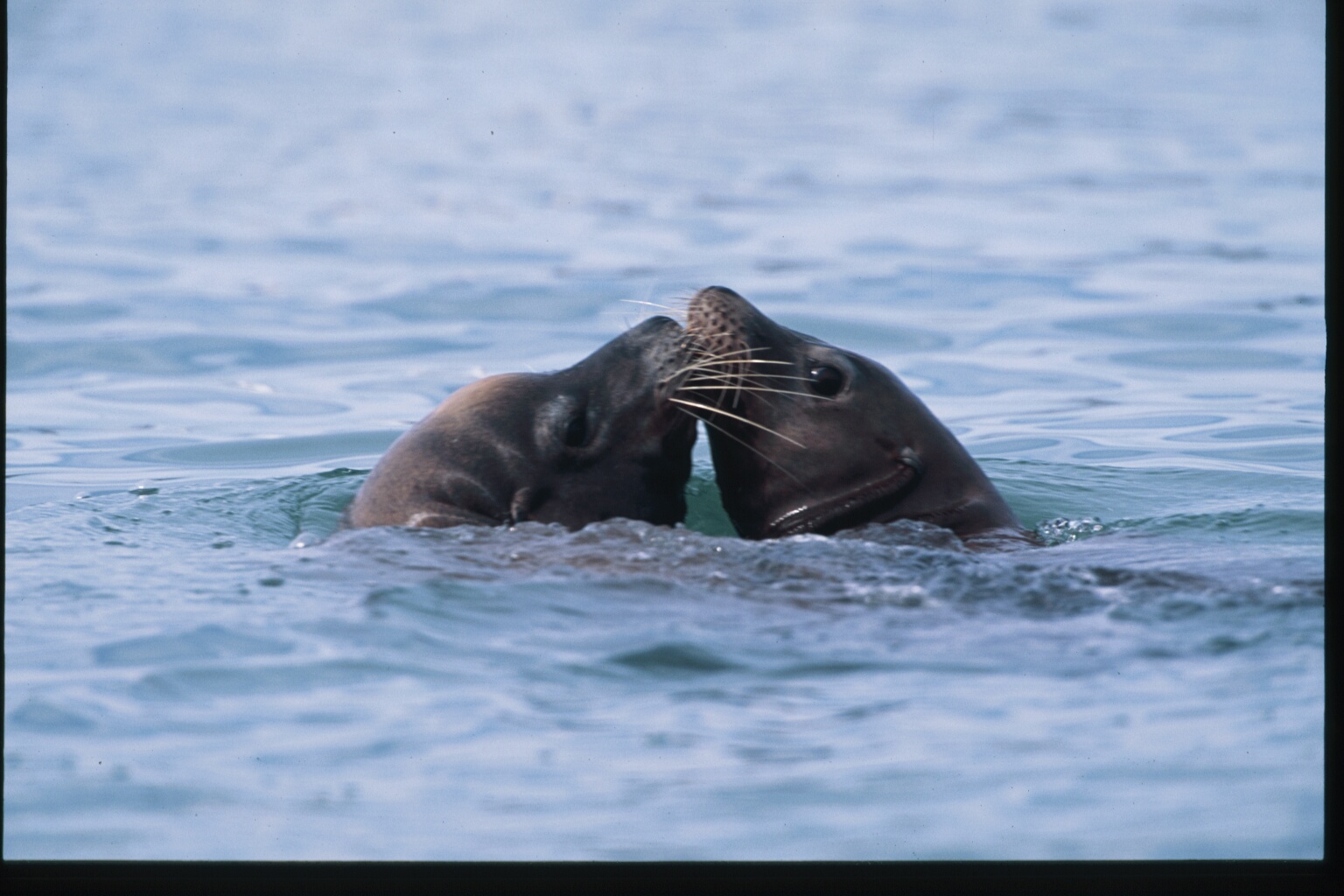
Yesterday, I came across another dead beaver, killed by an ignorant ruralite who enjoys dispatching any wild animal that crosses their path. The excuse? “Beavers eat our trees; seaDSC_0128 lions eat our fish; coyotes and wolves eat our deer and elk, prairie dogs eat our livestock’s grass,” etc., etc.

The real reason? It’s “fun” to shoot, snare or run over them as happened to the last four beavers I’ve seen dead along the road.

I’ll never forget, while I worked as a substitute school bus driver for the local district, when we passed a beaver carcass on the shoulder of the road, the students all jumped for joy and screamed “Oh, cool!” The kids have the excuse that no one has ever taught them any respect for life, or that everything in nature has its place. I still haven’t figured out what excuse their parents have for remaining so ignorant.

Text and Wildlife Photography ©Jim Robertson, 2014. All Rights Reserved

Text and Wildlife Photography ©Jim Robertson, 2014. All Rights Reserved


Follow Your Inner Convictions

“[After almost being pressured by other boys to sling rocks at birds.] From that day onward I took courage to emancipate myself from the fear of men, and whenever my inner convictions were at stake I let other people’s opinions weigh less with me than they had done previously. I tried also to unlearn my former dread of being laughed at by my school-fellows. This early influence upon me of the commandment not to kill or to torture other creatures is the great experience of my youth. By the side of that all others are insignificant.” ~ Dr. Albert Schweitzer

Photo Copyright Jim Robertson

Photo Copyright Jim Robertson

Court Finds Feds Violated Endangered Species Act in Pacific Northwest When Authorizing Navy Sonar

Southern Resident killer whale with calf

Photo by NOAA

[I can relate to the severity of this is of particular issue since my hearing has been permanently damaged by loud anthropogenic, electronic and/or mechanical noises. Over the years I’ve developed tinnitus–a permanent ringing in the ears which can increase in volume and potentially drive the sufferer crazy or even suicidal. I can imagine that this is the kind of thing that’s happening to marine mammals, who depend on their sensitive hearing for navigation and communication, when they strand themselves onshore.

There are no tests that I know of to show whether whales and dolphins are suffering from tinnitus-like hearing damage, so the navy will likely ignore this problem as long as they can get away with it.

I’ve found dolphins, sea lions and whales stranded on the beaches of Washington and Oregon, and it’s certainly possibly that these strandings are the result of the navy’s ungodly loud and disruptive sonar testing.]

———————————–

http://switchboard.nrdc.org/blogs/zsmith/court_finds_feds_violated_enda.html

A federal court has found that the government violated the Endangered Species Act when permitting Navy training activities in the Northwest Training Range Complex—a California-sized training area extending from Washington’s border with Canada down to Northern California.  The decision requires the National Marine Fisheries Service (NMFS) to reassess its permits to ensure that the Navy’s training complies with the Endangered Species Act’s requirements for the area’s endangered Southern Resident killer whales, blue whales, humpback whales, fin whales, sei whales, sperm whales, and Steller sea lions.  The government can no longer ignore science—that is developing at a brisk pace—showing that the Navy’s use of sonar is more harmful to whales and dolphins than previously thought.

The Navy’s use of mid-frequency active sonar can kill, injure, and disturb marine mammals.  The Navy and NMFS accept this fact, projecting 650,000 instances of injury and harassment to whales, dolphins, and porpoises over five years of activities in the Pacific Northwest.  Sonar has caused or been associated with multiple stranding events of whales and other marine mammals around the world.  NRDC and other concerned organizations (InterTribal Sinkyone Wilderness Council, Center for Biological Diversity, Friends of the Earth Friends of the San Juans, and People for Puget Sound) challenged the Fisheries Service’s permitting of the Navy’s activities in the Pacific Northwest in January 2012.  With its ruling yesterday afternoon, the court found that the agency’s approval of the Navy’s activities ignored the best available science showing that marine mammals are far more sensitive to sonar that can cause hearing loss and other injuries.

As we’ve seen over the past decade in permit approvals, the Navy and NMFS have been working overtime to minimize the nature and extent of harm to marine mammals caused by the Navy’s use of sonar—twisting, turning, dodging, and simply ignoring evidence right before them.  Now, the science is catching up and exposing these machinations for what they always were: “ends justify the means” attempts to let the Navy continue with business as usual, unencumbered by any serious obligation to protect whales and dolphins from significant harms.  NRDC and our allies will continue to call on this agency to find ways to minimize harm to marine mammals from the Navy’s training.  This court ruling should remind NMFS that its preeminent obligation is to endangered species under the Endangered Species Act, not to applicants seeking to conduct harmful activities regardless of the consequences.

Twenty-first Century Swastikas

For over half a century the Nazi swastika—that all too familiar symbol of hate—has been relegated to the dark corners of extremism, never to be openly displayed on a flag or uniform again. The Nazi credo was perhaps as confusing as it was complex, but generally, it was the definitive case of one group vilifying and scapegoating another.

Today, a similar type of blind hatred rules in areas where exploitive or extractive animal industries are considered a way of life. One can hardly drive a mile in parts of rural America without seeing emblems of extremism in the form of hateful bumper stickers touting selfish anti-wolf slogans like, “Smoke a Pack a Day” or, in areas where wolves are still extinct, “Did the coyotes get your deer?” Another popular hate-symbol adorning the back of all too many rural pickup trucks is simply a silhouette of a wolfNT wolf bumpr stickr inside a red circle with a slash through it.

In certain towns along the Pacific Northwest coast, where commercial fishing is a dying “way of life” (because dams and overfishing had nearly wiped out the salmon), the trendy stickers of ignorance and intolerance feature a sea lion with a fish inside a red circle and slash. The message is clear, sea lions can starve and die off, the humans have claimed the fish for themselves.

And although sea lions are indeed starving and dying off, it isn’t happening fast enough for some small minded, self-serving fishermen who shoot them, in defiance of the Marine Mammal Protection Act, just as the wolves in the tri-state and Great Lakes regions become victims of those who claim all land animals as “resources” and can’t stand the competition from those natural predators. Blatant Nazism may be a thing of the past, but speciesist extremism is alive and well all across America.

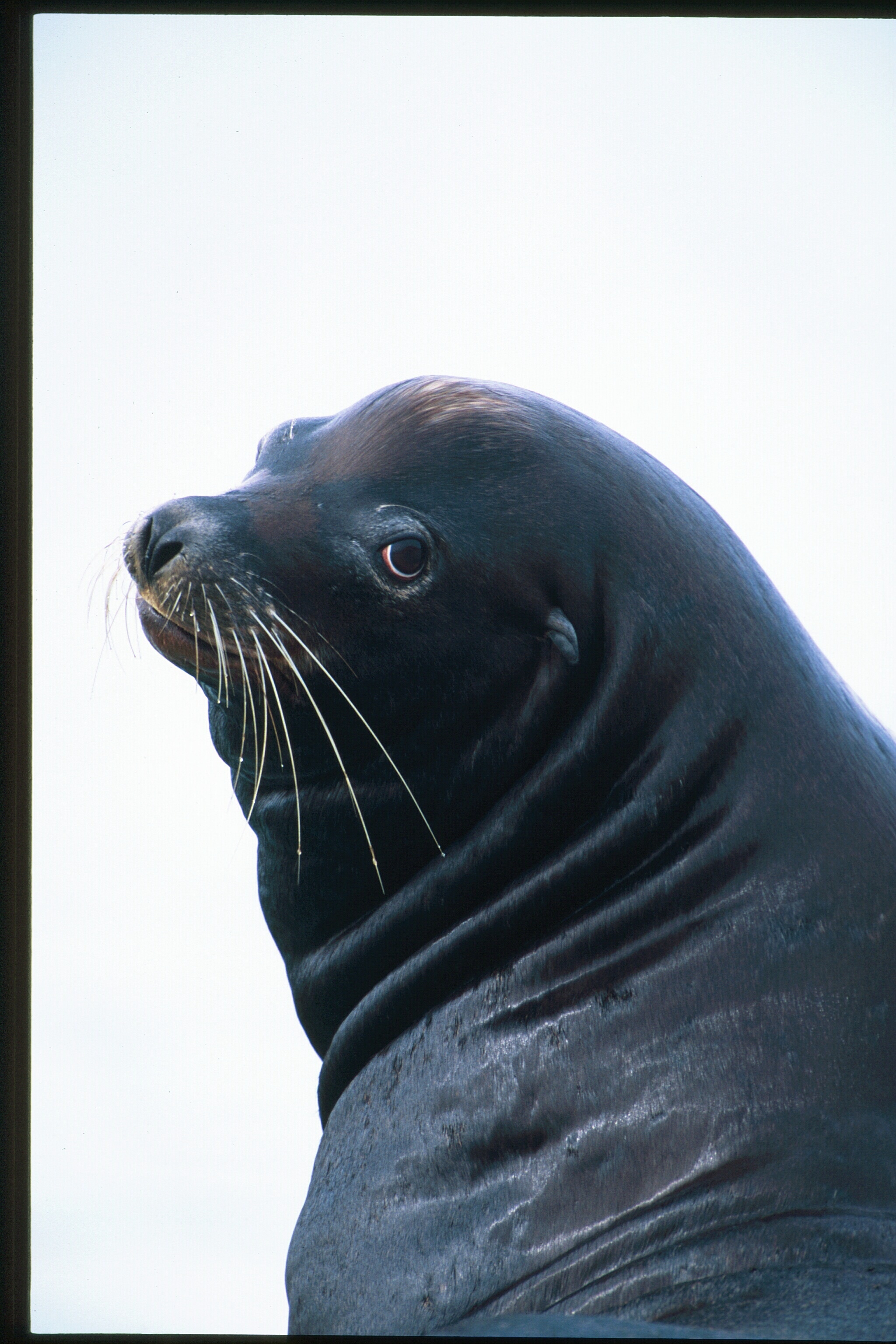
DSC_0131


Man, I Wish You Were Never Born

Some folks wonder why I sound like such a misanthropist when I talk about the human species. Although to me the answer appears obvious, I suppose I should explain myself to those who might think of human beings as “superior,” “God’s chosen ones” or in some other way entitled to do as they will to the planet and its non-human inhabitants.

I don’t hold all people to blame equally. I certainly don’t blame you, dedicated reader. You can’t help being born human any more than a wolf, sea lion, salmon or slug has any say over who or what they were born. But there are those who seem to go out of their way to fuel my misanthropy. You see, humans don’t just kill other animals to fill their bellies; they destroy them in droves out of spite, to eliminate the competition…or just for fun.

When I hear hate-speech against wolves from hunters who’d rather have them eradicated again than have to work a little harder to “get their elk;” or come across a starving sea lion on the beach and then read that emaciated sea lion pups are washing up in California by the hundreds–all due to their food being robbed by overly-industrious-yet-completely-terrestrial commercial fishermen who have no business taking anything from the sea; or learn that dolphins are being repeatedly shot to death by people along the Gulf coast I tend to get a bit cynical of the notion that man was created in the image of any kind of benevolent god.

Text and Wildlife Photography ©Jim Robertson, 2013.

Text and Wildlife Photography ©Jim Robertson, 2013.

In commenting about the recent rash of dolphin shootings, Randall Lockwood, senior vice president of the Forensic Sciences and Anti-Cruelty Projects department at the American Society for the Prevention of Cruelty to Animals (ASPCA), said, “One of the things that seems to underlie most intentional animal cruelty and acts of abuse is a need for power and control. A lot of severe animal cruelty [comes from an] absence of empathy, and also a sense that [the perpetrators] have a right to do these things.”

Backing up the premise that people act out of an overblown sense of entitlement, Robert Grillo, founder of the group Free From Harm, writes, “Not only do we assert our supremacy over nonhumans, we act upon it at every opportunity. The notion that human interests “trump” animal interests when we create an imaginary conflict of interest is particularly delusional when one considers that we wantonly kill 60 billion land animals and kill another trillion or so aquatic animals every year just to suit our pleasure in eating them, not for any legitimate need to survive.

“In fact, Professor Gary Francione of Rutgers University continually points to the schizophrenic nature of our relationship with animals. Francione simply asks us to look at the big picture: 99% of our animal use is unnecessary and for purposes of pleasure, entertainment, curiosity and education.”

While Nobel laureate Isaac Bashevis Singer wrote, “In relation to animals, all men are Nazis,” perhaps a more appropriate analogy for today’s world would be, “In relation to animals, all humans are serial killers.” How many parents of serial killers have secretly thought to themselves, “I wish Teddy would have never been born?” Considering how well the Earth got by before Homo sapiens came along and started messing with things, and how much mankind resembles a serial killer in its domineering attitude towards animals, I have to say, “Man, I wish you were never born.”

Life on Earth can take a lot of abuse and still come back for more, but it’s never had to withstand more than a few hundred thousand predacious hominids at a time. I don’t find much solace in the prediction by statisticians that the skyrocketing human population “will start to level off when it reaches 10 billion.” TEN BILLION over-consumptive human carnivores devouring everything in their collective path sounds like a monoculture of jabber-mouth two-leggers to me.

Text and Wildlife Photography ©Jim Robertson, 2013.

Text and Wildlife Photography ©Jim Robertson, 2013.

The Root of All Evil

Cattle ranchers in northeast Washington call for the renewed extermination of wolves, a species extinct from the area until recently thanks to shallow minds and destructive policies. Meanwhile, commercial fishermen take every opportunity to shoot protected seals and sea lions they view as competition for the fish their nets drag in by the thousands. And news that the Arctic sea ice has retreated to an all-time historic low, due to climate change wrought by the burning of fossil fuels, factory farming and a host of other human-induced hazards, only emboldens oil companies to drill offshore there and tempts industrialists from U.S., Canada, Beijing and beyond to use the fragile polar waters as a new shipping route.

It appears that Paul Ryan and Ayn Rand aren’t the only ones who think selfishness is a virtue.

Loath to share with other species what they see as their entitlements, animal exploiters think nothing of calling for the annihilation of long-besieged predators like wolves. Washington state rancher, Bill McIrvin told the Capital Press he is hoping for a total deletion of the Wedge Pack: “If we can get this pack removed, hopefully we’ll have long enough that people in Washington can wake up and see what’s going to happen to our game and our livelihood.”

The attitude, adopted by ‘wise use’ resource extractors across the board, goes something like, “Our ancestors massacred the wolves for our benefit, now the ‘game’ and the land are ours to do with as we see fit.” It’s the same self-centered stance taken by fishermen against marine mammals. Never mind that those intelligent Earthlings were mercilessly slaughtered during the nineteenth and twentieth centuries, today’s ocean exploiters see them as nothing more than rivals for ‘their’ fish. Meanwhile oilmen disregard all other animal life, and the very climate on which we all depend, in the single-minded veneration of the almighty dollar.

Yet, a dollar in and of itself is just a neutral marker of means. Money, like a gun, depends on human intent to unleash its devastating power.

No, I’m afraid to say, Mr. Ryan, selfishness is not a virtue—it’s the real the root of all evil.

Text and Wildlife Photography ©Jim Robertson

Something Serious to Protest

On Friday, May 4, my wife and I stopped at the East Moring Basin on the Columbia River in Astoria, Oregon, to see the sea lions who spend the daytime hours hauled out on one of the floating docks there. It’s always a treat to watch their antics and to hear the raucous roaring of competitive bulls mouthing off to anyone who might try to wriggle in and crowd their personal space. As expected we heard bellowing as soon as we arrived, but this time the sea lions had something serious to protest: an unfortunate herd-mate had been trapped and was being held down tightly and tormented by a group of strange and menacing two-leggers wearing orange raingear, one of whom pulled out a hot iron and repeatedly branded the restrained sea lion. As the victim struggled, acrid smoke from his burning flesh drifted for a hundred yards across the harbor.

The searing pain of the branding may have been temporary, but now the sea lion is branded in the figurative sense of the word as well, and his troubles are just beginning. With the numbers viciously burned onto the animal’s back, the Oregon Department of Fish and Wildlife thus has a clever way to recognize him. Later, they will decide whether or not to add him to their annual hit list of 92 sea lions they plan to kill if they reach the man-made dam that impedes the ancient migration route of spawning salmon.

It speaks volumes about the trusting nature of sea lions that they are willing to return to Astoria year after year. Since its establishment in 1811 as a hub for the booming, bloody fur trade, Astoria has been the scene of countless crimes against marine animals, including sea lions, who were killed along the Oregon coast by the thousands—exclusively for lamp oil. 

Image

Charles M. Scammon—whaler, sealer, mariner and infamous discoverer and exploiter of the gray whale birthing lagoons in Baja California—devoted a chapter to sea lions in his book, The Marine Mammals of the Northwestern Coast of North America: Together with an account of the American Whale-Fishery. He begins that chapter with the lines, “Among the numerous species of marine mammalia found upon the Pacific coast of North America, none excite more interest than the sea lion;” Scammon goes on to describe an average day in the life of the pitiless sealers, and the last day ever for a group of sea lions. “On the south coast of Santa Barbara Island was a plateau, elevated less than a hundred feet above the sea, stretching to the brink of a cliff that overhung the shore, and a narrow gorge leading up from the beach, through which the animals crawled to their favorite resting-place. Several unsuccessful attempts had been made to take them; but, at last, a fresh breeze commenced blowing directly from the shore, and prevented their scenting the hunters, who landed some distance from the rookery, then cautiously advanced, and suddenly, yelling and flourishing muskets, clubs, and lances, rushed up within a few yards of them, while the pleading creatures, with lolling tongues and glaring eyes, were quite overcome with dismay, and remained nearly motionless. At last, two overgrown males broke through the line formed by the men, but they paid the penalty with their lives before reaching the water. A few moments passed, when all hands moved slowly toward the rookery, which had slowly retreated. This maneuver is called “turning them” and, when once accomplished, the disheartened creatures appear to abandon all hope of escape, and resign themselves to their fate. The herd at that time numbered 75, which were soon dispatched by shooting the largest ones, and clubbing and lancing the others, save for one young sea lion, which they spared to ascertain whether it would make any resistance by being driven over the hills beyond. The poor creature only moved along through the prickly pears that covered the ground, when compelled by his cruel pursuers; and, at last, with an imploring look and writhing in pain, it held out its fin-like arms, which were pierced with thorns, in such a manner as to touch the sympathy of the barbarous sealers who put the sufferer out of its misery with the stroke of a heavy club.”

Scammon ends his chapter with the prediction that the Pacific Coast sea lions “…will soon be exterminated by the deadly shot of the rifle, or driven away to less accessible haunts.” Today the few sea lions who have managed to hold on are again under attack, this time for the crime of daring to survive despite industrial scale over-fishing depleting their only food source.