What Really Motivates a Hunter?

Whenever an anti asks a hunter why they like to kill animals the answer (unless the hunter is exceptionally evil or unrepentant) is some variation of, “I don’t actually enjoy killing, I do it for the meat”…or, “to control their population”… or some other variation of those validations they think will sound plausible or palatable.

But the truth is not nearly so toothsome—they do it because they get off on taking and possessing another’s life.

You don’t have to lurk in those dark, seedy hunter chat rooms, Facebook pages or message boards to learn how hunters really think or how they view the animals they lust after. One need only pick up a Washington State Department of Fish and Wildlife game regulations handout, available at any sporting goods store or rural mini market, and read the following featured article by a WDFW Wildlife Program Assistant Director:

Sportsmanship Evolves through Five Stages of Hunting

by Nate Pamplin

In hunter education, we talk about the five phases that hunters commonly pass through and how our definition of success in the field evolves over time. I think that discussion is valuable, because it provides an important perspective on our approach to the sport.

In the first stage of the five-step progression, most new hunters are primarily focused on bagging their first game animal. My first big game animal was a small ‘forked-horn’ sitka black-tailed buck on Kodiak Island, Alaska–and I couldn’t have been more proud.  

In phase two, the goal shifts to filling bag limits. The definition of a good day for a hunter in this phase would be taking all four forest grouse allowed, not just two.

The third stage is what is called the “trophy phase,” where success is derived by harvesting an animal with a large rack or trophy score. A hunter in this phase may pass immature animals waiting for the opportunity to harvest a trophy for the wall.

A fourth phase is limited-weapon phase, when hunters who have had success with modern firearms put down their rifle to pursue game through traditional implements that present more of a challenge.

Finally, we arrive at the fifth stage–the sportsman phase. Here, hunters find satisfaction in all aspects of hunting, whether sighting-in their rifle with their friends, waiting on a stand for a buck to pass by, or recounting hunting stories with family and friends over a bowl of venison stew.

An important aspect of the sportsman phase—and I’d advocate for every phase—Is sharing the rich tradition of hunting with others.

I ask you to consider your role in promoting the hunting heritage in Washington. Have you introduced hunting to a colleague from work who may have never been hunting before? Have you invited your niece to the shooting range? Do you have time to volunteer with a local hunter-education team? Did you mail a thank-you note to the landowner who afforded you access to their

Text and Wildlife Photography ©Jim Robertson

Text and Wildlife Photography ©Jim Robertson

ranch last fall?

Hunters don’t have to move through every stage of the sport before entering the sportsman phase. All of us share a passion for Washington’s hunting heritage, and it’s important we all do our part to keep this tradition alive during the coming season.

….

It’s uncanny how much the statement above mirrors this quote by another trophy taking expert on the subject—the prolific serial killer, Ted Bundy, who told the authors of The Only Living Witness, from his cell on death row:

“At each stage of the process the individual’s feelings would be different. And when he’s 15 it’d be a much more mystical, exciting, experience…than when he’s 50. And when—even within that given hunting expedition—the feeling of sighting the animal would be different than shooting it or showing it to your buddy. Or putting it in the trunk and taking it home and butchering it and having it for dinner…And that’s the way some guys may approach killing their fellow human beings.”

A Killer’s Backstory

Earl started killing when he was in grade school—first frogs, then rabbits and cats; then later, raccoons, coyotes and stray dogs, always seeking out targets on which to vent his frustrations. His classmates sometimes questioned his cruelty, and Earl sensed he was different. He was never able to muster a normal ability to feel compassion for others and failed to see the value of the sanctity of life—human or otherwise.

Any feelings of regret were only fleeting and self-serving. Remorse was outside his realm of emotions. Earl never thought, “Why did I do that?” but sometimes he wondered, “What have I got myself into now?” He depersonalized and objectified the victims he sought to control and found that any action could be justified. He became so adept at rationalizing and compartmentalizing that killing grew to be second nature; he could do it in his sleep. The problem with being so proficient at taking and possessing another’s life is that he got to where he couldn’t seem to not do it. For him, it was addictive.

Seized by a frenzied desire, each new project was all-consuming. A successful kill would only temporarily satiate the urge to possess—to have total control over something. His propensity toward violence was at first latent, then active, growing finally into his central preoccupation—his obsession. Yet he was able to fit into society by forming a façade, a mask that allowed him to blend in wherever he went. He watched how people reacted to things and acquired by rote the social skills he did not come by naturally.

One of Earl’s proudest moments was the day his father first asked him to join him for a hunt. As they lay in wait for their quarry, Earl was nearly overwhelmed with anticipation, feeling surges of excitement like he’d never known before. A powerful sense of adventure had been building all morning, starting well before dawn, when they loaded their rifles, ammo, hack saw, butcher knives and body bags into the truck. On the drive to the kill site, they chattered about the 4-point buck they were going to blast and bring home and where they would mount his head. Earl’s state of high arousal grew to an almost frenzied desire to kill. He knew that when he did, the reward would be sweet fulfillment of the kind of deep gratification that he sought. When they spotted “their” deer, his father told him not to feel sorry for it. But the pep talk was unnecessary–Earl felt nothing for the deer in his sights.

All he knew was an irresistible urge to possess it, body and spirit. To physically possess its remains and be the master and owner of all it ever was or will be. Pulling the trigger and taking its life was the ultimate possession; as satisfying as he always knew it would be.

Earl made his first human kill at age 15. He was an angry teenager and she was a ten year old neighbor girl in the wrong place at the wrong time…
________________________________________________________

The preceding was an excerpt from a novel in progress I’m working on—a piece of fiction based-on-fact…

Text and Wildlife Photography ©Jim Robertson, 2013. All Rights Reserved

Text and Wildlife Photography ©Jim Robertson, 2013. All Rights Reserved

Hunting: the Sport of Sociopaths

How can some people torment and kill animals and call it a “sport?” They must have the same merciless attitude as Canadian pig farmer, hands-on butcher and serial killer, Willy Pickton.

When asked by a Vancouver police interrogator to reveal the locations of the 49 women he’d murdered over his career (some of whose remains were ground up, mixed with pig meat and sold or given away to friends or family), Pickton asked, “Why should I do that?” To which the investigator replied, “For the families. They need to know.”

Willie’s chilling comeback summed up his entire outlook on life, “Not my problem, shit happens.”

Pickton was clearly a sociopath (or psychopath, if you prefer), and so must be those who subscribe to his “shit happens” philosophy. While a lot of folks are pretty unsympathetic about things that don’t directly affect them, hunters (like serial killers) take it a step further, by making bad shit happen to others.

Still not convinced that hunters are sociopaths? Consider these quotes from “diehard” bowhunter and NRA spokesman “terrible” Ted Nugent, about his favorite sport: “There’s an absolute surety to the hands-on conservation lifestyle of hunting, fishing and trapping…” or “If you want to save a species, simply decide to eat it. Then it will be managed – like chickens, like turkeys, like deer, like Canadian geese.” and “I get a full predator spiritual erection from hunting bear, lions, coons, housecats, escaped chimps, small children, scared women and everything else that can be chased and/or hunted.”

Now, if that guy’s not a sociopath, Willy Pickton’s just a pig farmer.

68439_10151399495155861_1116657731_n

Update from the Bear-Killing Fields of Washington

While walking my dog this morning on the ordinarily deserted logging roads around here, I came across (in addition to several fresh piles of bear scat) boot tracks in the grass heading into a draw thick with blackberry and salmonberry bushes, where one of our local bears was murdered by a hunter (“harvested”) last August. Now, I’m hearing the report of a rifle and am wondering if the same narcissistic nimrod is out there trying to kill another of our bear friends (like some serial killer who struggled through an enforced nine-month cooling off period and, consequently, is gripped by the uncontrollable urge to satisfy his pent-up his bloodlust).

Although it’s barely berry season for the bears out there trying to stock up for the coming winter, it’s bear hunting season—as of August 1st—for Elmers and Elmerettes in the Evergreen State. Nowadays, every Elmer (or Elmerette) who wants to can kill not one, but TWO, bears apiece through November 15th!

As of last Thursday, any Washington State black bear who values his or her life will have no peace ‘til the snow flies and they’re safely tucked away in their hibernation den. Until then, they must assume there’s a camo-clad coward with a high powered rifle or compound bow aimed at them, perched in every tree they pass under.

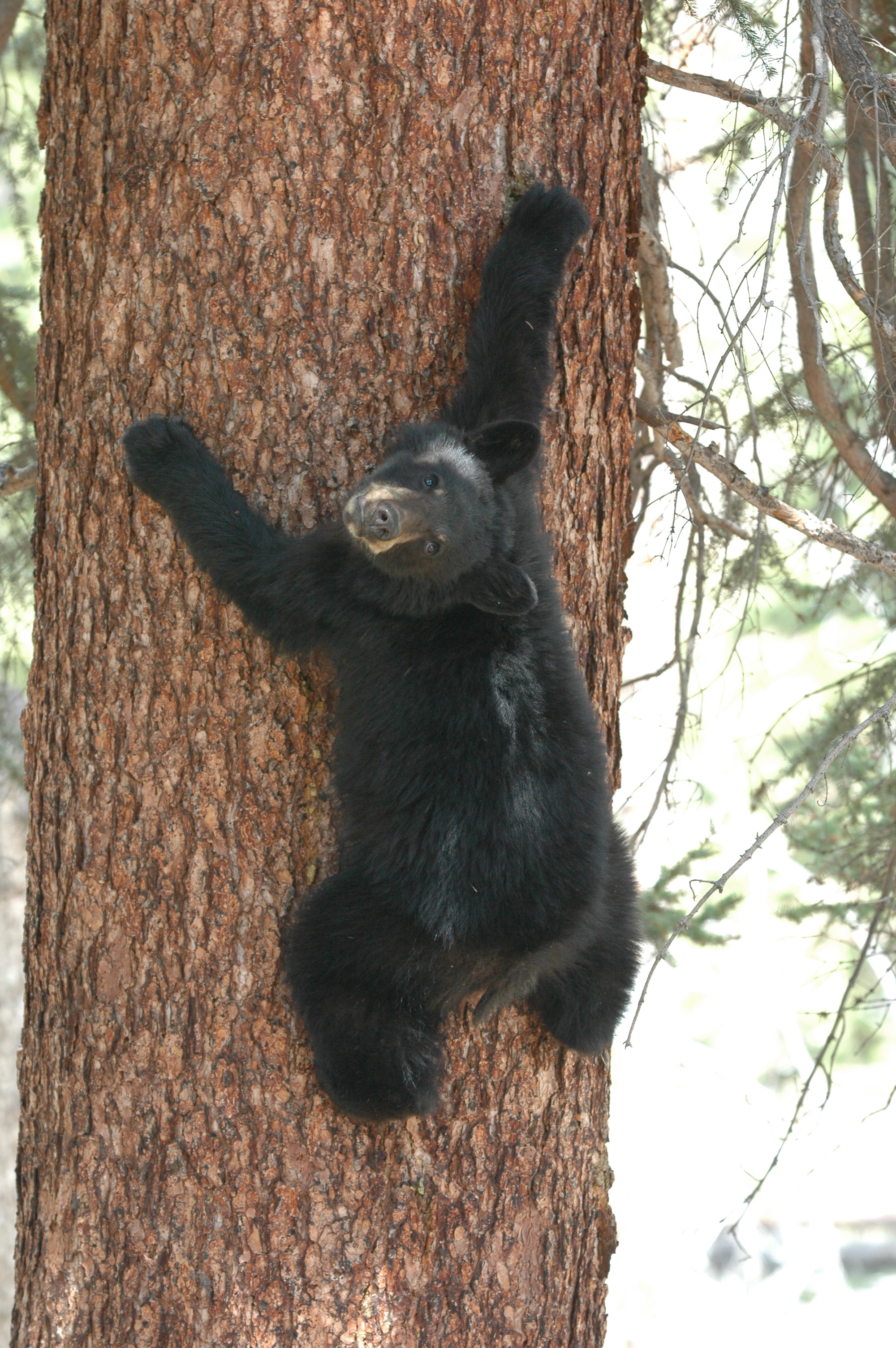
Each year 30,000 black bears are killed by hunters in the U.S. alone. And each and every one of them was a more remarkable, more worthy being than the sadists and psychos who kill them for sport.

Text and Wildlife Photography ©Jim Robertson, 2013. All Rights Reserved

Text and Wildlife Photography ©Jim Robertson, 2013. All Rights Reserved

Save the Wolves: Support the Rights of All Animals

Make no mistake, I love wolves as much as just about anyone; yet some people practically worship them, putting them above any other species except perhaps whales and dolphins. To be sure, wolves are sacred, but there are folks who think of them as hyper-sentient—the great Northern furred land-dolphin, if you will.

I’m not for a minute denying wolves’ intelligence or adherence to an almost human-like social caste system, but I can’t get behind campaign slogans such as “Real hunters don’t hunt wolves.” I call bullshit on that. Real hunters hunt wolves, coyotes, elk, deer, prairie dogs, pigeons, pronghorn, bears, cougars, raccoons— anything and everything that moves or has ever moved. Hell, they’d probably hunt whales and dolphins if it weren’t for the Federal Marine Mammal Protection Act. Most hunters just want a target and a trophy, they don’t really care what species it is.

Granted, some hunters are more sadistic than others, just as some serial killers revel in their victims’ suffering, while others dispatch their prey as quickly as possible—they’re only interest: harvesting a trophy corpse to have around, for whatever morbid reason. The most sadistic hunters are probably fueled by the fact that there are people out there who adore wolves while state laws still consider delisted wolves “property” like every other non-human animal.

Serial killers have been known to derive sick pleasure from taunting the families of their victims, calling them from prison to recount their murders. The same kind of thing likely goes on in the minds of sadistic wolf hunters who boast and post photos of their kills, knowing that some sentimental environmentalist or animal rightsists might come across one and be hurt or outraged by it. They’d love to know that one of us broke down, burned out or resorted to lethal action because of their post (as long as they weren’t on the receiving end of the action).

The wolf situation is unique among modern-day animal atrocities, in that it’s as yet perfectly “legal” for hunters and trappers to film themselves in action. In sharing them online, they’re banking on the fact that the general public is unmoved and apathetic. But I’d like to think that if factory farmers readily shared footage of their routine acts of animal abuse online, there would be a lot more vegans in this world.

For now, the only way anti-wolf sadists can be stopped is by eliminating them from the world of the living. But if you happen to reside in one of those backward states that have yet to implement a death penalty for wolf hunting, the best advice is to just ignore them like you would the taunts of any other bully. Meanwhile, keep petitioning Facebook and other social media outlets where their death porn appears. As long as animals, including wolves, are seen only as “property” by the powers that be, the people who run Facebook will feel entitled to allow anti-wolf evil to be spread throughout their pages and posts.

Eventually common decency will prevail and violent anti-wolf/anti-animal sites will come under serious scrutiny, just as misogynistic sites recently have. We need to step up the pressure on Facebook and let them know that freedom of speech does not give one the right to victimize. Be sure to sign this petition and pass it on: http://www.change.org/petitions/facebook-executives-ban-sadistic-pages-of-wildlife-torture

Meanwhile, let’s fight for the rights and personhood of all animals, not just a chosen few.

Text and Wildlife Photography ©Jim Robertson, 2013. All Rights Reserved

Text and Wildlife Photography ©Jim Robertson, 2013. All Rights Reserved

Texas Teen Kills His Elder

By now you’ve probably read, or heard on the news, something to the effect of “Texas teen ‘bags’ an 800-pound record alligator.” The Texas Parks and Wildlife Department say the alligator was between 30 and 50 years old. [That’s right, the animal was older and wiser than the young human who hooked and shot him.]

Typical of the media’s coverage of the atrocity is the following article from the Seattle Times:

A Houston-area high school senior has bagged a 14-foot, 800 pound alligator – the heaviest ever certified in Texas – on his first alligator hunt. [Great, he’s a trophy hunter for life now, no doubt.]

Texas Parks and Wildlife Department officials say 18-year-old Braxton Bielski bagged [“BAGGED”? Here the press are being about as disrespectful of the animal as the murderous kid] the record gator last week at Choke Canyon State Park, about 90 miles south of San Antonio.

The agency says in a statement that Braxton shot the giant reptile after hooking it on a line using raw chicken as bait. [They call it a “hunt” but the poor animal was hooked in the water like a fish, only later to be shot by the mighty human “hunter.”]

Bielski’s father, Troy Bielski, won a Parks and Wildlife drawing for a five-day permit to hunt in the Daughtry Wildlife Management Area. The Houston police officer says his son had been dreaming of hunting alligators for years. [Serial killers fantasize for years before murdering their victims too.]

I posted this article to my Facebook page yesterday; it received these fitting comments:

“For absolutely no significant purpose whatsoever. Sickening. This is what young people are taught through so many societal avenues – that no other living creature matters, except them and those like them. Not even other human beings. Humans are raising a whole bunch of Sociopaths and Psychopaths. Very Frightening.”

“Sick–go into its habitat–bait a hook–then shoot it from a boat when it comes up…”

“Wow, this is something to be proud of? There will probably never be an 800 lb alligator on this planet again, so good for this little asshole, he got the last one. I’m sure the killer of the last wolf, bear, cougar….will be just as proud of himself.”

Need I say more?

It’s not so surprising to hear about Syrian rebel leaders eating human hearts when this kind of treatment of other living things is taught to today’s youth.

796px-gator34

All Meat Is the Product of Cruelty and Exploitation

A German serial killer, Fritz Haarmann, known as the “Butcher of Hanover,” cut his victims’ bodies into strips of flesh and sold them as pork. Here in North America, third-generation Canadian pig farmer and serial killer of 49 women, Robert Pickton, ground the bodies of his victims into sausage and sold it in packages or gave it out to friends.

While it’s appalling that folks who acquired meat from Pickton may have ingested human flesh, it is equally unsettling that they didn’t notice. To the taste buds it seems meat is meat. This tragedy was just one of many recent incidents that should make people rethink their carnivorous ways.

On a related note, according to an article by Cindi Avila with NBC News, Whole Foods admitted to accidentally reversing labels on two salads sold at its stores, a curried chicken salad and a vegan version called curried “chick’n” salad, last Tuesday and Wednesday at some 15 of its locations in the Northeast (including Connecticut, Maine, Massachusetts, New Jersey and New York). “The switched labels means it is highly likely someone who made a conscious choice not to eat animal products wound up doing so, through no fault of their own.”

To the ethical vegetarians who inadvertently ingested chicken flesh, the stomach-churning physical response of revulsion was on par with those of the pork-eaters who learned they’d cannibalized. Now, you might be asking yourself, “How can anyone compare eating chicken or pork to cannibalizing human flesh?”

The NBC article makes the clarifying point, “It may be hard for meat-eaters to understand, but this is a way of life that simply doesn’t involve compromise or mistakes. That’s especially the case for those of us who are vegetarian or vegan because of animal-welfare reasons or those who choose this for religious reasons.”

Pigs, like humans, cows and chickens, are capable of experiencing joy, affection, and pleasure. However, on hog farms, they are treated like unfeeling machines, confined in tiny stalls and fed growth-accelerating drugs that often cause lameness. Their teeth are cut with pliers, and their tails are cut off-without anesthetic. At the slaughterhouse, they are hung upside down and bled to death-often while they are fully conscious. Whether flesh comes from the victim of a serial killer or from a pig, a cow, or a chicken, it is the product of cruelty toward a thinking, feeling being who experiences pain and fear and wants to live free of exploitation.

In light of all this, why are people still eating meat? One common answer goes something like this: “I’m a human—superior to other beings—I’m entitled.” But a sense of entitlement is one of the trademark rationalizations that serial killers use to justify their wrongdoings, and grandiosity is also symptomatic of psychopathy, according to Canadian psychologist and author of Without Conscience: The Disturbing World of the Psychopaths Among Us, Robert D. Hare, Ph.D. Other symptoms outlined on Dr. Hare’s “psychopathy checklist,” such as shallow emotions and a lack of empathy or remorse, aid the killer—or meat-eater—in disregarding the suffering of his or her victims.

Psychopathic serial killers objectify their victims and consider their victims’ self-interests insignificant. The same rationale is called into play when one thinks of pigs only as “pork,” cows as “beef,” or chickens as “poultry,” without thought of the individuals or their suffering.

Both Canada and the U.S. have had recent cases of mad cow disease. As a result, we saw news footage of downer cows, too sick to walk, being dragged by chains into slaughterhouses. Press coverage of avian flu outbreaks reveal the intensely overcrowded conditions of chickens on factory farms-tens of thousands of animals cooped up in their own filth, each with less space than a standard sheet of typing paper. Besides being warned of health risks, consumers are finally learning about some of the cruelties endured by the animals they know only as “roasts” or “drumsticks.”

It is never too late to examine our actions and re-evaluate our food choices accordingly. By respecting the interests of all sentient beings, we are not akin to the conscienceless killers that plague our society. The only way to ensure that you are not supporting grotesque violence and cruelty against animals, or benefiting from their suffering, is to adopt a plant-based diet.

524958_3325028303604_654533903_n

Wolf-Killers’ Admit They’re Sadistic Perverts

7d547853b294cf28b7b6c4ff5a69dda1
Paul Watson was right. In his foreword to my book, Exposing the Big Game: Living Targets of a Dying Sport, Sea Shepherd’s Captain Paul Watson wrote:

“Any man who has to kill a magnificent bear or bull elk to mount its head on his wall has some very deep and disturbing psychological and sexual problems. Hunting is no longer necessary for our survival but trophy hunting was never necessary for human survival. Trophy hunters can be described quite adequately as sadistic perverts and social deviants.”

Worst of all, they freely admit it.

An article by Cathy Taibbi in Examiner.com entitled “Wolf-killers admit it’s all about the sadistic sexual thrill” includes photos, links and quotes from one of the many anti-wolf Facebook pages where members brag about “’getting wood’ when seeing wolves trapped, tortured and killed, whether in images or in real life.” Flaunting the fact that they’re still legally entitled to their predatory perversions as long as the abused are only wild animals, they don’t hesitate to tell their Facebook friends that they “feel ‘orgasmic’ when hunting, trapping, killing, butchering, and even eating their victims.”

And they wonder why we call them psychopaths or compare them to serial Killers?

Anyone who gets sexually aroused at the sight of a trapped, struggling or suffering animal should be preemptively executed for the good of the many. They are what the FBI’s Behavioral Science team refers to as “sexual sadists,” the most dangerous of all offenders to their victims.

The Examiner article goes on to say “…in a nutshell, what they are saying plainly is that torturing animals is sexually arousing for them. Do we really want people like this freely expressing their fetishes on the Internet (where children can be traumatized – or worse, titillated – by them), or acting them out using our wildlife or pets?

“What’s happened to our society, when any show of ethics, decorum or empathy is treated as a liability to be ridiculed, threatened and treated derisively, while a site enabling perverted, sadistic sexual thrills from abusing animals is considered free speech?

“These kinds of pages are no better than so-called ‘crush videos’ (movies of innocent, live animals being stomped, cut apart with scissors, burned, etc., and sold to perverts who like to masturbate while watching) except that, being based more in the ‘traditional sports’ of hunting and trapping, these (for now, at least) manage to sneak by legally.

“Hunting, trapping and other hate/fetish sites need to be dealt with in the same fashion as perpetrators of illegal crush videos. The penalties for gratuitous animal abuse need to be severe. The moral fiber and safety of our society is definitely at risk.

“Yup. These are scary individuals. And our politicians are pandering to them. It’s a sad and disheartening statement about where America is at this point.”

The article includes a slide show of graphic photos of which they caution: “Viewer discretion is advised.” If you’re already well aware of the depth of wolf-hater depravity, then you might want to spare yourself the mental and emotional scarring. But if you have any doubts that wolf trapping is as evil as the Inquisition, then by all means view the slide show.

Hunting Conditions Us to Killing

The Following is an Op/Ed I sent to the New York Times in response to a recent article they featured glorifying hunting. For some reason, they didn’t print this—it must not have fit in with their agenda…


Hunting Conditions Us to Killing

I’d like to thank the New York Times for inadvertently giving us a glimpse inside the hunter’s mind, through their recent article, “Hunting your own dinner.” In my book, Exposing the Big Game: Living Targets of a Dying Sport, I spend an entire chapter probing “Inside the Hunter’s Mind” and I’m here to tell you, it’s a dark and disturbing place in there—and no one divulges that better than the hunters themselves. Here are a couple of quotes from hunters waxing poetic on the thrills they get out of killing:

“I had wondered and worried how it would feel to kill an animal, and now I know. It feels — in both the modern and archaic senses — awesome. I’m flooded, overwhelmed, seized by interlocking feelings of euphoria and contrition, pride and humility, reverence and, yes, fear. The act of killing an innocent being feels — and will always feel — neither wholly wrong nor wholly right.”

“You’re the last one there…you feel the last bit of breath leaving their body. You’re looking into their eyes and basically, a person in that situation is God! You then possess them and they shall forever be a part of you. And the grounds where you killed them become sacred to you and you will always be drawn back to them.”

Both quotes were from people who considered themselves hunters—men who stalked and killed innocent, unarmed victims. The first was taken from the aforementioned Times article written by Bill Heavey, an editor at large for the “sportsman’s” magazine, Field and Stream. The second one triumphantly reliving his conquest was none other than the infamous Ted Bundy, as he sat on death row musing over his many murders to the authors of The Only Living Witness.

It seems that, whether the perpetrator is engaged in a sport hunt or a serial kill, the approach is similar. Though their choice of victims differs, their mindset, or perhaps mental illness, is roughly the same.

Even our former cold war enemy seems to be light years ahead of the U.S. in moving beyond the barbarity of hunting. Oleg Mikheyev, MP of the center-left Fair Russia parliamentary party, told daily newspaper Izvestia just what I’ve been saying all along: “People who feel pleasure when they kill animals cannot be called normal.”

Mikheyev entered a draft law to ban most hunting in Russia and expressed his belief that hunting is unnecessary and immoral, regardless of whether one sees it as a sport, a pastime or an industry. According to the bill, forest rangers will still be allowed to hunt but must first pass a psychological test, which Mikheyev points out, “…can help us in early detection of latent madmen and murderers.”

Here in the states, Heavey went on to write, “What ran in the woods now sits on my plate… What I’ve done feels subversive, almost illicit.”

Then why do it?

Though some hunters like Heavey may put on a show of innocuousness by temporarily eschewing guns and choosing to test their skill at bowhunting—arguably the cruelest kill method in the sportsman’s quiver—the typical American hunter sets out on their expeditions in a Humvee or some equally eco-inefficient full-sized pickup truck, spending enough on gas, gear, beer and groceries to buy a year’s supply of food, or to make a down payment on a piece of land big enough to grow a killer garden.

Clearly the motive for their madness is more insidious than simply procuring a meal.

There’s been plenty of discussion about controlling weapons to stave off the next school shooting, but the media has been mute over the role hunting plays in conditioning people to killing. And the New York Times article is a shameful example of the press pandering to the 5 percent who still find pleasure in taking life. Do we really want to encourage 7 billion humans to go out and kill wildlife for food as if hunting is actually sustainable and wild animal flesh is an unlimited resource?

Overhunting has proven time and again to be the direct cause of extinction for untold species, including the passenger pigeon, the Carolina parakeet and the Eastern elk. Meanwhile, hunters out west are doing a bang-up job of driving wolves back to the brink of oblivion for the second time in as many centuries.

Heavey ended his Times article gloating, “I have stolen food. And it is good.” Like serial killers and school shooters, hunters objectify their victims; so insignificant are they to them that hunters don’t even recognize them for what they are—fellow sentient beings. Does somebody have to point out the obvious—he didn’t just steal “food,” he stole a life.

Text and Wildlife Photography ©Jim Robertson, 2013. All Rights Reserved

Text and Wildlife Photography ©Jim Robertson, 2013. All Rights Reserved