KILLER OF WORLD’S BIGGEST ELEPHANT IDENTIFIED

Be the change you want to see in the world's photo.

Rainer Schorr, a real estate CEO, was named by three separate sources as the hunter who sparked global anger after killing what is thought to be the biggest elephant killed in Africa for almost 30 years.

PETA has named the man believed to be the German hunter who paid nearly £40,000 to shoot one of the largest elephants ever seen in ‪#‎Zimbabwe‬ as a property mogul in Berlin.

‪#‎PETA‬ in Germany offered a €1,000 (£730) reward to anyone who could identify the German ‪#‎hunter‬ photographed posing with the body of the huge elephant that was circulated widely online after the Telegraph revealed the animal had been killed as a ‪#‎trophy‬ on a private shoot.

In a case that echoes the furore that erupted after ‪#‎Cecil‬ the lion was shot by an American dentist, 55-year-old ‪#‎Schorr‬ paid $60,000 (£39,000) for a permit to ‪#‎hunt‬ a large bull ‪#‎elephant‬.

What Fresh Hell Is This?

What do you call a war waged on unarmed opponents?  Considering the rate and frequency of shooting I’m hearing out there now, there’s a massacre going on. If the victims being slain were human, it would be called mass murder. A pre-dawn ambush. All-out insanity. Evil incarnate.

But to the hunters on opening day annihilating ducks and geese, it’s tradition; harvesting nature; business as usual.

Text and Wildlife Photography ©Jim Robertson

Text and Wildlife Photography ©Jim Robertson

Someone must have signaled “charge” to an entire platoon waiting to attack at dawn, and a mindless barrage of semi-automatic shotgun fire shattered the morning air. Now it’s 7:30 a.m. and only the random explosions break the stillness. The blitzkrieg has been going on steadily for over forty-five minutes—since before first light (sunrise today is officially at 7:35, according to the NOAA weather radio).

I wasn’t sure if the “enemy,” no, “opponent,” no, victims were the elk herd who occasionally visit the neighbor’s hayfield, the stray black-tail deer who keep themselves mostly out of sight around here for fear of poachers, or the ducks and geese who are starting to gather on their customary wintering grounds. Judging by the constant rapid gun fire, the victims must be the “waterfowl” whose “season” started today.

What fresh hell is this? Armageddon for avian kind? Or just another opening day for sport hunters?

Hunting clubs, rhino hunter sue Delta over trophy ban

Hunting clubs and a man who paid $350,000 for a license to hunt a black rhino in Namibia have sued Delta Airlines, saying its ban on transporting some big game hunting trophies hurts conservation efforts and violates its global obligations.

In a lawsuit filed in federal court in Texas on Thursday, the hunter of the endangered black rhino, Corey Knowlton, along with the Dallas Safari Club, the Houston Safari Clubs and others said that the transport of the trophies is allowed under a strict systems of global permits and Delta must abide by its obligations.

“Tourist hunting revenue is the backbone of anti-poaching in Africa. If there are fewer users, as Delta’s embargo envisions, there are fewer boots on the ground and reduced security for elephant, rhino and other at-risk wildlife,” the lawsuit said.

Delta officials were not immediately available for comment.

Delta was one of three U.S. airlines in August that banned the transport of lion, leopard, elephant, rhino or buffalo killed by trophy hunters, in the fallout from the killing of Zimbabwe’s Cecil the Lion about a month earlier.

Delta is the only of the carriers with direct service between Johannesburg and the United States and its decision was seen as carrying the most weight.

There has been an international outcry against trophy hunting among animal lovers since it emerged that American dentist Walter Palmer killed Cecil, a rare black-maned lion that was a familiar sight at Zimbabwe’s Hwange National Park.

Eleven African countries issue lion hunting permits. Of them South Africa’s hunting industry is the biggest, worth $675 million a year, according to the Professional Hunters Association.

Hunting groups argue the money generated from the legally sanctioned hunts bolster the coffers for conservation in emerging African countries that want to use their limited finances for social programs.

In the middle of this year, the cargo division of South Africa’s national carrier, SAA, lifted an embargo that had been in place since April on the transport of legally acquired hunting trophies of African lion and elephant, rhinoceros and tiger.

“It should be remembered that hundreds of legally acquired wildlife specimens, such as hunting trophies, pass through our main ports of entry and exit monthly without incident. Penalizing an entire industry for the illegal actions of the few is not in the country’s best interests,” South Africa’s Environment Minister Edna Molewa said at the time.

(Reporting by Jon Herskovitz; Editing by Sandra Maler)

Florida’s Upcoming Bear Hunt: A Tragic Failure to Apply Solid Science, Public Opinion, and Compassionate Conservation

http://www.huffingtonpost.com/marc-bekoff/floridas-upcoming-bear-hu_b_8300882.html

by ,

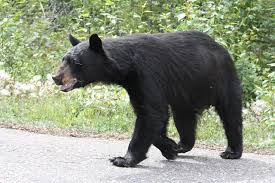
As evidence mounts around the globe that the emerging principles of compassionate conservation can succeed in resolving conflicts between human and nonhuman animals (animals) while respecting the needs of all stakeholders (see, for example, here and here), painful examples remain of cases in which human management of shared habitats completely fails to heed the lesson that killing is neither effective nor acceptable. In Canada’s western provinces, a ruthless war is being fought against wild canids, devaluing individual lives and disrupting families and social groups. In Florida, on October 24th, a similar war is about to commence, although its hapless victim, the Florida black bear, has never killed a human, is not accused (unlike wolves) of harming other wild animals or livestock, and is a vital umbrella species of great ecological concern.

2015-10-14-1444856710-5781873-images.jpeg

Florida’s decision to reinstate bear hunting after a 21-year hiatus ignores well-established science on human-bear conflicts and constitutes an appalling magnification of the ethical defects afflicting the killing of grizzly mother Blaze by officials at Yellowstone National Park and, more recently, the killing of Boulder Bear 317 by Colorado Parks and Wildlife. 320 black bears – 10% of the estimated statewide population – have been targeted by Florida’s Fish and Wildlife Conservation Commission (FWC) for killing by recreational hunters (you can see the hunt plan here), a lethal response that is massively disproportionate to the concerns that have been articulated by human stakeholders about property damage and a handful of relatively minor attacks on humans. The hunt’s quota is in addition to the increasingly routine practice of killing bears who have been deemed a nuisance and to high road kill rates (282 in 2012 alone). A combined mortality rate of 20% of the entire bear population has become Florida’s ghastly new definition of sustainability, while the human population of the state increases by more than the entire bear population every single week, a fact that human policy-makers regard as a source of pride, not a cause for grave concern.

Just as there was no science to support the assertion by National Park Service staff that a grizzly bear who killed, or was suspected of killing, a human, is more likely to kill another human, there is no science to support the proposition that a large-scale slaughter of black bears will have any effect on the occurrence of human-bear conflicts. On the contrary, the available science clearly demonstrates that the only dependable way to reduce human-bear conflicts is intelligent trash management and related behavioral changes by humans. Aware of its plan’s unscientific foundation, the FWC admits that the hunt is not expected to reduce human-bear conflicts. Instead, it asserts a need to “manage” or “stabilize” the black bear population. Yet when pressed in a recent court hearing (you can see the video here) to explain why, exactly, the bear population needs to be “managed,” Dr. Thomas Eason, Director of the FWC’s Division of Habitat and Species Conservation, ultimately returned to nuisance calls, property damage, and a few cases of minor injuries to humans as problems that would be mitigated if bear population pressures were reduced. Available scientific data do not support this claim.

It’s also important to note a majority of Florida’s human citizens appear ready to embrace the concept of compassionate conservation and let the bears be. About 75% of 40,000 public comments received by the FWC opposed the bear hunt. Were we to regard societies of nonhumans as Nations, we would be forced to characterize the State’s disposition as regrettably genocidal. As recently as three years ago, the black bear was still listed as threatened. In 2012, the FWC adopted new criteria for determining threatened status, delisting 15 other species along with the black bear (which is a genetically unique subspecies). And now, before a statewide bear-population survey has even been completed, the State’s human power structure is refusing, in the most lethal possible way, to accept responsibility for the undeniable impact of relentless human encroachment into the habitats of nonhumans. The third-most populous state in the country, its metropolitan areas dominating the list of the nation’s fastest-growing areas, Florida provides a tragic case of unrepentant, deadly anthropocentrism, literally bulldozing over the right of nonhumans to exist in an environment that allows them to be who they really are.

While the killing of Florida’s black bears will be carried out by recreational hunters, the State’s policy provides ample opportunities for FWC employees to emulate the noble example set by Bryce Casavant, a Canadian conservation officer who was suspended after refusing to kill two bear cubs. Florida’s bear hunting policy, although initiated by political appointees on the Commission, was drafted by FWC staff, defended by them in court hearings, and requires their participation (in the administration of permits, at check stations, in field enforcement efforts, during data monitoring, etc.) for its implementation. Staff at any point in this chain could, individually or collectively, refuse to facilitate a wholly unwarranted and grossly unethical and bloody killing spree. Especially for the bear biologists who spent five years developing the Florida Black Bear Management Plan released at the time of delisting, a plan that explicitly eschewed hunting and called for the enhancement of bear habitats, the decision to sit back and passively witness the slaughter of this magnificent animal ought to weigh heavily on their consciences for the rest of their lives. This is a great opportunity for these scientists simply to ask people not to hunt the bears.

Instead, Dr. Eason, for one, seems to be perfectly comfortable with Floridians repeating their familiar role as super-predators, killing adult bears in their prime reproductive years, imposing far-reaching collateral damage on family units and the bear population as a whole. Although Florida’s bear hunt forbids the “harvesting” — read, killing — of mother bears with cubs, this will inevitably happen, since mothers commonly “tree” their cubs up to 200 yards away, out of sight from hunters. Black bear cubs stay with their mother for up to two years, learning essential survival skills and enjoying her protection from male bears and other animals who may harm them. As orphans, their prospects for survival are grim. And, since we know that animals experience a wide range of emotions, including joy, love, empathy, and grief, it is beyond dispute that these cubs will suffer immense emotional, as well as physical, distress. Equally repugnant is the fact that the FWC knows that some female bears will be pregnant at this time of year (just prior to denning), and there is no way for hunters to discern the gender of their target until they’re killed. Far from apologizing for these horrific effects, Dr. Eason has matter-of-factly stated that this is all part of the plan.

Compassionate conservation asks us to do no harm to individual animals, their family units, and their social groups. It expects us to finally acknowledge the extent to which we have deprived nonhumans of their right to live free from human dominance or interference, and to accept these magnificent and fascinating beings as a wondrous part of the planet we all call home. For many humans, the gateway to compassionate conservation is the recognition, amply documented by the latest science, that animals are sentient beings with rich emotional lives, aware of themselves, their surroundings, and one another. Compassionate conservation does not elevate animals to a position of primacy over humans. Rather, it seeks to level the playing field, granting animals stakeholder status equal to that of humans who have controlled — dominated — their very lives for far too long.

Florida’s mass slaughter of its black bears violates every dimension of the compassionate conservation paradigm and ignores solid science and public opinion. It’s yet another example of wildlife managers claiming they use the latest science and public opinion and then ignore what is known. For future generations of conservationists and other people who choose to live in Florida because of its fascinating and magnificent animals, Florida’s ill-planned bear hunt will serve as an exemplary case study of why it should not have been done in the first place.

This essay was written with Adam Sugalski and Richard Foster.

Jimmy John Liautaud: Listen to Your Customers and Stop Your Trophy Hunting

Petitioning Jimmy John Liautaud

Listen to Your Customers and Stop Your Trophy Hunting

Petition by Mindy Everett
Oak Park, Illinois
3,568
Supporters
The illegal killing of Cecil, a beloved African lion, put a spotlight on the horrors of trophy hunting. My family recently learned that Jimmy John’s restaurant’s founder and CEO, Jimmy John Liautaud, is a trophy hunter. We were outraged, and decided to stop eating at Jimmy John’s. But my seven-year-old daughter, Grace, wants us to do more. Grace wants to take action and get Jimmy John to end his trophy hunting.

Jimmy John’s is getting ready to take its company public — a huge moment for any business. It is being reported that the company will be valued at more than $2 billion. This is a great opportunity to let potential investors know what people think of Jimmy John’s trophy hunting. There may be some money in this investment, but is it worth supporting a man who kills endangered animals for sport?

Join Grace in calling on the founder and CEO of Jimmy John’s, Jimmy John Liautaud, to publicly commit to no longer participate in trophy hunting.  

This controversy surrounding Jimmy John is nothing new. Reports of Jimmy John Liautaud hunting big game came out in 2011. Now, with the issue resurfacing after the senseless killing of Cecil in July, we have an opportunity to put pressure on Mr. Liautaud.

Trophy hunting is defined as “a specific and selective legal form of wildlife use that involves payment for a hunting experience and the acquisition of a trophy by the hunter”. In simpler terms, big game hunting consists of wealthy people paying big bucks to slaughter animals for “fun”. Join me in showing my daughter that her voice can be heard. Please sign this petition and help put an end to Jimmy John Liautaud’s trophy hunting.

B.C. man persuaded to give up coveted licence to hunt grizzly bears

Screen Shot 2015-09-28 at 3.17.28 PM

http://www.theglobeandmail.com/news/british-columbia/bc-man-persuaded-to-give-up-coveted-licence-to-hunt-grizzly-bears/article26646576/

Brent Sheppe grew up in a family of hunters, and for almost as long as he can remember he wanted to kill what some people regard as the biggest trophy of all.

“It’s been a dream of mine to get a grizzly bear. You know, to be able to hunt something that could hunt you back is pretty intimidating, is pretty awesome,” Mr. Sheppe said in a recent interview as he sat at home watching a hunting show on television.

This fall, after 10 years of trying, Mr. Sheppe got lucky, and for the first time his name was drawn for a grizzly bear licence in a limited entry hunt (LEH) in the Knight/Kingcome Inlet area on British Columbia’s central coast.

Getting your name drawn for an LEH is like winning the lottery, because it allows you access to an area from which the vast majority of hunters are excluded. LEHs are a way for the government to restrict the number of animals killed by limiting the number of hunters allowed in a prescribed zone. This year, 9,614 hunters applied for LEH licences for grizzly bears in British Columbia, and 3,469 tags were issued. In the Knight/Kingcome zone, 324 applied and 59 were selected.

(A government spokesman said many more tags are issued than bears are harvested. In 2014, for example, 3,067 LEH hunters province-wide killed 267 grizzlies.)

When Mr. Sheppe got his licence after so many years of trying, he was ecstatic.

But in a remarkable story of conversion that shows the dramatic way attitudes are shifting against grizzly hunting in B.C., Mr. Sheppe is going to forfeit his LEH.

Instead of shooting a trophy bear, he is going to look at one through binoculars.

The 31-year-old welding contractor grew up in Port McNeill on the north end of Vancouver Island, where people go into the forest to get meat the way urbanites visit the butcher.

“The way I was raised, we’d go out and shoot some animals and we’d bring the animals home and clean them, process them, smoke them and put them in the freezer. That was what we’d eat growing up. So hunting has been a big part of my life,” he said.

But his views on hunting grizzly bears changed recently when he talked with Mike Willie, an old friend and a hereditary chief of the Musgamakw Dzawada’enuxw First Nation.

Mr. Willie runs Sea Wolf Adventures, which offers cultural and wildlife tours on the coast, and Mr. Sheppe was hoping to get a boat ride into the remote Knight/Kingcome area, at the southern edge of the Great Bear Rainforest.

“I gave him a call, and was like, ‘You know, you’re the guy to take me out and help find some animals.’ And he said, ‘Well, there’s a bit of a problem because I’m completely against hunting these animals; they are majestic and spiritual,’” Mr. Sheppe said.

They talked about the importance of bears to First Nations.

“Bears are like family. If you have a bear lost, it’s a family member down,” Mr. Willie said.

“It really hit me,” Mr. Sheppe said. “I never had the opportunity to go hunt one before, so I was pretty excited about this [hunt], but my views have changed. Something in my spirit has switched and I’m ready to start a new chapter and try and help promote saving these bears.”

Mr. Willie said as an incentive to help Mr. Sheppe abandon his hunt, Sea Wolf Adventures and Nimmo Bay Resort, a luxury wilderness lodge, have offered to host him and his family for a bear-viewing trip.

It is an offer he hopes to make to other hunters prepared to give up their LEH licences.

Fraser Murray of Nimmo Bay Resort said when Mr. Sheppe sees a trophy grizzly, they will identify it as the bear that would have been shot had the hunt proceeded. A snare will be used to get DNA from a hair sample, and the bear will become part of a science project tracking the movement of coastal grizzlies.

“We’ll learn more about that bear and get a sense of the value of that bear to tourism as opposed to hunting,” he said.

A study last year found that tourists spent $15-million on bear viewing in the Great Bear Rainforest in 2012, while hunters spent $1.2-million.

Judging by that, the bear being spared by Mr. Sheppe is worth a lot more alive than dead.

Increasingly, British Columbians seem to be realizing that. A survey released on Friday found that more than 90 per cent now oppose the grizzly hunt. Included in that number are probably a lot of hunters like Mr. Sheppe, who have turned away from killing bears.

Former Billings woman has 2 hunts of a lifetime in 1 week

Every guy that Cathy Percy knows is jealous, her husband said.

“Oh my goodness, yeah,” Eric Percy said. “She pulled it off.”

This year, Cathy drew coveted bighorn sheep and mountain goat tags after 12 years of applications and denials. The Billings West graduate, who at age 54 has retired to Bozeman, said the successful drawings weighed heavily on her mind all summer.

“I felt like I needed to try my best to fill both tags,” she said.

She succeeded in not only filling both tags, but doing so only a week apart.

Eastern bighorn

The first to fall to Cathy’s hunting prowess was a Missouri Breaks bighorn ram that green scored 175, just shy of the Boone & Crockett Club record books because he had worn off the tips of his heavy horns. The minimum score to make the Montana record book is 175, but Boone & Crockett has a minimum score of 180 for bighorn sheep.

“I wanted to get my sheep first because I was worried about the weather becoming a factor,” she said. “I got my sheep in three days.”

Those weren’t three easy days, though. Cathy noted that the landscape they were hunting near Fourchette Bay along the north shore of Fort Peck Reservoir in Eastern Montana is steep country.

“That land is wicked,” she said, “down and up.”

On one of the four days spent scouting, they spotted 17 rams on private land, indicating the wealth of the sheep herd in the area. But the Percys were on a public land hunt in Hunting District 622, so they had to ignore the temptation of those private land sheep.

After hiking about 2.5 miles on the third day, they spotted two rams. While working in closer for a shot, the sheep took off running. Cathy shouldered her brother Michael Sampson’s .270 Winchester Short Magnum rifle and drew a bead on the second of the two rams. With one shot from only 60 yards away, the bighorn dropped.

“I saw the first one when he took off,” Cathy said. “He had longer horns but they were skinnier. The one behind definitely had way more mass. Another few inches, and he would have made the Boone and Crockett record book.”

It was a hot day when Cathy made her kill, and it took two days of hiking to pack out all of the sheep meat, hide and antlers. She “worried the whole night long” after the first trip, concerned that a predator might find and ruin the horns they’d left behind in a tree. But her luck held out, and the trophy was fine.

Western billy goat

After returning home to Bozeman, the Percys heard reports that the weather was about to get nasty in the mountains. So they telephoned Hell’s A-Roarin’ Outfitters in Jardine and asked if they could move up their scheduled hunt by three days. Owners Warren and Susan Johnson were happy to accommodate their guests, so the Percys went from the lowlands of Eastern Montana to the highlands of the Beartooth Mountains in a span of a few days.

“I can’t decide which hunt was harder,” Cathy said. “Getting to the goat was exhausting.”

A 15-mile horseback ride took the Percys in to a base camp from which they arose at 4:30 in the morning to ride again through the Absaroka-Beartooth Wilderness, just north of Yellowstone National Park. It was in the vicinity of 10,000-foot high Roundhead Butte that Cathy’s guide spotted a billy goat perched below on the edge of a cliff.

Even after two shots behind the goat’s shoulder it was still standing, so Cathy aimed for the backbone and dropped the reticent billy at a distance of about 125 yards. The guide told Cathy she didn’t have to scramble down the slope for a photograph of the goat that would measure 57 5/8 inches, he would be happy to bring it back uphill since she has a bad knee. But Cathy was adamant that she wanted a shot of the billy where he fell and before he was skinned.

“I’m going down,” she recounted telling the guide. “I slid all the way down on my butt.”

She joked that her husband “was trying to figure out a way to tell my daughter where my body was,” as she scrambled downhill.

“That goat was incredible

Read more: http://billingsgazette.com/lifestyles/recreation/former-billings-woman-has-hunts-of-a-lifetime-in-week/article_eb4c19e5-a143-596d-ad03-48d7c4889536.html#ixzz3nzpe0C3x

NM “Game” Commission caters to hunters, ranchers

Letters to the editor

Published: Tuesday, September 8th, 2015 at 12:02am
Commission caters to hunters, ranchers
AT THE N.M. Game Commission hearing on Aug. 27, opponents of increased mountain lion and bear killing outnumbered the hunters, trappers and ranchers at least 4 to 1. Yet, while some of the environmental/animal groups were allowed to speak, many of us individual citizens were not.
It was obvious to many that the commission was changing the rules to fit its biased needs. Not only are numerous ranchers and hunters on this commission, but there are two Safari Club International members as well.
Anyone surprised that the “vote” was unanimous in favor of more killing?
We cannot help wildlife by changing these game (commission’s) names, or funding structure, or by continuing to accept their barbaric “game management policies” as something worthy of support.
Game agencies were started in the early 1900s. Aldo Leopold – a longtime wolf killer – literally wrote the textbook on game management. Yes, he was “sorry” for killing one wolf too many, but he was responsible for the atrocious model of today’s “modern game management,” which views wild animals as “commodities and resources.”
Terms such as “harvest” and “game quotas” are designed to artificially maintain wild species for trophy/trapping – keeping just enough of them for human exploitation/killing.
The N.M. Game (and Fish) Department comes up with pseudo-statistics to rationalize its use of wildlife. Some so-called wildlife groups are collaborating with the enemies of wildlife – the hunting, trapping and livestock industries – to establish a so-called sustainable level of wildlife killing. The wildlife of New Mexico has enough to contend with without wildlife organizations joining the killing machine.
The World Wildlife Living Planet Report states that populations of fish, birds, mammals, amphibians and reptiles measured for the report have declined by 52 percent since 1970; and freshwater species have suffered a 76 percent decline – an average loss almost double that of land and marine species.
We are developing a campaign against trophy hunting, and the state game departments that support it, on our EARTH for Animals website.
ROSEMARY LOWE
Santa Fe
Protect our wildlife from trophy hunters
I FIND IT despicable that the N.M. Game Commission could be dominated by the lobbying of hunters. Bears, cougars and other native species are magnificent wildlife creatures that have no voice, no vote, no money and no guns with which to fight back.
Shame on the commission for considering any killing, let alone killing by traps. Anyone with a degree in biology knows that predator/prey populations enter population equilibrium if humans do not interfere by hunting. It is unnecessary to kill them.
I will work to defeat those on the commission with my time, effort and money if they refuse to protect our wildlife from trophy hunters.
Hunting is not motivated by a need for food but by a need for power and satisfaction of personal ego. Allowing these kills satisfies the self interest of the few over the common interest of the many, the greater public.
Listen to the people who support the common interest, people who want these creatures to live, not die.
LORNA DYER
Santa Fe
Game Commission OKs exterminations
SHAME ON THE New Mexico Game Commission for its continued assault on our wildlife. It is tragically pathetic that even though the taxpaying public has loudly voiced opposition to the commission’s plans to exterminate all forms of wildlife from our lands (commissioners) continue their quest to do so and get away with it.
How sad for the rest of us.
RUTH CONNERY
Albuquerque
All commissioners ignored will of people
A PERVERSION OF democracy in order to kill cougars. Just one fact makes that statement sadly accurate.
Seventy-five percent of voters (polled) don’t want trapping of cougars, and furthermore, 75 percent of voters (polled) don’t want trapping of cougars, even considering it would bring in revenue. And yet, the N.M. Game Commission voted, unanimously, to allow trapping of cougars.
Let that sink in. Seventy-five percent of voters polled don’t want trapping of cougars in New Mexico, and yet, the N.M. Game Commission voted unanimously to allow it anyway. Unanimously.
All of the game commissioners ignored the will of the people.
And while maybe the Game Commission doesn’t have to adhere strictly to democratic principles, the fact that all commissioners ignored the will of the people shows that absolutely none of them give democracy any consideration.
It seems like that would be impossible. Impossible that none of the commissioners would vote according to the will of the people. This, folks, is a sad commentary on the arrogance of these officials. Ignoring democratic principles. Surely one would think that at least one commissioner would acquiesce to the will of the people, but no. Not one considered democracy when voting.
Add to that the petition results opposing trapping of cougars and the questionable handling of public comments, it is accurate and fair to say that the decision to allow trapping of cougars in N.M. is a perversion of democracy here in New Mexico. Just so a few people can torture and kill.
How sad.
DAVID J. FORJAN
Tularosa
Time to get some new commissioners
THE NEW MEXICO Game Commission is charged with managing wildlife for all of us. Recent decisions show there is no representation for those of us who think wildlife, including the top predators, should be protected from slaughter. We are the majority yet completely unrepresented on the commission.
The terms of three of the commissioners expire on Dec. 31. All New Mexicans who believe wildlife has a right to more than a brutal death should implore Gov. Susana Martinez to appoint at least one commissioner to represent the majority.
MARK JUSTICE HINTON
Albuquerque
JOURNAL

Guide: Walter Palmer knew Wis. black bear ‘was illegally shot and killed’

KMSP) – Before Cecil the lion, there was this unnamed Wisconsin black bear. Minnesota dentist Walter Palmer let his guides know he wasn’t interested in any bear, but the largest they could find. He paid his guides more than $2,500, but was allegedly willing to pay so much more if they would lie about where the kill went down.

http://www.fox9.com/news/19925713-story

Zimbabwe man who helped U.S. dentist kill Cecil the Lion arrested on new wildlife smuggling charges

http://www.nydailynews.com/news/world/african-hunter-helped-kill-cecil-lion-arrested-article-1.2361421

Professional hunter Theodore Bronkhorst, who helped in the killing of Cecil the lion, has been arrested by Zimbabwean authorities for allegedly smuggling antelopes.

A professional hunter in Zimbabwe who helped an American dentist kill a well-known lion named Cecil has now been arrested for allegedly trying to smuggle sable antelopes into South Africa, Zimbabwean police said Tuesday.

Theo Bronkhorst, a Zimbabwean, is in police custody in the southern city of Bulawayo following his arrest a day earlier and will appear Wednesday in a court in Beitbridge, a town on the border with South Africa, police spokeswoman Charity Charamba said.

Police and Zimbabwe National Parks officials also caught three South African men after the vehicles carrying the sables got stuck along the Limpopo River which marks Zimbabwe’s border with South Africa, the Zimbabwe National Parks and Wildlife Management Authority said in a statement.

“Bronkhorst will be charged for trying to move wild animals without a permit. He faces an additional charge of being an accomplice in a smuggling racket involving the sables,” Charamba told The Associated Press in a telephone interview.

The scheme involved trying to smuggle 29 sables worth $384,000 into South Africa, according to the parks authority.

NORTH AMERICA OUT; AP PROVIDES ACCESS TO THIS HANDOUT PHOTO TO BE USED SOLELY TO ILLUSTRATE NEWS REPORTING OR COMMENTARY ON THE FACTS OR EVENTS DEPICTED IN THIS IMAGE. THIS IMAGE MAY BE USED ONLY FOR 14 DAYS FROM THE TIME OF TRANSMISSION; NO ARCHIVING; NOPaula French/AP

Cecil the Lion was killed in July.

The South Africans had no capture and translocation permits authorizing them to move the sables — seven males, 16 females and six calves — from a private sanctuary in Zimbabwe to a private conservancy in South Africa, the parks authority said.

Bronkhorst had been out on bail after being charged for the allegedly illegal hunt of Cecil by dentist James Walter in July.

He is due to go on trial in that case on Sept. 28. Authorities say Cecil was lured out of a national park with an animal carcass before he was shot.

The lion’s death sparked an international outcry, prompting some airlines to ban the transport of parts of lions and other animals killed by hunters.