
Poetic Justice
Image
3

***
Today, the Yellowstone grizzly bear faces the two greatest threats to its survival in our lifetime. The first deadly threat is global warming, which has already decimated the grizzly’s most important food source. The second potentially fatal threat comes from agents of the U.S. Fish and Wildlife Service (FWS) who want to remove the federal protections of the Endangered Species Act from Yellowstone’s grizzlies (called delisting) and turn bear management over to the states of Wyoming, Montana, and Idaho.
“Management” for these three states means hunting licenses. So a combination of trophy grizzly bear permits and a lack of deterrents for just shooting any old bear on sight could lead to the killing of 100-200 additional grizzlies per year. There are as many as 600 or 700 grizzlies in the greater Yellowstone area. This bear population is an island ecosystem, isolated physically and genetically from other grizzlies living in northern Montana or Idaho. The grizzly has one of the lowest reproductive rates of any land mammal in North America; once you start killing off more bears than are born into this marooned population, you’re headed down the road to extinction for the Yellowstone grizzly.
The government claims the Yellowstone grizzly bear population is large, healthy, has steadily grown in number and is ready to be delisted. Independent scientists say these claims are bogus, that a clear pattern of political bias runs throughout the feds’ arguments, and that this bias exhibited by government servants is nothing less than a betrayal of public trust. Why the government is so vehemently eager to delist the grizzly remains a troublesome question.
FWS’s effort to strip these bears of federal protections will be challenged in court by pro-grizzly advocates. This fight looks like it will emerge as the major American wildlife campaign of the decade. Conservationists and Native tribes are already picking sides.
***
Yellowstone National Park serves as a microcosm, a model for modern people living with wild nature, a guide for humans coexisting with wild animals and with the wilderness that was once their home. Like most other national parks and monuments, Yellowstone is isolated—an island ecosystem afloat in a sea of human dominated landscapes. Unlike other parks in the lower states, Yellowstone is still home to all the larger mammals that were here when the first European explorers arrived—the wolf, bison, wolverine, lynx and, especially, the grizzly bear. This great bear is Yellowstone’s most iconic animal, both famous and exceedingly notorious, as legendary creatures have always been.
***
Trophy Hunting
If the federal government succeeds in removing the Yellowstone grizzly from Endangered Species-listing, bear management will be transferred to the states of Wyoming, Montana, and Idaho. “Management” in this situation means issuing permits for trophy grizzly hunts. As Gilbert says: “Delisting … will resurrect a so-called ‘trophy’ grizzly bear hunt, a historical tradition out of touch with current principles of wildlife management.”
How many permits will the three states put out there? If Wyoming indeed wants to issue 60 permits, Montana and Idaho won’t be far behind. Back in the ’60s, when hunting grizzlies was legal, biologists found that 47 percent of all bear mortality was caused by big game hunters.
One can quibble about how many legal hunting permits will be issued by Wyoming, Montana, and Idaho and how successful that grizzly hunt will be, but what is certain is that a climate will be created where it will be very easy for anyone to kill a Yellowstone grizzly, for any reason. If you doubt that, look at the history of these Northern Rocky Mountain states with the recently delisted wolf.
On Sept. 30, 2012, FWS delisted the gray wolf and transferred wildlife management to the states. In Wyoming, protected wolves became legal vermin overnight—subject to being shot on sight in approximately 90 percent of the state as of October 1. In the other 10 percent of Wyoming, wolf-hunting season opened that same day. The state of Idaho paid a bounty hunter to kill wolves in the Salmon River country. My own state of Montana’s wolf record is no better. These hostile attitudes towards top predators will create a virtual “open season” on grizzlies once the Yellowstone bear is delisted.
In 2008, the first year after the collapse of whitebark pine nuts as food, the government estimated that 79 grizzlies died in the Yellowstone ecosystem. Fifty-six grizzlies were known to die in 2012—rough numbers that probably represent about half of actual mortality. With delisting, relaxed regulations, and hunting quotas, you might add in another one or two hundred dead grizzlies. During bad drought years, which global warming models predict for Yellowstone, you could end up with 300 dead grizzlies in this island ecosystem during a single year. At that point, it wouldn’t matter how many hundreds of bears are in Yellowstone: In a species with a very low reproductive rate, this is a blueprint for turning the grizzly bear of Yellowstone into nothing more than a legend, fading with memory into the hot sagebrush.
Resistance
Yellowstone’s grizzlies have many friends and an international constituency that reaches far beyond the region. As citizens, we could mobilize and petition President Obama to order the Secretary of the Interior to withdraw the proposed order to delist the bear.
But why do the feds continue to cling so fiercely to their need to delist Yellowstone’s grizzlies? I put this bedrock question to Louisa Willcox, who has unfalteringly defended the grizzly for three decades, variously representing the Greater Yellowstone Coalition, National Resources Defense Council, and the Center for Biological Diversity. The answer, she says, is “about power and ego.” Willcox blames Chris Servheen, “the longest running recovery coordinator (of the Interagency Grizzly Bear Committee) in the history of the Endangered Species Act,” for whom “delisting Yellowstone grizzly bears would be the capstone in his career. In accomplishing delisting, Servheen is taking personal revenge against those who have worked assiduously for years to stop delisting and secure more protections for grizzly bears: for him, this agenda is personal.” For the feds, she says, “delisting is, at bottom, about appeasing the states; FWS believes, despite lack of evidence, that such moves will save the Endangered Species Act. The shrill demands of states like Wyoming only amplifies the imperative for the Fish and Wildlife Service to delist bears.”
More: http://www.thedailybeast.com/articles/2014/11/23/what-it-takes-to-kill-a-grizzly-bear.html
|

Since the killing of Cecil (pictured above), 38 airlines have committed to halting the shipping of the Africa Big Five. Photo by 500px Prime
The reverberations from the early July slaying of Cecil the lion continue to be felt worldwide, with the news that authorities in Zimbabwe have charged the second of two men who guided Safari Club International member Walter Palmer’s illicit trophy kill just outside the borders of Hwange National Park. “Cecil was delivered to him like a pizza,” said the Hwange Lion Research Project’s Brent Stapelkamp, who took the last photo of Cecil alive, just a month before Palmer killed, skinned, and beheaded the lion with the assistance of hunting guide Theo Bronkhurst and game park owner Honest Ndlovu. We are still awaiting word on Zimbabwe’s request to extradite Walter Palmer, who was at the center of this scheme to kill Hwange National Park’s most famous lion, and if that happens, there will be some measure of justice for all three horsemen of the Hwange apocalypse.
We’re also urging the U.S. Fish and Wildlife Service to finalize its proposed rule listing the African lion under the Endangered Species Act, as have dozens of members of Congress. We are hoping for final action from the agency soon, so that further imports of lion trophies will be restricted or banned from African nations.
Either way, the killers will have a hard time getting those trophies back home. Since the Cecil slaying, 38 airlines have committed to halting the shipping of the Africa Big Five. Delta, United, and American Airlines — the big U.S.-based carriers with service to Africa — are among the airlines to ban shipping lion, leopard, elephant, rhinoceros, and Cape buffalo trophies. UPS this week announced a good, sound policy of not shipping shark fins, but we are still awaiting a declaration from that company on its policy concerning the hunting trophies, since four species of the Africa Big Five are listed, or about to be listed, as threatened with extinction under the provisions of the Endangered Species Act.
U.S. Senator Robert Menendez, D-N.J., has introduced a bill to ban all imports of trophies and parts from African lions and other at-risk species into the United States. Reps. Sheila Jackson Lee, D-TX, and Eddie Bernice Johnson, D-TX, have announced their intention to sponsor a bill to amend the Endangered Species Act to ban “all acts of senseless and perilous trophy killings.” Lawmakers in New York and New Jersey have introduced bills to restrict imports into their states.
Right now, there are 41 trophy hunters who, just like Walter Palmer, paid a fortune to kill an animal about to get listed under the Endangered Species Act, and want a waiver from Congress to display the heads and hides of the slain animals in their homes. In the case of the 41, they killed polar bears in northern Canada. We’re fighting their import-waiver effort not just as a symbolic act to deny these trophy hunters their ill-gotten gains, but to prevent the bum rush of trophy hunters into a foreign land whenever our federal government announces that it’s going to upgrade federal protections for a declining species and restrict imports.
Finally, there is the battle we’re waging in the marketplace of ideas. We’ve answered the self-serving reasoning of the trophy-hunting clan about the value of their activity to conservation, and more than ever, people see through their pay-to-slay reasoning. People realize that trophy killing undermines wildlife conservation, is no boon to national or regional economies anywhere, and should not be countenanced or encouraged by anyone. How can anyone possibly think it’s helpful to animals to kill a dominant lion in a pride with an arrow, or to slay a large-tusked elephant, or a mature rhino with a beautiful horn? For them, I guess, it diminishes the utter selfishness of the activity by concocting some far-fetched scenario where killing a creature somehow helps the grieving, surviving family members or pride or herd mates. It’s really a travesty to think anyone could buy this drivel.
When it comes to The HSUS and Humane Society International, we’re going to devote more resources, in the near and the long term, to fight this enterprise of globe-trotting trophy hunting of the rarest, most remarkable animals in the world. If you’re willing to stand with us, and to support our worldwide campaigns against trophy killing, I’m willing to make you this promise: Cecil won’t have died in vain.
***
Here’s how you can help fight trophy hunting:
Tell Congress to stop trophy hunting >
Ask the USFWS to finalize listing African lions under the Endangered Species Act >
Ask airlines to end the transport of hunting trophies >
Ask South African Airways to recommit to a ban on hunting trophies >
Tell UPS to ban the shipment of hunting trophies >
The post Cecil Killing Offers Prospect of Sweeping Reforms appeared first on A Humane Nation.
The study compared humans to other predators to see what they killed, looking at nearly 400 species in the oceans and on every continent except Antarctica. And while other animals tend to kill the young, small and weak, humans kill the more mature animals that are in their reproductive primes. It found humans killed up to 14 times more adults than other animal predators, with the biggest differences in prey seen in how humans fish.
Thanks to our tools and intelligence, humans now boast “rather unnatural, unusual predator behavior,” said study lead author Chris Darimont, a conservation scientist at the University of Victoria in Canada. The method is “not considering the hand of Darwin.”
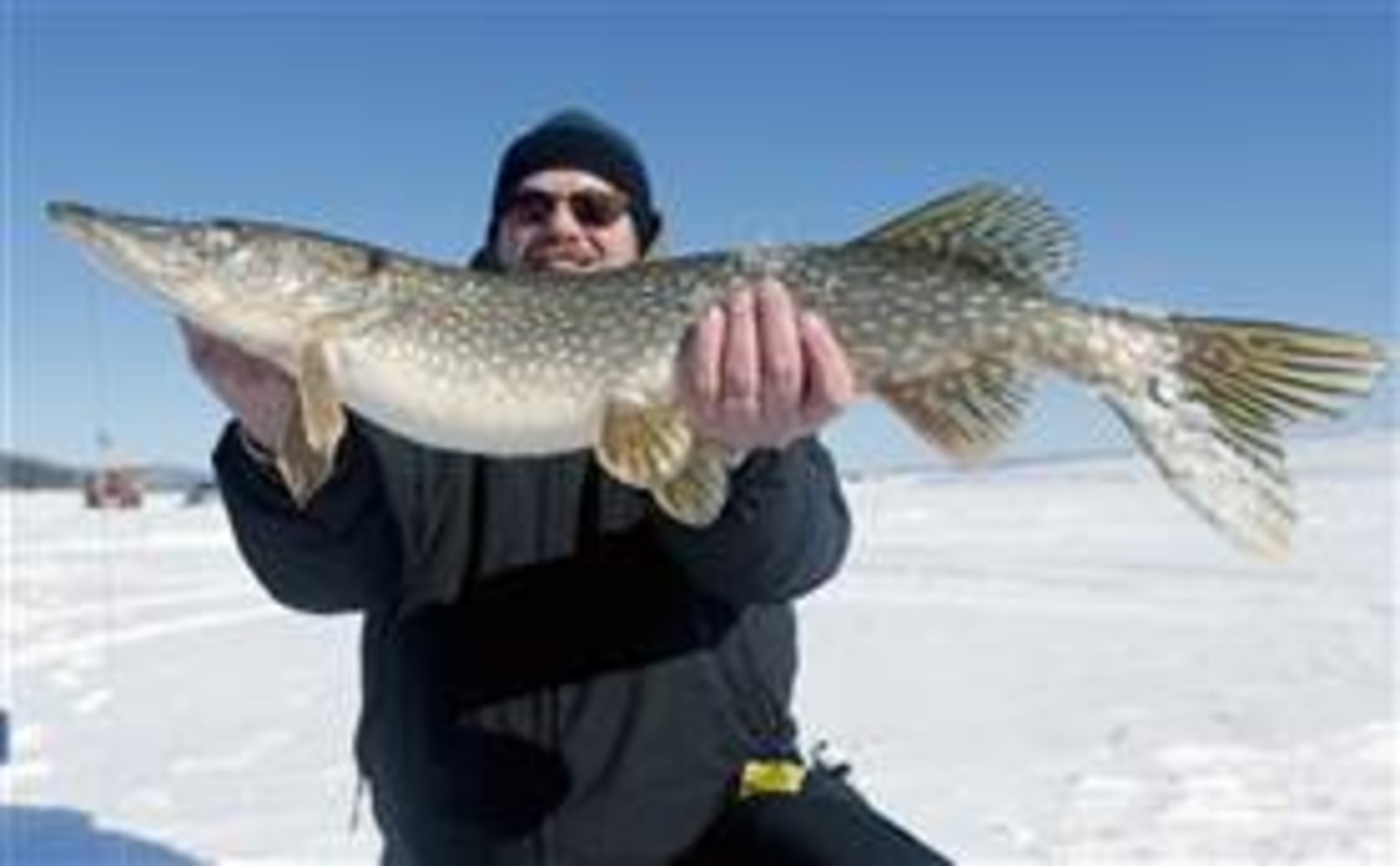
The ways humans hunt and fish “change the rules of the game” of evolution from survival of the fittest to survival of the smallest, Darimont said. Humans, he said, are “super predators.” Taking bigger fish or wildlife has “remarkable short-term benefits” — for example, it makes it easier to process for food. But long term, it’s a loser, Darimont said.
The collapse of the Atlantic cod is a good example, Darimont said. If female cod live long enough, they are “cod-making machines.” He said a fish that can grow an extra 10 percent often produces more than double the amount of eggs. As fishermen spare smaller cod and target bigger ones, scientists have noticed that Atlantic cod population has changed to breed earlier in their lifetime, he said.
Related: Major U.S. Airlines End Trophy Hunter Shipments Amid Cecil Outcry
In a statement, Richard Methot, the science adviser for fish stock assessments at the U.S. National Oceanic and Atmospheric Administration, said the agency uses quotas to manage overfishing that “closely examines the balance of fishery impacts on young versus old fish and designs harvest rates that allow fish and shellfish to grow to sizes that produce seafood for the nation while preserving stock and ecosystem sustainability.”
Conservation expert Stuart Pimm of Duke University, who wasn’t part of the study, praised it. “We ought to be harvesting animals that are about to die from other causes,” he said.

https://www.rawstory.com/2015/08/photo-of-7-year-old-son-killing-his-first-lion-yanked-from-twitter-by-proud-dad-after-activists-shame-him/
“An Indiana man who formerly tweeted under the name @Safarihunter77
had shut down his account after animal rights activists discovered
photos he took of his two young sons with lions they had shot and
killed, reports theDaily Record.”

Cecil the lion, pictured above. Photo by Brent Stapelkamp. <!– –>
Cecil’s story has shone a bright light on the pay-to-slay subculture of the trophy killing industry and as a result, the public has voiced their outrage. Now it’s time for the U.S. Congress to act on it.
Congress is considering the so-called “Bipartisan Sportsmen’s Act”, which provides a sweetheart deal for millionaire trophy hunters by allowing the import of the heads of rare polar bears they shot in Canada. Polar bears are a threatened species, but these trophy hunters want a special congressional waiver.
TAKE ACTION
Please ask your U.S. Senators to oppose S. 405 and withdraw their name if they have already cosponsored this cruel bill.
Exclusive: The Telegraph obtains first images of Walter Palmer in Minnesota since beloved lion was killed
|
|
|
|
|
|

These are the first images of Walter Palmer, the American dentist, back in his home town after it was revealed by The Telegraph last month that he was responsible for the death of Cecil the lion.
Pictured for the first since the hunt in Minnesota, Mr Palmer has been in hiding since the worldwide furore surrounding the death of the beloved lion in one of Zimbabwe’s national parks.
His return to normal life coincided with a letter announcing that the dental practice he owns was reopening – but without the embattled hunter.
“Today, River Bluff Dental employees and dentists are beginning to serve our loyal patients,” the firm said in a letter dated Monday. “Dr Palmer is not on site.”
The dental practice website was still offline, but the news was announced on a Twitter account claiming to belong to the practice.
The account, which was started after the news of Cecil’s killing was announced, has been used to rally support for the practice since The Telegraph named Dr Palmer as the man responsible for the animal’s death on July 28.
“A smile takes but a moment, but the memories of it last forever. Happy #WorldLionDay!” they tweeted on August 10, with a photo of two lions bearing their teeth.
“Don’t understand why people are so angry. What’s done is done. The practice WILL be open again! Promise!!!”
Last week they tweeted: “The practice is still closed even though people care less and less about #CecilTheLion day after day. Fickle people.”
Mr Palmer is believed to have paid £35,000 to shoot and kill the 13-year-old lion with a bow and arrow. The animal was wearing a radio collar because he was part of an academic study by Oxford University.
 Walter Palmer, the dentist responsible for killing Cecil the lion Photo: Richard Beetham/The Telegraph/Splash News
The animal was shot on July 1 in Hwange National Park. There have been calls for Mr Palmer to be extradited to face charges in Zimbabwe – something highly unlikely to happen.
 Walter Palmer, the dentist responsible for killing Cecil the lion Photo: Richard Beetham/The Telegraph/Splash News
The professional hunter who accompanied the American, Theo Bronkhorst, is facing charges of carrying out an illegal hunt.
Last week, Robert Mugabe, the Zimbabwean president, blamed his own people for allowing Cecil to be killed by the dentist, telling them they “failed to protect” a national resource from foreign “vandals”.
When a controversial animal rights activist outed Dr. Walter Palmer as the hunter who killed Cecil the lion last month, the Minnesota dentist became arguably one of the most hated people in the world almost overnight.
Soon after Cecil’s killer was made public, protesters showed up at Palmer’s dental office in Bloomington, Minnesota, waving signs that said things like “lion killer” and “justice for Cecil.” They started building a shrine of stuffed lions at his office front door.
And last week, vigilantes vandalized his Marco Island, Florida, vacation home, covering his driveway with bloodied pigs’ feet.

Palmer was the target of countless hateful and threatening Internet posts.
Since then, the highly skilled bow hunter has remained out of the public eye.
Rebecca Francis, a big-game hunter and bow-hunting expert from Wyoming, knows exactly how Palmer probably feels.
Five years ago, Francis went to Africa and posed for a photo lying next to an adult dead giraffe she had just killed. She posted the photo on her personal website. In April of this year, comedian Ricky Gervais tweeted out her photo with the words, “What must’ve happened to you in your life to make you want to kill a beautiful animal and then lie next to it smiling?”
More: http://abcnews.go.com/US/big-game-hunter-rebecca-francis-opens-kill-photo/story?id=33083741
An open letter to Mozambique by Josphat Ngonyo, founder, Africa Network for Animal Welfare
On behalf of Africa Network forAanimal Welfare (ANAW), a network of organizations and individuals interested in promoting humane treatment of animals in Africa while working with communities and governments, I write to you Sir, with the aim of engaging with you, on the most recent development in your country, the World Bank’s International Development Association (IDA) approving $40 million grant to your country, to fund conservation efforts that include strengthening the country’s program of selling the rights to hunt wild animals.
I write to your government to request you to reconsider this grant in light of the unmistakable negative effects this would have on wildlife conservation in Mozambique and the rest of Africa at large.
Read more:
 August 20, 2015


 Exposing the Big Game
