Exposing the Big Game

Forget Hunters' Feeble Rationalizations and Trust Your Gut Feelings: Making Sport of Killing Is Not Healthy Human Behavior

Exposing the Big Game

Opinion: Cecil the lion and compassionate conservation

http://www.vancouversun.com/opinion/op-ed/Opinion+Cecil+lion+compassionate+conservation/11279680/story.html

BY CHRIS GENOVALI AND PAUL PAQUET, SPECIAL TO THE VANCOUVER SUN AUGUST 11, 2015

The senseless killing of Cecil the lion has catalyzed a worldwide discussion about the gratuitous trophy hunting of large carnivores.

In Western Canada, countless Cecils are killed in an equally senseless manner each year for the amusement, pleasure, and excitement of recreational hunters.

From the unrestrained killing of wolves in British Columbia and Alberta to the persistence of the insupportable B.C. grizzly bear hunt, large carnivores are persecuted in Western Canada by way of an anachronistic approach to wildlife management that relies on suffering and death as its primary tool. The chief purveyors and ideological proponents of this faulty and antiquated model are government ministries responsible for wildlife management and trophy hunting special interest groups. Moreover, they are rapidly falling out of favour with much of society as their excesses and biases steadily become more widely known. Clearly, the time has come for a different way of managing wildlife.

Dr. Marc Bekoff, one of the foremost proponents and thinkers in the evolving field of compassionate conservation, writes that “Compassionate conservation — in which the guiding principle ‘First do no harm’ stresses the importance of individual nonhuman animals — is gaining increasing global attention because most animals need considerably more protection than they are currently receiving and many people can no longer justify or stomach harming and killing animals in the name of conservation.”

Too often conservation and wildlife management primarily focus on the maintenance of population numbers. We forget wild populations are formed by of individuals that can suffer stress and pain, which we deem unacceptable for companion animals that share our homes and those we farm to eat. Although suffering is a feature of a wild life, the human-induced suffering caused by sport hunting and lethal predator control, such as the B.C. and Alberta wolf culls, is not.

In Western Canada, thousands of large carnivores are killed annually under the guise of conservation and wildlife management. The recreational hunting of wolves, grizzly bears, black bears, and cougars is done for the most trivial of motivations such as “bagging a trophy.” In addition, hundreds more of these animals are tyrannized every year in the name of predator control, as large carnivores become scapegoats for the decline of other animals from marmots to mountain caribou.

Humans intrude, degrade, and destroy large carnivore habitat, including restricting access to or depleting their food, in our relentless pursuit of resource development, economic gain, and even recreational activity. In doing so, top predators are deprived of the requisites they need to survive, and then are slain when they become “problem” animals as a result of their search for sustenance.

Large carnivores are demonized in books, films, and television programs, as our society clings to malevolent myths that have no basis in reality, but are instead phantasmagoric products of our own deep-seated fears and paranoia about the “other.”

We diminish the lives of large carnivores by relegating them to the status of unthinking and unfeeling beasts, fostering our bloated sense of entitlement and misguided belief in human exceptionalism. We hold the balance of power in our relationship with wildlife and typically wield that power with downright ruthlessness, motivated by a parsimonious self-interest that continues to be informed by superstition, hubris, and indulgence.

Bekoff summarizes the goals of compassionate conservation and the challenges we face in fundamentally changing our current relationship with wildlife thusly: “Striving to live peacefully with other animals with whom we share space, and into whose homes we’ve moved, is part of the process of re-wilding our hearts, and coming to appreciate other animals for whom they are and for what they want and need in our troubled world, to live in peace and safety.”

Ultimately, how we relate to wolves, bears, lions, and other carnivores is determined by the social values and mores of the culture we inhabit. Increasingly, we are realizing our treatment of large predators is a test of how likely we are to achieve co-existence with the natural elements that sustain us.

It is encouraging that growing public sensitivity to the trophy hunting of large predators is exposing blood-sport adherents to intense scrutiny. Much of society is beginning to identify the wanton killing of wildlife for fun and entertainment as an unacceptable deviancy by which so-called trophy animals are sacrificed for the perverse gratification of trophy hunters.

Perhaps there will come a day when the stubborn allegiance of many trophy hunters, government biologists, and opportunistic politicians to lethal exploitation and management is understood to tell us less about the exigencies of wildlife conservation and more about the psychological pathology of people.

Chris Genovali is executive director for Raincoast Conservation Foundation. Dr. Paul Paquet is Raincoast’s senior scientist.
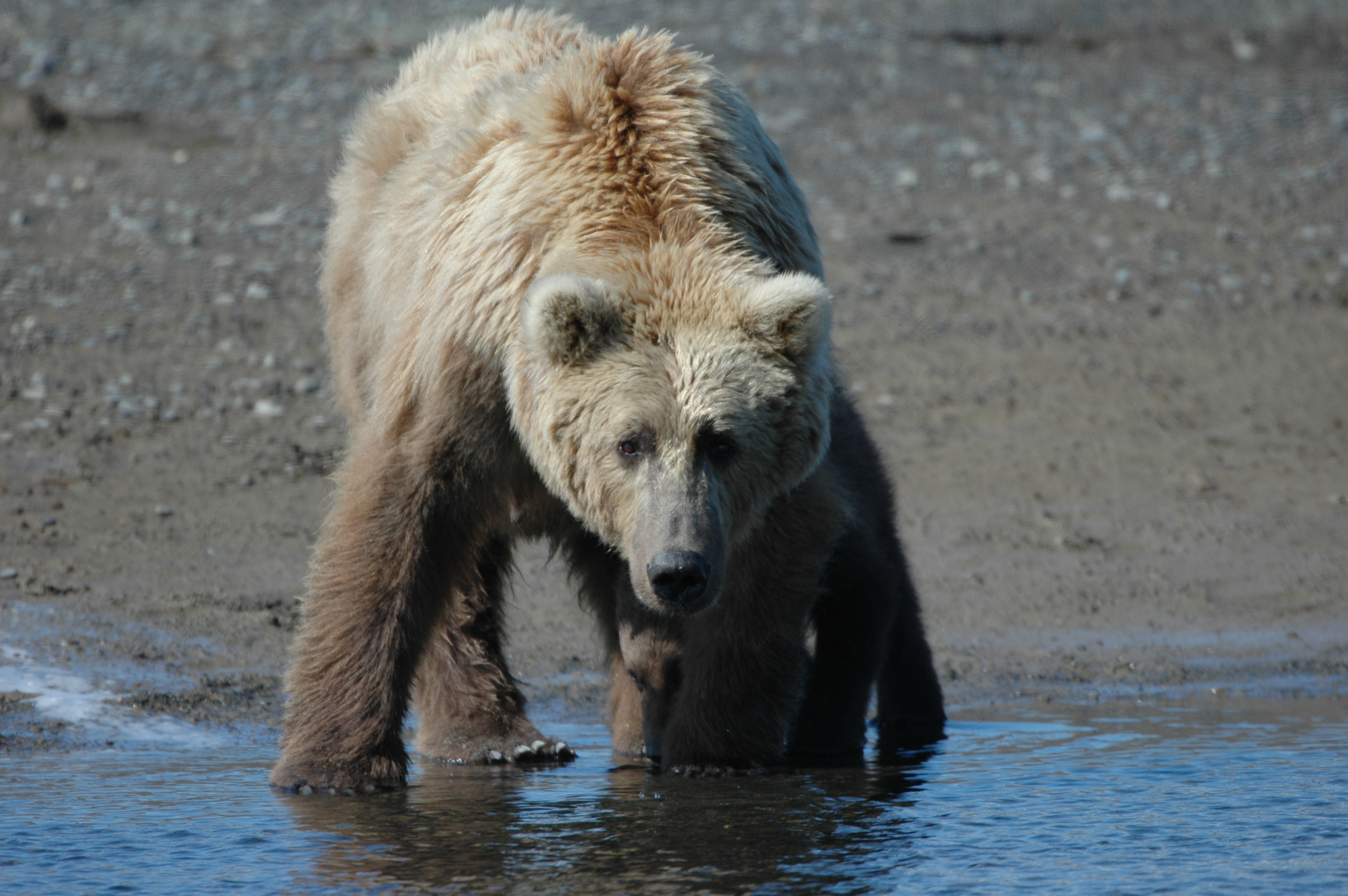
Wildlife Photography ©Jim Robertson, 2015. All Rights Reserved

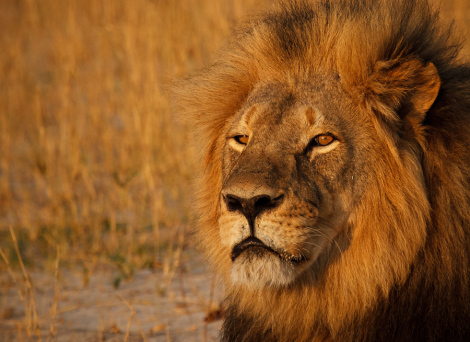
Wildlife Photography ©Jim Robertson, 2015. All Rights Reserved
In Defense of Legal Killing

Wayne Bisbee is founder of Bisbee’s Fish and Wildlife Conservation Fund, a nonprofit organization that promotes conservation programs through science, education and technology. The opinions expressed in this commentary are solely those of the author.

(CNN)The recent illegal killing of Cecil the lion in Zimbabwe has understandably generated passionate and emotional responses from around the world.

I agree with the common sentiment that the circumstances around Cecil’s death are abhorrent and those responsible should be prosecuted to the fullest extent of the law. I also think it’s unfortunate that legitimate hunters are given a public black eye by this case.

Let’s face it, we all feel strongly about this issue, whether we’re animal activists, conservationists, or hunters. Many of us have the same basic goal: to ensure that endangered species are here for generations to come.

That’s why I advocate conservation through commerce, which are controlled and high-dollar hunts whose proceeds benefit animal conservation. This is one of numerous legal, logical and effective tools to humanely manage resources, raise awareness of endangered animals, and help fund solutions.

Wayne Bisbee

<img alt=”Wayne Bisbee” class=”media__image” src=”http://i2.cdn.turner.com/cnnnext/dam/assets/150811151033-wayne-bisbee-headshot-large-169.jpeg”>

Yes, I am an avid hunter. I enjoy the thrill and challenge of stalking an animal and providing a more natural, healthier meat protein source to my family than what is available from the commercial food industry.

Today, most hunters see the activity as sport. But hunting has been around as long as man and it’s not likely to go away any time soon. Billions of the world’s human population eat animal meat for protein, and this is not going to change. So the reality is that somewhere, somehow, millions of animals are killed every day to sustain human life.

Does that mean I hate animals? Absolutely not. I love wildlife and I’m not alone among hunters. In a study published in the March 2015 issue of The Journal of Wildlife Management, researchers from Clemson University and Cornell University found that “wildlife recreationists — both hunters and birdwatchers — were 4 to 5 times more likely than non-recreationists to engage in conservation behaviors, which included a suite of activities such as donating to support local conservation efforts, enhancing wildlife habitat on public lands, advocating for wildlife recreation, and participating in local environmental groups.”

Hunters are more likely than non-hunters to put our money and time where our mouths are. It makes sense when you think about it. Hunters have a vested interest in keeping exotic and endangered animals from going extinct.

It’s about resource management

All animals, from wolves to rhinos to humans, are hierarchical. In the animal kingdom there are alpha males who try to eliminate competition. An older member of a herd often isn’t ready to step aside just because he can no longer perform his reproductive duties.

Older, post-breeding males are also very often aggressive and interfere with the proliferation of the rest of the herd, especially in the rhino species. That’s why a legitimate trophy hunt to benefit conservation can remove a problem animal from a herd.   …

The right way to hunt

No one thinks that putting a suffering dog to sleep is inhumane. The same logic applies to hunting …

[WTF? Does that mean shooting an animal with an arrow and pursuing it for 40 long hours before killing it is considered “humane” for hunters? I’ve heard enough. If you want to read more of this bullshit article, it continues here]: http://www.cnn.com/2015/08/11/opinions/bisbee-legal-hunting/index.html

Zimbabwe Lifts Hunting Ban After Just 10 Days

http://www.nbcnews.com/news/world/cecil-lion-zimbabwe-lifts-hunting-ban-after-just-10-days-n406971

After Just 10 Days

Cecil ‘Was Murdered’: Head of Safari Group0:40

Zimbabwe has lifted a ban on big-game hunting after less than two weeks after the death of Cecil the lion, officials told NBC News on Monday.

The country suspended hunting on August 1 in the area surrounding Hwange National Park. This was where Cecil was killed by Minnesota dentist Walter Palmer with a bow in an incident that provoked international outrage.

Just 10 days after the moratorium was imposed, the Zimbabwe Parks and Wildlife Management Authority said it had been be axed across most of that area.

The ban remains in place on farmland where Cecil died, as well as several other farms were officials allege animals were killed illegally, parks spokeswoman Caroline Washaya-Moyo told NBC News.

Those exceptions will be reviewed following the trial of Theo Bronkhorst, the hunter who allegedly helped 55-year-old Palmer illegally hunt the animal. Palmer said he trusted his guides and believed he had the correct permits to kill the lion.

 
FROM AUGUST 5: Cecil the lion hunting guide faces charges in African court2:36

Anyone convicted of illegal hunting would be blocked from getting permits for life, “as they tarnish the image of the hunting industry, the authority and the country at large,” Washaya-Moyo said, adding that “their actions border on economic sabotage.”

The announcement that the ban was lifted came after a meeting between the parks authority and representatives from the hunting industry last week. Their recommendations have since been approved by the government, Washaya-Moyo said.

All hunts would now be subject to stricter rules, she added, with participants having to be accompanied by national parks staff at all times and required to submit detailed reports of the kill.

Bow hunting was also suspended unless the hunter had written permission from the national parks director general, the spokeswoman added

Airlines Take Flight From Trophy Hunting — When Will Congress Get on Board?

Portrait of Cecil by Ed Hetherington

http://www.huffingtonpost.com/michael-markarian/airlines-take-flight-from-trophy-hunting_b_7966170.html

by

Chief Program & Policy Officer, The Humane Society of the United States

The tragic death of Cecil the Lion — senselessly shot by an American dentist with a bow and arrow and left to suffer for hours before being shot again — has exposed the pay-to-slay subculture of wealthy people who spend a fortune to kill the grandest, most majestic animals in the world. The public outrage shows no signs of slowing down.

Virtually overnight, a cascade of major airlines has banned the transportation of spoils from the trophy killing industry — principally elephants, rhinoceros, lions, leopards, and buffalo, or the “Africa Big Five” sought for self-aggrandizement in the Safari Club International record books. Delta, United, American and others are all in flight from the destruction and death meted out by trophy hunters on the African continent.

But when will Congress get on board? Even now, there are lawmakers working quietly to appease the bullies and fat-cats of the trophy hunting corps. While most of the world is convulsed over Cecil, some members of Congress are springing into action to grant special favors for one of the smallest and most elite groups of trophy hunters in the world.

Walter Palmer is now a household name. What isn’t so widely known is that there are thousands of ultra-wealthy trophy hunters just like him, and that 41 of them are lobbying Congress for a wholly unprincipled bail-out that would blow a hole in the heart of the Endangered Species Act.

Bills in the House and Senate — the “Bipartisan Sportsmen’s Act” sponsored by Sens. Lisa Murkowski, R-Alaska, and Martin Heinrich, D-N.M., and the “SHARE Act” sponsored by Reps. Rob Wittman, R-Va., Tim Walz, D-Minn., Jeff Duncan, R-S.C., and Gene Green, D-Tex. — both provide a sweetheart deal to help 41 big-bucks, trophy-mad hunters import the heads of rare polar bears they shot in Canada. None of these millionaire trophy hunters, who paid as much as $50,000 each to shoot a polar bear, ate the meat. They just went on a head-hunting exercise in the Arctic, and paid a fortune to do so — all for the head and the hide and the bragging rights that go along with it.

U.S. law bars import of these trophies because polar bears are in terrible trouble with their very survival at stake, thanks to climate change, commercial trade, and over-hunting. These animals were killed during expensive trophy safaris in Canada at a time when the Bush Administration had proposed listing the polar bear as a threatened species — the U.S.’s contribution to conservation. These fat-cat hunters proceeded knowing that the door would be closed to polar bear trophy imports, but confident that they could always call upon friends in Congress to do their bidding and get them an exemption.

Indeed, Congress has several times granted similar import allowances — a de facto repeal of the import ban — sending a message to trophy hunters that they can continue killing imperiled species and eventually exert their influence to get approval to bring home their trophies. The cumulative impact of this corrosive pandering encourages more reckless killing of these animals around the globe.

The whole sordid business is fueled by competitive killing programs that give “hunting achievement” awards and “grand slams” for kills in specific categories. For example, hunters at the Safari Club International compete for the “North American 29” award, which requires killing a minimum of 29 species and subspecies of animals, including the polar bear, in North American habitat. They also strive to earn the “Bears of the World” award, which requires killing five bears, such the polar bear and Eurasian and Siberian brown bears, on a number of continents.

The U.S. Fish and Wildlife Service is now considering a rule to list the African lion as threatened under the Endangered Species Act. Should all the Walter Palmers of the world seeking the “Africa Big Five” award now rush to be among the last hunters to bag the king of the jungle? That acceleration of killing inverts the very purpose of the law.

These trophy hunters don’t care that African lion populations and polar bear populations are declining fast. They don’t care that time is running out to slow the mortality of these majestic creatures. But Congress should.

Trophy Hunting Deserves the Attention it Does Not Want

11825758_10153384818490861_9149004585855556291_n

http://www.bornfreeusa.org/weblog_canada.php> Born Free USA Canadian Blog by Barry Kent MacKay 07 Aug 2015

As most folks now know, after suffering for 40 hours, wounded by an arrow, an African lion given the name “Cecil” was shot again—this time fatally—with a rifle.

His tormentor was a dentist named Walter Palmer, from Minnesota, who had paid tens of thousands of dollars, travelling to distant Zimbabwe to kill animals: something he admits he loves to do. Cecil had been lured from a national park, which is illegal to do in Zimbabwe.

And, the world took note. Cecil was wearing a radio tracking collar. His body was skinned, the head removed.

Palmer’s guide was charged with poaching and so was the owner of the ranch where this outrage occurred.

Now, Zimbabwe wants to extradite Palmer from the U.S. to face similar charges. Palmer has been the subject of outrage, all the more so for having poached before, when he lied about where he had shot a black bear in the U.S. His life has been threatened, his property vandalized, his business closed for now, and he has fled into hiding, hounded by relentless vitriol and images of him posted on social media posing with various beautiful animals he has killed. He looks so pleased; the animals look so dead.

If there is a positive outcome to this situation, it may be to the degree that trophy hunting has received attention it would rather avoid.

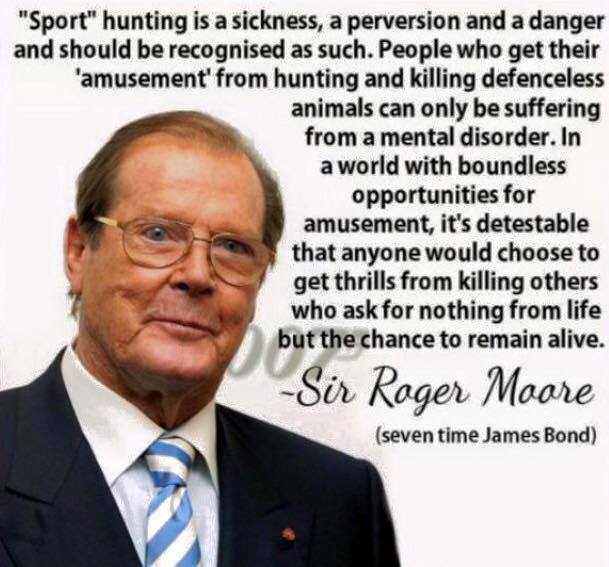
I am personally inclined to agree with British actor Sir Roger Moore, who said, “‘Sport’ hunting is a sickness, a perversion, and a danger and should be recognized as such… We know that we should protect the most vulnerable and helpless in society, not destroy them—much less derive pleasure from doing so.

Thankfully, those of us with a conscience are appalled by the idea of gunning down animals for the sake of a thrill or a photo. Interest in hunting in Great Britain and elsewhere is steadily declining, since decent people prefer to hike, take photographs, kayak, and generally enjoy the outdoors without killing other beings.”

Palmer had already scored the “super grand slam” of North American trophy hunting by killing all of the “top 29” North American species and subspecies.

And then, there is Sabrina Corgatelli, an American accountant who defended her own love of killing animals on a national TV show, saying, “There is a connection to the animal, and just because we hunt them doesn’t mean we don’t have a respect for them. Giraffes are very dangerous animals. They could hurt you seriously, very quickly.” This last comment was likely in reference to disgusting images of her posing triumphantly with a giraffe she had just killed. In her Facebook account of this event, she wrote, “I got an amazing old giraffe. Such an amazing animal!!!! I couldn’t be happier.”

There are hunters I’ve met who have no respect for the category of hunting known as “trophy” hunting, or even of baiting animals to lure them into range. Cecil was lured from the park refuge by the smell of a dead animal tied to a vehicle, at night, and shot when caught in the glare of a spotlight. We would never know but for the radio collar, put there by scientists from Oxford University studying lions in the nearby park. We have learned of other such lions being shot for the same reason. Indeed, lions are in serious decline, heading toward extinction.

Killing animals for trophies continues day after day around the world. It seems even reminiscent of those serial killers who take some trophy of their victims—some hair or a piece of clothing, perhaps—as if wanting to have a souvenir to aid memory of the event. Except, trophy hunting for animals is, too often, quite legal.

And, while they may not be able to admit it to themselves, I think that, at some rudimentary level, trophy hunters realize that their love of killing is an aberration to other people. Thus, they may try to excuse it with rationales that, thanks to Cecil’s sad plight, are now being held up to scrutiny. No giraffe threatens you, me, or Corgatelli. Even Cecil never bothered or threatened humans.

The more sophisticated defense is that trophy hunting brings essential revenue to places like Africa, to be used for conservation. But, it does no such thing. We have found that <http://www.bornfree.org.uk/animals/lions/projects/trophy-import-ban/> revenue from trophy hunting is a fraction of what tourism brings to Africa, and people travel to such places mostly to see (not kill) live (not dead) animals.

It is almost as if the trophy hunter somehow thinks that, with access to the art of taxidermy, the grace, beauty, power, and elegance of beautiful creatures can be possessed and owned as a reflection of their own competency. They don’t “get” how pathetic they are in the eyes of other people.

Some argue that trophy hunting removes geriatric animals who are past being able to contribute to the survival of the species. However, that was not true of Cecil, nor Corgatelli’s “old giraffe,” nor most other animals: often prime individuals. (That’s the whole idea.). And, at any rate, the slaughter still begs the question of “Why?” Why do you want to kill anything?

To shoot a warthog? A walrus? A giraffe? How can a person kill something so wonderfully alive and so evocative of the high plains and big skies as a pronghorn—for fun? No. I just don’t want to do that. Most people don’t. Those who do are the aberrant ones: the misfits, the insecure, the outright strange.

They are a minority… but not enough of a minority. They are killers in a world that’s in desperate need of protectors.

And, at Born Free, and in our offices everywhere—including mine up in Canada—that’s why we’re here.

Economics of Trophy Hunting in Africa Are Overrated and Overstated

http://www.ifaw.org/united-states/news/new-report-economics-trophy-hunting-africa-are-overrated-and-overstated

New Report: Economics of Trophy Hunting in Africa Are Overrated and Overstated
Tuesday, June 18, 2013
Washington, DC

A new report released today analyzes literature on the economics of trophy hunting and reveals that African countries and rural communities derive very little benefit from trophy hunting revenue. The study, authored by Economists at Large—commissioned by the International Fund for Animal Welfare (IFAW www.ifaw.org), The Humane Society of the United States, Humane Society International and Born Free USA/Born Free Foundation—comes amid consideration to grant the African lion protection under the U.S. Endangered Species Act (ESA).

“The suggestion that trophy hunting plays a significant role in African economic development is misguided,” said economist Rod Campbell, lead author of the study.  “Revenues constitute only a fraction of a percent of GDP and almost none of that ever reaches rural communities.”

As a portion of any national economy, trophy hunting revenue never accounts for more than 0.27 percent of the GDP. Additionally, trophy hunting revenues account for only 1.8 percent of overall tourism in nine investigated countries that allow trophy hunting, and even pro-hunting sources find that only 3 percent of the money actually reaches the rural communities where hunting occurs. While trophy hunting supporters routinely claim that hunting generates $200 million annually in remote areas of Africa, the industry is actually economically insignificant and makes a minimal contribution to national income.

“Local African communities are key stakeholders for conservation, and they need real incentives for conservation,” said Jeff Flocken, North American regional director, International Fund for Animal Welfare. “Non-consumptive nature tourism–like wildlife viewing and photo safaris–is a much greater contributor than trophy hunting to both conservation and the economy in Africa. If trophy hunting and other threats continue depleting Africa’s wildlife, then Africa’s wildlife tourism will disappear. That is the real economic threat to the countries of Africa.”

Many species suffer at the hands of trophy hunters including the African lion. The number of African lions has declined by more than 50 percent in the past three decades, with as 32,000 or fewer believed remaining today. The steepest declines in lion population numbers occur in African countries with the highest hunting intensity, illustrating the unsustainability of the practice.

“Trophy hunting is driving the African lion closer to extinction,” said Teresa Telecky, director, wildlife department, Humane Society International. “More than 560 wild lions are killed every year in Africa by international trophy hunters. An overwhelming 62 percent of trophies from these kills are imported into the United States. We must do all we can to put an end to this threat to the king of beasts.”

Listing the African lion as endangered under the ESA would generally prohibit the import of and commercial trade in lion parts, and thus would likely considerably reduce the number of lions taken by Americans each year.

“The U.S. government has a serious responsibility to act promptly and try to prevent American hunters from killing wild lions, especially when the latest evidence shows that hunting is not economically beneficial.  Listing the African lion under the Endangered Species Act will help lions at almost no cost to African communities. Government inaction could doom an already imperilled species to extinction through much of its range,” said Adam Roberts, executive vice president, Born Free USA.

A copy of the economic study is available for download.

###

About the International Fund for Animal Welfare (IFAW)
Founded in 1969, IFAW (the International Fund for Animal Welfare) saves animals in crisis around the world. With projects in more than 40 countries, IFAW rescues individual animals, works to prevent cruelty to animals, and advocates for the protection of wildlife and habitats. For more information, visit www.ifaw.org. Follow us on Facebook and Twitter.  Photos and video available at www.ifawimages.com.

About Born Free USA
Born Free USA is a recognized leader in animal welfare and wildlife conservation. Through litigation, legislation, and education, Born Free USA leads campaigns against animals in entertainment, exotic “pets,” trapping and fur, and the international wildlife trade.  Born Free USA brings to America the mission of the U.K.-based Born Free Foundation, established in 1984 by Bill Travers and Virginia McKenna, stars of the iconic film Born Free:  to end suffering of wild animals in captivity, conserve threatened and endangered species, and encourage compassionate conservation. (bornfreeusa.org; twitter.com/bornfreeusa; facebook.com/bornfreeusa.)

About Born Free Foundation
Born Free Foundation, based in England, is an international organization devoted to compassionate conservation and animal welfare.  Born Free Foundation takes action worldwide to protect threatened species, stop individual animal suffering, and keep wildlife in the wild. Born Free helps hundreds of thousands of animals worldwide each year.  (bornfree.org/uk)

About The Humane Society of the United States
The Humane Society of the United States is the nation’s largest animal protection organization, rated the most effective by its peers. Since 1954, The HSUS has been fighting for the protection of all animals through advocacy, education and hands-on programs. We rescue and care for tens of thousands of animals each year, but our primary mission is to prevent cruelty before it occurs. We’re there for all animals, across America and around the world. Celebrating animals and confronting cruelty – on the Web at humanesociety.org. Subscribe to Wayne Pacelle’s blog, A Humane Nation. Follow The HSUS on Twitter. See our work for animals on your Apple or Android device by searching for our “Humane TV” app.

About Humane Society International
Humane Society International and its partner organizations together constitute one of the world’s largest animal protection organizations. For nearly 20 years, HSI has been working for the protection of all animals through the use of science, advocacy, education and hands-on programs. Celebrating animals and confronting cruelty worldwide — on the Web at hsi.org.

Alaska big-game hunting “safe” from airline trophy bans

http://juneauempire.com/local/2015-08-06/alaska-big-game-hunting-safe-airline-trophy-bans

August 6, 2015 – 12:06am

The amount of revenue generated by resident and non-resident hunting activities and their support systems means big game is a big deal for Alaska.  James Brooks | The Juneau Empire

James Brooks | The Juneau Empire
The amount of revenue generated by resident and non-resident hunting activities and their support systems means big game is a big deal for Alaska.


It has been more than a month since an American Dentist killed Cecil the lion, Zimbabwe’s most famous feline, but public uproar regarding the lion’s death is certainly still alive.

On Monday, three major U.S. airlines added their names to a growing list of carriers limiting, and in some cases eliminating altogether, the transport of hunting trophies.

“Effective immediately, Delta will officially ban shipment of all lion, leopard, elephant, rhinoceros and buffalo trophies worldwide as freight,” Delta announced in a press release Monday. United Airlines and American Airlines released similar statements the same day, joining several other international carriers — some of whom started banning hunting trophies as early as April.

Alaska Airlines has no intention to implement any such ban. The Seattle-based company has made clear that it will continue allowing the transport of hunting trophies as long as they meet the airline’s existing guidelines.

“Our existing policy works well for the people in the Lower 48 and in Alaska, and we’re not making any policy changes,” said Bobbie Egan, a spokesperson for Alaska Airlines.

Though most carriers’ hunting-trophy bans primarily target trophies taken in Africa, Delta went on to say that it “will also review acceptance policies of other hunting trophies,” potentially impacting trophy hunting in Alaska. Delta is engaged in tight competition with Alaska Airlines for service to and from the 49th state, having added year-round service to Fairbanks, Juneau and several other communities in recent years.

Nonetheless, many of Alaska’s top sport-hunting officials are not worried that these bans will hurt the state’s robust big-game hunting industry, which drew in $3.9 million from hunting-tag fees in 2014.

Since the 1960s, the Alaska Department of Fish and Game has awarded and sold thousands of hunting tags annually to Outside visitors seeking to hunt the biggest state’s biggest game. Caribou, moose, black bears and grizzly bears are the animals most sought after by out-of-state sport hunters.

None of the major U.S. airlines banning hunting trophies have added these animals to their no-fly lists and bison, available in Alaska, are hunted in extremely small numbers. However, even if the airlines banned all shipments, the Alaskan big-game hunting industry likely wouldn’t be impacted, said Kelly Vrem, chair of the Alaska Big Game Commercial Services Board.

Vrem has been a guiding big-game hunts for more than four decades and hunting even longer. The way he sees it, the bans are hardly more than a publicity stunt by airlines.

“This is kind of grandstanding on the airlines’ part,” Vrem said. “It’s is nothing but an opportunity to get some free advertising.”

Most out-of-state hunters who are coming to Alaska and taking trophies home are not transporting them on commercial airlines, he said. Instead, these hunters use regular freight companies or specialty expeditors to ship their trophies home, and that has been the case here for more than 20 years.

“For a fair amount of time now, it has really been impractical to ship trophies by air,” Vrem said. “It was a hassle for them, and it was a hassle for us, too. It was just a nuisance for everyone.”

Such a nuisance, in fact, that Vrem’s business, Kelly Vrem’s Rough and Ready Guide Service, officially changed its policy regarding shipment of trophies in 1993 to recommend against using commercial airlines for shipping.

The airlines didn’t like dealing with trophies because they are typically large and heavy, he said. They take up a lot of space, and can be damaging to other luggage. If packaged improperly, for example, caribou horns are sharp enough to puncture soft luggage stacked on top of them, he said.

Back then, Vrem never had a problem with the airlines. It was simply easier for both parties if hunters shipped their trophies using freight services. However, now Vrem said he plans to avoid flying with any airlines imposing hunting-trophy bans, which he sees as useless if not insulting. He’s not the only one.

Thor Stacey, a hunting guide and member of the Alaska Professional Hunters Association, said the hunting trophy bans are useless in protecting animals and offensive to hunters.

“We feel, in a way, very picked on,” Stacey said. “It’s akin to the person who doesn’t want to make wedding cakes for same-sex couples who are getting married.”

Stacey said animals would be better protected if these airlines would impose a tariff on the transport of trophies rather than a ban. The extra money raised by the tariff could then be put toward habitat protection and conservation, he said. “Now that would be something we could understand.”

Delta and United did not respond to the Empire by press time. American issued the following statement, “Even though we do not serve the continent of Africa, we will no longer transport buffalo, elephant, leopard, lion or rhinoceros trophies.”

• Contact reporter Sam DeGrave at sam.degrave@juneauempire.com or at 523-2279.

Similar stories from JuneauEmpire.com

Let’s Ground Trophy Hunting

Featured Image -- 10026
From HSUS.org

In the days since the circumstances surrounding the death of Cecil the lion came to light, at least 20 airlines have shown their commitment to protecting wildlife by implementing or clarifying existing bans on the transport of hunting trophies.

While companies like Delta, Virgin Airways, United Airlines and KLM are moving in the right direction, one airline has taken a detour. Despite instituting a ban in late April, South African Airways recently resumed the transport of hunting trophies because of pressure from commercial trophy hunting interests

With Cecil’s death, the world has come to realize the truly horrific nature of trophy hunting. Africa’s wild animals are part of our global heritage and must be protected from needless slaughter for the sake of a head-hunting exercise. By giving trophy hunters — and poachers — a way to transport pieces of these majestic creatures, South African Airways is providing a getaway vehicle for the theft of Africa’s wildlife.

Urge South African Airways to honor Cecil by joining the growing list of airlines that will no longer participate in the depletion of Africa’s wildlife — write today and tell the company #DontFlyWild.