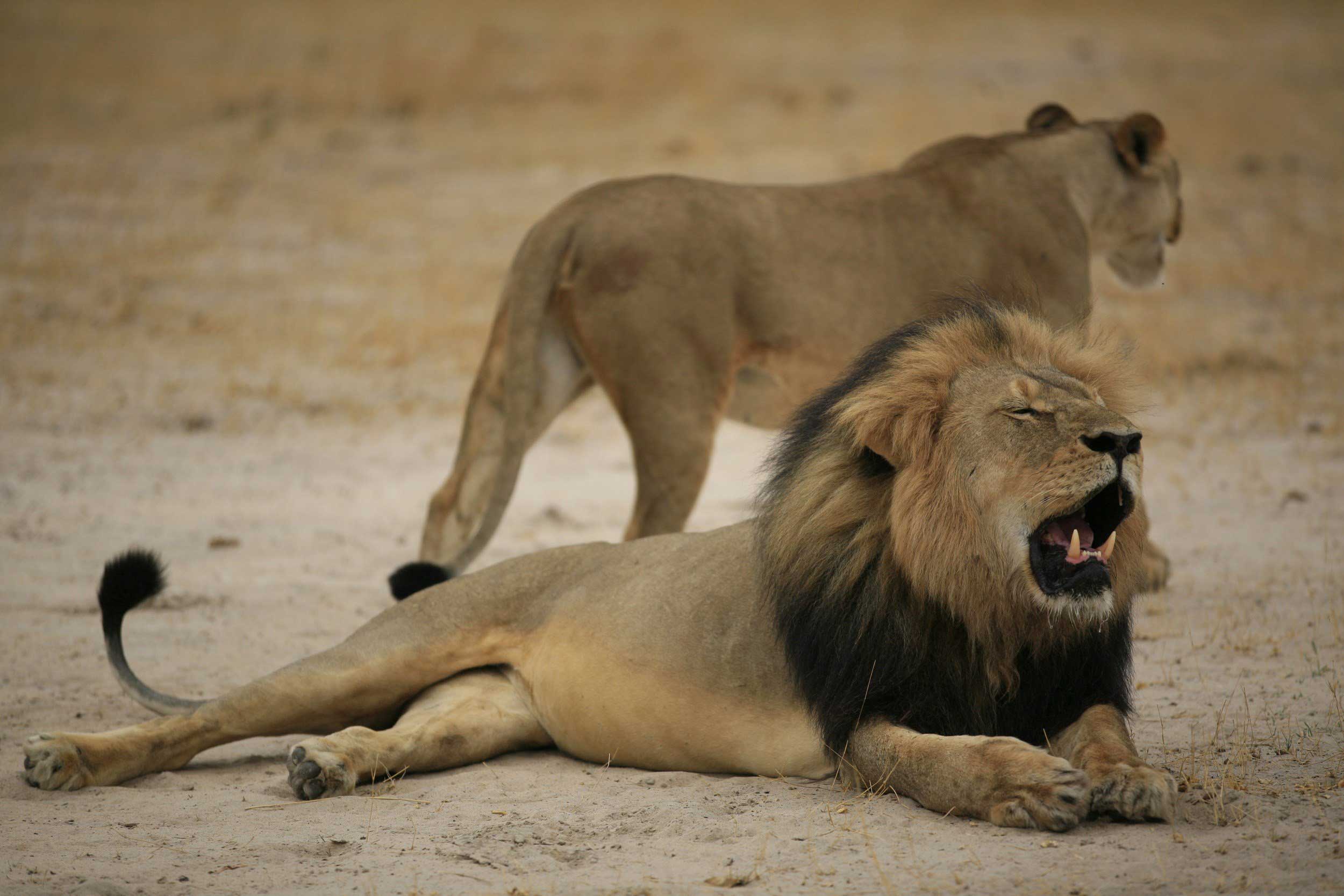
Cecil the lion’s death highlights the work to be done to protect wildlife

August 5 at 7:31 PM

IN THE wake of the international outcry over the death of Zimbabwe’s most famous lion, the country’s wildlife authority has suspended the hunting of lions, leopards and elephants in the areas outside the park that the black-maned Cecil made his home before he was lured to his death. Conservationists hailed the move as a good first step. But more than a temporary stop in hunting in one African country will be needed if threatened and endangered species are to be saved.

Circumstances of the death of Cecil, a 13-year-old lion popular with tourists at Hwange National Park and being studied by scientists, are well known. Shot with an arrow after a dead animal was allegedly used to draw him out of his sanctuary, Cecil was tracked for 40 hours before being shot with a gun, skinned and beheaded. Walter Palmer, the American dentist who admitted killing Cecil, expressed regret, saying he relied on local guides and thought the hunt was legal. Officials in Zimbabwe and the United States are investigating.

What must not get lost in the hunt for justice for one celebrity lion is that Cecil’s death is part of a larger problem. The decline in population of African lions has been dramatic, from 500,000 to 600,000 at the turn of the 20th century to about 30,000 today. Other animals — elephants, rhinoceros, apes — are in equal, sometimes greater, danger. The Post’s Kevin Sieff pointed up the contrast in attention between Cecil’s killing and that of five nameless elephants slaughtered in Kenya by poachers marketing in ivory.

Hunting, legal and illegal, has not been the main cause of the decline in animal populations; that honor goes to the encroachment of civilization on natural habitats. Indeed, some hunting enthusiasts even argue that trophy hunting can be a boon to conservation by generating big fees to support sanctuaries, attract tourists and discourage local residents from killing animals or taking over their habitats.

Whether trophy hunting is beneficial to wildlife is a matter of some dispute. A 2009 report from the International Union for the Conservation of Nature said it had produced “mixed results.” Countries (Namibia is an example) that tightly regulate trophy hunting (paying close attention to the population of species), are vigilant about enforcement and are transparent about where the monies go can claim some overall benefits in helping wildlife. Too many countries, though, sell permits with lax regulations, no enforcement and no idea of the impact on animal populations.
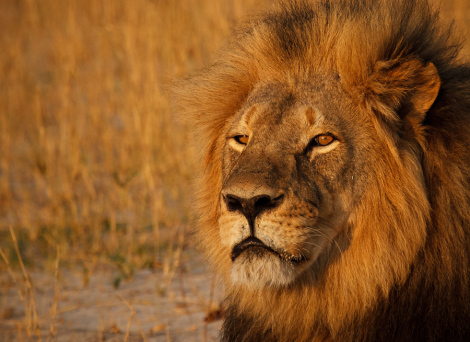
 Portrait of Cecil by Ed Hetherington

The African Wildlife Foundation is asking all African governments to consider placing a moratorium on the trophy hunting of lions. Delta has joined other airlines in banning the shipment of big-game trophies on its flights. The United Nations has called on member states to increase efforts to fight poaching of endangered species, and the U.S. Fish & Wildlife Service has proposed listing lions as threatened under the Endangered Species Act. All are prudent moves that we hope will prove to be more than a sop to those mourning Cecil.
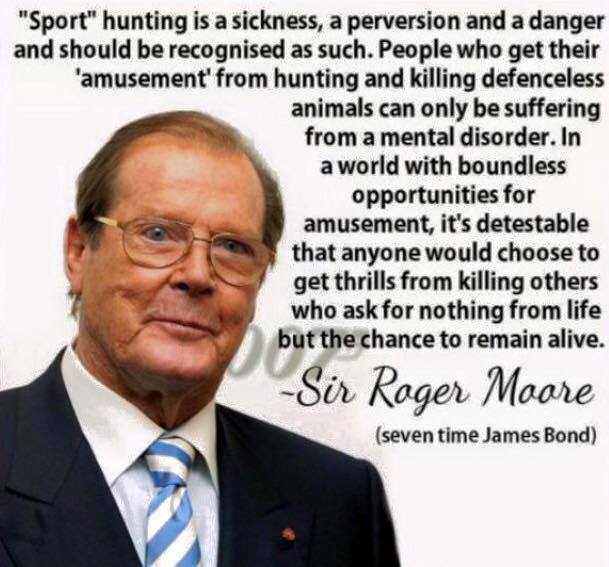
Wednesday Cecil News Roundup

Naples taxidermist reacts to ban on shipment of trophy animals
http://www.nbc-2.com/story/29710960/naples-taxidermist-reacts-to-ban-on-shipment-of-trophy-animals#.VcJBBBNViko
“He’s not happy about the new ban, but he said even though Delta,
United and American airlines aren’t allowing trophy animal remains to
be shipped into the U.S., it won’t kill his business.”

Cecil the lion killer Walter Palmer’s Florida vacation home vandalized
http://www.dailymail.co.uk/news/article-3185082/Cecil-lion-killer-s-1million-Florida-vacation-home-vandalized-graffiti-pigs-feet.html?ito=social-twitter_dailymailus

‘LION Killer!’ sprayed on Florida home of Twin Cities hunter
http://www.startribune.com/vandals-tag-lion-killer-on-fla-home-of-twin-cities-hunter/320741711/?stfeature=S
“Pigs feet made to look bloody also left in the driveway of the Marco
Island residence.”

Trial due to open in Zimbabwe over Cecil the lion’s death
http://news.yahoo.com/trial-due-open-zimbabwe-over-cecil-lions-death-035034280.html

Zimbabwe has suspended the hunting of wildlife following the death of
Cecil the lion
http://qz.com/471639/zimbabwe-has-suspended-the-hunting-of-wildlife-following-the-death-of-cecil-the-lion/

Dubai expat’s billboard campaign to raise awareness of animal rights
http://www.thenational.ae/uae/dubai-expats-billboard-campaign-to-raise-awareness-of-animal-rights

Animal rights organisation against proposal to export dog meat
http://www.niticentral.com/2015/08/05/animal-rights-organisation-against-proposal-to-export-dog-meat-327231.html
“Kochi, Aug 4 (PTI) An animal rights organisation today termed as
“illegal” a controversial resolution adopted by gram panchayats in a
Kerala district proposing export of dog meat to China to counter stray
dog population, saying the state government was bound to follow rules
established by the Centre in this regard.”

Air Canada bans shipments of hunting trophies after killing of Cecil the lion
http://www.startribune.com/air-canada-bans-shipments-of-big-game-hunting-trophies/320681132/?stfeature=S

Major U.S. airlines halt carrying African hunting trophies after Cecil
the Lion killing
http://www.marketwatch.com/story/delta-air-lines-bans-animal-hunting-trophies-after-cecil-the-lion-shooting-2015-08-03
“American Airlines AAL, says it’s joining U.S. carriers Delta Air
Lines DAL, and United Airlines UAL, in banning hunting trophies from
baggage if they are from endangered species. This comes as worldwide
outrage over the killing of Cecil the Lion, Zimbabwe’s most famous big
cat, by a Minneapolis dentist last month shows no sign of abating.”

‘Canned hunting’ of lions in South Africa raises concern, debate
http://www.chicagotribune.com/news/nationworld/ct-south-africa-lion-hunting-20150804-story.html

How Vegans Should Be Responding to Cecil the Lion
http://www.care2.com/greenliving/how-vegans-should-be-responding-to-cecil-the-lion.html

Guide who led Twin Cities dentist to Cecil defends his actions
http://www.startribune.com/bc-zimbabwe-lion-killing-nyt-0548-n-guide-who-led-hunt-that-killed-cecil-the-lion-defends-his-actions/320699191/?stfeature=S
“The guide who led a Minnesota dentist on the hunt that killed Cecil
the lion defended his actions Tuesday, a day before he was scheduled
to stand trial in Zimbabwe.”

http://www.washingtonpost.com/news/morning-mix/wp/2015/08/03/delta-air-lines-bans-freight-shipments-of-lion-hunting-trophies/

Safari Club International Awards by Captain Paul Watson

Sea Shepherd Conservation Society

Safari Club International has some 50,000 members, 150 chapters and collects $3.17 million in membership dues each year. It raises another 7 million from their annual convention. But what is truly despicable about this organization is that it encourages slaughter through awards.

SCI’s record book system ranks the biggest tusks, horns, antlers, skulls and bodies of hunted animals. Hunters are rewarded with trophies for completing a “Grand Slam”. There are 15 “Grand Slams”. The ones that cover Africa are:

1. “The African Big Five Club” African lion, African leopard, African elephant, African buffalo and an African rhinoceros.

2. “Dangerous Game of Africa” requires a minimum of five from the African lion, African leopard, African elephant, African rhinoceros, African buffalo, hippopotamus and Nile crocodile.

3. “African 29” African lion, leopard, elephant, rhinoceros, buffalo, and a small cat, eland, bongo,kudu, nyala, sitatunga, bushbuck, sable antelope, roan antelope, oryx/gemsbok, waterbuck,lechwe, kob or puku, reedbuck or rhebok, wildebeest, hartebeest, mamalisc, impala, gazelle, pygmy antelope, springbok, dik-dik, bush duiker, forest duiker, nubian ibex, aoudad, hippopotamus, and wild pig.

4. “Cats of the World” minimum of four of: lion, leopard, cheetah, jaguar, cougar, lynx, cougar or puma, serval, carcal, African golden cat or bobcat.

There are dozens of other reward categories where members can buy special gold and bejewelled pins for the number of kills they rack up.

There is also the “Global Hunting Award” that requires the killer to have hunted 6 continents to receive a diamond award, a minimum of 17 native in Africa, 13 native or introduced in North America, 4 native or introduced in South America, 6 native or introduced in Europe, 6 native to Asia and 4 introduced in the South Pacific, for a total of 50 animals.

There is the “Hunting Achievement Award” that requires a minimum of 125 animals, or 60 if hunting with a bow.

And for women they have the “Diana Award”, given to women who “have excelled in international big game hunting”.

And finally there is the obscenely named “World Conservation & Hunting Award” given to hunters who have killed on six continents and have killed more than 300 species. This “esteemed” award goes to the killer who has taken all 14 “Grand Slams”, the 23 “Inner Circles”, “Pinnacle of Achievement” (fourth) and the “Crowning Achievement Award”.

It is this award system that is driving thousands of wealthy primarily white men and a few women to spend millions of dollars stalking animals around the world for the sole purpose of killing the in the name of vanity and self-glorification.

See the SCI hit lists here:

http://1drv.ms/1P6RIP2

See More

— with Darlene Robinette and 48 others.

Alice Susan Harding's photo.

Botswana confirms ban on trophy hunting in wake of Cecil the Lion’s death

by , 08/04/15

<a href=’http://ad.doubleclick.net/jump/Inhabitat/news;article=articlename;kw=content1;sz=300×250;ord=123456789?’ target=’_blank’ > <img src=’http://ad.doubleclick.net/ad/Inhabitat/news;article=articlename;kw=content1;sz=300×250;ord=123456789?’ border=’0′ alt=” /> </a>
map of Southern Africa, Southern Africa, Botswana, Botswana map

Spokesperson Jeff Ramsay reported, “It is our stern belief that safari hunting of threatened species such as lions has the potential to undermine our regional anti-poaching efforts as it encourages illegal trade which in turn promotes poaching. To this end, individuals partaking in such sport hunting expeditions will not be welcome in Botswana.”

Related: Zambia finally bans the hunting of endangered lions and leopards

Just last week, Zimbabwe officials released a statement calling for Palmer’s extradition back to the southern African nation to answer for his crime. There has been much discussion on how nations which are home to these hunted species are cracking down on what is called “canned hunting,” or exporting wild animals to other countries to be hunted down for sport, and Botswana is proud to stand against such activities. Let’s count this as a win for endangered animals’ rights and conservation of our precious wildlife parks.

Via eNCA

Read more: Botswana confirms ban on trophy hunting in wake of Cecil the Lion’s death | Inhabitat – Sustainable Design Innovation, Eco Architecture, Green Building

Zimbabwe bans trophy hunting (Sorta, for Some Species, Sometimes)

lionHwange National Park: Cecil the lion was brutally killed three months after another lion in the same Zimbabwean park

Zimbabwe FINALLY bans trophy hunting after 1 million sign petition

__________________________________________________________

Hooray for Zimbabwe for Leading the Way!

My faith in humanity is refreshed; my hope has been rekindled.

As a wildlife photographer I know where my tourist dollars are going someday. (There’s nothing worse than spending time getting figuratively close to an animal only to learn that they ended up on some psycho dentist’s or gynecologist’s office or trophy room wall.)

It’s refreshing to be among a majority who care and feel that the laws are on the side of goodness again.

My hope for humanity has been rekindled; my faith in the future has been refreshed…

……..

At least that’s what I was going to write, if the headlines here Zimbabwe FINALLY bans trophy hunting after 1 million sign petition  turned out to be fully true…

…but here’s the fine print:

“Hunting of lions, leopards and elephants in areas outside of Hwange National Park has been suspended with immediate effect” [That protect 3 species in some areas, but falls short of an outright ban on trophy hunting.]

“He added big game hunters would only be allowed if “authorised in writing by the Director-General of the Zimbabwe Parks and Wildlife Management Authority”. [Again, this leaves the door open for interpretation and corruption…]

It’s definitely better than nothing, but to see what an all out ban looks like, Zimbabwe would have only to look the example set by their neighbor, Botswana:

Botswana confirms ban on trophy hunting in wake of Cecil the Lion’s death

http://inhabitat.com/botswana-confirms-ban-on-trophy-hunting-in-wake-of-cecil-the-lions-death/

While airlines ban hunting trophy shipments, UPS says it won’t bow to controversy

August 4 at 1:58 PM http://platform.twitter.com/widgets/follow_button.a64cf823bcb784855b86e2970134bd2a.en.html#_=1438717358015&dnt=false&id=twitter-widget-0&lang=en&screen_name=slarimer&show_count=false&show_screen_name=true&size=m

Hunters and others looking to ship lion, leopard, elephant, rhinoceros and buffalo heads and other big-game trophies across the world still have options available, even as Delta Air Lines, American Airlines and Air Canada announced this week that they will no longer allow such cargo on their planes.

Shipments of hunting trophies are still allowed by United Parcel Service, a UPS spokeswoman told The Washington Post on Tuesday, noting that the global shipping giant follows U.S. and international laws, not public opinion, in determining what it will and won’t ship.

“There are many items shipped in international commerce that may spark controversy,” UPS public relations director Susan Rosenberg wrote in an e-mail. “The views on what is appropriate for shipment are as varied as the audiences that hold these views.

“UPS takes many factors under consideration in establishing its shipping policies, including the legality of the contents and additional procedures required to ensure compliance. We avoid making judgments on the appropriateness of the contents. All shipments must comply with all laws, including any relevant documentation from the shipper required in the origin and destination location of the shipments.”

[While other trophy hunters hide, Idaho’s ‘Italian Huntress’ is flaunting her kills]

Although FedEx doesn’t ship animal carcasses, the company “may accept legitimate shipments of parts for taxidermy purposes if they meet our shipping guidelines,” a spokesman said in an e-mail to The Post.

“These are legitimate shipments, not shipments that are illegally obtained,” spokesman Jim McCluskey wrote Tuesday. “Our priority is to ensure we abide by laws and regulations for all shipments.”

The policies of airlines and shipping companies are drawing extra attention and scrutiny following the death of one of Africa’s most iconic lions, which was killed in a hunt this summer.

That lion, known as Cecil, was killed in Zimbabwe by an American big-game hunter, an act that has sparked international outrage. Walter Palmer, a Minnesota dentist, has said he had “no idea that the lion I took was a known, local favorite.”

[Zimbabwean hunter says he did nothing wrong in luring Cecil the lion to his death]

“I relied on the expertise of my local guides…

Lay Cecil the Lion to Rest on the White House Lawn

Featured Image -- 9991

Lay Cecil the Lion to Rest on the White House Lawn

By Marc Ash, Reader Supported News
02 August 15

Blame for the death of Cecil the Lion lies squarely with the U.S.
government. For decades, the White House and its conservation agencies have
turned a blind eye to the well-being of wildlife in North America and
around the world. Even in the face of overwhelming evidence that inaction
would lead to their endangerment and often extinction.

*The Fish and Wildlife Service Is Investigating*
From Laury Parramore, damage control specialist, U.S. Fish and Wildlife
Service: “The U.S. Fish and Wildlife Service is investigating the
circumstances surrounding the killing of Cecil the Lion.”

Sounds like the FWS is keeping busy on this, but the fact that lions in the
wild have been critically endangered and face total extinction in less than
< http://www.redorbit.com/news/science/1112797857/lions-nearly-extinct-40-years-030613/>
perhaps as little as 40 years
< http://www.redorbit.com/news/science/1112797857/lions-nearly-extinct-40-years-030613/>
has been well known to the FWS for decades.

In searching for the truth, the Fish and Wildlife Service might well
investigate itself. As recently as October 2014, the FWS *rejected
< https://firstforhunters.wordpress.com/2014/10/27/fws-rejects-attempts-to-stop-lion-hunting/>*
Endangered
Species status for African lions, saying that sport-hunting was “not found
to be a threat to the species at this time.” The Safari Club International
(SCI) was ecstatic. Their headline called the ruling a “Major Setback for
Anti-Hunting Efforts!”

https://exposingthebiggame.wordpress.com/2015/08/04/was-cecil-the-lions-death-business-as-usual/

Was Cecil the lion’s death business as usual?

Featured Image -- 10032

RONALD ORENSTEIN

CONTRIBUTED TO THE GLOBE AND MAIL

Published Monday, Aug. 03, 2015 6:00AM EDT

http://static.theglobeandmail.ca/1cc/news/world/article25795815.ece/ALTERNAT
ES/w620/web-wo-cecil-digest31nw4

Cecil the lion is shown in a handout photo taken Oct. 21, 2012, and released
on July 28, 2015, by the Zimbabwe National Parks agency. (AFP/GETTY IMAGES)

Ronald Orenstein is a Canadian zoologist, author, lawyer and wildlife
conservationist. He is the author of Ivory, Horn and Blood: Behind the
Elephant and Rhinoceros Poaching Crisis.

The death of Cecil the lion has shocked and angered people around the world.
It should. But perhaps the most shocking thing about his killing at the
hands of a selfish American hunter and his guides is that there may have
been nothing unusual about it. Zimbabwe’s government may have created the
situation that led to Cecil’s death.

Hwange National Park is ringed with private landholdings where hunting is
legal, though the land where Cecil was killed did not have an assigned quota
for lions. Luring Cecil out of Hwange has been called “unethical” by the
Safari Operators Association of Zimbabwe, and the Zimbabwe Parks and
Wildlife Act makes it illegal to “entice” an animal out of a national park
without a permit. However, a 2007 study found that 24 lions radio-collared
in Hwange were shot by sport hunters between 1999 and 2004. Further
killings have been alleged since. The difference this time is that Cecil was
famous.

Zimbabwe has been treating its wildlife as a commodity for years. Though the
kills have decreased recently, its hunting quotas for lions, among the
highest in Africa, have been called unsustainable by lion biologists. Lions
as young as two years old have been shot for trophies, despite
recommendations that only animals at least five years old should be hunted
to give young males a chance to reproduce.

In early July, despite protests from around the world (and arguably
violating its own laws against animal cruelty), Zimbabwe exported 24 baby
elephants from Hwange to a dubious safari park in China, claiming that the
move relieved elephant overpopulation. Zimbabwe’s Environment Minister at
the time, Saviour Kasukuwere, said that “it made commercial sense” to send
the country’s wildlife to China. The Zimbabwe Independent cited claims that
the money went to pay a shoe manufacturer for boots for the military.

Hunters argue that the fees they pay for the right to shoot a lion can
benefit conservation and alleviate rural poverty. Conservation is certainly
expensive, and money helps – though tourism revenue exceeds hunting revenue
in many African countries, and a 2010 study, published by the pro-hunting
International Council for Game and Wildlife Conservation and the United
Nations Food and Agriculture Organization, found that hunting companies in
Tanzania contributed only about 3 per cent of their revenues to local
communities.

When a hunter is willing to pay tens of thousands of dollars into a corrupt
system, the benefits can be hard to find. Zimbabwean blogger Alex Magaisa
claims that there is “a huge amount of corruption and skullduggery” in
Zimbabwe’s hunting industry, and warns that there will be “more Cecils in
future.” The enormous prices hunters pay tempt operators to give clients
what they want, and fund the bribes needed to get it. When hunting quotas
are based on the industry’s bottom line, and the rules that exist are
ignored, trophy hunting becomes little more than organized, legalized
poaching, and the hunters’ targets little more than contraband.

African lions have been in serious decline for years. Numbering an estimated
75,800 in 1980, a combination of human population growth, habitat loss,
disease and hunting pressure has reduced their number to no more than 32,000
today (and possibly a good deal less). It is a decline that has gone largely
unrecognized. A 2011 petition to list the African lion under the U.S.
Endangered Species Act – a listing that would require the United States to
prohibit trophy imports unless they can be shown to benefit conservation –
still awaits action.

The revulsion at Cecil’s death may have been, in part, because he was an
animal with a name. I hope, nonetheless, that it leads countries like the
United States, the biggest importer of lion trophies, to take a closer, and
tougher, look at “sustainable” wildlife management, and to clamp down on
trophy imports that threaten the survival of Cecil’s nameless kin. If they
do, perhaps Cecil will not have died entirely in vain.

http://www.theglobeandmail.com/globe-debate/was-cecil-the-lions-death-busine
ss-as-usual/article25805515

U.S. airlines ban shipment of big game hunting ‘trophies’

http://www.komonews.com/news/national/US-airlines-ban-shipment-of-hunting-trophies-320617632.html

By SCOTT MAYEROWITZ, AP Airlines Writer Published: Aug 4, 2015

NEW YORK (AP) – The big three U.S. airlines have all this week banned the shipment of hunting trophies, although it is unclear how many – if any – they have been carrying in recent years.

Delta Air Lines was the first to announce the change Monday, saying that it would no longer accept lion, leopard, elephant, rhinoceros and buffalo trophies. American Airlines and United Airlines soon followed.

American spokesman Ross Feinstein said it’s largely symbolic because his airline does not serve Africa. United, which only has one flight to Africa, also announced Monday afternoon its own restriction. United said its records indicate no shipments of these types of trophies in the past.

The moves come after an American dentist killed a well-known lion named Cecil in Zimbabwe last month in an allegedly illegal hunt, setting off a worldwide uproar. The dentist, Walter James Palmer, lives in Minnesota, which is a major hub for Delta.

As recently as May, Atlanta-based Delta had said that it would continue to allow such shipments – as long as they were legal. At the time, some international carriers prohibited such cargo.

Delta has the most flights of any U.S. airline to Africa. Several foreign airlines announced similar bans last week.

Delta would not answer questions from The Associated Press about why the decision was made now and how many hunting trophies it has shipped in recent years. The company only issued a 58-word statement noting that prior to Monday’s ban, “Delta’s strict acceptance policy called for absolute compliance with all government regulations regarding protected species.”

Henry Harteveldt, a travel industry consultant, noted that the airline was probably responding to pressure following the news of Cecil’s killing. The airline was the subject of a petition on change.org to ban such shipments.

“I don’t think there was much of this shipment taking place, so there is minimal revenue loss and big PR gain for them,” he said.