Exposing the Big Game

Forget Hunters' Feeble Rationalizations and Trust Your Gut Feelings: Making Sport of Killing Is Not Healthy Human Behavior

Exposing the Big Game

Time for Major Airlines to Stop Shipping Africa Big Five Trophies

Featured Image -- 10026

http://blog.humanesociety.org/wayne/2015/08/time-for-major-airlines-to-stop-shipping-africa-big-five-trophies.html?utm_source=ha_080315&utm_medium=email&utm_campaign=wildlife

By on August 3, 2015

Breaking News: Today, both Delta and United – the biggest U.S. based carriers to Africa – announced new policies that ban transport of trophies from lions, elephants, rhinos, leopards, and buffalo – the “Africa Big Five.” These announcements come in response to the global furor of the illegal killing of Cecil, and will put pressure on foreign-based carriers that serve major African cities to stop their carrying of trophies from these species. 

Dr. Walter Palmer’s behavior in killing and mutilating Cecil the lion is disgraceful. But he’s not a one-off character. He’s a very enthusiastic participant in the larger enterprise of globe-trotting international trophy hunting, where rich trophy hunters seek out and kill some of the largest animals in the world to fill their dens or private museums, get their names in the record books of Safari Club International, and brag to their buddies that they’ve killed the biggest and the grandest of creatures on earth.

Now, sure as shooting, a second low-life character has come to light – Jan C. Seski, a gynecologist from Pittsburgh – for a possible illegal lion killing under similar circumstances in April. In addition to the lion he killed, Dr. Seski also shot his sixth elephant on that trip. (He apparently threatened to shoot his neighbor’s dogs too – as if any of us needed more evidence that this guy, too, is a heartless thug.)

Seriously, what is wrong with these people? Why are they obsessed with killing the world’s biggest, most magnificent animals, and denying the rest of us the pleasure of sharing the earth with these creatures? What is it about the serial killing of animals that titillates them so much?

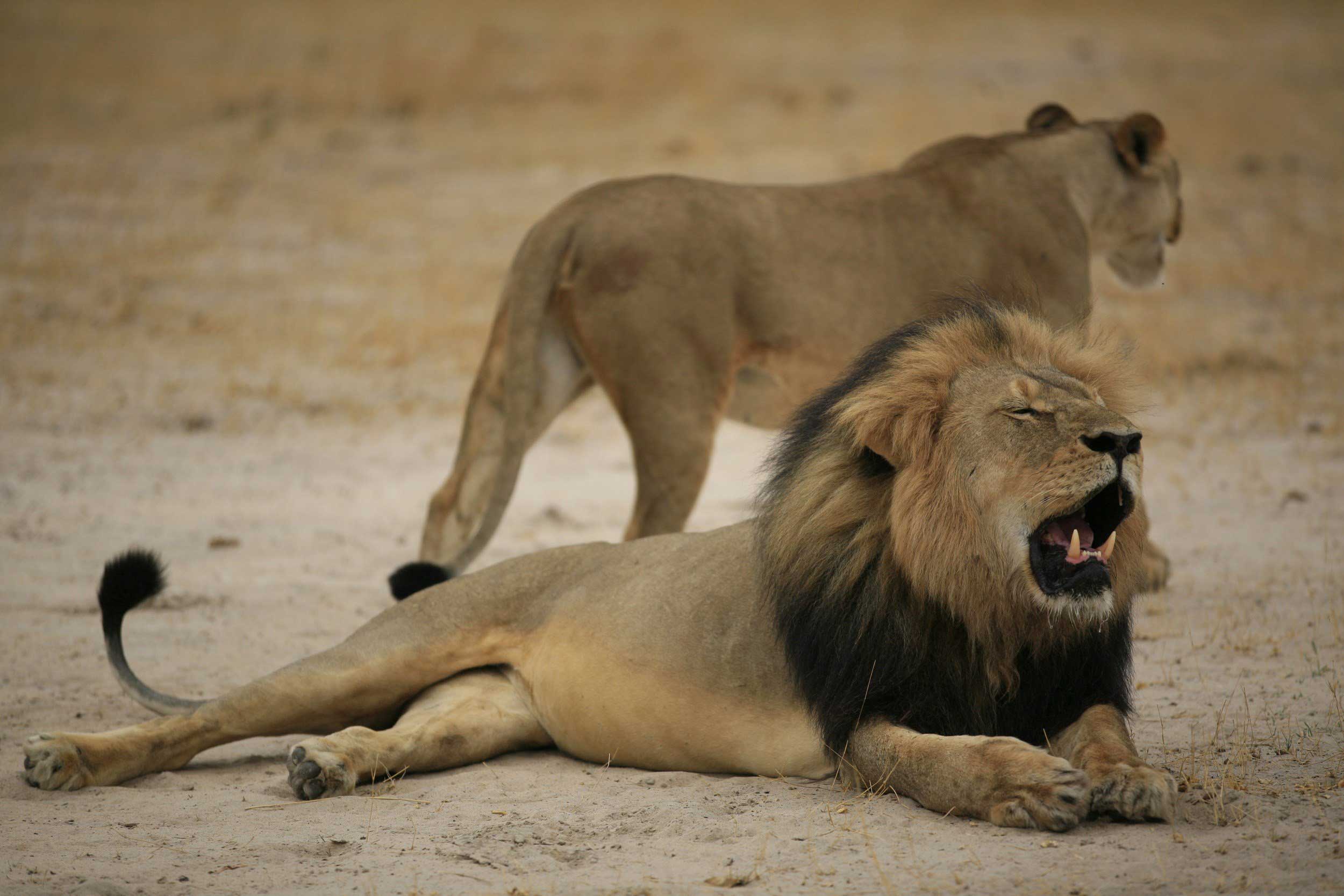
Cecil the lion with his cubs.

Cecil the lion with his cubs. Photo by Brent Stapelkamp

It’s been reported that after Cecil’s death, Palmer requested help in finding an elephant with tusks above a certain weight. He only left the country after he was informed by his guide they could not help him with that.

The trophy hunters like to excuse their passion for killing by saying that their spending promotes conservation. That’s nonsense, and more of a self-serving diversion.

A 2013 economic report demonstrated what anybody with their wits about them knows: These animals are worth more alive than dead. Kenya, which banned trophy hunting in the 1970s, has an  eco-tourism economy that brings in far more than trophy hunting brings in to South Africa as a whole.

The fact is, trophy hunting of lions, elephants, and rhinos is a net revenue loser for African economies. Trophy hunters may throw around some money, but they rob parks, reserves, and other natural areas of the wonderful animals that are the real draw – the animals that attract countless people willing to spend money to see them and to be close to them.  In that respect, trophy hunters are like bank robbers who leave a little cash behind.

South African Airways suspended the transport of big game trophies from Africa several months ago, including the heads of lions killed on canned hunting operations in the country. But recently, under pressure from Safari Club International and other groups aligned with the trophy hunting industry, they resumed transports. Emirates Airlines, on the other hand, has remained steadfast in not accepting hunting trophies of lions, elephants, and rhinos. So has Lufthansa.  With the announcements from Delta and United, the momentum is clearly on our side.

Let’s let all the major airlines know it’s time to cut off the shipments for good of African lions, elephants, rhinos, leopards, and Cape buffalo – the so-called Africa Big Five. This “hunting achievement” award leads to disgraceful behavior, and the airlines should not provide a getaway vehicle for trophy hunters’ larceny.

Using wealth to kill the magnificent animals of the world is a misuse of the gifts these people have been given. If trophy hunters are serious about conservation they should do some real good with their wealth – and stop spreading destruction, pain, and death.

Take action today to tell the rest of the airline industry: Don’t fly wild »
wikileaks exposes gov’t knowledge of illegal hunting

There is hypocrisy all around this brutal hunting industry. The US government purports to be horrified at Palmer’s illegal activity, and there is talk of extradition.
What a farce!
Wikileaks documents show that the US government has been well aware all along of the illegal and unethical practices of US hunters in Zimbabwe (and elsewhere in Africa) – and deliberately chose not to act on this knowledge, hoping it would never become public.
Featured Image -- 10032

Dr. Palmer Should Die

For the crimes he committed against Cecil the half-tame Lion—luring, baiting, impaling and pursuing him for 40 long hours. For being a sadistic, narcissistic, psychopathic bow-hunter willing to put another sentient animal through sheer hell for a trophy, Walter Palmer DDS should die. And his accomplices—the guides, along with whoever shot another lion today–should join him on the gallows.

They should all be dragged into a court of law and sentenced to death ASAP. But unfortunately, that won’t happen. Walter Palmer and his ilk, his cohorts in crime, will probably live out their long lives and get off with a slap on the wrist; a fine, a public service sentence and possibly have their hunting licenses revoked for a while.

Why? Because they’re human beings—the most sacred of God’s creatures; the pinnacles of evolution and the reason it’s all here (sarcasm intended)—and a lion is just a lion. An animal: ours to do with as we see fit.

It’s the self-imposed law of the land, and there’ll be no justice for animals as long as speciesism rules.

Featured Image -- 10026

Ted Nugent Posts Photo of Himself with a Lion Carcass

68439_10151399495155861_1116657731_n

http://radio.com/2015/07/31/ted-nugent-posts-photo-of-himself-with-a-lion-carcass/

By Brian Ives

Ted Nugent is at it again.

The “Motor City Madman” and scourge to animal rights activists everywhere just posted a photo to his Facebook page showing him over a lion who he had, apparently, just killed in a hunt. He refers to it as “Fernando the lion” and says it is “Cecil’s great great grandpa.”

In the photo, he is sitting on the carcass, saying “this pure natural legal proper scientificaly [sic] sound necessary hunt like all hunts was pure SPORT TROPHY MEAT FUN.”

Related: Ted Nugent Weighs in on Cecil the Lion Debate

As he noted to Radio.com in a recent interview, it his his stance that animals must be hunted in order to keep the population under control.

He also says, “Every sacred precious [sic] part of this animal was utilized. We hired 40 people on the safari, shared the meat, claws, skull, sinew, body fluids, teeth, blood, organs, skin, hair, tongue, eyeballs & each & every hard earned resource this magnificent RENEWABLE resource provided while bringing in critical massive revenues to the local economy while making room for new lions to be born & bringing value to valuable creatures.” However, he doesn’t address that Cecil was killed and his head taken as a trophy, but none of the rest of the carcass was used at all. According to CBS News, Cecil was found beheaded and skinned. Additionally, Animal Planet’s predator expert David Salmoni explained to CBS News that Cecil had six cubs who will now probably be killed by a male lion from another group of lions.

Related: Ted Nugent Posts Picture of Kid Rock with Dead Endangered Lion

And the hunt that resulted in Cecil’s death was, in fact, not legal, at least according to the Zimbabwean government who arrested the hunting guide and land owner who were allegedly involved in the incident. 

And now, the U.S. Fish and Wildlife Service is looking for the American who paid north of $50,000 for he privilege of killing the lion. “The U.S. Fish & Wildlife Service is investigating the circumstances surrounding the killing of ‘Cecil the lion.’ That investigation will take us wherever the facts lead,” said Edward Grace, the agency’s deputy chief of law enforcement, in the statement (via Huffington Post).

American Public Roars After It Gets a Glimpse of International Trophy Hunting of Lions

http://blog.humanesociety.org/wayne/2015/07/cecil-lion-killed-by-trophy-hunter.html?credit=web_hpfs1-cecil-072915_id93480558

Cecil the lion is dead because Walter Palmer the dentist is a morally deadened human being.Featured Image -- 9991

The man traveled clear across the world – from the suburbs of Minneapolis into the pay-to-slay world of Zimbabwe, where dictator Robert Mugabe sells off hunting rights and other natural resources to the highest bidders – for the chance to kill the king of beasts. In this case, the victim was a lion who has been widely photographed and somewhat habituated to a non-threatening human presence in Hwange National Park. The hunt was a “guaranteed kill” arrangement, where Palmer paid about $50,000 to hire professional guides to help him complete the task. The local guides knew exactly what they were doing. In the dark of night, they lure a famed, black-maned lion from an otherwise protected area, with a dead carcass as bait. Palmer then stuck Cecil with an arrow.

Even though he’s used that weapon to kill countless other rare animals all over the globe – from leopards to black bears to Argali sheep – Palmer didn’t deliver a killing shot. He wounded the animal, and because he did it at night, I bet he didn’t have the courage to track the animal at that time. So he waited, while the lion tried to live minute to minute and hour to hour after receiving the stab wound from the arrow. At some point, Walter and the professional guides resumed the chase. It took them nearly two days to find him, and then they apparently shot him with a firearm. The killers then removed a radio collar nestled around his neck – because Cecil was also the object of a study by Oxford researchers. Some reports say they tried to disable the signal from the collar, unsuccessfully. The team took the customary pictures of the westerner guy standing atop a beautiful, muscled animal, and then they decapitated and skinned him, as keepsakes for Palmer’s global crossing in order to conduct a pointless killing.

The lion is one of Safari Club International’s Africa Big Five, along with elephants, rhinos, leopards, and Cape buffalo, and the idea of killing each of them motivates thousands of wealthy people to do it. It’s one of more than 30 hunting achievement and “inner circle” awards you can get if you become a member of Safari Club – including Cats of the World, Bears of the World, and Antlered Game of North America. If you win all of the awards, and there are plenty people who do, you have to shoot more than 320 different species and subspecies of large animals. In the process, you spend millions of dollars, in addition to spilling an awful lot of blood and spreading a lot of death.

Partly because of the dramatic decline in lion populations, and also to stop heartless and selfish people like Palmer from meting out so much pain and suffering, The HSUS and HSI filed a petition four years ago to protect lions under the terms of the U.S. Endangered Species Act. Last October, the U.S. Fish and Wildlife Service, to its credit, proposed a rule to list the lions as threatened.

The United States is the world’s largest importer of African lion parts as hunting trophies and for commercial purposes. Between 1999 and 2013, the United States imported about 5,763 wild-source lions just for hunting trophy purposes; and the last five years of this period averages to 378 wild-source lions per year. Worse, this number has increased in recent years. That’s a lot of Walter Palmers doing ugly things.

The Oxford University study Cecil was part of was looking into the impact of sports hunting on lions living in the safari area surrounding the national park. The research found that 34 of 62 tagged lions died during the study period. Of these, 24 were shot by sport hunters.

When we think of Bengal or Siberian tigers, we think of big cats nearing extinction. We should think the same way about lions, since their populations have been plummeting. They are in danger of extinction in the foreseeable future.

For most of us, when we learn they are in crisis, we want to help — to protect them from harm, because we empathize with their plight.

But for one subculture in the U.S., when wildlife are rare, that means they want to rush in and kill them precisely because they can do something that few others can.  It’s like the rush of trophy hunters to Canada to shoot polar bears when the United States announced it planned to list them. “Let me shoot a polar bear before they are all gone!” They want to distinguish themselves from others who live in the world of competitive hunting.

Sadly, Cecil’s story is not unique – American hunters kill hundreds of African lions each year and are contributing to the steady decline of the species.  Today we sent a letter to the U.S. Fish and Wildlife Service, which recently took steps to protect chimpanzees and African elephants, urging the agency to make final its regulation to upgrade the legal status of lions, to restrict people from trekking to Africa and bringing back their parts for no good reason. Not for food.  For vanity. For ego gratification. And because they are morally deadened.

Ask the U.S. Fish and Wildlife Services to protect African lions from extinction »

Editor’s note: This version has updated numbers on wild-source lions trophy-hunted each year.

Also from Wayne: Miss Cecil the lion? End trophy hunting

White House says will review ‘Cecil the Lion’ petition

http://www.msn.com/en-us/news/politics/white-house-says-will-review-cecil-the-lion-petition/ar-AAdJtmH

WASHINGTON, July 30 (Reuters) – The White House said on Thursday that it will review the public petition to extradite the American dentist who allegedly killed “Cecil,” a Zimbabwean lion.The petition has exceeded the required 100,000 signatures, and the White House has said it will respond to all petitions that meet that level.

White House spokesman Josh Earnest said it is up to the Justice Department to respond to an extradition order.

In this frame grab taken from a November 2012 video made available by Paula French, a well-known, protected lion known as Cecil strolls around in Hwange National Park, in Hwange, Zimbabwe.© Paula French via AP In this frame grab taken from a November 2012 video made available by Paula French, a well-known, protected lion known as Cecil strolls around in Hwange National Park, in Hwange…The incident is currently being investigated by Zimbabwean authorities and the U.S. Fish and Wildlife Service.

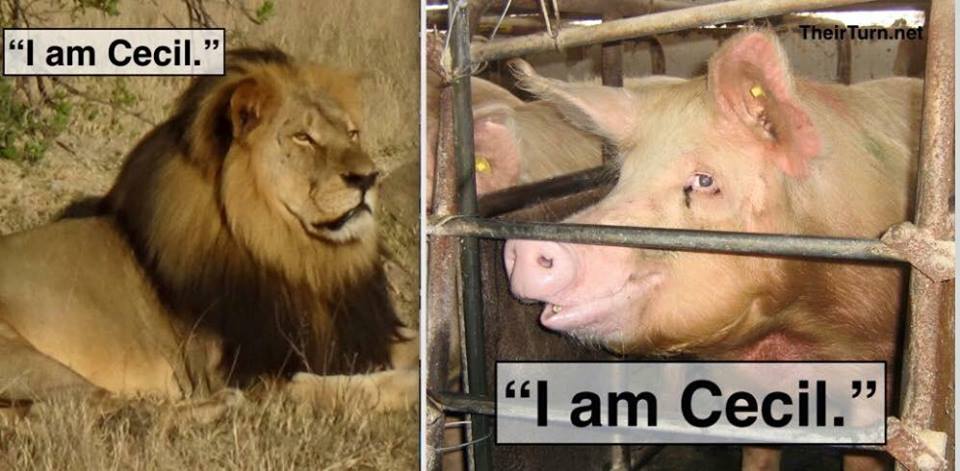
“I am Cecil”

11825732_10153390282711508_1843680943326951608_n

Every day we can make a choice to save animals who want to live just as much as Cecil did. https://www.facebook.com/veganoutreach

“…most the friends ive seen talking about cecil are meat eaters and it feels crazy that one animal being killed is outrageous because its “majestic”, “pretty” and “exotic” and yet another animals being killed in the thousands daily is totally fine” Emma Smithies

What Could Happen to Walter Palmer and Hunters?

http://www.nbcnews.com/news/world/cecil-lion-what-could-happen-walter-james-palmer-hunters-n400461

What is the legal case against the guides?

The two Zimbabweans — professional hunter Theo Bronkhorst and farmowner Honest Ndlovu — were in court to face poaching charges. Authorities say they did not have the valid hunting permits.

<img class=”img-responsive img_inline” src=”http://media4.s-nbcnews.com/j/newscms/2015_31/1146066/lion-hunters-ejo-072915_d2c2ca3b3a964dcae3fe0d3df2ed6126.nbcnews-fp-360-360.jpg” alt=”Image: A combination photo shows Zimbabwean safari operator Ndlovu and fellow countryman and hunter Bronkhorst waiting to appear in Hwange magistrates court” title=”Image: A combination photo shows Zimbabwean safari operator Ndlovu and fellow countryman and hunter Bronkhorst waiting to appear in Hwange magistrates court” itemprop=”image”/> Image: A combination photo shows Zimbabwean safari operator Ndlovu and fellow countryman and hunter Bronkhorst waiting to appear in Hwange magistrates court
A combination photo shows Zimbabwean safari operator Honest Ndlovu (rigjt) and fellow countryman and hunter Theo Bronkhorst waiting to appear in Hwange magistrates court on July 29, 2015. PHILIMON BULAWAYO / Reuters

Wildlife officials accuse the men of taking $50,000 from Palmer in order to coax Cecil out of the Hwange National Park and onto private land, where he was beheaded and skinned.

Johnny Rodrigues, chairman of the Zimbabwe Conservation Task Force, said Palmer is the one who fatally shot the creature.

Bronkhorst has been stripped of his license while he faces criminal charges, according to a joint statement from the Zimbabwe National Parks and Wildlife Authority and the Safari Operators Association.

Bronkhorst’s bail was set at $1,200 and he’s due back in court in one week. If found guilty, he and Ndlovu could be fined $20,000 and get a sentence of up to 10 years in jail.

What charges could Palmer face — and could he be extradited?

Police would like to question the 55-year-old trophy hunter for his role in the killing, but have not commented on any possible charges.

He may not face any charges depending on the circumstances, according to the U.K.-based charity LionAid, which advocates for the animal’s protection. The group says it is legal to bait lions in Zimbabwe, and even to kill them using a bow and arrow outside of national parks during private hunting trips. Whether or not they’re wearing a radiocollar — Cecil was — also doesn’t matter, the group says.

But the landowner in this case allegedly never obtained a “quota” for the number of lions that could be killed on his property, making it illegal, LionAid said.

Palmer, meanwhile, was merely the “client” and entrusted his guides — a defense that could get him off the hook for any charges, the group added.

Palmer said in a statement Tuesday that he had “no idea” who the lion was and the legalities of the hunt. He added that he has not been contacted by Zimbabwean authorities.

The U.S. does have an extradition treaty with Zimbabwe that covers crimes punishable for more than a year in jail. Minnesota Congresswoman Betty McCollum has asked the U.S. Attorney’s Office and U.S. Fish and Wildlife Service to investigate whether any American laws were violated.

Palmer in 2008 pleaded guilty to making false statements to U.S. wildlife officials about a black bear he had fatally shot in western Wisconsin.

Why was Cecil so celebrated?

The black-maned beast was a fixture of Hwange National Park, making him a local favorite among parkgoers and wildlife researchers. He was named after Cecil Rhodes, a British businessman who was also the namesake for the former southern African territory of Rhodesia, now Zimbabwe.

Since 2008, Cecil was being studied by an Oxford University research program. “The lion, Cecil, was a remarkable individual. Remarkable particularly because we have studied him for so long,” Professor David MacDonald, founding director of the Wildlife Conservation Research Unit at Oxford University, told NBC News.

What could happen to Cecil’s cubs?

Although the exact number of cubs that 13-year-old Cecil fathered is unclear, researchers believe about eight to 10 of them could wind up dead. That’s because in a lion’s social circle, when one male dies, incoming males in a new coalition typically kill the cubs of the old incumbents, MacDonald said.

“The death of one male lion can cause a cascade of effects that leads to other lions being killed,” he said, adding, “We are working hard to follow the consequences of Cecil’s death.”

More: http://www.nbcnews.com/news/world/cecil-lion-what-could-happen-walter-james-palmer-hunters-n400461

When is it hunting and when is it poaching?

http://www.bbc.com/news/world-africa-33699347

Cecil the lion was a renowned figure in Zimbabwe’s Hwange National Park.

Earlier this month, however, American dentist Walter Palmer paid roughly $50,000 (£32,000)for the chance to kill the popular animal, although he says he was unaware of Cecil’s fame and reputation.

That prompted revulsion from many on social media, with tens of thousands signing a petition calling for Cecil’s killer to be brought to justice.

But what is the difference between hunting an animal and poaching?

What is poaching?

The crucial distinction to be made between poaching and hunting is where each sits in the eyes of the law. Put simply, poaching is hunting without legal permission from whoever controls the land.

Hunting lions is not prohibited per se in Zimbabwe, and indeed in many other countries in Africa. Hunting is regulated by the government, and hunters must obtain permits authorising them to kill certain animals.

Tourists who wish to hunt in the country may do so. Where and what they hunt, and what type of weaponry they use, is all the subject of regulation.

Foreigners hunting in Zimbabwe must be accompanied by a licensed professional hunter, and tour operators which sell hunting packages to tourists are regulated by the government.

Browsing online, it is possible to find package hunting trips in Zimbabwean game reserves for around $50,000 – about the same amount Mr Palmer says he paid for the hunt which has earned him global infamy.

The dentist who has attracted numerous unwanted headlines over the last couple of days, has insisted that he believed “everything about this trip was legal and properly handled”, prior to killing Cecil the lion.

Why do people poach?

Some animals, such as elephants and rhinos, attract poachers because selling their tusks can prove extremely lucrative.

Earlier this year, Kenya’s president set fire to a pile containing 15 tonnes of seized elephant ivory with an estimated value of more than $30 million (£19 million).

Uhuru Kenyatta lamented that the tusks had been taken from elephants which had been “wantonly slaughtered by criminals”.

Rhino and elephant tusks are routinely exported to Asia, where ivory is used to make ornaments, and in traditional medicines.

For some, like Walter Palmer, however, the act of hunting itself is the attraction. That, and the prospect of a “trophy”, such as a lion’s head, after the kill is made.

Since he acknowledged having killed Cecil, photographs of the hunter with the carcasses of other animals have been widely shared online.

He has expressed regret that “my pursuit of an activity I love” had resulted in the death of such a popular animal.

It is estimated that more than 650 lion carcass “trophies” are exported from Africa each year.

What are the effects of poaching?

The main argument against unauthorised hunting is the effect it has on the numbers of animals living in the wild.

The level of public outcry when a case such as the slaying of Cecil the lion comes to the fore is accentuated by the fact that poachers often target some of the planet’s most impressive and treasured creatures.

The Born Free Foundation estimates that between 30% and 50% of Africa’s lion population has been wiped out over the course of the last two decades. Just 32,000 of the animals remain in the wild.

Can hunting have a positive impact?

Hunting big game in its natural habitat is undoubtedly an attractive prospect for some tourists – and something many are willing to pay tens of thousands of dollars to experience.

Emmanuel Fundira, president of the Safari Operators Association of Zimbabwe, has described Cecil’s killing as a “tragedy” for tourism in Zimbabwe.

Critics say the money paid by trophy hunters rarely reaches those most in need
Critics say the money paid by trophy hunters rarely reaches those most in need….
More: http://www.bbc.com/news/world-africa-33699347