High School Class Sponsoring Crow Hunting Tournament…

…and other weekly hunting news from Oklahoma.

The senior class of Sasakwa High is sponsoring a crow hunting tournament
on March 1st. [Watch for the next big school shooting to happen there, sometime after March 1st.]

[Crow] “hunters” can register for the tournament as individuals or
three
person teams.
The deadline to enter is Feb. 17th. The cost is $20 per person. The
first
place will pay 35 percent of the entry fees. The second place will be
awarded
15 percent.

The Okla. Station Chapter of the Safari Club International is holding its
29th
annual convention banquet and fundraiser on March 1st at the Okla.
Cowboy and Western Heritage Museum.
In 2010 and 2012, the chapter’s banquet program won best-in-class among
all the organization’s chapters across the world.
The 2014 banquet will feature much more. This includes more than
$500,000
worth of auction items such as big-game hunts around the world, bird hunts,
fishing trips, guns, gear, jewelry, sculptures and more.
Auction items can be viewed on line and the tickets are $75 in advance or
$95 at the door

Photo Copyright Jim Robertson

Photo Copyright Jim Robertson

.

Okla. is now debating whether to hunt a young deer buck or shoot a trophy
deer. Now, deer associations and landowners work together to manage
deer and other wildlife on their properties, with a common goal, such as
protecting young bucks and increasing the buck age structure.
A bill has been introduced in the Okla. House of Representatives that
proposes a 6-point antler restriction on bucks for hunters ages 17 or
older.
This is an attempt to protect young bucks. They can’t grow into trophy
bucks if they keep getting killed as yearlings.
Other states have similar restrictions. However, some wildlife officials
don’t think it would work in Okla.
Because so many deer hunters voluntarily do not kill young deer, wildlife
officials believe that the trend in Okla. is that more hunters keep passing
on young bucks.
One official notes “Hunters are better educated, and they are more
selective about what they harvest.”
Four of the top five states that had the lowest percentage of yearling
bucks
harvested were states that did not have any antler regulation.
Depending on which side of the deer management debate often depends
on whether you primarily hunt for meat or hunt for horns.
The Okla. Wildlife Dept. tries to please both groups thru liberal hunting
seasons and Deer Management Assistance Programs for landowner
interested in managing for bigger bucks.

Hunter sues over alleged fraudulent big-game hunt

Poor baby, imagine his mental distress, anxiety and loss of sleep from not receiving the right head in the mail…

http://seattletimes.com/html/nationworld/2022920756_biggamesuitxml.html

Rick Vukasin is demanding reimbursement or else the original argali horns, but he said a possible exchange is complicated by international treaties governing hunting of the rare sheep, a threatened species in Tajikistan.

By SCOTT SONNER

The Associated Press

 This December 2012 photo shows Vukasin, 65, of Great Falls, Mont., posing with a rare argali sheep known as the “Marco Polo” that he shot in the Pamir Mountains.
Enlarge this photoThis December 2012 photo shows Vukasin, 65, of Great Falls, Mont., posing with a rare argali sheep known as the “Marco Polo” that he shot in the Pamir Mountains.

Show comments         

                You travel around the world, to shoot an endanger species, and expect sympathy? What…                (February 15, 2014, by more important things)                                                        
                A good example of someone who deserves to get ripped off.                (February 15, 2014,                     
                What kind of a person would kill endangered animals for just a trophy? How infantile…                (February 15, 2014,                                                          

RENO, Nev. — A big-game hunter from Montana is suing a Canadian outfitter and a renowned hunting guide in Tajikistan he accuses of turning his once-in-a-lifetime adventure of bagging a rare, wild argali sheep known as the “Marco Polo” into a nightmare.

Rick Vukasin, 65, said in a lawsuit filed in U.S. District Court in Reno last week that he spent more than $50,000 pursuing the animal in the Pamir Mountains of northeast Tajikistan near China’s border in December 2012.

The electrician said he felt like he was literally on top of the world after he tracked, shot and killed a 400-pound, big-horned ram with the coveted, spiraling horns at an elevation of 14,000 feet. But he was mortified two months later, when he opened the box shipped to his home in Great Falls to find the horns were not the 58-inch-long ones from his trophy animal.

“I could tell right away,” Vukasin said. “I was sick.”

The native Montanan who grew up hunting deer on the eastern front of the Northern Rockies had stalked moose in Saskatchewan and red stag elk in New Zealand.

“But the thing I really wanted to do was a Marco Polo sheep hunt,” he said. He pored over books, guides and websites before settling on the excursion halfway around the world.

“The biggest of the species is in Tajikistan. So I figured if I was only going to be able to do this once, I’m going top shelf,” he said.

Vukasin and his guide, Yuri Matison, saw animals the first day but had difficulty tracking them, partly because it’s hard to breathe at that altitude, he said. But the next day he said he “felt lucky” to land a prize with a rack in “pretty good shape … not all busted up from fighting.”

The horns he ended up with are missing a few noticeable chips and weathered to the point he suspects they are at least 2 years old.

Vukasin said Matison and the booking outfitter — Ameri-Cana Expeditions of Edmonton, Alberta — first insisted the horns were the originals and then offered to send a replacement.

Vukasin is demanding reimbursement or his original horns, but he said a possible exchange is complicated by international treaties governing hunting of argali, a threatened species in Tajikistan. Only 60 permits are issued there annually for the sheep named after the 13th-century explorer.

The Safari Club International considers the argali’s horns the “most spectacular” of all the world’s sheep, according to its record book.

Vukasin said Ameri-Cana co-owner Dan Frederick dismissed his concerns, telling him “It’s just hunting.”

“Granted,” Vukasin said, “you can have bad weather or you might not see any animals or you might miss the shot. That’s hunting.

“But to shoot the animal and take pictures of it and then not to get it, somebody has to be responsible.”

Frederick didn’t return calls or email seeking comment. The Associated Press was unable to locate Matison.

Vukasin said he contacted an FBI agent in Great Falls, Mont., who indicated he probably was a fraud victim but there was little authorities could do unless they found a number of other hunters who’d also been duped.

FBI spokesman William Facer in Salt Lake City said Friday the agency could not comment.

Linda Linton, a Reno lawyer, said she filed Vukasin’s lawsuit there because Matison and Ameri-Cana advertise and do business there regularly at conventions of the Safari Club International and the Wild Sheep Foundation, the latter of which named Matison to its Mountain Hunter Hall of Fame in 2009.

Vukasin is seeking $75,000 in damages for lost money, “worry, anxiety, loss of sleep, physical and mental distress.”

“I’ve been fighting them more than a year. I finally got fed up and decided to do something about it,” he said, adding he’s convinced others have been victimized. “I have this stuff sitting in my living room and every time I look at the horns, I just get that much more mad.”

Not All Winter Sports Negatively Impacted by Climate Change…

…THAT IS, IF YOU CONSIDER KILLING RABBITS A “SPORT”!!!

The USA Today ran an article yesterday by U.S. Olympic cross country skier, Andrew Newell, entitled, Climate Change Impacts Winter Sports.” Newel tells us, “As a skier, my life revolves around winter and being outside. Years spent training have not only honed my skills, but also shown me the negative impacts of climate change first-hand. There have been countless times in the past 10 years when our early season competitions have been delayed or canceled due to lack of snow, or our spring and summer training camps disrupted due to erratic weather or insufficient snowpack. It’s no coincidence then that the last decade was also the hottest decade ever recorded…

“Even the most reliable snowfall areas have seen a decrease in storms and precipitation. In the last few seasons, Scandinavian countries such as Finland, Norway and Sweden, which host world cup ski events in November and December, have had to rely upon man-made snow and injected ice for races. Many Nordic athletes, myself included, train on glaciers during the summer months.DSC_0098

“I’ve witnessed the visible recession of off season ski destinations such as Eagle Glacier in Alaska and the Dachstein Glacier in Austria in the last decade. Warming temperatures melting snow has meant in recent years, summer skiing conditions on glaciers have become too unstable to train on. Some countries have resorted to skiing indoors in artificial ski tunnels due to unpredictable conditions.

‘The conditions in Sochi are no exception. The organizers of these Winter Games ran into similar problems and had to go to extreme and unorthodox means to supply the snow necessary to hold high-level competitions. Workers in Russia have been stockpiling nearly 16 million cubic feet of snow and adding a special kind of salt to prevent melting.”

The article goes on: http://www.usatoday.com/story/opinion/2014/02/11/andrew-newell-olympics-global-warming/5370379/  and in many ways parallels an early post of mine about the impacts of climate change on skiing, “In Case You Haven’t Noticed, Global Warming is Real.”  https://exposingthebiggame.wordpress.com/2014/02/01/in-case-you-havent-noticed-yet-global-warming-is-real/

imagesQB1DEJITBut there’s one winter “sport” (if it can be called that) that isn’t effected by a lack of snow–bunny blasting. As Utah’s Daily Herald claims, “Rabbit hunting offers chance for winter sport” reports, “Regulations allow each hunter with a license to kill up to 10 cottontails.” [per day, no doubt.] And it also quotes Mark Zornes, who boasts, “This is what bunny hunting is like,” he said. “We rarely see people doing this, and this is the most fun kind of hunting. It’s also a great kid activity.”

So, forget snow sports, winter can be yet another chance to kill something.

Bill promoting hunting, fishing passes U.S. House

By Dave Golowenski For The Columbus Dispatch
Sunday February 9, 2014

A divergent range of sportsmen’s groups commended the passage in the U.S. House of Representatives of the Sportsmen’s Heritage and Recreational Enhancement Act (SHARE) last week.

The package of eight bills represented by SHARE would promote hunting and fishing on land managed by the U.S. Bureau of Land Management and make the purchase of a federal duck stamp easier. Among the act’s authors is Rep. Bob Latta (R-Bowling Green).

Groups including Safari Club International, the National Rifle Association and the Theodore Roosevelt Conservation Partnership praised the bill and urged the Senate to follow the House’s bipartisan approval.

Meanwhile, a measure that would raise the price of a federal duck stamp to $25 from the current $15 moved out of a Senate committee last week. Revenues generated by the stamp help fund wetlands conservation.

No bump in price has occurred since 1991, the longest period without an increase since the program was established during the 1930s.

Honked off

A Mississippi hunter is reporting he got his 8-point buck after he blew his nose. The sound apparently ticked off the buck, which came running toward the hunter’s stand in full attack mode.

http://www.dispatch.com/content/stories/sports/2014/02/09/bill-promoting-hunting-fishing-passes-u-s–house.html

HuntingTrophiesJamieKripke600

Morrissey Writes Another Scathing Letter About the Royal Family’s Hunting Habits

http://pitchfork.com/news/53894-morrissey-writes-another-scathing-letter-about-the-royal-familys-hunting-habits/

Morrissey Writes Another Scathing Letter About the Royal Family’s Hunting Habits

“… We can only pray to God that their hunting guns backfire in their faces.”

By Evan Minsker on February 9, 2014

Once again, Morrissey has written a letter about the Royal Family, once again focusing on their hunting habits. Appropriately titled “The story is old, I know, but it goes on”, he criticizes Prince William’s speech about protecting endangered species, as it came one day before he went hunting in Spain with Prince Harry. “We can only pray to God that their hunting guns backfire in their faces,” writes Morrissey. Read the entire thing here:…

One day prior to giving a public plea on behalf of animal welfare (!), Prince William is to be found in Spain (with Prince Harry) shooting and killing as many deer and boar as they possibly can! Although William’s speech (no doubt written by his publicity aides at Clarence House) will concentrate on endangered species, William is too thickwit to realize that animals such as tigers and rhino are only driven to near extinction because people who are precisely like himself and his brother have shot them off the map – all in the name of sport and slaughter. Whenever you shoot an animal in the head the outcome is usually the same: death. Just why William kills innocent and defenseless deer does not matter – the fact is, he does it, and we must go on and on asking why any form of violence is acceptable to the British establishment. It is easy for privileged people to assume jealousy to be the reason why anyone would wish to condemn them, but the British Boil Family never fails to be a colossal embarrassment to the United Kingdom. The Spanish trip is more than likely unwillingly funded by the British taxpayer, and we know very well that the British press is duty-bound to always defend and cleanse the bad behavior of the Boil Family – no matter how abysmal and hypocritical their actions. But the rationalists amongst us – who are never allowed to speak, are intelligent enough to realize that endangered species are dying out only because of people like William and Harry, and, for this we can only pray to God that their hunting guns backfire in their faces.

Fudd

Prince William Flies off to Shoot Spanish Boar

[Not only does this make him a hypocrite, but somehow when someone who has it all chooses to do evil it makes it all that much despicable.]

Prince William flies off to shoot wild boar in Spain… days before launching a campaign to combat illegal hunting

Next week the prince is helping to lead conference on illegal wildlife trade …

By Rebecca English

7 February 2014
http://www.dailymail.co.uk/news/article-2554484/Prince-William-flies-shoot-wild-boar-Spain-days-launching-campaign-combat-illegal-hunting.html#ixzz2slSTvcih

Prince William has flown off on a hunting trip days before taking part in a high-profile campaign to highlight poaching and the illegal wildlife trade.

Accompanied by his brother, Prince Harry, the second in line to the throne flew out to Spain on Thursday to shoot wild boar and stag at an estate in rural Cordoba owned by one of the wealthiest men in Britain, the Duke of Westminster.

The princes are frequent visitors to Finca La Garganta, which is one of the largest and most exclusive hunting estates in western Europe.

Prince William has been shooting boar on a private estate in Cordoba, Spain. Here he is engaging in the pastime at Sandringham in December 2005

Prince William has been shooting boar on a private estate in Cordoba, Spain. Here he is engaging in the pastime at Sandringham in December 2005

Read more: http://www.dailymail.co.uk/news/article-2554484/Prince-William-flies-shoot-wild-boar-Spain-days-launching-campaign-combat-illegal-hunting.html#ixzz2slRxPQob Follow us: @MailOnline on Twitter | DailyMail on Facebook

Albania to Enforce a Two-Year Ban on All Hunting

http://www.natureworldnews.com/articles/5878/20140204/albania-enforce-two-year-ban-hunting.htm

By James A. Foley Feb 04, 2014

Hunter at Selawik National Wildlife Refuge

Albania’s government will impose a two-year moratorium on all forms of hunting in an effort to protect endangered species, according to media reports. Pictured is a hunter at Selawik National Wildlife Refuge, USA.  (Photo : US Fish and Wildlife Service )

Albania’s government will impose a two-year moratorium on all forms of hunting in an effort to protect endangered species, according to media reports.

Earlier this year, Albania’s environment minister Lefter Koka said the government was considering a two-year hunting ban after the numbers of wild animals in the European nation reportedly decreased significantly.

Albania says the move is drastic, but necessary to protect its animals, including endangered species such as brown bears and eagles.

“We have been forced to adopt strict measures to protect endangered species from illegal hunting,” Koka said, according to an AFP report Tuesday.

Albania is a popular European hunting destination, the AFP reported, noting that hunters from Italy travel to Albania by the thousands largely because of the nation’s relaxed and poorly enforced hunting regulations. Many of these foreign hunters participate in the activity illegally.

The hunting ban will be initiated later this month, the AFP reported.

“This is a drastic measure but necessary in order to stop the further degradation of  wildlife, which is now at a critical minimum, and to impose controls on hunting activities that have been lacking for the last two decades,” Kolka said in January.

Kolka blamed illegal hunting, the large number of hunting weapons in the country and the government’s inability to collect fines as the reason 30-50 percent of the species allowed to be hunted in Albania have faced drastic population declines, according to the website Balkan Insight.

“There are 75,000 registered hunting rifles in Albania, as well as a large number of illegal automatic weapons,” Koka said.

“Although the legal framework for the protection of wildlife has been improved over the last few years, the data unveils a situation that can only be restored through an emergency moratorium on hunting,” Koka added.

Idaho Lowering Big Game Hunting Age to 10?

[Next they’ll be wanting to kill more wolves so 10 year olds will have a better chance of “getting their elk.”

http://guardianlv.com/2014/02/idaho-lowering-big-game-hunting-age-to-10/

by Heather Pilkinton on February 4, 2014.
This is neither the website of, nor affiliated in any way with, Guardian News and Media.

Hunting is a way of life for many in Idaho, but a new proposal has some questioning how young is too young to huntsafe_image big game. Idaho lawmakers are considering a proposal which would lower the current age to hunt big game, such as elk, from 12 to 10.

Right now in the state, children as young as 10 are able to hunt small game like duck and rabbit, as long as they have completed a hunter’s education program and are accompanied by a licensed adult. However, the type of gun needed to hunt big game is different than small game, which leads to the question as to whether a 10-year-old is capable of handling that level of firearm.

Currently those 12 and over are able to hunt without an accompanying adult as long as they have completed a hunter’s education program. As per Idaho law, anyone born after January 1, 1975, must complete a hunter’s education program, or show proof of a valid license from another state in order to purchase a license.

Part of the reason for the idea of lowering the hunting age is to boost stagnant hunting and fishing license sales in the state, which have hovered around the 330,000. Wildlife regulators hope that by lowering the age, hunting can be promoted as a family activity, especially in this age of electronic entertainment. They are hoping that lowering the hunting age will bring families with kids back to Mother Nature.

Sharon Kiefer, the Idaho Fish and Game Deputy Director, has stated that more women are getting into hunting, but admits that not all parents are keen on the idea of younger children being out in the field with a high powered firearm. One former conservation officer and hunter education instructor, Tony Latham, worries about a 10-year-old handling a rifle, even a scaled down model, that can shoot a bullet for miles when hunting big game.

This is not the first time that Idaho’s hunting practices have come into question in the past year. In December, 2013, the Wolf and Coyote Derby held in Salmon brought a lot of unwanted attention to the state from animal rights activists, from both inside and out of the state, who sought to stop the derby. This derby is one of a few derbies in Idaho; the annual Hannah Bates Memorial Rock Chuck Derby in Bliss serves as a fundraiser for cancer research and other charity programs.

Idaho is also under scrutiny for another piece of legislation not related to hunting. Republican lawmaker Lynn Luker recently introduced two bills that would make it legal for professionals to refuse service to individuals based on characteristics such as sexual orientation, if that individual was “contrary” to the professional’s sincerely held religious belief. This would mean that a teacher could refuse to teach a child who is gay, or a medical professional could refuse to accept a single mother as a patient if items such as birth control violates that medical professional’s religious teaching.

The idea to lower the big game hunting age from 12 to 10 also comes at a time when gun violence as a whole is a pressing issue throughout the United States. The number of school shootings has raised the question as to how young is too young to handle a gun? This is brought to the forefront even more as gun manufacturers are making “youth” firearms, which are scaled down models of those used by adults.

However, many will say that education plays a big part in firearm safety and that younger hunters will benefit not just by Hunter’s Education, but by being mentored by experienced, adult hunters. Kiefer believes this and this sentiment is echoed by Jim Toynbee, who has taught hunter’s education for nearly 40 years, though Toynbee admits a lower hunter age would not be possible without the smaller sized rifles. He said his main concern is that a young hunter might get too excited and not make a clean shot. This means an animal might be unnecessarily wounded, where an experienced hunter would harvest the animal with a clean kill.

If the hunting age is lowered in Idaho from 12 to 10 for big game, it will not be the only state with a minimum age of 10; Maine and Nebraska both have that same minimum age with adult accompaniment. Those states who do have minimum ages often require adults to be with minor hunters. However, considering the type of firearms used and the controversy around children and firearms in general, the question is how young is too young to hunt big game in Idaho?

By Heather Pilkinton

German Environment Ministry Official in Elephant Killing Scandal

00847AF6_B0E63080B13AC39D9CCC0EE6E0B44890

Udo W. (German law prohibits the release of his full name) is a high official in the environment ministry of the German county of Thuringia and actually still holds a leading function in the wildlife species protection department.

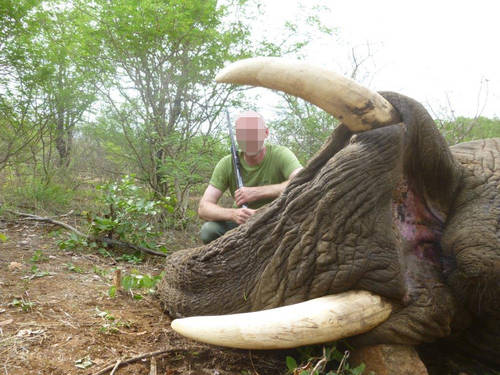
Just days before Botswana closed trophy “hunting” on 31. December 2013, achieving that since first of January now all such sport-killing is prohibited in the African country, the civil servant went on a trophy hunt in Botswana and bragged himself now to have killed a 40 year old, middle aged bull.

Though it apparently was a legal big-game safari in old colonial style, the case has raised a storm of protest in Germany and calls – e.g. by the Green Party – for the immediate dismissal of the civil servant from his post.

The biggest shame, however, has not yet become a viral twitter storm and that is given by the fact that Botswana actually permitted such colonial style killing for money of an elephant by a foreign trophy hunter, while at the same time and under the helm and often enough at the hands of the same Botswana officials, members of the First Nation in Botswana, the San bushmen, are tortured, killed, raped, alienated from their wildlife resources and expropriated from their wildlands. All these atrocities against the San must be seen as what they are: Outright genocide.

While peoples the indigenous hunter-gatherer cultures are driven to extinction, the kill-for-money psychopaths are allowed to continue their shameful acts in other African countries.

The leaked photos from the kill:

http://media401.zgt.de.cdn.thueringer-allgemeine.d…
http://media101.zgt.de.cdn.thueringer-allgemeine.d…

Read also the background to these atrocities against the San:

Tswana Atrocities 4.0

http://groundreport.com/5058632/

ECOTERRA Intl.
SURVIVAL & FREEDOM for PEOPLE & NATURE

What Motivates a Wolf Killer?

Text and Wildlife Photography ©Jim Robertson, 2014. All Rights Reserved

Text and Wildlife Photography ©Jim Robertson, 2014. All Rights Reserved

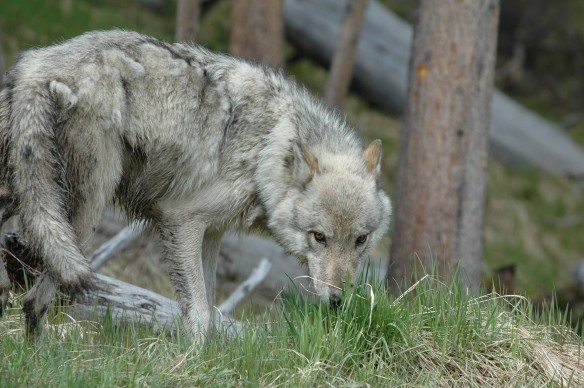
Killing a wolf is a crime against nature—and the motive depends on the kind of perpetrator. To a trophy hunter, a dead wolf is something to mount on a wall and brag about. By literally possessing the animal, they can relive their kill over and over, remorselessly boosting their flagging self-esteem every time they vacuously gaze at their victim’s lifeless body. For a fur trapper, a dead wolf is just a hide and a chance to play modern-day frontiersman. Although there’s no real frontier left, they consciously choose to revive a bloody, destructive lifestyle—partly for money, but mostly for a sense of identity.

But to a “wolfer,” the kind of person whose central preoccupation is hiring on to rid an area of each and every last wolf he can, a prime sense of greed is the motivating factor.

Sure, a guy like that, such as the wolfer contracted by the Idaho Department of Fish and Game to snuff out the Golden Creek and Monumental Creek packs in Idaho’s Frank Church Wilderness Area, must get an ego boost from being known as a “professional” wolf killer. He no doubt experiences some kind of perverse thrill every time he finds an animal desperately trying to free him-or-herself from one of his leg crushing traps. And he probably even gets off on hearing that his actions are upsetting a lot of empathetic wolf advocates who desperately want him to stop his atrocities. But the main reason the wolfer does the job he does is greed, pure and simple: a selfish lust for power, control and of course, money.

That may not seem like a lot to accuse him of in a country built on the spoils of selfishness and greed. Yes, he is surely evil incarnate, soulless and sick to the core, but as long as someone is paying him to “get the job done”… And who the hell pressed the state into hiring a hit man to eliminate established packs, tormenting individual wolves and disrupting nature’s time-tested order? Ask the Idaho trophy elk hunting syndicate.*

The wolves in the Frank Church Wilderness area weren’t after anyone’s cows or frightening school kids at bus stops, they were just doing what comes naturally to wolves. Killing off apex predators to make it easier for sport hunters has got to be the height of human arrogance.
________________________________
*syn-di-cate (noun) 5) an association of gangsters that controls an area of organized crime