New Bill Promoting Public Lands Access for Hunting Draws Praise Protest, Puke

New Bill Promoting Public Lands Access for Hunting Draws Praise from Outdoors Community
Published on Saturday, October 26, 2013

WASHINGTON –-(Ammoland.com)-Senate legislation introduced today that would  increase hunting and angling access on public lands and bolster the nation’s  outdoor recreation economy was welcomed by a broad coalition of influential  sportsmen’s groups and outdoor interests.

The Hunt Unrestricted on National Treasures Act, or  “HUNT Act,” introduced this afternoon by Sen. Martin Heinrich of New Mexico,  directs federal agencies to inventory all public lands greater than 640 acres  where hunting and fishing are legal but inaccessible with the goal of expanding  access for members of the public. The legislation finances land acquisitions  from willing sellers through a small percentage of Land and Water Conservation  Fund monies. Heinrich introduced similar legislation in 2012, when he was a  member of the House of Representatives.

Sportsmen and others hailed the measure as a way of maintainingHuntingTrophiesJamieKripke600 and  expanding sportsmen’s access to public lands that provide important fish and  wildlife habitat and offer valuable opportunities for hunting and fishing. They  note that Heinrich’s announcement coincides not only with the opening of  big-game seasons across the country but also with National Hunting and Fishing  Day and National Public Lands Day, both on Saturday.

“The HUNT Act would open millions of acres of landlocked public lands to  public access, expanding the opportunity for sportsmen to hunt, fish and  otherwise enjoy these uniquely American resources,” said Joel Webster, director  of the Theodore Roosevelt  Conservation Partnership’s Center for Western Lands. “Sportsmen need  two things to be able to hunt and fish: access and opportunity. We appreciate  Senator Heinrich’s leadership in introducing this measure and specifically  addressing the very real challenge of diminished public access to our publicly  owned lands and waters.”

“Ensuring access to America’s public lands is good for people, good for  communities and good for business,” said Frank Hugelmeyer, president and CEO  of Outdoor  Industry Association. “I applaud Senator Heinrich for introducing  legislation that reinforces the importance of outdoor recreation to the  economy and improves access for all Americans who enjoy hunting, fishing  and outdoor recreation.”

Heinrich, who often hunts and fishes public lands, acknowledged that  diminished access is a growing problem for sportsmen.

“Sportsmen say their No. 1 concern is the lack of access to our public lands  across the West,” Heinrich stated. “The HUNT Act will open up these areas to  hunting and fishing and grow our thriving outdoor recreation economy in the  process. Hunting and fishing are a way of life for millions of Americans. As an  avid hunter, I remain deeply committed to preserving our outdoor heritage for my  children and for future generations.”

“­­­­­­­­­­­­­­The  HUNT Act exemplifies a pragmatic approach to increasing access to public lands  for hunters and anglers,” said Gaspar Perricone, director of the Bull Moose Sportsmen’s Alliance. “We commend Senator  Heinrich for his efforts to identify federal landlocked lands and for providing  the necessary recourses to ensure that they are accessible by  sportsmen. The HUNT Act will further reverse the trend of declining access  to public lands for hunters and anglers.

“American outdoors families are frustrated when they have public land on the  map but are effectively locked out,” said Land Tawney, executive director  of Backcountry  Hunters & Anglers. “Senator Heinrich gets it. He hunts public lands, and  this bill corrects that problem, using commonsense tools to open up access to  land that is already in the public domain. That’s a win-win for landowners,  hunters and anglers and all families that love the outdoors.”

“Senator Martin Heinrich’s reintroduction of the HUNT Act is a means to  protect rural economies and our sportsman heritage,” said Kent Salazar,  a National Wildlife  Federation board member whose family has lived and ranched in New  Mexico for several generations. “Without access to public lands for hunting,  fishing and recreating in America’s great outdoors, our economy, our tourism and  our citizens’ health will suffer. As an avid hunter and outdoorsman, I  support Senator Heinrich’s bill because it is good for all  Americans.”

“Heinrich’s perspective on this issue is a genuine one,” said Garrett  VeneKlasen, southwest regional director forTrout  Unlimited’s Sportsmen’s Conservation Project. “Probably more than most  members of Congress, he hunts and fishes on public lands, so this bill comes  from a place of personal, intimate knowledge. He’s spot on when it comes to  public lands sportsmen’s issues.”

Inspired by the legacy of Theodore Roosevelt,  the TRCP is a coalition of organizations and grassroots partners working  together to preserve the traditions of hunting and fishing.  For more  information on the TRCP visit our  website.

Read more: http://www.ammoland.com/2013/10/new-bill-promoting-public-lands-access-for-hunting-angling-draws-praise-from-outdoors-community/#ixzz2j2LJ0bUb

A convergence of bucks – Milwaukee basketball and hunting

[Well now, isn’t that special.]

By Paul A. Smith of the Journal Sentinel

Oct. 23, 2013 
Licensed hunters and anglers can receive discounts on Milwaukee Bucks tickets  as part of a program offered by the NBA franchise and the Department of Natural Resources.

People who buy tickets under the “DNR Nights” program will receive a free blaze orange winter  hat featuring the Milwaukee Bucks emblem.

The discount is available to holders of Wisconsin hunting and fishing  licenses. The offer is good for tickets to the following games at BMO  Harris Bradley Center:

Saturday, Nov. 2, 7:30 p.m. vs. Toronto (opening night)

Wednesday, Nov. 6, 7 p.m., vs. Cleveland

Saturday, Nov. 9, 7:30 p.m., vs. Dallas

Saturday, Nov. 16, 7:30 p.m., vs. Oklahoma City

Wednesday, Nov. 20, 7 p.m., vs. Portland

Saturday, Nov. 23, 7:30 p.m., vs. Charlotte

The promotion offers a ticket and blaze orange Bucks hat for $18 in the upper  bowl and $35 in the lower bowl. The prices represent a discount of up to 40%,  according to the agency.

Read more from Journal Sentinel: http://www.jsonline.com/blogs/sports/228967181.html#ixzz2j1gnV1bF Follow us: @NewsHub on Twitter

Big Game Hunter Pays $13,500 to Kill Mountain Lion

[He won’t just donate the money without the chance to killsnrsslion something, of course.]

From Mountain Lion Foundation: Big Game Hunter Pays $13,500 to Participate in Nebraska’s First Ever Exclusive Lion Hunt

Spouting the standard propaganda about hunters being the biggest conservationists, Tom Ferry, of Ponca, Nebraska, paid $13,500 to become the winning bidder of one of the first two mountain lion permits issued by the Nebraska Game and Parks Commission.

Mr. Ferry, a Big Game Hunter, has killed animals for sport in Africa, Canada, New Zealand, Russia, and across the United States. He has approximately 150 trophy mounts commemorating his exploits at his home including those of mountain lions killed in Arizona and Utah.

“I just thought it would be nice to hunt mountain lions in Nebraska during the state’s first season,” Ferry said.

Ferry will be one of only two people permitted to hunt cougars during Nebraska’s first lion hunting season (January 1st through February 14th) in the Pine Ridge Hunting Unit. Last week, 15-year-old Holden Bruce of Franklin, Nebraska, was selected in a drawing for the other permit. Both hunters will be allowed to hunt with dogs.

The auction, held Wednesday night at a special Nebraska Big Game Society function, reflected the small participant turnout experienced in last week’s statewide lion hunting lottery with only 70 bidders.

Before the auction, Nebraska Game and Parks Director, Jim Douglas, also presented former State Senator LeRoy Louden, who shepherded Nebraska’s lion hunting bill through the Legislature, with an honorary mountain lion hunting permit so he can accompany the remaining 99 lottery winners when they commence their hunt during Nebraska’s second lion hunting season (February 15th through March 31st).

Game and Parks officials say the objective for allowing mountain lion hunting is to provide hunters opportunities while allowing a slight to moderate reduction in mountain lion population.

Mr. Ferry seemed to sum up the Department’s draconian position towards Nebraska’s wildlife. “They have a saying in Africa,” he said. “And it’s true here, too: If it doesn’t pay, it doesn’t stay.”

“Harvest” is Not a Synonym of “Kill”

Local OKC weekend hunting news:

Oklahoma’s deer muzzleloader season opened Sat. and will run thru Nov. 3rd statewide.
Archery deer season remains open thru Jan. 15th. Up to now, more than 12,000 deer have been harvested by bow hunters and youth gun hunters this season a/w state wildlife officials.
A big game biologist for the Okla. Dept. of Wildlife Conservation states “With the recent onset of cooler weather, deer will be moving longer in the mornings and earlier in the evenings. Hunters need to find natural food sources (for deer) like oak trees that are dropping acorns or persimmon trees.”

The bear muzzleloader season also opened Saturday and runs thru Nov. 3rd in some SE Okla. counties. Bear archery season ended Oct. 20th with a total of 27 bears taken by bow hunters.

Almost all of these bears were killed during the first few days of the three-week season.

[Note that this article, from pro-hunting news source, actually used the word “Killed” for once, instead of the traditional hunter favorite for murdered, “harvested.” Yet the article below, about elk hunting “prospects” uses the word “harvest” 6 times and never mentions even once that successfully hunted animals are “killed.” Of course, “murdered” is right out. Never do they say, “dispatch,” “assassinate,” “slay” or “snuff out.” How about, shoot? That’s a relatively benign-sounding word for what they do. How many times do you suppose they resort to that word? I counted exactly 0. How often did they resort to the word, “bombard”? 0. “Open fire”? 0. “Lay waste to”? 0.  What about something humane, like say, “euthanize” or “finish off”? 0. They speak of hunting “opportunities” 4 times, but they never use the words “liquidate,” “eliminate,” “gun down,” “execute” or “do away with” once. Surprisingly, the even the word “destroy” is never used. But “Harvest” appears six times.  .

I hate to break it to hunters and their apologists, but the word “harvest” is not considered a synonym of “kill” in any English dictionary.]

From the Washington State Department of Wildlife:

Elk hunting prospects good statewide,

2012 harvest best in years 

OLYMPIA – After a strong harvest in 2012, Washington Department of Fish and Wildlife (WDFW) game managers are again forecasting good elk hunting opportunities statewide when the 2013 modern-firearm general season opens Saturday (Oct. 26) in Eastern Washington and next Saturday (Nov. 2) in the western part of the state. 

Dave Ware, game manager for WDFW, said last year’s elk harvest was the best since at least 1997. 

“Our elk harvest has consistently been between roughly 7,000 and 8,800 animals,” said Ware. “But last year, Washington hunters took 9,162 elk, both bulls and cows. It was definitely our best season since at least 1997 when we moved to our current and more reliable method for determining harvest numbers.” 

Ware said the last few years have been good statewide for calf recruitment and adult survival, adding that all of the state’s major herds are at or above population management objectives. As such, he predicts good opportunities throughout Washington’s elk country. 

“News across the state is pretty good, especially for Eastern Washington elk tag holders,” said Ware. “The Yakima Elk Herd’s productivity began declining several years ago, so we backed off our antlerless tags. Productivity has since increased, and, based on last year’s calf survival, I think hunters can expect to see good numbers of spikes in 2013.” 

News is similar in the Blue Mountains, if not better. 

“Our surveys indicate we’re seeing 40 percent survival on spike elk in the Blues, which is excellent,” said Ware. “A more typical number we expect to see is 20 percent post-hunt survival. This means there are plenty of elk escaping hunters, due in part to steep terrain. It looks like we should have very good numbers of spike bulls available in the Blue Mountains again this year.” 

The Colockum Elk Herd is also above WDFW’s management objective and increasing. That should mean increased antlerless tag opportunities in the future, especially with the temporary decline in habitat conditions resulting from this summer’s catastrophic wildfires that swept across the Colockum and L.T. Murray wildlife areas, as well as surrounding lands. 

“The effects of the fire shouldn’t affect the 2013 season much,” said Ware. “The new, green grass growing on burned landscapes is like candy to elk, so hunters might want to look in and around burned areas close to timbered cover. As always, scouting is important, and so is the ability to adapt to different access options and/or elk distribution and behavior caused by fires and post-fire flooding. Hunters should also be mindful of the true-spike regulation in place in these GMUs.” 

Ware also mentioned the Selkirk Elk Herd, which is comprised of many small bands of elk spread out throughout the state’s northeastern corner. Numbers appear to be stable, said Ware, but scouting is especially key to success in this part of the state due to vast habitat and small, roaming bands of elk. 

“Hunter success has held strong over the last several years in Northeast Washington,” Ware said. 

In Western Washington, the St. Helens Elk Herd continues to be the state’s largest, despite hoof disease affecting an undetermined minority of the total population. 

“Hunters should be aware that if they follow basic techniques for caring for game, animals infected with hoof disease appear to pose no threat to human health based on all of those examined so far,” said Ware. 

WDFW is investigating potential causes and solutions to address elk hoof disease in Southwest Washington and is asking hunters to report any hoof deformities they encounter via the department’s website. http://wdfw.wa.gov/conservation/health/hoof_disease/

“Elk numbers remain very high, and we expect good hunter success,” said Ware. “With some private timber lands going into fee access, it will become increasingly important to plan ahead, scout, and develop alternatives going forward. Still, there is plenty of access available.” 

Ware said WDFW is continuing to seek a range of solutions to maintain free or inexpensive access on private timberlands in Western Washington. 

Meanwhile, Southwestern Washington’s Willapa Hills Elk Herd is at objective and should offer good opportunities for three-point or better Roosevelt elk bulls, Ware said. Some hunters may be frustrated by a lack of drive-in access in places, but Ware said those willing to walk behind closed gates – where legal – stand the best chances of encountering and harvesting elk…

Text and Wildlife Photography ©Jim Robertson

Text and Wildlife Photography ©Jim Robertson


NY bans boar hunting

By Associated Press

October 23, 2013

ALBANY — New York wants to head off a potential rampage by wild, Eurasian boar by banning their import and use in so-called “canned hunts.”

Gov. Cuomo signed a bill on Tuesday that outlaws hunting Eurasian boars, now done in fewer than 20 commercial hunting facilities statewide.

The new law prohibits not just hunting, but importing and breeding the animals and releasing them into the wild. They can weigh up to 300 pounds. By 2015, possession of a Eurasian boar will be a crime.

The effort is intended to end the destruction of farmland by boars and their threat to pets. They’re considered an invasive species and have created havoc in Southern states, where they go by the names razorbacks, Russian boars, and feral swine.

The Buffalo News reported the wild boar populations are growingimagesCALYDLG2 mostly because of hunting preserves that attract hunters with a guarantee of getting their game in a fenced-in area.

Also see:  http://en.wikipedia.org/wiki/Monster_Pig

The HSUS has more on canned hunting here: http://www.humanesociety.org/issues/captive_hunts/ and here: http://www.humanesociety.org/news/press_releases/2013/10/ny-gov-signs-wild-pigs-legislation-102213.html


Numbers down for antelope, pheasant hunting near Havre

http://www.greatfallstribune.com/article/20131024/LIFESTYLE0506/310240011/Numbers-down-antelope-pheasant-hunting-near-Havre?nclick_check=1

Oct. 23, 2013

Overall hunting numbers were down, but hunters took more of some upland birds and waterfowl in the Havre area during the weekends of Oct. 12-13 and Oct. 19-20, according to numbers gathered from Montana Fish, Wildlife and Parks Region 6 game check station outside Havre.

“Over the first two weekends of the season, harvest for most species has been down,” said FWP Havre-area wildlife biologist Scott Hemmer. “Antelope numbers and licenses have remained low since the winter of 2010-11, and this fact is reflected in the check station harvest being down 92 percent from the long-term average. Most antelope hunters reported having to hunt harder to find animals, but most have reported good horn growth in the bucks they did find and harvest this year.”

The general antelope season opened Oct. 12, as did pheasant season.

Pheasant harvest has been down slightly from last year, and hunters have reported pheasant hunting as spotty.

Sharp-tailed grouse harvest is down from last year, but Hungarian partridge harvest is up. Duck harvest has remained strong again this year.

Montana’s special two-day youth deer hunt was a week earlier this year, and that resulted in additional mule deer and white-tailed deer being harvested during this reporting period. In previous years, only archery deer hunting was open during this time of the year, Hemmer said.

However, white-tailed deer numbers are still down overall this year in FWP Region 6. That’s due to a long recovery period from a series of especially hard winters and significant outbreaks of epizootic hemorrhagic disease, also known as EHD, in 2011 and again this year.

Elk harvest reported at the check station thus far may have been limited by the temporary closure of the Charles M. Russell National Wildlife Refuge, but Hemmer said not enough elk have been harvested yet for a meaningful comparison to past years’ harvest.

Overall, hunter numbers continue to be low so far this year, Hemmer said.

Total hunter numbers are down 6 percent from last year and are still well below those seen prior to the winter of 2010-11.

Wildlife Photography ©Jim Robertson, 2013. All Rights Reserved

Wildlife Photography ©Jim Robertson, 2013. All Rights Reserved

Hunters “Become the Hunted,” Squeal

Wis. Hunters Apparently Shot at by ‘Animal Lover’

Updated at: 10/23/2013  By: Beth McDonough, KSTP

Hunters looking for ducks, find trouble. The harrowing hunting story happened in Barron County in Western Wisconsin.

Two men were shot at, numerous times, while hunting legally in Cameron. The man who opened fire, is only facing minor charges.

Both sides are telling their stories to Eyewitness News.

It’s the heart of duck hunting season. On Sunday, a marsh looked like it does, perfect, for outdoorsman, “we knew it was going to be a great day, it started out good.”

Yet within minutes of shooting two mallards, the hunters became the hunted.

A stranger lurking in the nearby woods, got mouthy, “he went off on a rant about how we shouldn’t be here, we should be in Afghanistan if we were gonna shooting something,” says Levi Johnston.

Then, that stranger, Van Hawkinson, got a gun, “for a moment there, I got angry and was hurt, I jumped in the vehicle took a .410 with me, what’s that gonna do? I shot out at the corn field up in the air, I had my weapon like so.”

We asked duck hunter David Reichenberger if he felt targeted, “oh absolutely, if he had a .22 or any other lethal weapon he could’ve killed us.”

Reichenberger and Johnston were in a canoe. No way to escape. The shots were close enough to scare them. And that’s the point, “I’m an animal lover and bird lover. I don’t like to see things die, especially for the sport of killing,” says Hawkinson.

Although the hunters were on private land, they had permission from the owner to be there. Authorities arrested and charged the 64-year-old with dangerous use of a weapon and disorderly conduct, which are misdemeanors and considered minor crimes by the law.

We asked Hawkinson if he was sorry, “yes, why? Because I went to jail for it.” He was there for one night, then he was free on $1,000 bond.

“That’s it?” That’s what David Reichenberger and Levi Johnston want to know, “he got nothing for basically trying to kill us, how is it you can shoot somebody and the next day get out of jail?”

monty-python-image-3

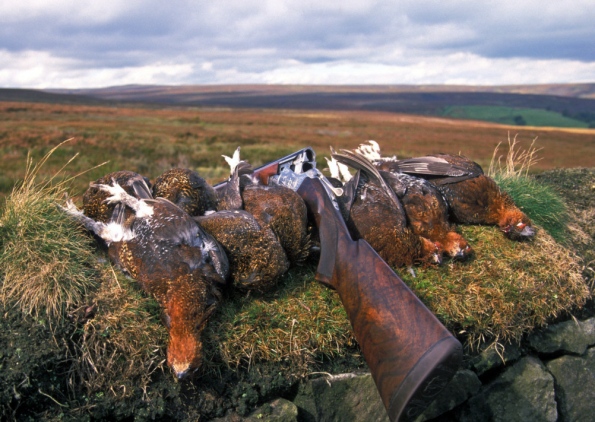
POLL: Should the Slaughter of Grouse be allowed to continue?

Please vote (No) here and circulate widely:

http://focusingonwildlife.com/news/poll-should-the-slaughter-of-grouse-be-allowed-to-continue/

Aug12, 2013

Today is the “Glorious Twelth”, a day when according to tradition hunting enthusiasts gather on moors in Scotland and the north of England to shoot Grouse. Proponents will tell you that that this is an important British tradition. They will also argue that it is good for Britain’s economy by attracting tourists, providing jobs for thousands of people and generating several £100 millions annually .

Eight Reasons to Oppose Grouse Shooting:
1.Killing birds for sport is cruel and uncivilised. [Say no more!]
2.A large number of native birds and mammals who interfere with grouse shooting are trapped, poisoned or snared. Victims include stoats, weasels, and even iconic raptors such as hen harriers, red kites and golden eagles.
3.An unnatural, heather-rich environment is created because the grouse thrive on young heather shoots. To create fresh young shoots, the heather is burned, which can harm wildlife and damage the environment.
4.The burning of heather, reports an expert, ‘threatens to release millions of tonnes of carbon locked into the peat bogs underpinning the moors. Where burning occurs, the hydrology changes and the peat is open to decomposition and erosion. This strips the moor of carbon as surely as setting fire to the Amazon Forest.’ (Adrian Yallop,New Scientist magazine, 12 August 2006)
5.The harsh ‘management’ of moorlands causes grouse numbers to boom. But as they overburden the landscape, they become weakened and fall prey to a lethal parasite – Strongylosis. This attacks the gut and leads to a collapse in the population.
6.A cycle of population boom and bust is the norm on Britain’s grouse moors.
7.Large quantities of lead shot are discharged, which is toxic to wildlife.
8.Grouse shooting estates use the Countryside and Rights of Way Act to restrict public access to mountain and moorland.

3745058911


Enthusiasts Encourage More Women To Give Hunting A Shot

http://www.npr.org/2013/10/18/236366868/enthusiasts-encourage-more-women-to-give-hunting-a-shot

by   October 18, 2013 fromWPRN                

Tara Heaton (left) and Crystal Mayfield with guide Fred Williams at a women's antelope hunt in Wyoming. Before the event, both women had hunted almost exclusively with male relatives, not other women.

Tara Heaton (left) and Crystal Mayfield with guide Fred Williams at a women’s antelope hunt in Wyoming. Before the event, both women had hunted almost exclusively with male relatives, not other women.         Irina Zhorov/Wyoming Public Media


The departure time for Wyoming’s inaugural Women’s Antelope Hunt was set for 5:30 a.m. — but that was before a snowstorm hit. By 6 a.m., the electricity is still out, wind and snow are howling and antsy women in camouflage are eating eggs by candlelight.

Marilyn Kite, Wyoming’s first female state Supreme Court justice and one of the people who dreamed up the hunt, is among them.

“We’ve found it to be just great recreation, lots of fun, and the camaraderie of it is why you do it, really,” Kite says. “But we also really like the meat.”

Women still make up only a small percentage of all hunters, but that number has increased significantly in recent years. Now, organizations like the Wyoming Women’s Foundation want to encourage more growth through mentorship.

The group says hunting is an important way to teach self-sufficiency and economic independence — and taking meat home is a part of that, Kite says. “There’s a lot of young women who are single mothers, who are trying to provide for their families,” she says. “And [hunting is] certainly one way to do it.”           

 Just to show how outnumbered women currently are in hunting, most of the guides on this women’s hunt are men. One of them, Fred Williams, says women who try hunting usually do really well with the sport.

“I think women tend to be actually better hunters because they tend to be a bit more patient, and oftentimes are a much better shot, because they tend to be a bit more focused,” Williams says.

By 10 a.m., conditions outside have improved and the hunt is on. Williams and his team of two set off for a private ranch to look for antelopes.

Tara Heaton, a Navy veteran, already has some experience hunting, but she says this is different. It gives her an opportunity to meet “different women from around Wyoming, and more hunters, because a lot of my friends growing up weren’t hunters,” she says.

Heaton is partnered with Crystal Mayfield, a single mother. Before today, both women hunted almost exclusively with their fathers and brothers.

As the three drive through the snow, they spot some antelopes in the distance. They park and start stalking them on foot.

Williams has Mayfield load a bullet in the chamber and they proceed quietly through a snow-covered field strewn with cottonwoods and cows. When they reach a rise overlooking the grazing antelopes, Williams preps Mayfield for her shot. She takes aim, shoots — and misses.

In fact, both women miss their shots today. The 35 mph winds don’t help. But on the drive back to the ranch, Mayfield says she’s not upset. Even missing is easier in the company of women, she says.

“When I missed that shot, I didn’t feel like a loser when I went and told [Heaton] that, ‘Oh, I missed it,’ ” she says. “I didn’t feel like she was going to be like, ‘Oh, you’re a huge loser.’ … My brother easily would have been like, ‘Oh, I can’t believe you missed that. You’re stupid.’ “

As is typical in Wyoming, the next day is sunny, wind-free and beautiful. Both Heaton and Mayfield get their antelopes, and all but two of the 34 participating women come away with a kill.

One first-time hunter says she can’t wait to teach her son how to hunt

Girl Kills Two Bucks, Asks “What Now?”

“Some guys think, you know, ‘OK, well, you’re a girl, you can’t kill a deer.’ You know, I can say, ‘Yeah, I’ve killed two of them. What now?'” – Magan Hebert
[An ominous question if there ever was one.]

For Some Girls, The Ultimate Goal Is To Kill A Buck

by Tamara Keith

December 09, 2010
Looking at Magan Hebert in her orange-and-blue cheerleading uniform, you’d never guess that she could shoot a rifle and kill a deer with a single shot.

Her hair is teased up and pinned back into a pouf. Her cheekbones and eyelids are defined with bold, colorful sweeps of makeup.

Magan, 15, of Wayne County, Miss., defies the typical image of a hunter — a man wearing camouflage, holding a gun.

But an increasing number of girls now hunt. According to the latest data from the U.S. Fish and Wildlife Service, there are some 300,000 female hunters under the age of 16. From 1991 to 2006, the number of girls who hunt in this country nearly doubled.

‘I Like To Cheer. I Like To Hunt.’

On a recent Saturday morning, Magan is headed to a cheerleading competition at her high school in Waynesboro. She sings along with the car stereo on the drive over.

Magan Hebert cheerleading

Magan, especially in her cheerleading uniform, defies the typical image  of  a hunter.

Courtesy of Marcy Hebert

“I like to cheer. I like to hunt,” she says. “I get really good grades in school. I keep an A.”

Magan is tiny — one of the girls at the top of the pyramid who flips through the air like a rag doll. And on this day, she lands every stunt. But the team comes in second place out of two. Magan is quiet on the drive home. Maybe she’ll have better luck hunting deer on Sunday.

Magan started hunting when she was in the fourth grade. Her dad hunts every spare minute he can get.

“He would ask, like, every time he went if we wanted to go,” she says, reflecting on how she got into hunting. “One time I was like, ‘Yeah, I want to go.’ I just thought it would be pretty cool, you know, and I just loved it.”

For Magan’s mom, Marcy Hebert, it was a bit of a surprise that her little girl wanted to hunt.

“She wanted to do it, as a matter of fact, before my son did,” Marcy says. “Of course, a lot of the girls up here hunt.”

“I started shaking when I put the gun up, so [Dad] had to hold it steady for me,” Magan says.

But she did it. She hit the doe in the shoulder. Marcy couldn’t believe it. Magan was hooked.

“I just like the peace and quiet,” Magan says, explaining the appeal.

She says she likes it when she sees a mother deer playing with her fawns. “I think it’s cute. ‘Cause, you know, you can’t kill them yet. But when they grow up, it’s really good food. I don’t know. I just like it.”

The family gets almost all the red meat it needs for a whole year during hunting season.

Hunting And Texting

It’s still way before dawn and freezing cold when Magan and Marcy load into the truck and head out to the spot where the family hunts. It’s in a private, wooded area. They have a stand — a small, slightly elevated shack with slits for windows. There’s a feeder off in the distance that occasionally spreads corn and protein pellets on the ground.

Among hunters, baiting is controversial. It’s illegal in some states but standard practice in Mississippi.

Marcy lights a propane camp heater inside the stand, but it’s still cold.

Magan shown with the first deer she killed

Magan killed her first deer when she was 10

Courtesy of Marcy Hebert

“Basically, what you watch for is — at the edge of the tree line, you watch for movement,” Marcy says.

The sun is rising in the sky. The frost is melting off the grass. Magan and Marcy haven’t seen a thing.

Magan flips open her phone and updates her Facebook status: “Sittin’ in the stand, freezin’, waitin’ for the deer to come out,” she taps out on the small keys.

She’s texting, too, and occasionally nodding off. And Marcy says this is how it goes: sitting side by side in the quiet, staring out at trees and grass, hoping to see a deer and breaking the boredom with text messages.

“A lot of times we’d text back and forth, sitting in the stand,” Marcy says. “That’s how I learned how to text, was sitting in a deer stand with her.”

A little before 9 a.m., they give up.

They go back to the house empty-handed, and Magan’s little brother is gloating. He has killed a deer — his second one of the weekend.

“Like, every time he goes hunting — almost every time — he kills something,” Magan says, clearly a little bit jealous.

It’s been five years since the last time she got one. That’s partly because she hasn’t had as much time to hunt now that she’s on the varsity cheerleading squad. But partly, it’s luck: catching the right deer, walking into the right spot at the right time.

“I want to get a buck,” she says. “I don’t care how big. I just want a buck.”

Getting Her Buck

In the afternoon, they go back out, hoping for that buck. They wait and wait. And then, “Shhhh,” Marcy says as she spots a deer. “It’s a spike.”

A spike, a young buck, walks into a clearing near the feeder. He’s about 120 pounds, with just two small antlers. Magan starts texting excitedly.

“You’d better put the phone down and put the gun up,” Marcy whispers firmly.

Magan picks up the gun and releases the safety. She is tense. She takes several deep breaths as she gets the deer in her sight.

There’s a long silence. Then a single gunshot. The sound reverberates around the stand.

Marcy Hebert, with Magan

Magan’s mother, Marcy Hebert, says Magan was interested in hunting before her brother was.

“You got him, you got him,” Marcy says.

The deer runs about 50 feet before collapsing. The shot is clean, and fatal, just behind the front leg. Magan has her buck.

“Some guys think, you know, ‘OK, well, you’re a girl, you can’t kill a deer,’ ” Magan says, reflecting on her triumph. “You know, I can say, ‘Yeah, I’ve killed two of them. What now?’ You know? Not a lot of people can say that.”

Mother and daughter come out of hiding in the deer stand, grab the lifeless spike by the legs and hoist him into the back of the truck. It takes all the strength they have to get it in. They close the truck gate and drive home.

There are bragging rights in the bed of that truck — and there’s venison. Within the hour, Magan’s dad will butcher the deer, filling a cooler with the meat.